Search results
Search for "interactions" in Full Text gives 1244 result(s) in Beilstein Journal of Nanotechnology. Showing first 200.
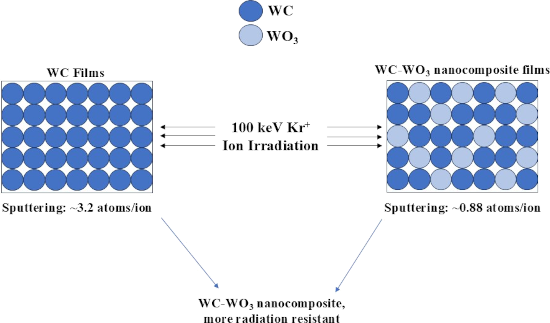
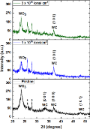
Enhanced erosion resistance and radiation stability of WC–WO3 nanocomposite films under 100 keV Kr+ ion irradiation
Beilstein J. Nanotechnol. 2026, 17, 922–934, doi:10.3762/bjnano.17.65
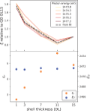
- and theoretical values have been reported earlier also [81][82]. The difference between the experimentally determined values of sputtering and theoretical predicted values can be explained as follows: The sputtering process induced by ion–solid interactions can be theoretically be understood through
- nanoclusters is observed. At a higher fluence of 3 × 10¹⁶ ions/cm2, the surface morphology evolves further, showing enhanced clustering and the emergence of surface features such as voids and cracks, suggesting substantial structural modification. These changes arise from ion–solid interactions, primarily



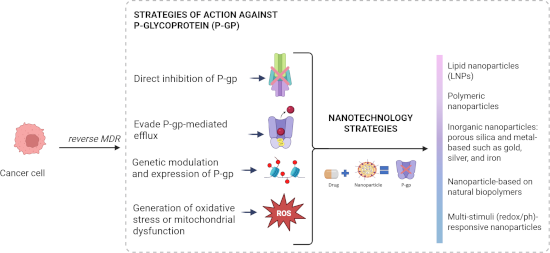
Nanocarrier strategies to overcome P-glycoprotein-mediated drug resistance in cancer therapy
Beilstein J. Nanotechnol. 2026, 17, 882–921, doi:10.3762/bjnano.17.64


Supramolecular one-dimensional conducting nanofibers from a C3-symmetric tetrathiafulvalene derivative
Beilstein J. Nanotechnol. 2026, 17, 872–881, doi:10.3762/bjnano.17.63
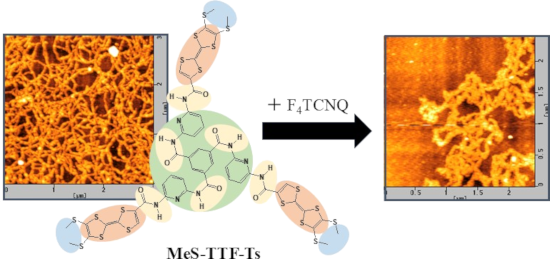
- molecular architecture contains three TTF units radially arranged around a rigid C3-symmetric core, enabling the formation of highly ordered one-dimensional assemblies through cooperative π–π stacking and directional intermolecular interactions. Solution casting of MeS-TTF-Ts produced nanorod and nanofiber
- structures with morphologies strongly dependent on the solvent conditions. AFM and SEM observations revealed that distinct supramolecular structures were formed depending on the solvent and substrate used, suggesting that molecular interactions and assembly processes play important roles in determining the
- considerable attention in the fields of materials science and nanotechnology because of their diverse functionalities, including luminescence, sensing, charge transport, and drug delivery [3][4][5][6]. Supramolecular gels are formed through bottom-up self-assembly driven by weak intermolecular interactions


He+ FIBID-fabricated 3D AFM tip architectures: an exploratory study of hollow pillars, helices, and spirals
Beilstein J. Nanotechnol. 2026, 17, 863–871, doi:10.3762/bjnano.17.62
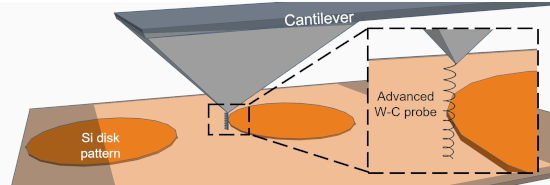
- versatile technique for nanoscale surface characterisation that enables topographic measurements with sub-nanometre resolution by means of a sharp tip mounted at the end of a flexible cantilever [1]. During operation, the tip scans across the sample surface and responds to local interactions such as van der


Light-driven ammonia electrooxidation via carbon nitride–ruthenium molecular interfaces
Beilstein J. Nanotechnol. 2026, 17, 854–862, doi:10.3762/bjnano.17.61
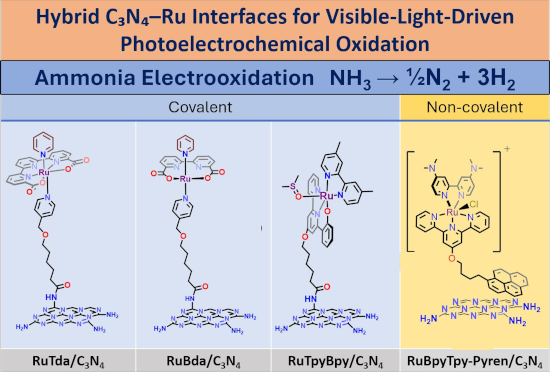
- anchoring strategies, covalent amide bond formation exploiting the surface amine groups of C3N4, and non-covalent π–π and C–H···π interactions mediated by pyrene-functionalized ligands, are presented as complementary rather than competing routes to the heterointerface, each controlling surface density
- the semiconductor surface where the molecular catalyst awaits [8]. Its medium bandgap means it can harvest blue and green photons that pass unused through many metal oxide photocatalysts. Its 2D layered structure, stabilised by π–π stacking interactions between heptazine sheets, provides a large, flat
- , aromatic surface ideally suited for the non-covalent adsorption of flat aromatic molecular catalysts through complementary π–π and C–H···π interactions [8][16]. D) Ruthenium molecular catalysts: selectivity and multielectron chemistry Ruthenium is suited for ammonia oxidation for three reasons. First, the


Nanoparticle delivery systems for HIV pre-exposure prophylaxis (PrEP): advances and challenges
Beilstein J. Nanotechnol. 2026, 17, 839–853, doi:10.3762/bjnano.17.60
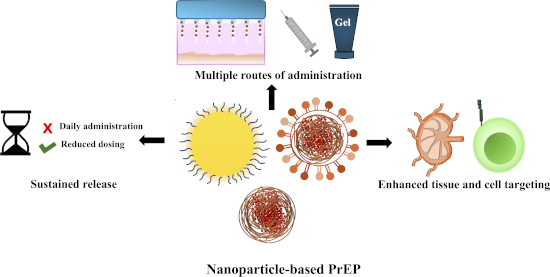
- loading and controlled release. PrEP nanoparticle delivery platforms can be equipped with different functionalization and passivation chemistries. The surface properties determine colloidal stability as well as the interactions between the nanoparticles and the surrounding. These properties are critical
- systems, LBNPs in general allow for a higher flexibility in tuning surface charge and membrane composition to facilitate interactions with immune cells [56]. Both factors enhance the overall ability of targeted delivery. One example of surface functionalized LBNPs for targeted delivery are DRV-loaded SLNs
- systems. Some metallic nanoparticles (MNPs), such as gold nanoparticles (AuNPs), exhibit long-term stability, chemically modifiable surfaces, and potential for intrinsic antiviral activity [68][69]. AuNPs can, for instance, interfere with and block HIV gp120-CD4 interactions. Other MNPs, like silver


Cross-scale design of chemosensor arrays: from molecular self-assembly in water to paper-based devices for metal ion detection
Beilstein J. Nanotechnol. 2026, 17, 828–838, doi:10.3762/bjnano.17.59
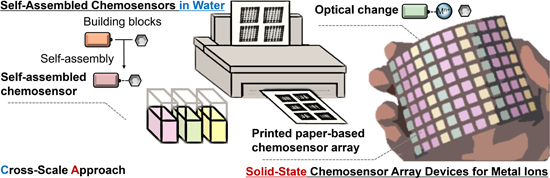
- , chemosensors provide multivalent interactions toward analytes, which allow the simultaneous detection of metal ions based on pattern recognition [12][13][14][15][16]. Chemosensor design relies on molecular-recognition chemistry, dye chemistry, and photochemistry [3]. Conventional chemosensors based on covalent


Sustainable fabrication of 2D-based devices through reuse of substrates with microfabricated electrodes
Beilstein J. Nanotechnol. 2026, 17, 818–827, doi:10.3762/bjnano.17.58
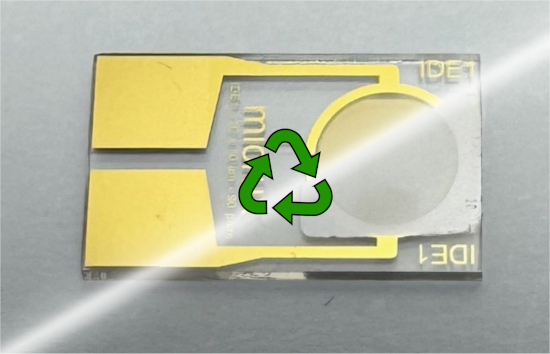
- its ability to penetrate microscopic gaps [24]. Heating to 50 °C can help weaken the van der Waals interactions between the 2D flakes and the substrate. Simultaneously, ultrasound agitation enhances molecular diffusion and promotes cavitation, generating localized pressure fluctuations that further


Glycerol photoelectrochemical oxidation reaction at carbon nitrides/BiVO4 materials
Beilstein J. Nanotechnol. 2026, 17, 806–817, doi:10.3762/bjnano.17.57
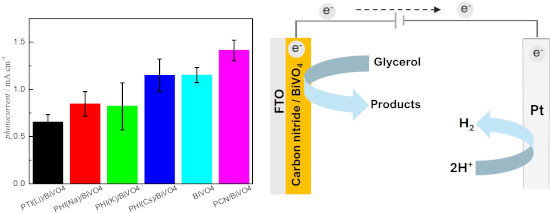
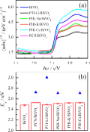
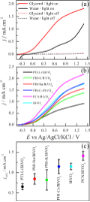
- , unlike the neutral PCN, which enhances their interactions with various substrates and expands their potential applications. A key factor in achieving superior crystallinity of PHI and PTI is ionothermal synthesis, where the use of salts facilitates a well-ordered molecular arrangement and minimizes
- that PHI synthesized in the presence of smaller cations, such as Na+, exhibits a higher degree of crystallinity compared to those prepared with larger cations, such as K+. This trend can be attributed to the stronger electrostatic interactions and more efficient packing of smaller cations within the





Tuning the electronic properties of defect-rich MoS2
Beilstein J. Nanotechnol. 2026, 17, 796–805, doi:10.3762/bjnano.17.56
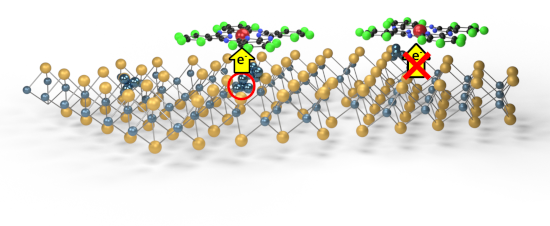
- strong local interactions accompanied by (integer) charge transfer [9]. A convenient side effect of this heterostructure is the strong interaction of the central Co atom of CoPcF16 with many metals such as Au, Ag, Cu, or Ni [11][12][13][14][15][16] such that it can be used as a probe for PES studies of
- no major effects on the Co L2,3 XAS results for the samples sputtered with Ne+ (1 min) and Ar+ (1 min) (compare Figure 2a vs Figure 2d, and Figure 2b vs Figure 2e, respectively). In general, these spectra are similar to bulk-like spectra, suggesting the absence of strong interfacial interactions. In
- monolayer coverage (Figure 2c). These results indicate almost planar, flat lying CoPcF16 molecules on the MoS2 surface, enabling generally strong interactions of the central Co atom of CoPcF16 with the substrate. Such interactions can include a redistribution of the d electrons, charge transfer, or even the


Restorative potential of laser-synthesized silver nanoparticles with Salvia officinalis for periodontal disease treatment: an in vitro study
Beilstein J. Nanotechnol. 2026, 17, 781–795, doi:10.3762/bjnano.17.55
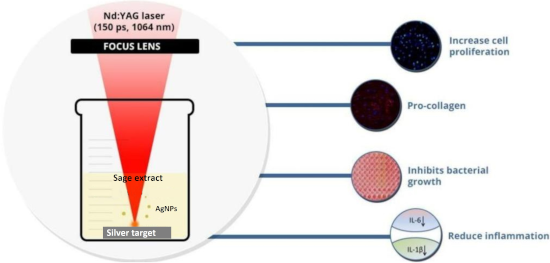
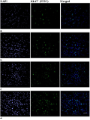
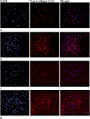
- interactions with proteins and ions, which makes direct quantification of free Ag+ ions challenging [47]. Interestingly, SageAgNPs6mJ demonstrated toxicity toward bacterial cells without decreasing the viability of GFCs at the same concentration, thus achieving antimicrobial efficacy without cellular damage



Substrate-dependent pore formation in molybdenum disulfide monolayers under ion irradiation
Beilstein J. Nanotechnol. 2026, 17, 769–780, doi:10.3762/bjnano.17.54
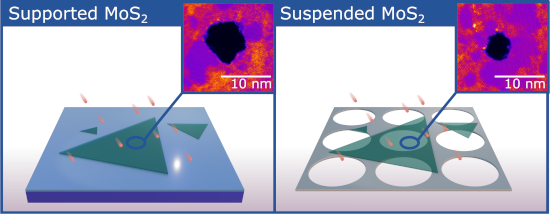
- nanostructuring. However, achieving predictive control requires a detailed understanding of ion–solid interaction and post-impact energy dissipation [5]. While ion–bulk interactions are well described across many energy regimes [6][7][8], the interaction with surfaces and ultrathin targets, particularly for
- highly charged ions (HCIs) and swift heavy ions (SHIs), remains less complete. The emergence of 2D materials has intensified the interest in ion–surface interactions [9][10][11][12][13]. Owing to their atomic thickness, 2D materials combine outstanding mechanical properties with promising (opto
- this coupling has been attributed to Fermi-level pinning arising from interface–dipole formation and the appearance of Mo d-orbital gap states due to metal–S interactions at the interface [61][65]. Whether these equilibrium coupling mechanisms directly govern the efficiency of transient charge transfer


Environmental applications of silver nanoparticles: state-of-the-art review and emerging trends
Beilstein J. Nanotechnol. 2026, 17, 697–736, doi:10.3762/bjnano.17.49
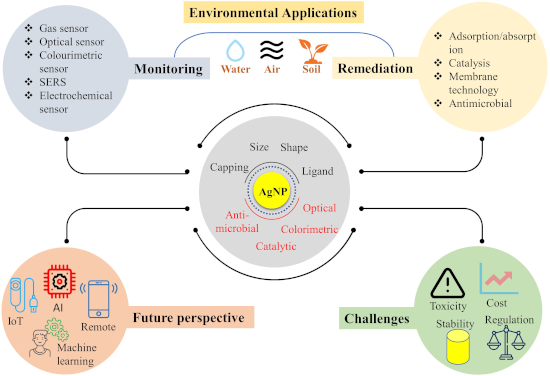
- through their interactions with the surrounding medium. Zeta potential measurements are used to assess the surface charge and stability of silver nanoparticles; higher absolute values (>±30 mV) indicate better colloidal stability and resistance to aggregation [52]. This surface charge also validated the
- critical factor influencing the behaviour and toxicity of AgNPs in ecological systems [64]. Surface charge affects the electrostatic interactions between nanoparticles and other charged species in the environment, influencing their aggregation behaviour and mobility. The surface chemistry of silver
- nanoparticles, including surface coatings or functional groups, can alter their reactivity, stability, and interactions with pollutants and microorganisms [68]. Environmental standardization and stabilization of AgNPs surface charge are essential in biological systems for studying interactions [69]. Response


Molecular engineering of individual dye-based nanoparticle photostability for ultrabright two-photon fluorescence
Beilstein J. Nanotechnol. 2026, 17, 688–696, doi:10.3762/bjnano.17.48
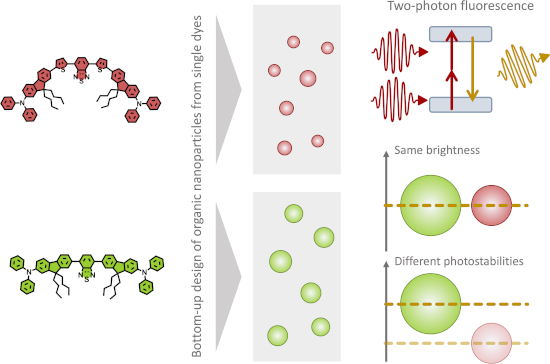
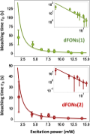
- higher surface-to-volume ratios and increased exposure of dye molecules to environmental interactions. We previously demonstrated a counterintuitive result: 14 nm NIR-emitting dFONs (fluorescence quantum yield Φ ≈ 0.01) were ten times more photostable in SPT than larger 43 nm green-emitting dFONs (Φ


Protein-based custom-designed molecular nanotraps for biomedical applications
Beilstein J. Nanotechnol. 2026, 17, 683–687, doi:10.3762/bjnano.17.47
- encoding biological functions (e.g., cell adhesion sequences such as RGD), which could lead to unintended biological interactions and off-target effects. Resulting from these considerations, the route to turn the first evidences on the potential of bioMIPs into consolidated nanomaterials for biomedical

Decontamination from water pollutants and pathogens by electrospun nanofibers doped with heavy-atom-free borafluorene-BODIPY photosensitizers
Beilstein J. Nanotechnol. 2026, 17, 668–682, doi:10.3762/bjnano.17.46
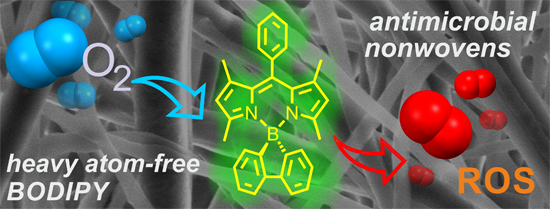
- resulting from hydrogen and dipole–dipole interactions, as well as the dispersive component associated with London and van der Waals forces [56]. The study was complemented with X-ray photoelectron spectroscopy (XPS) for the sample with the highest BODIPY concentration, 1(1.00 wt %)@PCL. The analysis of SEM
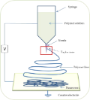
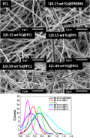
- interactions between BODIPY molecules and PCL chains. Increasing the dye content promotes stronger jet stretching in the electric field during electrospinning, leading to the formation of thinner fibers. Porosity and average pore size analysis confirmed the effect of BODIPY addition, leading to increased



Cellulose as a photocatalyst support material: extraction, structural features, and environmental applications
Beilstein J. Nanotechnol. 2026, 17, 635–652, doi:10.3762/bjnano.17.44
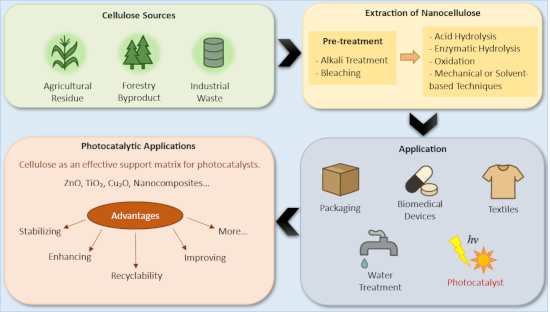
- interactions, as a wide range of ILs demonstrate strong biomass-dissolving abilities primarily through hydrogen bonding and electrostatic forces. During pretreatment, the anions of ILs first interact with cellulose hydroxy groups, causing the biomass to swell, while the bulkier cations subsequently surround
- conditions, thereby improving the colloidal stability of the nanofibers. Through this modification, nanocellulose gains the ability to form stronger interactions with hydrogels and composite materials, which further enhances its reinforcing performance and widens its potential applications [80][81]. CNCs


Recent progress in enhancing built-in electric fields of perovskite solar cells via junction engineering
Beilstein J. Nanotechnol. 2026, 17, 602–621, doi:10.3762/bjnano.17.42
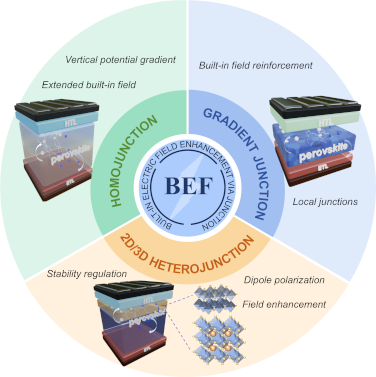
- . The method enabled effective acceptor doping within the HTL, shifting the Fermi level downward and thereby improving alignment with the perovskite valence band. Simultaneously, interfacial interactions between BF4− and Pb2+ suppressed iodine vacancies, converted the underlying perovskite from n-type
- and its interactions with Pb, I, and the organic cations not only improved local crystallinity but also induced band bending and an upward shift in the work function, a shift that partially changed the conduction type toward n−. As a result, an n/n− homojunction formed at the microinterface, enhancing
- oxidation-induced energy level collapse, leading to longer-term stability. In graded-junction strategies, evaporation of volatile salts combined with synergistic multi-ion interactions can both establish a potential gradient and passivate defects, thereby further enhancing the BEF. Tao et al. [42




Probing tribological evolution in atomically thin MoS2 at different scales
Beilstein J. Nanotechnol. 2026, 17, 586–597, doi:10.3762/bjnano.17.40
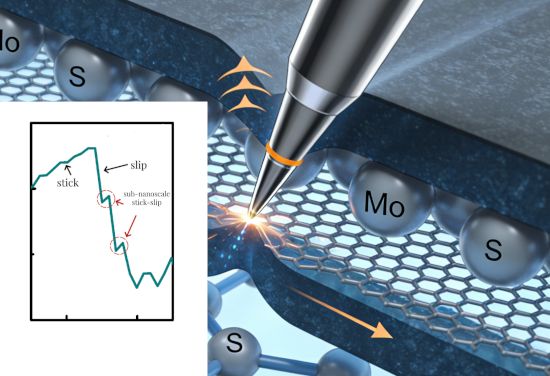
- atomic lattice site until the lateral force overcomes interfacial interactions, followed by an instantaneous “slip” to the next stable site [9]. This stick–slip motion is widely regarded as the elementary mechanism of energy dissipation in nanoscale friction, underpinning efforts to understand energy
- 2D materials remain elusive, primarily due to the need for high resolution and precise control of tip–sample interactions. Atomically thin 2D materials are ideal platforms for studying nanoscale and sub-nanoscale friction, owing to their atomic smoothness, well-defined crystal structure, and chemical
- inertness [13][14][15]. Molybdenum disulfide (MoS2) as a representative 2D materials is particularly promising because of its trilayered structure (one Mo layer sandwiched between two S layers) and tunable interlayer interactions, making it a model system for investigating the nanoscale and sub-nanoscale


Impacts of annealing on structural and photophysical properties of zinc phthalocyanine adsorbed on graphene
Beilstein J. Nanotechnol. 2026, 17, 576–585, doi:10.3762/bjnano.17.39
- molecular media, and are strongly influenced by various structural parameters at the molecular scale [13]. For example, face-on or edge-on orientation of π-conjugated molecules on graphene turns on or off π-stacking interactions with large consequences on hole conductivity and rectifying properties [14]. It
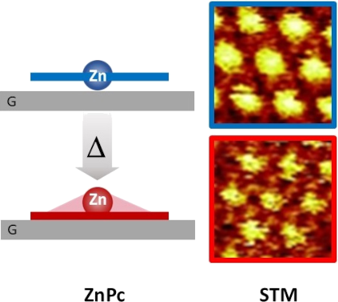
- experienced by ZnPc self-assembled monolayer on graphene or HOPG. Single ZnPc molecules are guest-isolated within the nanocavities of a self-assembled 2D host matrix, preventing intermolecular interactions and allowing for individual characterization. This phase change, induced by annealing, is discussed in
- planar structure dominated by Zn-substrate interactions towards a shuttlecock structure, with the Zn atom pointing outward, dominated by the interactions of π-conjugated PC moiety with the substrate. This result is important in the context of bottom-up fabrication through molecular self-assembly. In fact


Laser–material interactions in liquids for the synthesis of nanomaterials: current status and perspectives
Beilstein J. Nanotechnol. 2026, 17, 571–575, doi:10.3762/bjnano.17.38
- –matter interactions; laser processing in liquids; In the ever-evolving landscape of materials science and nanotechnology, laser synthesis and processing of colloids (LSPC) has emerged [1] as a powerful and versatile technique for producing high-purity, surfactant-free nanoparticles from a wide range of
Advances in nanotechnology applied to natural products
Beilstein J. Nanotechnol. 2026, 17, 555–558, doi:10.3762/bjnano.17.36
- modifications (e.g., polymer or polysaccharide coatings) can be used to tailor stability and biological interactions [16]. These vesicles are attractive due to their biocompatibility and capacity to encapsulate both hydrophilic and lipophilic substances [17]. Liposomes have been explored in diverse biomedical
Electrochemical determination of ciprofloxacin using a MIL-101/reduced graphene oxide-modified electrode
Beilstein J. Nanotechnol. 2026, 17, 541–554, doi:10.3762/bjnano.17.35
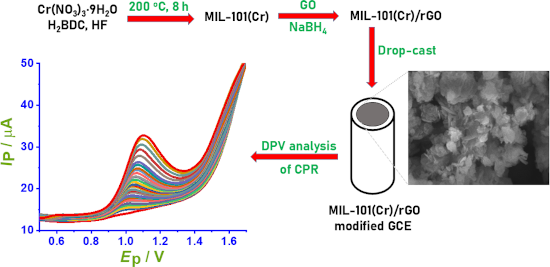
- strong π–π interactions with aromatic compounds like ciprofloxacin [14][15]. Integrating MIL-101 with rGO aims to combine the high surface area and adsorption capacity of MIL-101 with the excellent electrical conductivity and electron-transfer ability of rGO, creating a synergistic effect that boosts the
- interfacial interactions between MIL-101 and rGO sheets. The EDX results confirm the successful formation of the MIL-101/rGO composite through the presence of C, O, and Cr as the main constituent elements. As summarized in the elemental composition table, carbon (C) accounts for 30.42 wt % (42.31 atom
- from the carboxylate ligands of the terephthalate linkers in MIL-101 and residual oxygen functionalities on rGO [26]. The presence of these oxygen groups suggests that the reduction of graphene oxide is partial and that surface functional groups remain, helping to facilitate interactions between rGO


Fractional shot noise of an SU(N) Kondo system
Beilstein J. Nanotechnol. 2026, 17, 515–540, doi:10.3762/bjnano.17.34
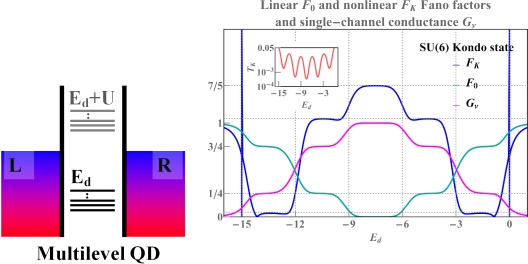
- understanding a large variety of intricate many-body problems. Potential applications are also relevant. Let us just mention a few: The Kondo effect can be used, for example, as conductance control mechanism [5][17], in probing magnetic interactions [18], or, when polarized electrodes are connected, also for
- quantum dot (N-QD) in terms of quasiparticles and their weak residual interactions. The Kondo many-body singlet is described by us in the extended slave boson approach using the Kotliar and Ruckenstein representation (SBMFA) [87][88]. In the SBMFA, the effective non-interacting quasiparticles scatter
- shift, one must also deal with two particle scattering off the singlet. At finite degeneracy, fluctuations of slave bosons about their mean-field coherent states determine the size of current fluctuations. Motions of the quasiparticles generate fluctuations that create interactions between


![[Graphic 127]](/bjnano/content/inline/2190-4286-17-34-i187.svg?max-width=637&scale=1.18182)

Probing internal continua and atomic ultrafast charge transfer within size-controlled nanoparticles by post-collision interaction in core-hole clock spectroscopy
Beilstein J. Nanotechnol. 2026, 17, 505–514, doi:10.3762/bjnano.17.33
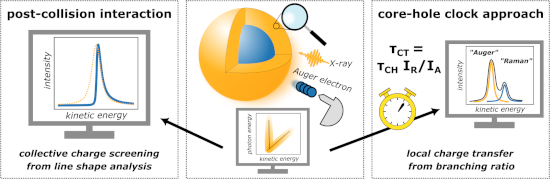
- emission of a photoelectron and the subsequent Auger electron emission are treated as separate and independent steps. However, a more elaborate description of the process is required to explain the observed line shapes, specifically considering the Coulomb interactions between the two electrons within the
- kinetic energy. These interactions, known as PCI effects, manifest in an apparent energy shift and increasing asymmetry of the Auger lines towards higher kinetic energies. PCI effects were first observed by Barker and Berry in helium atoms [35]; since then, they have been widely studied in atoms
- , molecules, and gas-phase systems, leading to successful theoretical descriptions [36][37]. While these approaches allow one to derive the line shapes solely based on the kinematics of electron–electron interactions, the situation is more complex in condensed matter. The overall electron distribution can