
Search results
Search for "gap" in Full Text gives 762 result(s) in Beilstein Journal of Nanotechnology. Showing first 200.
Integrating high-performance computing, machine learning, data management workflows, and infrastructures for multiscale simulations and nanomaterials technologies
Beilstein J. Nanotechnol. 2024, 15, 1498–1521, doi:10.3762/bjnano.15.119
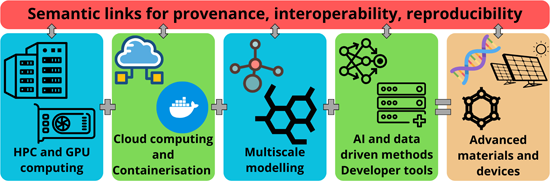
- horizontal technologies to a vertical integration to the materials science domain see Figure 3. The successful implementation of digital strategies for materials/nanomaterials development relies on the crucial role of “translators” who bridge the gap between domain-specific researchers and digital technology


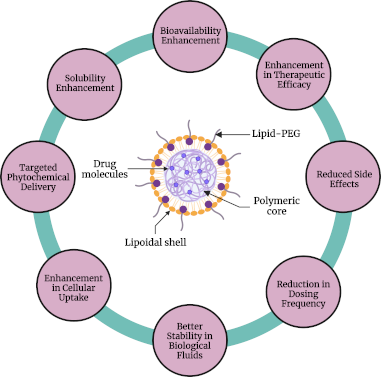
Polymer lipid hybrid nanoparticles for phytochemical delivery: challenges, progress, and future prospects
Beilstein J. Nanotechnol. 2024, 15, 1473–1497, doi:10.3762/bjnano.15.118


Effect of radiation-induced vacancy saturation on the first-order phase transformation in nanoparticles: insights from a model
Beilstein J. Nanotechnol. 2024, 15, 1453–1472, doi:10.3762/bjnano.15.117
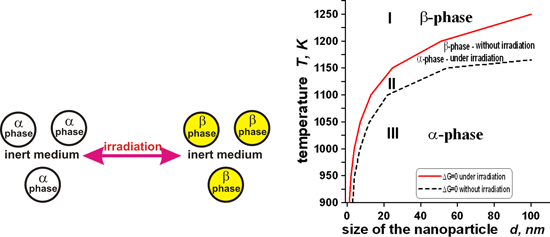
- have identified only a few papers proposing a thermodynamic assessment [17][18][19][20]. Our aim in this work is to fill this gap. Shen’s proposed qualitative framework suggests that the grain size of a material influences its resistance to amorphization and the removal of radiation defects by altering


Strain-induced bandgap engineering in 2D ψ-graphene materials: a first-principles study
Beilstein J. Nanotechnol. 2024, 15, 1440–1452, doi:10.3762/bjnano.15.116
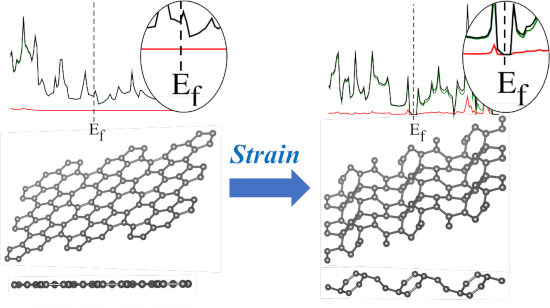
- (EBSs)) of these materials becomes essential to expand their utility in energy-related and optoelectronic applications [18][19]. Engineering of the electronic gap not only broadens the possible use of 2D materials but also enables them to satisfy the demand for ultramodern technologies [20]. Bandgap
- , we performed EBS and density of states (DOS) calculations (Figure 1) alongside projected orbital calculations of the different atoms to understand their contributions to the electronic states. Our calculations reveal no gap between the energy bands in both ψ-graphene and ψ-graphone (Figure 1a,b
- the lattice plane, while a negative strain of −14% generates a gap of 0.2 eV between its energy bands. Structural and electronic properties of ψ-graphone with strain We tabulate the structural parameters, buckling heights, and electronic bandgap values of all strained structures in Table 3. Positive


Nanoarchitectonics with cetrimonium bromide on metal nanoparticles for linker-free detection of toxic metal ions and catalytic degradation of 4-nitrophenol
Beilstein J. Nanotechnol. 2024, 15, 1312–1332, doi:10.3762/bjnano.15.106
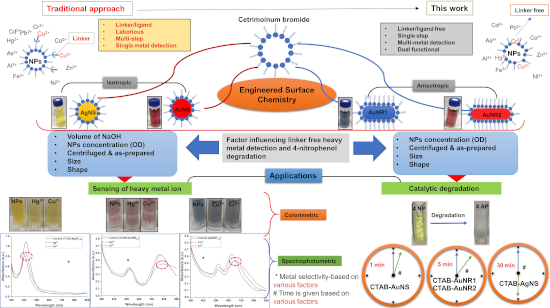
- highly depend on various factors, including size, shape, and reaction parameters [34]. However, there was a gap in the literature regarding which factor is most crucial to the efficient degradation of 4-nitrophenol using nanoparticles. Some studies suggest size is essential, while others suggest pH
- the case of CTAB-AuNS due to tightly bound CTAB. However, in the case of CTAB-AuNR1, CTAB is tightly bound to the flat side and show an intermicellar gap at the curvature. The curvature allows for metal interaction only after adding a specific amount of NaOH. The nanoparticles (as-prepared AuNR10.5




Introducing third-generation periodic table descriptors for nano-qRASTR modeling of zebrafish toxicity of metal oxide nanoparticles
Beilstein J. Nanotechnol. 2024, 15, 1142–1152, doi:10.3762/bjnano.15.93
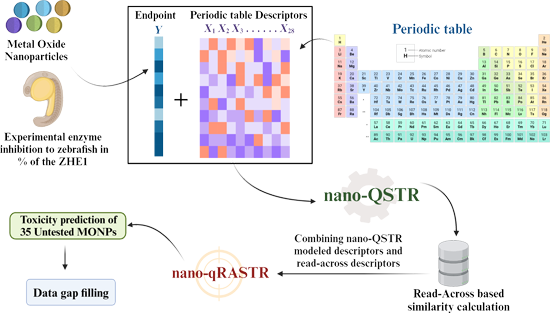
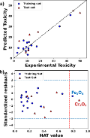
- -randomization procedure, the study calculated the mean values of R2 and Q2 for the 100 randomly generated models. External dataset for data gap filling and prediction reliability Our prepared external dataset consists of 35 MONPs that were used to predict toxicity for zebrafish. External prediction quality is
- 35 diverse MONPs as external dataset also helped to fill the toxicity data gap of zebrafish. The model’s capability to identify compounds with potentially high toxicity offers a pathway to preemptively address the environmental risk assessment and health impacts of nanomaterials. However, only a


Local work function on graphene nanoribbons
Beilstein J. Nanotechnol. 2024, 15, 1125–1131, doi:10.3762/bjnano.15.91
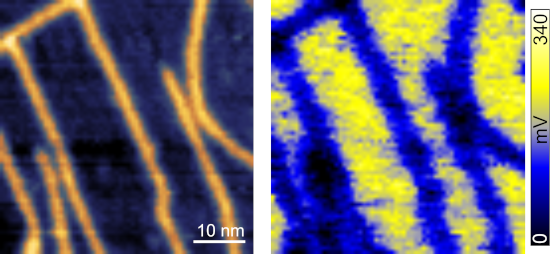
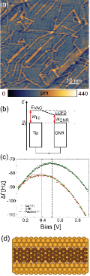
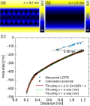
- opening a size-dependent energy gap [6][9]. As in graphene, the Fermi level of GNRs is also strongly influenced by charge transfer between the substrate and the GNR [10], again related to differences in the work function. Here, we take the work function as a local property influenced by local charge, that

![[Graphic 1]](/bjnano/content/inline/2190-4286-15-91-i4.svg?max-width=637&scale=1.18182)
Signal generation in dynamic interferometric displacement detection
Beilstein J. Nanotechnol. 2024, 15, 1070–1076, doi:10.3762/bjnano.15.87
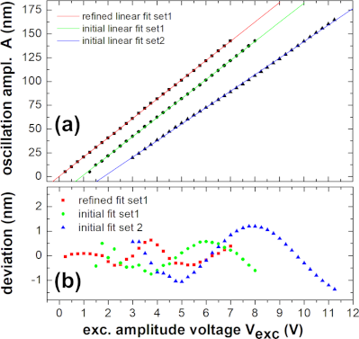
- ) describes the loss of light in the gap between the fiber end and the cantilever due to beam divergence. The spatial variation of the electric field strength due to interference is governed by the path difference 2d determining the phase of the interference electric fields . Linear superposition of reference
- in Figure 1. This error is estimated by visual inspection of a CCD camera image of the fiber–cantilever gap, and we find . To estimate the wavelength error δλ, we performed a careful measurement of the laser diode light wavelength λ with a spectrograph (Acton series SP-2500i-2556, Princeton


Entry of nanoparticles into cells and tissues: status and challenges
Beilstein J. Nanotechnol. 2024, 15, 1017–1029, doi:10.3762/bjnano.15.83
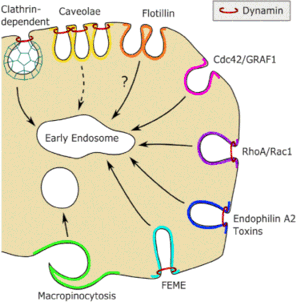
- of new types of NPs, there is a knowledge gap when it comes to our understanding of the interaction of NPs with both cells and tissues. However, it is well known that NP properties, such as surface charge, size, and the material they are composed of can affect cellular uptake, biodistribution, and


Atomistic insights into the morphological dynamics of gold and platinum nanoparticles: MD simulations in vacuum and aqueous media
Beilstein J. Nanotechnol. 2024, 15, 995–1009, doi:10.3762/bjnano.15.81
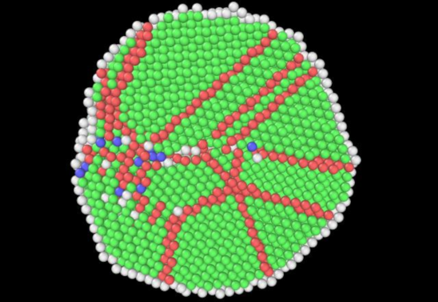
- and 8 nm is noted. Nevertheless, the gap between the NP with 8 nm diameter and the bulk material is large enough to suggest that finite-size effects as well as geometrical deviations from a flat surface are strong for the considered diameters. With the knowledge of the coordination number and the


Recent progress on field-effect transistor-based biosensors: device perspective
Beilstein J. Nanotechnol. 2024, 15, 977–994, doi:10.3762/bjnano.15.80
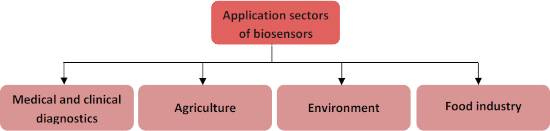
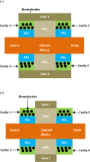
- is known as dielectric modulation, where a nanoscale gap cavity is introduced in either the gate metal or gate insulator region. The biomolecules are immobilized in this cavity region functionalized with bioreceptor elements, where the presence of the specific target biomolecule alters the effective




A review on the structural characterization of nanomaterials for nano-QSAR models
Beilstein J. Nanotechnol. 2024, 15, 854–866, doi:10.3762/bjnano.15.71
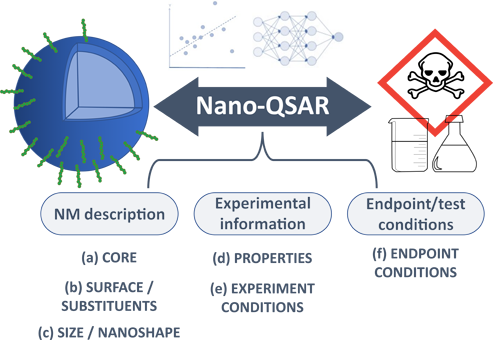
- , area and volume of the cluster, energies of HOMO and LUMO orbitals and the gap between them, and lattice energies [22][26]. The energy levels of conduction and valence bands, which are found commonly among the most important parameters, can be calculated from QM models or derived from other simple


Green synthesis of biomass-derived carbon quantum dots for photocatalytic degradation of methylene blue
Beilstein J. Nanotechnol. 2024, 15, 755–766, doi:10.3762/bjnano.15.63
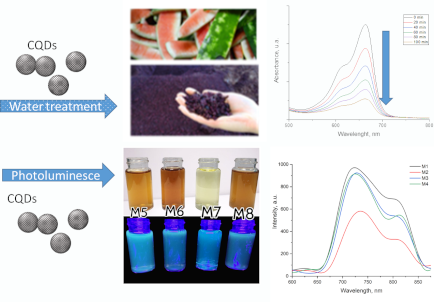
- exposed to the sunlight in comparison with their performance under incandescent lamp. It is commonly known that the sunlight emission spectrum presents a higher intensity at the ultraviolet range if compared to that of the tungsten lamp. Considering the band gap of the CQDs, we can affirm that sunlight


Elastic modulus of β-Ga2O3 nanowires measured by resonance and three-point bending techniques
Beilstein J. Nanotechnol. 2024, 15, 704–712, doi:10.3762/bjnano.15.58
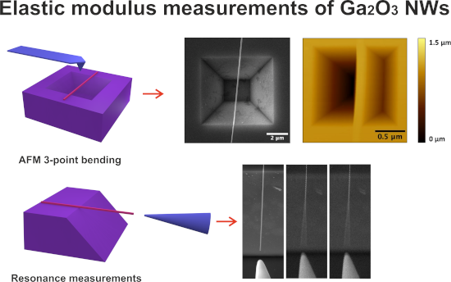
- ; Introduction Significant advancements in both material and device technologies related to monoclinic gallium oxide (β-Ga2O3) have been achieved in the current decade [1][2]. Recently, attention has been directed towards it due to its outstanding properties [3] such as ultrawide band gap (4.4–4.9 eV) and


Enhancing higher-order modal response in multifrequency atomic force microscopy with a coupled cantilever system
Beilstein J. Nanotechnol. 2024, 15, 694–703, doi:10.3762/bjnano.15.57
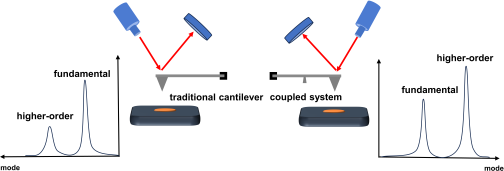
- amplitude of the traditional cantilever (3.03 × 10⁻⁴ mm). The gap between the responses of the third- and higher-order modes is even bigger. These findings provide valuable insights into the different modal responses between the coupled system and the traditional cantilever. Additionally, it can be observed


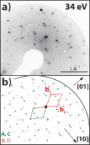
Directed growth of quinacridone chains on the vicinal Ag(35 1 1) surface
Beilstein J. Nanotechnol. 2024, 15, 556–568, doi:10.3762/bjnano.15.48
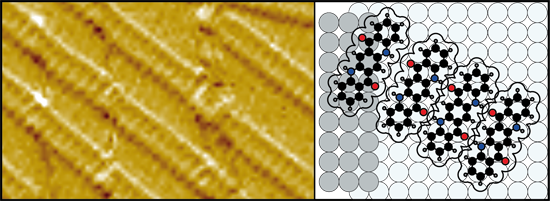
- . For a coverage of 0.8 ML, this occurs in about 90% of all cases when a QA chain reaches a Ag step edge. At lower coverages, this phenomenon is less likely (at 0.45 ML only about 70%). When QA chains continue across the step, in about 50% of all cases a visible gap or break in the chain (discontinuity
- continues in an undistorted structure. In the alternative case, a small gap between the two molecules close to the step is formed. New step-induced orientation Another interesting observation is that, on Ag(35 1 1), a fifth azimuthal orientation exists, which is parallel to the Ag step edges. This
- positions of the step edges. (c) Models of chain growth at Ag step edges. These illustrate that the chains that nucleated on the lower terrace may statistically end in two positions with respect to the step edge. The left-hand side shows the case where the gap between the molecules on the upper and lower


Cholesterol nanoarchaeosomes for alendronate targeted delivery as an anti-endothelial dysfunction agent
Beilstein J. Nanotechnol. 2024, 15, 517–534, doi:10.3762/bjnano.15.46
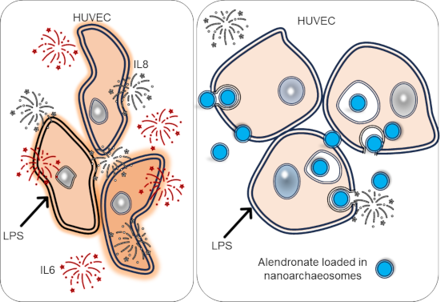
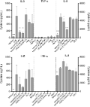
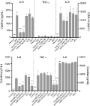
- tyrosine phosphorylation, actin depolymerization, and gap formation on the actin cytoskeleton [64]. However, the most important finding reported here is that nanoARC-Chol(ALN) was the only formulation capable of reducing the secretion of IL-6 and IL-8 by HUVECs, not only in the mild but also in the





On the mechanism of piezoresistance in nanocrystalline graphite
Beilstein J. Nanotechnol. 2024, 15, 376–384, doi:10.3762/bjnano.15.34
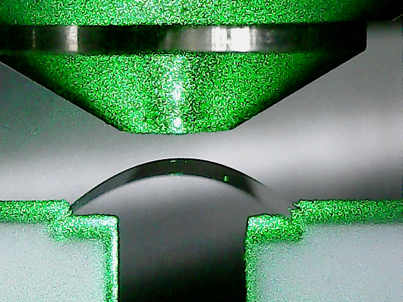
- resistance. However, the theoretical modeling shows that the modulation of the transport gap under strain is sensitive to the degree of asymmetry of the grain boundaries. While the symmetric grain boundaries remain metallic in the presence of uniaxial strain, the transport gap of the asymmetric


Controllable physicochemical properties of WOx thin films grown under glancing angle
Beilstein J. Nanotechnol. 2024, 15, 350–359, doi:10.3762/bjnano.15.31
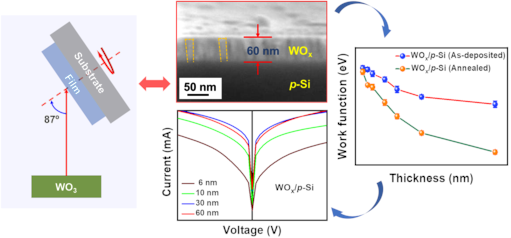
- within the forbidden gap. These states lead to a reduction in bandgap energy and an upward shift of the Fermi level [41][42]. This is the reason behind the observed reduction in bandgap with higher thicknesses (Figure 2b,c) [43]. To probe the Fermi level position, KPFM is a useful tool to acquire
- regarded as an interlayer between the p-Si substrate and the Ag electrode. The glancing angle (87°) growth of a 6 nm film is likely to sustain a large number of metal (Ag)-induced gap states at the NS-WOx/p-Si interface, leading to Fermi level pinning, the degree of pinning being directly related to film
- post-growth annealing in vacuum of NS-WOx/p-Si samples generates an enhanced OV concentration (as observed from the XPS analysis) in the WOx films, which eventually contributes to a higher number of gap states within the film as well as at the WOx/p-Si interface. Since the Fermi level pinning becomes




Investigating structural and electronic properties of neutral zinc clusters: a G0W0 and G0W0Г0(1) benchmark
Beilstein J. Nanotechnol. 2024, 15, 310–316, doi:10.3762/bjnano.15.28

- . The electron affinity is taken as the negative of the LUMO level. The results are presented along with energy gap (Egap) and hardness in Table 1. Our estimated EAs for Zn clusters are close to those obtained by Dai et al. [28], who also predicted high electron affinities of the cluster Zn9. The
- trend, which follows the behavior of metallic bandgaps. One exception is the zinc dimer, for which our bandgap from calculations is relatively high, which may be attributed to the van der Waals forces. The HOMO–LUMO gap trend shows that, at larger sizes, the behavior of the cluster becomes close to
- that of the bulk material, that is, the HOMO–LUMO gap decreases. As seen in Figure 4, the bandgap values obtained from GW calculations are far from the bulk limit of metals. In our work, the HOMO–LUMO gap decreases from ca. 8.5 eV to approximately 3.5 eV, but it is still sizable compared with the bulk


![[Graphic 14]](/bjnano/content/inline/2190-4286-15-28-i15.svg?max-width=637&scale=1.18182)
Exploring the relationships between physiochemical properties of nanoparticles and cell damage to combat cancer growth using simple periodic table-based descriptors
Beilstein J. Nanotechnol. 2024, 15, 297–309, doi:10.3762/bjnano.15.27
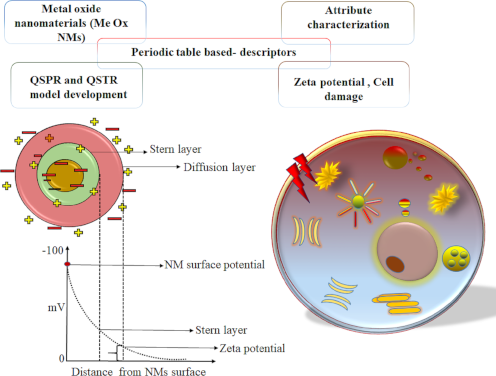
- defining the cell damage. On removal of zeta potential as a descriptor, the model quality decreases. Predictions from one model as a descriptor for another model are made to fill the data gap or to determine the missing values. This approach is similar to the imputation methodology, which creates a model
- data gap. Chemical read-across analysis The developed QSPR (PLS) model for dataset 2 provided eight descriptors that were utilized for read-across predictions. Three similarity-based prediction methods, namely Euclidean distance (ED)-based, Gaussian kernel (GK) similarity-based, and Laplacian kernel


Determining by Raman spectroscopy the average thickness and N-layer-specific surface coverages of MoS2 thin films with domains much smaller than the laser spot size
Beilstein J. Nanotechnol. 2024, 15, 279–296, doi:10.3762/bjnano.15.26
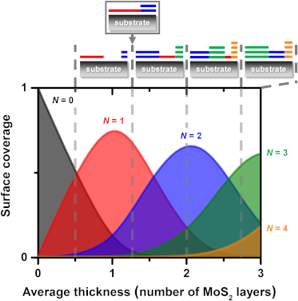
- dependence of the A2D(Si)/A0(Si) ratio, its dependence on SiO2 thickness combined with experimental errors lead to the conclusion that the measured values for N and N + 1 can overlap for any N if the SiO2 thickness is not known with good accuracy. For a given SiO2 thickness, the gap between the A2D(Si)/A0(Si
- would be close in twisted and 2Hc-stacked MoS2 multilayers. However, as previously recalled, the sensitivity of this ratio to the SiO2 thickness and the gap between the A2D(Si)/A0(Si) ratios for N and N + 1 permit to ensure the determination of N with a rather good reliability only for N ≤ 5. DLI-PP-CVD


Design, fabrication, and characterization of kinetic-inductive force sensors for scanning probe applications
Beilstein J. Nanotechnol. 2024, 15, 242–255, doi:10.3762/bjnano.15.23
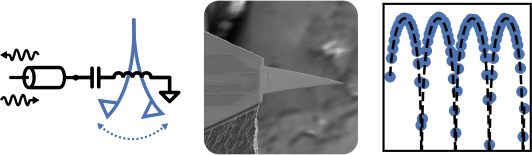
- less than the London penetration depth to the normal-state sheet resistance R□ and the superconducting energy gap Δ0. For a conductor of length ℓ and width w, the kinetic inductance is where Lk,□ is the kinetic inductance per square. From Equation 4, we require a superconducting film with large normal
- -ion etch (RIE) process in a Plasmapro 100 ICP300 from Oxford Instruments, with an etch rate of roughly 8 nm/min. (e) Fine circuit pattern. Electron-beam lithography defines the finer structures, such as the meandering nanowire inductor, the shunt inductor, and the interdigital gap of the capacitor. We
- temperature Tc = 9.6 K, from which we estimate the superconducting energy gap with the BCS relation Δ0 = 1.76kBTc = 1.46 meV. Using Equation 4, we find a kinetic inductance per square Lk,□ = 35 pH/□ for the 200 nm wide nanowires, corresponding to a kinetic inductance per unit length Lk/ℓ = 175 pH/μm. We

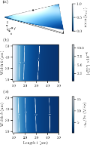


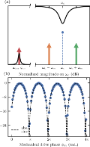
Exploring disorder correlations in superconducting systems: spectroscopic insights and matrix element effects
Beilstein J. Nanotechnol. 2024, 15, 199–206, doi:10.3762/bjnano.15.19
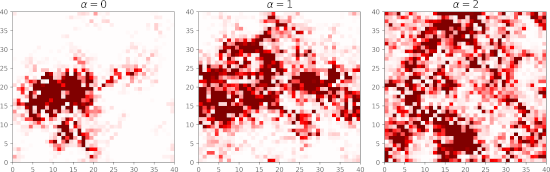
- disordered amorphous superconductors [50] revealed that in the regime of superconductor–insulator transition the superconducting gap is stable, whereas the coherence peaks in the single-particle density of states (DOS) disappear. Following this observation, it was suggested that the system exhibits
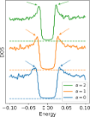
- analysis. The quasi-particle DOS is determined by the following expression: This quantity is ensemble-averaged over various realizations of the disorder potential, as illustrated in Figure 1 for three specific values of the correlation degree, α = 0, 1, and 2. The figure clearly indicates that both the gap
- and the two coherence peaks at its edges depend on α. Notably, the gap exhibits a discernible reduction with increasing α. In the case of uncorrelated disorder with α = 0, the gap is approximately 80% larger compared to the scenario with α = 2. Simultaneously, the coherence peaks gradually vanish with


CdSe/ZnS quantum dots as a booster in the active layer of distributed ternary organic photovoltaics
Beilstein J. Nanotechnol. 2024, 15, 144–156, doi:10.3762/bjnano.15.14
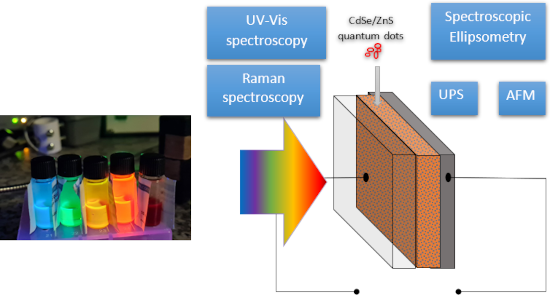
- -transporting layers [24], active absorbing layers, and other components [25][26]. Inorganic quantum dots are considered substitutes for fullerene acceptors. Their biggest advantages are a tunable band gap, various absorption spectra, and comparatively high mobility of carriers [27][28]. The application of
- : The imaginary part function is described by: where Eg is the band gap of the material, E0 is the peak in the joint density of states, Θ is the Heaviside theta function, Γ is the broadening parameter, and A is a prefactor. The refractive indices and extinction coefficients as functions of the
- , QD520, QD580, QD600, and QD640, respectively. According to Hummon et al. [52] the CdSe valence-band edge was determined to be −6.8 eV, from thin-film UPS and photoluminescence measurements. The CdSe conduction-band edge was determined by the photonic band gap (2.0–4.8 eV). The valence- and conduction