Search results
Search for "technology" in Full Text gives 1467 result(s) in Beilstein Journal of Nanotechnology. Showing first 200.
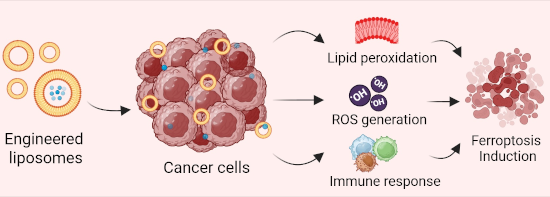
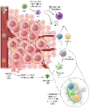
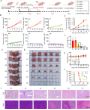
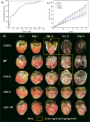
Ferroptosis induction by engineered liposomes for enhanced tumor therapy
Beilstein J. Nanotechnol. 2025, 16, 1325–1349, doi:10.3762/bjnano.16.97
- Biomedical Technology, The Personalized Medicine Research Institute (PRECISION), University Medical Center Groningen, University of Groningen, 9713 AV Groningen, The Netherlands Department of Immunology, Faculty of Medicine, Mashhad University of Medical Sciences, Mashhad, Iran 10.3762/bjnano.16.97 Abstract
- is defined by irregularities in the processes that control cell division, leading to the survival and rapid spread of cancerous cells. Despite significant advances in medical science and technology, cancer is still a disease with limited therapeutic options. Metastasis and recurrence of cancer lead
- method for clinical liposome formulations is the thin film hydration/Bangham technique [113]. DepoFoam liposome technology utilizes a proprietary liposome formulation that can be administered by injection and provides sustained release of the encapsulated drug over an extended period. DepoFoam liposomes


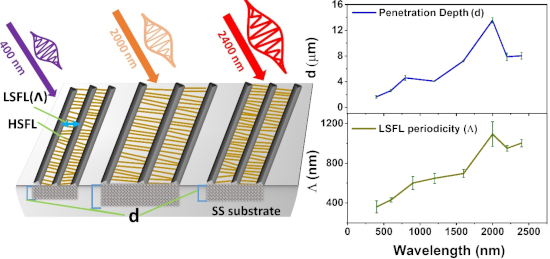
Wavelength-dependent correlation of LIPSS periodicity and laser penetration depth in stainless steel
Beilstein J. Nanotechnol. 2025, 16, 1302–1315, doi:10.3762/bjnano.16.95
- Nitin Chaudhary Chavan Akash Naik Shilpa Mangalassery Jai Prakash Gautam Sri Ram Gopal Naraharisetty School of Physics, University of Hyderabad, Gachibowli, Hyderabad, 500046, India School of Engineering Sciences and Technology, University of Hyderabad, 500046, India 10.3762/bjnano.16.95 Abstract




Enhancing the photoelectrochemical performance of BiOI-derived BiVO4 films by controlled-intensity current electrodeposition
Beilstein J. Nanotechnol. 2025, 16, 1289–1301, doi:10.3762/bjnano.16.94
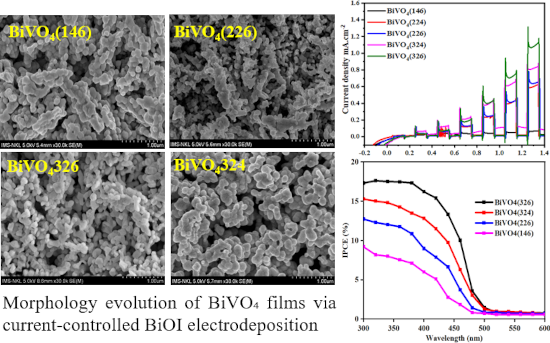
- renewable and sustainable energy sources has become a top priority in science and technology [1][2]. Photoelectrochemical (PEC) water-splitting systems hold significant promises for converting abundant solar energy into chemical fuels, such as hydrogen [3][4]. However, their widespread application is still



Acrocomia aculeata oil-loaded nanoemulsion: development, anti-inflammatory properties, and cytotoxicity evaluation
Beilstein J. Nanotechnol. 2025, 16, 1277–1288, doi:10.3762/bjnano.16.93
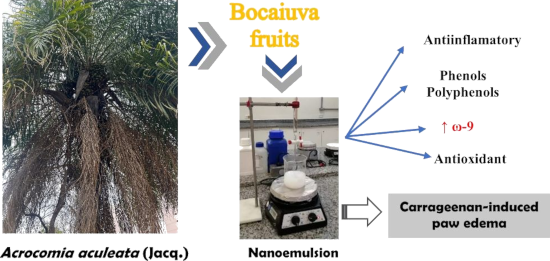
- , Federal University of Mato Grosso do Sul, Av. Costa e Silva s/n, 79070-900, Campo Grande-MS, Brazil Laboratory of Pharmaceutical Technology, Federal University of Mato Grosso do Sul, Av. Costa e Silva, s/n, 79070-900, Campo Grande-MS, Brazil Laboratory of Pharmacology and Inflammation, Federal University


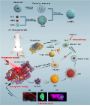
Better together: biomimetic nanomedicines for high performance tumor therapy
Beilstein J. Nanotechnol. 2025, 16, 1246–1276, doi:10.3762/bjnano.16.92
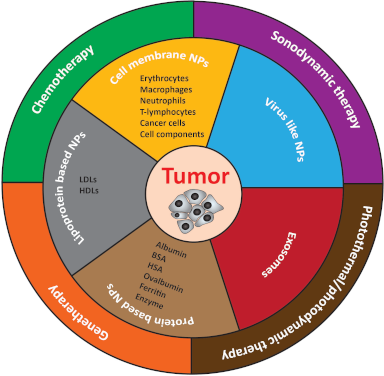
- “disassembly–reassembly” technology to obtain reconstituted RBCs (rRBCs) for a membrane-coated delivery platform. It was found that the rRBC membrane improved stability, circulation time, and immune escape after removing the endogenous proteins and lipids on the membrane. After synthesizing biomimetic rRBC







Functional bio-packaging enhanced with nanocellulose from rice straw and cinnamon essential oil Pickering emulsion for fruit preservation
Beilstein J. Nanotechnol. 2025, 16, 1234–1245, doi:10.3762/bjnano.16.91
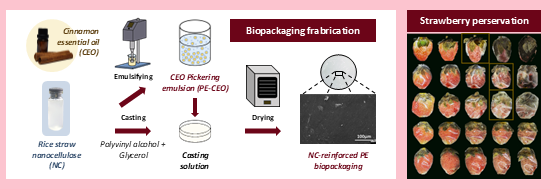
- Tuyen B. Ly Duong D. T. Nguyen Hieu D. Nguyen Yen T. H. Nguyen Bup T. A. Bui Kien A. Le Phung K. Le Institute for Tropical Technology and Environmental Protection, Ho Chi Minh City, Vietnam Faculty of Chemical Engineering, Ho Chi Minh City University of Technology (HCMUT), VNU-HCM, Ho Chi Minh
- %, and 10% (v/w)). Acknowledgements We acknowledge the support from HUTECH University and Institute for Tropical Technology and Environmental Protection for this study.


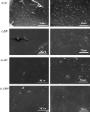

Chitosan nanocomposite containing rotenoids: an alternative bioinsecticidal approach for the management of Aedes aegypti
Beilstein J. Nanotechnol. 2025, 16, 1197–1208, doi:10.3762/bjnano.16.88
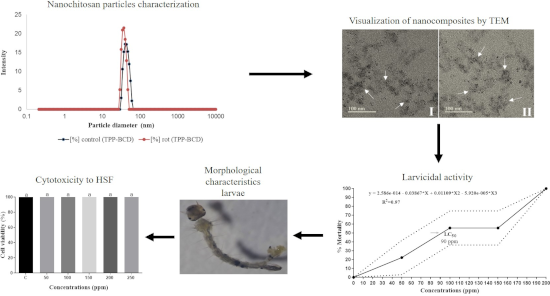
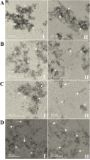
- offering a promising alternative, this technology directly contributes to preventing diseases such as dengue, zika, and chikungunya. Results and Discussion Two rotenoids, identified as 11α-O-β-ᴅ-glucopyranosylrotenoid (CFD – RI) and 6-deoxyclitoriacetal O-β-ᴅ-glucopyranoside (CFD – RII), were previously



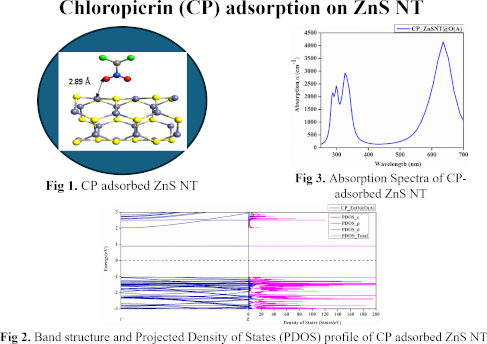
Electronic and optical properties of chloropicrin adsorbed ZnS nanotubes: first principle analysis
Beilstein J. Nanotechnol. 2025, 16, 1184–1196, doi:10.3762/bjnano.16.87
- Prakash Yadav Boddepalli SanthiBhushan Anurag Srivastava Advanced Material Research Group, Department of Engineering Sciences, ABV-Indian Institute of Information Technology and Management, Gwalior, MP-474015, India Department of Electronics and Communication Engineering, Indian Institute of
- Information Technology, Allahabad, UP-211015, India 10.3762/bjnano.16.87 Abstract Zinc sulfide nanotubes have garnered significant attention as potential candidates for chemical sensing applications owing to their exceptional structural, electronic, and optical properties. In this study, we employed density
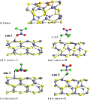
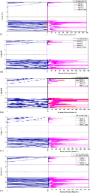
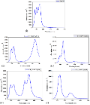
- orientations A, B, C, and D, respectively. Comparison of sensing response and recovery time with previous works. Acknowledgements The authors express their gratitude to the Atal Bihari Vajpayee - Indian Institute of Information Technology and Management (ABV-IIITM) Gwalior for providing the infrastructural



Transfer function of an asymmetric superconducting Gauss neuron
Beilstein J. Nanotechnol. 2025, 16, 1160–1170, doi:10.3762/bjnano.16.85
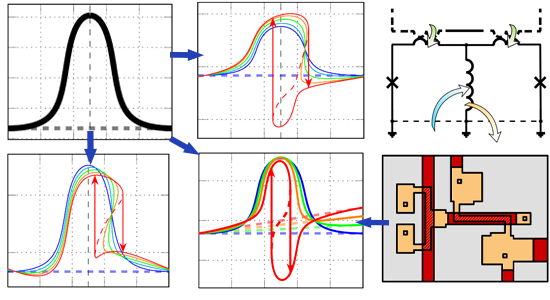
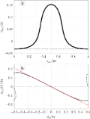
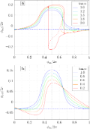
- and Technology, 9 Institutskiy per., Dolgoprudny, Moscow Region, 141701, Russian Federation Joint Venture Quantum Technologies, 121205, Moscow, Russian Federation 10.3762/bjnano.16.85 Abstract The Gauss neuron is a nonlinear signal converter, whose transfer function (TF) is described by the
- 31–33 were obtained by postgraduate students of the Moscow Institute of Physics and Technology (National Research University) A.S. Ionin and F.A. Razorenov within their practical training program. Equation 15, Equation 16 and Figure 2b were obtained as a part of A.S. Ionin’s collaboration with “Joint



Influence of ion beam current on the structural, optical, and mechanical properties of TiO2 coatings: ion beam-assisted vs conventional electron beam evaporation
Beilstein J. Nanotechnol. 2025, 16, 1097–1112, doi:10.3762/bjnano.16.81
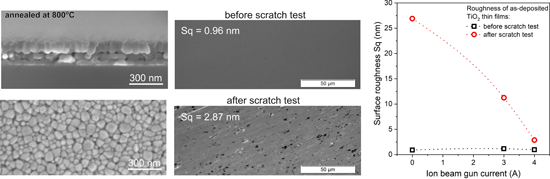
- Agata Obstarczyk Urszula Wawrzaszek Wroclaw University of Science & Technology, Faculty of Electronics, Photonics and Microsystems, Janiszewskiego 11/17, 50-372 Wroclaw, Poland 10.3762/bjnano.16.81 Abstract In this paper, comparative studies of selected properties of titanium dioxide (TiO2
- Professor Jarosław Domaradzki from Wrocław University of Science and Technology for their support in thin films manufacturing and their characterization and the valuable discussion and constructive feedback regarding the analysis and interpretation of the investigation results. Funding This work was co
- -financed from the sources given by the Polish Ministry of Education and Science under subsidy for Department of Electronic and Photonic Metrology K31/W12N at Wrocław University of Science and Technology.




Single-layer graphene oxide film grown on α-Al2O3(0001) for use as an adsorbent
Beilstein J. Nanotechnol. 2025, 16, 1082–1087, doi:10.3762/bjnano.16.79
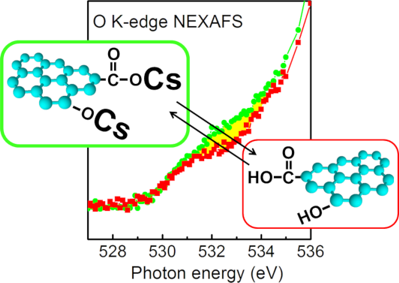
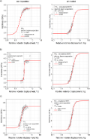
- Shiro Entani Mitsunori Honda Masaru Takizawa Makoto Kohda Quantum Materials and Applications Research Center, National Institutes for Quantum Science and Technology, Takasaki, Gunma 370-1292, Japan Honda’s Lab for Development of Future Clay Materials Research, Japan Atomic Energy Agency, Tokai


Soft materials nanoarchitectonics: liquid crystals, polymers, gels, biomaterials, and others
Beilstein J. Nanotechnol. 2025, 16, 1025–1067, doi:10.3762/bjnano.16.77
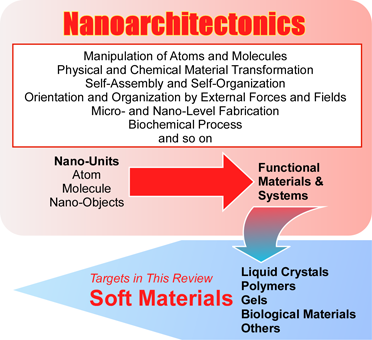
- such as self-assembled monolayers (SAMs) [75][76][77][78][79], Langmuir–Blodgett (LB) method [80][81][82][83][84], and layer-by-layer (LbL) assembly [85][86][87][88][89]. The science and technology of creating and structuring soft materials has advanced in parallel with the growing demand for the
- construction of functional materials from nanoscale units using a variety of materials processes (Figure 1) [125]. It is evident that the integration of knowledge and technology from both nanotechnology and materials sciences is imperative. Nanoarchitectonics may be regarded as a convergence of nanotechnology






Multifunctional properties of bio-poly(butylene succinate) reinforced with multiwalled carbon nanotubes
Beilstein J. Nanotechnol. 2025, 16, 1014–1024, doi:10.3762/bjnano.16.76
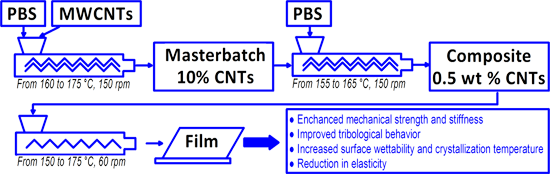
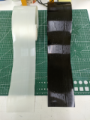
- , Masiarska 74 St., 04001 Košice, Slovakia Department of Mechanical Engineering, University of West Attica, 250 Thivon & P. Ralli, Egaleo 12241, Athens, Greece 10.3762/bjnano.16.76 Abstract Recent advances in nanocomposite technology, particularly the incorporation of carbon nanotubes, have shown promise in



Time-resolved probing of laser-induced nanostructuring processes in liquids
Beilstein J. Nanotechnol. 2025, 16, 968–1002, doi:10.3762/bjnano.16.74
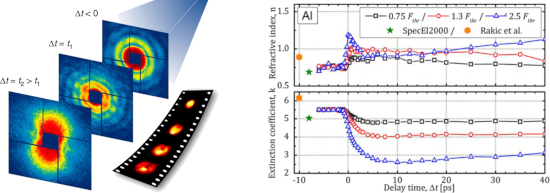
- Institute of Technology (KIT), Postfach 3640, D-76021 Karlsruhe, Germany 10.3762/bjnano.16.74 Abstract Laser synthesis and processing of colloids (LSPC) in liquids has gained widespread applications in producing nanomaterials of different classes of solids. While the technical processes in different cases


Shape, membrane morphology, and morphodynamic response of metabolically active human mitochondria revealed by scanning ion conductance microscopy
Beilstein J. Nanotechnol. 2025, 16, 951–967, doi:10.3762/bjnano.16.73
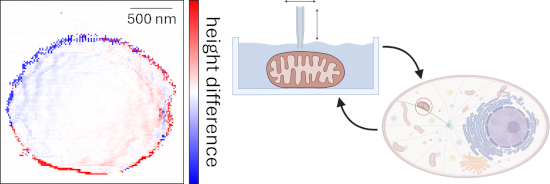
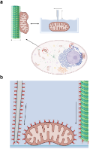
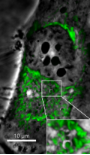
- nitrogen cavitation or mechanochemical method were performed as described in [21]. The following primary antibodies were used: anti-VDAC (1:500) (OriGene Technologies, Inc., USA), anti-GAPDH (1:1000) (Cell Signaling Technology, USA), and Total OXPHOS Rodent WB Antibody Cocktail (1:250) (Abcam, UK
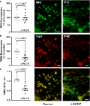
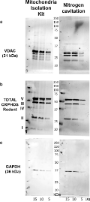
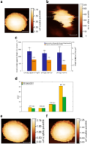

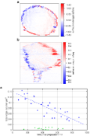


Tendency in tip polarity changes in non-contact atomic force microscopy imaging on a fluorite surface
Beilstein J. Nanotechnol. 2025, 16, 944–950, doi:10.3762/bjnano.16.72
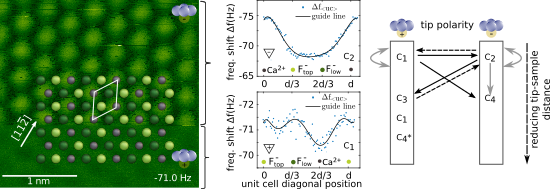
- . The sample was prepared in situ by first degassing a p-type Si (B-doped) sample (Institute of Electronic Materials Technology, Warsaw, Poland) for several hours after introduction into the vacuum. Second, the Si(111)-(7 × 7) termination was formed by flash annealing cycles. Third, CaF2 material (99.9


Synthesis of biowaste-derived carbon-dot-mediated silver nanoparticles and the evaluation of electrochemical properties for supercapacitor electrodes
Beilstein J. Nanotechnol. 2025, 16, 933–943, doi:10.3762/bjnano.16.71
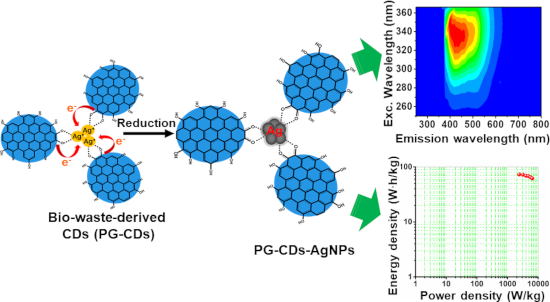
- Navya Kumari Tenkayala Chandan Kumar Maity Md Moniruzzaman Subramani Devaraju Department of Chemistry, Vignan Foundation for Science, Technology and Research (Deemed to be University), Guntur, 522213, India Department of Chemistry, Mallareddy college of Engineering and Technology, Maisammaguda


Focused ion beam-induced platinum deposition with a low-temperature cesium ion source
Beilstein J. Nanotechnol. 2025, 16, 910–920, doi:10.3762/bjnano.16.69
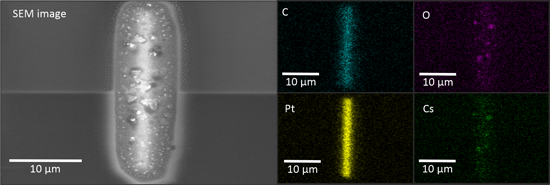
- and Application Center (SUNUM), 34956, Istanbul, Turkey Department of Applied Physics, Eindhoven University of Technology, P.O. Box 513, 5600 MB Eindhoven, The Netherlands 10.3762/bjnano.16.69 Abstract In addition to precise milling, the deposition of material at a specific location on a sample


Characterization of ion track-etched conical nanopores in thermal and PECVD SiO2 using small angle X-ray scattering
Beilstein J. Nanotechnol. 2025, 16, 899–909, doi:10.3762/bjnano.16.68
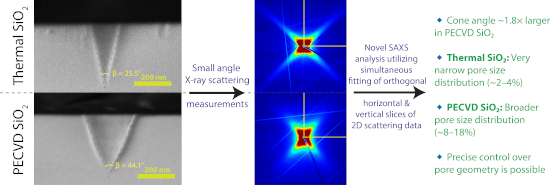
- the track-etch technology in a number of different materials [39][29]. This method involves irradiating the material with swift heavy ions to create long and narrow damaged regions along the paths of the ions known as “ion tracks”. These ion tracks are more susceptible to chemical etching compared to
- , and the type and energy of the ions used [13][29][40]. Track-etch technology has been used for the commercial fabrication of cylindrical nanopores in polymers for filtration applications [41][42][43][44][45][46]. Only recently we have adapted this technology to generate conical nanopores in silicon


Ar+ implantation-induced tailoring of RF-sputtered ZnO films: structural, morphological, and optical properties
Beilstein J. Nanotechnol. 2025, 16, 872–886, doi:10.3762/bjnano.16.66
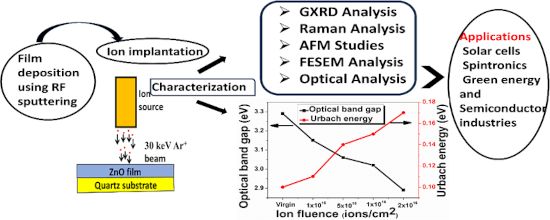
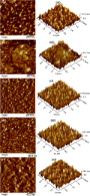
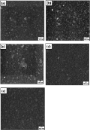
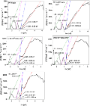
- fluence. Variation in grain size and RMS roughness of pristine and implanted ZnO films. EDS analysis of the pristine ZnO film and the film with the highest implanted dose. Funding The authors are thankful to the Department of Science and Technology (DST), New Delhi, for providing financial support to






Insights into the electronic and atomic structures of cerium oxide-based ultrathin films and nanostructures using high-brilliance light sources
Beilstein J. Nanotechnol. 2025, 16, 860–871, doi:10.3762/bjnano.16.65
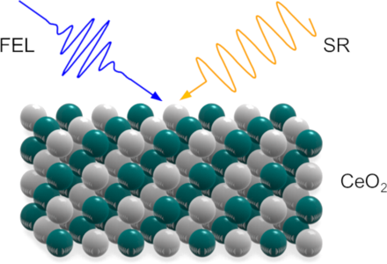
- written in the framework of the Italian Ministry of Foreign Affairs and International Cooperation (MAECI) funded project “Ultrafast Dynamics in Materials for Energy Conversion (U-DYNAMEC)” under the program 2023 Italy – Germany Science and Technology Cooperation. Funding Financial support from the Italian
- Ministry of Foreign Affairs and International Cooperation (MAECI) funded project “Ultrafast Dynamics in Materials for Energy Conversion (U-DYNAMEC)” under the program 2023 Italy – Germany Science and Technology Cooperation is acknowledged.


Facile one-step radio frequency magnetron sputtering of Ni/NiO on stainless steel for an efficient electrode for hydrogen evolution reaction
Beilstein J. Nanotechnol. 2025, 16, 837–846, doi:10.3762/bjnano.16.63
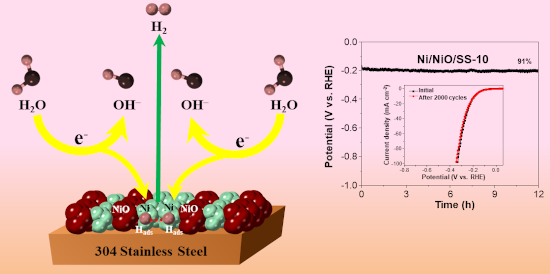
- Ha Huu Do Khac Binh Nguyen Phuong N. Nguyen Hoai Phuong Pham NTT Hi-Tech Institute, Nguyen Tat Thanh University, Ho Chi Minh City 700000, Vietnam Institute of Applied Materials Science, Vietnam Academy of Science and Technology (VAST), 29TL Street, Ward Thanh Loc, District 12, Ho Chi Minh City
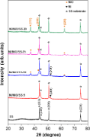


Synthesis and magnetic transitions of rare-earth-free Fe–Mn–Ni–Si-based compositionally complex alloys at bulk and nanoscale
Beilstein J. Nanotechnol. 2025, 16, 823–836, doi:10.3762/bjnano.16.62
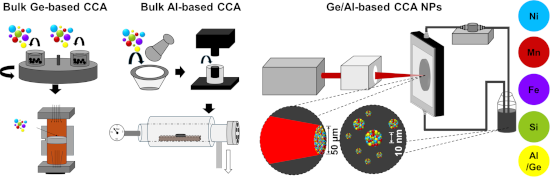
- magnetocaloric refrigeration, magnetic sensors, and actuators, but the reliance on costly, scarce rare-earth materials limits sustainability. Developing affordable, rare-earth-free materials with tunable magnetic properties and scalable miniaturization methods is vital for advancing technology. We present a


Supramolecular hydration structure of graphene-based hydrogels: density functional theory, green chemistry and interface application
Beilstein J. Nanotechnol. 2025, 16, 806–822, doi:10.3762/bjnano.16.61
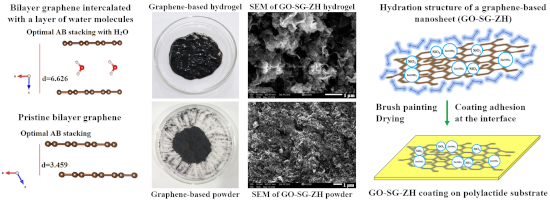
- Hon Nhien Le Duy Khanh Nguyen Minh Triet Dang Huyen Trinh Nguyen Thi Bang Tam Dao Trung Do Nguyen Chi Nhan Ha Thuc Van Hieu Le Faculty of Materials Science and Technology, University of Science, Ho Chi Minh City, 700000, Vietnam Vietnam National University, Ho Chi Minh City, 700000, Vietnam
- Laboratory for Computational Physics, Institute for Computational Science and Artificial Intelligence, Van Lang University, Ho Chi Minh City, 700000, Vietnam Faculty of Mechanical – Electrical and Computer Engineering, School of Technology, Van Lang University, Ho Chi Minh City, 700000, Vietnam School of
- using the method reported in our previous paper [14][26]. Measurement of tensile properties was conducted using a universal tensile testing machine (Yang Yi Technology, 500-N load cell) and the ASTM D882-18 standard [14][27]. Results and Discussion Density functional theory calculations of intersheet


Morphology and properties of pyrite nanoparticles obtained by pulsed laser ablation in liquid and thin films for photodetection
Beilstein J. Nanotechnol. 2025, 16, 785–805, doi:10.3762/bjnano.16.60
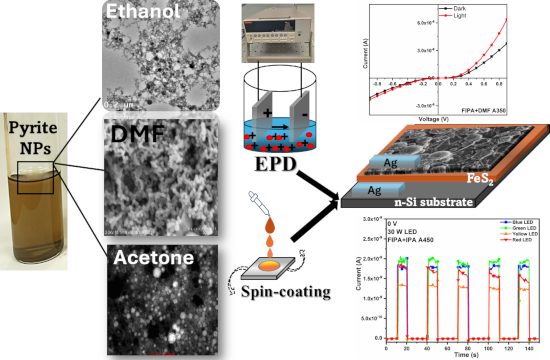
- downsizing, and low power consumption, self-powered photodetectors, which have numerous uses in the military, civilian purposes, and notably those related to green technology and flexible electronics have been increasingly popular in recent years [33][62]. This greatly interested us in this area and