


Search results
Search for "adhesive" in Full Text gives 246 result(s) in Beilstein Journal of Nanotechnology. Showing first 200.
Nanoporous water oxidation electrodes with a low loading of laser-deposited Ru/C exhibit enhanced corrosion stability
Beilstein J. Nanotechnol. 2019, 10, 157–167, doi:10.3762/bjnano.10.15
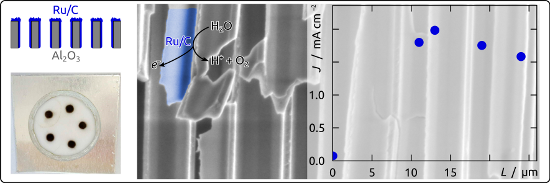
- deposition areas were laser-cut and subsequently glued with the ITO contact on small copper plates using double-sided conductive copper foil. A chemically resistant and electrically insulating polyimide (Kapton®) adhesive tape featuring a laser-cut circular window of 1.5 mm diameter was used to define the


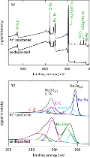


Wet chemistry route for the decoration of carbon nanotubes with iron oxide nanoparticles for gas sensing
Beilstein J. Nanotechnol. 2019, 10, 105–118, doi:10.3762/bjnano.10.10
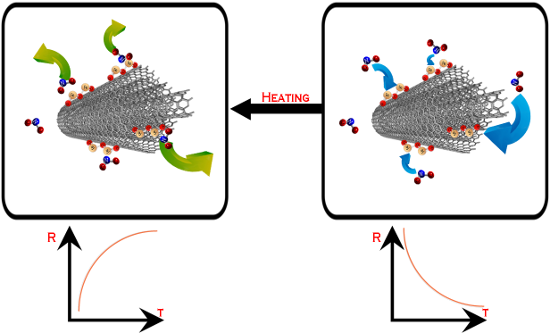
- delimitate the area where the CNTs were deposited, a shadow mask of adhesive Kapton was used. This second approach leads to thinner active layers. The differences in the results for both approaches can be seen in the Supporting Information File 1 (Figure S1). After the previous steps, heaters and the CNT




Pull-off and friction forces of micropatterned elastomers on soft substrates: the effects of pattern length scale and stiffness
Beilstein J. Nanotechnol. 2019, 10, 79–94, doi:10.3762/bjnano.10.8
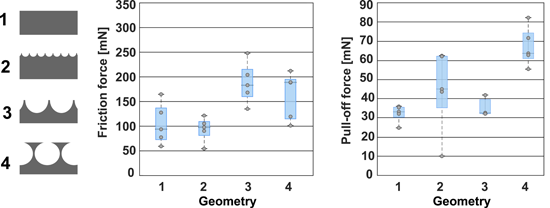
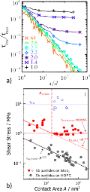
- substrate between the dimples. Keywords: adhesion; biomimetic micropatterned adhesive; colloidal lithography; friction; pull-off; soft substrate; Introduction Pull-off and friction forces of micropatterned adhesives as a function of geometry, feature size, and stiffness Over the last few decades
- between the adhesive and the substrate, in the form of intermolecular forces, capillary forces, and suction forces. To achieve intimate contact between the adhesive and the substrate, researchers have been designing micropatterned adhesives with a low effective elastic modulus Eeff [6]. For example, micro
- features on different length scales, conform to substrate roughness on different length scales, increasing pull-off and friction forces [21]. Besides geometry and feature size, the Eeff of adhesive micropatterns also relates to the stiffness of the material the micropattern is made of [6]. When a soft





A comparison of tarsal morphology and traction force in the two burying beetles Nicrophorus nepalensis and Nicrophorus vespilloides (Coleoptera, Silphidae)
Beilstein J. Nanotechnol. 2019, 10, 47–61, doi:10.3762/bjnano.10.5

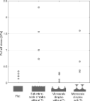
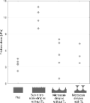
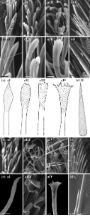
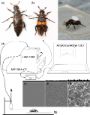
- , Hauptstr.1, 79104 Freiburg, Germany 10.3762/bjnano.10.5 Abstract Our aim was to compare friction and traction forces between two burying beetle species of the genus Nicrophorus exhibiting different attachment abilities during climbing. Specifically, the interaction of adhesive hairs and claws during
- clues concerning the mechanisms behind insect attachment. Although burying beetles appear not to be especially adapted to smooth and slippery plant surfaces, N. nepalensis is known as a ‘good climber’ [2] and both the investigated species exhibit, like other burying beetles [8], many tarsal adhesive
- reported that significantly reduce attachment, especially in hairy systems. The extent of the reduction in attachment success depends on the ratio between the size of the surface irregularities and that of both the claws and the adhesive hair tips; this ratio affects the close interlocking of the


Contact splitting in dry adhesion and friction: reducing the influence of roughness
Beilstein J. Nanotechnol. 2019, 10, 1–8, doi:10.3762/bjnano.10.1

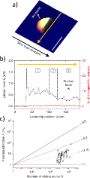
- been performed so far for thin-film-based adhesives. To this end, we report on the behavior of original and split, wall-shaped adhesive microstructures on different surfaces ranging across four orders of magnitude in roughness. Our results clearly demonstrate that the adhesion- and friction-driven
- decisive experimental validation of this hypothesis has been performed so far for thin-film-based adhesives. To this end, here we report the adhesive and frictional behavior of original and carefully split wall-shaped adhesive microstructures [36] on different surfaces ranging across four orders of
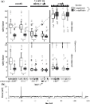
- magnitude in roughness. Results and Discussion Pull-off forces measured with original and split wall-shaped adhesive microstructures against different rough surfaces (Figure 1, see Experimental for details) are shown in Figure 2. The surfaces are represented using the traditional root-mean-square deviation


A new bioinspired method for pressure and flow sensing based on the underwater air-retaining surface of the backswimmer Notonecta
Beilstein J. Nanotechnol. 2018, 9, 3039–3047, doi:10.3762/bjnano.9.282

- adhesive pads [6] or the structural colors of Morpho menelaus [7]. Superhydrophobic surfaces are also important in the above context. Several plants and animals, which can maintain stable air layers while submerged (Salvinia effect [8]), have been analyzed. Especially the floating ferns of the genus
- high adhesive forces, in turn indicating that the pins became stuck inside the droplet. When the droplet lies on the surface, the clubs support the droplet and prevent surface wetting of the hemelytron (Figure 6b). The results so far suggest that Notonecta uses air layers in combination with




The effect of flexible joint-like elements on the adhesive performance of nature-inspired bent mushroom-like fibers
Beilstein J. Nanotechnol. 2018, 9, 2893–2905, doi:10.3762/bjnano.9.268
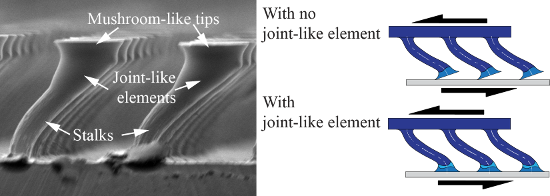
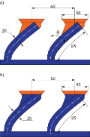
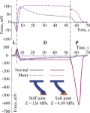
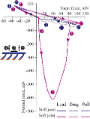
- particular, for male ladybird beetles, research has shown that the adhesive setae feature a material gradient such that the elastic modulus of the material at the junction between the stalk and the divergent distal end is close to minimum. This soft material acts like a flexible joint, improving the bending
- depending on the organism that bears them. They form an adhesive contact with the opposing surface, cumulatively providing a large enough force to support the organism’s body weight [3][4]. The strength of adhesion primarily depends on two quantities, the compliance of the fiber array as well as the number
- of fibers per unit area [5][6][7]. One important material property which influences these adhesive properties the most is the elastic modulus of the material forming the fibers [5]. For instance, in geckos, which utilize a hierarchical fiber structure ranging from millimeter-scale lamellae to






Near-infrared light harvesting of upconverting NaYF4:Yb3+/Er3+-based amorphous silicon solar cells investigated by an optical filter
Beilstein J. Nanotechnol. 2018, 9, 2788–2793, doi:10.3762/bjnano.9.260
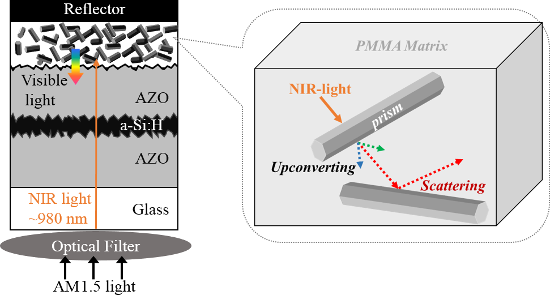
- material lies in NIR range, not deteriorating the visible light response of solar cells. Other important thing is that such upconverting materials with nanoscale dimensions can be easily re-dispersed into a binding/adhesive agent [10]. Because the upconverter is supposed to use the transmitted light, it


Optimization of Mo/Cr bilayer back contacts for thin-film solar cells
Beilstein J. Nanotechnol. 2018, 9, 2700–2707, doi:10.3762/bjnano.9.252
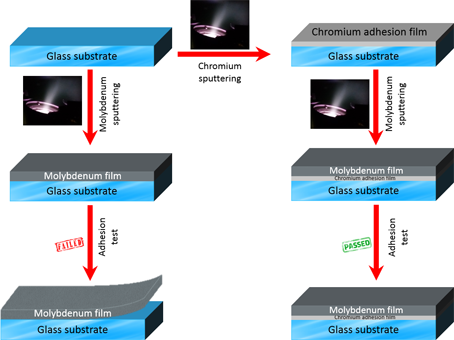
- influence of Cr on the properties of the back contact and on the total performance of the solar cell is still a subject of debate and some studies negatively correlates Cr with a low performance of the cell due to its diffusion in the absorber layer [31]. In this work we exploit the adhesive properties of


Friction reduction through biologically inspired scale-like laser surface textures
Beilstein J. Nanotechnol. 2018, 9, 2561–2572, doi:10.3762/bjnano.9.238
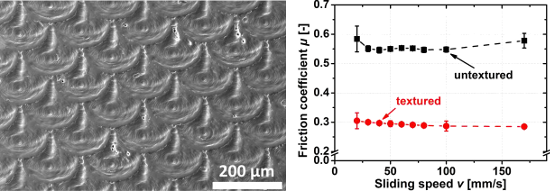
- detrimental effect by introducing a scale-like surface morphology for smaller sliding speeds was observed. Surface profilometry on the discs after the experiments revealed surface roughness values of Ra ≈ 250 nm, demonstrating that the discs became slightly rougher. Occasional signs of adhesive wear events


Evidence of friction reduction in laterally graded materials
Beilstein J. Nanotechnol. 2018, 9, 2443–2456, doi:10.3762/bjnano.9.229

- frictional and adhesive behaviour can also be achieved by exploiting a grading of the material properties. In this paper, we investigate this possibility by considering the frictional sliding of elastic surfaces in the presence of a spatial variation of the Young’s modulus and the local friction coefficients
- , display setae with a graded stiffness that optimises the adhesive performance on rough surfaces [1]. Hardness and stiffness gradients are of fundamental importance in the biomechanics of contacts, since they allow increased resistance against wear, impact, penetration and crack propagation [2][3][4][5][6


![[Graphic 5]](/bjnano/content/inline/2190-4286-9-229-i10.svg?max-width=637&scale=1.18182) as function of time for the non-graded material: SBM solution for dif...
as function of time for the non-graded material: SBM solution for dif...


Droplet-based synthesis of homogeneous magnetic iron oxide nanoparticles
Beilstein J. Nanotechnol. 2018, 9, 2413–2420, doi:10.3762/bjnano.9.226
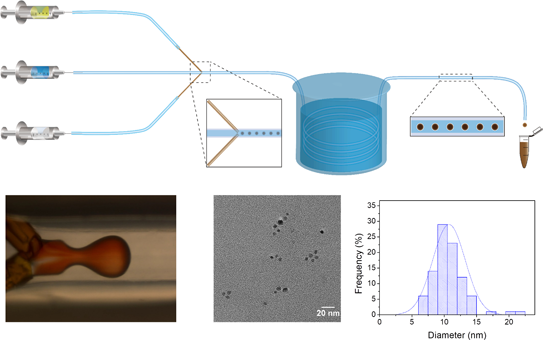
- of hot-melt adhesive. The remaining tubing after the junction was submerged in a water bath and the end was placed into a vial filled with water for sample collection. For droplet experiments the formation of droplets was recorded using a bright-field microscope (IX37, Olympus, Japan). Droplet


Adhesive contact of rough brushes
Beilstein J. Nanotechnol. 2018, 9, 2405–2412, doi:10.3762/bjnano.9.225
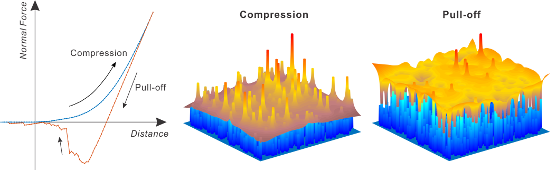
- Qiang Li Valentin L. Popov Berlin University of Technology, 10623 Berlin, Germany National Research Tomsk State University, 634050 Tomsk, Russia National Research Tomsk Polytechnic University, 634050 Tomsk, Russia 10.3762/bjnano.9.225 Abstract The adhesive contact between a rough brush-like
- gecko feet and structured biomimetic materials. For rigid brushes, the contact splitting does not enhance adhesion even if all pillars of the brush are positioned at the same height. Introducing statistical scatter of height leads to a further decrease of the maximum adhesive strength. At the same time
- modification due to finite size effect of the brush. Keywords: adhesion; brushes; contact splitting; pressure sensitive adhesion; roughness; Introduction The study of adhesive contacts has been largely enhanced by studies of the extremely effective adhesion pads of geckos [1]. For example, the adhesion can


Nanoscale characterization of the temporary adhesive of the sea urchin Paracentrotus lividus
Beilstein J. Nanotechnol. 2018, 9, 2277–2286, doi:10.3762/bjnano.9.212

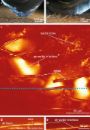
- , the first nanoscale characterization of sea urchin temporary adhesives was performed using atomic force microscopy (AFM). Results: The adhesive topography was similar under dry and native (seawater) conditions, which was comprised of a honeycomb-like meshwork of aggregated globular nanostructures. In
- terms of adhesion forces, higher values were obtained in dry conditions, reaching up to 50 nN. Under native conditions, lower adhesive forces were obtained (up to 500 pN) but the adhesive seemed to behave like a functional amyloid, as evidenced by the recorded characteristic sawtooth force–extension
- curves and positive thioflavin-T labelling. Conclusion: Our results confirm that like other temporary adhesives, the sea urchin adhesive footprint nanostructure consists of a meshwork of entangled globular nanostructures. Under native conditions, the adhesive footprints of the sea urchin behaved like a


Electrospun one-dimensional nanostructures: a new horizon for gas sensing materials
Beilstein J. Nanotechnol. 2018, 9, 2128–2170, doi:10.3762/bjnano.9.202


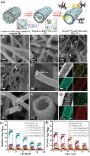
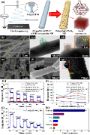


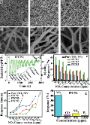


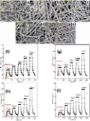


The structural and chemical basis of temporary adhesion in the sea star Asterina gibbosa
Beilstein J. Nanotechnol. 2018, 9, 2071–2086, doi:10.3762/bjnano.9.196

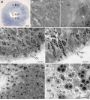
- inspiration for biomedical and industrial applications. Nevertheless, natural adhesives and especially temporary adhesion systems are mostly unexplored. Sea stars are able to repeatedly attach and detach their hydraulic tube feet. This ability is based on a duo-gland system and, upon detachment, the adhesive
- morphology of tube feet was described using histological sections, transmission-, and scanning electron microscopy. Ultrastructural investigations revealed two adhesive gland cell types that both form electron-dense secretory granules with a more lucid outer rim and one de-adhesive gland cell type with
- tested 24 commercially available lectins and two antibodies for their ability to label the adhesive epidermis and footprints. Out of 15 lectins labelling structures in the area of the duo-gland adhesive system, only one also labelled footprints indicating the presence of glycoconjugates with α-linked




Recent highlights in nanoscale and mesoscale friction
Beilstein J. Nanotechnol. 2018, 9, 1995–2014, doi:10.3762/bjnano.9.190
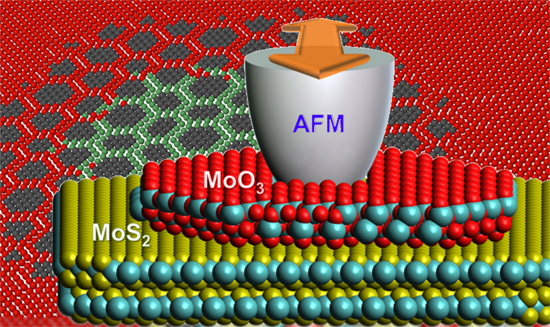
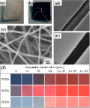
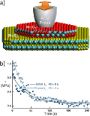
- the nanometer scale Molecular layers play an important role in the reduction of friction and wear at the macro scale. The addition of boundary lubricants is necessary to prevent damaging metallic adhesive forces between the machine parts in relative motion (cold welding). Unfortunately, under high
- have shown that electrical fields can be used to change frictional properties by orders of magnitude [179]. Molecular layers can be studied relatively to their frictional, adhesive and elastic properties and how can these mechanical properties be controlled by external means. In the future, we may be


Synthesis of hafnium nanoparticles and hafnium nanoparticle films by gas condensation and energetic deposition
Beilstein J. Nanotechnol. 2018, 9, 1868–1880, doi:10.3762/bjnano.9.179
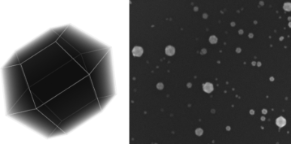
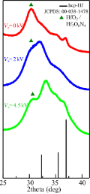
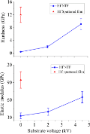
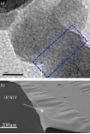
- catalysis [25] to energy storage [26][27]. While an increasing number of applications of porous NTFs are proposed in the literature, the poor mechanical stability of these systems is a major drawback that prevents their widespread industrial use. The weak adhesive force between the nanoparticles leads to
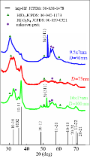
- undergone mechanical reinforcement with other techniques [29][30]. We believe it is porosity and strength of the bonding between the grains that affect the mechanical properties of the films. In the case of Vs = 0 kV, fragile NP coatings with poor mechanical properties are formed due to the weak adhesive






Friction force microscopy of tribochemistry and interfacial ageing for the SiOx/Si/Au system
Beilstein J. Nanotechnol. 2018, 9, 1647–1658, doi:10.3762/bjnano.9.157
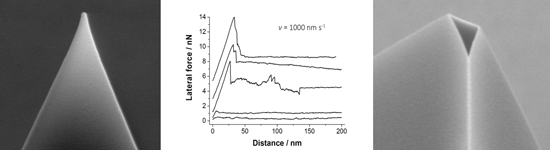
- was observed for oxidized silicon tips sliding on Au(111) or on oxidized Si(100) surfaces. We therefore deliberately increased the adhesive forces between probes and surfaces. In an attempt to allow for the successive formation of chemical bonds in contact ageing experiments, we removed passivating
- contact for 48 h until cold welding had occurred and adhesive forces between tip and surface had become larger than the force detection range of the cantilever. We found that the tip was reactive after pulling it off the surface, indicating a partial removal of the Au coating. The friction force was
- Au layer, while no adhesive Cr layer could be distinguished between Si and Au. An amorphous layer (marked with asterisk in Figure 7) with a thickness of about 13 nm covers the surface that had been in sliding contact with Au(111). A rather sharp border marks the transition from amorphous Si to




Cathodoluminescence as a probe of the optical properties of resonant apertures in a metallic film
Beilstein J. Nanotechnol. 2018, 9, 1491–1500, doi:10.3762/bjnano.9.140
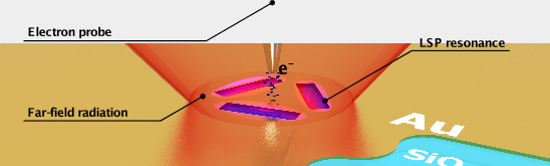
- nominally 100 nm thickness is deposited using electron beam evaporation (Intvac Nanochrome I) onto a high quality borosilicate glass slide with 5 nm of chromium as an adhesive layer. The rate of deposition of the gold was set to 0.3 Å/s. High quality azimuthal arrangements of three slot apertures with


Surface characterization of nanoparticles using near-field light scattering
Beilstein J. Nanotechnol. 2018, 9, 1228–1238, doi:10.3762/bjnano.9.114
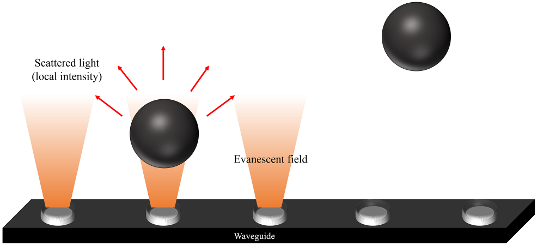
- Zeiss, Thornwood, NY) with an accelerating voltage of 2 kV. Each dried sample was placed on a metallic pin stub with adhesive and was coated with carbon (Cressington 208C High Vacuum Turbo Carbon Coater, Ted Pella Inc.). Dynamic light scattering and zeta potential The hydrodynamic diameter, size




Electrostatic force spectroscopy revealing the degree of reduction of individual graphene oxide sheets
Beilstein J. Nanotechnol. 2018, 9, 1146–1155, doi:10.3762/bjnano.9.106

- is biased. The sample, however, which is adhered to the sample holder with insulating double-sided adhesive, is not connected to ground. Thus the tip material has a capacitance similar to an isolated conductor and the rGO sheets or mica act as a dielectric in its electrostatic field, rather than


Review on nanoparticles and nanostructured materials: history, sources, toxicity and regulations
Beilstein J. Nanotechnol. 2018, 9, 1050–1074, doi:10.3762/bjnano.9.98

- into finer subcontacts, helps to clearly explain the insect body weight to setae trend. The natural adhesive system uses this principle for their design and may be incorporated in future practical applications. Research on attachment and mechanism of insects walking on ceilings using their hairy
- setae array endings by releasing greater adhesive strength [237][238][239]. The beautiful color patterns of peacock feathers are also known to be due to the cross-sectional arrangement of their feather frills as shown in Figure 7 [196]. Mollusk shells consists of “nacre”, which is a hierarchical



Scanning speed phenomenon in contact-resonance atomic force microscopy
Beilstein J. Nanotechnol. 2018, 9, 945–952, doi:10.3762/bjnano.9.87
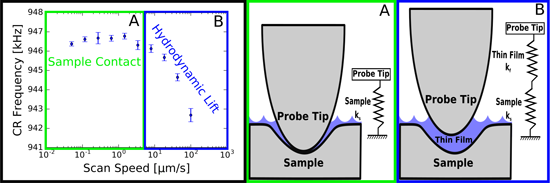
- thick [16][17] and is usually studied by measuring adhesive forces between the AFM tip and sample. Capillary necking between the adsorbed water layer and AFM tip creates additional adhesive forces that can be easily measured with a typical AFM system. These measurements are conducted using force pull


Tuning adhesion forces between functionalized gold colloidal nanoparticles and silicon AFM tips: role of ligands and capillary forces
Beilstein J. Nanotechnol. 2018, 9, 660–670, doi:10.3762/bjnano.9.61
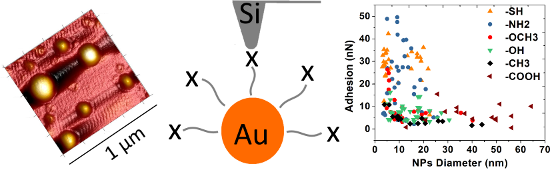
- agreement with experimentally measured adhesive values. In addition, the adhesion forces were evaluated between flat Au films functionalized with the same molecular components and silicon tips to exclude the effect of particle shape on the adhesion values. Although adhesion values on flat substrates were
- , electrostatic forces, H-bonding and capillary forces are crucial to understand the dependence of adhesive force on the type of functional layer. First, the high adhesion values of –SH and –NH2 coated NPs are explainable by the high polarizability of the molecules. Hence, adhesion forces acting between
- –OH functional group compared to those of –NH2 and –SH groups, a higher adhesion value might have been expected. However, this high polarity of the tail group also confers a high reactivity to Au NPs, especially with contamination in air. As a result, the final adhesive behavior of the Au coated NPs





