


Search results
Search for "diffusion" in Full Text gives 769 result(s) in Beilstein Journal of Nanotechnology. Showing first 200.
Gold nanomakura: nanoarchitectonics and their photothermal response in association with carrageenan hydrogels
Beilstein J. Nanotechnol. 2024, 15, 678–693, doi:10.3762/bjnano.15.56
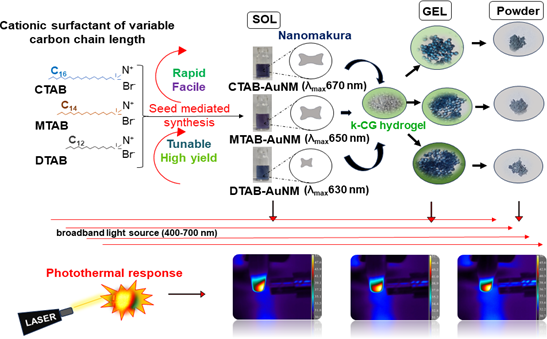
- introducing ascorbic acid indicated partial reduction of Au3+ to Au+, since ascorbic acid is a weak reducing agent. The introduction of seeds rapidly changed the colourless solution into blue, indicating complete reduction of Au+ to Au0. This was due to diffusion of Au0 atoms toward the {111} facet of the






Functional fibrillar interfaces: Biological hair as inspiration across scales
Beilstein J. Nanotechnol. 2024, 15, 664–677, doi:10.3762/bjnano.15.55
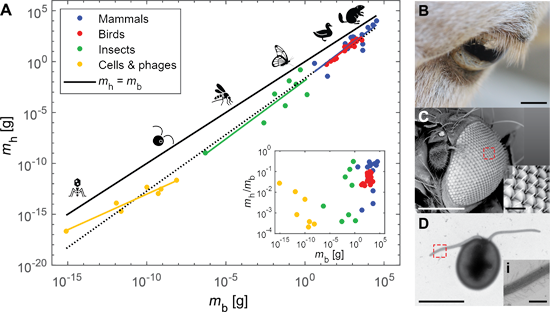
- detect chemicals in their surroundings, enabling them to locate sustenance, recognize their species, and avoid danger [147]. Moth antennae possess dense arrays of hairs, which have been found to interact with surrounding airflow in order to enhance diffusion of chemicals to the antennae for detection


Laser synthesis of nanoparticles in organic solvents – products, reactions, and perspectives
Beilstein J. Nanotechnol. 2024, 15, 638–663, doi:10.3762/bjnano.15.54
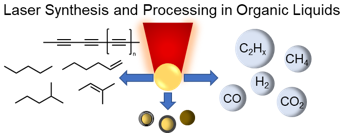
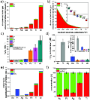
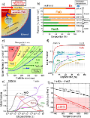
- porous nanoparticles when the liquid is saturated with hydrogen, depending on the specific metals and their properties (e.g., hydrogen permeability and diffusion coefficient of hydrogen) [91]. To summarize, the generated nanoparticles can be oxidized or reduced depending on process parameters such as





Radiofrequency enhances drug release from responsive nanoflowers for hepatocellular carcinoma therapy
Beilstein J. Nanotechnol. 2024, 15, 569–579, doi:10.3762/bjnano.15.49
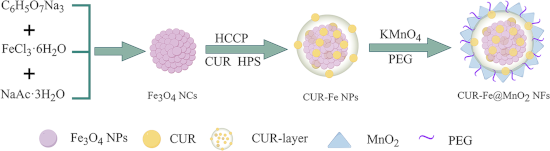
- model has the highest degree of fitting with the release of NFs in different simulated environments within 72 h, which indicates conformity with the Fick diffusion mechanism. Meanwhile, we found that RF heating does not affect the release kinetics model. Ritger–Peppas is a semiempirical model, and n is
- an indicator of the drug release mechanism, where n ≤ 0.45 represents the Fick diffusion. The n values calculated in this study are all less than 0.45, indicating that the CUR release from NFs is in accordance with the Fick diffusion. Similarly, the Higuchi model has the highest degree of fitting
- with the release of CUR-Fe NPs and is in accordance with the Fick diffusion (Table 2). Cellular uptake study Prussian blue staining was performed to detect the ability of Huh-7 cells to uptake NFs, as shown in Figure 5. Compared with those in the control group, blue particles were observed in the


Directed growth of quinacridone chains on the vicinal Ag(35 1 1) surface
Beilstein J. Nanotechnol. 2024, 15, 556–568, doi:10.3762/bjnano.15.48
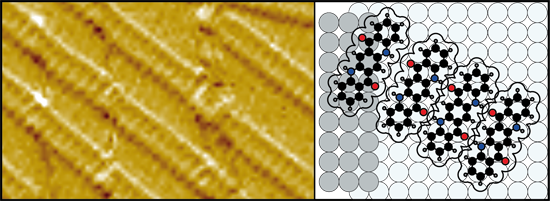
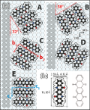
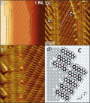
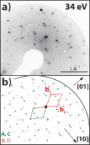
- chains of the orientations A–D in areas with a high density of unidirectional steps. Nevertheless, on the small terraces, the formation of chains with orientation E may be kinetically inhibited because of a lack of space, which hinders the diffusion of the molecules to the growing endpoints of the chains


Electron-induced deposition using Fe(CO)4MA and Fe(CO)5 – effect of MA ligand and process conditions
Beilstein J. Nanotechnol. 2024, 15, 500–516, doi:10.3762/bjnano.15.45
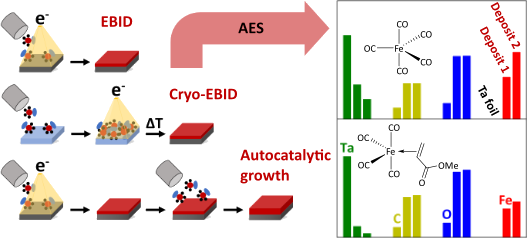
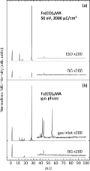
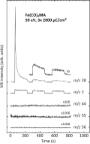
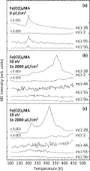
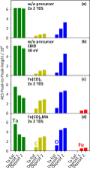
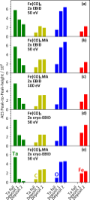
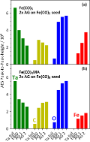
- -step process becomes visible. In a first step, CO accumulates near the surface of the adsorbed precursor layer before it desorbs in the second step. CO can be delivered to the surface either by electron-induced fragmentation of the MA ligand or by diffusion of CO ligands cleaved from the precursor at



Fabrication of nanocrystal forms of ᴅ-cycloserine and their application for transdermal and enteric drug delivery systems
Beilstein J. Nanotechnol. 2024, 15, 465–474, doi:10.3762/bjnano.15.42
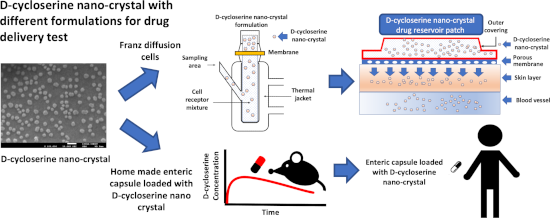
- and then to the in vitro Franz diffusion test with reservoir patch formulation as well as in vivo pharmacokinetics study with enteric capsules. We tested these formulations regarding their nanocrystal physical properties, size effect, and dissolution rate, respectively. We found that DCS nanocrystals
- showed good performance in the Franz diffusion test and rodent pharmacokinetic studies due to the nanoparticle size and faster dissolution as compared with the commercial DCS powder. These DCS nanocrystal formulations could offer a new approach for the development of an advanced drug delivery system for
- different hydrophobic solutions to obtain emulsion solutions, and loaded into the donor compartment of the Franz diffusion cell for 24 h. The release of DCS was detected in the receptor compartment. The summary of DCS formulations and release is shown in Table 1 and described as: Formulation Test 1: 20 mg


Sidewall angle tuning in focused electron beam-induced processing
Beilstein J. Nanotechnol. 2024, 15, 447–456, doi:10.3762/bjnano.15.40
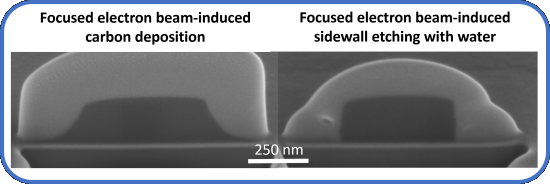
- deposit. In addition, the dissociation of the precursor molecules needs to be modelled, secondary reactions of the etch products need to be taken into account, also the residence time of the fragments on the deposit, the sticking and diffusion of the water molecules, and so on. Although this is a very
- the etching takes place is unknown. It was noticed that a small change in the pressure of water vapour led to a significant change in the etching rate, suggesting that the process is gas-limited (see Supporting Information File 1, section S3). The role of diffusion could therefore be significant. The
- diffusion rate of adsorbed contamination is known to be enhanced by the presence of water layers [21]. But since the relevant quantities are hard to measure, the diffusion rate has not been included in the model, nor have some other factors such as scattering, porosity, and secondary etch product reactions




Heat-induced morphological changes in silver nanowires deposited on a patterned silicon substrate
Beilstein J. Nanotechnol. 2024, 15, 435–446, doi:10.3762/bjnano.15.39
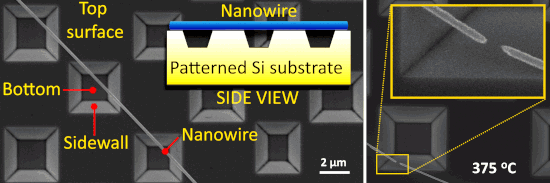
- fragmentation of NWs is attributed to the interplay between heat-enhanced diffusion and Rayleigh instability. In this work, we demonstrated that contact with the substrate plays an important role in the fragmentation process and can strongly affect the outcome of the heat treatment. We deposited silver NWs onto
- process, fragmentation in either adhered or suspended parts can dominate. Experiments were supported by finite element method and molecular dynamics simulations. Keywords: diffusion; finite element method; heat treatment; molecular dynamics simulations; morphological changes; scanning electron microscopy
- . However, during prolonged heat treatment (lasting minutes or more), surface atom diffusion can lead to morphological changes in NWs even at temperatures several hundred degrees below the melting point of the material [26][27]. Sintering of Ag and Au NWs at intersections can occur at temperatures as low as


Investigating ripple pattern formation and damage profiles in Si and Ge induced by 100 keV Ar+ ion beam: a comparative study
Beilstein J. Nanotechnol. 2024, 15, 367–375, doi:10.3762/bjnano.15.33
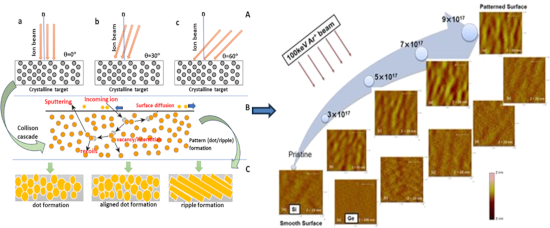
- Harper [31] based on morphological effects of IBS. The height h(x, y, t) of the sputtered surface can be described by a linear equation (Equation 1): where ν0 is the constant erosion velocity, ν is the effective surface tension, and D denotes the surface diffusion which is activated by different physical
- processes (i.e., thermal diffusion and ion-induced diffusion) [32]. This approach is based on the linear cascade model and Gaussian approximation of energy distribution as developed by Sigmund [26] to describe ion–atom collisions inside the target. Rutherford backscattering spectrometry (RBS) studies in the
- diffusion processes. The values for α and β were found to be α = 0.42 and 0.26 and β = 0.23 and 0.19 for Si and Ge, respectively, indicating that sputtering dominates in both cases to create ripples on the two surfaces. However, this process is better for Si. Transmission electron microscopy studies The TEM


Exploring the relationships between physiochemical properties of nanoparticles and cell damage to combat cancer growth using simple periodic table-based descriptors
Beilstein J. Nanotechnol. 2024, 15, 297–309, doi:10.3762/bjnano.15.27
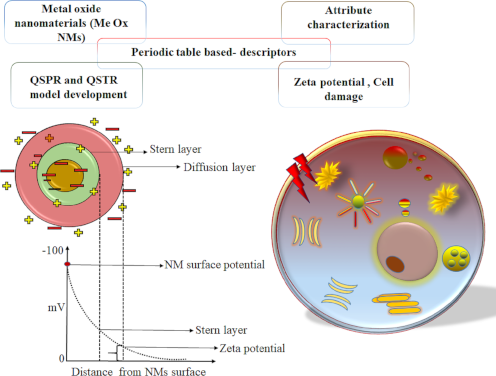
- unstable and tend to agglomerate. NPs attract negative or positive ions from the medium to build a diffusion double layer. The electronegativity of the NPs also depends on the pH value of the medium [40]. In colloidal solutions, negatively charged metal oxides decrease the zeta potential, which reflects


Multiscale modelling of biomolecular corona formation on metallic surfaces
Beilstein J. Nanotechnol. 2024, 15, 215–229, doi:10.3762/bjnano.15.21
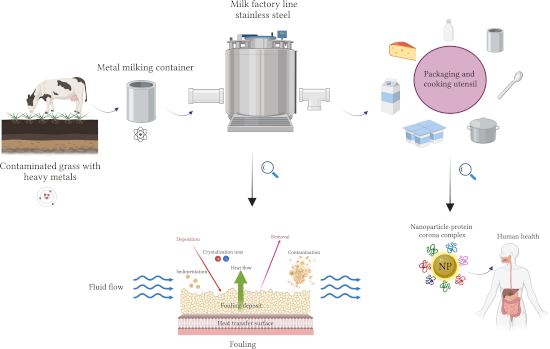
- rate of collisions between two spheres in solution, normalized by the number of binding sites for that protein, where RNP is the radius of the NP, NA is Avogadro’s number, RA is the effective adsorbate radius, D is the pair diffusion coefficient given by taking the viscosity η = 8.9 × 10⁻⁴ Pa·s. We




Graphene removal by water-assisted focused electron-beam-induced etching – unveiling the dose and dwell time impact on the etch profile and topographical changes in SiO2 substrates
Beilstein J. Nanotechnol. 2024, 15, 190–198, doi:10.3762/bjnano.15.18
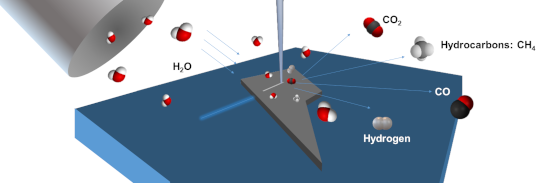
- is dependent on the precursor dynamics (adsorption/desorption rate, diffusion), electron beam (lateral size, electron flux, energy), and scanning parameters (dwell time, refresh time, scanning strategy) [22]. Additionally, residual hydrocarbons inside the scanning electron microscope chamber manifest


Development and characterization of potential larvicidal nanoemulsions against Aedes aegypti
Beilstein J. Nanotechnol. 2024, 15, 104–114, doi:10.3762/bjnano.15.10
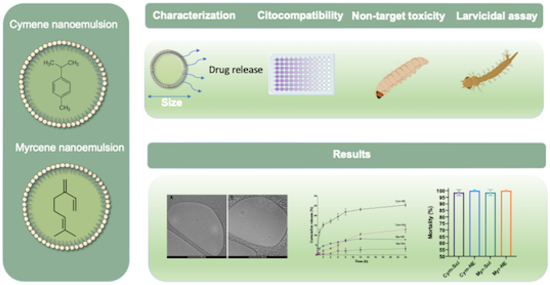
- a transport exponent value (n) of 0.3, indicating a release mechanism primarily driven by Fickian diffusion [44]. The free terpenes exhibited a value of 0.6, suggesting an anomalous transport mechanism for drug release. This mechanism involves a combination of diffusion and dissolution processes for
- conditions. Modified Franz cells, equipped with a polyethersulfone membrane (Sigma-Aldrich) and with a diffusion area of 1.77 cm2 were used in the assays. A Microette (Hanson Research, USA) was used. The receptor compartment was filled with 7.0 mL of a receptor solution composed of 0.1 M phosphate buffer and


Berberine-loaded polylactic acid nanofiber scaffold as a drug delivery system: The relationship between chemical characteristics, drug-release behavior, and antibacterial efficiency
Beilstein J. Nanotechnol. 2024, 15, 71–82, doi:10.3762/bjnano.15.7

- nanofiber compositions [11][12][13]. For a long-term drug release, hydrophobic polymers are chosen for the preparation of drug-loaded nanofiber scaffolds. This is because the hydrophobicity of the polymer could form air gaps, slowing matrix hydration and suppressing drug diffusion from the nanofibers [14
- compared to that of other models. In addition, the release exponent (n) of the equation was 0.1703, indicating that the BBR release from the BBR/PLA nanofiber scaffold followed the Fickian diffusion. In this mechanism, the release of BBR was governed by a diffusion process, where the diffusion rate was
- higher than the polymer relaxation [43]. Based on the R2 values shown in Table 1, the release data of the BBR NPs/PLA nanofiber scaffold was simultaneously well described by the Higuchi and Ritger–Peppas models, suggesting that BBR NPs release was mainly controlled by a diffusion mechanism. However, the


Influence of conductive carbon and MnCo2O4 on morphological and electrical properties of hydrogels for electrochemical energy conversion
Beilstein J. Nanotechnol. 2024, 15, 57–70, doi:10.3762/bjnano.15.6
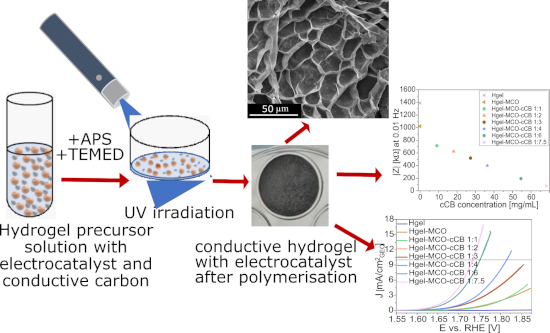
- the morphology also facilitates the penetration by the electrolyte, the diffusion of ions to electroactive sites, and the rapid release of the reaction, thus promoting the kinetics of the reaction and achieving higher efficiency of the catalyst built into the 3D structure [19]. The hydrogel matrix
- designed to facilitate and increase mass transport; therefore, it is vital to achieve the desired three-dimensional structure of the material. In addition, the free space in the form of pores and the network structure within the polymer facilitate the penetration by the electrolyte, the diffusion of ions
- scaffold, coating its surface. The characteristic porous structure is still formed but has a much more granular structure. The presence of pores is very important in the case of the application of hydrogel composite in OER. As aforementioned, the porosity has a beneficial effect on the diffusion of


Nanotechnological approaches in the treatment of schistosomiasis: an overview
Beilstein J. Nanotechnol. 2024, 15, 13–25, doi:10.3762/bjnano.15.2

- polymers or the polymerization of monomers [17]. The first one is more commonly describe in the literature, and the techniques usually employed to produce them include nanoprecipitation, solvent evaporation, emulsification/solvent diffusion, and emulsification/reverse salting out [18][19]. The main
- homogenization); (2) low-energy methods, which requires the precipitation of nanoparticles from homogeneous systems (such as microemulsions); and (3) methods based on organic solvents (emulsification–diffusion method) [35]. Liposomes are vesicles composed of a phospholipid and cholesterol with an aqueous core


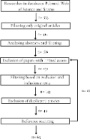
unDrift: A versatile software for fast offline SPM image drift correction
Beilstein J. Nanotechnol. 2023, 14, 1225–1237, doi:10.3762/bjnano.14.101

- effective way to reduce thermal drift to a minimum is to carry out SPM experiments under cryogenic conditions close to the temperature of liquid helium. The cryogenic temperature, however, also drastically reduces the rates of thermal processes such as on-surface reactions, diffusion, or desorption [25
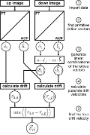


Elasticity, an often-overseen parameter in the development of nanoscale drug delivery systems
Beilstein J. Nanotechnol. 2023, 14, 1149–1156, doi:10.3762/bjnano.14.95

- filled with poly(lactic-co-glycolic acid) (PLGA) cores of different sizes resulting in interfacial water layers with different thicknesses and therefore with tunable elasticity [38]. Semielastic particles whose Young’s moduli were around 50 mPa showed the fastest diffusion in mucus. However, harder
- the interaction with mucus in vitro, they demonstrated that the apparent permeability coefficient (Papp value) through porcine intestinal mucus as well as the diffusion determined by particle tracking is significantly higher for softer particles. However, as soon as cells are included in the system


Dual-heterodyne Kelvin probe force microscopy
Beilstein J. Nanotechnol. 2023, 14, 1068–1084, doi:10.3762/bjnano.14.88

- dynamics is indeed the effective mobility of holes and electrons (under the effect of drift diffusion) in the donor and acceptor networks. After the application of a light pulse – and during the duration of the pulse – the charge mobility limits the rate at which an electrostatic equilibrium can be reached




Nanoarchitectonics of photothermal materials to enhance the sensitivity of lateral flow assays
Beilstein J. Nanotechnol. 2023, 14, 988–1003, doi:10.3762/bjnano.14.82
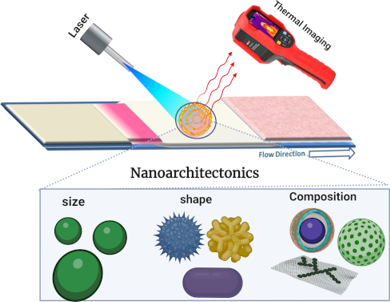
- photothermal LFA (A). Comparison of Pe and Da on the LFA membrane. (Pe, the ratio between diffusion time and convection time), (Da, ratio between diffusion flux and reaction flux) (B). Comparison of visual and thermal signal (A, B and C stand for 100, 60, 30 nm sized GNP respectively: A, B and C correspond to


Isolation of cubic Si3P4 in the form of nanocrystals
Beilstein J. Nanotechnol. 2023, 14, 971–979, doi:10.3762/bjnano.14.80

- precursor for diffusion doping of wafers and as anode material for Li-ion batteries. A similar method with a hydrogenation step offers the possibility to obtain other compounds, such as silicon selenides, arsenides, and sulfides. Keywords: ampoule annealing; defective zinc blende structure; DFT
- microcircuits through the introduction of P donors by diffusion doping of wafers with an efficiency comparable to monolayer doping [18] or ion implantation [19]. This paper outlines the successful formation of the cubic Si3P4 phase under mild conditions. The technique developed for this investigation requires
- phosphorus as a dopant. From the outset, phosphorus diffusion through hydrogenated and oxide layers was surmised to be different. In the case of similar previously performed syntheses of Si NPs with an oxide layer [21], phosphorus diffuses deep into the NP cores and distributes rather homogenously with a


Low temperature atomic layer deposition of cobalt using dicobalt hexacarbonyl-1-heptyne as precursor
Beilstein J. Nanotechnol. 2023, 14, 951–963, doi:10.3762/bjnano.14.78
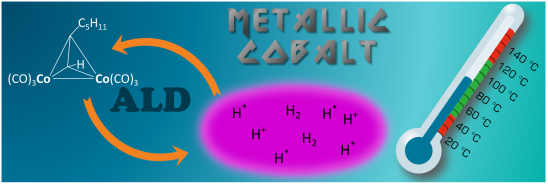
- resistance to electromigration and lowers the tendency to undergo diffusion, giving a higher stability in environments involving both elevated temperature and high current densities [1][3]. In current technology nodes with device dimensions below 10 nm, electron scattering becomes the dominant factor in


Antibody-conjugated nanoparticles for target-specific drug delivery of chemotherapeutics
Beilstein J. Nanotechnol. 2023, 14, 912–926, doi:10.3762/bjnano.14.75

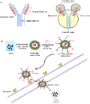
- antigen binding ability. Improper antibody conjugation influences antigen binding affinity and specificity. Once injected into the body, the ACNPs face both physical and biological barriers (such as diffusion, flow and shear forces, aggregation, protein adsorption, phagocytic sequestration, and clearance



Nanostructured lipid carriers containing benznidazole: physicochemical, biopharmaceutical and cellular in vitro studies
Beilstein J. Nanotechnol. 2023, 14, 804–818, doi:10.3762/bjnano.14.66
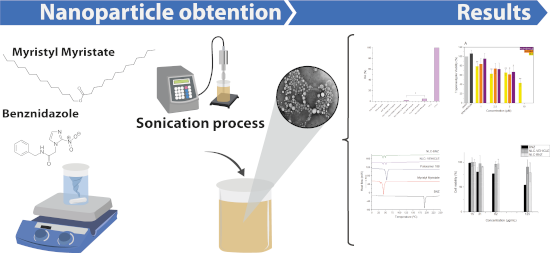
- –Peppas model, also called power law, was initially used to describe drug release in polymeric systems where the two predominant mechanisms were relaxation of the polymer chains and diffusion. In this model (Equation 2), Mt/M∞ is the fraction dissolved, K is a constant that incorporates structural and
- release can be inferred through the value of the release exponent n. For spherical systems, n will take a value of 0.43 for drug release governed by Fickian diffusion, a value of 1 for zero-order release, and intermediate values for intermediate behavior, often regarded as anomalous transport. In our case
- , the estimated value of n was 0.56, suggesting mixed release mechanisms at play with a strong contribution of diffusion. As in our case there is no polymer relaxation involved, it may be hypothesized that the burst effect could be slightly affecting the global kinetics of the process [35]. Although





