

Search results
Search for "hydrogen" in Full Text gives 824 result(s) in Beilstein Journal of Nanotechnology. Showing first 200.
A review on the structural characterization of nanomaterials for nano-QSAR models
Beilstein J. Nanotechnol. 2024, 15, 854–866, doi:10.3762/bjnano.15.71
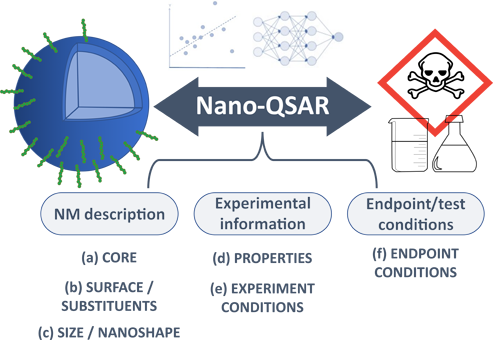
- its interaction with other substances, as for example using the maximum salt concentration in the medium with no significant coagulation or the rate constant of its oxidation by hydrogen peroxide [68]. It should be noted that the use of experimental descriptors can be exclusive, and there are models


Intermixing of MoS2 and WS2 photocatalysts toward methylene blue photodegradation
Beilstein J. Nanotechnol. 2024, 15, 817–829, doi:10.3762/bjnano.15.68
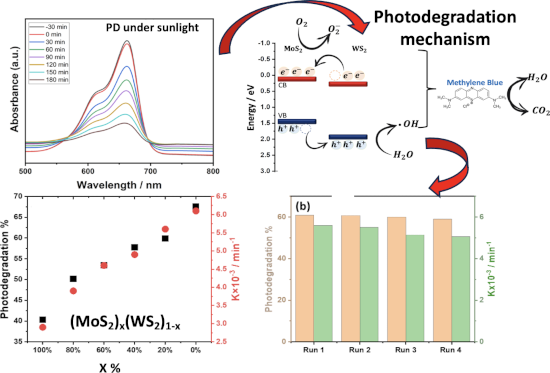
- electrons (e−), leading to the formation of superoxide anions (O2−) [43]. The adsorbed oxygen has the ability to undergo a reaction with two electrons, resulting in the formation of hydrogen peroxide (H2O2). Hydrogen peroxide subsequently reacts with an electron, forming hydroxyl radicals (•OH), which are


Synthesis of silver–palladium Janus nanoparticles using co-sputtering of independent sources: experimental and theorical study
Beilstein J. Nanotechnol. 2024, 15, 808–816, doi:10.3762/bjnano.15.67
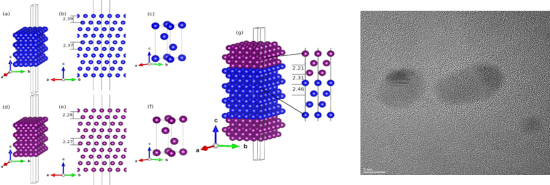
- nanoparticles, by the wet reduction method using palladium and silver hydroxide colloids as precursors, to study hydrogen absorption; the size of these BNPs was 6–7 nm. However, inhomogeneous nanoparticles were obtained because Ag fractions were found on the surface, which were increased by heating the samples




Electron-induced ligand loss from iron tetracarbonyl methyl acrylate
Beilstein J. Nanotechnol. 2024, 15, 797–807, doi:10.3762/bjnano.15.66
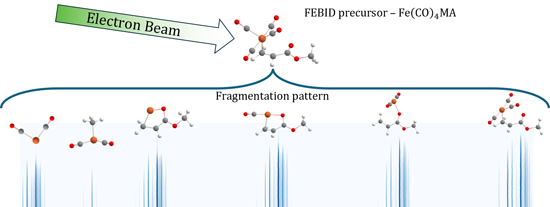
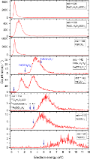
- Fe(CO)2H2+ requires removal of two hydrogen atoms from MA and their bond formation with iron, and, finally, this mass can have a stochiometry of (C4H6O2)CO+, two different ligands without the iron atom. We will return to the nature of this fragment below. There are interesting differences to the 70



Simultaneous electrochemical determination of uric acid and hypoxanthine at a TiO2/graphene quantum dot-modified electrode
Beilstein J. Nanotechnol. 2024, 15, 719–732, doi:10.3762/bjnano.15.60
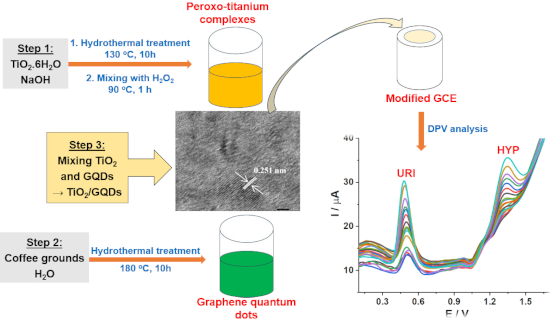
- HYP using a TiO2/GQDs-modified electrode were addressed. Experimental Materials Coffee grounds were collected from the local area. Anatase (98%), hydrogen chloride (39%), hydrogen peroxide (30%), boric acid (99%), phosphoric acid (85%), acetic acid (99%), uric acid (99%), and hypoxanthine (99%) were


Laser synthesis of nanoparticles in organic solvents – products, reactions, and perspectives
Beilstein J. Nanotechnol. 2024, 15, 638–663, doi:10.3762/bjnano.15.54
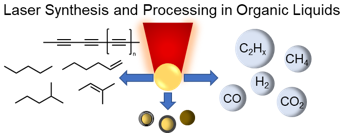
- nanoparticle synthesis in water is always accompanied by the production of gases [66][67]. Although gas formation has often been attributed to the vaporization of water, the formation of hydrogen and oxygen also occurs. Additionally, the formation of hydrogen peroxide was observed during LAL [50][51] and LRL
- nanoparticles [75][76]. Beyond the formation of carbon monoxide, the direct reduction of permanent solutes in liquids via LRL, sometimes termed laser bubbling in liquid (LBL), has been demonstrated recently for alternative reactants, such as hydrogen extraction from ammonia [77] or methanol [78], and direct
- oxygen species (ROS), for example, hydrogen peroxide, hydroxyl radicals, or dissolved oxygen, react with the particles leading to their surface oxidation. During irradiation of water with intense laser pulses, a weakly ionized plasma forms because of optical breakdown, supercontinuum emission, or both





Directed growth of quinacridone chains on the vicinal Ag(35 1 1) surface
Beilstein J. Nanotechnol. 2024, 15, 556–568, doi:10.3762/bjnano.15.48
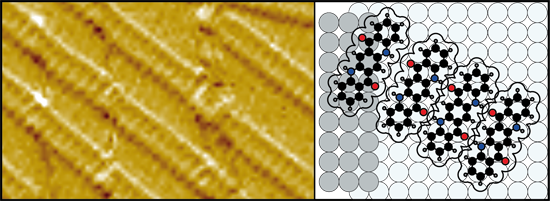
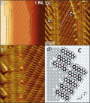
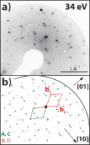
- sample temperature of 300 K, QA forms the same kind of molecular chains as on the nominally flat Ag(100) surface because of strong intermolecular hydrogen bonds, which we reported in a previous publication [Humberg, N.; Bretel, R.; Eslam, A.; Le Moal, E.; Sokolowski, M. J. Phys. Chem. C 2020, 124, 24861
- step edges. Keywords: Ag(100); intermolecular hydrogen bonds; one-dimensional aggregates; organic nanostructures; quinacridone; step-molecule interactions; vicinal surface; Introduction A versatile and powerful method to create nanostructures on surfaces is the self-assembly of atoms and molecules
- hydrogen bonds (H-bonds) [19] support the growth of long 1D chains of parallel oriented QA molecules, both in bulk crystals and on surfaces. It has been shown by Głowacki et al. that QA exhibits promising properties for applications in electronic and optoelectronic devices [20][21]. In particular, they


On the additive artificial intelligence-based discovery of nanoparticle neurodegenerative disease drug delivery systems
Beilstein J. Nanotechnol. 2024, 15, 535–555, doi:10.3762/bjnano.15.47
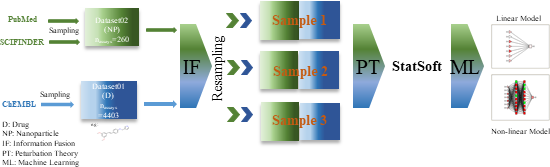
- solubility [90]. Most NDDs of this database are in the PSAdi range of 60–120 Å2. Stephen et al. suggested that CNS drugs should have a PSA value below 90 Å2 for a decent BBB permeability, among other physicochemical characteristics such as number of hydrogen bond donors, molecular size, and shape, with
- smaller contributions from hydrogen bond acceptors [89]. Although this type of graphic is clearly a simplification of the whole database, it offers simple guidelines for researchers concerned with designing NDD compounds or libraries with improved probability of BBB penetration. The size of the vast



Photocatalytic degradation of methylene blue under visible light by cobalt ferrite nanoparticles/graphene quantum dots
Beilstein J. Nanotechnol. 2024, 15, 475–489, doi:10.3762/bjnano.15.43
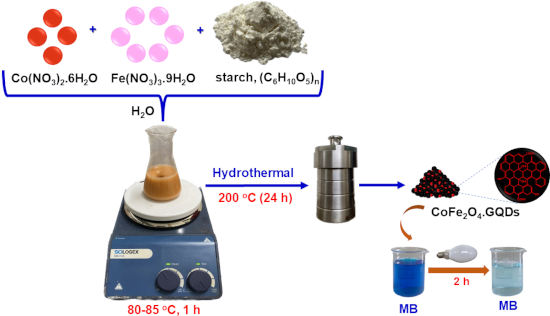
- benzoquinone (C6H4O2) was provided by Sigma-Aldrich, USA. Sodium hydroxide (NaOH, ≥96%) and hydrogen chloride (HCl, 38%) were purchased from Xilong, China. Instruments X-ray diffraction (XRD) patterns were recorded by using a D8 Advance (Bruker, Germany) with Cu Kα radiation (λ = 0.154 nm). Fourier-transform




Potential of a deep eutectic solvent in silver nanoparticle fabrication for antibiotic residue detection
Beilstein J. Nanotechnol. 2024, 15, 426–434, doi:10.3762/bjnano.15.38
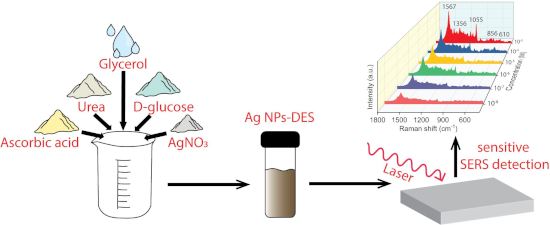
- the NPs as well as a high aggregation state (Figure 3A). This is because of the high viscosity of the DES, which directly affected the stirring and yielded nonspherical NP shapes. The aggregated Ag NPs are supported by pure DES in which oxygen and hydrogen atoms of ᴅ-glucose, urea, and glycerol tend
- to form hydrogen bonds. The DES acts as a surfactant helping to stabilize Ag NPs. The rod-like appearance with 122.6 nm average length and small crystals on the surface of Ag NPs crucially contribute to strengthening the LSPR phenomenon thanks to the lightning rod effect [42]. As reported by other
- dispersing the Ag NP suspension via its hydrogen bonding networks [30], which increases the possibility of linkage formation between –NH2 groups of 3-aminopropyl)triethoxysilane (APTES) and Ag NPs. This eventually explains the evenness of the Ag NPs-DES thin film. Another type of selectivity test was carried


Classification and application of metal-based nanoantioxidants in medicine and healthcare
Beilstein J. Nanotechnol. 2024, 15, 396–415, doi:10.3762/bjnano.15.36
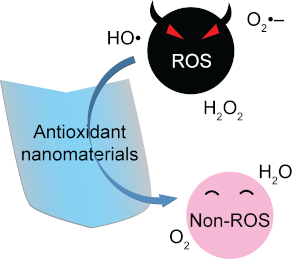
- radicals through several pathways such as chelating transition metals, quenching singlet oxygens, decomposing hydrogen peroxides, and deactivating superoxides without generating active radicals [17][18][19]. Transition metals such as Fe2+ and Cu2+ initiate a Fenton reaction in the presence of hydrogen
- peroxide or organic hydroperoxide (ROOH) to produce ROS. In nature, biological systems commonly use catalase (CAT) and glutathione peroxidase (GPx) as preventive antioxidants to degrade hydrogen peroxide, which is a precursor of ROS. CAT, containing a heme active site, and GPx, containing a selenium active
- site, can decompose hydrogen peroxides into harmless compounds (e.g., O2 and H2O). Although CAT and GPx show great potential for reducing oxidative stress, the disadvantages of natural enzymes such as low stability and little flexibility can limit their applications, especially in medicine and


Exploring the relationships between physiochemical properties of nanoparticles and cell damage to combat cancer growth using simple periodic table-based descriptors
Beilstein J. Nanotechnol. 2024, 15, 297–309, doi:10.3762/bjnano.15.27
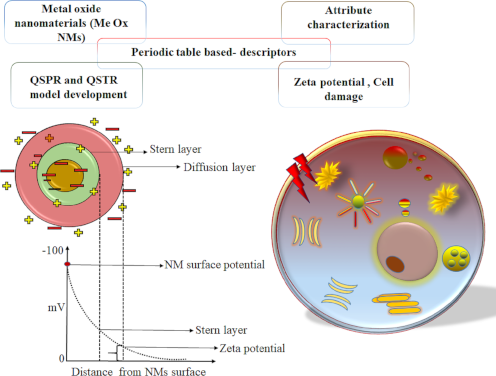
- are involved in the Fenton reaction, which generates hydroxyl radicals from hydrogen peroxide. Similarly, the Haber–Weiss reaction involves the oxidized forms of redox-active metal ions and superoxide anions, which generate the reduced form of the metal ion. This reduced form can then be coupled to


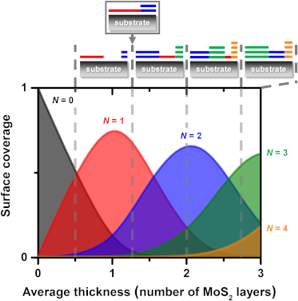
Determining by Raman spectroscopy the average thickness and N-layer-specific surface coverages of MoS2 thin films with domains much smaller than the laser spot size
Beilstein J. Nanotechnol. 2024, 15, 279–296, doi:10.3762/bjnano.15.26


Vinorelbine-loaded multifunctional magnetic nanoparticles as anticancer drug delivery systems: synthesis, characterization, and in vitro release study
Beilstein J. Nanotechnol. 2024, 15, 256–269, doi:10.3762/bjnano.15.24
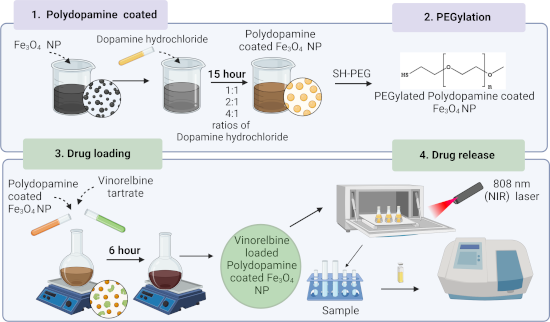
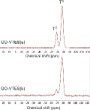
- nitrogen–hydrogen (N–H) group in the range of 3500–3000 cm−1 [53]. The FTIR spectrum of VNB/PDA/PDA/Fe3O4 NPs displays all PDA, SH-PEG, and VNB peaks, indicating the successful formation of a core–shell structure containing these three components. According to the VSM analysis, the saturation magnetization


Modification of graphene oxide and its effect on properties of natural rubber/graphene oxide nanocomposites
Beilstein J. Nanotechnol. 2024, 15, 168–179, doi:10.3762/bjnano.15.16
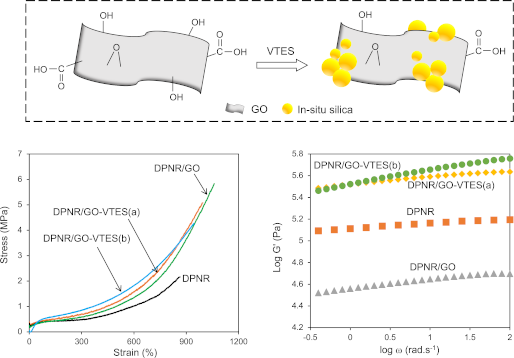
- hydroxyl group by hydrogen or chemical bonding. The formation of silica particles from hydrolysis and condensation of VTES may occur on the GO surface and in water. The unreacted vinyl group in GO-VTES may have possible interactions with rubber particles through radical graft copolymerization, same as






Study of the reusability and stability of nylon nanofibres as an antibody immobilisation surface
Beilstein J. Nanotechnol. 2024, 15, 83–94, doi:10.3762/bjnano.15.8

- the antibody by hydrophobic interactions through binding sites inside of its three-dimensional structure [21][22]. The polar side chains are located on the outside of the protein molecule, allowing the protein to form hydrogen bonds with nylon. On the other hand, nylon is a polyamide that contains
- amide groups and free amine groups at the ends of its polymer chains, as well as carboxyl groups. These amide and amine groups provide excellent hydrogen bonding sites [23][24]. Regarding the binding of antibody to protein A/G, it has been described that this occurs at pH values between 5 and 8 because
- pH 11, but not strongly acidic pH levels such as 2.5, could impart a negative charge to the carboxylic acid groups in both protein A/G and nylon NFs, preventing hydrogen bonds between them. Acidic pH, such as pH 2.5, does not alter the binding of protein A/G to nylon. However, bare nylon nanofibres


Influence of conductive carbon and MnCo2O4 on morphological and electrical properties of hydrogels for electrochemical energy conversion
Beilstein J. Nanotechnol. 2024, 15, 57–70, doi:10.3762/bjnano.15.6
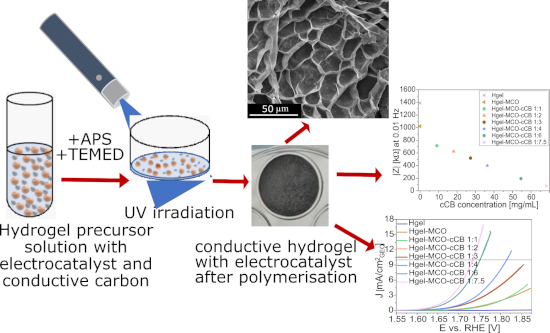
- ; hydrogel; hydrogen; oxygen evolution reaction; polymer composites; Introduction Hydrogels are defined as a group of polymeric materials with an insoluble hydrophilic structure which gives them the ability to absorb and hold large amounts of water (up to over 99 wt %) in their three-dimensional network
- interactions, ionic cross-linking, and hydrogen-bonded gels). Chemically synthesised hydrogels are produced by covalent cross-linking pathways such as radical polymerisation, radiation cross-linking, grafting, thermogelation, enzymatic reactions, and click chemistry [4][5]. Hydrogel materials have quite a long
- ], and environmental [17][18]. In recent years, scientists have been very interested in the use of hydrogels in electrocatalytic water splitting to produce hydrogen from renewable energy sources. These studies assume the use of empty spaces, thus ensuring efficient mass transport, as well as increasing


Fluorescent bioinspired albumin/polydopamine nanoparticles and their interactions with Escherichia coli cells
Beilstein J. Nanotechnol. 2023, 14, 1208–1224, doi:10.3762/bjnano.14.100

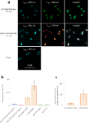
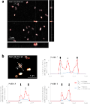
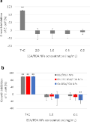
- KE diad (e.g., catestatin) [13]. During the formation process, hydroxy groups of dopamine form hydrogen bonds with carboxylic groups (COO−) of glutamate (pKa = 4.3), whereas protonated amino groups (NH3+) of lysine (pKa = 10.5) further stabilize the aggregate by cation–π interactions with the



A combined gas-phase dissociative ionization, dissociative electron attachment and deposition study on the potential FEBID precursor [Au(CH3)2Cl]2
Beilstein J. Nanotechnol. 2023, 14, 1178–1199, doi:10.3762/bjnano.14.98
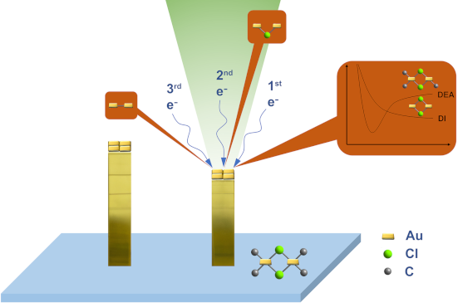
- progression shows the loss of one chlorine atom and two, three, and four methyl ligands at m/z 458, 444, and 429, respectively. From these, m/z 458 has lost an additional hydrogen and m/z 444 overlaps with lesser contributions from m/z 443, which we also attribute to additional hydrogen loss. Similar to the
- are of similar intensity, although the loss of three methyl ligands, m/z 408, is slightly more apparent. Lesser contribution is also observed at m/z 407 and is attributed to additional hydrogen loss as compared to that of m/z 408. The last progression is from the loss of both chlorine atoms along with
- value at the DLPNO-CCSD(T)-TZVP level of theory agrees well with the experimental AE value. The next progression observed in the mass spectrum, m/z 458, 444, and 429, constitutes a progressive loss of the methyl ligands along with the loss of one chlorine and partly additional hydrogen loss. We find the



Properties of tin oxide films grown by atomic layer deposition from tin tetraiodide and ozone
Beilstein J. Nanotechnol. 2023, 14, 1085–1092, doi:10.3762/bjnano.14.89
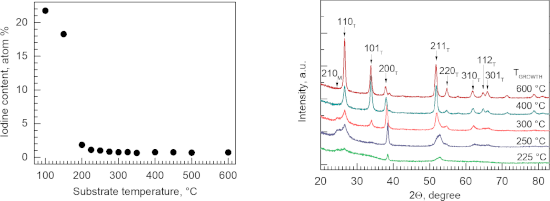
- precursor combinations for obtaining SnO2 in atomic layer deposition (ALD) processes [9]. Two of these processes have employed SnI4 as the metal precursor with either O2 [10][11][12][13][14] or H2O2 [10][11][15] as oxidizer. Of these two oxygen sources, O2 would be more desirable because with it a hydrogen


Recognition mechanisms of hemoglobin particles by monocytes – CD163 may just be one
Beilstein J. Nanotechnol. 2023, 14, 1028–1040, doi:10.3762/bjnano.14.85

- emerging hydrogen bonds, altered surface structures, and possible interactions between proteins and particles, in particular polymers such as HbMPs [45][46]. The adsorption of various plasma proteins seems to not only enhance the chance of complement activation but also to promote phagocytosis directly, as




Exploring internal structures and properties of terpolymer fibers via real-space characterizations
Beilstein J. Nanotechnol. 2023, 14, 1004–1017, doi:10.3762/bjnano.14.83

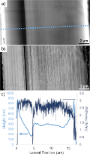
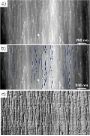
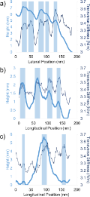
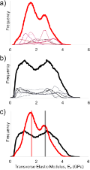
- molecular “bends” within DPE molecules) or weak intermolecular interactions (e.g., due to distributions in monomers capable of intermolecular hydrogen bonding) may make it energetically favorable for sets of molecules to branch apart at different junctures rather than to remain together within a fibril





Nanoarchitectonics of photothermal materials to enhance the sensitivity of lateral flow assays
Beilstein J. Nanotechnol. 2023, 14, 988–1003, doi:10.3762/bjnano.14.82
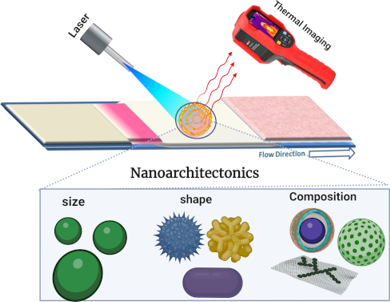
- , bleaching, and degradation. Gold nanoparticles possess intrinsic peroxidase-like activity, which converts particular peroxidase substrates into coloured products in the presence of hydrogen peroxide. The enzyme-like properties of nanomaterials have been utilized in various LFA formats. The inclusion of


Isolation of cubic Si3P4 in the form of nanocrystals
Beilstein J. Nanotechnol. 2023, 14, 971–979, doi:10.3762/bjnano.14.80

- were conducted. A synthesis at 400 °C was performed in order to observe the influence of hydrogen preservation on the process of formation of the new compound as well as to attempt postsynthetic hydrosilylation to protect the particle cores from air and moisture. A temperature range of 400 to 500 °C
- was shown to be consistent with Si–H bond cleavage and hydrogen desorption from silicon surfaces [29] (including Si NPs [30]) with the bond completely disappearing at 700 °C as indicated by FTIR spectra [31][32][33]. A temperature of 900 °C was chosen to assess the probability of formation of another
- nature of HF). The total etching time was 20 min (HF vapor etching of Si NPs doped with P results in the removal of the oxide layer after 15 min of etching [42]). It should be mentioned that Si NPs with hydrogen-terminated surfaces rapidly oxidize when exposed to air even at room temperatures [43][44


Low temperature atomic layer deposition of cobalt using dicobalt hexacarbonyl-1-heptyne as precursor
Beilstein J. Nanotechnol. 2023, 14, 951–963, doi:10.3762/bjnano.14.78
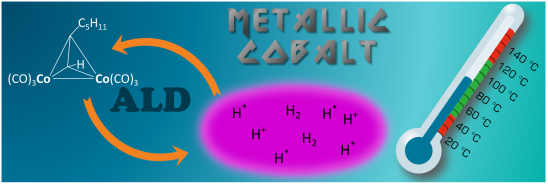
- operates at low temperatures using dicobalt hexacarbonyl-1-heptyne [Co2(CO)6HC≡CC5H11] and hydrogen plasma. For this precursor an ALD window in the temperature range between 50 and 110 °C was determined with a constant deposition rate of approximately 0.1 Å/cycle. The upper limit of the ALD window is
- cobalt precursor delivery and without any further reacting gases. The precursor was provided via the showerhead over the whole wafer surface. The depositions were done at 90, 100, 125, and 150 °C. The ALD depositions were carried out with molecular hydrogen (H2) as second precursor. During the H2 pulsing
- time of 6 s has been chosen to reach the saturation state safely. The purging time after the precursor pulse also may affect the deposition rate. Insufficient purging may result in an increased deposition rate as the remaining precursor can directly react in the gas phase within the hydrogen plasma