

Search results
Search for "mass spectrometry" in Full Text gives 168 result(s) in Beilstein Journal of Nanotechnology.
Dissociative electron attachment to coordination complexes of chromium: chromium(0) hexacarbonyl and benzene-chromium(0) tricarbonyl
Beilstein J. Nanotechnol. 2017, 8, 2257–2263, doi:10.3762/bjnano.8.225
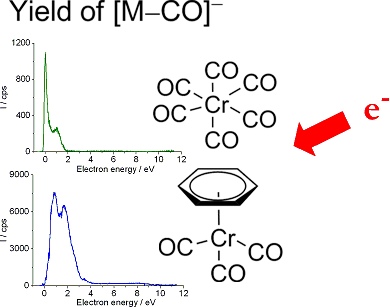
- ; dissociative electron attachment; gas phase reactions; mass spectrometry; Introduction Organometallic compounds are a large class of compounds with numerous applications such as homogeneous catalysts for the synthesis of fine chemicals or even enantiomerically pure products used in the pharmaceutical industry
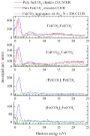
Comprehensive investigation of the electronic excitation of W(CO)6 by photoabsorption and theoretical analysis in the energy region from 3.9 to 10.8 eV
Beilstein J. Nanotechnol. 2017, 8, 2208–2218, doi:10.3762/bjnano.8.220
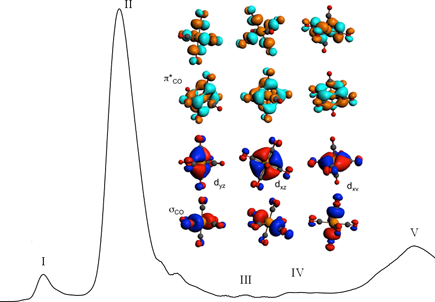
- ]. Nanometre-thick films of surface-adsorbed W(CO)6 irradiated at 500 eV electron impact energy were analysed in situ by X-ray photoelectron spectroscopy (XPS), mass spectrometry and reflective absorption infrared spectroscopy (RAIRS) measurements [23]. These studies on electron-stimulated reactions of surface
- the relevance of electronically excited precursors yielding neutral fragmentation, although the products of ND processes appear to be more difficult to monitor than charged products in mass spectrometry. Therefore, detailed knowledge of the nature of the electronically excited states by experimental


Suppression of low-energy dissociative electron attachment in Fe(CO)5 upon clustering
Beilstein J. Nanotechnol. 2017, 8, 2200–2207, doi:10.3762/bjnano.8.219
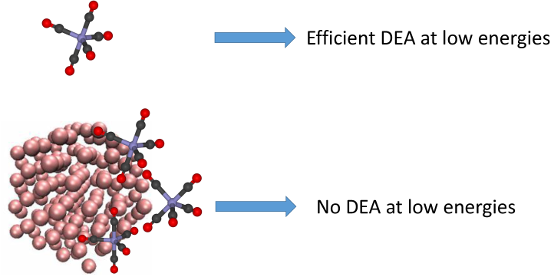
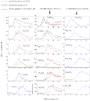
- . Once a fragment ion is created, it can be detected via mass spectrometry, regardless of whether it separated from the rest of the cluster (”desorption”) or stayed attached to the rest of the cluster (”no desorption”). Our recent experiments [14] on precursor molecules adsorbed on large argon
- , isotope distributions and high-energy resolution ion yields can be obtained. Results The mass spectrometry analysis of anions resulting from electron interactions with Fe(CO)5 clusters is complicated by the fact that two CO ligands have the same mass as one iron atom (56 amu). We have used the fact that

Ta2N3 nanocrystals grown in Al2O3 thin layers
Beilstein J. Nanotechnol. 2017, 8, 2162–2170, doi:10.3762/bjnano.8.215
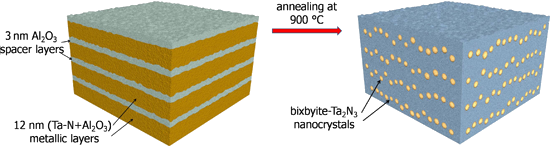
- magnetron deposition at room temperature and characterized using grazing incidence small-angle X-ray scattering (GISAXS), X-ray reflectivity (XRR), grazing incidence X-ray diffraction (GIXRD), secondary ion mass spectrometry (SIMS) and X-ray photoelectron spectroscopy (XPS). We found amorphous tantalum
- nitride NPs with the processing parameters of the films. For this purpose we used complimentary and well-established characterization techniques such as X-ray reflectivity (XRR), grazing incidence small-angle X-ray scattering (GISAXS), grazing incidence X-ray diffraction (GIXRD), secondary ion mass
- spectrometry (SIMS) and X-ray photoelectron spectroscopy (XPS). Experimental The films were grown as periodic multilayers by using the magnetron sputter deposition system KJLC CMS-18. In order to obtain tantalum nitride, the depositions were carried out in a reactive atmosphere containing 20% N2 and 80% Ar


Carbon nano-onions as fluorescent on/off modulated nanoprobes for diagnostics
Beilstein J. Nanotechnol. 2017, 8, 1878–1888, doi:10.3762/bjnano.8.188
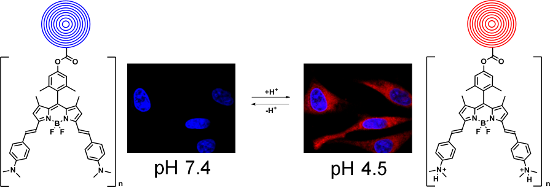
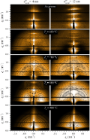
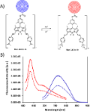
- MHz for 1H and 100.62 MHz for 13C) in CDCl3 or DMSO-d6. High-resolution mass spectrometry (HRMS) The accurate mass measurements (HRMS) were performed on a Waters SYNAPT G2 high-resolution mass spectrometry instrument equipped with an electrospray ionization interface and coupled to a Waters ACQUITY




Application of visible-light photosensitization to form alkyl-radical-derived thin films on gold
Beilstein J. Nanotechnol. 2017, 8, 1863–1877, doi:10.3762/bjnano.8.187

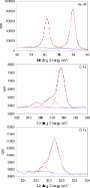
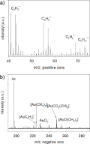
- irradiation all proved necessary for the deposition of robust films that could survive nanoshaving. In addition to characterizations with AFM, grazing angle infrared reflectance–absorbance spectroscopy (IRRAS), X-ray photoelectron spectroscopy (XPS), time-of-flight secondary ion mass spectrometry (TOF SIMS
- energy of 23.5 eV and energy step 0.125 eV, and collected at 45° to the normal of the sample surface. The binding energies (EB) were calibrated using the Au 4f7/2 photoelectron peak (EB = 84.00 eV). Time-of-flight secondary ion mass spectrometry (TOF SIMS): Time-of-flight secondary ion mass spectra were



Self-assembly of chiral fluorescent nanoparticles based on water-soluble L-tryptophan derivatives of p-tert-butylthiacalix[4]arene
Beilstein J. Nanotechnol. 2017, 8, 1825–1835, doi:10.3762/bjnano.8.184

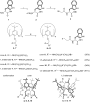
- structure of L-tryptophan, the resulting compounds 8–11 are water soluble. The structure and composition of the synthesized compounds 8–11 were determined by 1H and 13C NMR, IR spectroscopy, ESI mass spectrometry and elemental analysis. The method of dynamic light scattering (DLS) is widely used to study



Methionine-mediated synthesis of magnetic nanoparticles and functionalization with gold quantum dots for theranostic applications
Beilstein J. Nanotechnol. 2017, 8, 1734–1741, doi:10.3762/bjnano.8.174

- of NPs suspension was placed onto a lacey grid, whereas for FTIR and magnetic investigations the suspension was dried at 60 °C. Analysis: The concentration of gold remaining in the deposition solution was determined by inductively coupled plasma mass spectrometry. Measurements were made on emission


Fluorination of vertically aligned carbon nanotubes: from CF4 plasma chemistry to surface functionalization
Beilstein J. Nanotechnol. 2017, 8, 1723–1733, doi:10.3762/bjnano.8.173
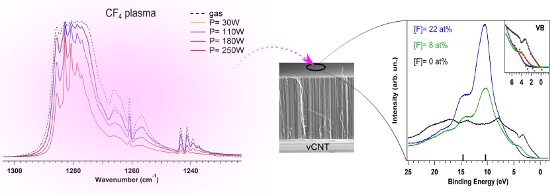
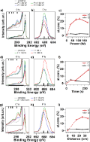
- obtained via FTIR and mass spectrometry are combined with the XPS and Raman analysis of the sample surface showing the dependence on different plasma parameters (power, time and distance from the plasma region) on the resulting fluorination. Photoemission and absorption spectroscopies are used to
- carbon nanotubes (vCNT) exposed to the fluorine-rich glow discharge. In situ residual gas analysis (RGA) mass spectrometry is performed to probe the chemistry of the plasma phase and to individuate the plasma products that are simultaneously explored by Fourier transform infrared spectroscopy (FTIR). The
- = 18 amu), HF (m/z = 20 amu), CO (m/z = 28 amu), CF (m/z = 31 amu), O2 (m/z = 32 amu), CO2 (m/z = 44 amu), COF (m/z = 47 amu), CF2 (m/z = 50 amu), COF2 (m/z = 66 amu) and CF3 (m/z = 69 amu). Since only charged species can be detected by mass spectrometry, neutral species have to be ionized in the




Collembola cuticles and the three-phase line tension
Beilstein J. Nanotechnol. 2017, 8, 1714–1722, doi:10.3762/bjnano.8.172

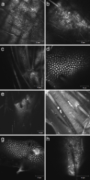
- al demonstrated a lipid layer (epicuticular wax) covering all parts of the Collembola cuticle, using time-of-flight secondary ion mass spectrometry [30]. A lipophilic dye, such as Nile Red, will bind to any part of such a layer it came into contact with, thus staining the part of a surface wetted by


![[Graphic 16]](/bjnano/content/inline/2190-4286-8-172-i22.png?max-width=637&scale=1.18182) . A system with θ0 = 105°, S = 0.1 μm a...
. A system with θ0 = 105°, S = 0.1 μm a...

Deposition of exchange-coupled dinickel complexes on gold substrates utilizing ambidentate mercapto-carboxylato ligands
Beilstein J. Nanotechnol. 2017, 8, 1375–1387, doi:10.3762/bjnano.8.139

- HS(C6H4)2CO2− (8)), and their ability to adsorb on gold surfaces is reported. Besides elemental analysis, IR spectroscopy, electrospray ionization mass spectrometry (ESIMS), UV–vis spectroscopy, and X-ray crystallography (for 6 and 7), the compounds were also studied by temperature-dependent magnetic
- soluble in polar aprotic solvents (e.g., acetone, acetonitrile, or dichloromethane), but are only sparingly soluble in alcohols and insoluble in H2O. The products gave satisfactory elemental analyses and the electrospray ionization mass spectrometry (ESIMS) spectra with base peaks for the individual [Ni2L


Synthesis, spectroscopic characterization and thermogravimetric analysis of two series of substituted (metallo)tetraphenylporphyrins
Beilstein J. Nanotechnol. 2017, 8, 1191–1204, doi:10.3762/bjnano.8.121
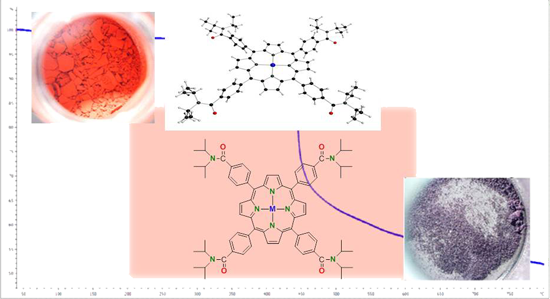
- elevated temperatures. Metalloporphyrins 2a–d and 3a–d were obtained in yields exceeding 60% and have been, as well as 2 and 3, characterized by elemental analysis, electrospray ionization mass spectrometry (ESIMS) and IR and UV–vis spectroscopy. Porphyrins 2, 2a–d and 3, 3a–d are not suitable for organic
- molecular beam deposition (OMBD), which is attributed to their comparatively low thermal stability as determined by thermogravimetric analysis (TG) of selected representatives. Keywords: electrospray ionization mass spectrometry; IR spectroscopy; metalloporphyrin; porphyrin; thermogravimetry; UV–vis
- porphyrins 2 and 3 are indicated by the disappearance of their N–H 1H NMR resonances. Electrospray ionization mass spectrometry High-resolution mass spectrometry (HRMS) studies enable one to verify the successful formation of 2/3 and of 2a–d/3a–d. The ESIMS measurements in positive-ionization mode were


Recombinant DNA technology and click chemistry: a powerful combination for generating a hybrid elastin-like-statherin hydrogel to control calcium phosphate mineralization
Beilstein J. Nanotechnol. 2017, 8, 772–783, doi:10.3762/bjnano.8.80

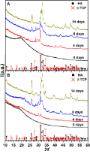
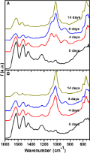
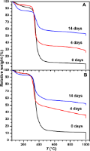
- purification, ELRs were characterized using matrix-assisted laser deposition ionization time of flight mass spectrometry (MALDI-TOF-MS), attenuated total reflection infrared spectroscopy (ATR-IR) and nuclear magnetic resonance spectroscopy (1H NMR). 3 Preparation of ELR hydrogels ELR hydrogels were made by
- different incubation times (4, 8, and 14 days) by removing and rinsing with ultrapure water followed by drying under vacuum at 37 °C. 6 Analysis 6.1 Matrix-assisted laser desorption-ionization time-of-flight mass spectrometry (MALDI-TOF-MS) The molecular weight (Mw) of the ELRs was determined by MALDI-TOF


Selective photodissociation of tailored molecular tags as a tool for quantum optics
Beilstein J. Nanotechnol. 2017, 8, 325–333, doi:10.3762/bjnano.8.35

- -resolution mass spectrometry (HRMS). Detailed experimental protocols together with analytical data are provided in Supporting Information File 1. Photocleavage in solution The photoinduced degradation of the target compound was first studied in solution. Initially, we planned to investigate the photocleavage


Nitrogen-doped twisted graphene grown on copper by atmospheric pressure CVD from a decane precursor
Beilstein J. Nanotechnol. 2017, 8, 145–158, doi:10.3762/bjnano.8.15

- magnitude smaller than for a N2 dissociation process. For example, for the •CH + N2 = N + •CHN reaction this value was determined as 21.2 ± 0.7 kcal/mol [66]. Moreover, as it was proved by time-of-flight mass spectrometry experiments, various hydrocarbon radicals can be formed from n-decane just by thermal


Monolayer graphene/SiC Schottky barrier diodes with improved barrier height uniformity as a sensing platform for the detection of heavy metals
Beilstein J. Nanotechnol. 2016, 7, 1800–1814, doi:10.3762/bjnano.7.173
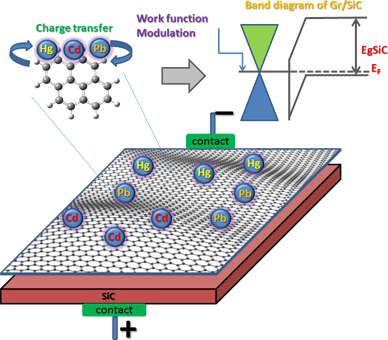
- properties. It is also important to note that the most popular approaches to detect heavy metals are mainly based on complicated chromatography principles [3], photometric methods [4], atomic absorption spectroscopy [5], mass spectrometry [6] and total reflection X-Ray fluorimetry [7]. These techniques


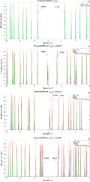


Precise in situ etch depth control of multilayered III−V semiconductor samples with reflectance anisotropy spectroscopy (RAS) equipment
Beilstein J. Nanotechnol. 2016, 7, 1783–1793, doi:10.3762/bjnano.7.171

- multilayered III–V semiconductors in situ. The related accuracy of etch depth control is better than 16 nm. Comparison with results of secondary ion mass spectrometry (SIMS) reveals a deviation of only about 4 nm in optimal cases. To illustrate the applicability of the reported method in every day settings for
- increase with decreasing structure size, in situ monitoring is gaining importance. There are various approaches to monitor and control the etch depth during dry-etching: With methods based on gas-phase analysis such as mass spectrometry of the residual gas [12] or optical gas-phase analysis such as optical
- accuracy in etch depth control with RAS, which until now had been estimated only in our earlier publications [8][9], is demonstrated. Different etch depths have been monitored during etching of layered samples and the results are compared to secondary ion mass spectrometry (SIMS) measurements of the


Numerical investigation of depth profiling capabilities of helium and neon ions in ion microscopy
Beilstein J. Nanotechnol. 2016, 7, 1749–1760, doi:10.3762/bjnano.7.168
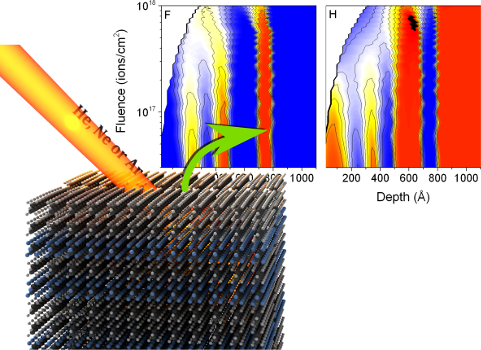
- specifically secondary ion mass spectrometry (SIMS), analysis of organic samples by sputtering is also one important field of applications and the kind of damage mentioned for previous applications remains the same. However, for depth profiling applications of polymers [19] and biological samples [20
- Patrick Philipp Lukasz Rzeznik Tom Wirtz Advanced Instrumentation for Ion Nano-Analytics (AINA), MRT Department, Luxembourg Institute of Science and Technology (LIST), 41 rue du Brill, L-4422 Belvaux, Luxembourg 10.3762/bjnano.7.168 Abstract The analysis of polymers by secondary ion mass
- spectrometry (SIMS) has been a topic of interest for many years. In recent years, the primary ion species evolved from heavy monatomic ions to cluster and massive cluster primary ions in order to preserve a maximum of organic information. The progress in less-damaging sputtering goes along with a loss in


Nanoanalytics for materials science
Beilstein J. Nanotechnol. 2016, 7, 1674–1675, doi:10.3762/bjnano.7.159
- sensors for both nanoindentation and depth sensing is presented by Cinar and co-workers [2]. Furthermore, Fleming et al. present an in situ combination of atomic force microscopy (AFM) and secondary ion mass spectrometry (SIMS) [3]. By doing so, they obtain high-resolution 3D elemental/chemical maps. This
Graphene-enhanced plasmonic nanohole arrays for environmental sensing in aqueous samples
Beilstein J. Nanotechnol. 2016, 7, 1564–1573, doi:10.3762/bjnano.7.150

- is an urgent task. Most widely used techniques are gas chromatography and high performance liquid chromatography coupled with mass spectrometry (GC–MS and HPLC–MS), however often enrichment and extraction steps prior to the analysis are necessary [7]. An online detection system for natural water with




Antitumor magnetic hyperthermia induced by RGD-functionalized Fe3O4 nanoparticles, in an experimental model of colorectal liver metastases
Beilstein J. Nanotechnol. 2016, 7, 1532–1542, doi:10.3762/bjnano.7.147

- analyses. The iron concentration [Fe] in micrograms per gram (µg·g−1) was measured in samples of hepatic and tumor tissue by inductively coupled plasma mass spectrometry (ICP-MS). The infusion of MNPs significantly increased [Fe] in the liver of MNpG rats as compared to quantifications obtained in SG


False positives and false negatives measure less than 0.001% in labeling ssDNA with osmium tetroxide 2,2’-bipyridine
Beilstein J. Nanotechnol. 2016, 7, 1434–1446, doi:10.3762/bjnano.7.135

- the above stability tests were done in pure water, as the osmylation reaction is carried out in pure water. Further investigation into the stability of C(OsBp) containing oligos as well as the stability of C(Me)(OsBp) oligos should be done, and major degradants should be identified by NMR and mass
- spectrometry, but the corresponding reactions need to be carried out in buffers, because most of this instability is known to be pH-dependent [37]. For the purposes of sequencing osmylated DNA via nanopores, one may conjecture that tentative degradation of osmylated C under current labeling conditions of 2 h


Microwave synthesis of high-quality and uniform 4 nm ZnFe2O4 nanocrystals for application in energy storage and nanomagnetics
Beilstein J. Nanotechnol. 2016, 7, 1350–1360, doi:10.3762/bjnano.7.126

- the iTEM software. Thermogravimetric analysis was performed on a Netzsch STA 409 PC. The thermobalance was coupled to a Balzers QMG 421 quadrupole mass spectrometer. The ionization energy was 70 eV. Gas chromatography-mass spectrometry was performed on an Agilent 6890 gas chromatograph equipped with
- sol–gel synthesis using anhydrous zinc acetate and iron(III) acetylacetonate as the precursors and rac-1-phenylethanol as a solvent. Details on the formation mechanism from gas chromatography-mass spectrometry (GC-MS) are given in Supporting Information File 1, Figure S1–S4 and Table S1. The size and
- energies arise from organic compounds containing C–O and C=O bonds, respectively. The fact that the as-prepared nanoparticles are not “naked” was also confirmed by thermogravimetric analysis-mass spectrometry (TGA-MS). The TGA-MS data of vacuum-dried material in Supporting Information File 1, Figure S5


Experimental and simulation-based investigation of He, Ne and Ar irradiation of polymers for ion microscopy
Beilstein J. Nanotechnol. 2016, 7, 1113–1128, doi:10.3762/bjnano.7.104
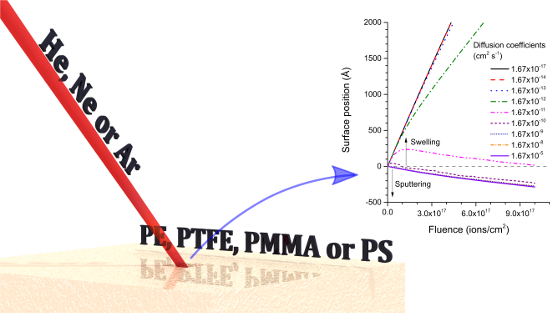
- Lukasz Rzeznik Yves Fleming Tom Wirtz Patrick Philipp Advanced Instrumentation for Ion Nano-Analytics (AINA), MRT Department, Luxembourg Institute of Science and Technology (LIST), 41 rue du Brill, L-4422 Belvaux, Luxembourg 10.3762/bjnano.7.104 Abstract Secondary ion mass spectrometry (SIMS) on
- . Keywords: Helium ion microscopy; irradiation; polymers; preferential sputtering; secondary ion mass spectrometry; simulations; Introduction Progress in materials and life sciences requires sample characterisation with high lateral resolution and high sensitivity. A technique which allows for both is
- secondary ion mass spectrometry (SIMS). Combined with a high-resolution mass spectrometer, mass interferences can be avoided and isotopes and small cluster ions identified unambiguously. These properties have been used since the early days of SIMS for imaging applications [1]. On the Cameca NanoSIMS, which


Phenalenyl-based mononuclear dysprosium complexes
Beilstein J. Nanotechnol. 2016, 7, 995–1009, doi:10.3762/bjnano.7.92
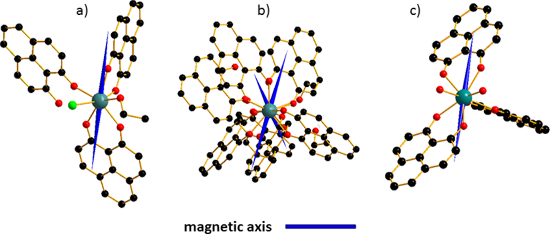
- , paramagnetic 1H NMR, MALDI-TOF mass spectrometry, UV–vis spectrophotometry and magnetic measurements. Both static (dc) and dynamic (ac) magnetic properties of these complexes have been investigated, showing slow relaxation of magnetization, indicative of single molecule magnet (SMM) behavior. Attempts to
- distilled THF, anhydrous starting materials and oven-dried glassware. So far, single crystals of the complex 4 were not obtained, thus its exact structure remains unknown yet. Nevertheless, the product was fully characterized by NMR spectroscopy, mass spectrometry and UV–vis spectrophotometry in comparison