


Search results
Search for "ion" in Full Text gives 954 result(s) in Beilstein Journal of Nanotechnology. Showing first 200.
Classification and application of metal-based nanoantioxidants in medicine and healthcare
Beilstein J. Nanotechnol. 2024, 15, 396–415, doi:10.3762/bjnano.15.36
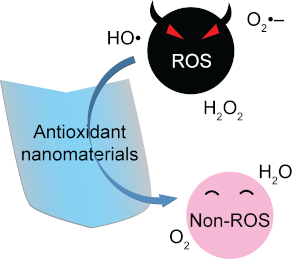
- nanomaterials with more hydroxy groups in the stoichiometric composition generally tend to exhibit higher CAT activity because hydroxy groups enhance ion exchange on the surface of nanomaterials by providing active sites [35][36]. The CAT-like activity was also investigated in copper-based nanomaterials by


Investigating ripple pattern formation and damage profiles in Si and Ge induced by 100 keV Ar+ ion beam: a comparative study
Beilstein J. Nanotechnol. 2024, 15, 367–375, doi:10.3762/bjnano.15.33
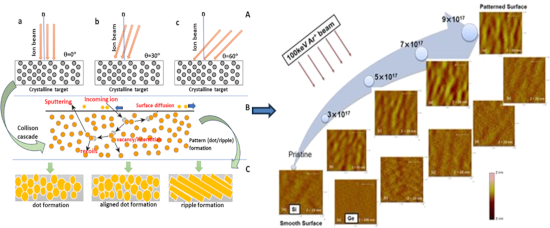
- Research and Innovation, University of Petroleum and Energy Studies University, Dehradun 248007, India 10.3762/bjnano.15.33 Abstract Desired modifications of surfaces at the nanoscale may be achieved using energetic ion beams. In the present work, a complete study of self-assembled ripple pattern
- fabrication on Si and Ge by 100 keV Ar+ ion beam bombardment is discussed. The irradiation was performed in the ion fluence range of ≈3 × 10¹⁷ to 9 × 10¹⁷ ions/cm2 and at an incident angle of θ ≈ 60° with respect to the surface normal. The investigation focuses on topographical studies of pattern formation
- using atomic force microscopy, and induced damage profiles inside Si and Ge by Rutherford backscattering spectrometry and transmission electron microscopy. The ripple wavelength was found to scale with ion fluence, and energetic ions created more defects inside Si as compared to that of Ge. Although


Modulated critical currents of spin-transfer torque-induced resistance changes in NiCu/Cu multilayered nanowires
Beilstein J. Nanotechnol. 2024, 15, 360–366, doi:10.3762/bjnano.15.32
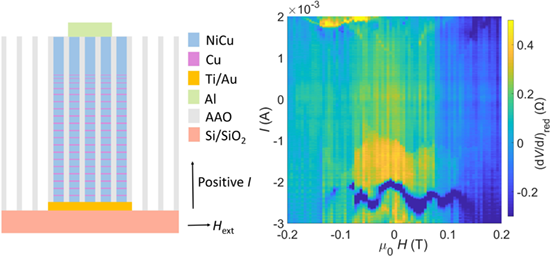
- spacer in the following). From the bottom to the top, both NiCu layers and Cu spacers get thinner, which can be caused by the dynamical change of the ion concentration in the holes. Eventually, the thickness of the Cu spacers becomes zero and no well-defined Cu spacer can be observed. Through the SEM


Exploring the relationships between physiochemical properties of nanoparticles and cell damage to combat cancer growth using simple periodic table-based descriptors
Beilstein J. Nanotechnol. 2024, 15, 297–309, doi:10.3762/bjnano.15.27
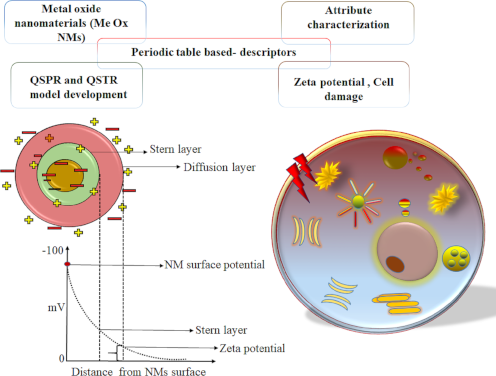
- are involved in the Fenton reaction, which generates hydroxyl radicals from hydrogen peroxide. Similarly, the Haber–Weiss reaction involves the oxidized forms of redox-active metal ions and superoxide anions, which generate the reduced form of the metal ion. This reduced form can then be coupled to


Ultrasensitive and ultrastretchable metal crack strain sensor based on helical polydimethylsiloxane
Beilstein J. Nanotechnol. 2024, 15, 270–278, doi:10.3762/bjnano.15.25
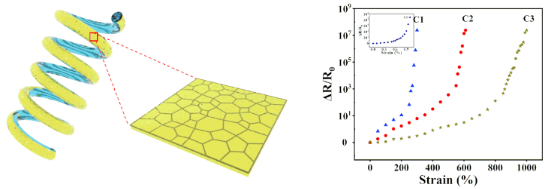
- ion beam sputtering was obtained from Fuzhou Yingfei Xun Photoelectric Tech Co., Ltd, China; it possessed a density of 19.3 g·cm−3 and a conductivity of 4.52 × 10⁷ S·m−1. Silver conductive adhesive, which was procured from Shenzhen Ausbond Co., LTD. (Guangdong, China), was employed to affix copper
- structured PDMS was initially cleansed through a 5 min Ar plasma sputtering and, subsequently, coated with a 10 nm thick Ti adhesion layer. After that, ion beam sputtering was utilized to deposit a 50 nm thick Au thin film onto the outer surface of the helically shaped PDMS. Then, a controlled pre-stretch


Design, fabrication, and characterization of kinetic-inductive force sensors for scanning probe applications
Beilstein J. Nanotechnol. 2024, 15, 242–255, doi:10.3762/bjnano.15.23
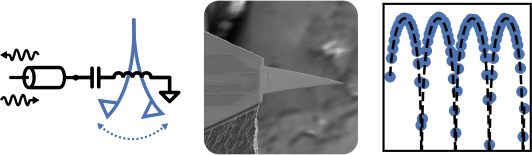
- -beam lithography and reactive-ion etching. We simulate the electromagnetic response of the meandering nanowire inductors using Sonnet, a quasi-3D electromagnetic simulator [32], which has the feature of including sheet kinetic inductance Lk,□. We begin by simulating the meandering inductor itself to
- -ion etch (RIE) process in a Plasmapro 100 ICP300 from Oxford Instruments, with an etch rate of roughly 8 nm/min. (e) Fine circuit pattern. Electron-beam lithography defines the finer structures, such as the meandering nanowire inductor, the shunt inductor, and the interdigital gap of the capacitor. We



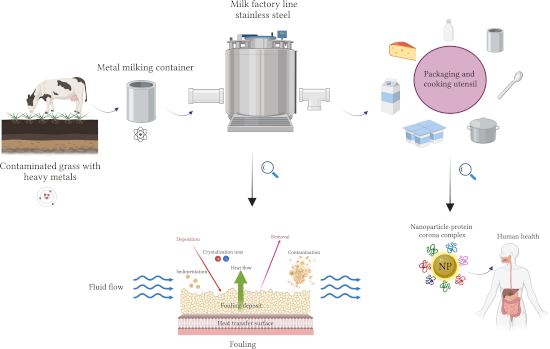
Multiscale modelling of biomolecular corona formation on metallic surfaces
Beilstein J. Nanotechnol. 2024, 15, 215–229, doi:10.3762/bjnano.15.21
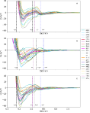
- 0.15–0.18 nm and 0.42–0.48 nm away from the aluminum surface. These regions corresponded to the first and second water layers adjacent to the metal surface, respectively (as depicted in Supporting Information File 1, Figure S1). Further examination of the ion density profiles indicated the presence of
- vertical lines indicate the positions of water and ion layers. (a) Al(100), (b) Al(110), and (c) Al(111). Minimum energy of adsorption (kBT) for each SCA on three Al fcc slabs obtained through all-atom simulations: (a) Al(100), (b) Al(110), and (c) Al(111). Notably, Al(111) exhibits a stronger binding





Ion beam processing of DNA origami nanostructures
Beilstein J. Nanotechnol. 2024, 15, 207–214, doi:10.3762/bjnano.15.20
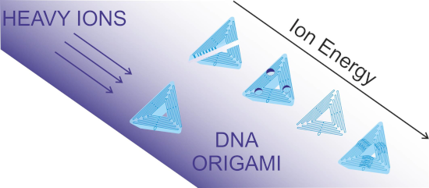
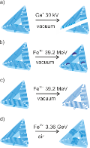
- nanopatterning approach. Direct combination of this approach with top-down nanotechnology, such as ion beams, has not been considered because of the soft nature of the DNA material. Here we demonstrate that the shape of 2D DNA origami nanostructures deposited on Si substrates is well preserved upon irradiation
- by ion beams, modeling ion implantation, lithography, and sputtering conditions. Structural changes in 2D DNA origami nanostructures deposited on Si are analyzed using AFM imaging. The observed effects on DNA origami include structure height decrease or increase upon fast heavy ion irradiation in
- vacuum and in air, respectively. Slow- and medium-energy heavy ion irradiation results in the cutting of the nanostructures or crater formation with ion-induced damage in the 10 nm range around the primary ion track. In all these cases, the designed shape of the 2D origami nanostructure remains


Graphene removal by water-assisted focused electron-beam-induced etching – unveiling the dose and dwell time impact on the etch profile and topographical changes in SiO2 substrates
Beilstein J. Nanotechnol. 2024, 15, 190–198, doi:10.3762/bjnano.15.18
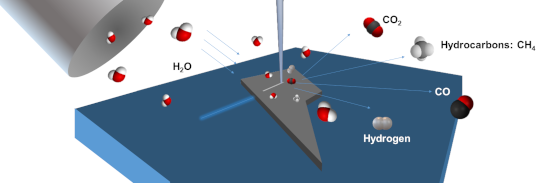
- -beam bombardment, which initially introduces defects into the graphene structure and then knocks out carbon atoms, although the edges of the fabricated nanostructures remain rough after the process [11]. Other direct techniques, such as focused ion beam (FIB) milling with heavy Ga+ ions, are not
- applicable due to the high impact on the underlying substrate. Helium ion milling was believed to be the most suitable tool for structuring graphene [12]. However, it requires expensive equipment, and even this technique introduces a substantial number of defects into the graphene layer, as shown by Kim et


Study of the reusability and stability of nylon nanofibres as an antibody immobilisation surface
Beilstein J. Nanotechnol. 2024, 15, 83–94, doi:10.3762/bjnano.15.8

- an environment of high ion concentration capable of interacting with any charge density group, disrupting the hydrophobic bonds between protein A/G and antibody and the hydrogen bonds between protein A/G and nylon, as well as the bare nylon nanofibres. Results of stability study As this system is


Influence of conductive carbon and MnCo2O4 on morphological and electrical properties of hydrogels for electrochemical energy conversion
Beilstein J. Nanotechnol. 2024, 15, 57–70, doi:10.3762/bjnano.15.6
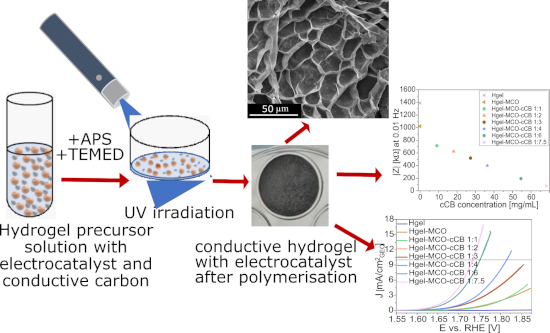
- /dec [56]. The results obtained confirm that ensuring the appropriate concentration of ion-conducting and electron-conducting particles in the hydrogel structure is a necessary condition to provide high electrocatalytic efficiency of the catalyst particles participating in the oxygen evolution reaction


TEM sample preparation of lithographically patterned permalloy nanostructures on silicon nitride membranes
Beilstein J. Nanotechnol. 2024, 15, 1–12, doi:10.3762/bjnano.15.1

- using three different fabrication methods: lift-off, ion beam etching (IBE), and stencil lithography. They were further analyzed using different instruments, including scanning electron microscopy, LTEM, and electron holography. A bilayer of positive PMMA resist was utilized in the first fabrication
- submicrometer apertures were milled on SiN membranes using a focused ion beam. Furthermore, we have developed a new TEM sample preparation method, where we fabricated Py nanostructures on a bulk substrate with a SiN buffer layer and etched the substrate to create a thin SiN membrane under the Py nanostructure
- mode to avoid melting of the PMMA resist. The second approach involved etching a thin Py film with an ion beam while preserving the intended structure with an electron-beam-patterned negative resist mask. Redeposition of etched material was found to construct fences at the edges of the structures


A combined gas-phase dissociative ionization, dissociative electron attachment and deposition study on the potential FEBID precursor [Au(CH3)2Cl]2
Beilstein J. Nanotechnol. 2023, 14, 1178–1199, doi:10.3762/bjnano.14.98
- . [26] under the term focused-electron-beam-induced mass spectrometry (FEBiMS). In this approach, ion-extraction mass spectrometry, in close proximity to the forming FEBID structure, is used to analyze the charged, desorbing ligand fragments. Another approach in this direction is to combine ultrahigh
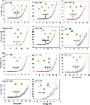
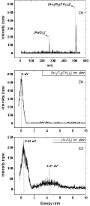
- . According to the AES depicted in Figure 1b and Figure 5b, x can be inferred to be 1–2. Gas-phase studies Figure 6a shows a positive ion mass spectrum of [Au(CH3)2Cl]2, recorded for the m/z range from 10 to 550 at a 50 eV electron impact energy. A rich fragmentation pattern, characterized by progressive loss
- ion yield curves for the individual fragments along with their average AEs determined from fits to 3–4 ion yield curves recorded on different days. Also shown are the respective confidence limits and the structures of the respective positive ions optimized at the PBE0-TZVP level of theory. Table 2



Properties of tin oxide films grown by atomic layer deposition from tin tetraiodide and ozone
Beilstein J. Nanotechnol. 2023, 14, 1085–1092, doi:10.3762/bjnano.14.89
- have been studied from many perspectives. For example, one can mention anodes for Li-ion batteries [1], gas sensors [2], catalytic activities [3], and stable buffer [4] or base [5] layers in solar cells. More applications can be found, when SnO2 is considered as constituent of a nanostructure or a
- nanocomposite layer. ZrO2–SnO2 stacked layers have been shown to perform as mechanically elastic and magnetizable films [6]. SnO2-coated carbon nanotubes have been studied as catalysts [7] and ZnO–SnO2 as functional composite in Li-ion batteries [8]. A recent review article from 2022 lists 27 different


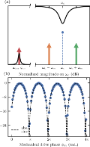
Spatial mapping of photovoltage and light-induced displacement of on-chip coupled piezo/photodiodes by Kelvin probe force microscopy under modulated illumination
Beilstein J. Nanotechnol. 2023, 14, 1059–1067, doi:10.3762/bjnano.14.87

- finalized by etching circular holes from the backside of the wafer to obtain thin membranes. The sizes of these holes were defined by applying and patterning a photoresist on the backside of the wafer, which was then anisotropically etched by deep reactive ion etching (DRIE) using SF6, O2, and C4F8 gases


Recognition mechanisms of hemoglobin particles by monocytes – CD163 may just be one
Beilstein J. Nanotechnol. 2023, 14, 1028–1040, doi:10.3762/bjnano.14.85

- = dilution factor (2.1); molar mass of Hb (tetrameric) = 64.5; (monomer) molar extinction coefficient (ε) = 6.945). Percentage of functional hemoglobin Each hemoglobin molecule contains an Fe2+ ion on which the ability of Hb to bind oxygen is based. Methemoglobin has undergone an oxidation process. The
- central iron ion is trivalent, and the Hb derivative has lost its ability to bind oxygen. Therefore, only bivalent Hb is functional. The “oxygen release method” was used to determine the percentage of functional hemoglobin, as previously described in detail by Kloypan and co-workers [33]. In brief, the


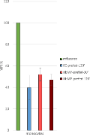


Exploring internal structures and properties of terpolymer fibers via real-space characterizations
Beilstein J. Nanotechnol. 2023, 14, 1004–1017, doi:10.3762/bjnano.14.83

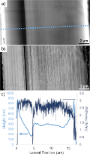
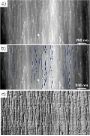
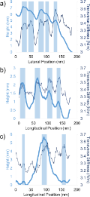
- investigated the processing and properties of high-performance terpolymer fibers, much remains to be understood about the internal nano- and microstructures of these fibers, and how these morphologies relate to fiber properties. Here we use a focused ion beam notch technique and multifrequency atomic force
- features at different length scales and verify the applicability of analytical structural models used to date. Over the last several years, a “focused ion beam (FIB) notch” technique has been developed and employed to address these gaps in understanding of the internal structures of fibers such as Kevlar
- chamber [9]. Kevlar® K29 fibers also discussed in this report underwent the same preparation techniques. Focused ion beam notching Conductively coated fibers were cut with a FIB as discussed in detail in an earlier study [9]. In summary, 2–3 μm wide through-cuts were notched into each fiber (Figure 1b





Fragmentation of metal(II) bis(acetylacetonate) complexes induced by slow electrons
Beilstein J. Nanotechnol. 2023, 14, 980–987, doi:10.3762/bjnano.14.81
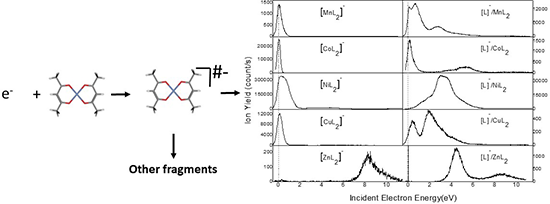
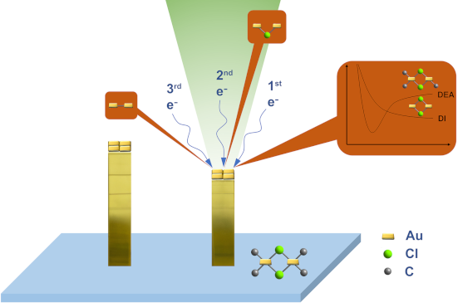
- fragmentation arises from a resonant mechanism known as dissociative electron attachment (DEA) producing exclusively a negative fragment ion and one or more neutral counterparts, as it will be discussed below. The contribution of each of the processes may depend on the nature of the organometallic precursors
- summarizes all the observed anion products. As the anion yields shown below in Figures 1–6 show structures characteristic of resonant mechanisms, Table 1 also reports the peak positions of the fragment anions and their branching ratios derived by integration of the ion yield over the respective peaks. At the
- incoming scattering electron is captured by the precursor molecule to form a transient negative ion, TNI or [ML2]#−. If the electron autodetachment time of the TNI is longer than the dissociation time, the transient anion undergoes dissociation into a negative fragment and one or more neutral counterpart(s


Isolation of cubic Si3P4 in the form of nanocrystals
Beilstein J. Nanotechnol. 2023, 14, 971–979, doi:10.3762/bjnano.14.80

- precursor for diffusion doping of wafers and as anode material for Li-ion batteries. A similar method with a hydrogenation step offers the possibility to obtain other compounds, such as silicon selenides, arsenides, and sulfides. Keywords: ampoule annealing; defective zinc blende structure; DFT
- number of potential benefits to both science and industry. These methods often employ new strategies for the synthesis of specific classes of substances. For example, the widely known development of perovskite synthesis through ion exchange reactions has attracted attention in scientific as well as
- ) Si3P4 to be energetically favored [9][10][11][12][13][14]. The calculated lattice constant a and the ratio c/a lie within the ranges of 4.961–5.093 Å and 0.994–1.003, respectively. Among the properties of silicon-based materials, one may note a high specific capacity, which is crucial for Li-ion


Metal-organic framework-based nanomaterials for CO2 storage: A review
Beilstein J. Nanotechnol. 2023, 14, 964–970, doi:10.3762/bjnano.14.79

- the linker molecules but have also involved the metal ions. For example, Lau et al. used an ion exchange strategy to boost the amount of adsorbed CO2 in UiO-66 (Figure 4) [38]. After replacing approximately 50% of the Zr4+ ions in UiO-66 with Ti4+, a significant increase in CO2 adsorption capacity (81
- view of the channels displaying the cylindrical pores. Figure 3 was reprinted with permission from [34]. Copyright 2015 American Chemical Society. This content is not subject to CC BY 4.0. Graphic illustration of the ion exchange by Ti(IV) in UiO-66. Figure 4 was republished with permission of The




Ni, Co, Zn, and Cu metal-organic framework-based nanomaterials for electrochemical reduction of CO2: A review
Beilstein J. Nanotechnol. 2023, 14, 904–911, doi:10.3762/bjnano.14.74
- metal ion doping in ZIF-8, aiming to enhance the performance of CO2 conversion, as recently reported (Figure 4a). Cho et al. revealed that Cu-doped ZIF-8 exhibited the highest catalytic activity, surpassing both Fe- and Ni-doped ZIF-8 [44]. Specifically, Cu0.5Zn0.5/ZIF-8 yielded a large FECO of 88.5% at
- /by/4.0/). (a) A graphic representation of the preparation of MzZny/ZIF-8, (b) Faradaic efficiency for the CO production using different materials, (c) diagram of free energy for CO2RR. Figure 4 was adapted from [44], J. H. Cho et al., “Transition Metal Ion Doping on ZIF-8 Enhances the Electrochemical


Ultralow-energy amorphization of contaminated silicon samples investigated by molecular dynamics
Beilstein J. Nanotechnol. 2023, 14, 834–849, doi:10.3762/bjnano.14.68

- , Luxembourg Thermo Fisher Scientific, Hillsboro, OR, 97124, USA 10.3762/bjnano.14.68 Abstract Ion beam processes related to focused ion beam milling, surface patterning, and secondary ion mass spectrometry require precision and control. Quality and cleanliness of the sample are also crucial factors
- . Furthermore, several domains of nanotechnology and industry use nanoscaled samples that need to be controlled to an extreme level of precision. To reduce the irradiation-induced damage and to limit the interactions of the ions with the sample, low-energy ion beams are used because of their low implantation
- depths. Yet, low-energy ion beams come with a variety of challenges. When such low energies are used, the residual gas molecules in the instrument chamber can adsorb on the sample surface and impact the ion beam processes. In this paper we pursue an investigation on the effects of the most common




Silver nanoparticles loaded on lactose/alginate: in situ synthesis, catalytic degradation, and pH-dependent antibacterial activity
Beilstein J. Nanotechnol. 2023, 14, 781–792, doi:10.3762/bjnano.14.64
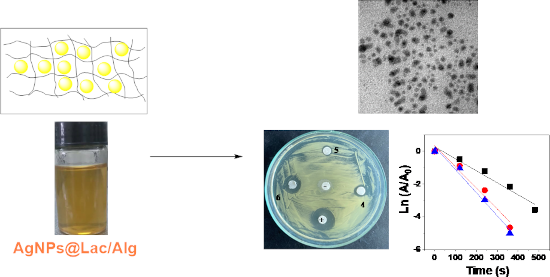
- values up to 140 min. Throughout the synthesis process, the λmax values showed a slight increase, which confirms the critical role of reaction time in the synthesis of stable nanocomposites. To assess the impact of silver ion concentration, ratios of silver ions to gel in the range of 0.1–0.7 (w/w) were
- in the absorbance value in the UV–vis spectra. Minor changes in λmax values were noted from the absorption data, indicating a slight influence of the silver-ion-to-nanocomposite ratio on the physicochemical properties of the synthesized AgNPs. Considering these findings, two ratios of silver ions to
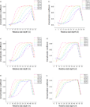
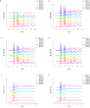
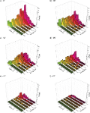
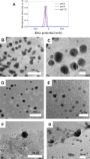
- (left) and plots of absorbance and wavelength (λmax) data (right) recorded as a function of temperature (A and B), reaction time (C and D) and the ratio of silver ion to blank Lac/Alg (E and F). Zeta potentials (A) and size distribution obtained from DLS measurements (B) of AgNPs@Lac/Alg with different


In situ magnesiothermic reduction synthesis of a Ge@C composite for high-performance lithium-ion batterie anodes
Beilstein J. Nanotechnol. 2023, 14, 751–761, doi:10.3762/bjnano.14.62

- report an in situ magnesiothermic reduction to synthesize a composite of Ge@C as an anode material for lithium-ion batteries. The obtained electrode delivered a specific capacity of 454.2 mAh·g−1 after 200 cycles at a specific current of 1000 mA·g−1. The stable electrochemical performance and good rate
- contact formation during in situ synthesis. Keywords: Ge anode; in situ synthesis; lithium-ion batteries; magnesiothermic reduction; Introduction The significantly increasing energy consumption leads to the exhaustion of fossil fuel sources such as coal, oil, and natural gas. Additionally, there are
- number of electric vehicles (EVs) [5][6]. The most important component of EVs are suitable energy storage systems, the further development of which will be key to a more widespread use of this kind of transportation [7]. Commercialized first by Sony company, lithium-ion batteries (LIBs) and related


The microstrain-accompanied structural phase transition from h-MoO3 to α-MoO3 investigated by in situ X-ray diffraction
Beilstein J. Nanotechnol. 2023, 14, 692–700, doi:10.3762/bjnano.14.55
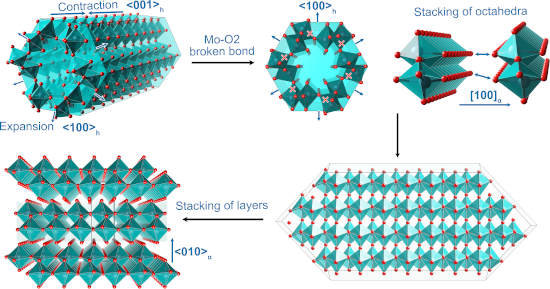
- , making them multifunctional electronic and optical materials for applications in ion batteries [3][4], lubricants [5], gas detectors [6][7], photochromism [8][9], photocatalysis [10][11], and superconductors [12][13]. The molybdenum oxide MoO3 can crystalize into several structures, including α-MoO3 [14





