

Search results
Search for "response" in Full Text gives 1025 result(s) in Beilstein Journal of Nanotechnology. Showing first 200.
Recent advances in photothermal nanomaterials for ophthalmic applications
Beilstein J. Nanotechnol. 2025, 16, 195–215, doi:10.3762/bjnano.16.16
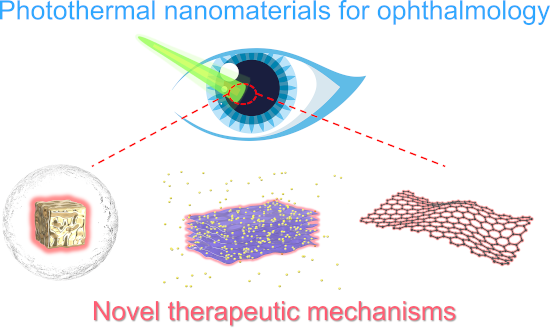
- ophthalmology because of their compatibility with the high transmittance characteristics of ocular tissues, allowing for a more sensitive response to various types of incident light [9][10][11]. This sensitivity facilitates diverse therapeutic effects and offers solutions to complex ophthalmic diseases. In
- addition, the cornea, an ocular tissue, is relatively “immune amnestied” because of the absence of blood vessels and lymphatic vessels, which reduces the patient’s immune response and inflammation and improves the safety and efficacy of photothermal nanomaterials therapy [12][13]. The small size of
- the migration of LECs and their inflammatory response following photothermal treatment, without causing significant damage to the surrounding healthy tissues (Figure 3f). 3.3 Vitreous turbidity The vitreous is a highly hydrated, transparent gel supported by a network of long and thin collagen fibers


A review of metal-organic frameworks and polymers in mixed matrix membranes for CO2 capture
Beilstein J. Nanotechnol. 2025, 16, 155–186, doi:10.3762/bjnano.16.14
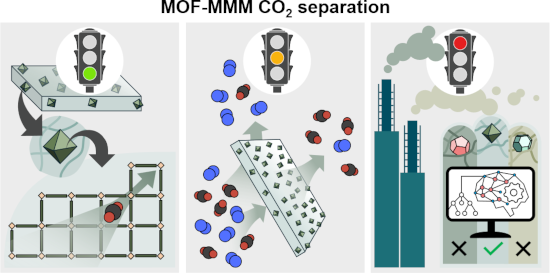
- flexibility, which may undergo dynamic changes in response to external stimuli, such as pressure and temperature. This characteristic allows for gated CO2 adsorption under specific conditions [44], which presents itself as a unique strategy to selectively control CO2 separation in gas mixtures. For instance




Nanocarriers and macrophage interaction: from a potential hurdle to an alternative therapeutic strategy
Beilstein J. Nanotechnol. 2025, 16, 97–118, doi:10.3762/bjnano.16.10

- be considered a therapeutic target, exploiting their natural ability to phagocyte external agents such as NCs. Both monocytes and macrophages perpetuate tissue damage during chronic inflammatory disorders. They are implicated in preventing and resolving inflammation and wound-healing response [8
- strong pro-inflammatory response. These cells release cytokines such as tumor necrosis factor-α (TNF-α), interleukin (IL)-6, and IL-1β, essential for pathogen clearance and initiating immune defense mechanisms [19]. However, if an inflammation remains active for extended periods, it can contribute to
- toll-like receptor 4 (TLR4) [19]. This interaction leads to the expression and release of type-1 interferons (IFN-α and IFN-β), which further amplify the immune response through the Janus kinase/signal transducers and activator of transcription (JAK/STAT) signaling cascade [18][19]. M2 macrophages


Modeling and simulation of carbon-nanocomposite-based gas sensors
Beilstein J. Nanotechnol. 2025, 16, 90–96, doi:10.3762/bjnano.16.9
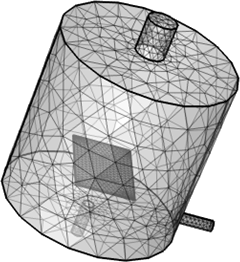
- effective, often face limitations such as poor sensitivity, slow response times, and high-power consumption. These limitations restrict their widespread use and make the development of more efficient, sensitive, and cost-effective CO gas-sensing solutions necessary. The unique properties of carbon
- composed of PEDOT:PSS/poly(p-anisidine) (PPA) to detect CO was investigated at room temperature. The gas-sensing characteristics of the developed sensors such as sensitivity, response, and recovery time were evaluated at room temperature for different CO concentrations [5]. Many research works on PEDOT:PSS



Characterization of ZnO nanoparticles synthesized using probiotic Lactiplantibacillus plantarum GP258
Beilstein J. Nanotechnol. 2025, 16, 78–89, doi:10.3762/bjnano.16.8
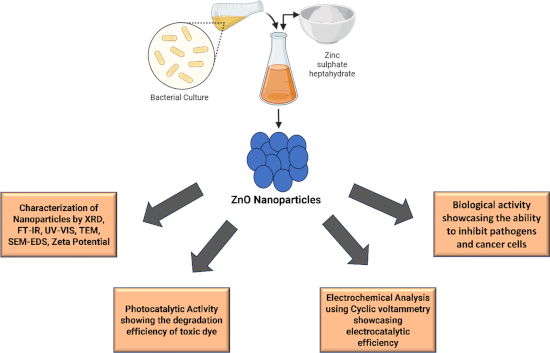
- concentrations. The IC50 values represent the concentration of biosynthesized ZnO NPs required to inhibit the biological response by 50%. The IC50 value after 24 h was calculated as 98.53 µg/mL (Figure 6c). Discussion The principal aim of this investigation was to employ an eco-friendly synthesis approach in
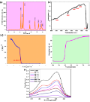
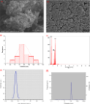
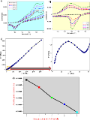
- ) EDX spectroscopy for elemental composition. (e) Zeta potential measurement. (f) DLS results showing the size distribution of ZnO NPs. (a, b) Cyclic voltammetry response of the ZnO electrode in 0.1 M KCl solution at varying scan rates, showing redox behavior and electron transfer characteristics. (c



Instance maps as an organising concept for complex experimental workflows as demonstrated for (nano)material safety research
Beilstein J. Nanotechnol. 2025, 16, 57–77, doi:10.3762/bjnano.16.7



Advanced atomic force microscopy techniques V
Beilstein J. Nanotechnol. 2025, 16, 54–56, doi:10.3762/bjnano.16.6
- . Khachartryan et al. highlight the strength of cantilever displacement detection with a Michelson-type fibre interferometer and provide a model for interferometric signal generation [4]. The interferometer response is slightly nonlinear under typical NC-AFM working conditions, while a large cantilever
Theoretical study of the electronic and optical properties of a composite formed by the zeolite NaA and a magnetite cluster
Beilstein J. Nanotechnol. 2025, 16, 44–53, doi:10.3762/bjnano.16.5
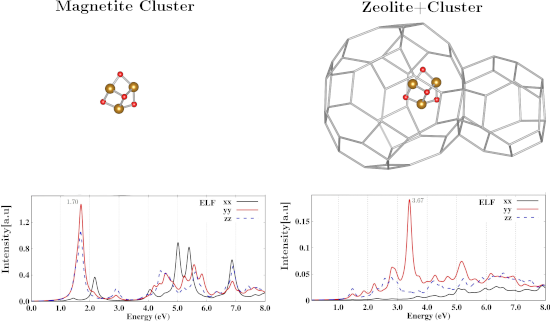
- that the composite exhibits magnetic properties of a half-semiconductor and a strong optical response within the visible and ultraviolet regions of the spectrum. Keywords: magnetic cluster; NaA zeolite; optical properties; Introduction Zeolites are crystalline materials made up of aluminosilicates
- response are intricately linked to factors such as the chemical composition, particle size, structure, and geometry of these materials [18][19][20]. Hence, it is generally undesirable for nanoscale materials to undergo structural alterations because of environmental exposure or to change their properties
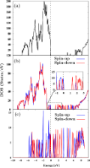
- complex, has some intervals where it is the highest. Note that within this interval is the visible range; therefore, unlike pure zeolite, the composite exhibits a response within the visible and ultraviolet regions of the spectrum (i.e., non-zero dissipation). For energies less than 1.26 eV, all imaginary




A nanocarrier containing carboxylic and histamine groups with dual action: acetylcholine hydrolysis and antidote atropine delivery
Beilstein J. Nanotechnol. 2025, 16, 11–24, doi:10.3762/bjnano.16.2
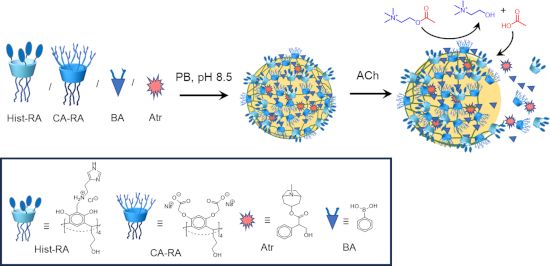
- . %EE was calculated as 60%. Then, the polymer particles containing encapsulated Atr (Atr@p(Hist-CA)) were mixed with ACh (5 mM) before undergoing another round of dialysis for 1 h. The dialysate was once again removed under reduced pressure, and the amount of Atr released in response to ACh was


Orientation-dependent photonic bandgaps in gold-dust weevil scales and their titania bioreplicates
Beilstein J. Nanotechnol. 2025, 16, 1–10, doi:10.3762/bjnano.16.1
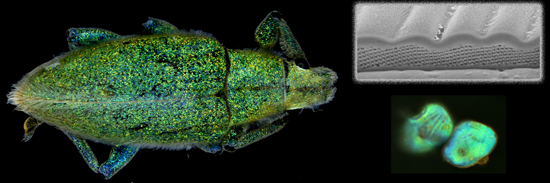
- geometries were set up in a rectangular simulation box with two lateral directions. While the in-plane boundaries had periodic boundary conditions, the boundary along the incident light directions had a perfectly matched layer (PML) boundary. The diamond geometry used to simulate the scale response had a


Biomimetic nanocarriers: integrating natural functions for advanced therapeutic applications
Beilstein J. Nanotechnol. 2024, 15, 1619–1626, doi:10.3762/bjnano.15.127
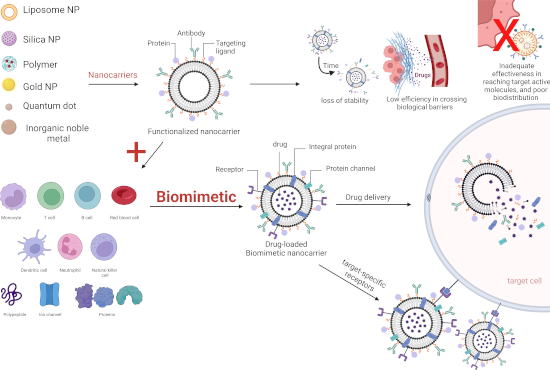
- bioavailability and drug delivery. Additionally, the capacity of these nanocarriers to react with reactive oxygen species at inflammation sites offers an anti-inflammatory response, reducing tissue damage [76][77]. Within this scope, manganese dioxide nanocarriers have been studied to address a challenge in


Facile synthesis of size-tunable L-carnosine-capped silver nanoparticles and their role in metal ion sensing and catalytic degradation of p-nitrophenol
Beilstein J. Nanotechnol. 2024, 15, 1576–1592, doi:10.3762/bjnano.15.124
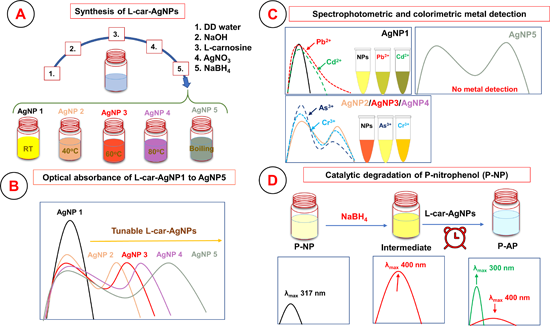
- Fenton-like oxidation or ozonation [10]. These techniques require expensive equipment, specialized operational skills, and extensive sample preparation, making them less practical for on-site testing, frequent monitoring, and remediation. In response to these challenges, recent advancements in




Green synthesis of silver nanoparticles derived from algae and their larvicidal properties to control Aedes aegypti
Beilstein J. Nanotechnol. 2024, 15, 1566–1575, doi:10.3762/bjnano.15.123
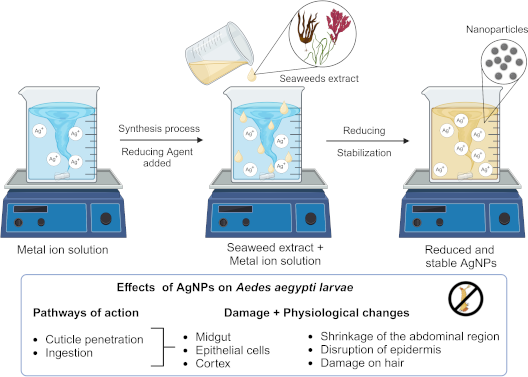
- extract against A. aegypti larvae. The L4 larvae were treated with 1 mL of NPs in 249 mL of distilled water. An increasing mortality was observed after periods of 24, 48, and 72 h, yielding the lowest LC50 value after a period of 72 h (Table 2). The response of the free extract against the larvae was not


The round-robin approach applied to nanoinformatics: consensus prediction of nanomaterials zeta potential
Beilstein J. Nanotechnol. 2024, 15, 1536–1553, doi:10.3762/bjnano.15.121
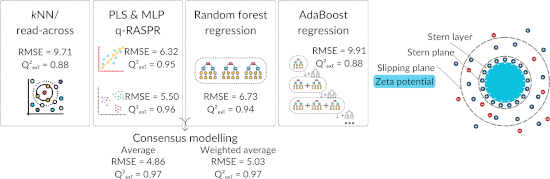
- descriptor DLS (hydrodynamic diameter) and found that it had a significant correlation with the training set response, except for four data points. This was because, for these compounds, the values of DLS were significantly higher than the rest of the training data points, therefore hindering linear


Electrochemical nanostructured CuBTC/FeBTC MOF composite sensor for enrofloxacin detection
Beilstein J. Nanotechnol. 2024, 15, 1522–1535, doi:10.3762/bjnano.15.120
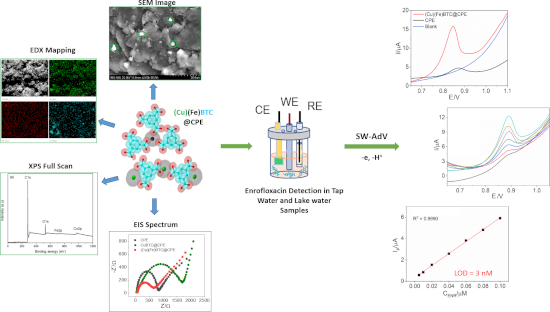
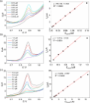
- significantly enhanced the electrochemical response of ENR, increasing the signal by more than ten times compared to the unmodified electrode. Under optimal analytical conditions, the sensor exhibited three dynamic ranges for ENR detection, that is, 0.005 to 0.100 µM, 0.1 to 1.0 µM, and 1 to 13 µM, with
- efficacy in the detection of ENR with quick response, low cost, and simple handling; hence, these methods are promising to quantify ENR [15][16]. Noble metals and metal-organic frameworks (MOFs) are the most typical electrode materials to detect antibiotics [17][18]. MOFs emerged as the outstanding
- voltammogram in ENR-free blank solution with no electrochemical response for ENR. In phosphate-buffered saline (PBS) containing ENR, there is a peak at 0.85 V on all four electrodes, attributed to the oxidation of ENR during the anodic scanning. No reduction peak was observed, revealing that the





Integrating high-performance computing, machine learning, data management workflows, and infrastructures for multiscale simulations and nanomaterials technologies
Beilstein J. Nanotechnol. 2024, 15, 1498–1521, doi:10.3762/bjnano.15.119



Polymer lipid hybrid nanoparticles for phytochemical delivery: challenges, progress, and future prospects
Beilstein J. Nanotechnol. 2024, 15, 1473–1497, doi:10.3762/bjnano.15.118
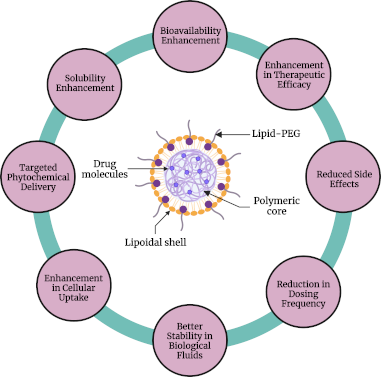
- significantly limited by low bioavailability and poor water solubility [163]. To circumvent this, Jangde et al. fabricated HPN-PLHNPs for better topical delivery and improved antioxidant activity [164]. The HPN-PLHNPs were optimized by response surface methodology, and the optimized HPN-PLHNPs exhibited small


Effect of radiation-induced vacancy saturation on the first-order phase transformation in nanoparticles: insights from a model
Beilstein J. Nanotechnol. 2024, 15, 1453–1472, doi:10.3762/bjnano.15.117
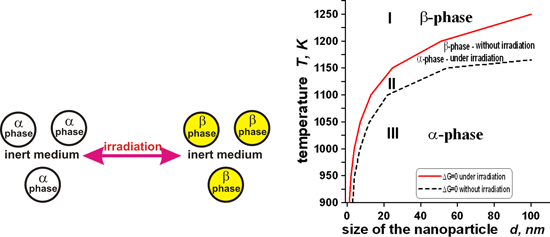
- the Gibbs free energy and kinetic rate theory [17]. Shen delineates five size-dependent regions that govern the material’s response to irradiation. Nevertheless, Shen’s approach remains qualitative, highlighting the need for a more comprehensive thermodynamic assessment to enhance our understanding of


Ion-induced surface reactions and deposition from Pt(CO)2Cl2 and Pt(CO)2Br2
Beilstein J. Nanotechnol. 2024, 15, 1427–1439, doi:10.3762/bjnano.15.115
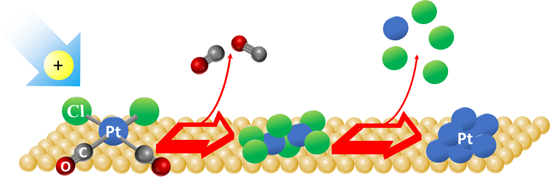
- )2Br2 evolves in response to (Figure 4, left) Ar+ and (Figure 4, right) H2+ exposure. Prior to ion irradiation, the C 1s region displays a single peak at 289 eV corresponding to the carbonyl (CO) groups in Pt(CO)2Br2. Upon ion irradiation, the C 1s peak decreases in intensity and shifts to 288 eV until



Lithium niobate on insulator: an emerging nanophotonic crystal for optimized light control
Beilstein J. Nanotechnol. 2024, 15, 1415–1426, doi:10.3762/bjnano.15.114
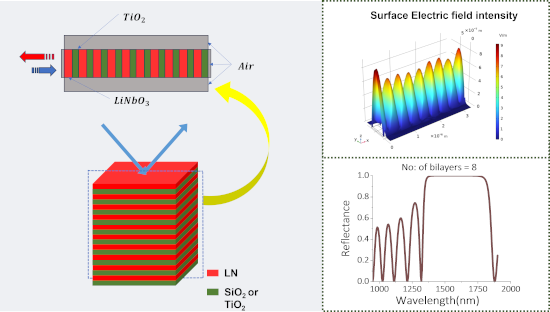
- rely on nonlinear optical effects, such as the Kerr effect [59], where the refractive index of a material changes in response to the intensity of light. The enhanced mode confinement amplifies the intensity of light interacting with the material, enabling nonlinear refractive index changes to occur at
- necessary to fulfill phase-matching conditions [60]. This interplay between different frequency modes and regions is essential for optimizing the overall nonlinear response of the photonic crystal. The relatively large refractive index difference between SiO2 and LiNbO3 can lead to the widening of bandwidth


Out-of-plane polarization induces a picosecond photoresponse in rhombohedral stacked bilayer WSe2
Beilstein J. Nanotechnol. 2024, 15, 1362–1368, doi:10.3762/bjnano.15.109
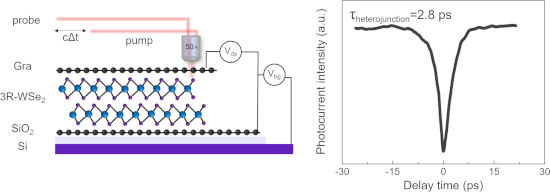
- intrinsic photoresponse time of approximately 3 ps. The ultrafast response time remains consistent across varying detection powers, demonstrating environmental stability and highlighting the potential in optoelectronic applications. Our study presents an effective strategy for enhancing the response time of
- polarization, offering promising advances in optoelectronics [23][30]. One of the key optoelectronic phenomena in 2D semiconductor materials is the photocurrent response. The polarization, which results in spontaneous photocurrent under zero bias, gives rise to the bulk photovoltaic effect (BPVE), which can
- scanning photocurrent map under zero bias. In addition, the OOP polarization accelerates the drift of photogenerated carriers, giving the heterojunction region an ultrafast intrinsic response time of approximately 3 ps, surpassing that of graphene under the same conditions. Despite variations in probe


Investigation of Hf/Ti bilayers for the development of transition-edge sensor microcalorimeters
Beilstein J. Nanotechnol. 2024, 15, 1353–1361, doi:10.3762/bjnano.15.108
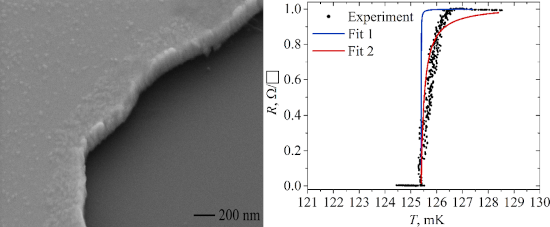
- generally also means a shorter thermal response time, allowing the detector to respond more quickly to small temperature changes. Second, the active area is reduced, which allows for a more efficient detection of a useful signal because of the higher energy density and, therefore, a higher signal-to-noise
- current through the TES is constant, τel is the electrical time constant of the power supply circuit, L is the inductance of the input coil, and RL is the shunt resistance and parasitic resistance. The energy resolution δE is the minimum energy difference that can be seen in the microcalorimeter response
- × 10−10 W/K, calculated for the electron–phonon constant of 0.8 nW/K6/μm3, and the sixth degree of temperature according to [22]. Figure 7 shows the ampere–watt sensitivity and noise characteristics of the TES with above parameters for sample A4. The maximum current response is observed at frequencies


Hymenoptera and biomimetic surfaces: insights and innovations
Beilstein J. Nanotechnol. 2024, 15, 1333–1352, doi:10.3762/bjnano.15.107
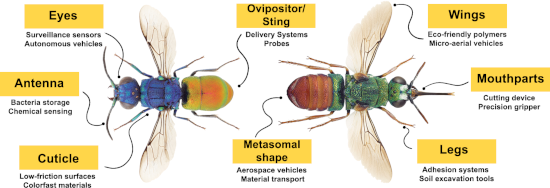
- with a smaller contact area [128]. In honeybees, these pads function in response to specific drag activities, even without neuromuscular reflexes [129]. This passive mechanism is attributed to the structural characteristics of the soft pads, which work in concert with hierarchical structures supported






Interaction of graphene oxide with tannic acid: computational modeling and toxicity mitigation in C. elegans
Beilstein J. Nanotechnol. 2024, 15, 1297–1311, doi:10.3762/bjnano.15.105
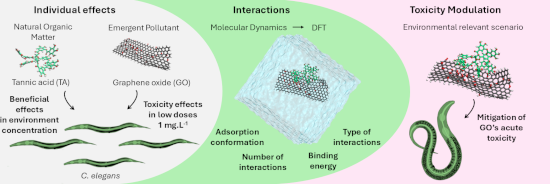
- to GO causes significant damage to intestinal microvilli cells . Furthermore, Dou et al. [53] showed that GO triggers cell autophagy as a protective response to the material. Apoptosis was observed in germline cells, indicating that GO can damage gonad development and reduce the reproduction rate of


Mn-doped ZnO nanopowders prepared by sol–gel and microwave-assisted sol–gel methods and their photocatalytic properties
Beilstein J. Nanotechnol. 2024, 15, 1283–1296, doi:10.3762/bjnano.15.104
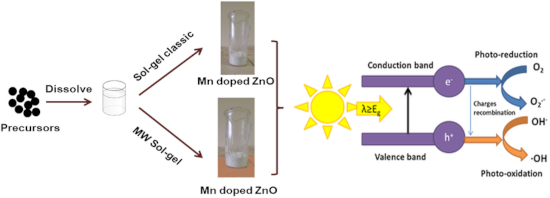
- materials obtained by SG and MW. The overall photocatalytic response of each catalyst was evaluated taking into account the blank experiment (oxalic acid photodegradation test carried out in the absence of catalyst). The CO2 generation was monitored in the aqueous phase under simulated solar irradiation for