


Search results
Search for "accumulation" in Full Text gives 399 result(s) in Beilstein Journal of Nanotechnology. Showing first 200.
Self-assembly of Eucalyptus gunnii wax tubules and pure ß-diketone on HOPG and glass
Beilstein J. Nanotechnol. 2021, 12, 939–949, doi:10.3762/bjnano.12.70

- formed tubules similar to those on E. gunnii leaves. Deviating platelet-shaped and layered structures not found on leaves were also formed, especially on areas with high mass accumulation. High-resolution AFM images of recrystallized ß-diketone tubules are presented for the first time. The data showed
- mass deposition, also known as “coffee ring effect” [36], was visible in low magnification. In areas of very high mass accumulation, both substances assembled into plates with a random orientation and into tubules on both substrates. On areas with lower mass accumulation, different structures were
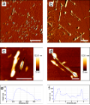
- mass accumulation, single tubules grew horizontally on the substrate. As observed on HOPG, ß-diketone formed many horizontally grown tubules on glass. They were very close together and a few tubules protruded upwards (Figure 2d). Furthermore, densely arranged plates with tubules in between or growing




Comprehensive review on ultrasound-responsive theranostic nanomaterials: mechanisms, structures and medical applications
Beilstein J. Nanotechnol. 2021, 12, 808–862, doi:10.3762/bjnano.12.64
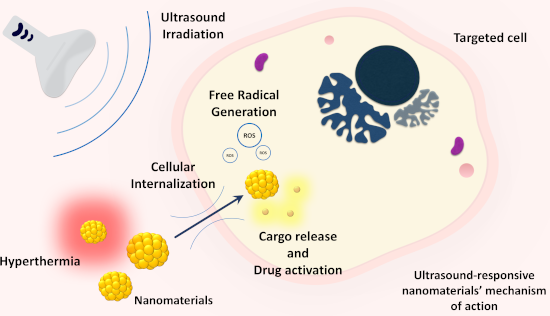
- another study, the authors assessed the effect of Pluronic P105 micelle-encapsulated doxorubicin (DOX) in the presence of US for the treatment of breast adenocarcinoma tumors in adult female BALB/c mice. The results showed significantly increased accumulation of DOX in the tumor and lower concentrations
- fluid, density of the sphere, and the distance between the center of a sphere and the nearest velocity node plane of the standing sound wave. The theory of King explained this phenomenon and provided some insight about the accumulation of particles in nodes and antinodes of sound fields. Afterward
- MBs can be loaded with cargo and also modified with specific ligands for targeting [178]. The use of MBs in combination with other types of NPs could also provide additional possibilities. These hybrids could enhance the accumulation, penetration, and uptake of nanomedicines [179][180][181]. These


Electromigration-induced formation of percolating adsorbate islands during condensation from the gaseous phase: a computational study
Beilstein J. Nanotechnol. 2021, 12, 694–703, doi:10.3762/bjnano.12.55

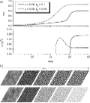
- neighboring vacancies in the direction of electron flow leading to an accumulation of atoms at the anode and vacancies at the cathode [1][2]. Current trends in computer technology, namely, reducing the size of integrated circuits, increasing their power, and increasing the density of elements, have led to an




![[Graphic 29]](/bjnano/content/inline/2190-4286-12-55-i36.svg?max-width=637&scale=1.18182) on the adsorption coefficient α ...
on the adsorption coefficient α ...

Nanogenerator-based self-powered sensors for data collection
Beilstein J. Nanotechnol. 2021, 12, 680–693, doi:10.3762/bjnano.12.54
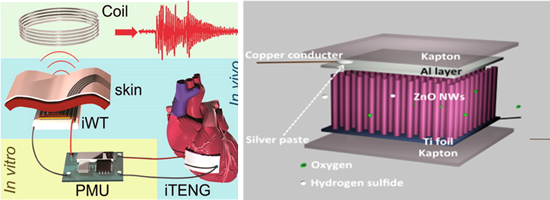
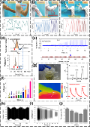
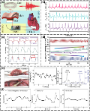
- through material optimization and charge-accumulation strategies [4][62][64][68][69]. In addition, TENGs can be directly used as sensors. For example, TENGs can collect irregular and low-frequency wave energy to generate electricity from blue energy [70]. Self-powered sensors based on TENGs can collect



Fate and transformation of silver nanoparticles in different biological conditions
Beilstein J. Nanotechnol. 2021, 12, 665–679, doi:10.3762/bjnano.12.53

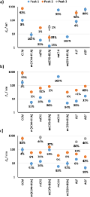
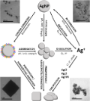
- drug abuse [21]. Animal experiments demonstrated Ag accumulation in the liver, kidneys, brain, and testis after oral exposure to AgNPs; however, the chemical form of Ag remained undefined in these cases [22]. In media of high ionic strength and low pH the AgNPs aggregate and/or dissolve [23]. Under
- -dense cubic or spherical structures were not found in the liver of control animals, meaning that they originate from the accumulation and biotransformation of AgNPs. Indeed, Prucek et al. [43] reported rapid crystallization of primary AgNPs to a one-order larger crystals in NaCl-rich media, in which a




A review of defect engineering, ion implantation, and nanofabrication using the helium ion microscope
Beilstein J. Nanotechnol. 2021, 12, 633–664, doi:10.3762/bjnano.12.52
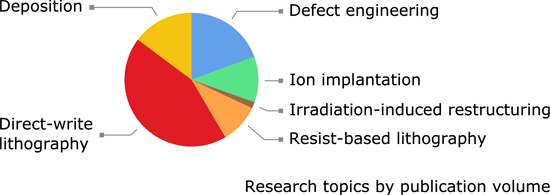
- were so low, the change in optical properties was attributed to the local accumulation of defects (as opposed to collisional phase mixing). In a plasmonic application, resonant triangular nanostructures were created in a graphene sheet supported on SiO2/Si by selectively irradiating the graphene in the
- modify the mechanical, electronic, and magnetic properties of these materials [73]. In this work, the focus was on characterizing the accumulation of defects and structural changes for increasing dose, using correlative Raman spectroscopy and TEM. The effect of sample thinning due to sputtering on the
- of varying the beam energy on the subsurface damage process [77]. For high-dose implantation at high beam energies (35 keV), blister formation was observed, as in [16]. This is explained by the formation and accumulation of helium nanobubbles beneath the surface that cannot escape, and which coalesce


A review on nanostructured silver as a basic ingredient in medicine: physicochemical parameters and characterization
Beilstein J. Nanotechnol. 2021, 12, 440–461, doi:10.3762/bjnano.12.36

- that AgNPs produce reactive oxygen species (ROS). The accumulation of intracellular ROS is well known as an important regulator of apoptosis [72]. The production of oxidative species may be due to trapped electrons in the respiratory chain. Antioxidant enzymes are unlikely to detoxify species generated


The impact of molecular tumor profiling on the design strategies for targeting myeloid leukemia and EGFR/CD44-positive solid tumors
Beilstein J. Nanotechnol. 2021, 12, 375–401, doi:10.3762/bjnano.12.31

- macrophages protrude through the vascular endothelial wall to gain access and monitor blood circulation [24]. Hussain et al demonstrated that perisinusoidal macrophages are responsible for the accumulation of the chylomicrons in the BM and, hence, play a crucial role in the delivery of lipids, as a source of
- estimate that the high levels of BM accumulation for this liposome formulation were probably due to the presence of 20% DSPG in the liposomal bilayer. This yields an overall anionic surface, which is known to have an affinity for the scavenger receptor on BM macrophages. Other polyanions, such as dextran
- activating the extracellular domain of membranous EGFR and influencing the EGFR signaling pathways through increased endocytosis (receptor internalization) and cytoplasmic accumulation of EGFR. In the study of Yokoyama et al. paramagnetic gold-coated plasmonic NPs (40–50 nm) with iron core and anti-EGFR


Nickel nanoparticle-decorated reduced graphene oxide/WO3 nanocomposite – a promising candidate for gas sensing
Beilstein J. Nanotechnol. 2021, 12, 343–353, doi:10.3762/bjnano.12.28
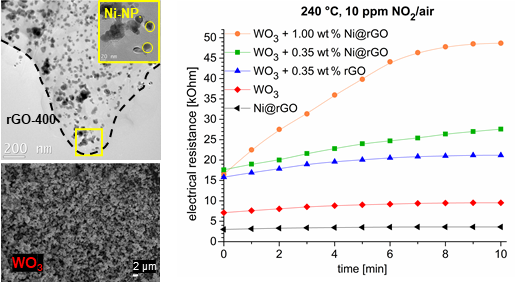
- consideration. When Ni@rGO/WO3 sensors are exposed to NO2, with NO2, which is a strong oxidizing gas accepts electrons from WO3. As a result, NO2 transforms into NO2− on the surface of WO3. This process leads to accumulation of holes and an increase in sensor sensitivity. In addition, the rGO/WO3 contact also


Differences in surface chemistry of iron oxide nanoparticles result in different routes of internalization
Beilstein J. Nanotechnol. 2021, 12, 270–281, doi:10.3762/bjnano.12.22

- functionalization to increase their accumulation in the tumor mass [3]. Numerous coating moieties have been employed to modify the surface properties of MNPs [16]. Among them, polyethylene glycol (PEG), a non-degradable polyether of the monomer ethylene glycol, and bovine serum albumin (BSA), a versatile protein
- F was higher than that of N. Interestingly, MBCD could neither inhibit the cellular internalization of Tr nor that of ChT. Application of Dyn resulted in the accumulation of Tr as well as that of ChT in larger spots, probably in the clathrin-coated pits/caveolae at the inner side of the membrane
- Dyn, the signal of RITC-BSA-SO-MNPs and FITC–clathrin was co-localized on the cell membrane (yellow signal), indicating the accumulation of a fraction of nanoparticles in the clathrin-coated pits (Figure 3D). The pattern of the co-localization signal of RITC-BSA-SO-MNPs and FITC–clathrin implied that



Imaging of SARS-CoV-2 infected Vero E6 cells by helium ion microscopy
Beilstein J. Nanotechnol. 2021, 12, 172–179, doi:10.3762/bjnano.12.13

- resolution of the HIM, compared to the SEM [23]. A further benefit of HIM is its charge compensation capability during secondary electron detection. SEM imaging of biological specimen usually necessitates a thin conductive coating to prevent negative charge accumulation from the impinging electrons. Such


Paper-based triboelectric nanogenerators and their applications: a review
Beilstein J. Nanotechnol. 2021, 12, 151–171, doi:10.3762/bjnano.12.12
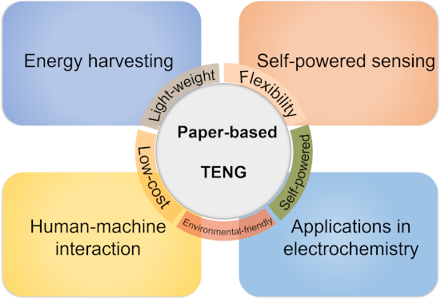
- smaller value, which indicated that the TENG-powered cathodic protection system has obvious anticorrosion properties. Marine fouling, caused by metal contamination and accumulation of biological organisms, is a major challenge for the oceanic ecosystem. With the growing threat to the environment caused by






A review on the green and sustainable synthesis of silver nanoparticles and one-dimensional silver nanostructures
Beilstein J. Nanotechnol. 2021, 12, 102–136, doi:10.3762/bjnano.12.9


Bulk chemical composition contrast from attractive forces in AFM force spectroscopy
Beilstein J. Nanotechnol. 2021, 12, 58–71, doi:10.3762/bjnano.12.5

- boehmite (green bars) are unambiguously distinguishable, since they show distinct distributions which do not overlap. The correlation of both parameters, the kr/Fattr diagram (the top-right panel of Figure 2c) shows a very distinctive pattern of accumulation points for the different materials. This method


Bio-imaging with the helium-ion microscope: A review
Beilstein J. Nanotechnol. 2021, 12, 1–23, doi:10.3762/bjnano.12.1

- contrast mechanism occurs when HIM is used to study insulating or poorly conducting materials such as most biological specimens. Here, differences in local conductivity result in the accumulation of positive charges under the ion beam, which hampers the emission of secondary electrons and results in a


Mapping of integrated PIN diodes with a 3D architecture by scanning microwave impedance microscopy and dynamic spectroscopy
Beilstein J. Nanotechnol. 2020, 11, 1764–1775, doi:10.3762/bjnano.11.159

- is then proportional to the effective Cnano of the conductive tip–sample nanoscale contact and varies with the active doping level of the semiconductor. When VAC and VDC biases are applied, the equivalent nano-MIS capacitor can go either to the accumulation or inversion mode. Figure 8 shows Cnano


PEG/PEI-functionalized single-walled carbon nanotubes as delivery carriers for doxorubicin: synthesis, characterization, and in vitro evaluation
Beilstein J. Nanotechnol. 2020, 11, 1728–1741, doi:10.3762/bjnano.11.155
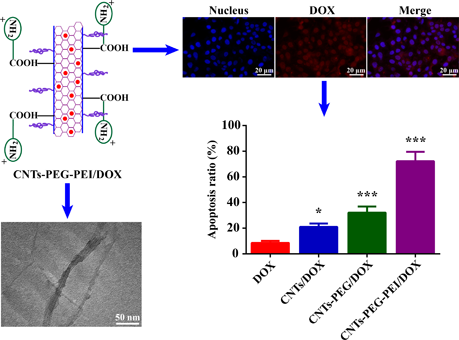
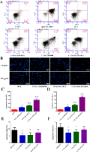
- the intracellular matrix of free solution, CNTs-COOH, CNTs-PEG, and CNTs-PEG-PEI was quantitatively investigated by flow cytometry (FCM) to compare the uptake efficiency and intracellular accumulation of the different DOX-loaded nanocarriers. MCF-7 cells were cultivated into 12-well plates at 1 × 10⁵
- more efficient cell internalization and accumulation. The subsequent drug release and diffusion within the cytoplasm can induce apoptosis. The results suggest that CNTs-PEG-PEI may be developed to be a novel nanoscale delivery system of chemotherapeutic drugs for cancer therapy. Schematic




Out-of-plane surface patterning by subsurface processing of polymer substrates with focused ion beams
Beilstein J. Nanotechnol. 2020, 11, 1693–1703, doi:10.3762/bjnano.11.151

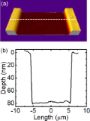
- -plane features, at the nanoscale, of the pre-deposited films. Ion irradiation of the Au-coated samples results in delamination, bulging, and perforation of the Au film, which is attributed to the accumulation of gases from radiolysis at the film–substrate interface. The irradiation with Ne+ and Ga+ ions
- of the cells in rows 1 and 2 in Figure 4a and confirmed by AFM imaging in Figure 4b. These effects are attributed to the accumulation of gases from radiolysis at the Au film/PMMA interface and to the pressure that becomes, at a certain fluence and at certain places, sufficiently high to delaminate
- be responsible for the occurrence of the second transition followed by material shrinkage in the high-dose range. We also do not exclude that a certain accumulation of gases from radiolysis inside the irradiated volume occurs in our samples, and to some degree it can contribute to shape the


PTCDA adsorption on CaF2 thin films
Beilstein J. Nanotechnol. 2020, 11, 1615–1622, doi:10.3762/bjnano.11.144
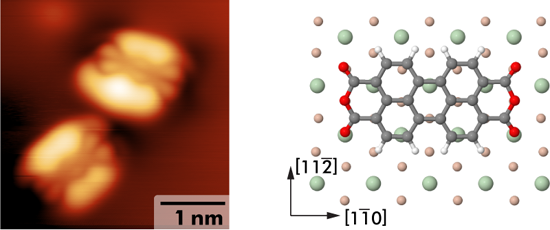
- main finding is electron accumulation below the carbonyl oxygen atoms, in agreement with the attractive interaction with the surface calcium atom already identified before from the oxygen displacement. Isosurfaces of the molecular orbital densities of the highest occupied molecular orbital (HOMO) as


Oxidation of Au/Ag films by oxygen plasma: phase separation and generation of nanoporosity
Beilstein J. Nanotechnol. 2020, 11, 1608–1614, doi:10.3762/bjnano.11.143
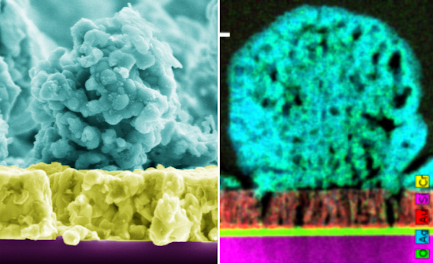
- heat accumulation within the material during its exposure to the plasma, which probably led to the observed diffusion. Unfortunately, since the temperature rise was local it could not be experimentally measured. STEM-EDS analysis performed on a single column after oxidation, showed a phase separation


Fabrication of nano/microstructures for SERS substrates using an electrochemical method
Beilstein J. Nanotechnol. 2020, 11, 1568–1576, doi:10.3762/bjnano.11.139

- power was kept at 0.6 mW with a 50× objective and the beam diameter was approx. 1 μm. The signal detector used a CCD camera (1040 × 256 pixels) with a grating size of 1800 lines/mm. The exposure time was 1 s and one accumulation scan was employed. The mapping images of the Raman spectrum were scanned


Cu2O nanoparticles for the degradation of methyl parathion
Beilstein J. Nanotechnol. 2020, 11, 1546–1555, doi:10.3762/bjnano.11.137

- inhibition is essentially irreversible [2]. Inhibition of acetylcholinesterase leads to an accumulation of the neurotransmitter. This, in turn, causes seizures and respiratory failure, which are the main causes of death [3]. O,O-Dimethyl O-(4-nitrophenyl) phosphorothioate, most commonly known as methyl


High permittivity, breakdown strength, and energy storage density of polythiophene-encapsulated BaTiO3 nanoparticles
Beilstein J. Nanotechnol. 2020, 11, 1190–1197, doi:10.3762/bjnano.11.103
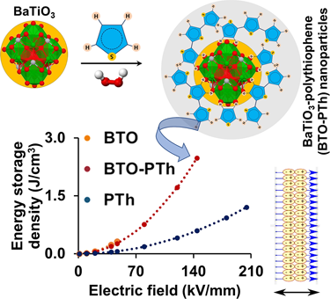
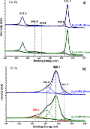
- nanoparticles, but they noticed that breakdown strength of the composite was critically affected at a high concentration of filler due to free charge accumulation at the interface. Therefore, to improve breakdown strength and energy storage density of BTO, we propose the design of polythiophene (PTh
- breakdown strength of BTO-polymer composites is considerably reduced after increasing the BTO content to 30–40 wt % because of the free-charge accumulation at the interface of BTO and polymer [10]. We believe that core–shell structure of BTO-PTh nanoparticles and good interfacial compatibility between the
- two phases prevent the free-charge accumulation at the interface and, therefore, improve the breakdown strength. Furthermore, in situ oxidative polymerization of PTh on BTO surfaces allows for the inclusion of 90 wt % BTO, which results in a high dielectric constant. This means that the tremendous




Photothermally active nanoparticles as a promising tool for eliminating bacteria and biofilms
Beilstein J. Nanotechnol. 2020, 11, 1134–1146, doi:10.3762/bjnano.11.98

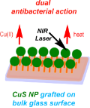
- of successful studies, the direct application of colloidal solutions containing photothermally active gold nanoparticles may be limited particularly due to the risk of accumulation in the body. Moreover, due to the heat dissipation in aqueous solution, high laser intensities are usually required to
- the published studies are devoted to the use of expensive plasmonic gold nanoparticles, whose accumulation in the body is still controversial and may lead to several adverse effects. In this direction, nanoparticle toxicity must also be studied carefully. For example, a few studies demonstrated the


Applications of superparamagnetic iron oxide nanoparticles in drug and therapeutic delivery, and biotechnological advancements
Beilstein J. Nanotechnol. 2020, 11, 1092–1109, doi:10.3762/bjnano.11.94
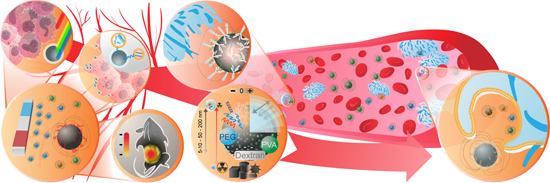
- spherical ones for MRI, having increased contrast and no toxicity in vitro and in vivo [61]. Iron oxide nanoworms were found to be a better solution for targeting tumors (in vitro) and for accumulation in tumors (in vivo) than simple spherical SPIONs [62]. Dimensions: synthesis dimension and hydrodynamic
- tumor sites making them good candidates for MRI imaging. 300 nm SPIONs coated with dextran were cleared from the main accumulation sites (liver, spleen, lungs) after 72 h, but the same SPIONs covered with silicon were still accumulating after 72 h. Similar results were obtained using 10 nm
- fluorescence) of Alzheimer’s disease Aβ plaque accumulations. They observed that the nanoparticles are not only appropriate for imaging but they also prevent plaque accumulation and break the already formed aggregates. Feng et al. [163] developed a SPION sensor coupled with a synthetic protein that recognizes





