Search results
Search for "composition" in Full Text gives 1136 result(s) in Beilstein Journal of Nanotechnology. Showing first 200.
Electrochemical nanostructured CuBTC/FeBTC MOF composite sensor for enrofloxacin detection
Beilstein J. Nanotechnol. 2024, 15, 1522–1535, doi:10.3762/bjnano.15.120
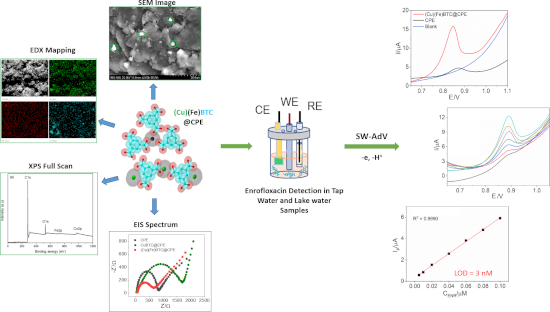
- volume of 0.544 cm3/g, and a capillary diameter of 1.50 nm. Additionally, energy-dispersive X-ray mapping demonstrated the uniform distribution of the two MOFs within the electrode composition. The synergistic effect of the electrocatalytic properties of CuBTC and the high conductivity of FeBTC
- electrode composition. For the determination of ENR, square wave adsorptive stripping voltammetry (SW-AdSV) was employed because of its superior performance in comparison to the cyclic voltammetric method. Figure 6b illustrates the square wave voltammograms (SWVs) depicting the electrochemical response of
- electrode has three components, namely, CuBTC, FeBTC, and carbon paste. The carbon paste content was maintained at 90%, resulting in the total of CuBTC and FeBTC being 10%. By altering the proportions of CuBTC and FeBTC in the electrode composition, significant variations in the ENR signal were observed





Integrating high-performance computing, machine learning, data management workflows, and infrastructures for multiscale simulations and nanomaterials technologies
Beilstein J. Nanotechnol. 2024, 15, 1498–1521, doi:10.3762/bjnano.15.119

- materials research by extracting valuable patterns and correlations from vast amounts of experimental and computational data [6][7][8][9]. These approaches enable researchers to uncover hidden relationships between composition, structure, morphology, processing, and properties, accelerating the discovery of


Polymer lipid hybrid nanoparticles for phytochemical delivery: challenges, progress, and future prospects
Beilstein J. Nanotechnol. 2024, 15, 1473–1497, doi:10.3762/bjnano.15.118
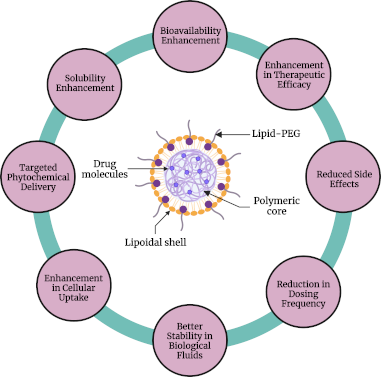
- crucial for maintaining therapeutic drug levels over extended periods of time [20][21]. By adjusting the polymer composition and lipid matrix, researchers can fine-tune the release kinetics of phytochemicals, ensuring sustained therapeutic effects. This controlled release mechanism is particularly



Effect of radiation-induced vacancy saturation on the first-order phase transformation in nanoparticles: insights from a model
Beilstein J. Nanotechnol. 2024, 15, 1453–1472, doi:10.3762/bjnano.15.117
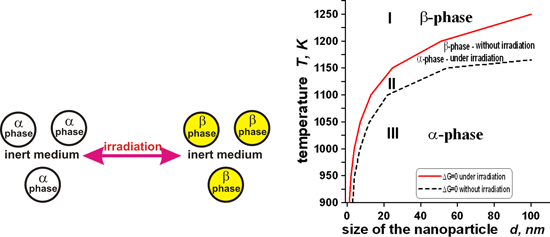
- literature review reveals that the stability of materials under irradiation is influenced by numerous factors. Some of these characteristic factors include the elemental composition and chemical structure, the microstructure of the material (including grain boundaries, defects, dislocations, and interfaces
- compared to similar materials lacking such precipitates. For example, nanocrystalline solids of ZrO2 or Pd demonstrate high resistance to radiation-induced defect production compared to coarse-grained polycrystals with the same chemical composition [3]. Consequently, a significant increase in radiation
- is worth noting that the thermodynamic analysis and conclusions drawn from this study are applicable for understanding amorphization and polymorphic phase transitions in both metals and ceramics. In the present study we investigate model systems with structure change, but without composition change


Ion-induced surface reactions and deposition from Pt(CO)2Cl2 and Pt(CO)2Br2
Beilstein J. Nanotechnol. 2024, 15, 1427–1439, doi:10.3762/bjnano.15.115
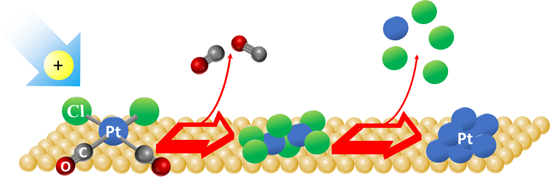
- transformations of precursor thin films. In this approach, the precursor is adsorbed onto a cooled substrate to form 1–2 nm thin films. The effects of ion beam exposure on the thin films are characterized by X-ray photoelectron spectroscopy to identify changes in the films’ composition and chemical environment
- , and mass spectrometry to identify the volatile species produced by ion beam irradiation. Insights from these studies have been used to rationalize the composition of thin films formed by ion-induced deposition of Pt(CO)2Cl2 in the presence of Ar+ irradiation under steady-state deposition conditions
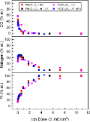
- Pt(CO)2Cl2/He+ and Pt(CO)2Br2/H2+. Analysis of Figure 5 reveals that trends in film composition amongst all of the different precursor/ion combinations as a function of the ion dose are remarkably similar. This strongly suggests that the elementary reaction steps involved in the ion beam-induced



A biomimetic approach towards a universal slippery liquid infused surface coating
Beilstein J. Nanotechnol. 2024, 15, 1376–1389, doi:10.3762/bjnano.15.111
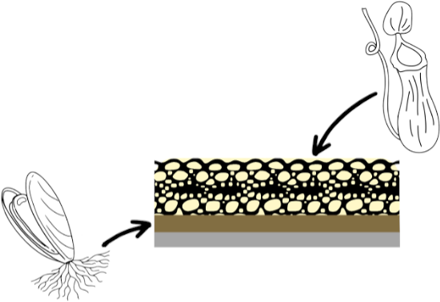
- to use. These biomimetic surface functionalization steps were confirmed by several complimentary surface analysis techniques. The wettability of each surface was probed with water contact angle measurements, while the chemical composition of the layer was determined by X-ray photoelectron
- , which has the ability to probe vibrational modes at an interface, thereby, providing insight into the order and confirmation of molecules at an interface [26][27]. XPS is a surface-sensitive technique to determine the atomic composition of the outer ca. 10 nm of a surface [28]. As mentioned above, SLIPS
- composition of the layer was determined by XPS. Surface roughness was evaluated using AFM to confirm successful formation of a porous structure. Finally, ordering of specific chemical groups within our PDA SLIPS layer was explored via SFG spectroscopy. Initially, each functionalization step was assessed




Hymenoptera and biomimetic surfaces: insights and innovations
Beilstein J. Nanotechnol. 2024, 15, 1333–1352, doi:10.3762/bjnano.15.107
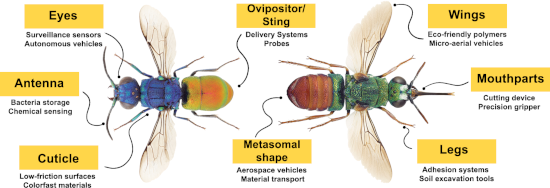
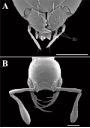
- ), with the leaf-cutter genus Atta overrepresented in cuticular composition investigations (reviewed in [59]). Within Hymenoptera, ants are particularly fascinating because of their division into castes with distinct tasks and sizes, showcasing a hierarchical organization in their societies [60]. Among
- modulus [61]. Understanding the mechanical properties and composition of leafcutter ant mandibles could offer valuable insights into biomimetic design principles, potentially inspiring the development of innovative tools and instruments with enhanced performance and adaptability for various applications







Nanoarchitectonics with cetrimonium bromide on metal nanoparticles for linker-free detection of toxic metal ions and catalytic degradation of 4-nitrophenol
Beilstein J. Nanotechnol. 2024, 15, 1312–1332, doi:10.3762/bjnano.15.106
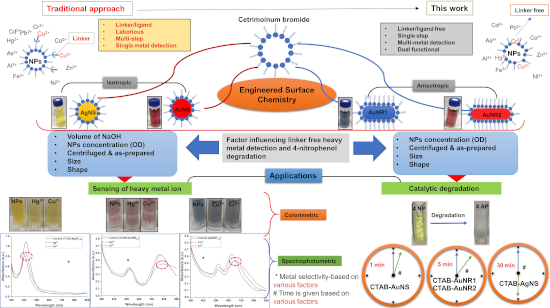
- , metal composition, centrifugation, and NaOH amount, were investigated for their impact on the performance of CTAB-capped nanoparticles in heavy metal detection and 4-NP degradation. CTAB-Au nanospheres demonstrated limited heavy metal ion detection capability but exhibited remarkable efficiency in




Interaction of graphene oxide with tannic acid: computational modeling and toxicity mitigation in C. elegans
Beilstein J. Nanotechnol. 2024, 15, 1297–1311, doi:10.3762/bjnano.15.105
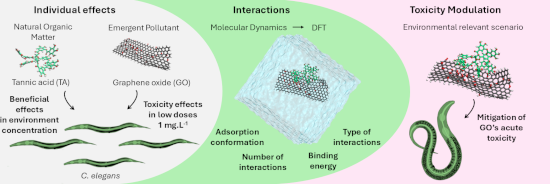
- composition analyzed by X-ray photoelectron spectroscopy (XPS) is 68% of carbon and 32% of oxygen. The functional groups and bonds of carbon are distributed among epoxy/hydroxy (C–O) (52%), carboxyl/esters (C=O) (9.4%), and π–π* (4.2%) moieties, besides graphitic/aromatic carbon (C sp2) (5.7%) and aliphatic
- according to data reported in the literature for graphene materials [38], to 2.0 nm in double-layer spots caused by the incubation in the EPA medium. Spectroscopy characterizations Spectroscopy analysis showed the main chemical groups on the material’s surface, and how their composition changed in the
- , to 1.02 ± 0.01 and 1.05 ± 0.005 when the material was incubated in EPA medium without and with TA, respectively (Figure 2b). All Raman spectra were normalized to the intensity of the respective G bands. X-ray photoelectron spectroscopy (XPS) presented the composition of GO surface in the presence of


Mn-doped ZnO nanopowders prepared by sol–gel and microwave-assisted sol–gel methods and their photocatalytic properties
Beilstein J. Nanotechnol. 2024, 15, 1283–1296, doi:10.3762/bjnano.15.104
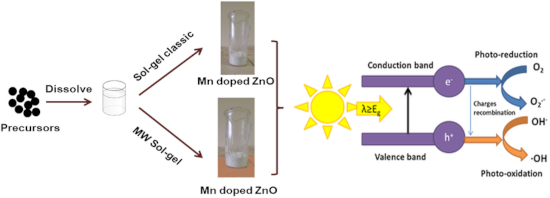
- distribution, improved purity, tailored shape, and morphological uniformity [21]. More crucially, the crystallization can be influenced by varying reaction temperature, reaction duration, and system composition [18][22]. According to the literature, MW has been predominantly employed for the thermal treatment
- samples were thermally treated at 350 °C and 500 °C for 1 h each. Scanning electron microscopy The morphology and chemical composition (inset) of the thermally treated samples is illustrated in Figure 4. Homogeneously distributed, quasi-spherical nanoparticles (mean size diameter of 70 nm) are observed in
- synthesis techniques are effective in producing photocatalytically active materials based on manganese-doped ZnO. Despite the similar start composition, obvious morphological differences, structural defects, and surface chemistry particularities were revealed for the investigated samples, which affected the


Functional morphology of cleaning devices in the damselfly Ischnura elegans (Odonata, Coenagrionidae)
Beilstein J. Nanotechnol. 2024, 15, 1260–1272, doi:10.3762/bjnano.15.102
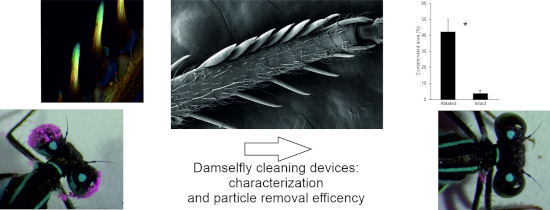
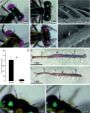
- concave cuticular lamina (L) collecting dirt particles (arrows). Confocal laser scanning micrographs (maximum intensity projections) showing differences in the autofluorescence composition present in the fore tibal grooming devices of Ischnura elegans. Red color indicates chitinous, sclerotized


Dual-functionalized architecture enables stable and tumor cell-specific SiO2NPs in complex biological fluids
Beilstein J. Nanotechnol. 2024, 15, 1238–1252, doi:10.3762/bjnano.15.100
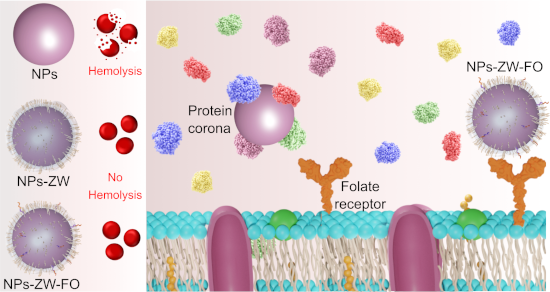
- at 100 °C and the percentages of carbon, nitrogen, and hydrogen were obtained. It is noteworthy that only the nitrogen percentages were considered for the calculations. The elemental composition of the NP surface was obtained using a K-Alpha XPS (Thermo Fisher Scientific) which operates with Al Kα X
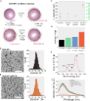
- mmol·g–1, and 12 mmol·g–1, respectively. In percentage (in moles), these values correspond to 73% ZW and 17% APTES and folate. Such results were satisfactory since they showed that the composition was similar to the stoichiometric proportion used during the synthesis, 95% ZW and 5% APTES and folate
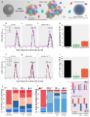
- the NP stability in DMEM (10% FBS) and in plasma may be associated with the composition of the media. Then, LC-MS/MS technique was used to identify the protein corona composition. A list of the 20 most abundant proteins was obtained for DMEM (10% FBS) and functionalized and non-functionalized SiO2NPs

Enhanced catalytic reduction through in situ synthesized gold nanoparticles embedded in glucosamine/alginate nanocomposites
Beilstein J. Nanotechnol. 2024, 15, 1227–1237, doi:10.3762/bjnano.15.99
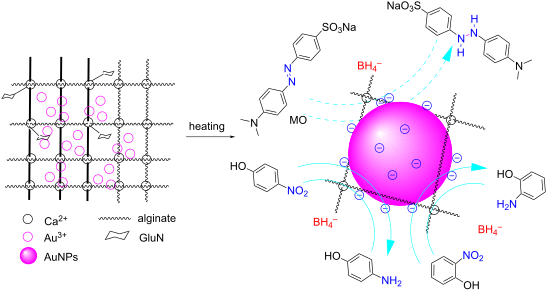
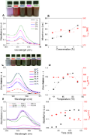
- indicating stretching vibrations of C–O bonds [34][35]. The FTIR spectra suggest the critical role of polysaccharides as stabilizing agents for AuNPs within the nanocomposite. EDX analysis (Figure 3C) was conducted to determine the elemental composition of AuNPs@GluN/Alg. Strong signals at approximately 2.2
- ). (A, B) Au3+ ions-to-gel ratio (w/w), (C, D) reaction temperature, and (E and F) reaction time. The upper photographs showing the corresponding color change. (A) Zeta potential curves, (B) FTIR spectra, (C) EDX spectrum and elemental composition (AuNPs@GluN/Alg only), and (D) TGA curves of GluN/Alg




Realizing active targeting in cancer nanomedicine with ultrasmall nanoparticles
Beilstein J. Nanotechnol. 2024, 15, 1208–1226, doi:10.3762/bjnano.15.98
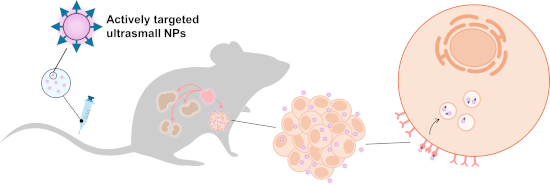
- underlying surface coat and undesired intermolecular interactions on the ligand shell. In this regard, computer simulations emerge as a powerful tool for optimizing the size and composition of usNPs designed for receptor targeting. For example, Häkkinen and colleagues designed a series of 1.7 nm AuNCs
- functionalized with RGD peptides as targeting ligands along with chemotherapy drugs and inhibitors of signaling pathways [96][97]. Their simulations revealed that the system composition and the peptide/drug ratio critically influenced the targeting ability of the particles. In addition to computer simulations, a


Photocatalytic methane oxidation over a TiO2/SiNWs p–n junction catalyst at room temperature
Beilstein J. Nanotechnol. 2024, 15, 1132–1141, doi:10.3762/bjnano.15.92
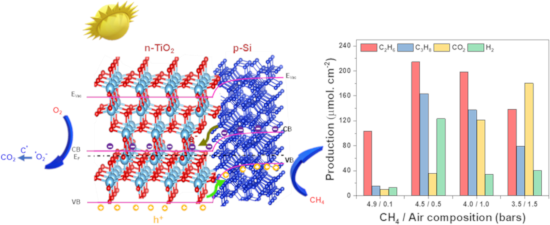
- a water contact angle of 50.24°. Because of the nanowire array morphology, the p-Si NWs were more hydrophilic nature with a water contact angle of 3.36°, which manifests superior photocatalytic oxidative coupling. Raman spectra were conducted to confirm the surface composition of the synthesized
- (HAL-320). First, the reactor containing the photocatalytic thin film samples was evacuated using a vacuum pump for 10 min and filled with a mixture of CH4/air (4.5/0.5 pressure ratio). The pressure ratio of the gas mixture was varied to study gas composition-dependent efficiency. The total pressure of
- conditions (b) of the TiO2/SiNWs sample. Raman spectra of pure p-Si and Si NW (a), and the TiO2/SiNWs thin film (b). Photocatalytic CH4 oxidation as a function of irradiation time (a) and different CH4/air composition (b) over TiO2/SiNWs. Reaction conditions: TiO2/SiNWs chip (1 × 2 cm2), total pressure of 5


Direct electron beam writing of silver using a β-diketonate precursor: first insights
Beilstein J. Nanotechnol. 2024, 15, 1117–1124, doi:10.3762/bjnano.15.90
- different process variables involved (such as spatial and temporal electron beam exposure and precursor flux), the composition and microstructure of the deposits can be tuned for obtaining desired nanocrystalline materials [10][11][12]. A direct writing technique is especially interesting for the
- fabrication of nano-optical components, where the actual geometry in combination with the material composition governs the optical response of the device [13]. However, typically a dominant carbon portion is present in the deposit due to the use of organometallic precursors [9][14], which poses practical
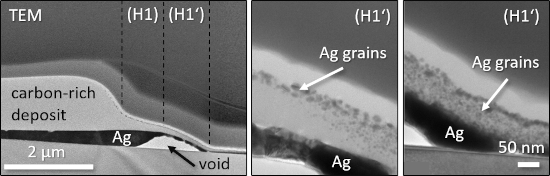
- . Compared to the typically obtained granular structure of metallic nanoparticles in a carbonaceous matrix, the deposit composition and chemistry evolution are unexpected. The resulting deposit exhibits a carbon-rich body with a surface decorated with silver nanoparticles and an interfacial layer of


Unveiling the potential of alginate-based nanomaterials in sensing technology and smart delivery applications
Beilstein J. Nanotechnol. 2024, 15, 1077–1104, doi:10.3762/bjnano.15.88

- frequently used to determine the chemical composition and functional groups of biopolymeric nanoparticles [67]. Advantages of using alginate-based nanoparticles The use of biopolymeric nanoparticles, specifically chitosan–alginate nanoparticles, offers several advantages in different fields such as


Effect of wavelength and liquid on formation of Ag, Au, Ag/Au nanoparticles via picosecond laser ablation and SERS-based detection of DMMP
Beilstein J. Nanotechnol. 2024, 15, 1054–1069, doi:10.3762/bjnano.15.86
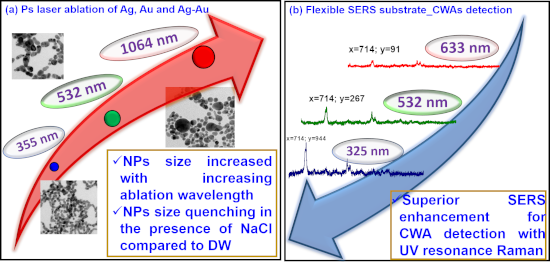
- size and composition, making it a preferred choice for nanomaterials synthesis [2][3][4][5]. The process involves laser plasma interacting with a metal in a liquid; it excites electrons, which then generates atomic vibrations within a few picoseconds, causing rapid heating, melting, and explosive
- ]. The properties of NPs, such as size, shape, crystallinity, productivity, and composition, can be influenced by several experimental parameters during synthesis [4][6][7][8][9][10]. The impact of laser parameters, such as pulse duration, wavelength, repetition rate, and fluence, and of the liquid


Interface properties of nanostructured carbon-coated biological implants: an overview
Beilstein J. Nanotechnol. 2024, 15, 1041–1053, doi:10.3762/bjnano.15.85
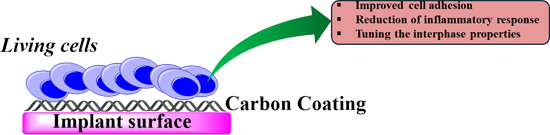
- graphene is significantly complicated by the extreme anisotropy intrinsic to its crystal structure and its large compositional and structural variability [39]. Beyond the obvious consequences arising from the chemical composition, some of the main aspects affecting electronic transport in graphene are



Entry of nanoparticles into cells and tissues: status and challenges
Beilstein J. Nanotechnol. 2024, 15, 1017–1029, doi:10.3762/bjnano.15.83
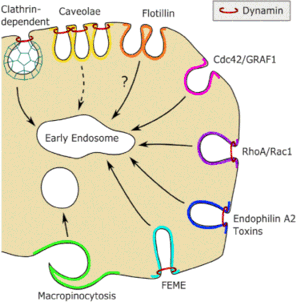
- cells. One should be aware that increasing cell density can increase the rate of endocytosis [25][26] and also change the lipid composition of the cells [27][28]. Both the amounts and composition of glycosphingolipids and phospholipids differ in cells grown at high and low density, increasing the
- different types of material, and even NPs with slight differences in chemical composition but having the same size and zeta potential have turned out to have very different effects on cells. They have for instance very different effects on autophagy in a cellular system [73], and it can be difficult to


Atomistic insights into the morphological dynamics of gold and platinum nanoparticles: MD simulations in vacuum and aqueous media
Beilstein J. Nanotechnol. 2024, 15, 995–1009, doi:10.3762/bjnano.15.81
- attributable to their distinctive properties, including superparamagnetism, piezoelectricity, certain optical characteristics [9][10][11][12][13], and the enormously high surface-to-volume ratio. These special properties derive from their small size, rather than their chemical composition. Given the broad
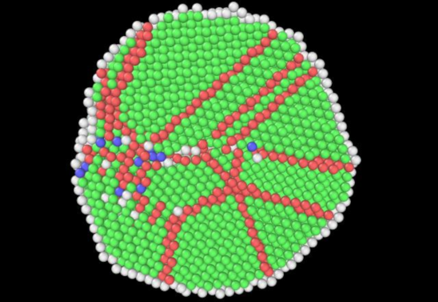
- compiled by Quinson and Jensen [56]. The aim of the present work is twofold, namely, (i) to discern the structural modifications in initially spherical NPs occurring upon rapid cooling and (ii) to link these modifications to the NP size, as quantified by the initial diameter, the NP chemical composition
- 1200 K (orange line), while, for the Pt NPs (Figure 2c,d), they are 100 K (blue line) and 1800 K (orange line). Regardless of chemical composition and NP diameter, the number density distributions at high temperatures are similar, and their shape is typical of liquid and amorphous materials. They have


Recent progress on field-effect transistor-based biosensors: device perspective
Beilstein J. Nanotechnol. 2024, 15, 977–994, doi:10.3762/bjnano.15.80
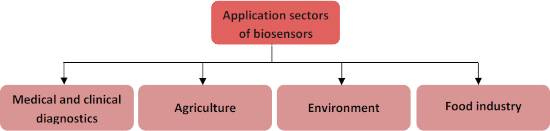
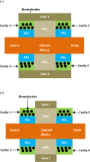
- . 2.2.19 Pocket-doped-channel dual-cavity TFET biosensors. Kanungo et al. [122] conducted a deep study on the impact of SiGe Source and pocket-doped-channel (SiGe S PKDC) TFET-based biosensors. In this study, the fundamental physics of the Ge composition difference in the source zone and doping density




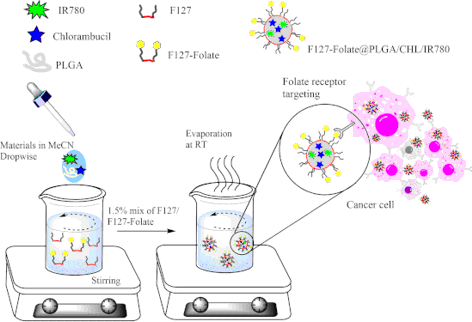
Therapeutic effect of F127-folate@PLGA/CHL/IR780 nanoparticles on folate receptor-expressing cancer cells
Beilstein J. Nanotechnol. 2024, 15, 954–964, doi:10.3762/bjnano.15.78
- the nanoparticles and the targeting ligands. Longer retention times for nanoparticles make it more likely that they will target the right area with the right targeting ligands, which leads to more nanoparticles building up in cancer cells. Nanoparticle size, charge, and composition all have an impact



Electrospun nanofibers: building blocks for the repair of bone tissue
Beilstein J. Nanotechnol. 2024, 15, 941–953, doi:10.3762/bjnano.15.77
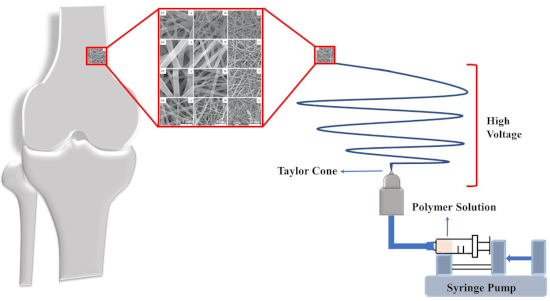
- surrounding muscle tissue as well. It plays an important role in bone growth and fracture healing [18][19]. The composition of bone tissue Any bone in the body has both an organic and inorganic composite structure. The composition of extracellular bone matrix can be estimated as approximately 60–65% organic
- ]. Type-I collagen constitutes approximately 90–95% of the organic matrix in bone tissue, and smaller amounts of other collagen types (i.e., III, V, X, and XII) are included in the bone composition [12][21]. It has been emphasized that type-I collagen is the most important protein structure that carries
- , ethanol, formic acid, and tetrahydrofuran. Depending on the polymer type or the hybrid polymer composition, these organic solvents can be used alone or applied as mixtures in order to obtain suitable solution properties [67]. Surface tension The surface tension of the polymer liquid is important for the


Effects of cutting tool geometry on material removal of a gradient nanograined CoCrNi medium entropy alloy
Beilstein J. Nanotechnol. 2024, 15, 925–940, doi:10.3762/bjnano.15.76
- through grain refinement can increase the strength further without adjusting the composition. Wei et al. used a mechanical surface abrasion treatment to prepare a CoCrNi MEA with a grain-size-gradient structure with excellent strain hardening potential compared with spark plasma sintering fine-grained
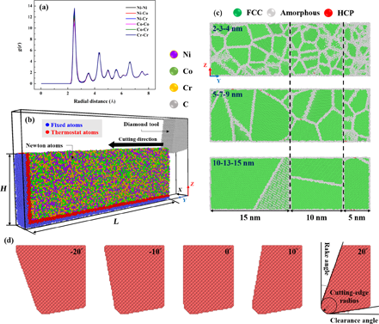
- composition of the CoCrNi MEA is Ni32.7Co33.6Cr33.7. The radial distribution function, g(r), of the CoCrNi MEA substrates was calculated, proving the correctness of the structure, as shown in Figure 1a. Fixed atomic and thermostat layers were added to the CoCrNi MEA substrates to facilitate the machining