


Search results
Search for "light" in Full Text gives 1542 result(s) in Beilstein Journal of Nanotechnology. Showing first 200.
Liver-targeting iron oxide nanoparticles and their complexes with plant extracts for biocompatibility
Beilstein J. Nanotechnol. 2024, 15, 1593–1602, doi:10.3762/bjnano.15.125
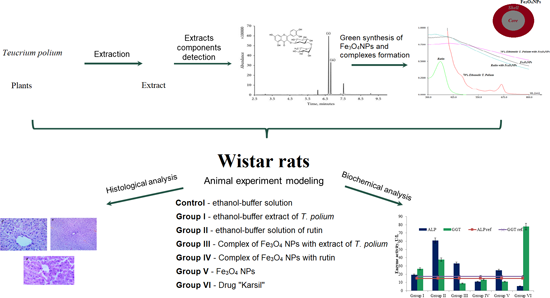
- liver tissue sections were stained with hematoxylin and eosin according to standard techniques [64]. The histological preparations were analyzed using light microscopy on an AmScope microscope (USA), and microphotographs of the liver tissue samples were obtained using an AmScope MU500 5MP digital camera


Facile synthesis of size-tunable L-carnosine-capped silver nanoparticles and their role in metal ion sensing and catalytic degradation of p-nitrophenol
Beilstein J. Nanotechnol. 2024, 15, 1576–1592, doi:10.3762/bjnano.15.124
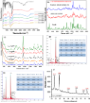
- Raman spectra of ʟ-carnosine-capped silver nanoparticles, as well as ʟ-carnosine, as solid and in aqueous solution, were recorded at RT using an excitation source of 532 nm. The light source was a diode-pumped solid-state Nd3+:YAG laser (Cobolt Samba 0532-01-0500-500, Cobolt AB, Sweden). For solid ʟ
- -carnosine solutions were analyzed using a standard cuvette (1 cm), and the Raman-scattered light was collected at an angle of 180°. The Raman signal detection was achieved with a charge-coupled device (CCD, Synapse, Horiba Jobin Yvon) attached to a monochromator (LabRAM HR800, Horiba Jobin Yvon, France) and
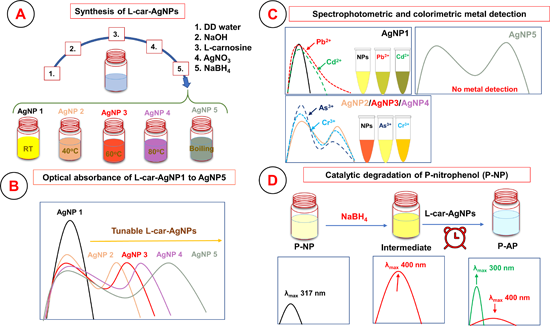
- cuvette, and the spectral changes were monitored as the reaction progressed. The reaction mixture consisted of an aqueous solution of P-NP (0.25 and 1 mM) and 0.1 M NaBH4 to which ʟ-car-AgNPs were added. It was noticed that, upon introducing NaBH4, the light yellow color changes to intense yellow-green




Ultrablack color in velvet ant cuticle
Beilstein J. Nanotechnol. 2024, 15, 1554–1565, doi:10.3762/bjnano.15.122
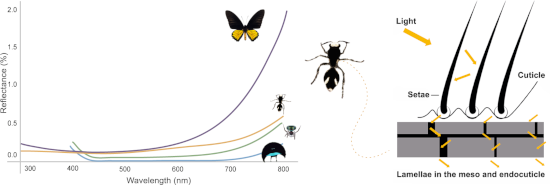
- specialized cuticle, characterized by microstructures that effectively minimize reflectance and enhance light absorption. Optical spectrometry confirmed the ultrablack nature of the cuticle, with the measured reflectance approaching minimal levels across a broad spectrum of wavelengths. Therefore, our study
- risen considerable interest in recent years because of its potential applications in various fields, including optics, camouflage, and solar energy harvesting [1][2]. These colors are characterized by their ability to reflect an exceptionally low amount of visible light. Inspired by several biological
- pigmentation originates from the interaction of light with arrays of microlenses on the cuticle or overlapping brush-like scales positioned just above a densely pigmented absorbing layer. Similar phenomena can be observed in butterflies [11][12], birds [13], and snakes [14][15]. This intricately structured



The round-robin approach applied to nanoinformatics: consensus prediction of nanomaterials zeta potential
Beilstein J. Nanotechnol. 2024, 15, 1536–1553, doi:10.3762/bjnano.15.121
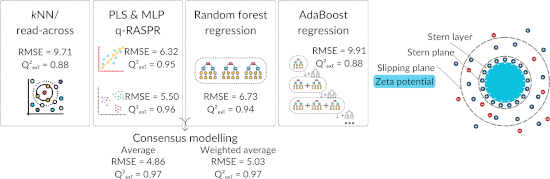
- [36], the following four were included in this study because of the completeness of the data (absence of data gaps): the NMs’ core chemistry, coating, morphology, and hydrodynamic diameter measured using dynamic light scattering (DLS). The ZP of the NMs was measured in water (pH 6.5–8.5). To enrich


Polymer lipid hybrid nanoparticles for phytochemical delivery: challenges, progress, and future prospects
Beilstein J. Nanotechnol. 2024, 15, 1473–1497, doi:10.3762/bjnano.15.118
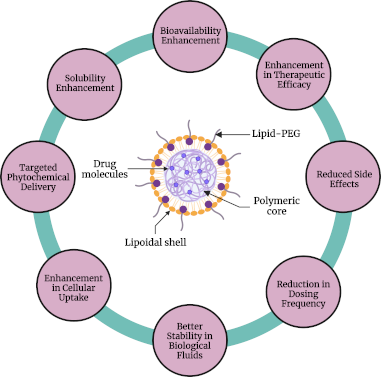
- and intestinal absorption after oral administration, which results in very limited oral bioavailability. Further, THQ is sensitive to light and pH, shows poor stability in biological fluids, is extensively metabolized in the liver, rapidly eliminated from the body, and shows a very short biological


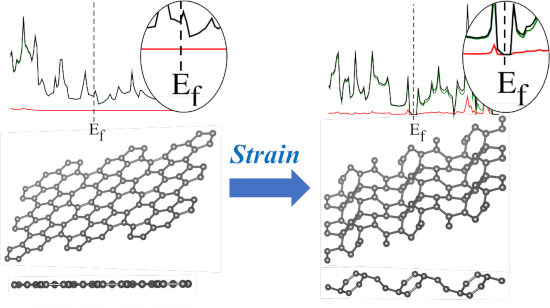
Strain-induced bandgap engineering in 2D ψ-graphene materials: a first-principles study
Beilstein J. Nanotechnol. 2024, 15, 1440–1452, doi:10.3762/bjnano.15.116
- calculations and concluded that ψ-graphene has the potential to be employed in infrared (IR) sensors, ultraviolet (UV) optomechanical sensors, and visible-light sensors [39]. Li et al. theoretically reported a maximum theoretical storage capacity of 372 mAh·g−1 for Li, showing its capability to be utilized as


Ion-induced surface reactions and deposition from Pt(CO)2Cl2 and Pt(CO)2Br2
Beilstein J. Nanotechnol. 2024, 15, 1427–1439, doi:10.3762/bjnano.15.115
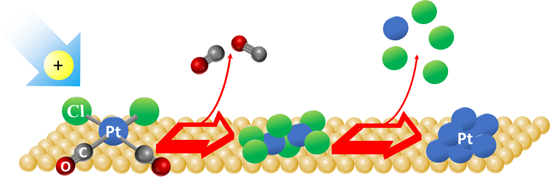
- ; however, light ion (He+ and H2+) irradiation resulted in very inefficient physical sputtering of Pt as compared to C atoms and therefore produced nearly pure Pt films for sufficiently high ion doses. The present study aims to elucidate the role of precursor and ion identities in FIBID by evaluating the
- of any chlorine although carbon and oxygen are observed. We ascribe the presence of carbon and oxygen to be in part due to the adsorption of background CO in the growth chamber onto the exposed Pt surface as it was warmed to room temperature. Light Ar+ sputtering significantly reduces the
- compound by sublimation at 30–35 °C at 125 ± 1 mTorr, a light-yellow solid (0.28 g, yield 80%) was obtained. 13C NMR (CDCl3, 500 MHz) δ 152.34 (1JC–Pt = 1546 Hz); IR (CH2Cl2, Figure S1, Supporting Information File 1): νco 2129, 2170 cm−1. cis-Pt(CO)2Cl2 The compound was prepared according to a literature



Lithium niobate on insulator: an emerging nanophotonic crystal for optimized light control
Beilstein J. Nanotechnol. 2024, 15, 1415–1426, doi:10.3762/bjnano.15.114
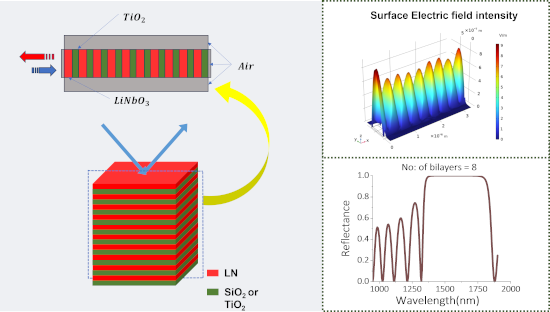
- manipulate the transmission of light modes, similar to how nanostructures have been utilized to regulate electron-related phenomena. Here we study the optical performance of a one-dimensional stacked photonic crystal based on LN and TiO2/SiO2. We studied the quarter wavelength multi-layered stack using
- electromagnetic simulation. The forbidden-frequency region indifferent from the bulk material has been observed around 1.55 µm. A high refractive index and non-linear optical and electro-optical properties enable LN to be used for more efficient manipulation of light. The highly reflective quarternary stack can
- arranged in a certain direction. The periodicity is proportional to the wavelength of light that lies in its photonic bandgap (PBG) [1]. The presence of the PBG and the potential ability to tune its position to match specific frequencies is perhaps the most attractive quality of PhC [2]. The specific


Various CVD-grown ZnO nanostructures for nanodevices and interdisciplinary applications
Beilstein J. Nanotechnol. 2024, 15, 1390–1399, doi:10.3762/bjnano.15.112
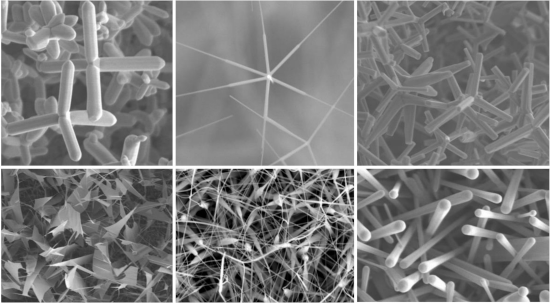
- comparison to other compounds [4][5][6]. Specifically, its large bandgap energy Eg ≈ 3.4 eV is comparable to GaN – a typical material for blue-light-emitting diode (LED) technology [7][8]. Also, its exciton binding energy is higher than the thermal energy at 300 K, and it has high-quality optical



Green synthesis of carbon dot structures from Rheum Ribes and Schottky diode fabrication
Beilstein J. Nanotechnol. 2024, 15, 1369–1375, doi:10.3762/bjnano.15.110
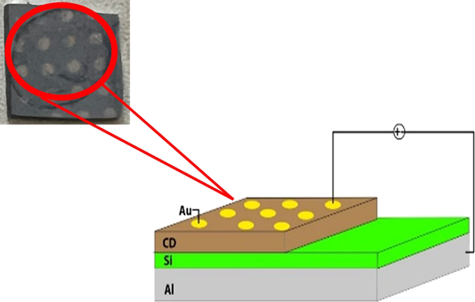
- range of uses in the fields of electrocatalysis, bioimaging, chemical sensors, biosensors, nanomedicine, biomolecule/drug release, light-emitting diodes, and photocatalysts. They also have promising applications in areas such as lasers and optoelectronic device applications [2][3][4][5]. CDs can be




Hymenoptera and biomimetic surfaces: insights and innovations
Beilstein J. Nanotechnol. 2024, 15, 1333–1352, doi:10.3762/bjnano.15.107
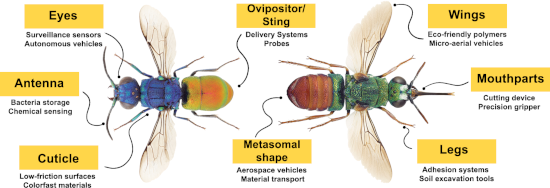
- and movement to unique features that enhance survival and reproductive success [4]. These adaptations may provide valuable insights for biomimetic and bioinspired technological advancements [1]. Hence, understanding these mechanisms not only sheds light on the evolutionary ingenuity of insects but
- pheomelanin) [21][22][23] (but see [24][25] for other pigments). Especially structural coloration provides a wealth of inspiration for creating vivid, durable colors without the use of dyes. This natural phenomenon involves the manipulation of light by micro- and nanostructures on the cuticle (e.g
- evolve structural coloration that reaches blue hues, like in carpenter bees [31]. Some species have ultrablack cuticles that absorb nearly all incident light (Lopez et al., this volume), a feature that can be used to create highly efficient light-absorbing materials for solar panels [32][33






Nanoarchitectonics with cetrimonium bromide on metal nanoparticles for linker-free detection of toxic metal ions and catalytic degradation of 4-nitrophenol
Beilstein J. Nanotechnol. 2024, 15, 1312–1332, doi:10.3762/bjnano.15.106
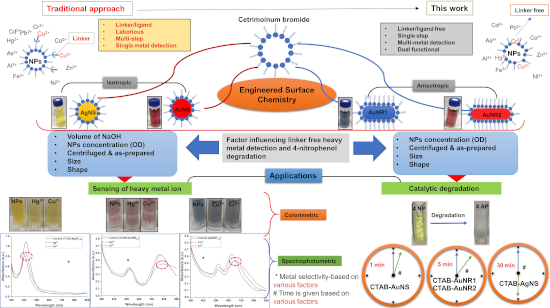
- nanostructures were measured using an Epoch2 spectrophotometer (BioTek, USA). Hydrodynamic radius and polydispersity index (PDI) were measured using dynamic light scattering (Zetasizer Nano ZS, Malvern, UK). The zeta potential measurements were conducted to determine the surface charge for both isotropic and




Interaction of graphene oxide with tannic acid: computational modeling and toxicity mitigation in C. elegans
Beilstein J. Nanotechnol. 2024, 15, 1297–1311, doi:10.3762/bjnano.15.105
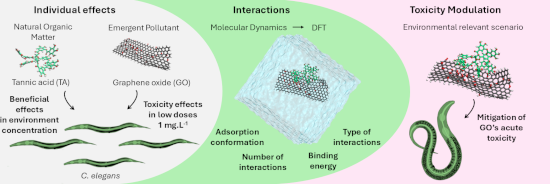
- sheets. TA did not improve the stability of these samples. After the 24 h, only the suspensions of 1 mg·L−1 of GO did not exhibit visual precipitation (Supporting Information File 1, Figure S1a). The results of dynamic light scattering (DLS) measurements presented in Table S1 (Supporting Information File
- added, and the suspension was sonicated in an ultrasonic bath. The sonication time was controlled by analyzing the material’s hydrodynamic diameters by dynamic light scattering (DLS). Dispersion aliquots for measurement were collected every 10 min, and the sonication was performed until there were no


Mn-doped ZnO nanopowders prepared by sol–gel and microwave-assisted sol–gel methods and their photocatalytic properties
Beilstein J. Nanotechnol. 2024, 15, 1283–1296, doi:10.3762/bjnano.15.104
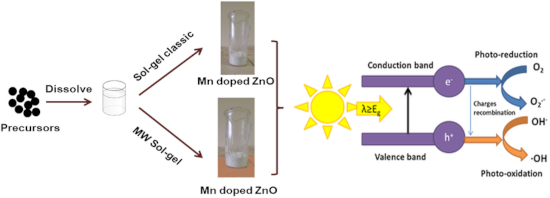
- their newly proved functionality, namely, the ability to photogenerate distinct reactive oxygen species (·OH or O2−) and to act as photoactive materials in aqueous media. The solar light-induced mineralization of oxalic acid by Mn-doped ZnO materials was clearly observed while similar amounts of
- generated CO2 were measured for both catalysts. These inexpensive semiconductor materials, which proved to be light-responsive, can be further used for developing water depollution technologies based on solar light energy. Keywords: microwave-assisted synthesis; oxalic acid mineralization; semiconductor
- toxic, and light-responsive. Up to now, advanced oxidation processes (AOPs) were used for the cleaning of waste water. Although AOPs based on engineered materials were performed in conjunction with biological treatments, the need for optimization still remains. Many photoactive semiconductors were


Functional morphology of cleaning devices in the damselfly Ischnura elegans (Odonata, Coenagrionidae)
Beilstein J. Nanotechnol. 2024, 15, 1260–1272, doi:10.3762/bjnano.15.102
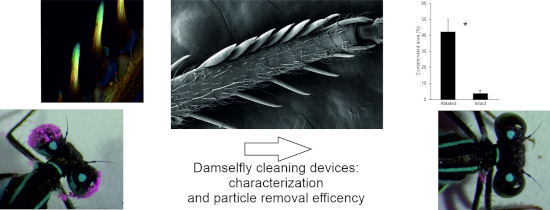
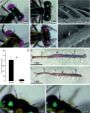
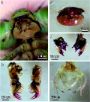
- Ischnura elegans males and females were collected in the field at Centro Ittiogenico del Trasimeno - Sant’Arcangelo (Perugia, Umbria region, Italy), in spring and summer 2023–2024. They were maintained for 2–3 days in a controlled climate chamber (14:10 light–dark rhythm, at a temperature of 25 ± 1 °C and
- relative humidity of 70 ± 10%) inside net cages (25 cm × 25 cm × 25 cm). Drosophila melanogaster flies were used to feed the damselflies. Adult insects of both sexes were used in the study. Light microscopy To count the mean number of foretibial grooming structures in males and females, we anaesthetized 13
- slides, stained with 1% methylene blue with sodium borate, and observed and photographed using a KOPPACE microscope camera KP-2100 (KOPPACE, Kepuaisi Science Technology, Shenzhen, China) mounted on a light microscope Leica DMLB (Leica Microsystem GmbH, Wetzlar, Germany). Scanning electron microscopy


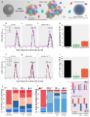
Dual-functionalized architecture enables stable and tumor cell-specific SiO2NPs in complex biological fluids
Beilstein J. Nanotechnol. 2024, 15, 1238–1252, doi:10.3762/bjnano.15.100
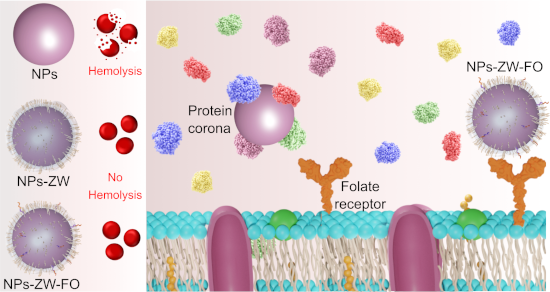
- Iris Renata Sousa Ribeiro Raquel Frenedoso da Silva Romenia Ramos Domingues Adriana Franco Paes Leme Mateus Borba Cardoso Institute of Chemistry (IQ), University of Campinas (UNICAMP), Postal Code 13083- 970, Post Office Box 6154, Campinas, SP, Brazil Brazilian Synchrotron Light Laboratory (LNLS
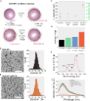
- 1.0 mg·mL–1) and later used for the quantification of captured SiO2NPs-ZW-FO. The calculations were performed using the value obtained at the maximum of the emission band. Stability of SiO2NPs in cell culture medium and human plasma Dynamic light scattering (DLS) measurements were performed to

Enhanced catalytic reduction through in situ synthesized gold nanoparticles embedded in glucosamine/alginate nanocomposites
Beilstein J. Nanotechnol. 2024, 15, 1227–1237, doi:10.3762/bjnano.15.99
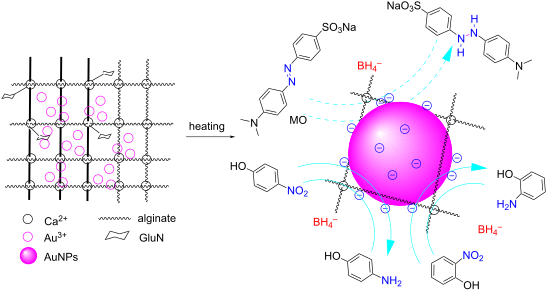
- microscopy (TEM) and selected area electron diffraction (SAED) were carried out using a JEOL JEM-2100 instrument. Crystal structure characterizations of AuNPs were carried out via XRD diffraction. Zeta potential and dynamic light scattering (DLS) measurements were carried out on gel solutions (1.0 mg·mL−1




A low-kiloelectronvolt focused ion beam strategy for processing low-thermal-conductance materials with nanoampere currents
Beilstein J. Nanotechnol. 2024, 15, 1197–1207, doi:10.3762/bjnano.15.97
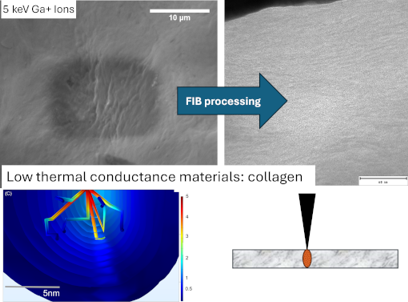
- light interactions with biological tissue [18] as well as focused electron beam-induced deposition (FEBID) [19]. The general approach to assess the beam-induced heat damage and undesired artifacts, regardless if working with ions [17], photons [18], or electrons [19], compares experiments to models
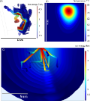
- based on heat transfer and to Monte Carlo or finite element simulations [17][18][19]. Open source programs that assess heat deposition and diffusion are readily available to assess damage in light–tissue interactions [18]. For electron beams, multidimensional models predicting electron beam-induced



Quantum-to-classical modeling of monolayer Ge2Se2 and its application in photovoltaic devices
Beilstein J. Nanotechnol. 2024, 15, 1153–1169, doi:10.3762/bjnano.15.94
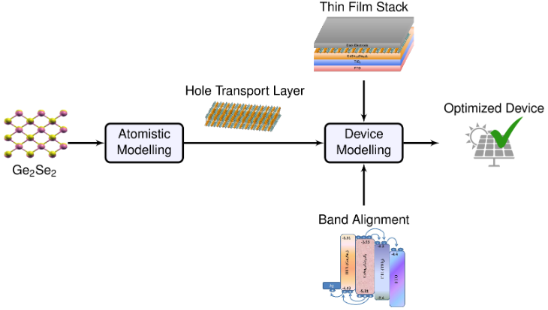
- and relatively low manufacturing cost [3][4]. These solar cells are based on perovskite-structured compounds, which have demonstrated excellent light absorption, charge-carrier mobilities, and tunable bandgaps [5]. Despite the rapid advancements in PSC technology, some critical issues, such as long
- , which further leads to higher transition possibilities. The absorption coefficient elucidates the rate at which light intensity diminishes while entering the material. It primarily depends upon the imaginary part of the refractive index k(λ) = Im{n(λ)} and the wavelength of the incident light λ, as per
- CBM around a wide range of spectra at the S point. Refractive index and extinction coefficient The real part of the material’s refractive index defines the angle of refraction that the light undergoes while entering a medium. Higher refractive indices refer to lower refraction angles measured from the




Photocatalytic methane oxidation over a TiO2/SiNWs p–n junction catalyst at room temperature
Beilstein J. Nanotechnol. 2024, 15, 1132–1141, doi:10.3762/bjnano.15.92
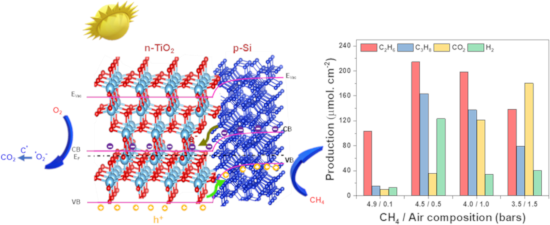
- of TiO2 on p-type SiNWs. The TiO2/SiNWs heterostructure exhibited an outstanding OCM performance under simulated solar light irradiation compared to the single components. This enhanced efficiency was attributed to the intrinsic electrical field formed between n-type TiO2 and p-type SiNWs, which
- because of its high stability, good dispersibility, and narrow energy bandgap. However, pristine TiO2 shows only low photocatalytic efficiency because of the high recombination rate between holes and electrons and the low visible-light harvesting ability [20][21][22]. The rapid recombination of charge
- electron–hole pairs. Additionally, TiO2/SiNWs offer flexibility, improved bandgap energy, and enhanced light harvesting across a broad spectrum, leading to higher photocatalytic efficiency. Combining SiNWs and TiO2 presents an opportunity to leverage the strengths of both materials while mitigating their


Direct electron beam writing of silver using a β-diketonate precursor: first insights
Beilstein J. Nanotechnol. 2024, 15, 1117–1124, doi:10.3762/bjnano.15.90
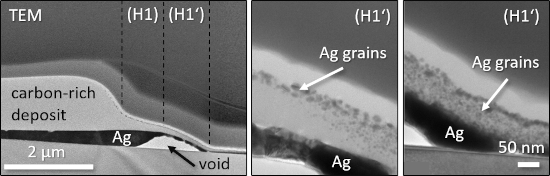
- . “Experimental” section) for focused electron beam-induced deposition (FEBID). (hfac)AgPMe3 is a white to light yellow solid, which was used before for chemical vapor deposition [32] and for growing silver nanoparticles by atomic layer deposition [33]. Like for other silver precursors, a pronounced halo and a


Unveiling the potential of alginate-based nanomaterials in sensing technology and smart delivery applications
Beilstein J. Nanotechnol. 2024, 15, 1077–1104, doi:10.3762/bjnano.15.88
- [61]. Nanoparticle size: The nanoparticle size can be determined using a variety of methods including dynamic (DLS) and static (SLS) light scattering; TEM, SEM, and AFM are also widely employed [62][63]. DLS and SLS can detect particle size by determining changes in distribution of particle size
- sensor. Another fluorescence-based smart sensor from alginate nanofilms was prepared [122]. Scientists proved that relative humidity could be detected using a guar gum–sodium alginate (GGSA) nanocomposite film. The study found that the fluorescence of biocomposite films under UV light varies at various


Signal generation in dynamic interferometric displacement detection
Beilstein J. Nanotechnol. 2024, 15, 1070–1076, doi:10.3762/bjnano.15.87
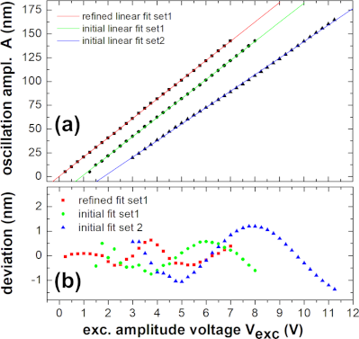
- to the harmonic displacement of the cantilever in the time domain. As the interferometer signal is limited in amplitude because of the spatial periodicity of the interferometer light field, an increasing cantilever oscillation amplitude creates an output signal with an increasingly complex temporal
- . Keywords: amplitude calibration; displacement detection; force microscopy; interferometer signal; NC-AFM; Introduction Optical interferometry is a reliable technique utilizing light waves to measure distance and displacement with high precision [1][2]. With the light wavelength as the length standard, a
- highly stable interferometer can detect displacements with an accuracy far beyond nanometer resolution [3], where the final physical limit is set by the photon emission statistics of the light source [4]. In non-contact atomic force microscopy (NC-AFM), interferometry is used to measure the periodic


Bolometric IR photoresponse based on a 3D micro-nano integrated CNT architecture
Beilstein J. Nanotechnol. 2024, 15, 1030–1040, doi:10.3762/bjnano.15.84
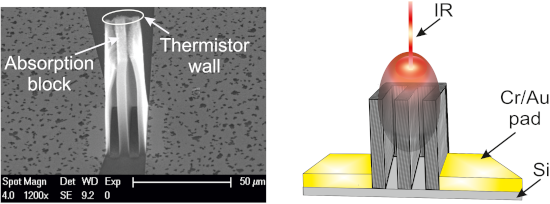
- (TCR) [6], and high mechanical stability [7]. Vertically aligned CNTs (VACNTs) are considered to be nearly ideal blackbody absorbers because of their ability to absorb light over a broad spectral range (0.2–200 μm), closely resembling the theoretical blackbody that absorbs all wavelengths of light [3
- VACNTs (water-assisted CVD on silicon substrates with ethylene as the carbon source) has been investigated by [3]. They showed that vertically aligned SWCNTs can absorb light almost perfectly with a reflectance of 0.01–0.02 over a very wide spectral range (0.2–200 μm). The UV-to-mid-IR absorption
- reduced by more than one order of magnitude. Assuming a similar temperature increase in the CNT walls, the responsivity will increase by an order of magnitude. In addition, the CNT height can be reduced to the effective light absorption depth to achieve a more homogeneous temperature rise over the wall


Entry of nanoparticles into cells and tissues: status and challenges
Beilstein J. Nanotechnol. 2024, 15, 1017–1029, doi:10.3762/bjnano.15.83
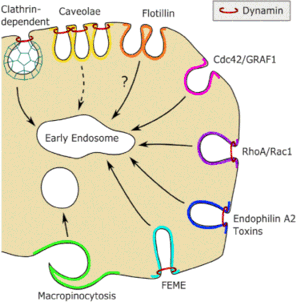
- [29]. Other microscopy techniques that are useful for such studies are correlative light and electron microscopy (CLEM) [30], confocal microscopy with Z-stacks [4], and structured illumination microscopy (SIM) which can also demonstrate in which organelles the NPs are localized. The SIM image shown in





