
Search results
Search for "reduction" in Full Text gives 1298 result(s) in Beilstein Journal of Nanotechnology. Showing first 200.
Green synthesis of silver nanoparticles derived from algae and their larvicidal properties to control Aedes aegypti
Beilstein J. Nanotechnol. 2024, 15, 1566–1575, doi:10.3762/bjnano.15.123
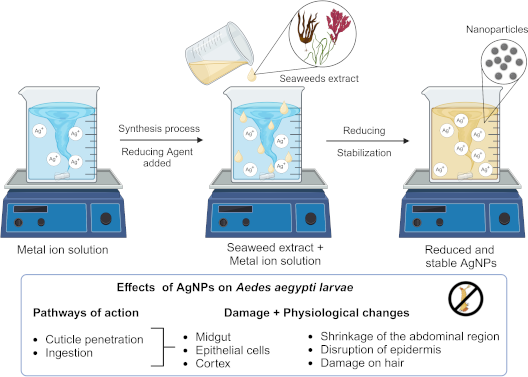
- chemical reduction of metal ions through biological compounds can be used to synthesize non-toxic and environmentally safe “green” insecticide alternatives in the form of metal-based nanoparticles [15]. A promising option are silver nanoparticles (AgNPs) obtained through synthesis from natural extracts
- containing secondary metabolites that act as reducing and stabilizing agents. Among these metabolites, alkanes, aromatics, phenols, ethers, amines, and amides stand out for their role in the reduction, stabilization, and capping of silver nanoparticles [11][16][17][18][19]. Compounds of natural origin are
- on naturally occurring biomaterials have been used as an alternative to obtain metallic nanoparticles [32][33]. These do not involve any toxic chemicals and require less energy and synthesis time. Simple protocols have been used involving the reduction of metal ions using biological extracts as


Electrochemical nanostructured CuBTC/FeBTC MOF composite sensor for enrofloxacin detection
Beilstein J. Nanotechnol. 2024, 15, 1522–1535, doi:10.3762/bjnano.15.120
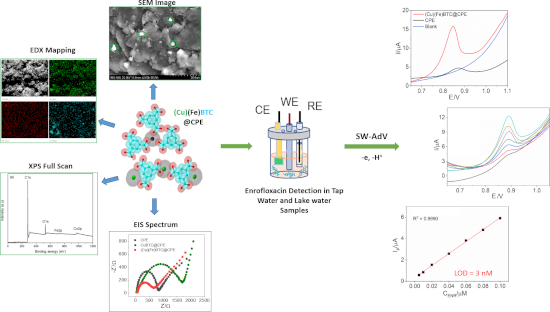
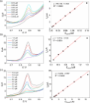
- Ω and significantly better conductivity [37], to the (Cu)(Fe)BTC@CPE led to reduction to about a third in Rct. This reduction in charge transfer resistance is advantageous for the enhancement of electrochemical oxidation on the electrode surface. Electrochemical behaviour of enrofloxacin on the (Cu
- voltammogram in ENR-free blank solution with no electrochemical response for ENR. In phosphate-buffered saline (PBS) containing ENR, there is a peak at 0.85 V on all four electrodes, attributed to the oxidation of ENR during the anodic scanning. No reduction peak was observed, revealing that the
- present in the analytical solution. Figure 13 illustrates that, at a concentration 100 times higher than that of ENR, ions including K+, Na+, Ca2+, Mg2+, Zn2+, Ni2+, Cl−, NO3−, SO42−, HCO3−, and CH3COO− had a negligible impact on the ENR signal, leading to a reduction in the ENR signal of less than 5





Polymer lipid hybrid nanoparticles for phytochemical delivery: challenges, progress, and future prospects
Beilstein J. Nanotechnol. 2024, 15, 1473–1497, doi:10.3762/bjnano.15.118
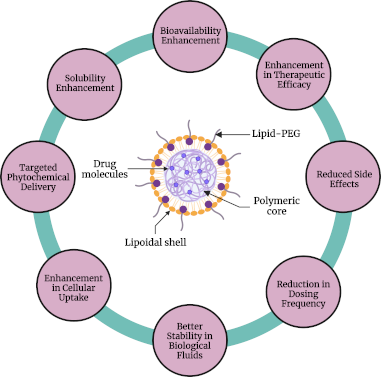
- profiles. The cell culture studies indicated that the targeted PLHNPs showed much greater cell uptake in MDA-MB-435s cells by integrin receptor-medicated endocytosis than the non-targeted PLHNPs. The targeted PLHNPs showed a significant reduction in IC50 value (by ≈50%) compared to the non-targeted PLHNPs
- . The hepatoprotective and antihyperlipidemic activity of the developed PLHNPs was evaluated in NAFLD-bearing PNPLA3 I148M transgenic mice. The developed PLHNPs showed a significant reduction in blood lipid levels, enhanced liver function, and decreased accumulation of lipids in the livers of mice. The
- HPN dispersion. The developed HPN-cPLHNPs gels showed much better wound healing activity with a significantly higher reduction in wound size after topical application for 14 days in comparison with the conventional HPN gel. Emodin Emodin (EDN) is a natural anthraquinone compound found in various


Effect of radiation-induced vacancy saturation on the first-order phase transformation in nanoparticles: insights from a model
Beilstein J. Nanotechnol. 2024, 15, 1453–1472, doi:10.3762/bjnano.15.117
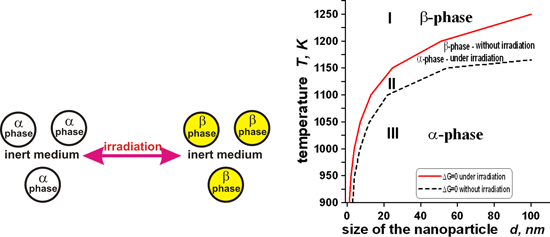
- irradiated with He+ ions, their amorphization leads to a reduction in nanohardness, and this reduction is strongly correlated with the grain size [12]. Phase instability (radiation-induced amorphization) is observed in zirconia nanoparticles (ZrO2) embedded in nanocrystalline composites. ZrO2 nanoparticles
- nanomaterials with phase change and reduction in surface tension serve as suitable systems for elucidation and comparison. In summary, there is a competition among various energetic factors influencing phase stability and transformations in HDCMs during irradiation. These factors include (i) the bulk


Strain-induced bandgap engineering in 2D ψ-graphene materials: a first-principles study
Beilstein J. Nanotechnol. 2024, 15, 1440–1452, doi:10.3762/bjnano.15.116
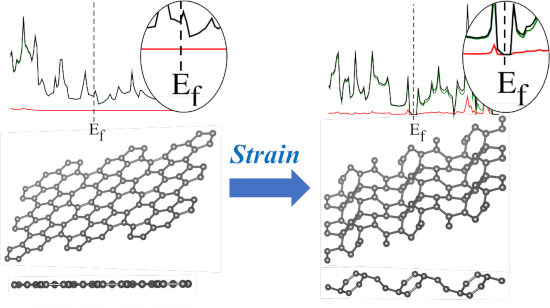
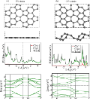
- ψ-graphene at strain levels of −15% and −6% (Table 2). The bond length d1, which was 1.51 Å in the absence of deformation, undergoes a considerable reduction under compression in the lattice plane. This bond length decreases until it reaches the lowest value of 1.27 Å at −10% strain level. The
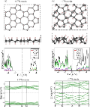
- slight reduction in the lattice parameters, was found to be sufficient for a metal-to-semiconductor transition in ψ-graphone (Figure 3). These results indicate the extreme sensitivity of the ψ-graphone crystal structure to mechanical strain (tensile or compressive). As the magnitude of strain increases
- beyond −1%, the bandgap increases and reaches a stable value of 2.31 eV within a negative strain range of −5% to −7%. However, beyond the −7% strain level, a continuous reduction is observed in the bandgap, which continues up to −16% strain. At this level, the bandgap becomes 0.7 eV, signifying the


Ion-induced surface reactions and deposition from Pt(CO)2Cl2 and Pt(CO)2Br2
Beilstein J. Nanotechnol. 2024, 15, 1427–1439, doi:10.3762/bjnano.15.115
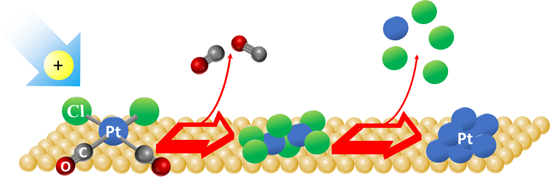
- sputtering of deposited material [21][22][25]. Recently, it was reported that the ion identity plays a major role in FIBID of Pt from MeCpPtMe3 [41]. In this study, Pt(IV) reduction from Ne+ and Ar+ bombardment resulted in the loss of four CH3 groups, whereas He+ and H2+ bombardment resulted in the loss of
- 73 and 71 eV, respectively. This shift indicates Pt reduction from Pt(II) to a Pt species that resembles Pt(0) [66][67]. As the ion dose increases, the intensity of these two new Pt peaks increases, while the intensity of the Pt(II) peaks associated with the parent compound decreases. At an Ar+ dose
- comparison of the CO loss and Pt(II) reduction from Pt(CO)2Cl2 as functions of the Ar+ dose. Both data sets are fit to a first-order kinetic decay profile producing very similar reaction cross sections of 8.5 × 10⁻¹⁵ and 1.9 × 10⁻¹⁴ cm2, respectively. Figure 4 shows how the photoelectron spectrum of Pt(CO



A biomimetic approach towards a universal slippery liquid infused surface coating
Beilstein J. Nanotechnol. 2024, 15, 1376–1389, doi:10.3762/bjnano.15.111
- –PFD compared to BSA and a ≈40% reduction in FXII activation on PDA–FDT–PFD compared to glass. This suggests that there is FXII coming down onto the surface of our coating and activating, though to a lesser degree than on glass. However, we observed no difference in FXII activation between PDA and
- , previous studies investigating SLIPS-induced fibrin polymerization found a significant reduction compared to bare surfaces [4]. There was significant variation between donors and between runs, but the trends remained consistent. Differences between runs were not of interest, so data was normalized to the




Investigation of Hf/Ti bilayers for the development of transition-edge sensor microcalorimeters
Beilstein J. Nanotechnol. 2024, 15, 1353–1361, doi:10.3762/bjnano.15.108
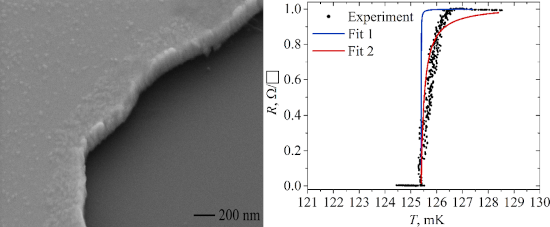
- sensitivity of the microcalorimeter. Our Hf films demonstrate superconductivity at half of the thickness of Ir films [12], allowing for the reduction of the detector volume. Moreover, hafnium is inexpensive in comparison with iridium. Another point is that the technology of Hf deposition, developed in our


Hymenoptera and biomimetic surfaces: insights and innovations
Beilstein J. Nanotechnol. 2024, 15, 1333–1352, doi:10.3762/bjnano.15.107
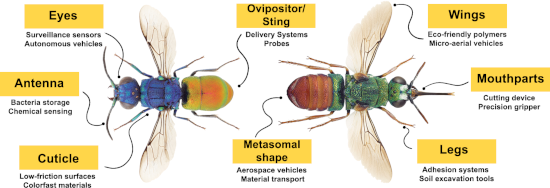
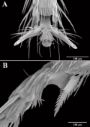
- sculptured and thick cuticle of some hymenopterans is also associated with increased resistance to fractures and high pressures [16] and may also potentially reduce water loss [17][18]. Alternative hypotheses yet to be tested for the function of such complex cuticle sculpturing is the air drag reduction
- to a reduction in electronic waste, as devices retain their visual appeal over a longer period. The techniques to create biomimetic materials with color producing mechanisms inspired by insects already exist [29][30] and applications of such technology have several possibilities. Hairs The body
- up to 90%, deflecting incoming air and create a zone of stagnant air, potentially helping in the deployment of sensors outdoors, where they are strongly subjected to airborne dust [19]. The detailed study of hymenopteran hairs can be useful in fabricating new surfaces with friction reduction





Nanoarchitectonics with cetrimonium bromide on metal nanoparticles for linker-free detection of toxic metal ions and catalytic degradation of 4-nitrophenol
Beilstein J. Nanotechnol. 2024, 15, 1312–1332, doi:10.3762/bjnano.15.106
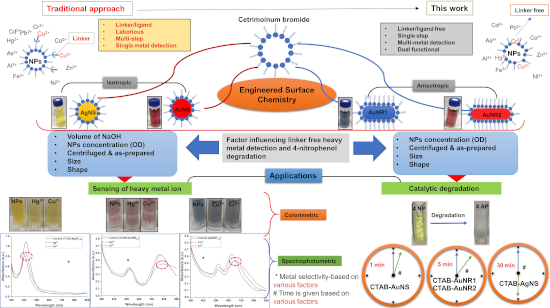
- synthesized using wet chemical reduction, as shown in Figure 1a. A unique feature of CTAB is its robust and selective binding to certain crystal facets of metal surfaces that define the growth and nucleation of nanoparticles. CTAB on metal surfaces plays a key role in nanoparticle stabilization but hinders
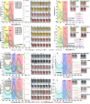
- , no flattening or aggregation of silver nanoparticles was noticed (Figure 4e,f). The decrease in the intensity of silver nanoparticles might be due to less CTAB on the nanoparticles’ surface or a decrease in CTAB CMC value. As reported elsewhere, the reduction in CTAB CMC is associated with NaCl




Interaction of graphene oxide with tannic acid: computational modeling and toxicity mitigation in C. elegans
Beilstein J. Nanotechnol. 2024, 15, 1297–1311, doi:10.3762/bjnano.15.105
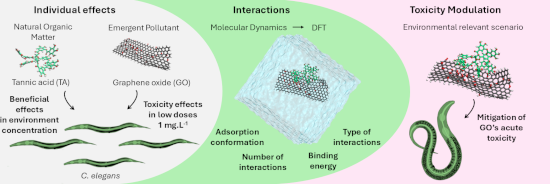
- characteristics made TA attractive to nanomaterial synthesis and functionalization for applications in nanomedicine, sensors, electronics, and composites [25][26][27]. In these different fields, TA has been applied in green alternative methods of GO synthesis and physicochemical modifications (e.g., reduction and
- (15 mL, 30% w/w) is added to complete the oxidation of graphite and the reduction of residual KMnO4; the mixture is left under stirring overnight. At the end, the material is precipitated by centrifugation and washed with H2SO4 (3.0%) and H2O2 (0.5%) to remove residues of oxidants and inorganic


Mn-doped ZnO nanopowders prepared by sol–gel and microwave-assisted sol–gel methods and their photocatalytic properties
Beilstein J. Nanotechnol. 2024, 15, 1283–1296, doi:10.3762/bjnano.15.104
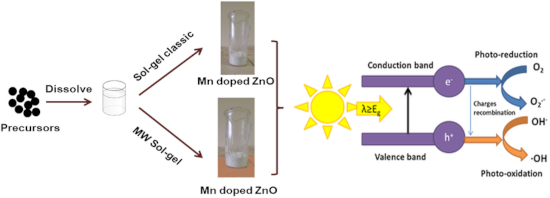
- simulated solar light, as follows: 0.003 g powder was suspended in 3 mM solution of 2,3-bis(2-methoxy-4-nitro-5-sulfophenyl)-2H-tetrazolium-5-carboxanilide; its reduction by the photogenerated O2‾ leads to the formation of formazan. This is signaled by a broad peak located at 470 nm. The UV–vis spectra were


New design of operational MEMS bridges for measurements of properties of FEBID-based nanostructures
Beilstein J. Nanotechnol. 2024, 15, 1273–1282, doi:10.3762/bjnano.15.103
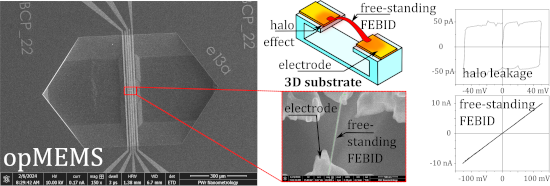
- before and after FIB milling at 393 K (100 K above ambient), respectively. (e) Von Mises strain (in MPa) around the formed RoI, showing concentration of strain around edges and near the cantilevers, indicating areas suitable for strain reduction. RoI of an opMEMS (a) before and (b) after FIB alignment


The role of a tantalum interlayer in enhancing the properties of Fe3O4 thin films
Beilstein J. Nanotechnol. 2024, 15, 1253–1259, doi:10.3762/bjnano.15.101
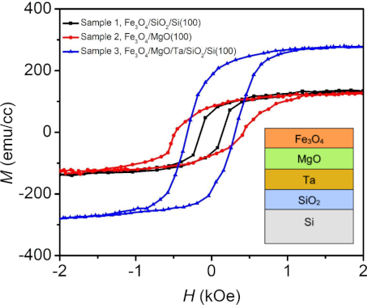
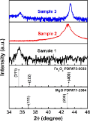
- affect Ms [39][40]. In reports [41][42], APBs in Fe3O4 thin films lead to the reduction of saturation magnetization compared to bulk Fe3O4 (510 emu/cm3) [29]. Therefore, sample 3 has the highest Ms because of the smallest number of APBs among all samples. Using a double buffer layer of MgO/Ta to lower
- buffer layer is nearly 3.5 times larger than that in sample 2, the number of APBs in sample 3 is the smallest, resulting in the reduction in Hc of sample 3 compared to the Hc value of sample 2. Conclusion Fe3O4 films were prepared on different substrates of SiO2/Si(100), MgO(100), and MgO/Ta/SiO2/Si(100


Dual-functionalized architecture enables stable and tumor cell-specific SiO2NPs in complex biological fluids
Beilstein J. Nanotechnol. 2024, 15, 1238–1252, doi:10.3762/bjnano.15.100
- from each sample were cut out. The preparation of samples for analysis by LC-MS/MS was performed according to previously described protocols [34][35]. Briefly, the protein bands were bleached with a destaining solution and dehydrated in acetonitrile. Reduction and alkylation of disulfide bridges were
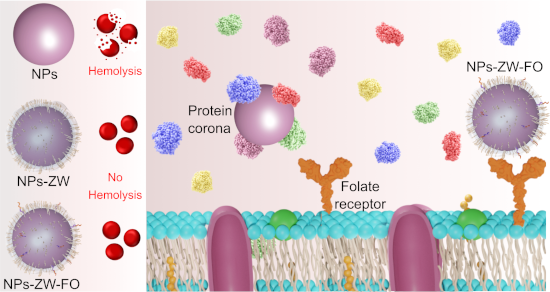
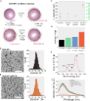
- greater intensity for the SiO2NPs-ZW-FO (Figure 1g). This reduction indicates that the functionalization process was successful and that folate remained active and could bind to the receptor. Based on the analytical curve (R2 = 0.9997 and sensitivity = 73800.9, arbitrary fluorescence units per mg·mL–1
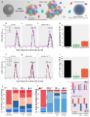
- (Supporting Information File 1, Table S1 and Supporting Information File 2). Albumin was the major protein identified in pure DMEM (10% FBS); however, there was a significant reduction in the amount of this protein in the hard corona of SiO2NPs, especially non-functionalized ones (Figure 2j). Although albumin

Enhanced catalytic reduction through in situ synthesized gold nanoparticles embedded in glucosamine/alginate nanocomposites
Beilstein J. Nanotechnol. 2024, 15, 1227–1237, doi:10.3762/bjnano.15.99
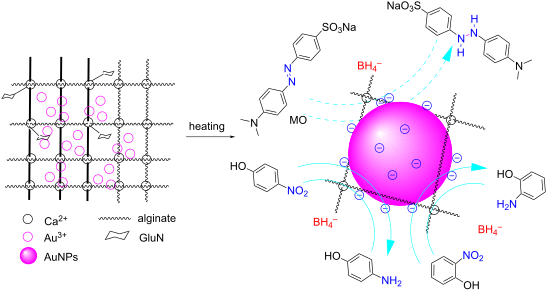
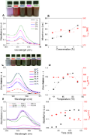
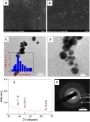
- AuNPs exhibited uniform size with an average diameter of 10.0 nm. The nanocomposites facilitated the recyclable reduction of organic dyes, including 2-nitrophenol, 4-nitrophenol, and methyl orange, employing NaBH4 as the reducing agent. Kinetic studies further underscored the potential of this
- nanocomposite as a versatile catalyst with promising applications across various industrial sectors. Keywords: catalysis; gold nanoparticles; organic dyes; organometallic nanocomposites; reduction; Introduction Gold nanoparticles (AuNPs) have garnered significant attention because of their exceptional
- physicochemical properties and diverse potential chemical applications [1][2][3]. The conventional synthesis of AuNPs typically involves the chemical reduction of Au3+ ions using various reducing agents and stabilizers [4][5]. However, many of these chemicals are highly reactive, posing risks to both the




Realizing active targeting in cancer nanomedicine with ultrasmall nanoparticles
Beilstein J. Nanotechnol. 2024, 15, 1208–1226, doi:10.3762/bjnano.15.98
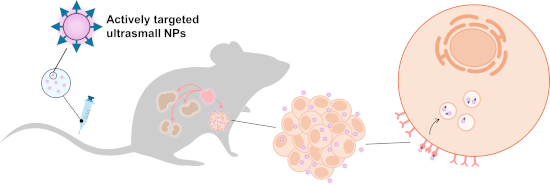
- effects also manifest through a reduction in koff while kon remains unaffected. Importantly, a prolonged residence time may prove beneficial when targeting the tumor vasculature, as the targeted usNPs would remain bound to their receptors even as most of the circulating particles are cleared from the body
- for PC3pip and PC3flu tumor-bearing mice treated with targeted AuNCs or PBS, with or without radiation. Significant reduction in tumor growth was observed in the PC3pip model 18 days after treatment with targeted AuNCs plus radiation. The figure was adapted from [129], D. Luo et al., “Targeted Gold


A low-kiloelectronvolt focused ion beam strategy for processing low-thermal-conductance materials with nanoampere currents
Beilstein J. Nanotechnol. 2024, 15, 1197–1207, doi:10.3762/bjnano.15.97
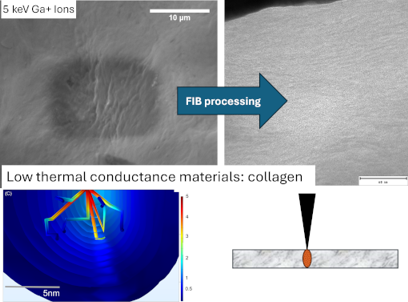
- shorter than the 1 ns cool down time constant for 30 keV ions [17]. The results indicate that, in the case of 5 keV ions, there might be sufficient time for the induced heat to dissipate between ion impacts or to at least allow for a significant reduction in induced heat before a subsequent ion impact. At
- keV). By reducing the ion energy from 30 to 5 keV, the loss to heat can be reduced by a factor of six, while the sputtering speed is only reduced by a factor of two. The reduction in energy allows the operator to use nanoampere beam currents, which addresses the drawback of the previously reported
- approach of unfeasibly long patterning times. The results suggest that an additional reduction in ion beam current and applying blur and reduced overlap, when using low ion energies, can further reduce the induced heat. Using that combination might be required for processing materials exhibiting an even



Quantum-to-classical modeling of monolayer Ge2Se2 and its application in photovoltaic devices
Beilstein J. Nanotechnol. 2024, 15, 1153–1169, doi:10.3762/bjnano.15.94
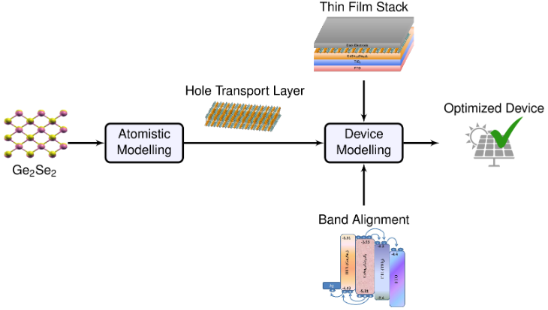
- of the absorber thickness on almost all parameters. The PCE increases from 27.4% to 28.11%, and the short-circuit current Jsc value reaches up to 28.86 mA·cm−2. We observed that there is a significant reduction in FF and Voc at higher absorber thicknesses, primarily because of the increasing series




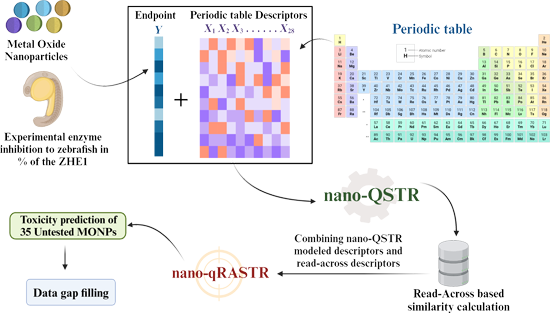
Introducing third-generation periodic table descriptors for nano-qRASTR modeling of zebrafish toxicity of metal oxide nanoparticles
Beilstein J. Nanotechnol. 2024, 15, 1142–1152, doi:10.3762/bjnano.15.93
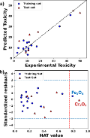
- . Conversely, MONPs with larger atomic radii and crystal ionic radii tend to exhibit a lower surface area-to-volume ratio, which can reduce their cellular interactions and uptake. This reduction in uptake can lead to less cellular dysfunction and toxicity. Larger atomic radii may result in MONPs that are less


Local work function on graphene nanoribbons
Beilstein J. Nanotechnol. 2024, 15, 1125–1131, doi:10.3762/bjnano.15.91
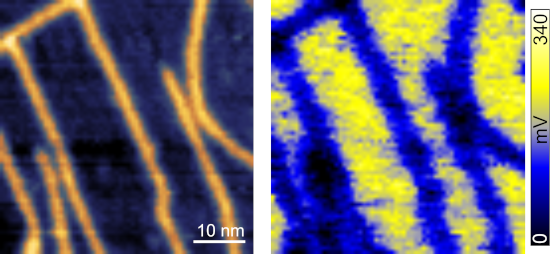
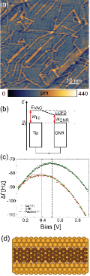
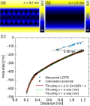
- considerable part of the Au surface in addition to the GNR and to a reduction of the CPD values due to the long range nature of the electrostatic force. Conclusion In summary, we have imaged graphene nanoribbons using KPFM. We confirm the p-type doping of the GNRs on the Au substrate. The measured LCPD values

![[Graphic 1]](/bjnano/content/inline/2190-4286-15-91-i4.svg?max-width=637&scale=1.18182)
Recent updates in applications of nanomedicine for the treatment of hepatic fibrosis
Beilstein J. Nanotechnol. 2024, 15, 1105–1116, doi:10.3762/bjnano.15.89
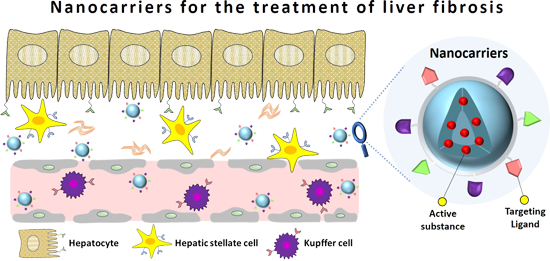
- played an important role in the enhancement of therapeutic outcomes compared to those of conventional therapy. At the same time, nanoparticle drug delivery systems offer a significant reduction in side effects of treatments by lowering the off-target biodistribution of the active pharmaceutical
- nanoparticle-encapsulated curcumin (NanoCurc™) could ameliorate CCl4-induced hepatic injury and fibrosis through reduction of pro-inflammatory cytokines [54]. The polymer platform of NanoCurc™ consists of N-isopropylacrylamide, vinylpyrrolidone, and acrylic acid and was selected because of its capability to
- dissolve a broad range of poorly water-soluble drugs. As this polymeric platform could deliver substantial amounts of curcumin to the liver, a significant reduction in in vivo CCl4-induced hepatocellular injury could be observed. The toxicity data also shows that NanoCurc™ essentially exhibits no toxicity


Unveiling the potential of alginate-based nanomaterials in sensing technology and smart delivery applications
Beilstein J. Nanotechnol. 2024, 15, 1077–1104, doi:10.3762/bjnano.15.88
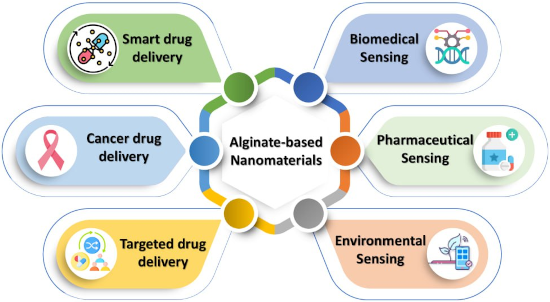
- ]. Conventional drug delivery techniques may be ineffective in many applications. Furthermore, it is difficult to manage the components that are produced in an acidic or basic environments, resulting in a reduction in the therapeutic impact of the medications. In recent years, smart DDSs have emerged as a
- , into the alginate polymer network. This can be achieved through various methods, including reduction reactions, electrochemical deposition, or deposition-precipitation. The resulting hybrid nanomaterials exhibit synergistic properties of both the inorganic nanoparticles and the alginate polymer


Effect of wavelength and liquid on formation of Ag, Au, Ag/Au nanoparticles via picosecond laser ablation and SERS-based detection of DMMP
Beilstein J. Nanotechnol. 2024, 15, 1054–1069, doi:10.3762/bjnano.15.86
- used across various scientific and technological fields due to their distinctive optical, physical, and chemical properties. Over the past few decades, different methods have been developed for NP synthesis, including chemical reduction, electrochemistry, atomic layer deposition, laser ablation
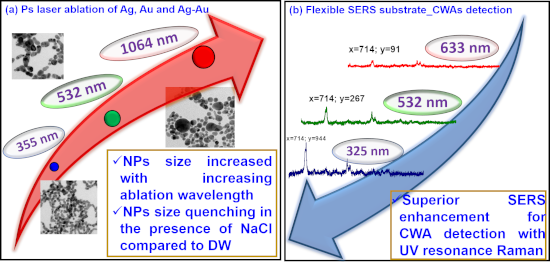
- efficiency and yield of the LASiS process [4][50]. The study reported by Shukri et al. [51] pointed out a size reduction in Au NPs from 19 to 12 nm by decreasing the input laser wavelengths, changing from 1064 to 532 nm in DW. Solati et al. [52] observed a significant increase in the mean size of Ag NPs from
- 532 nm, and 16.5 ± 0.5 nm at 1064 nm, respectively. The size distributions are provided in Supporting Information File 1, Figure S1(d–f). The size of the NPs increases with increasing laser wavelength. It is worth mentioning that a reduction in NP size was noticed more in NPs produced in aqueous NaCl


Interface properties of nanostructured carbon-coated biological implants: an overview
Beilstein J. Nanotechnol. 2024, 15, 1041–1053, doi:10.3762/bjnano.15.85
- graphene. rGO is produced through direct reduction of GO using physical or chemical routes [49]. Thus, the carbon-to-oxygen ratio can be increased to values of around 8:1 to 246:1, significantly higher than those of GO [50]. The electrical properties show a remarkable improvement compared with GO, even if
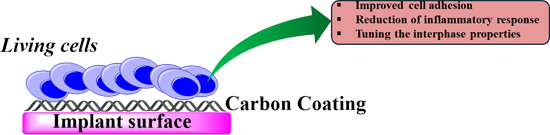
- roughness, inducing macrophage polarization to the pro-inflammatory state without producing a great excess of pro-inflammatory factors. Furthermore, GO-coated implants showed a reduction of the expression of the fibrosis-related protein α-SMA and collagen deposition in the presence of both fibroblasts and
- macrophages. The reduction of fibrotic formations on the implants is of capital relevance for preventing thrombosis [96]. Hassan et al. [97] investigated graphene coatings on a stainless steel implant to minimize the negative effect of metals contained into the alloy (i.e., Cr, Mo, and Ni). The authors used