Search results
Search for "substrate" in Full Text gives 1410 result(s) in Beilstein Journal of Nanotechnology. Showing first 200.
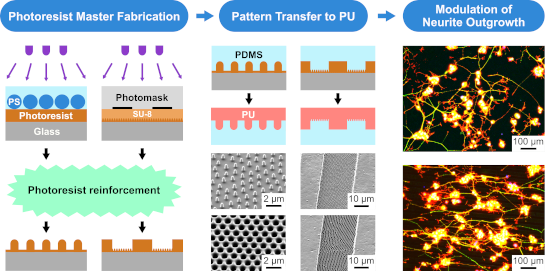
Hierarchically patterned polyurethane microgrooves featuring nanopillars or nanoholes for neurite elongation and alignment
Beilstein J. Nanotechnol. 2023, 14, 1157–1168, doi:10.3762/bjnano.14.96
- nerves are few and far between. Thus, further work is necessary to ascertain the potential of such structures for peripheral nerve regeneration. One of the reasons for the limited work on discrete nanostructures and hierarchical structures may be the expensive or non-versatile techniques for substrate
- Supporting Information File 1, Figure S2). Scanning electron microscopy (SEM) images (Figure 1C–E) confirm the featureless surface of flat PU and the ordered arrays of nanopillars and nanoholes on the nanopatterned films. For the PU nanopillar substrate, some short pillars occassionally appeared (Figure 1D
- nanopillar substrate having the smallest CAs (CA ≈ 30°). Based on confocal fluorescence microscopy of immunostained samples (Figure 1J–L), laminin successfully adsorbed onto the O2 plasma-treated PU samples. There was good laminin coverage on all of the samples, even on the nanostructures, as indicated by


A multi-resistance wide-range calibration sample for conductive probe atomic force microscopy measurements
Beilstein J. Nanotechnol. 2023, 14, 1141–1148, doi:10.3762/bjnano.14.94

- -AFM imaging and I–V curves measurement to define the conditions for calibrated measurements. Calibration sample design and fabrication The sample developed in this work consisted of a square fused silica substrate (11 mm wide, 2 mm thick), on which gold connection lines and pads were fabricated by
- droplets (F42240, lead-free solder paste – class 5, CIF, France). The fused silica substrate was placed on a heating plate set to 270 °C, which required around 3 min to reach the melting temperature of the solder droplets (217 °C), as observed under an optical microscope. Upon cooling, 16 SMD resistors
- were fixed on the sample surface, creating a set of 15 resistance values, as shown in Figure 1a. The substrate was fixed onto a circular metallic plate (15 mm diameter), which acts as a back electrode connected to all resistances using a peripheral gold line and dashes of silver paste deposited on the


Sulfur nanocomposites with insecticidal effect for the control of Bactericera cockerelli
Beilstein J. Nanotechnol. 2023, 14, 1106–1115, doi:10.3762/bjnano.14.91

- , and O, corresponding to the by-products of the reduction of sodium thiosulfate to sulfur (see Experimental section), were found [19][31][34]. Carbon is from the substrate used in the EDS analysis [35][36]. The TEM micrograph in Figure 3a reveals the formation of spherical SNPs that agglomerate into



Density functional theory study of Au-fcc/Ge and Au-hcp/Ge interfaces
Beilstein J. Nanotechnol. 2023, 14, 1093–1105, doi:10.3762/bjnano.14.90

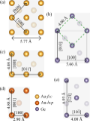
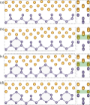
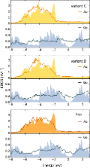
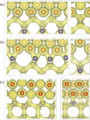
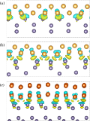
- crystalline phases on a specific substrate [2][3]. The structure of a heterophase can be studied using advanced atomic-resolution experiments, such as high-resolution electron microscopy [4], high-resolution secondary-electron microscopy [5], scanning transmission electron microscopy [6][7] or scanning
- , involving a hexagonal AuGe β phase present during the intermediate stages of growth. Interestingly, while the fcc crystallites were randomly oriented with respect to the Ge substrate, the hcp nanostructures were typically found with (001) planes at 60–65° to the (111) Ge planes [22]. In a recent experiment
- , stable hcp nanoislands were obtained under controlled annealing conditions on the germanium substrate [23]. After initial crystallization of the fcc gold phase, the hcp phase grows from the eutectic Au/Ge liquid. The atomically resolved STEM-HAADF measurements as well as electron backscatter diffraction





Properties of tin oxide films grown by atomic layer deposition from tin tetraiodide and ozone
Beilstein J. Nanotechnol. 2023, 14, 1085–1092, doi:10.3762/bjnano.14.89
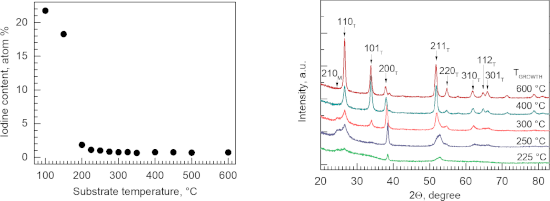
- . Suitable evaporation temperatures for the SnI4 precursor as well as the relationship between growth per cycle and substrate temperature were determined. Crystal growth in the films in the temperature range of 225–600 °C was identified. Spectroscopic analyses revealed low amounts of residual iodine and
- photocurrent and normalising the signal to a reference photocurrent signal from a clean gold mesh located behind the last optical element of the beamline. Results and Discussion To establish the evaporator temperature that provides the maximum coverage of substrate surface with precursor molecules and
- at the early stage of the ALD process (Figure 4). The highest GPC of the films was obtained at a substrate temperature of 300 °C (Figure 4). Obviously, there was no significant temperature window for saturation [20], that is, the so-called ALD window, in any temperature range. This may be related to


Dual-heterodyne Kelvin probe force microscopy
Beilstein J. Nanotechnol. 2023, 14, 1068–1084, doi:10.3762/bjnano.14.88

- reference substrate, a bulk organic photovoltaic heterojunction thin film, and an optoelectronic interface obtained by depositing caesium lead bromide perovskite nanosheets on a graphite surface. The conclusion provides perspectives for future improvements and applications. Keywords: heterodyne
- applications of KPFM are extremely broad. It is now used by physicists, chemists, and biologists to characterize the nanoscale electronic/electrostatic properties of an ever-expanding range of materials, interfaces, and devices, in ambient conditions, under ultrahigh vacuum, or at the liquid–substrate
- components (modulus and phase) onto a 2D grid. The validity of DHe-KPFM implementation is first demonstrated by carrying out measurements on a conducting reference substrate under electrical pumping. The results confirm that – thanks to the constant transfer function over the entire spectrum provided by the




Spatial mapping of photovoltage and light-induced displacement of on-chip coupled piezo/photodiodes by Kelvin probe force microscopy under modulated illumination
Beilstein J. Nanotechnol. 2023, 14, 1059–1067, doi:10.3762/bjnano.14.87

- . This final step was carried out to minimize the clamping effect of the actuator on the silicon substrate, thus enhancing the movement of the membrane. Kelvin probe force microscopy under modulated illumination In this experiment, we used KPFM with modulated illumination to study device type-I, namely
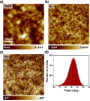
- membrane with a maximum of 946 pm, while decreasing to a few picometers at the side edges. The decay of displacement from the center to the edge is expected from the clamping effect at the edges, where the Si substrate is thicker [38]. The measured CPD shift in Figure 3b indicates that the photovoltage
- . Figure 4a–d exhibits the spatial mappings of one-quarter of the voltage-driven piezoelectric actuators (device type-II) with different dimensions from large to small sizes, respectively. The backside etching of the silicon substrate is marked by the dashed line. The measured displacement for each point


A visible-light photodetector based on heterojunctions between CuO nanoparticles and ZnO nanorods
Beilstein J. Nanotechnol. 2023, 14, 1018–1027, doi:10.3762/bjnano.14.84
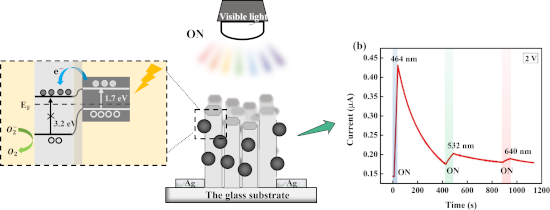
- -emission scanning electron microscopy (FESEM) image of ZnO NRs exhibits nanorods with hexagonal cross section, well aligned with the glass substrate (Figure 1a). Figure 1b indicates that many spherical nanoparticles are formed on the ZnO NRs after spraying the CuO NP solution with a concentration of 0.05 M
- bonding between nanoparticles and nanorods. To fabricate the photodetector, CuO NPs/ZnO NRs were deposited on a glass substrate initially. Then, silver electrodes with a thickness of 100 nm were directly patterned on the glass substrate by a sputtering process using a shadow mask with 0.3 cm channel


Exploring internal structures and properties of terpolymer fibers via real-space characterizations
Beilstein J. Nanotechnol. 2023, 14, 1004–1017, doi:10.3762/bjnano.14.83

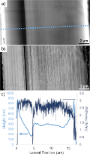
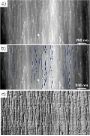
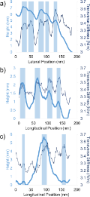
- expect that these features resulted from the way this particular fiber split open after FIB notching. Likewise, the lone drop in stiffness makes sense, as the AFM probe experiences a local reduction in tip–substrate contact area. However, similar topography and stiffness jumps forming a compliant band
- stiffness (or “stiffness”), quantified in [N/m], makes no assumptions about tip–substrate interactions such as tip size or shape. It is primarily useful for semi-quantitative mapping to show the relative fluctuations in stiffness within different regions. However, stiffness itself is not a material property
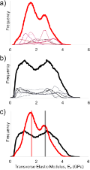
- AFM tip was taken to be a cylindrical punch, and the tip radius was calibrated by scanning on polystyrene (ET,PS = 2.7 GPa, Bruker) as a control substrate before and after each scan on a fiber surface. ET quantifications from fiber maps were only kept when mean ET,PS values varied by less than 10





Isolation of cubic Si3P4 in the form of nanocrystals
Beilstein J. Nanotechnol. 2023, 14, 971–979, doi:10.3762/bjnano.14.80

- the case of alcoholysis passivation, degassed 1-dodecanol was introduced to the Si3P4 product powder without air contact. Si3P4 NPs samples were examined on a diffractometer DRON-4-07 (Cu Kα radiation) in the form of films on a polished quartz substrate; phase analysis was performed using the program
- –1100 nm. The mass concentration of Si3P4 material in the sol (for the sake of attenuation coefficient calculation) was determined by drop casting 3.00 μL of the sol onto a sapphire substrate followed by an XRF study of the resultant film. DFT-GGA computations (structure optimization and calculation of


Low temperature atomic layer deposition of cobalt using dicobalt hexacarbonyl-1-heptyne as precursor
Beilstein J. Nanotechnol. 2023, 14, 951–963, doi:10.3762/bjnano.14.78
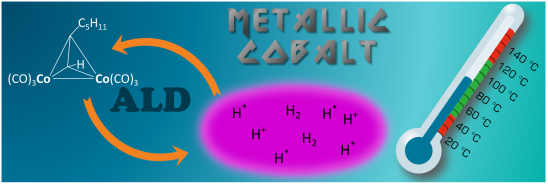
- contamination [16]. Thermal ALD processes operate usually at temperatures higher than 150 °C [17][18][19][20][21]. Characteristic for ALD processes, the growth rate is mainly independent of the substrate temperature in a specific temperature range, often denominated as ALD window. Within this range, the
- angle of 70° towards the wafer normal. However, for measurements the inner reactor has to be opened and the substrate has to be moved to a defined measurement position. This was done after a subset of typically 100 ALD cycles. The film thickness after a series of depositions was determined ex situ using
- sites of the substrate surface covered by the precursor will saturate with increasing duration of the precursor pulse resulting in an upper limit of the growth rate per cycle. This saturation follows an exponential decay curve [40]. Adapting Tuomo Suntola’s assumption of the surface occupation


Ni, Co, Zn, and Cu metal-organic framework-based nanomaterials for electrochemical reduction of CO2: A review
Beilstein J. Nanotechnol. 2023, 14, 904–911, doi:10.3762/bjnano.14.74
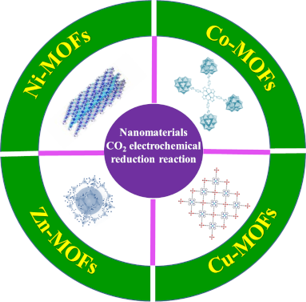
- carbon pastes, which serve as cathodes for CO2RR. To illustrate, Kornienko et al. deposited a Co-based MOF material onto an FTO substrate as a working electrode for CO2 conversion [40]. This material exhibited good performance in CO generation, achieving a faradaic efficiency (FE) of 76% (at −0.7 V vs
- converting individual MOFs into MOF-derived carbon-support nanomaterials. Another issue is the durability of the working electrodes. Many studies have employed drop casting and the use of binders to affix MOFs onto the substrate for electrode fabrication. This approach presents drawbacks such as reduced
- accessibility to active sites and unstable MOFs/substrate interfaces. Therefore, further studies are required to develop binder-free electrodes by in situ synthesis of MOFs on conductive substrates, such as nickel foam, copper foil, and carbon cloth, to overcome the aforementioned limitations and advancing the


Two-dimensional molecular networks at the solid/liquid interface and the role of alkyl chains in their building blocks
Beilstein J. Nanotechnol. 2023, 14, 872–892, doi:10.3762/bjnano.14.72

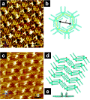
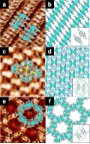
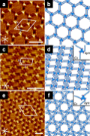
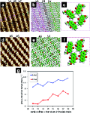
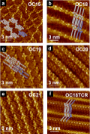
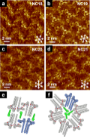
- , namely molecule–molecule, molecule–substrate, and solvent–molecule interactions (Figure 1). The target molecules are dissolved in non-conductive solvents with low volatility, such as 1-phenyloctane, 1,2,4-trichlorobenzene (TCB), long-chain n-alkanes, and octanoic acid [35][36][37]. The physisorbed
- , halogen bonding, and metal coordination, are often exploited for the formation of 2D structures. However, dispersion forces originating from the alkyl chains also play an important role in the adsorption onto the substrate, as well as in the in-plane intermolecular interactions at the solid/liquid
- functionalized group have been reported to exhibit distorted adsorption on HOPG in some cases [44][58][59][60][61]. This review mainly focuses on the alkyl chain effects on the HOPG surface. However, it is important to note that the kinds of substrate have influence on the 2D molecular self-assemblies. 2D









N-Heterocyclic carbene-based gold etchants
Beilstein J. Nanotechnol. 2023, 14, 865–871, doi:10.3762/bjnano.14.71
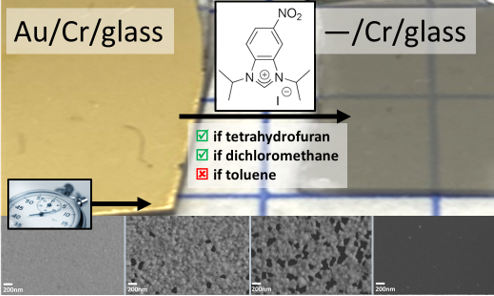
- the present work we show that one must carefully consider the particular NHC-related species, the solvent, the exposure time, and the concentration in order to avoid deleterious effects such as dissolution of the gold film or nanoparticle substrate. At the same time, we introduce a molecular etchant



Silver-based SERS substrates fabricated using a 3D printed microfluidic device
Beilstein J. Nanotechnol. 2023, 14, 793–803, doi:10.3762/bjnano.14.65
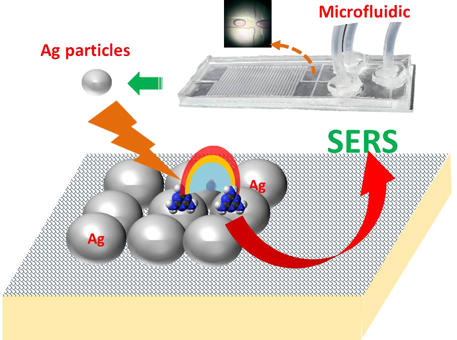
- , resulting in Ag nanoparticles of uniform shape and size. The study investigates the effects of various synthesis conditions on the size distribution, dispersity, and localized surface plasmon resonance wavelength of the Ag nanoparticles. To create the SERS substrate, the as-synthesized Ag nanoparticles were
- and 8.21 × 10³, respectively, were obtained. The detection limits for rhodamine B and melamine were estimated to be 1.94 × 10⁻¹⁰ M and 2.8 × 10⁻⁸ M with relative standard deviation values of 3.4% and 4.6%, respectively. The developed SERS substrate exhibits exceptional analytical performance and has
- the potential to be a valuable analytical tool for monitoring environmental contaminants. Keywords: 3D printing; microfluidic droplet; SERS substrate; silver nanoparticle; smartphone detection; Introduction Surface-enhanced Raman spectroscopy (SERS) has emerged as a powerful optical trace detection



Control of morphology and crystallinity of CNTs in flame synthesis with one-dimensional reaction zone
Beilstein J. Nanotechnol. 2023, 14, 741–750, doi:10.3762/bjnano.14.61
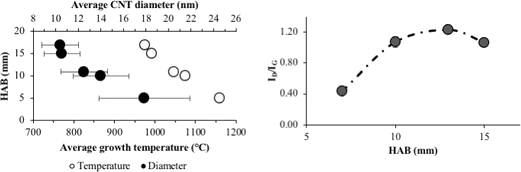
- arrangement and grow vertically from the substrate [20]. Said growth model is similar to the mechanism proposed by Baker and co-workers [21][22][23]. At elevated temperatures, catalytic particles are formed on the substrate surface, and hydrocarbon molecules that undergo cracking in the flame diffuse to the
- catalyst’s surface. Carbon atoms are adsorbed by the catalyst and deposited by diffusion to form nanotubes through continuous stacking. The weak interaction force between the catalyst particle and the substrate lifts the particles as the nanotubes grow, forming CNTs with catalyst particles at the tip. CNTs
- are formed with catalyst particles at the bottom if the catalyst–substrate interaction force is more substantial [23]. Nevertheless, the rapid growth of CNTs was observed from the catalytic reaction within the flame environment. Because of the coupled energy and mass transfer phenomena, the


Cross-sectional Kelvin probe force microscopy on III–V epitaxial multilayer stacks: challenges and perspectives
Beilstein J. Nanotechnol. 2023, 14, 725–737, doi:10.3762/bjnano.14.59
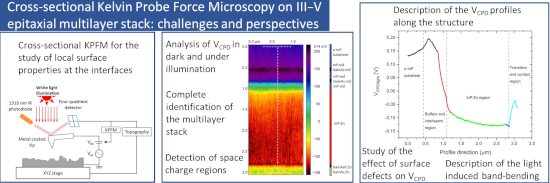
- process in an AIXTRON “Close Coupled Showerhead” reactor (6″ × 2″) at three different surface temperatures (580/600/640 °C). The n-type AXT substrate doping was typically in the range of 3 × 10¹⁸ to 5 × 1018 cm−3 with a thickness of 500 μm. Trimethylindium (TMIn), trimethylgallium (TMGa), phosphine (PH3
- , immediately after the chemical cleaning step. The topography and the associated VCPD image are reported in Figure 2a and Figure 2b, respectively. Note that the origin (0;0) is identified as a point in the InP substrate. Moving along the positive direction of the y axis, one will reach the end of the sample
- qualitative analysis. KPFM successfully detects the n-InP substrate (from 0 to 0.46 μm), the InP:nid/GaInAs:nid region (from 0.46 to 1.12 μm), the InP:Zn region (from 1.12 to 2.87 μm), and the GaInAsP:Zn/GaInAs:Zn region (from 2.87 to 3.09 μm). KPFM demonstrated a strong sensitivity on the local doping


The microstrain-accompanied structural phase transition from h-MoO3 to α-MoO3 investigated by in situ X-ray diffraction
Beilstein J. Nanotechnol. 2023, 14, 692–700, doi:10.3762/bjnano.14.55
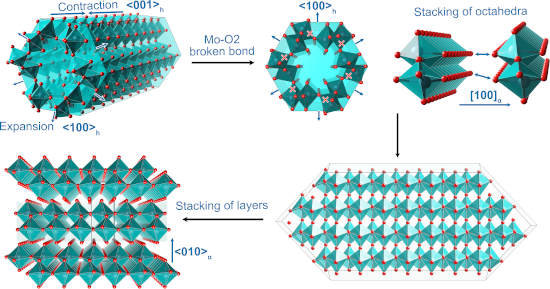
- transition from h-MoO3 to α-MoO3 Anisotropic thermal expansion and first-order phase transition The coefficient of thermal expansion (CTE) is an important mechanical parameter for the application of MoO3 thin films, as it can increase the mismatch between thin films and the substrate, causing microdevices to


Humidity-dependent electrical performance of CuO nanowire networks studied by electrochemical impedance spectroscopy
Beilstein J. Nanotechnol. 2023, 14, 683–691, doi:10.3762/bjnano.14.54
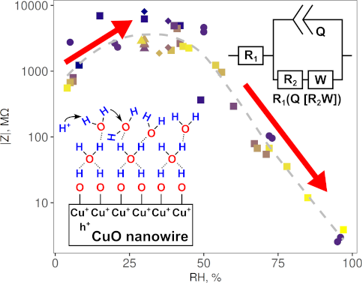
- frequencies in comparison with the Bode plots taken for RH 50% (Figure 2c,d), indicating an increase of thickness of the water layer. Finally, the porous structure of the CuO nanowire bundles promotes capillary condensation of vapour, which can reach the substrate surface and enhance the conductivity through
- reached the substrate. Fitting of the impedance spectra across the examined range of RH was performed using equivalent electric circuits R1(CR2), R1(QR2) and R1(Q[R2W]) as mentioned above (Figure 2b). The capacitor impedance is ZC,Q = 1/[Y0(iω)n], where the angular frequency ω, the imaginary unit i, Y0
- naturally. The substrates were submerged in pure isopropanol (IPA) and ultrasonicated for 3 s to release the CuO nanowires. These nanowires were assembled on arrays of Cr/Au (3/60 nm) microelectrodes lithographically pre-patterned on a commercially available Si/SiO2 wafer substrate (MTI Corporation) diced


Investigations on the optical forces from three mainstream optical resonances in all-dielectric nanostructure arrays
Beilstein J. Nanotechnol. 2023, 14, 674–682, doi:10.3762/bjnano.14.53

- top of the silicon disks represent the trapped PS spheres. The metasurface consists of a 225 nm thick array of silicon disks on a quartz substrate with elliptical slots etched perforating each disk. The number and positions of the slots depend on the specific mode to be excited, and may be different
- optical capturing of nanoscale particles and may have broad applications in medicine and biology. (a) Schematic overview of the metasurface structure composed of a silicon slotted-disk array on a quartz substrate. The trapped nanoscale particles and the incident plane wave are also illustrated. (b) Top


Transferability of interatomic potentials for silicene
Beilstein J. Nanotechnol. 2023, 14, 574–585, doi:10.3762/bjnano.14.48

- (TDS), honeycomb dumbbell (HDS), and large honeycomb dumbbell (LHDS) silicene [8]. There are still doubts about their dynamic stability. For example, for a flat phase, the negative ZO phonon mode could be removed by the selection of an appropriate substrate [3][9]. The ability of potentials for 3D
- phase is mechanically stable, but can be dynamically unstable, that is, the optical ZO phonon mode has a negative frequency. Other authors have also observed similar FS phase behavior [4][13]. However, since silicene is not a free-standing structure in nature, the selection of a proper substrate may
![[Graphic 3]](/bjnano/content/inline/2190-4286-14-48-i7.svg?max-width=637&scale=1.18182)

SERS performance of GaN/Ag substrates fabricated by Ag coating of GaN platforms
Beilstein J. Nanotechnol. 2023, 14, 552–564, doi:10.3762/bjnano.14.46

- PLD-made GaN/Ag substrates, the estimated enhancement factors were higher than for MS-made substrates with a comparable thickness of the Ag layer. In the best case, the PLD-made GaN/Ag substrate exhibited an approximately 4.4 times higher enhancement factor than the best MS-made substrate. Keywords
- view of SERS studies, the presence of peaks from the substrate in the spectrum is not desirable because it may hinder or prevent the correct interpretation of the spectra due to peak overlapping. Therefore, we did not study substrates with Ag layers thinner than 200 nm because the GaN material has an
- , we assumed the same Ag layer thickness of 215 ± 7 nm for all samples, equivalent to the thickness of the Ag layer deposited on a flat Si substrate at room temperature. The given thickness corresponds to the amount of deposited Ag determined by the number of laser pulses and does not reflect changes


Observation of multiple bulk bound states in the continuum modes in a photonic crystal cavity
Beilstein J. Nanotechnol. 2023, 14, 544–551, doi:10.3762/bjnano.14.45
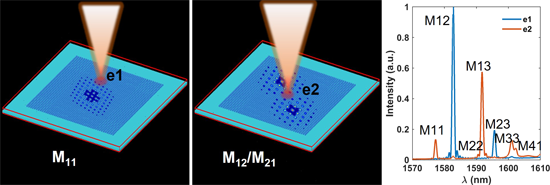
- -emitting devices [15][16][17][37], and nonlinear light generation [18][22][23][38][39][40]. In this paper, we propose a design of symmetry-protected BIC cavities consisting of aluminum gallium arsenide (AlGaAs) nanoblocks on a sapphire substrate. Motivated by the idea of in-plane leakage suppression by a
- eigenwavelength, yielding higher Q factors to the resonances at longer wavelength. Fabry–Pérot resonances of the substrate (thickness d = 600 μm, refractive index n = 1.75), with wavelength intervals of (λ2/2nd) ≈ 1.1 nm lead to the oscillations with a period of about 1 nm in Figure 4. Discussion Excitation
- cell. (a) Schematic of a unit cell consisting of an AlGaAs nanoblock on a sapphire substrate. The side length and the height of the nanoblock are w and h, respectively. The period of the unit is p. (b) Band diagram related to the MD BIC mode. The electric field distribution for the mode at the Г point


Carbon nanotube-cellulose ink for rapid solvent identification
Beilstein J. Nanotechnol. 2023, 14, 535–543, doi:10.3762/bjnano.14.44
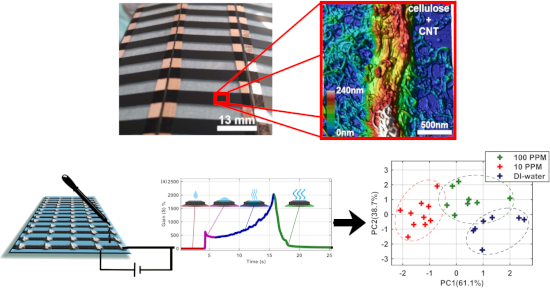
- [39][40]. Besides, graphene films deposited on cellulose paper and a graphene/cellulose composite were also reported as a solvent sensor material [30][33]. However, most of these works rely on cellulose as a paper substrate or as a thick composite film that cannot be readily employed for large-scale
- more information). Also, to compare our results with a simple conductive response to the pure liquids, we performed control experiments on a substrate without applying the ink. Our sensor film proved to be two orders of magnitude more sensitive than the bare substrates with only electrical contacts


Nanoarchitectonics to entrap living cells in silica-based systems: encapsulations with yolk–shell and sepiolite nanomaterials
Beilstein J. Nanotechnol. 2023, 14, 522–534, doi:10.3762/bjnano.14.43
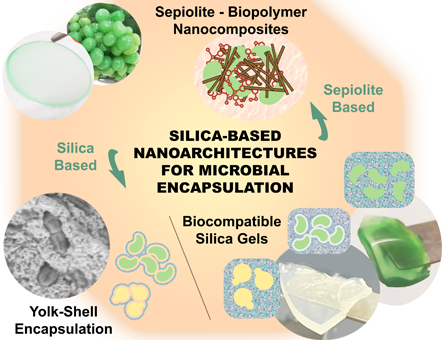
- conditions had been determined, the preparation of the G57-4 silica gel substrate was used to produce diverse biohybrid systems incorporating living cyanobacterial or yeast cells, as well as pre-synthesised yolk–shell bionanobybrids. In all cases, the microstructural features of the resulting biohybrid
- morphology. This image focusses on a “hollow region” of yeast cells encapsulated into the silica gel substrate. In Figure 2B, pseudohyphal growth is clearly observed, yielding long filaments of associated cells that expand as a three-dimensional network within the matrix. In this hollow region within the
- improved transport of nutrients and metabolites across the material. The FE-SEM images in Figure 2C and Figure 2D show the same microorganism cells but previously encapsulated in yolk–shell microstructures. They are arranged differently from those immobilized freely in the silica gel substrate. In the