Search results
Search for "dissipation" in Full Text gives 241 result(s) in Beilstein Journal of Nanotechnology. Showing first 200.
Substrate-dependent pore formation in molybdenum disulfide monolayers under ion irradiation
Beilstein J. Nanotechnol. 2026, 17, 769–780, doi:10.3762/bjnano.17.54
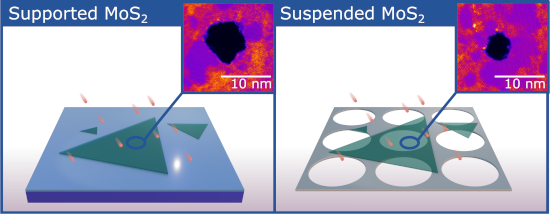
- Abstract Ion irradiation is a versatile tool for nanostructuring surfaces, yet the roles of energy deposition and dissipation at the surface and in ultrathin materials remain poorly understood. In this study, we investigate nanopore formation in monolayer MoS2 on different substrates under irradiation of
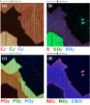
- under both HCI and SHI irradiation conclusively demonstrate the central role of substrate and interface-dependent electronic dissipation pathways regarding damage under these types of ion irradiation. Keywords: defects; MoS2; nanopores; SiO2; scanning transmission electron microscopy (STEM
- nanostructuring. However, achieving predictive control requires a detailed understanding of ion–solid interaction and post-impact energy dissipation [5]. While ion–bulk interactions are well described across many energy regimes [6][7][8], the interaction with surfaces and ultrathin targets, particularly for


Superconducting artificial neural networks and quantum circuits
Beilstein J. Nanotechnol. 2026, 17, 744–747, doi:10.3762/bjnano.17.51
- dissipation; Research on artificial neural networks (ANNs) is currently one of the most rapidly developing areas of modern science and technology [1]. Neural networks have demonstrated high efficiency in solving problems of pattern recognition and classification, clustering, forecasting, approximation, and
- ; however, it enables significantly lower energy dissipation and higher computational speed compared to conventional von Neumann architectures. A representative example is the IBM TrueNorth processor implemented using standard complementary metal–oxide–semiconductor (CMOS) technology in 2014. This processor
- dissipation while simultaneously increasing performance. The future of high-performance computing with reduced energy consumption is closely associated with technologies characterised by ultra-low energy dissipation. A highly promising approach is the implementation of artificial neural networks using
Molecular engineering of individual dye-based nanoparticle photostability for ultrabright two-photon fluorescence
Beilstein J. Nanotechnol. 2026, 17, 688–696, doi:10.3762/bjnano.17.48
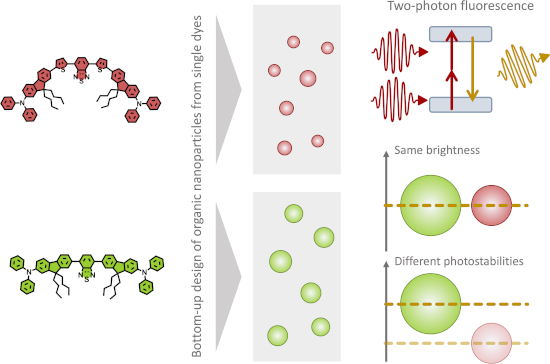
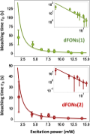
- illumination and high repetition rates). This leads to thermal degradation of the dyes. Despite the smaller size of dFONs(2), their heat dissipation capacity may be insufficient to compensate for this intense excitation cycling. Consequently, we propose that two-photon-induced thermal effects represent the


Probing tribological evolution in atomically thin MoS2 at different scales
Beilstein J. Nanotechnol. 2026, 17, 586–597, doi:10.3762/bjnano.17.40
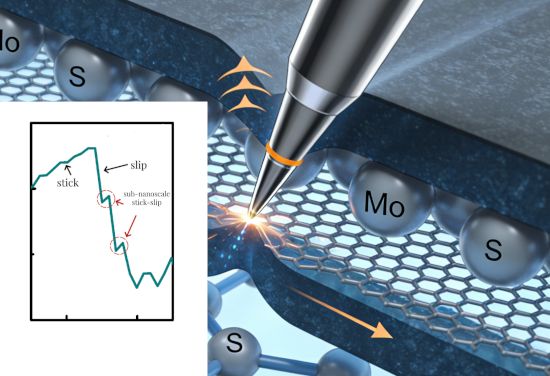
- atomic lattice site until the lateral force overcomes interfacial interactions, followed by an instantaneous “slip” to the next stable site [9]. This stick–slip motion is widely regarded as the elementary mechanism of energy dissipation in nanoscale friction, underpinning efforts to understand energy


Fractional shot noise of an SU(N) Kondo system
Beilstein J. Nanotechnol. 2026, 17, 515–540, doi:10.3762/bjnano.17.34
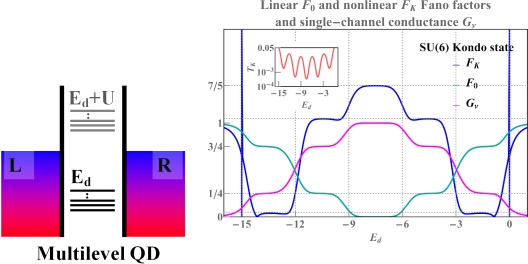
- –dissipation theorem to the linear conductance; thus, equilibrium noise does not carry extra information other than this from conductance [67]. Coulomb repulsion between electrons and their fermionic nature can regulate their motion, an effect that cannot be deduced from the time-averaged DC measurements, but


![[Graphic 127]](/bjnano/content/inline/2190-4286-17-34-i187.svg?max-width=637&scale=1.18182)

Defects and defect-mediated engineering of two-dimensional materials: challenges and open questions
Beilstein J. Nanotechnol. 2026, 17, 454–488, doi:10.3762/bjnano.17.31
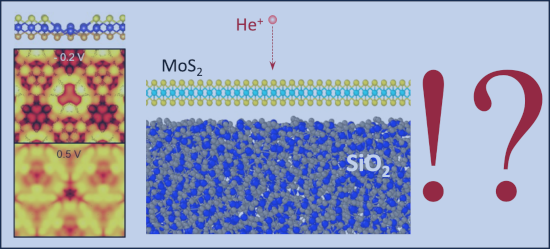
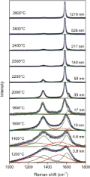
- vacancy clusters is highly exothermic and should be accompanied by dissipation of about 8.6 eV on the WS2 surface [62]. Modelling the mechanism of this dissipation is a complex problem. In addition to creating heat and electron–hole pairs, it may involve desorption of atoms and molecules, such as SO2 [60





Beam shaping techniques for pulsed laser ablation in liquids: Unlocking tunable control of nanoparticle synthesis in liquids
Beilstein J. Nanotechnol. 2026, 17, 309–342, doi:10.3762/bjnano.17.22
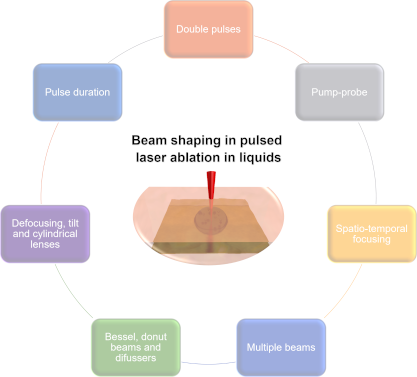
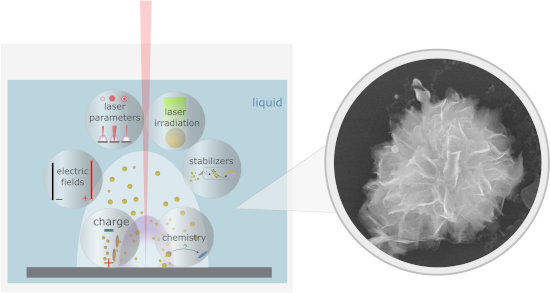
- they enable. Similarly, temporal pulse shaping modifies the interaction time and heat generation and dissipation, allowing for better control of overheat accumulation and nonlinear effects during ablation. These approaches provide a path toward more consistent and tunable NP synthesis, further
- maximise ablation efficiency through minimisation of thermal dissipation [109]. However, pulse shaping in PLAL still represents a barely explored approach, being mostly limited to experiments with controlled temporal delays between pulses. Further evaluating the possibilities of pulse shaping in PLAL holds







Calculation of the dynamic stiffness of a cantilever under torsional oscillation
Beilstein J. Nanotechnol. 2026, 17, 303–308, doi:10.3762/bjnano.17.21
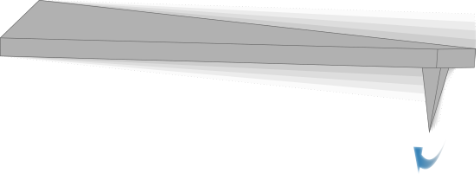
- : atomic force microscopy; dynamic stiffness; energy dissipation; friction; torsional oscillation mode; Introduction Friction serves as a fundamental mechanism of energy dissipation [1]. While friction typically arises from direct mechanical contact between surfaces, energy dissipation can also occur even
- in the absence of physical contact, and this dissipation is called non-contact friction [2]. Its origins have been investigated down to the nanometer scale [3][4][5]. In particular, the origin of non-contact friction is attributed to electromagnetic interactions between the two bodies, although its
- detailed mechanisms remain not fully understood [5]. Non-contact atomic force microscopy (nc-AFM) is widely employed to investigate non-contact friction through its dissipation channel. Common techniques include pendulum AFM, bimodal AFM, and quartz tuning fork AFM [6][7][8]. Pendulum AFM uses cantilevers

Fast vortex dynamics and relaxation times in NbRe-based heterostructures
Beilstein J. Nanotechnol. 2026, 17, 292–302, doi:10.3762/bjnano.17.20
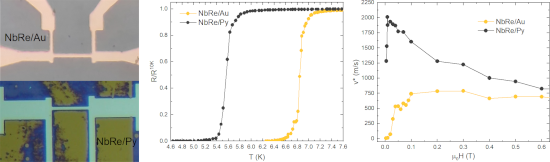
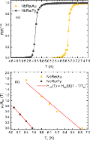
- as flux flow, which is associated with energy dissipation [2]. As the current increases further, jex ≫ jc, and as the vortex velocity approaches a maximum critical value, this regime may become unstable. A sudden voltage jump is observed in the I–V characteristic, attributed to the collapse of
- = 1.2 T. This indicates that, for magnetic fields larger than 0.1 T, the NbRe/Py microbridge is affected by thermal effects and that the vortex instability dynamics is influenced by thermal dissipation mechanisms. The different impact of thermal effects observed in the two microbridges can be traced
- back to material-dependent and intrinsic geometrical factors. The thermal dissipation affecting the flux-flow instability is dominated by processes occurring within the superconducting microstrip itself, namely vortex motion and flux-flow dissipation, which are strongly influenced by the nature of the


Time of flight secondary ion mass spectrometry imaging of contaminant species in chemical vapour deposited graphene on copper
Beilstein J. Nanotechnol. 2026, 17, 200–213, doi:10.3762/bjnano.17.13
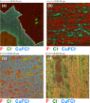
- directly under the graphene after post-growth exposure to atmosphere. This could have implications for better understanding transfer mechanisms that rely on oxidation of the Cu substrate [39][40], defect characterisation [41], or the heat dissipation ability of graphene on Cu [42]. Methods CVD graphene





Development and in vitro evaluation of liposomes and immunoliposomes containing 5-fluorouracil and R-phycoerythrin as a potential phototheranostic system for colorectal cancer
Beilstein J. Nanotechnol. 2026, 17, 97–121, doi:10.3762/bjnano.17.7
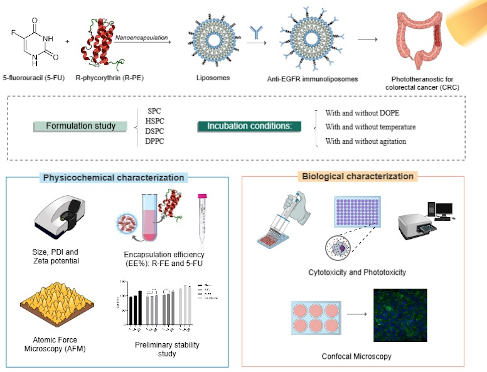
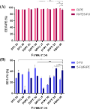
- , and viscoelastic materials [61][62]. The decoration of liposomes with cetuximab may result in a softer outer surface than the underlying lipid bilayer, explaining the observed increase in energy dissipation. These data strongly support that the surface properties of this liposome formulation were



Internal 3D temperature mapping in biological systems using ratiometric light-sheet imaging and lipid-coated upconversion nanothermometers
Beilstein J. Nanotechnol. 2025, 16, 2306–2316, doi:10.3762/bjnano.16.159
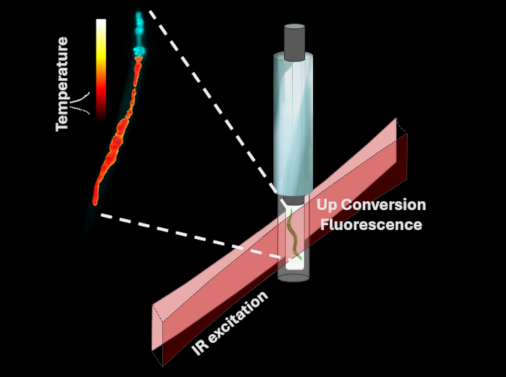
- from dysregulated metabolism (i.e., the Warburg effect) [3][4] and chaotic vasculature that impairs heat dissipation [5][6]. These factors can create thermal gradients of 0.5–2.0 °C between tumors and healthy tissue, with even greater differences at the subcellular level [7][8][9]. Consequently, the


Improving magnetic properties of Mn- and Zn-doped core–shell iron oxide nanoparticles by tuning their size
Beilstein J. Nanotechnol. 2025, 16, 2285–2295, doi:10.3762/bjnano.16.157
- to note, however, that magnetic anisotropy alone does not guarantee enhanced heating efficiency. As highlighted by Dirba et al., there exists an optimal range of magnetic anisotropy for effective energy dissipation in alternating magnetic fields [22]. Excessively high anisotropy may hinder relaxation
- and moment, both of which contribute to higher energy dissipation. For example, CoFe2O4@MnFe2O4 NPs have been shown to achieve SAR values in the range of 210–320 W·g−1 under specific magnetic field conditions, demonstrating the effectiveness of core–shell structures in enhancing hyperthermia
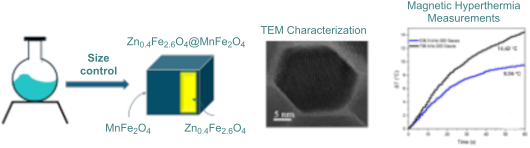
- particles at room temperature, with a blocking temperature of approximately 235 K for the largest core–shell system. In magnetic hyperthermia experiments, the 50 nm Zn0.4Fe2.6O4@MnFe2O4 NPs achieved SAR values up to 110 W·g−1, indicating efficient energy dissipation under alternating magnetic fields. These



Optical bio/chemical sensors for vitamin B12 analysis in food and pharmaceuticals: state of the art, challenges, and future outlooks
Beilstein J. Nanotechnol. 2025, 16, 2207–2244, doi:10.3762/bjnano.16.153


Multifrequency AFM integrating PeakForce tapping and higher eigenmodes for heterogeneous surface characterization
Beilstein J. Nanotechnol. 2025, 16, 2077–2085, doi:10.3762/bjnano.16.142
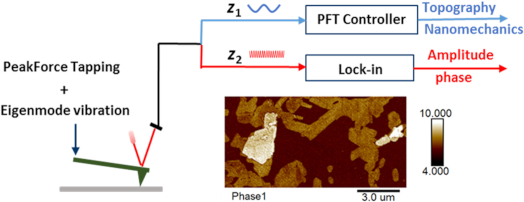
- these different areas (see Supporting Information File 1, Figure S2). Mechanistic insights and operational advantages The material contrast generated by the superposed eigenmode phase originates from the cantilever’s high sensitivity to the gradient of tip–sample interactions and energy dissipation
- processes [6][26], complementing the absolute force measurements obtained from the quasi-static PeakForce feedback loop. This dual-mechanism approach enables the detection of a broad range of near-surface properties, including elastic modulus, viscoelasticity, and dissipation, greatly enhancing material


Laser ablation in liquids for shape-tailored synthesis of nanomaterials: status and challenges
Beilstein J. Nanotechnol. 2025, 16, 1963–1997, doi:10.3762/bjnano.16.137
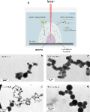
- the NPs in solid and liquid state, respectively, and Lm is the latent heat of fusion. These equations allow to determine the threshold irradiance required to melt NPs of specific sizes and compositions using laser pulses with a selected duration, fluence, and wavelength: The dissipation of the




PEGylated lipids in lipid nanoparticle delivery dynamics and therapeutic innovation
Beilstein J. Nanotechnol. 2025, 16, 1914–1930, doi:10.3762/bjnano.16.133
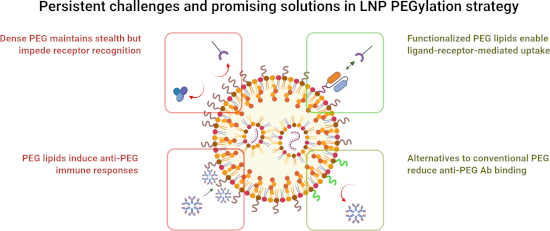
- microbalance with dissipation monitoring (QCM-D) reveals that reducing D below RPEG (D < RPEG) forces chain extension through lateral compression, forming brush conformations where the excluded volume effect dominates [14]. For PEG2k (RPEG2k ≈ 8.2 nm), achieving this brush regime requires interchain distances


Programmable soliton dynamics in all-Josephson-junction logic cells and networks
Beilstein J. Nanotechnol. 2025, 16, 1883–1893, doi:10.3762/bjnano.16.131
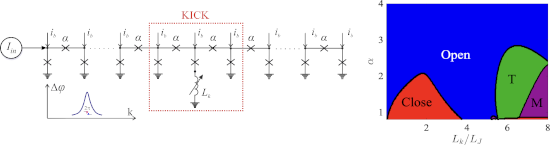
- normalized time, τ. Our simulations revealed a critical damping threshold at αcrit ≈ 0.8; below this value, stable soliton propagation is not supported. Also, under this condition, the energy dissipation rate is too high relative to the energy transfer between adjacent junctions, causing the soliton to decay


Self-assembly and adhesive properties of Pollicipes pollicipes barnacle cement protein cp19k: influence of pH and ionic strength
Beilstein J. Nanotechnol. 2025, 16, 1863–1872, doi:10.3762/bjnano.16.129
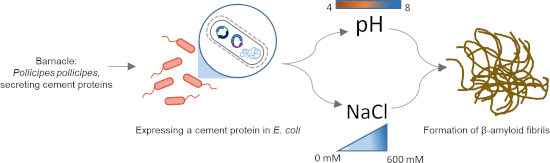
- bond formation, metal chelation, and covalent interactions [6]. The byssal threads display a mechanical gradient, with regions proximal to the animal more elastic and distal regions stiffer and tougher [7]. This design allows for effective dissipation of hydrodynamic forces and maintains attachment of
- quartz crystal microbalance-dissipation (QCM-D)-based studies of the adhesive properties of rPolcp19k-his monomers and fibres formed under different physicochemical conditions, as well as after a similar pH switch, are planned. Conclusion This study identifies a low pH and high salt concentration


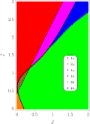
Energy spectrum and quantum phase transition of the coupled single spin and an infinitely coordinated Ising chain
Beilstein J. Nanotechnol. 2025, 16, 1668–1676, doi:10.3762/bjnano.16.117
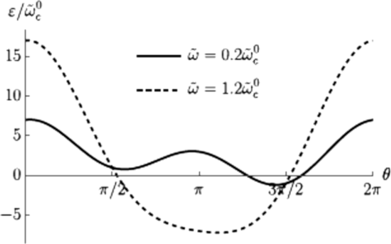
- the Markovian approximation, and also the correct way of introducing the Lindblad dissipation operators. These problems remain important in the general field of open quantum systems, extending beyond spin models [7][8][9]. One of the practical applications is modelling of certain quantum computing

![[Graphic 39]](/bjnano/content/inline/2190-4286-16-117-i63.svg?max-width=637&scale=1.18182)


![[Graphic 51]](/bjnano/content/inline/2190-4286-16-117-i75.svg?max-width=637&scale=1.18182)
Modeling magnetic properties of cobalt nanofilms used as a component of spin hybrid superconductor–ferromagnetic structures
Beilstein J. Nanotechnol. 2025, 16, 1557–1566, doi:10.3762/bjnano.16.110
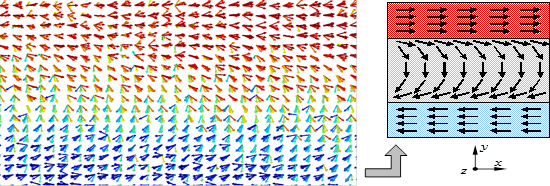
- are currently used, as well as fundamental features of the thin film formation processes with new composition and coatings of various types. These types of nanomaterials are very promising (in terms of computational performance and energy dissipation efficiency) for use in superconducting digital


Transient electronics for sustainability: Emerging technologies and future directions
Beilstein J. Nanotechnol. 2025, 16, 1545–1556, doi:10.3762/bjnano.16.109
- layers are also increasingly expected to provide resistance against mechanical shocks, electromagnetic shielding, and thermal dissipation. The development of new material systems capable of fulfilling these multifunctional requirements is essential for expanding the practical utility of bioresorbable
- degradation. While polymeric and inorganic coatings have demonstrated partial success, a unified encapsulation platform capable of addressing water barrier performance, mechanical robustness, and multifunctional protection, such as electromagnetic shielding or thermal dissipation, remains an unmet need. To


Mechanical stability of individual bacterial cells under different osmotic pressure conditions: a nanoindentation study of Pseudomonas aeruginosa
Beilstein J. Nanotechnol. 2025, 16, 1171–1183, doi:10.3762/bjnano.16.86
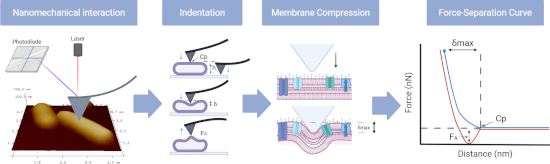
- . Therefore, the pre-programed grid in FV defines the amount of information (number of nanoindentations per scanned line) taken from the sample surface and also its resolution. Typical parameters obtained using the FV mode are the height, stiffness, adhesion, elasticity modulus, and dissipation of the sample


Time-resolved probing of laser-induced nanostructuring processes in liquids
Beilstein J. Nanotechnol. 2025, 16, 968–1002, doi:10.3762/bjnano.16.74
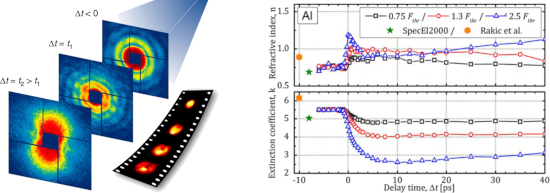
- transitions can be well modeled by classical approaches down to the nanometer scale in a local thermodynamic equilibrium [32][33][34]. A synthesis of the different coevolving phenomena with excitation and dissipation requires more detailed numerical approaches [35] or simulations. Molecular dynamics (MD
- provide an alternative pathway to understanding the energy dissipation pertinent to NP excitation in a liquid medium, as described in the next section. The abovementioned results highlight the capability of UED in probing laser-induced structural dynamics in liquid-phase systems. In particular, its
- femtosecond time resolution and ability to access large momentum transfer enable real-time imaging of chemical bond dynamics. We anticipate that UED will complement X-ray scattering techniques in studying liquid dynamics, providing critical insights into energy dissipation processes in laser-excited NPs


Nanoscale capacitance spectroscopy based on multifrequency electrostatic force microscopy
Beilstein J. Nanotechnol. 2025, 16, 637–651, doi:10.3762/bjnano.16.49
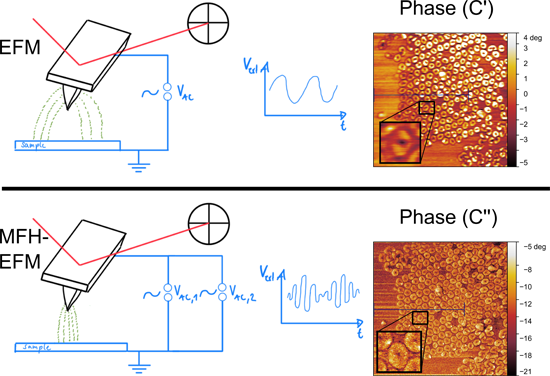
- way for the design of materials with tailored functionalities [1][2][3][4][5][6]. Dielectric properties are fundamental for understanding the behavior and performance of various material systems, as they directly influence charge storage, polarization, and energy dissipation mechanisms. For instance