Search results
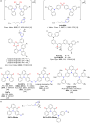
Search for "Buchwald–Hartwig" in Full Text gives 72 result(s) in Beilstein Journal of Organic Chemistry.
The role of spacer length and flexibility in peptide self-assembly
Beilstein J. Org. Chem. 2026, 22, 986–996, doi:10.3762/bjoc.22.77
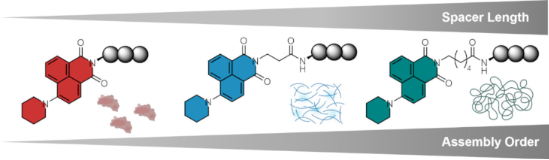
- naphthalene imide spacers were synthesized in two steps starting from 4-bromo-1,8-naphthalic anhydride (1) (Scheme 1 and Supporting Information File 1, Scheme S1). First, the bromo substituent in compound 1 was replaced by piperidine in a metal-free Buchwald–Hartwig amination reaction to obtain 6-(piperidin-1


Palladium-catalyzed benzocyclization reactions of quinoline-2-carboxamides via sequential C–H/N–H functionalization
Beilstein J. Org. Chem. 2026, 22, 905–914, doi:10.3762/bjoc.22.71
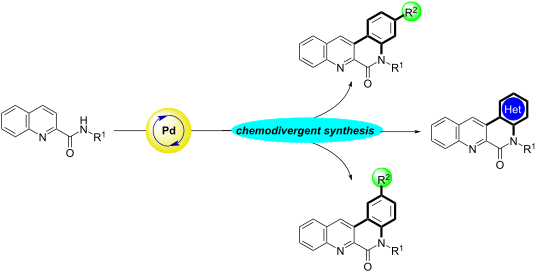
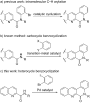
- carbon–metal species (Scheme 1a). Fagnou and co-workers reported direct arylation reactions with palladium(II) acetate to synthesize biaryl compounds via concerted metalation–deprotonation (CMD; Scheme 1b) [25][26][27]. Buchwald, Hartwig, and co-workers explored carbon–nitrogen coupling reactions that




Electrosynthetic access to unsymmetrical oxaza[8]helicenes with high chiral stability and strong circularly polarized luminescence (CPL)
Beilstein J. Org. Chem. 2026, 22, 372–382, doi:10.3762/bjoc.22.25
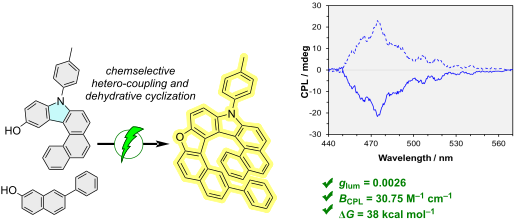
- -bromophenanthrene (1) via Buchwald–Hartwig amination with p-toluidine under Pd catalysis [55] – was subjected to phosphoric acid-mediated annulation with p-benzoquinone to give the hydroxycarbazole derivative 3 through a tandem Michael addition/ring-closure sequence. After rapid optimization of key parameters (see




Research towards selective inhibition of the CLK3 kinase
Beilstein J. Org. Chem. 2025, 21, 2250–2259, doi:10.3762/bjoc.21.172
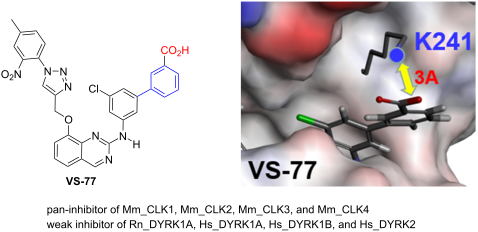
- ]. Results and Discussion Chemical syntheses The synthetic strategy is very similar to the one previously developed for the preparation of DB18 and designed analogues (Scheme 1) [23][24]. It starts from known quinazoline 1 which, on Buchwald–Hartwig-type reaction with 3-bromoaniline (2a), gave


Pd-catalyzed dehydrogenative arylation of arylhydrazines to access non-symmetric azobenzenes, including tetra-ortho derivatives
Beilstein J. Org. Chem. 2025, 21, 2234–2242, doi:10.3762/bjoc.21.170
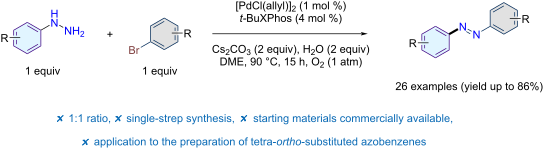
- intricate and inefficient using these standard synthetic protocols. The transition-metal-catalyzed C–N bond formation has emerged as a viable route to access non-symmetric azobenzenes, owing to the broad functional group tolerance of Buchwald–Hartwig amination reactions [34][35][36][37][38][39][40]. Kong
- for synthesizing non-symmetric azobenzenes via a Pd-catalyzed cascade involving C–N coupling of arylhydrazines with aryl bromides, followed by oxidative dehydrogenation (Figure 1c). As our study was nearing completion, Váňa and co-workers disclosed a related Buchwald–Hartwig approach employing the Pd
- reported in Buchwald–Hartwig reactions, enhances yield by facilitating the reduction of Pd(II) to Pd(0) and improving the solubility of the base [56]. To ensure the generality of the conditions, 1-bromo-2-(trifluoromethoxy)benzene was also tested, yielding the desired azobenzene 3c in 69% yield with the


Synthesis of N-doped chiral macrocycles by regioselective palladium-catalyzed arylation
Beilstein J. Org. Chem. 2025, 21, 1917–1923, doi:10.3762/bjoc.21.149
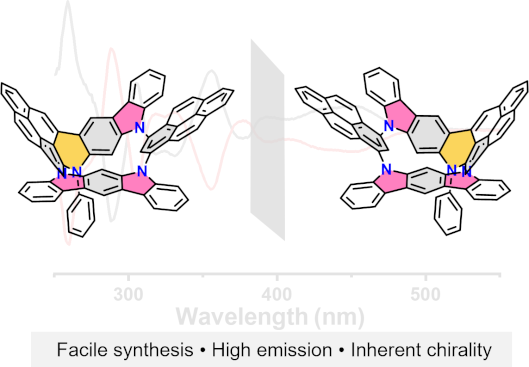
- bromide (see Supporting Information File 1). Subsequent Buchwald–Hartwig reaction with 1,3-dibromo-7-tert-butylpyrene (2) gave the [2 + 2] macrocyclic precursors 3a,b as the major product in 16%/10% yields, and trace amounts of higher oligomers as detected by mass spectrometry. Notably, compounds 3a,b




Microwave-enhanced additive-free C–H amination of benzoxazoles catalysed by supported copper
Beilstein J. Org. Chem. 2025, 21, 1462–1476, doi:10.3762/bjoc.21.108
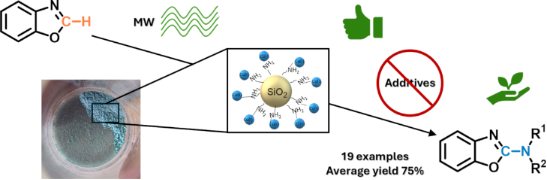
- classical Buchwald–Hartwig amination reaction [16] or the Ullman reaction [17][18]) which require pre-functionalisation steps and harsh conditions [19]. Many protocols for C–H aminations have been applied to heteroaromatic compounds, mainly 5-membered heteroarenes, and a great deal of attention has been



Oxetanes: formation, reactivity and total syntheses of natural products
Beilstein J. Org. Chem. 2025, 21, 1324–1373, doi:10.3762/bjoc.21.101
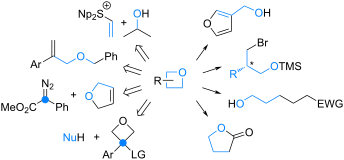
- , Howell et al. recently disclosed a general method for the synthesis of 2-halomethylideneoxetanes through halogenation of 2-methylideneoxetanes using N-halosuccinimides, and illustrated their synthetic utility by Suzuki–Miyaura, Sonogashira and Buchwald–Hartwig coupling reactions [53]. In addition to Cu
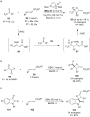
- Suzuki coupling to tether the oxetane with the nucleophile, and gave moderate to high yields (Scheme 48b). The last one employed an Ullman or Buchwald–Hartwig coupling and provided access to various benzomorpholines 203 with good functional group tolerance (Scheme 48c). In 2020, Sun et al. reported a










A versatile route towards 6-arylpipecolic acids
Beilstein J. Org. Chem. 2025, 21, 1104–1115, doi:10.3762/bjoc.21.88
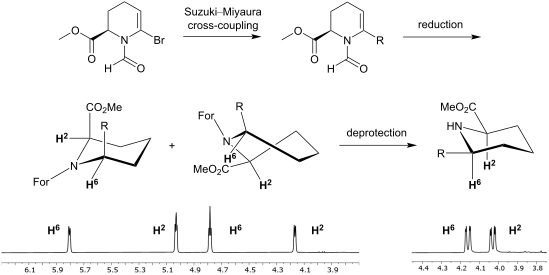
- performance to Cs2CO3 including the lack of methyl ester hydrolysis, but a lower price. The catalyst's performance had a more significant influence on the reaction results than the base. Both phosphine catalysts as well as the second generation of the Buchwald–Hartwig catalyst [47][48] gave similar results




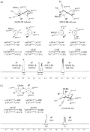

Synthesis of pyrrolo[3,2-d]pyrimidine-2,4(3H)-diones by domino C–N coupling/hydroamination reactions
Beilstein J. Org. Chem. 2025, 21, 1010–1017, doi:10.3762/bjoc.21.82
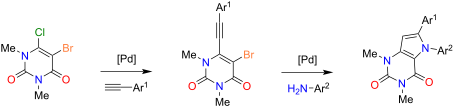
- pyrrolopyrimidine derivatives. The envisioned methodology combines a Sonogashira–Hagihara reaction and a one-pot process comprising a Buchwald–Hartwig coupling reaction followed by a hydroamination [23][24]. Results and Discussion The bromination of 6-chloro-1,3-dimethyluracil (1) afforded, following a known


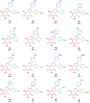

Orthogonal photoswitching of heterobivalent azobenzene glycoclusters: the effect of glycoligand orientation in bacterial adhesion
Beilstein J. Org. Chem. 2025, 21, 736–748, doi:10.3762/bjoc.21.57
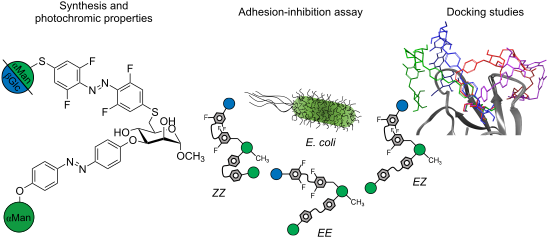
- and excellent yield of 94% (Scheme 1). A chemoselective deprotection of the mannosyl thioacetate 7 to yield the glycosyl thiol 8 was achieved using 0.95 equivalents of sodium carbonate. The crude product was in turn submitted to a Buchwald–Hartwig–Migita cross-coupling reaction [33] with the
- azobenzene derivative 9 [34] to furnish 10. This reaction had to be carried out at −78 °C in order to suppress nucleophilic substitution of the ortho-fluorine substituents in 9 by the thiol 8, a reaction that competes with the desired cross-coupling. For the second Buchwald–Hartwig–Migita cross-coupling, the
- -dithio-ᴅ-threitol) [36] (Scheme 2A). The crude thiol 14 was subsequently subjected to a Buchwald–Hartwig–Migita cross-coupling reaction with the literature-known azobenzene thioglucoside 15 [37], resulting in the (6-thioglucosyl)mannoside 16 in 63% yield over two steps. Zemplén deacetylation [38] gave


Synthesis of N-acetyl diazocine derivatives via cross-coupling reaction
Beilstein J. Org. Chem. 2025, 21, 490–499, doi:10.3762/bjoc.21.36
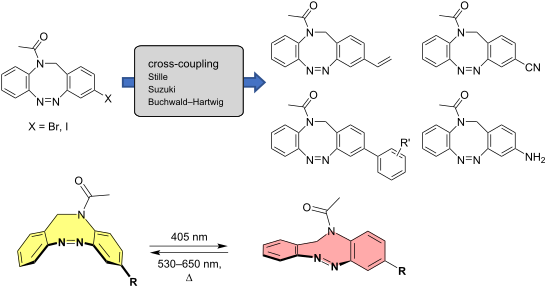
- -substituted diazocines were prepared via Stille, Suzuki, and Buchwald–Hartwig reactions. X-ray structures are presented for derivatives 1, 2 and 7. Keywords: cross-coupling; diazocine; N-acetyl diazocine; photoisomerization; photoswitch; thermal relaxation; Introduction Diazocines are frequently used
- with bis(pinacolato)diboron did not lead to the formation of the pinacolborane-substituted N-acetyl diazocine 18. Accordingly, the Suzuki–Miyaura reaction with inversed roles between N-acetyl diazocine boronic acid pinacol ester and aryl or alkyl halides could not be investigated. The Buchwald–Hartwig
- amination is a versatile and powerful tool for C–N bond formation and widely applied in the synthesis of new pharmaceutical substances [29][30][31]. Furthermore, azobenzenes [32][33], as well as diazocines [34][35], have been derivatized via Buchwald–Hartwig amination. The Buchwald–Hartwig amination of


Red light excitation: illuminating photocatalysis in a new spectrum
Beilstein J. Org. Chem. 2025, 21, 296–326, doi:10.3762/bjoc.21.22
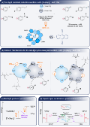
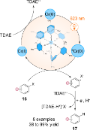
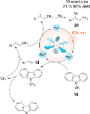
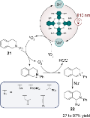
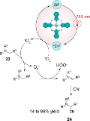
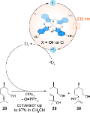
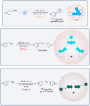
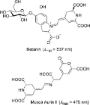
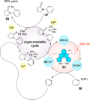
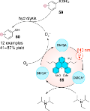
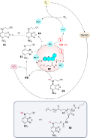
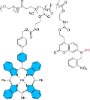
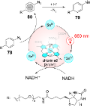
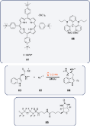
- , thereupon highlighting potential for broad applications in photoredox catalysis on an industrial scale. In this context, T. Rovis et al. have studied a C–N cross-coupling Buchwald–Hartwig-like reaction using dual nickel and osmium catalysis under red-light activation, addressing common challenges such as
















Emerging trends in the optimization of organic synthesis through high-throughput tools and machine learning
Beilstein J. Org. Chem. 2025, 21, 10–38, doi:10.3762/bjoc.21.3
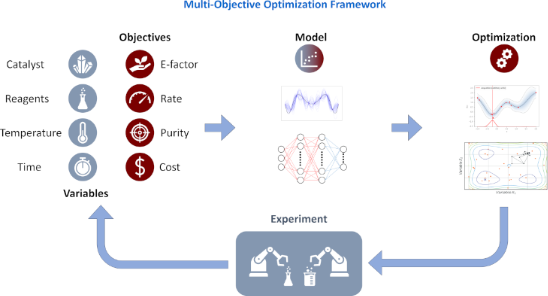
- Buchwald–Hartwig aminations [16][17][18][19], Suzuki couplings [16][17][20], N-alkylations [21], hydroxylations [22], and photochemical reactions [23][24][25][26][27][28][29]. The versatility to handle multiple reagents and the widespread availability of 96-well plates have facilitated the extensive
- medium for enhancing the optimization of the Buchwald–Hartwig amination intermediate, which is crucial for synthesizing the drug olanzapine [47]. The reactor setup was integrated with spectroscopic and chromatographic in-line analytical tools, enabling real-time monitoring of products and reaction
- selection, a dispensing module for solids and liquids, a reaction module capable of heating and stirring, a sample preparation module, and a LC–MS characterization module (Figure 2d). The efficiency of the system has been demonstrated in three reactions types, namely Suzuki–Miyaura coupling, Buchwald


Multicomponent reactions driving the discovery and optimization of agents targeting central nervous system pathologies
Beilstein J. Org. Chem. 2024, 20, 3151–3173, doi:10.3762/bjoc.20.261
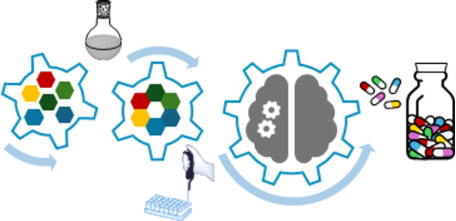
- post-modification reactions. Examples of these reactions include the Ugi/Dieckmann reactions, Ugi/Robinson–Gabriel reactions, Ugi/Buchwald–Hartwig reactions, Ugi reaction followed by a catalytic aza-Wittig cyclization, Ugi reaction followed by SNAr strategy, Ugi/Heck reactions, Ugi/Huisgen




5th International Symposium on Synthesis and Catalysis (ISySyCat2023)
Beilstein J. Org. Chem. 2024, 20, 2704–2707, doi:10.3762/bjoc.20.227
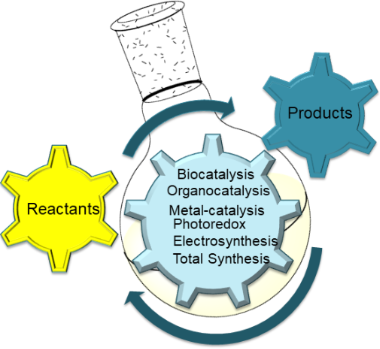
- ) derivatives, which possess recognized pharmacological properties [12]. They used sequential reactions catalyzed by palladium and copper. The process involves an initial amination, which can be carried out via either the Buchwald–Hartwig or the Chan–Lam reaction, followed by a palladium-catalyzed

Synthesis and cytotoxicity studies of novel N-arylbenzo[h]quinazolin-2-amines
Beilstein J. Org. Chem. 2024, 20, 2592–2598, doi:10.3762/bjoc.20.218
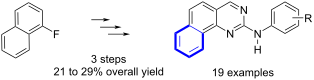
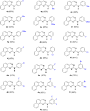
- attractive results in this area. Keywords: Buchwald–Hartwig coupling; cytotoxicity; heterocycles; Pd catalysis; quinazolines; Introduction Nitrogen-containing heterocyclic molecules are ubiquitous in living systems. Among them, quinazolines, and especially the 4-aminoquinazolines (type A molecules, Figure
- afforded the known aldehyde 2 in 65% yield [13]. Then, reaction with guanidinium carbonate in DMA at high temperature [12], gave the desired intermediate 2-aminobenzo[h]quinazoline (3). In a final step, classical Buchwald–Hartwig coupling [14][15][16][17] with bromobenzene under the conditions described


Homogeneous continuous flow nitration of O-methylisouronium sulfate and its optimization by kinetic modeling
Beilstein J. Org. Chem. 2024, 20, 2408–2420, doi:10.3762/bjoc.20.205
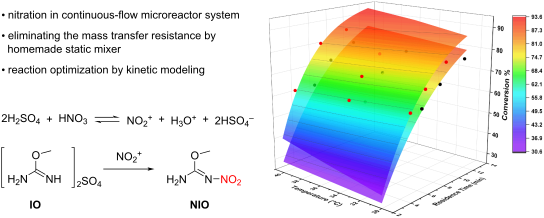
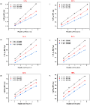
- the residence time to 12.36 min amplified the error to approximately 8% (Figure 7c). A similar increase in error with prolonged residence time was noted in Kappe et al.’s kinetic modeling of the Buchwald–Hartwig amination reaction [41], where the theoretical and experimental values diverged by 4.1


![[Graphic 1]](/bjoc/content/inline/1860-5397-20-205-i17.svg?max-width=637&scale=1.18182)


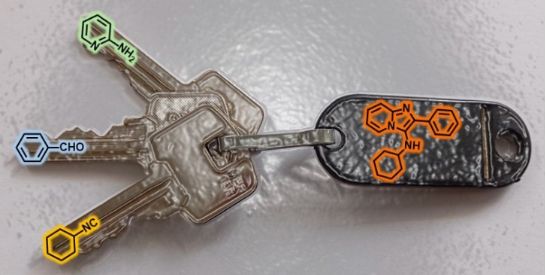
The Groebke–Blackburn–Bienaymé reaction in its maturity: innovation and improvements since its 21st birthday (2019–2023)
Beilstein J. Org. Chem. 2024, 20, 1839–1879, doi:10.3762/bjoc.20.162






Manganese-catalyzed C–C and C–N bond formation with alcohols via borrowing hydrogen or hydrogen auto-transfer
Beilstein J. Org. Chem. 2024, 20, 1111–1166, doi:10.3762/bjoc.20.98

- are of substantial importance for the fine chemical industry, pharmaceuticals, agrochemicals, dyes, and natural products [25]. The synthesis of amine derivatives can be accomplished using many powerful techniques, including Buchwald–Hartwig and Ullmann cross-coupling reactions, hydroamination



























Structure–property relationships in dicyanopyrazinoquinoxalines and their hydrogen-bonding-capable dihydropyrazinoquinoxalinedione derivatives
Beilstein J. Org. Chem. 2024, 20, 1037–1052, doi:10.3762/bjoc.20.92
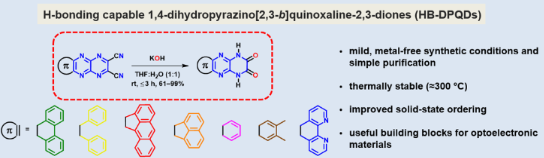
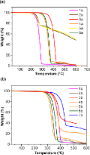
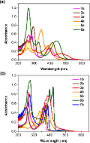
- functionality as well as Buchwald–Hartwig amination involving aryl halides. Thermal studies Thermal stabilities of DCPQs 1a–6a and DPQDs 1b–7b were evaluated using thermogravimetric analysis (TGA; Figure 2 and Table S4 in Supporting Information File 1). The thermal stability of the DCPQs is attributed to their




Metal-catalyzed coupling/carbonylative cyclizations for accessing dibenzodiazepinones: an expedient route to clozapine and other drugs
Beilstein J. Org. Chem. 2024, 20, 193–204, doi:10.3762/bjoc.20.19
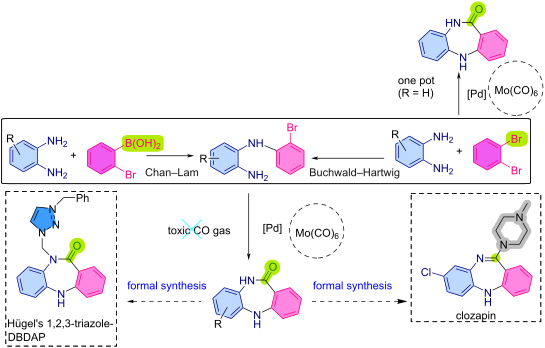
- (DBDAPs) is disclosed in this article through a palladium and copper-catalyzed amination (Buchwald–Hartwig (B–H) or Chan–Lam (C–L)) followed by a palladium-catalyzed intramolecular aminocarbonylation with Mo(CO)6 as CO surrogate (to avoid toxic CO handling) of readily available o-phenylenediamines and
- dibenzodiazepinones in good yields (up to 45%; 2 steps) and much milder conditions using copper as the catalyst. The synthetic utility of this novel strategy was showcased by demonstrating a formal synthesis for the antipsychotic drug clozapine and to an anticancer triazole–DBDAP hybrid. Keywords: Buchwald–Hartwig
- review in 2018 focused on a variety of routes to these compounds [8]. The well-known Buchwald–Hartwig (B–H) and Chan–Lam (C–L) reactions have proven to be highly useful procedures that allow the step-economical synthesis of diverse biologically relevant heterocycles through C–N bond formation [9]. These


The effect of dark states on the intersystem crossing and thermally activated delayed fluorescence of naphthalimide-phenothiazine dyads
Beilstein J. Org. Chem. 2023, 19, 1028–1046, doi:10.3762/bjoc.19.79
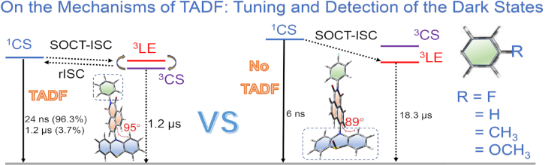
- chromophores, which are coupled through a Buchwald–Hartwig coupling reaction (another NI-PTZ paper) [39]. The oxidation of the PTZ unit was readily performed by treatment with H2O2 as oxidant (Scheme 1). All compounds were obtained with satisfactory yields and the molecular structures were fully characterized


Strategies in the synthesis of dibenzo[b,f]heteropines
Beilstein J. Org. Chem. 2023, 19, 700–718, doi:10.3762/bjoc.19.51
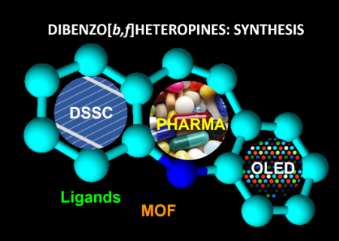
- synthesised via a copper-catalysed Ullman-type coupling or a palladium-catalysed Buchwald–Hartwig amination (Scheme 9). Performing the rearrangement at high temperatures resulted in the undesirable formation of acridine byproducts 44. Cleaner reaction profiles could be obtained at a lower temperature (100 °C
- categorised according to the major or final catalytic step employed to form the 7-membered heterocycle as several synthetic methods use multiple catalytic steps. 3.1 Buchwald–Hartwig amination, etherification and thioetherification The Buchwald–Hartwig reaction gives access to arylamines, -ethers and
- -pyridobenzazepines 60b via cyclisation of 2,2'-dihalostilbene analogue 58 through a Pd-catalysed double Buchwald–Hartwig amination. The stilbene analogues 58 were prepared by a Wittig reaction with reported yields of the desired Z-isomer around 55%. The amination step was performed on a series of primary alkylamines


Ionic multiresonant thermally activated delayed fluorescence emitters for light emitting electrochemical cells
Beilstein J. Org. Chem. 2022, 18, 1311–1321, doi:10.3762/bjoc.18.136
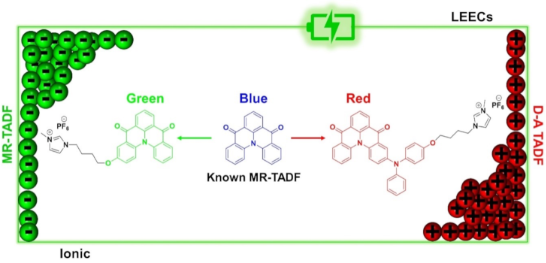
- synthetic strategy, which itself was synthesized from Br-DiKTa [28] following a Buchwald–Hartwig coupling. Details of the synthesis are found in Supporting Information File 1. The identity and purity of the molecules were verified using a combination of 1H and 13C NMR spectroscopy, high resolution mass