Search results
Search for "conjugation" in Full Text gives 446 result(s) in Beilstein Journal of Organic Chemistry. Showing first 200.
A practical CO2-mediated synthesis of 5,6-carboxylated silicon-rhodamines for targeted probe development
Beilstein J. Org. Chem. 2026, 22, 915–924, doi:10.3762/bjoc.22.72
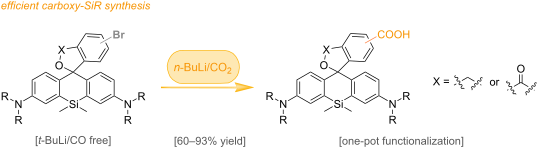
- molecular design framework (Figure 1a). Conformational restriction and optimization of amino substituents have been widely employed to enhance brightness and photostability [8][37][38][39], whereas extension of π-conjugation and electronic tuning have expanded the emission of SiR dyes from the far-red to



Site-specific labelling of native peptides and proteins: chemical and enzymatic strategies
Beilstein J. Org. Chem. 2026, 22, 857–881, doi:10.3762/bjoc.22.67
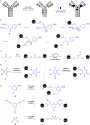
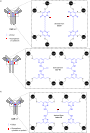
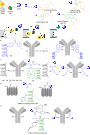
- , Roche, Jena Bioscience, Merck (Sigma-Aldrich), New England Biolabs, Promega, Agilent and Cytiva (Danaher), offer a plethora of reagents and kits, from fluorescent tags, crosslinkers to enzymatic tools. Meanwhile, companies such as EnzyTag, Shiru, and Revvity offer bespoke conjugation services. Beyond
- oxidation state of phosphorous, diethynylphosphonites 12 also utilize conjugate addition to provide a versatile three-point conjugation platform [37]. Related technologies have been adapted to link multiple disulfide residues simultaneously. Using bis-dibromopyridazinediones bis-9 [38] or bis/tetra
- including reaction kinetics, minimisation of reaction steps, conjugate stability and solubility. Furthermore, disulfide rebridging carries an inherent risk of scrambling, compromising homogeneity. In the case of DAR 4 ADCs, this approach enables conjugation with fairly homogeneous loading, yet heterogeneity








Unsymmetrical sulfoxides with sterically hindered catechol fragment: synthesis, structure, electrochemical properties, and antiradical activity
Beilstein J. Org. Chem. 2026, 22, 828–837, doi:10.3762/bjoc.22.65
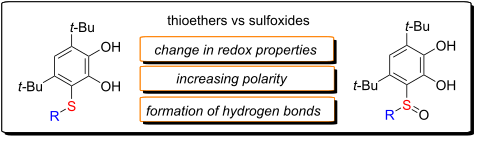
- range of 1.838–1.892 Å. If the C(R) atom is aromatic as in the case of 7a, the average S–C distance has a tendency to be slightly shorter (1.804 Å) due to a possibility of weak conjugation of the π-system in the aromatic ring with the S=O double bond, but nevertheless close to the corresponding value


Total synthesis of the capsular polysaccharide repeating unit towards the development of a glycoconjugate vaccine against Klebsiella pneumoniae ST512
Beilstein J. Org. Chem. 2026, 22, 821–827, doi:10.3762/bjoc.22.64
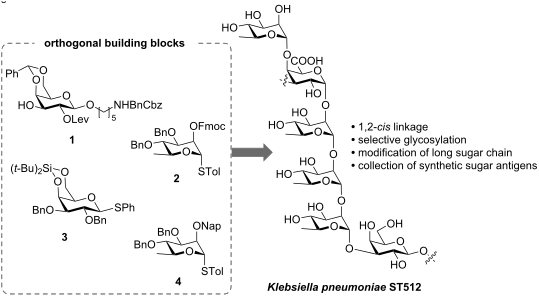
- conjugation-ready oligosaccharides, equipped with aminopentyl linkers, enables glycan microarray-based identification of minimal immunogenic epitopes. This work establishes a robust chemical foundation for the rational development of semi-synthetic glycoconjugate vaccines targeting K. pneumoniae ST512
- currently available [24][25][26][27]. The identification of immunogenic epitopes is a key step toward the development of efficacious semi-synthetic vaccines [19][28]. Herein, we report the first total synthesis of a series of conjugation-ready oligosaccharides related to the CPS repeating unit of K
- (NIS) and trifluoromethanesulfonic acid (TfOH) to afford 7 in 86% yield, neighboring participation effect of the levulinoyl (Lev) group at C2 position provided only the β-product. The linker was introduced in anticipation of conjugation to a carrier protein or a glycan microarray surface [31


Halogenated azobenzene acrylates: from efficient solution photoswitching to stable solid-state photochromic materials
Beilstein J. Org. Chem. 2026, 22, 782–794, doi:10.3762/bjoc.22.60
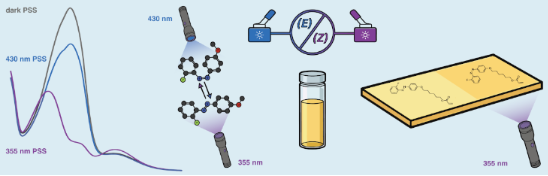
- nonplanar arrangement of the latter results in a diminished extent of conjugation, which accounts for the blue-shifted maxima (λEmax of 1b, d and f in Table 3). On the contrary, the differences in λZmax are rather minor (see Supporting Information File 1, Table S1 for ϕZ) but the longest-wavelength
- derivatives are planar, nonplanar disubstituted derivatives with diminished conjugation possess blue-shifted absorption and lower conversion efficiency. The stability of the resulting Z-isomers ( values) can be tuned similarly. In solution, the difluoro derivative 1b was identified as the most stable and


Synthesis and biological evaluation of new brassinosteroid analogs with C-22 benzoate function
Beilstein J. Org. Chem. 2026, 22, 753–762, doi:10.3762/bjoc.22.57
- , conjugation and oxidation via dynamic interaction with different phytohormones and on homeostasis mechanisms [52]. Consequently, exogenous application of a growth regulator initiates not only the process leading to a phenotypic response but also all those associated to its own regulation. Thus, only a


Design and synthesis of an erdafitinib-based selective FGFR2 degrader
Beilstein J. Org. Chem. 2026, 22, 583–591, doi:10.3762/bjoc.22.44
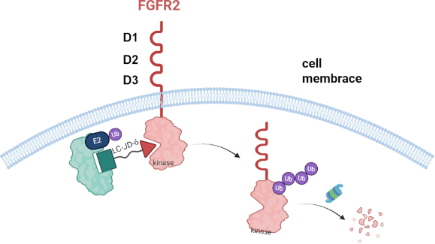
- positioned in the solvent-exposed region of the molecule. Given this observation, we selected the aliphatic amine group as a suitable conjugation site (Figure 2a). Previous studies have shown that different linkers exhibit distinct selectivity profiles [31]. Therefore, in this study, novel FGFR2 degraders



Molecular tweezer–peptide conjugates disrupt the protein–protein interaction between survivin and histone H3 essential in mitosis
Beilstein J. Org. Chem. 2026, 22, 557–567, doi:10.3762/bjoc.22.41
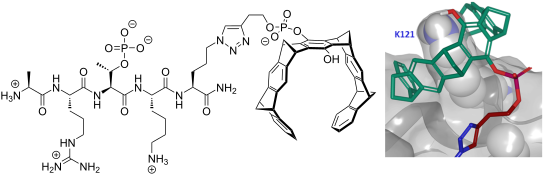
- by computational modeling (MD and QM/MM simulations) as well as structural biology (NMR/X-ray). Following our powerful concept of reinforcing natural peptide–protein interactions by tweezer conjugation [9][10], we envisaged to attach molecular tweezers to the histone H3 terminus at a distance which




Synthesis of a HDAC inhibitor–nanogold probe for cryo-EM visualization in class I HDAC co-repressor complexes
Beilstein J. Org. Chem. 2026, 22, 480–485, doi:10.3762/bjoc.22.35
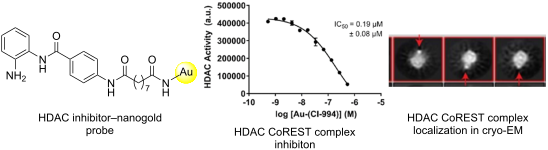
- stoichiometric conjugation with suitable substrates. The small size of Au–NH2 minimizes steric hindrance and allows for enhanced spatial resolution, relative to colloidal nanogold particles, thereby facilitating high precision labeling of the HDAC active site. CI-994 was synthesized using previously established
- , and was stable for days stored at −20 °C (stability determined by 1H NMR, Figures S1–S4 in Supporting Information File 1). For the conjugation of 9 to Au–NH2, an excess of 9 was used to drive the conjugation reaction to completion. Unreacted 9 was then removed by repeated washing with water and buffer
- confirm that the conjugation of CI-994 to the nanogold particle did not significantly affect HDAC inhibition. The HDAC1-LSD1-CoREST complex, incorporating a FLAG tag in CoREST, was expressed and purified from HEK293F cells as previously reported [10]. Fluorescent deacetylase assays were carried out using



Synthesis and stereochemical analysis of dynamic planar chiral oxa[7]orthocyclophene
Beilstein J. Org. Chem. 2026, 22, 436–442, doi:10.3762/bjoc.22.30

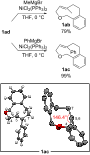
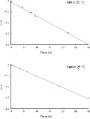
- still observed in the measurement at 5 °C, albeit only slightly. The phenyl-substituent effect on the stereochemical stability can be understood as a destabilization of the ground state due to the transannular repulsion, and a stabilization of the transition state for racemization by a conjugation






Electrosynthetic access to unsymmetrical oxaza[8]helicenes with high chiral stability and strong circularly polarized luminescence (CPL)
Beilstein J. Org. Chem. 2026, 22, 372–382, doi:10.3762/bjoc.22.25
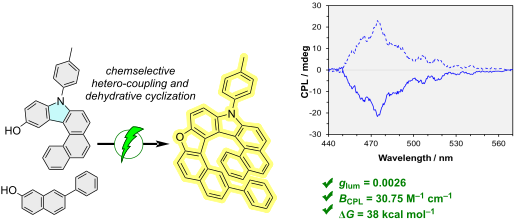
- , security inks, and information-storage materials, where both helicity and emission characteristics must be precisely controlled [23][24][25][26]. A central design element in helicene chemistry is helical extension. Increasing the number of ortho-fused rings amplifies π-conjugation, structural rigidity, and
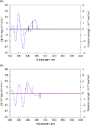
- ]helicenes 5a and 5b in chloroform (1 × 10⁻⁵ M) were recorded and compared with those of the corresponding oxaza[7]helicenes 6a and 6b (Figure 4A and 4B). As expected, extension of the helical π-systems in 5 leads to enhanced conjugation relative to 6, manifested in red-shifted absorption and emission bands




Recent advances in the cleavage of non-activated amides
Beilstein J. Org. Chem. 2026, 22, 352–369, doi:10.3762/bjoc.22.23
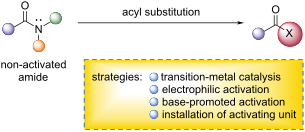
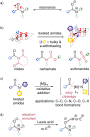
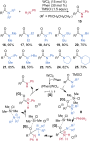
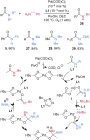
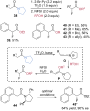
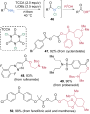
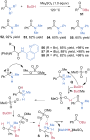
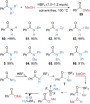
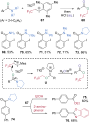
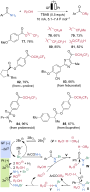
- substituents on the nitrogen (e.g., tosyl, carbamate, or acyl groups) distorts the planarity of the amide and diminishes amidic conjugation (Scheme 1b). These “twisted” amides exhibit a dramatically enhanced electrophilicity at the carbonyl carbon and a significantly weaker C–N bond strength [28][29][30][31










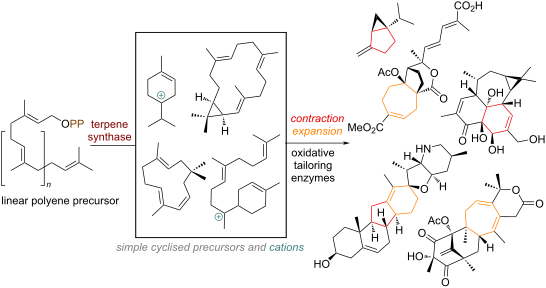
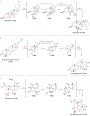
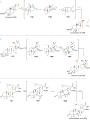
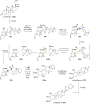
Ring contraction and ring expansion reactions in terpenoid biosynthesis and their application to total synthesis
Beilstein J. Org. Chem. 2026, 22, 289–343, doi:10.3762/bjoc.22.21






Arene activation via π-bond localization: concepts and opportunities
Beilstein J. Org. Chem. 2026, 22, 257–273, doi:10.3762/bjoc.22.19
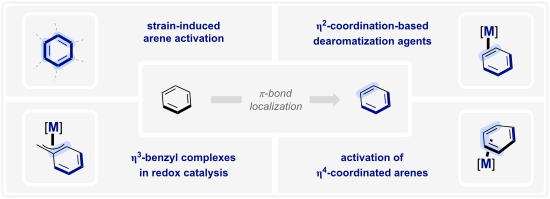
- emphasized heteroatom-driven reactions in which metal coordination enhances the natural polarization of the molecule, primarily by disrupting its aromaticity. For example, a π-base preferentially binds to the C(2) and C(3) positions of monosubstituted arenes, maintaining linear conjugation between the




Screwing the helical chirality through terminal peri-functionalization
Beilstein J. Org. Chem. 2026, 22, 205–212, doi:10.3762/bjoc.22.14
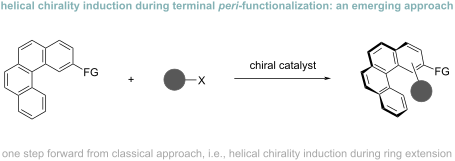
- the utility of the parent helicene in diverse areas, thereby offering a more versatile alternative to classical helicene extension strategies. Discussion Only a handful attempts have been made for the asymmetric synthesis of helical molecules using π conjugation extension [28][29][30]. This prevalent


Symmetrical D–π–A–π–D indanone dyes: a new design for nonlinear optics and cyanide detection
Beilstein J. Org. Chem. 2026, 22, 131–142, doi:10.3762/bjoc.22.6
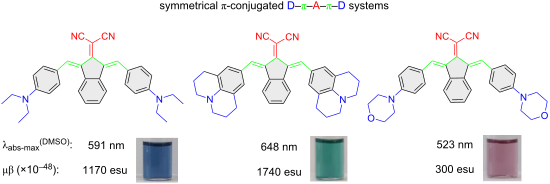
- ). The vinyl bridges were added to the design, which have the potential to open nucleophilic addition reactions (Michael type) due to their electron deficiencies, in addition to acting as π-bridges for the D–A conjugation. Furthermore, a symmetric design with increased π-conjugation was planned to shift
- cyanide to dyes, the absorption bands at longer wavelength, 550–700 nm, disappeared while shorter wavelength absorption maxima, 350-450 nm, showed a slight increment in absorbance. The disappearance of the ICT band indicates that the conjugation through the structure of dyes between the donor and acceptor
- and phenyl rings (C13–C21–C23–C24 and C11–C19–C33–C34) are (157.30, −157.30); (159.29, −159.29); 154.46, −156.48) for 2a–c, respectively, which is an indicator of large degrees of conjugation and good ICT. When CN− interacts with the 2a–c via the proposed addition mechanism (Scheme 2), the planarity


Thiazolidinones: novel insights from microwave synthesis, computational studies, and potentially bioactive hybrids
Beilstein J. Org. Chem. 2025, 21, 2618–2636, doi:10.3762/bjoc.21.203
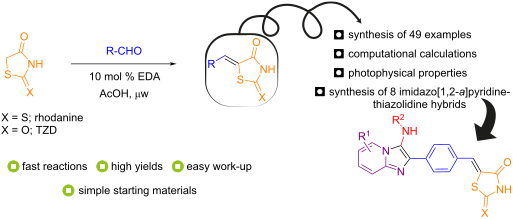
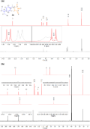
- behavior is not expected from hydrogen-bonded carbon atoms in aromatic rings. Since peak intensities depend on spin-lattice relaxation times, the absence of peaks implies some degree of molecular rigidity, which could be related to two factors: the viscosity of DMSO and the conjugation between the six






Pentacyclic aromatic heterocycles from Pd-catalyzed annulation of 1,5-diaryl-1,2,3-triazoles
Beilstein J. Org. Chem. 2025, 21, 2524–2534, doi:10.3762/bjoc.21.194
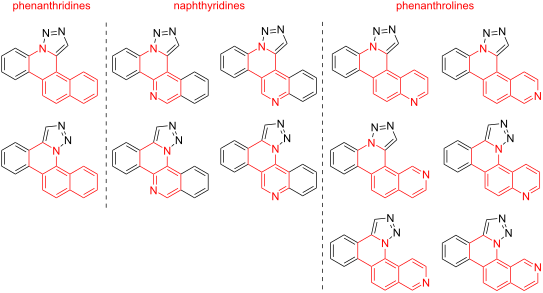
- compounds. The utility of click chemistry [11][12] for achieving chemoselective conjugation in a diversity of chemical environments has established the 1,2,3-triazole ring as a ubiquitous heterocycle in many research areas such as therapeutics [13][14][15][16], chemosensors [17][18][19], bioconjugation [20
- shape differences by allowing such subunits to rotate out of coplanarity due to steric strain, diminishing conjugation between subunits. Formation of pentacyclic ring systems via annulation led to several expected spectroscopic signatures indicating the formation of an expanded aromatic π-system. 1H NMR


A m-quaterphenyl probe for absolute configurational assignments of primary and secondary amines
Beilstein J. Org. Chem. 2025, 21, 2211–2219, doi:10.3762/bjoc.21.168
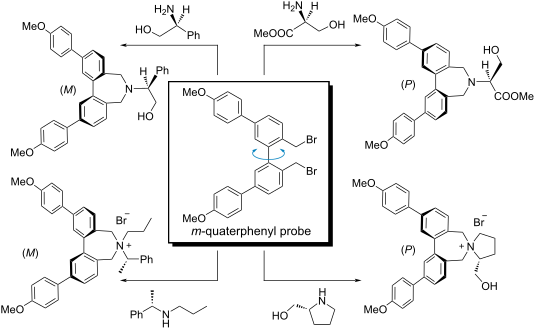
- bond. Therefore, the π-electron conjugation is widespread almost over the chromophores. However, the UV spectrum of 1–ʟ-alaninol conjugate (S)-2a shows an intense absorption, maintaining the nature of methoxybiphenyl chromophore. The absorption band at 259 nm is attributed to the π–π* transition


The application of desymmetric enantioselective reduction of cyclic 1,3-dicarbonyl compounds in the total synthesis of terpenoid and alkaloid natural products
Beilstein J. Org. Chem. 2025, 21, 2085–2102, doi:10.3762/bjoc.21.164
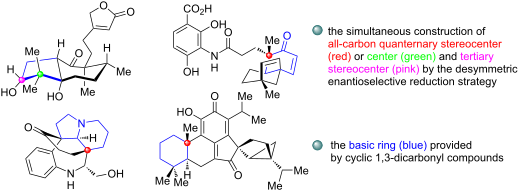
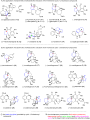
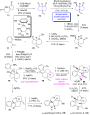
- 69 and lactone 70 at 456 nm with fac-Ir(ppy)3 as the photocatalyst furnished a mixture of isomeric olefins. Finally, DBU-promoted the isomeric olefins conjugation and removal of the two silyl ether completed the first total synthesis of (+)-randainin D (13). Total synthesis of (−)-hunterine A and







Synthesis of N-doped chiral macrocycles by regioselective palladium-catalyzed arylation
Beilstein J. Org. Chem. 2025, 21, 1917–1923, doi:10.3762/bjoc.21.149
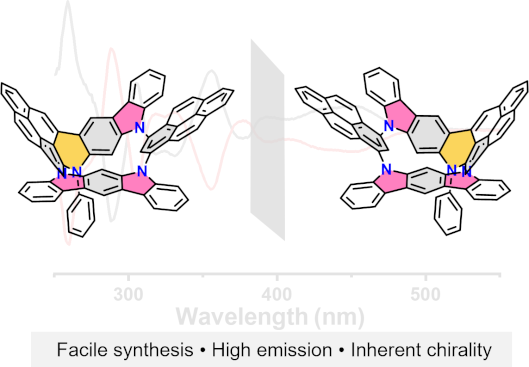
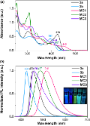
- absorption maximum of MC1 is more redshifted by 42 nm compared to MC2, which is attributed to the extended conjugation after the fusion of one pyrene unit. Similarly, both MC1 and MC2 have higher ΦF values of 0.45 and 0.69 than compound MC3 (ΦF = 0.13). The optical energy bandgaps were determined to be 2.48




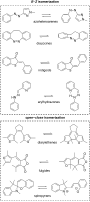
Photoswitches beyond azobenzene: a beginner’s guide
Beilstein J. Org. Chem. 2025, 21, 1808–1853, doi:10.3762/bjoc.21.143
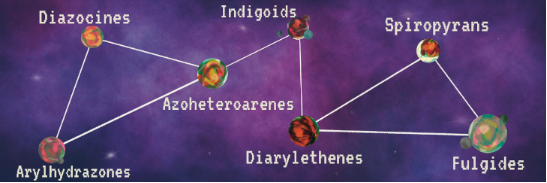
- to the strong electron conjugation, these compounds usually show much shorter thermal lifetime, alongside with strong bathochromic shifts [17][18][19][20][21][22][23][24][25][26]. They are useful when fast responsive T-type photoswitches are needed. Moreover, some compounds show interesting non
- ” conjugation (Figure 4B). The “complete” conjugation implies shorter lifetimes, due to the ability to rearrange the electrons more efficiently, thus showing a stronger push character. A follow-up study showed that di-ortho-fluorination (9c and 9d) and di-ortho-methoxylation (9e) of the phenyl moiety of 4
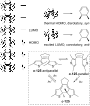
- lifetimes with great accuracy [7]. In summary, the more extended the conjugation of the heterocycle with the N=N bond, the more feasible the inversion mechanism (which does not involve the rupture of the double N=N bond). The less conjugated switches, however, would undergo rotation around the (instant






Research progress on calixarene/pillararene-based controlled drug release systems
Beilstein J. Org. Chem. 2025, 21, 1757–1785, doi:10.3762/bjoc.21.139
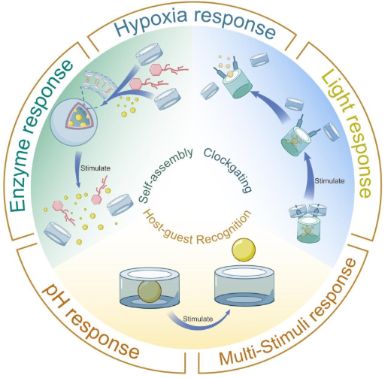
- cyclodextrins in terms of controllable functionalization [61]. In clinical applications, particularly for anticancer drug conjugation, CAs demonstrate remarkable cancer cell selectivity, minimized off-target effects, enhanced delivery efficiency, and reduced systemic toxicity. Additionally, their synthetic






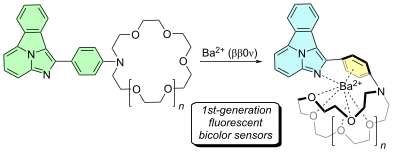
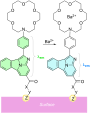
On the aromaticity and photophysics of 1-arylbenzo[a]imidazo[5,1,2-cd]indolizines as bicolor fluorescent molecules for barium tagging in the study of double-beta decay of 136Xe
Beilstein J. Org. Chem. 2025, 21, 1627–1638, doi:10.3762/bjoc.21.126
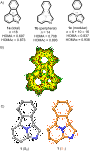
- imidazo[1,2-a]pyridine components. In reaction A, an hyperhomodesmotic equation [19] 2 + 3 → 4 + 1 was defined, in which the conjugation of the bicyclic imidazo[1,2-a]pyridine unit was removed, while preserving the ortho-disubstituted phenyl ring, highlighted in yellow in Scheme 1A. This reaction yielded
- considered: a total delocalized geometry denoted as 1a in Figure 3A, a peripheric conjugation 1b that excludes the participation of the lone pair of the central N atom and, finally, a two-component delocalization scheme denoted as 1c. The chief features of fully optimized structures of 1 at the ground state





Synthesis of optically active folded cyclic dimers and trimers
Beilstein J. Org. Chem. 2025, 21, 1603–1612, doi:10.3762/bjoc.21.124

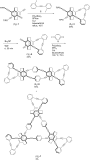
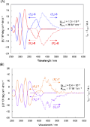
- photoluminescence (PL) spectra of (Sp)-6 and (Sp)-7 in diluted CHCl3 solutions (1.0 × 10⁻⁵ M) are depicted in Figure 1. The absorption bands are derived from the π–π* transitions of a phenylene–ethynylene conjugation system. The spectra of (Sp)-6 and (Sp)-7 are similar, and the absorption peak top of (Sp)-7 is red
- -shifted compared with that of (Sp)-6 because of the bent structure of the p-phenylene–ethynylene moieties in (Sp)-6 and extended π-conjugation of (Sp)-7. Such a red-shift of a UV–vis absorption spectrum has been observed in previously reported [2.2]paracyclophane-based cyclic oligomers [39]. CHCl3
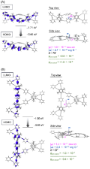
- ). Molecular orbitals of (Sp)-6 and (Sp)-7 in their ground and excited states were calculated using DFT and TD-DFT calculations (Figures S20–S23, Supporting Information File 1). In both molecules, the orbitals were localized to part of the π-conjugation systems rather than the whole system in the ground and