Search results
Search for "oxygen" in Full Text gives 1359 result(s) in Beilstein Journal of Organic Chemistry. Showing first 200.
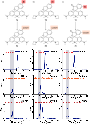
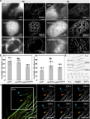
A practical CO2-mediated synthesis of 5,6-carboxylated silicon-rhodamines for targeted probe development
Beilstein J. Org. Chem. 2026, 22, 915–924, doi:10.3762/bjoc.22.72
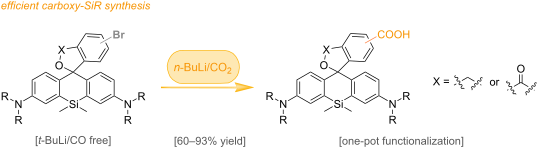
- switching and fluorogenic responses, making rhodamines particularly valuable for advanced imaging beyond the optical diffraction limit [14][15][16][17][18][19]. Replacement of the conventional bridging oxygen atom with silicon shifts the emission of rhodamines from red to the far-red region (typically λem



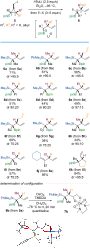
Diastereodivergent electrophilic trapping of α-boryl lithium derivatives
Beilstein J. Org. Chem. 2026, 22, 882–887, doi:10.3762/bjoc.22.68
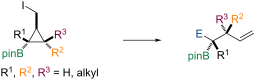
- task [25][26][27]. The electronic character of these intermediates, especially for boronic ester derivatives that allow coordination between oxygen atoms and the metal counterion, complicates predictable stereochemical outcome. Developing strategies to harness the exceptional nature of these carbanions




The trans-influence in gold chemistry from a catalytic perspective
Beilstein J. Org. Chem. 2026, 22, 838–856, doi:10.3762/bjoc.22.66
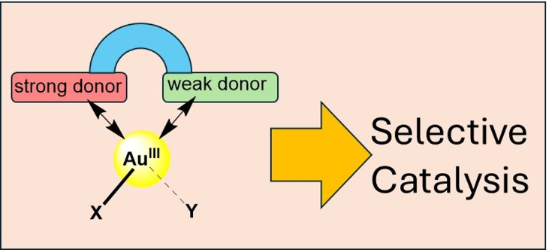
- corresponding1H NMR chemical shifts. Gold(III) hydride formation by oxygen transfer. Heterolytic H–H bond cleavage by cationic Au(III) complexes [32][56]. Gold(III) models of the water-gas shift reaction [30]. Gold(III) hydride complexes supported by C^C and C^N chelate ligands [32][50]. O2 insertions into Au–H


Unsymmetrical sulfoxides with sterically hindered catechol fragment: synthesis, structure, electrochemical properties, and antiradical activity
Beilstein J. Org. Chem. 2026, 22, 828–837, doi:10.3762/bjoc.22.65
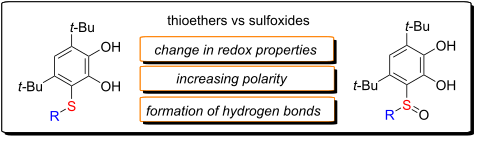
- environmentally friendly and readily available hydrogen peroxide, oxygen is another soft “green” oxidizer widely used in the oxidation of sulfides to sulfoxides [39][40][41]. In the case of catechol thioethers, an additional key challenge lies in achieving chemoselective oxidation of the sulfur atom in the
- °, depending on the nature of the substituent. The hydroxy group at the second position participates in the formation of an intramolecular H-bond with the oxygen atom of the sulfoxide group (Figure 1), and the second OH group forms an intermolecular contact with the SO group of the neighboring molecule (Table
- hydrogen atom to the oxygen of the sulfinyl group. This weakens the O–H bond in the catechol, making it more polar and less strong, thereby facilitating the electrooxidation process. These findings are confirmed by IR spectroscopy: for the corresponding thioether, the O–H stretching vibrations are observed


Knoevenagel condensation of 4,5- and 1,8-diazafluorenes
Beilstein J. Org. Chem. 2026, 22, 803–812, doi:10.3762/bjoc.22.62
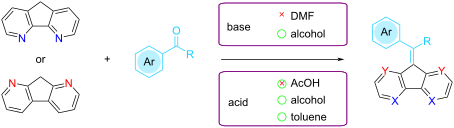
- into 1,8-diazafluorenone by oxygen present in the reaction mixture. Therefore, the position of nitrogen atoms in diazafluorenes strongly affects their reactivity in acidic media via protonation, electrostatic repulsion, and stability of the condensation products. Therefore, the equilibrium in the




Halogenated azobenzene acrylates: from efficient solution photoswitching to stable solid-state photochromic materials
Beilstein J. Org. Chem. 2026, 22, 782–794, doi:10.3762/bjoc.22.60
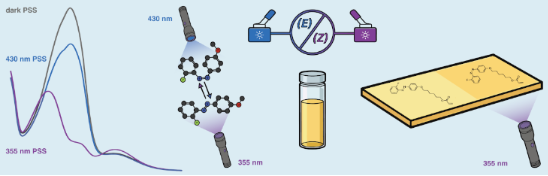
- approximate ratio of ipred1,cat vs ipox1,an = 1:3 for compounds 1a–e. This indicates a three-electron process within the first oxidation, implying parallel oxidation of the “phenolic” oxygen and the adjacent π-system. The mutual ratio of both current maxima was more balanced in the case of the dibromo


Design, synthesis, and biological evaluation of FXR/ASK1 dual-target modulators
Beilstein J. Org. Chem. 2026, 22, 771–781, doi:10.3762/bjoc.22.59
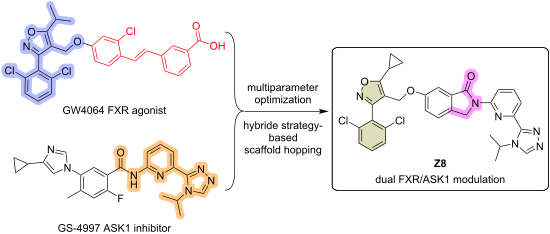
- ). Apoptosis signal-regulating kinase 1 (ASK1), a member of the MAP3K family, is known to be activated by various cellular stressors. These can be induced by diverse factors, spanning from reactive oxygen species (ROS) and endoplasmic reticulum stress to calcium influx and inflammatory agents (e.g., TNF and


Rongalite addition to dienones: diastereoselectivity in cyclic sulfone synthesis; stereochemical rationalization and prospects as a general conjugate nucleophile
Beilstein J. Org. Chem. 2026, 22, 742–752, doi:10.3762/bjoc.22.56

- -methyl groups cannot freely rotate past the nearby sulfone oxygen atoms. Calculations suggested a rotation barrier of 18 kcal/mol, consistent with it being insurmountable at room temperature, vs only 4 kcal/mol for the unsubstituted phenyl ring (see Supporting Information File 1). The combined results of
- high concentration of ≈80% acetic acid (pH ≈3), it seemed plausible that activation of the dienone carbonyl group would occur by hydrogen-bonding, rather than complete proton transfer to the carbonyl oxygen lone pairs [29]. We therefore included explicit solvation with acetic acid in our computational
- oxygen, which is absent in the other sulfinates. We finally elected to examine double intermolecular conjugate addition with some commercially available enones (Scheme 7). These reactions were sluggish, but yielded the expected adducts 30, 32, and 34 as 1:1 diastereomeric mixtures (30 was obtained in a 1


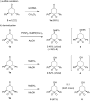


Synthesis of heterocycles based on azomethine ylides from α-amino acids (or amines) and carbonyl compounds
Beilstein J. Org. Chem. 2026, 22, 705–741, doi:10.3762/bjoc.22.55
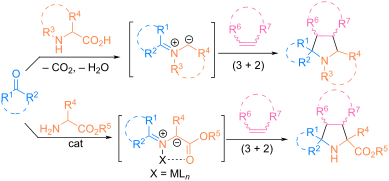
- heating were used. Notably, this process can proceed solvent-free at 140 °C, which is suitable for less reactive substrates. Various exo-cyclic alkenes obtained from cyclic (hetero)aliphatic ketones such as cyclobutanone, azetidinone, thienone, as well as endo-(hetero)cyclic alkenes containing oxygen
- due to the possibility of cycloaddition at the carbon–oxygen double bond (C=O) of the aldehyde, which acts as an alternative to the carbon–carbon double bond (C=C) [83]. In 2016, Sridharan reported a one-pot iridium-catalyzed three-component dehydrogenation/1,3-dipolar cycloaddition cascade reaction


Synthesis of depressin, cryptomeridiol and 4-epi-cryptomeridiol enabled by a terpenoid chiral pool-producing platform
Beilstein J. Org. Chem. 2026, 22, 683–690, doi:10.3762/bjoc.22.53
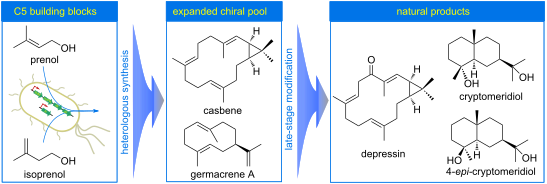
- cyclases; Introduction Terpenoids are one of the most important family of natural products that have been found to be produced in all domains of life. Although containing only carbon, hydrogen and oxygen atoms in most cases, over 100,000 terpenoid structures containing diverse skeletons and rich oxidative


Harnessing light energy with molecules
Beilstein J. Org. Chem. 2026, 22, 680–682, doi:10.3762/bjoc.22.52
- structure by a heteroatom (oxygen or nitrogen) in donor–acceptor, push–pull NBD derivatives are reported. In a computational study, Pawar and co-workers [7] further expanded the NBD structure by elongating the unsaturated bridge with different heteroatoms or functional groups. Azobenzenes, interconverting
Melifoliox B, a novel phloroglucin derivative isolated from Melicope barbigera (Rutaceae) and synthesis of new oxidation products from melifoliones A and B
Beilstein J. Org. Chem. 2026, 22, 535–546, doi:10.3762/bjoc.22.39
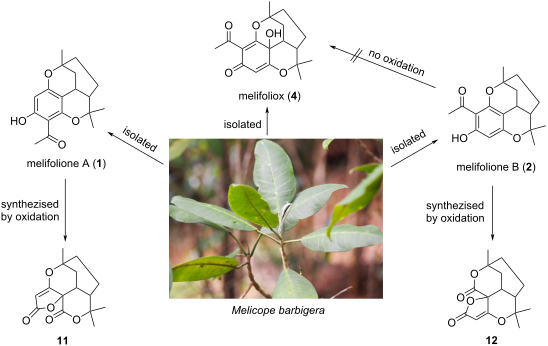
- colorless and amorphous substance. The molecular formula was determined as C18H22O5 by high resolution electrospray ionization mass spectrometry (HRESIMS), thus containing one more oxygen atom than the melifoliones. The UV spectrum showed a maximum at 250 nm, typical for an α,β-unsaturated carbonyl
- atmospheric oxygen. Oxidation with potassium peroxodisulfate (Oxone®) according to a method by Carreño et al. [7] led to a complex mixture of compounds in which the quinols 3 and 4 could be excluded. While oxidation with alkaline hypochlorite solution gave a mixture of not identified chlorinated products
- ). Since all attempts to prepare the quinols 3 or 4 via oxidation of melifoliones had failed, the combined use of ferricyanide and hydrogen peroxide in alkaline solution was finally used. Under these conditions, superoxide and hydroxy radicals or even singlet oxygen can be formed [10][11]. After addition


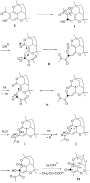

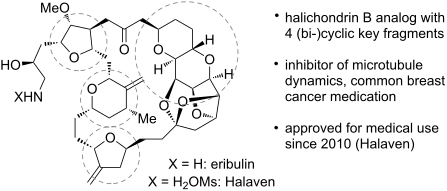
Modern synthetic pathways towards eribulin and its subunits
Beilstein J. Org. Chem. 2026, 22, 495–526, doi:10.3762/bjoc.22.37
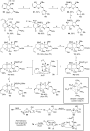
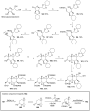
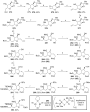
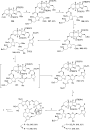
- formation of 252. Next, conditions reported by Kishi and co-workers were applied for the nucleophilic substitution of the chloride by the oxygen from the tetrahydrofuran ring towards 253 [94], before an adjacent secondary alcohol group reopened the bicyclic cationic intermediate. Cleavage of the TBDMS








Synthesis and uranyl(VI) extraction performance of a calix[4]pyrrole–tetrahydroxamic acid receptor
Beilstein J. Org. Chem. 2026, 22, 486–494, doi:10.3762/bjoc.22.36
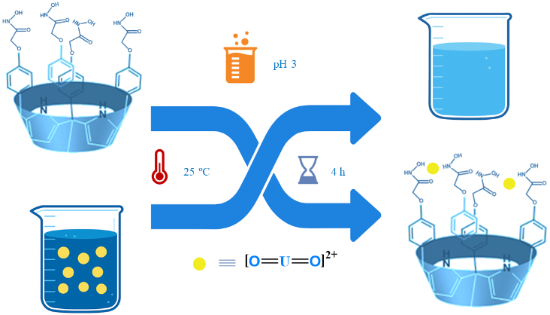
- donor atoms, a carbonyl oxygen and a hydroxy oxygen, that can simultaneously coordinate to a uranyl ion [77]. In supramolecular systems, not all hydroxamic acid groups necessarily bind uranyl ions, as steric hindrance and site accessibility can limit coordination to a subset of available sites [78]. A


Synthesis and stereochemical analysis of dynamic planar chiral oxa[7]orthocyclophene
Beilstein J. Org. Chem. 2026, 22, 436–442, doi:10.3762/bjoc.22.30

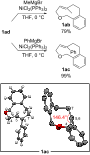
- on the differences of the heteroatom and substituents on the (E)-alkene moiety [11][12]. The half-lives of the optical activity optt1/2 of 1aa (X = O, Y = H) and 1ba (X = NTs, Y = H) were 380 h and 56.7 h at 25 °C, respectively, indicating that the stereochemical stability of the oxygen-containing






Synthesis and anti-cancer activity of naphthalimide–organylselanyl conjugates
Beilstein J. Org. Chem. 2026, 22, 416–435, doi:10.3762/bjoc.22.29
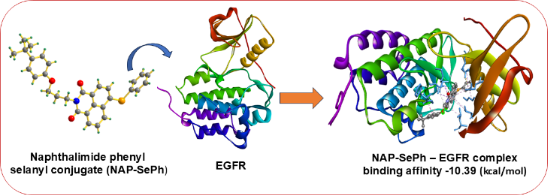
- the compounds 7 and 8, as shown in Figure 5, reveals important insights into their electronic structures relevant to biomedical applications [60]. For compound 7, nitrogen and oxygen atoms exhibited high negative charges of −0.588 (N), −0.533 (O1), −0.511 (O2), and -0.500 (O3) as shown in Figure 5a
- character for (C1) and (C2), with a Mulliken charge value of 0.597 for compound 7, and for compound 8, (C1) and (C2) are 0.598 and 0.599. This electron charge distribution clearly indicates that the nitrogen atom has a more negative character than oxygen and selenium. Still, the oxygen atom has a
- regions indicate more electronegative areas. For both compounds 7 and 8, the oxygen atoms exhibit the highest electronegativity, indicating potential nucleophilicity and the ability to readily participate in hydrogen bonding with amino acids through non-covalent interactions. Overall, MEP mapping reveals


Cone p-aminocalix[4]arenes enriched with ‘clickable’ alkyne or azide functionalities
Beilstein J. Org. Chem. 2026, 22, 399–415, doi:10.3762/bjoc.22.28
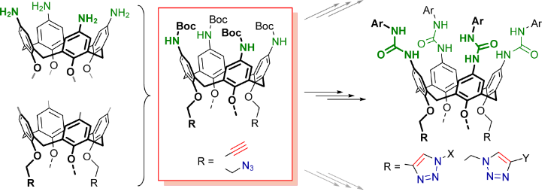
- possess just limited functionalization capabilities unless synthetically more valuable groups are introduced into their structures. Due to the synthetic approaches well-developed in the first decades of calixarene chemistry, these groups can be arranged in a certain number and order at the phenolic oxygen
- structures of calixarenes and related macrocycles [75][76][77][78]. Many of them relied on the introduction of propargyl or azidoalkyl groups to the phenolic oxygen atoms for synthesizing the CuAAC-ready calixarene cores. Within this area of research, our studies on the CuAAC reactions applied to cone
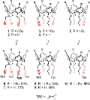
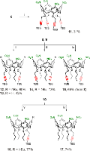
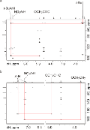
- calixarene tetraaryl- and tetraarylsulfonylureas if co-dissolved in a 1:1 molar ratio [51][52][53]. Furthermore, tetraureas 47–51 contain relatively bulky substituents at the phenolic oxygen atoms, which may influence the conformational behavior of the macrocycle (e.g., pinched cone-to-pinched cone




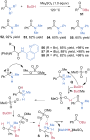
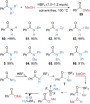
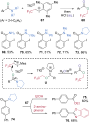
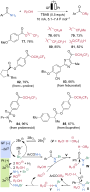
Recent advances in the cleavage of non-activated amides
Beilstein J. Org. Chem. 2026, 22, 352–369, doi:10.3762/bjoc.22.23
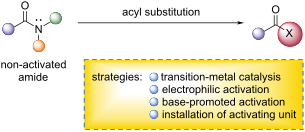
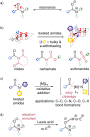
- remains a significant and persistent challenge in synthetic chemistry [41][42][43][44]. Classical approaches for activating non-activated amides typically rely on transition-metal catalysts acting as Lewis acids, which coordinate to the carbonyl oxygen and enhance electrophilicity (Scheme 1d). However
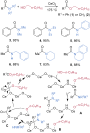
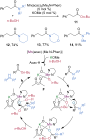
- employed as reliable tools to activate amide bonds through coordination with the amide oxygen lone pair [45]. Although the substrate scope of such methods remains limited, several successful examples with hindered amides have recently been reported. In 2019, Shimizu et al. reported the esterification of
- restored after recalcination prior to reuse. Based on DFT calculations, the authors proposed that octanol is deprotonated and coordinated to Ce, while the amide substrate is simultaneously activated electrophilically through coordination to the Ce center (A). This dual activation enables the lattice oxygen










Synthesis of tricyclic fused pyrrolidine nitroxides from 2-alkynylpyrrolidine-1-oxyls
Beilstein J. Org. Chem. 2026, 22, 344–351, doi:10.3762/bjoc.22.22

- metalation of trimethylsilylacetylene or benzyl propargyl ether with ethylmagnesium bromide. After quenching, removal of the MOP protecting group, and oxidation by atmospheric oxygen the nitroxides 2d and 2e were isolated in 64% and 66% yields, respectively. Terminal alkynes can be converted into




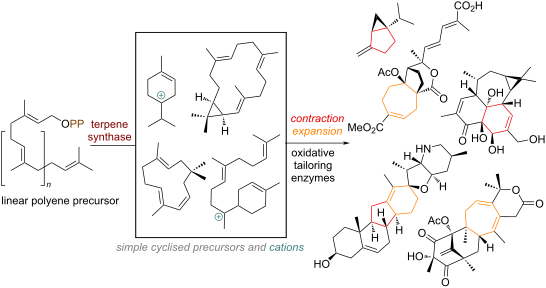
Ring contraction and ring expansion reactions in terpenoid biosynthesis and their application to total synthesis
Beilstein J. Org. Chem. 2026, 22, 289–343, doi:10.3762/bjoc.22.21
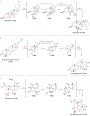
- with oxygen via 2 the ketal structure 3 can decarboxylate [50], generating another high-energy ferryl-oxo species 4 (bound with succinate) which can lead to hydroxylation or carbocation chemistry [51]. Finally, other classes of tailoring enzymes can also act as electrophiles and lead to ring-size
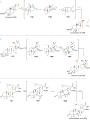
- 78 after proton exchange. The same intermediate diketone could be theoretically obtained directly from singlet-oxygen-mediated oxidation of the olefin through hydroperoxide 81 and Hock rearrangement [130][131][132]. Finally, euphnerin B (76) is furnished after 1,2-alkyl shift in 83 towards the C-5




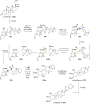


Spirobarbiturates with a pyrrolizidine moiety: synthesis, structure and biological evaluation
Beilstein J. Org. Chem. 2026, 22, 274–288, doi:10.3762/bjoc.22.20
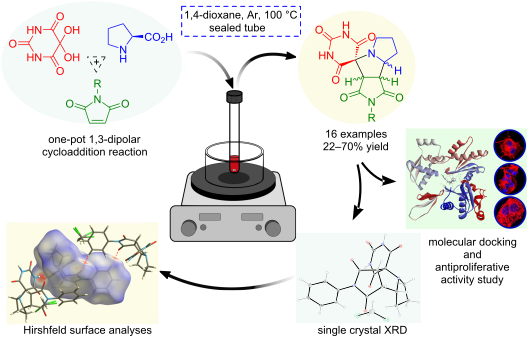
- contacts: the barbiturate ring forms hydrogen bonds with water molecules through C=O···H–O and N–H···O–H interactions; the amide group of the barbiturate ring is engaged in a C=O···H–N hydrogen bond with the carbonyl oxygen of the maleimide fragment; additionally, a C=O···H–CH2 contact is observed between
- the hydrogen atom of the maleimide methyl group and the carbonyl oxygen of an adjacent maleimide ring. The crystal structure of compound 4b exists as a solvate. The oxygen atom of a water molecule forms a hydrogen bond with the amide hydrogen of the barbiturate fragment (N–H···O–H = 2.783 Å), while
- corresponding intermolecular interactions cannot be precisely determined. However, the nature of these interactions can be described as follows: one of the hydrogen atoms of dichloromethane contacts with the oxygen atoms of carbonyl groups from two nearby barbiturate rings. The estimated contact distances are C




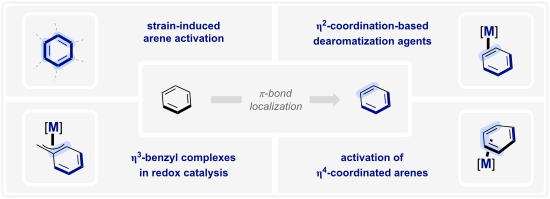
Arene activation via π-bond localization: concepts and opportunities
Beilstein J. Org. Chem. 2026, 22, 257–273, doi:10.3762/bjoc.22.19
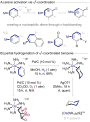
- nucleophile toward diphenylketene to generate a cyclohexadienyl intermediate that captures a second ketene molecule (Figure 11B). Subsequent ring closure furnishes a product complex that, upon oxidation with molecular oxygen, liberates the [2 + 2 + 2] bis-adduct, dihydroisochroman-3-one, in 73% yield. This




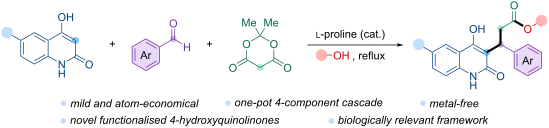
A mild and atom-efficient four-component cascade strategy for the construction of biologically relevant 4-hydroxyquinolin-2(1H)-one derivatives
Beilstein J. Org. Chem. 2026, 22, 244–256, doi:10.3762/bjoc.22.18
- , is likely due to the electronic effects within pyranoquinoline. As an enol ester conjugated with an amide and an aromatic ring, electron-withdrawing groups decrease electron density on the enol OH, while aliphatic substituents (methyl, ethyl) increase electron density on the alcohol oxygen. This


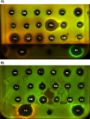
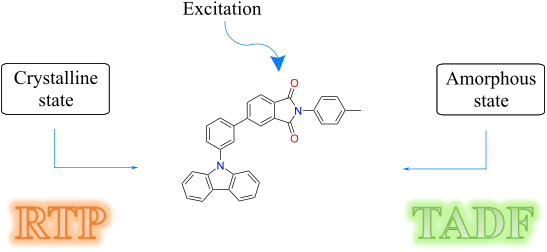
Configuration–packing synergy enabling integrated crystalline-state RTP and amorphous-state TADF
Beilstein J. Org. Chem. 2026, 22, 224–236, doi:10.3762/bjoc.22.16
- placed into a 250 mL three-necked round-bottomed flask, ensuring the proper amount of space for the reaction. It was then dissolved in 100 mL of glacial acetic acid, which served as the solvent. To create an inert atmosphere and prevent any unwanted reactions with oxygen, the solution was purged with
- no moisture or oxygen interfered with the reaction. Following this, 3-(9H-carbazol-9-yl)phenylboronic acid (5, 1.09 g, 3.80 mmol) was added to the flask. The mixture was stirred for 5 minutes to allow proper mixing. To facilitate the Suzuki coupling reaction, an aqueous solution of potassium


Base-promoted deacylation of 2-acetyl-2,5-dihydrothiophenes and their oxygen-mediated hydroxylation
Beilstein J. Org. Chem. 2026, 22, 192–204, doi:10.3762/bjoc.22.13
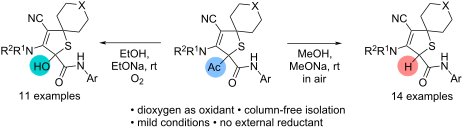
- methoxide afforded the deacylated products. Conversely, the treatment with sodium ethoxide in an oxygen saturated ethanolic solution produced 2-hydroxy substituted 2,5-dihydrothiophenes. Keywords: 2-acetyl-2,5-dihydrothiophenes; deacylation; 2-hydroxy-2,5-dihydrothiophenes; transformations; Introduction
- oxidation of ketones includes C‒C-bond cleavage, and carboxylic acids are predominantly formed. This can be achieved by the treatment of acyclic ketones with hypohalites [13], in the nitroarene-catalyzed oxidation with oxygen under basic conditions [14] or by the use of hypervalent iodine compounds (Scheme
- ], oxygen [23][24] or with m-CPBA (Scheme 1B) [25][26] or non-catalytic transformations [27]. The few known oxidative transformations of o- or p-hydroxy-substituted aromatic ketones, that in most cases lead to phenols, involve the use of hydrogen peroxide as an oxygen source (Scheme 1C) [20][25][26