


Search results
Search for "peptide" in Full Text gives 488 result(s) in Beilstein Journal of Organic Chemistry. Showing first 200.
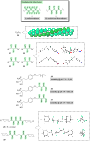
The role of spacer length and flexibility in peptide self-assembly
Beilstein J. Org. Chem. 2026, 22, 986–996, doi:10.3762/bjoc.22.77
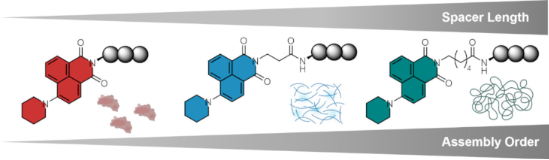
- -cysteine-alanine (ICA) tripeptides containing carbon spacers of 6, 3, or 0 methylene units linking the peptide backbone to a hydrophobic naphthalene (Nap) π-block. Using complementary spectroscopic and microscopic techniques, we show that spacer length controls the balance between conformational
- (C3), whereas peptides containing the rigid C0-spacer fail to develop ordered nanostructures. These findings identify spacer length as a powerful design parameter for tuning peptide self-assembly across multiple length scales. Keywords: nanostructures; peptide amphiphiles; peptide nanofibers; self
- ], and responsiveness to environmental stimuli [10][11][12]. These peptide monomers can be synthesized in high throughput through solid-phase peptide synthesis (SPPS) and have shown a great structural versatility ranging from the formation of different secondary structures, such as α-helices, β-sheets


Novel macrocycles: from synthesis to supramolecular function
Beilstein J. Org. Chem. 2026, 22, 982–985, doi:10.3762/bjoc.22.76

- peptide-functionalized supramolecular tweezers was developed by Schrader and Vetter [42] to target survivin, a key component of the chromosomal passenger complex (CPC). These receptors were designed to interfere with the recognition of phosphorylated histone H3 by the survivin BIR domain, displaying high
- binding affinity and selectivity that depended on the presence of Lys121. Structural investigations revealed an unexpected binding mode in which, in addition to the peptide-mediated recognition of the BIR domain, the tweezer scaffold established supplementary interactions with the protein surface. These
- findings provided valuable insights into the molecular basis of survivin recognition and guided the design of second-generation peptide tweezers capable of simultaneously engaging multiple binding regions of the protein. The study highlights the potential of peptide-modified supramolecular tweezers as
A practical CO2-mediated synthesis of 5,6-carboxylated silicon-rhodamines for targeted probe development
Beilstein J. Org. Chem. 2026, 22, 915–924, doi:10.3762/bjoc.22.72
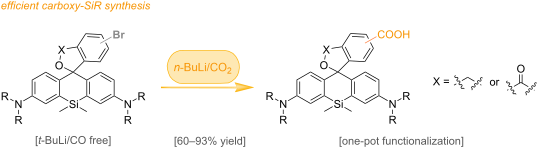
- construction of SiR-based probes, including HaloTag, SNAP-tag, peptide-, and small-molecule-conjugated derivatives [18][35]. The synthetic accessibility of 5,6-carboxylated SiRs has thus become a central bottleneck in the diversification and broader application of SiR chemistry. Traditional approaches to the



Site-specific labelling of native peptides and proteins: chemical and enzymatic strategies
Beilstein J. Org. Chem. 2026, 22, 857–881, doi:10.3762/bjoc.22.67
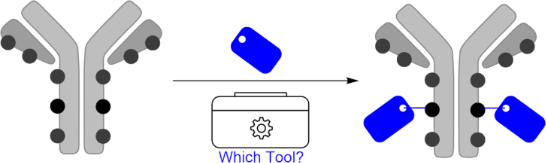
- and peptide modifications introduce functionalities not achievable through recombinant methods alone, making them vital for fundamental research and biomedical applications [1][2][3][4]. Such chemistry underpins wide-ranging biological investigations including microscopy, proteomic analyses and tissue
- therapeutics, advances in protein modification have the potential to partially replace solid-phase peptide synthesis (SPPS), reducing environmental impact by minimising protecting groups and harmful solvents. Driven by scientific innovation, clinical demand and sustainability goals, the global protein
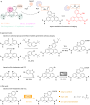
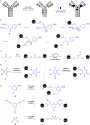
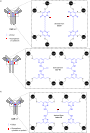
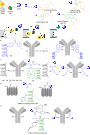
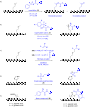
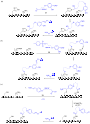
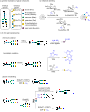
- , the enzyme cleaves the Thr–Gly peptide bond to form an acyl intermediate that is ligated to an incoming primary amine nucleophile, such as an N-terminal glycine or lysine ε-amine (Scheme 14a) [143]. Native proteins with an N-terminal glycine and sufficient flexibility can thus be directly modified by









Preparation of 3-(alkylamino)imidazo[1,2-a]pyridine-2-carbaldehydes via Kornblum oxidation and unexpected ring-opening reactions of the corresponding alcohols under oxidative conditions
Beilstein J. Org. Chem. 2026, 22, 763–770, doi:10.3762/bjoc.22.58
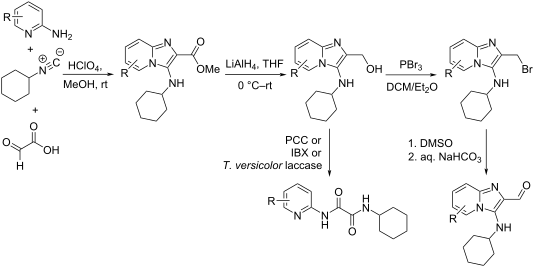
- -chloroaniline, followed by reduction; ii) reaction of the corresponding carboxylic acid with 2-chloroaniline under peptide-coupling conditions followed by reduction; and iii) reduction of the ester to the aldehyde, followed by reductive amination to give compounds 8. Initial attempts at direct conversion of
- ]. The very small number of compounds of this type reported is suggestive of their inherent instability and their tendency to readily decarboxylate. Having ruled out using a peptide-coupling approach we moved to investigate the preparation of the 2-substituted aldehyde derivative, with subsequent


Synthesis of heterocycles based on azomethine ylides from α-amino acids (or amines) and carbonyl compounds
Beilstein J. Org. Chem. 2026, 22, 705–741, doi:10.3762/bjoc.22.55
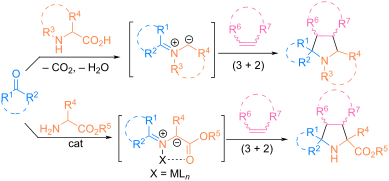
- and unsubstituted isatins, various α-amino acids, as well as the peptide Gly–Gly and benzylamines with cyclopropenes, which resulted in the preparation of 3-spiro[cyclopropa[a]pyrrolizine]- and 3-spiro[3-azabicyclo[3.1.0]hexane]oxindoles 157–160, predominantly in the form of one diastereomer, with


Using generative AI to transform peptide hits into small molecule leads
Beilstein J. Org. Chem. 2026, 22, 672–679, doi:10.3762/bjoc.22.51
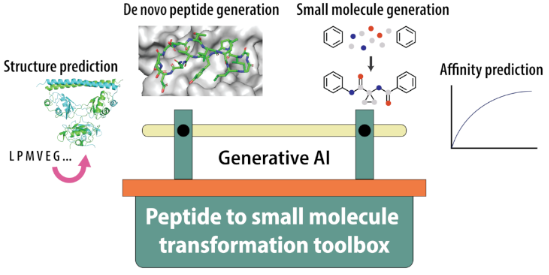
- Joshua Mills Yu Heng Lau School of Chemistry, The University of Sydney, Camperdown NSW 2006, Australia ARC Centre for Innovations in Peptide and Protein Science, The University of Sydney, Australia 10.3762/bjoc.22.51 Abstract There is a wealth of structural data on peptides that bind potential
- potential for new AI-based tools to expedite the structure-based transformation of peptide hits into small molecule leads. In this Perspective, we highlight how AI-enabled prediction and design tools can potentially span the entire workflow from peptide to small molecule: target protein structure prediction
- , de novo peptide binder generation, diffusion models for generating novel small molecule scaffolds, and deep-learning predictors of binding affinity to rapidly triage candidates. Keywords: diffusion models; drug discovery; generative AI; peptides; small molecules; Introduction In drug discovery


Molecular tweezer–peptide conjugates disrupt the protein–protein interaction between survivin and histone H3 essential in mitosis
Beilstein J. Org. Chem. 2026, 22, 557–567, doi:10.3762/bjoc.22.41
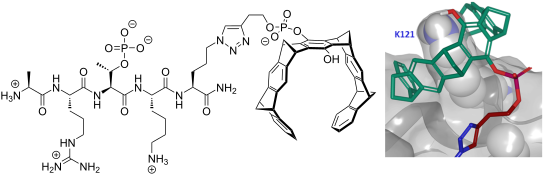
- , Otto-Hahn-Straße 11, 44227 Dortmund, Germany 10.3762/bjoc.22.41 Abstract Peptide-modified supramolecular tweezers, a promising new class of chemical tools, were designed and employed to inhibit the interaction of the BIR domain of human survivin, a member of the chromosomal passenger complex (CPC
- ), with the phosphorylated histone H3 N-terminal peptide. Fluorescence polarization measurements revealed a nanomolar affinity of the BIR domain for the peptide-tweezer, depending on the presence of lysine residue 121, as proven by the K121A mutant of survivin. Two crystal structures of C-terminally
- truncated human survivin with the peptide-tweezer molecules demonstrated that the peptide moiety binds the BIR domain as expected from the well-known published crystal structures of survivin with various peptides, but the tweezer itself, surprisingly, was bound to a putative Ca2+ ion and the side chain of




Recent advances in the cleavage of non-activated amides
Beilstein J. Org. Chem. 2026, 22, 352–369, doi:10.3762/bjoc.22.23
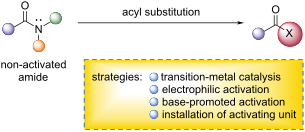
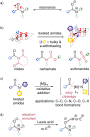
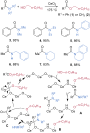
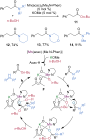
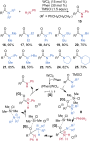
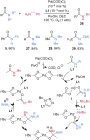
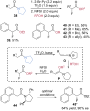
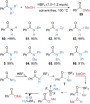
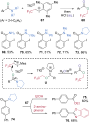
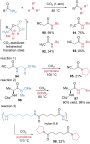
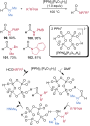
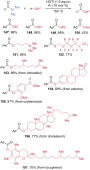
- 91 in good to excellent yields. In the case of electron-enriched primary amides 92, the yield was decreased. Benzylamine was also a competent nucleophile, providing the corresponding amide 93 in moderate yield. Significantly, this CO2-mediated strategy also enabled chemoselective peptide bond
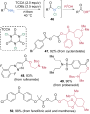
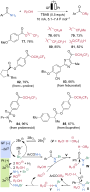
- benzoates 59, 185, and 51 in essentially quantitative yields. A key advantage of this protocol is its applicability to amino acid- and peptide-derived amides. Complex alcohols were successfully employed, producing the corresponding esters 186–192 in high yields without any detectable racemization or
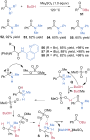
- epimerization. Notably, the chemoselective esterification of a complex peptide, containing four distinct amide bonds and the tert-butyl nicotinate directing group, delivered the ester product 193 in 58% yield. The p-methoxybenzyl (PMB) group was recognized as an efficient activating unit for the selective










Screwing the helical chirality through terminal peri-functionalization
Beilstein J. Org. Chem. 2026, 22, 205–212, doi:10.3762/bjoc.22.14
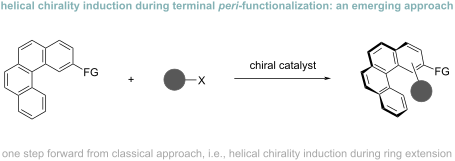
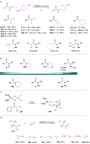
- helical chiral entities was reported by Wang and co-workers. They reported an organocatalyzed asymmetric synthesis of phosphorus-containing chiral helicenes enabled by dynamic kinetic resolution using copper and peptide-mimetic phosphonium salts, i.e. amino acid-derived phosphonium iodide and bromide as
- nucleophilic substitution reactions (Scheme 5). A stereochemical model was proposed for the phospha-Michael addition, indicating that enantioselectivity was primarily influenced by steric effects arising from hydrogen bonding and ion pairing between the peptide mimetic phosphonium salt (PPS)-activated


Total synthesis of asperdinones B, C, D, E and terezine D
Beilstein J. Org. Chem. 2025, 21, 2730–2738, doi:10.3762/bjoc.21.210
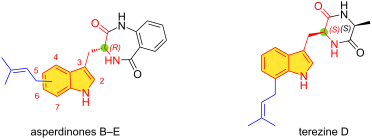
- peptide synthetase AnaPS within the genetic machinery of these microorganisms during biosynthesis [18][19]. Subsequently, post-translational enzymatic processes mediated by prenyl transferases (AnaPT) lead to prenylation at the C4–C7 sites in the indole unit. Terezine D (6), an indole-containing


Competitive cyclization of ethyl trifluoroacetoacetate and methyl ketones with 1,3-diamino-2-propanol into hydrogenated oxazolo- and pyrimido-condensed pyridones
Beilstein J. Org. Chem. 2025, 21, 2716–2729, doi:10.3762/bjoc.21.209
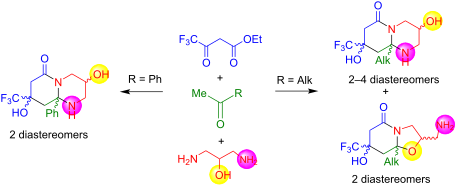
- inhibitor doravirine [31], calcitonin gene-related peptide (CGRP) antagonist ubrogepant [32], dipeptidyl peptidase-4 (DPP-4) inhibitor gemigliptin [33]. The trifluoromethyl pyridine framework is also widely used in the development of plant protection products [34], including the fungicides fluopicolide [35


Efficient solid-phase synthesis and structural characterization of segetalins A–H, J and K
Beilstein J. Org. Chem. 2025, 21, 2612–2617, doi:10.3762/bjoc.21.202

- scalable methodology overcomes limitations of prior syntheses, enabling biological evaluation. Keywords: Fmoc-solid-phase peptide synthesis (Fmoc-SPPS); head-to-tail cyclization; plant cyclopeptides; Vaccaria segetalis; Introduction Cyclopeptides have garnered significant research interest owing to their
- from the high cost of the specialized resin and large solvent volumes required for dilution, coupled with DPPA's poor efficiency in forming sterically hindered peptide bonds involving residues like Val or Ile. Dahiya and Kaur synthesized segetalin C (3) via a solution-phase fragment coupling strategy
- and solid-phase approaches are viable for peptide synthesis, Fmoc-based SPPS offers distinct advantages in operational simplicity and efficiency for laboratory-scale production [20]. We therefore devised a streamlined solid-phase strategy for synthesizing the Vaccaria segetalis cyclopeptide family



Isoorotamide-based peptide nucleic acid nucleobases with extended linkers aimed at distal base recognition of adenosine in double helical RNA
Beilstein J. Org. Chem. 2025, 21, 2513–2523, doi:10.3762/bjoc.21.193
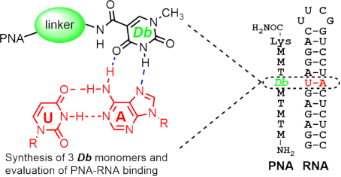
- acid (RNA) impacts many biological processes; however, the complexities of its many roles are not completely understood. Therefore, designing tools for molecular recognition is of paramount importance. Peptide nucleic acids (PNA) show promise as a tool for selective recognition of double helical
- bonding; modified nucleobases; peptide nucleic acids; PNA–RNA triplexes; RNA recognition; Introduction RNA is a key contributor in countless biological processes. Though coding RNA has a well-known role in the central dogma of biology, most RNA is non-coding (ncRNA) and plays a multitude of roles
- oligonucleotides (TFOs) [8]. TFOs are utilized in both RNA and DNA recognition [9][10][11][12] and a particular type of TFO, peptide nucleic acid (PNA), has emerged as a promising probe for recognizing ncRNA [13][14][15][16]. The Nielsen lab first designed PNA with the N-(2-aminoethyl)glycine backbone for the


Rotaxanes with integrated photoswitches: design principles, functional behavior, and emerging applications
Beilstein J. Org. Chem. 2025, 21, 2345–2366, doi:10.3762/bjoc.21.179
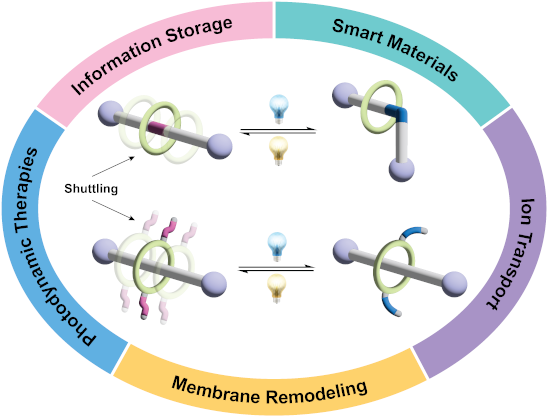
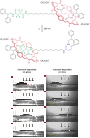
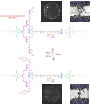
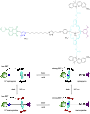
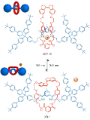
- -bonded to a chiral peptide station. This rotaxane works as a chiroptical switch by light-induced macrocycle movement along the axle [65]. The need to understand the photochemistry of fumaramides to aid their usage in various applications led to the design of rotaxanes containing different axles. Both





Discovery of cytotoxic indolo[1,2-c]quinazoline derivatives through scaffold-based design
Beilstein J. Org. Chem. 2025, 21, 2062–2071, doi:10.3762/bjoc.21.161
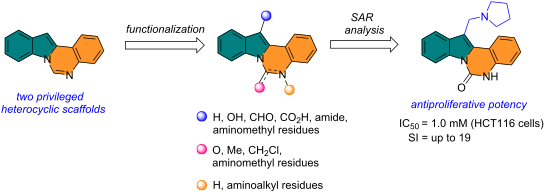
- as the activating agent under standard peptide coupling conditions. Cleavage of the Boc-protecting group with TFA afforded the target 6-oxoindolo[1,2-c]quinazoline-12-carboxamides 7a–c (Scheme 2). 3-Aminomethylindole derivatives represent a well-established class of compounds with diverse biological


Synthesis, biological and electrochemical evaluation of glycidyl esters of phosphorus acids as potential anticancer drugs
Beilstein J. Org. Chem. 2025, 21, 1909–1916, doi:10.3762/bjoc.21.148

- HSA in aqueous medium shows a characteristic oxidation wave that begins to rise around +0.5 V and significantly increases up to +1.2 V vs Ag/AgCl (Figure 3). This wave is attributed to oxidation processes at peptide bonds or specific side chains (such as cysteine, methionine, tyrosine, serine


Photoswitches beyond azobenzene: a beginner’s guide
Beilstein J. Org. Chem. 2025, 21, 1808–1853, doi:10.3762/bjoc.21.143
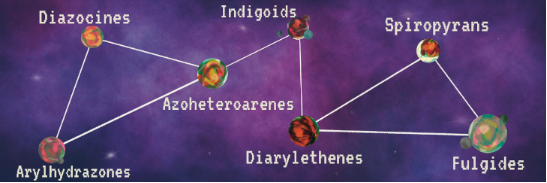
- the peptide chain [94]. Arylhydrazones Arylhydrazones are a class of extremely versatile photoswitches, with good fatigue resistance and thermal half-lives that span from a few hours to years (Figure 17). The common feature of arylhydrazones is the presence of a H-bond acceptor in the rotor, which






Research progress on calixarene/pillararene-based controlled drug release systems
Beilstein J. Org. Chem. 2025, 21, 1757–1785, doi:10.3762/bjoc.21.139
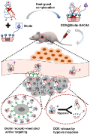
- developed a SAC4A grafted self-assembled peptide hydrogel for hypoxia-responsive controlled drug release in anti-inflammatory treatment of ischemic stroke (Figure 17) [125]. Following PBS induction, the peptide hydrogel was tailored to exhibit a rheological modulus and shear-thinning behavior similar to
- -DM) or fingolimod (FTY720) in vitro. Upon local administration, the hypoxia-responsive self-assembling peptide hydrogel resulted in improved motor function and reduced inflammation in vivo. Recently, Geng and colleagues created additional binding sites by modifying the upper rim of CA4 with glucose
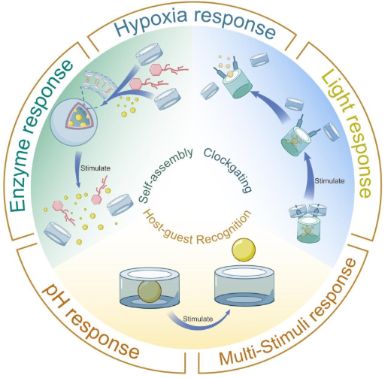
- responses have a broad application prospect in controlling drug release. For example, supramolecular peptide assemblies that naturally respond to pH or ion strength can be designed to include light-responsive elements or feature-specific enzyme substrates, thus utilizing two separate stimulus-response






N-Salicyl-amino acid derivatives with antiparasitic activity from Pseudomonas sp. UIAU-6B
Beilstein J. Org. Chem. 2025, 21, 1388–1396, doi:10.3762/bjoc.21.103
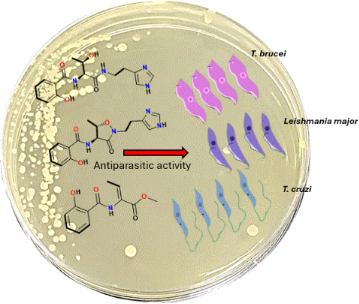
- tentative biosynthesis follows that of pseudomonine, a non-ribosomally synthesized isoxazolidone produced by P. fluorescens. The previous studies on the biosynthesis revealed seven genes, three non-ribosomal peptide synthases (Pms D, E, G) and four precursor biosynthetic enzymes (Pms A, B, C, F) [23][24][25


A versatile route towards 6-arylpipecolic acids
Beilstein J. Org. Chem. 2025, 21, 1104–1115, doi:10.3762/bjoc.21.88
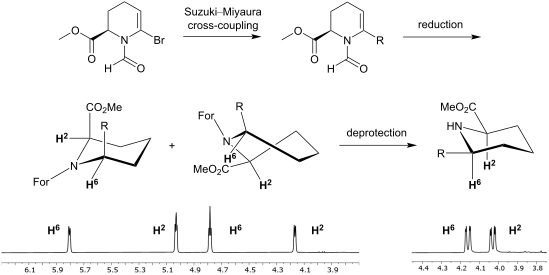
- . It contains a six-membered ring and is, like its five-membered correlate, known for its secondary structure inducing properties, which are particularly useful in the design of peptide conformations. We present a new and improved way to generate enantiomerically pure pipecolic acid derivatives with
- important role as building blocks for peptide synthesis [1][2][3][4][5], as organocatalysts [6][7][8][9][10] and as enzyme inhibitors [4][11][12][13]. The incorporation of such amino acids into peptides can, for example, influence peptide conformation, the binding affinity to receptors [14], as well as
- pharmacokinetics [15][16], stability against degradation [17] and general stability [10][18] of the peptide [19]. One of those amino acids is pipecolic acid [20][21], a homolog of proline with a six-membered piperidine ring. Pipecolic acid has similar features as proline in regard to its rigid nature and turn





Studies on the syntheses of β-carboline alkaloids brevicarine and brevicolline
Beilstein J. Org. Chem. 2025, 21, 955–963, doi:10.3762/bjoc.21.79
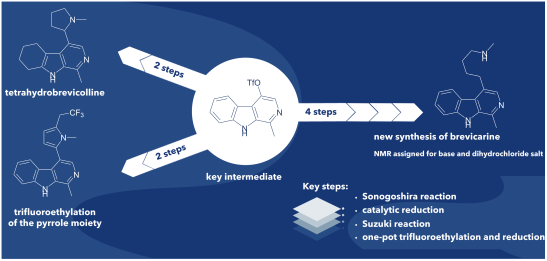
- silico for non-peptide malignant brain tumor (MBT) antagonist activity, showing hits on three MBT-containing proteins [35]. Although Carex brevicollis DC has been observed to have a teratogenic effect on animals [1][36], which could be linked with the presence of the two mentioned β-carboline alkaloids


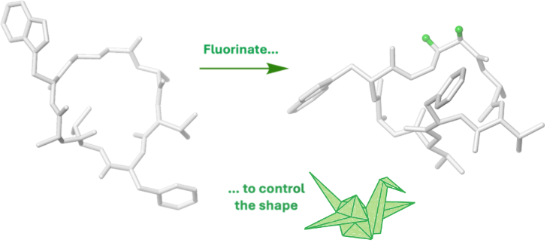
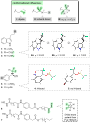
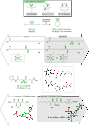
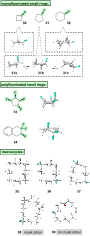
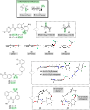
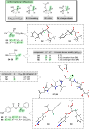
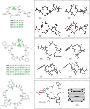
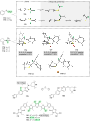
Origami with small molecules: exploiting the C–F bond as a conformational tool
Beilstein J. Org. Chem. 2025, 21, 680–716, doi:10.3762/bjoc.21.54



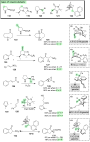
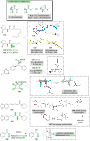
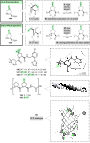
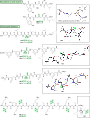
Asymmetric synthesis of fluorinated derivatives of aromatic and γ-branched amino acids via a chiral Ni(II) complex
Beilstein J. Org. Chem. 2025, 21, 659–669, doi:10.3762/bjoc.21.52
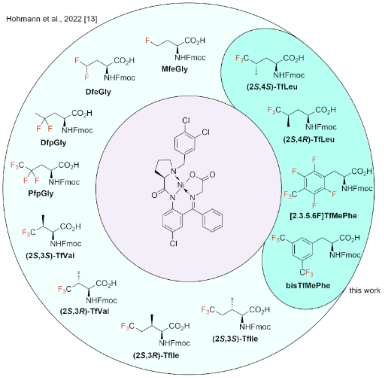
- amino acids. We synthesized two fluorinated analogs of phenylalanine, which are still unexplored in the context of peptide and protein chemistry. Furthermore, both diastereomers of trifluoroleucine were synthesized, demonstrating that the described strategy can also be applied to synthesize enantio‑ and
- -natural amino acids are pivotal in protein engineering and drug development. Over 30% of approved small‑molecule drugs today contain non‑canonical amino acid building blocks [1][2]. In peptide and protein engineering, non‑natural amino acids significantly increase the respective range of tools used to
- modify a series of peptide and protein-related properties such as stability, specificity, and folding. In this regard, fluorinated amino acids are particularly important. Incorporation of fluorinated groups into the sequence of peptides and proteins can, for instance, regulate the respective


Photocatalyzed elaboration of antibody-based bioconjugates
Beilstein J. Org. Chem. 2025, 21, 616–629, doi:10.3762/bjoc.21.49
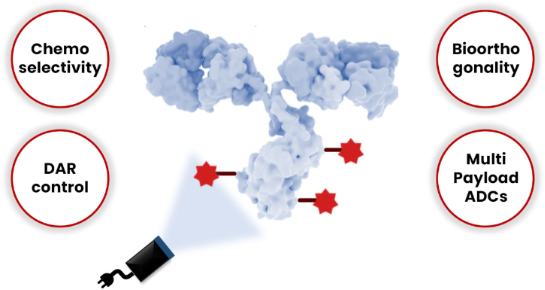
- such methods are generally reported with a heterogeneous DAR, the group developed a site-specific approach leading to a homogeneous DAR 2, thanks to a photoreactive Fc-binding peptide derivative (pFcBP) containing a photoleucine (pLeu) [46]. By analyzing the X-ray crystal structure of IgG, the
- acts as a microtubule destabilizer. To ensure the stability and homogeneity of the final product, the design of the FcBP included a norbornene motif at the N-terminal end of the peptide sequence. The norbornene motif selectively reacts with a tetrazine located on the spacer-payload. This study





