


Search results
Search for "sugar" in Full Text gives 338 result(s) in Beilstein Journal of Organic Chemistry. Showing first 200.
Site-specific labelling of native peptides and proteins: chemical and enzymatic strategies
Beilstein J. Org. Chem. 2026, 22, 857–881, doi:10.3762/bjoc.22.67
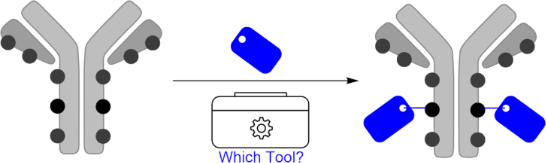
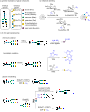
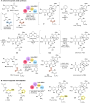
- branches: metabolic and in vitro glycoengineering. Metabolic glycoengineering introduces a non-natural sugar precursor, such as Ac4GlcNAz (34), Ac4ManNAz (35) and Ac4GalNAz (36, Scheme 12b) into living cells. These analogues enter the cellular glycosylation pathway, thereby incorporating azide motifs into
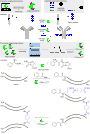
- of azido-carrying nucleotide sugar analogues (UDP-GalNAz), thereby introducing the bioorthogonal handle on the glycan [131][132]. Similarly, sialyltransferases, featuring remarkable substrate promiscuity, have also been exploited to install non-natural sugars on glycans [115][116][117][118][119








Design, synthesis and biological evaluation of 2,5-diaryloxazolo[4,5-d]pyrimidin-7-ylamines as selective cytotoxic agents against HeLa cells
Beilstein J. Org. Chem. 2026, 22, 390–398, doi:10.3762/bjoc.22.27

- K562 and EC109 cells (IC50 > 12 mM). In A549 and HepG2 cells, cytisine exhibited activity, with IC50 values of 4.40 ± 1.70 mM and 5.92 ± 2.77 mM, respectively [6]. Heterocycle hybrids with sugar moieties have shown selective cytotoxicity against liver cancer (HepG2 – IC50 values of 1.32–9.43 µM) and


Chemoenzymatic synthesis of the cardenolide rhodexin A and its aglycone sarmentogenin
Beilstein J. Org. Chem. 2025, 21, 2637–2644, doi:10.3762/bjoc.21.204
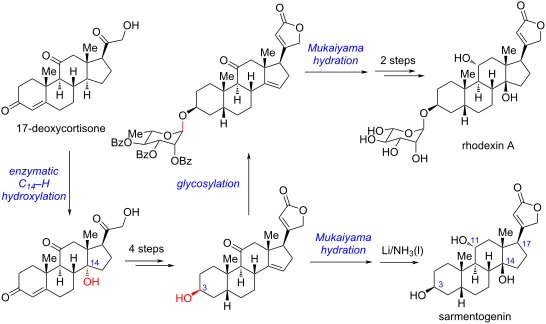
- oleandrin have been used in clinical treatment for heart failure for a long time (Figure 1) [3][4][5]. The bioactivity of CGs is primarily determined by the lactone ring, with the sugar residue critically influencing their toxicological profile [6]. This is evident as the free aglycone facilitates
- key C14 β-hydroxylated intermediate 16 in 53% yield, accompanied by the separable C14 α-OH epimer in 27% yield. Later on, we assumed to achieve the deprotection of the sugar motif and the reduction of the C11 carbonyl of 16 simultaneously under Li–NH3(l) conditions, which would directly afford the
- final natural product rhodexin A in one step. Just as expected, when directly subjecting 16 to the abovementioned conditions, rhodexin A was indeed afforded albeit in only 10% yield. The required longer reaction time and elevated temperature to achieve deprotection of the sugar motif resulted in an over



The intramolecular stabilizing effects of O-benzoyl substituents as a driving force of the acid-promoted pyranoside-into-furanoside rearrangement
Beilstein J. Org. Chem. 2025, 21, 2456–2464, doi:10.3762/bjoc.21.187
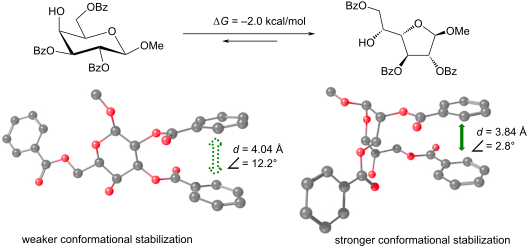
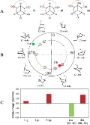
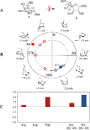
- resulting Gibbs energies relative to gt (bars 1-tg, 1-gt, 1-gg). In comparison to pyranosides, furanosides possess more degrees of flexibility. The major difference is of course their potency to adopt a variety of conformations of the sugar ring [38]. This is commonly represented as a pseudorotation ring




Halogenated butyrolactones from the biomass-derived synthon levoglucosenone
Beilstein J. Org. Chem. 2025, 21, 2297–2301, doi:10.3762/bjoc.21.175
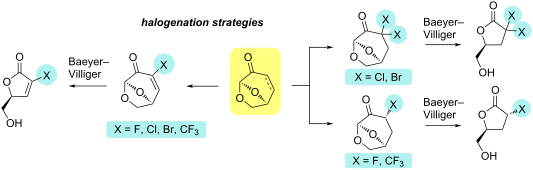
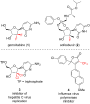
- infections. The preparation of 2-halo-2-deoxy-ᴅ-ribose derivatives can be achieved via the modification of the parent sugar [9][10] or chain-elongation strategies from lower homologues. For example, Castro and co-workers have demonstrated the synthesis of a dichlorinated 2-deoxypentose via the addition of




C2 to C6 biobased carbonyl platforms for fine chemistry
Beilstein J. Org. Chem. 2025, 21, 2103–2172, doi:10.3762/bjoc.21.165
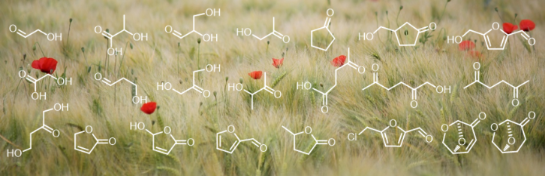
- for the synthesis of GA and GCA using activated carbon deposited Cu catalysts and different biomass-derived polyols as feedstock with exceptionally high atom utilization ≈93% and up to 90% yield (Scheme 1) [28]. Glycolaldehyde (GCA), the smallest sugar molecule, was used by Sels et al. for the
- , pharmaceuticals or high added value chemicals [215][216][217][218][219][220][221][222][223]. Its first commercial production began in the 1940s. Its preparation from biomass involves several different possible pathways. One is the C5 sugar route starting from xylose as an example, relying on acid hydrolysis of


Bioinspired total syntheses of natural products: a personal adventure
Beilstein J. Org. Chem. 2025, 21, 2048–2061, doi:10.3762/bjoc.21.160
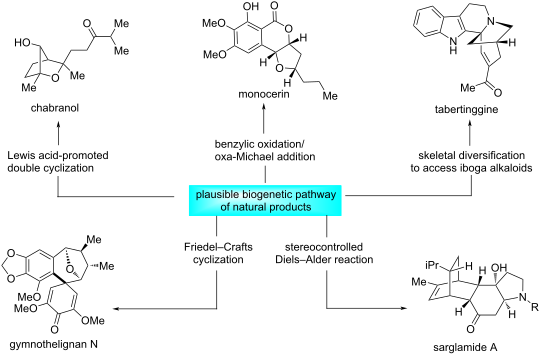
- in human history to obtain natural products and develop new applications. Traditionally, natural products are directly obtained from its natural source, such as sugar and vitamins. Since Wöhler’s historic success [1] in converting widely believed “inorganic” materials into the “organic” compound urea


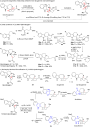
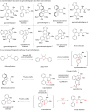

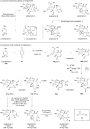
Approaches to stereoselective 1,1'-glycosylation
Beilstein J. Org. Chem. 2025, 21, 1700–1718, doi:10.3762/bjoc.21.133
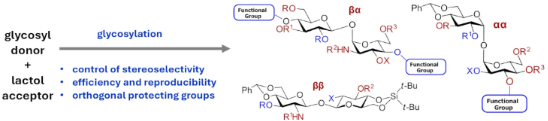
- synthesis of neotrehalosamines related to the sugar moiety of the nucleoside antibiotic tunicamycin was performed using benzoylated 2-(benzoyloxyimino)-protected GlcN bromide donor 5, which enabled 1,2-cis stereochemical control through the non-participating C-2 benzoyloxyimino group, leading to the
- involves the activation of an anhydro sugar glycosyl donor 129 by the "acidic OH group" of a glycosyl 1,2-diol acceptor (generated via activation with a borinic acid catalyst possessing sufficient Lewis acidity) [62][63]. Anomeric C2-OH-unprotected lactols 45 and 36 were subjected to glycosylation with
- of human galectins [118][119], while α,α-1,1'-linked disaccharides composed of a galactose moiety and a second pyranose with varying sugar configurations have been shown to inhibit Pseudomonas aeruginosa lectins LecA and LecB [120]. Thioglycosides can be synthesized using standard protocols


Orthogonal photoswitching of heterobivalent azobenzene glycoclusters: the effect of glycoligand orientation in bacterial adhesion
Beilstein J. Org. Chem. 2025, 21, 736–748, doi:10.3762/bjoc.21.57
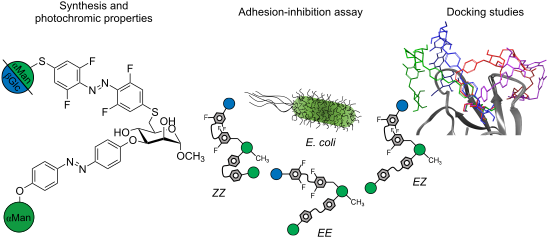
- diverse interactions with primary and secondary carbohydrate binding sites of the protein [13]. For example, when an α-ᴅ-mannopyranosyl (Man) and a β-ᴅ-glucopyranosyl (Glc) unit were conjugated such that the relative orientation of the two sugar portions is varied – be it on enantiomeric or regioisomeric
- proton of the terminal sugar units in the 1H NMR spectrum (Table 1 and Supporting Information File 1, Figures S8, S10, and S12). Irradiation with 365 nm light excites the π–π* band of the ortho-fluorinated S-azobenzene units (ABF4) of both 3 and 4 and the π–π* band of the O-azobenzene (AB) unit of 5
- to the O-azobenzene (AB) photoswitch. (Orthogonal) photoswitching alters the relative spatial orientation of the two sugar units. Glucose (Glc) moieties are colored in blue and mannose (Man) in green according to the symbol nomenclature for carbohydrates (SNFG) [29][30]. A: Wavelength-selective


Origami with small molecules: exploiting the C–F bond as a conformational tool
Beilstein J. Org. Chem. 2025, 21, 680–716, doi:10.3762/bjoc.21.54
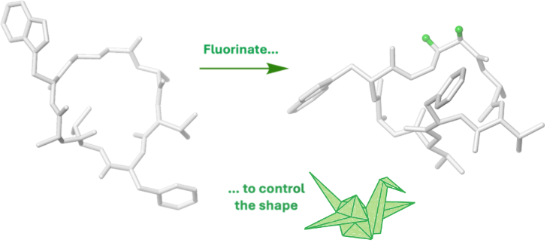
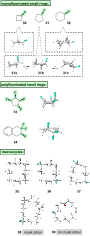
- recognition processes. Therefore, methods for controlling the conformations of sugars are likely to have diverse and valuable applications in biotechnology and medicine. The structure of a sugar molecule offers several potential locations where fluorine can be introduced. Typical patterns include the
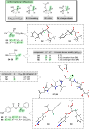
- envelope conformation in which the fluorinated carbon is projected above the ring plane, stabilised by dual σC–H → σ*C–F hyperconjugation [138]. Let us now consider ways in which fluorine can influence bond rotations outside the sugar ring (Figure 10). We will focus initially on the C-5–C-6 bond. In
- in which fluorine can control the rotation of the C-5–C-6 bond is seen when a C-6-fluorinated sugar is converted into an oxocarbenium ion (e.g., 73, Figure 10). The C-6–F bond of 73 preferentially orients over the sugar ring, due to a combination of electrostatic attraction between the partially



The effect of neighbouring group participation and possible long range remote group participation in O-glycosylation
Beilstein J. Org. Chem. 2025, 21, 369–406, doi:10.3762/bjoc.21.27
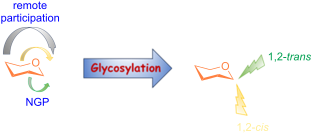
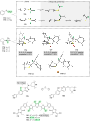
- C-2 position also renders neighbouring group assistance (Scheme 9) with the anomeric carbon thereby forming the acetoxonium intermediate complex 53. It significantly blocks the α-face of the sugar ring causing the acceptor to attack from the exposed β-face. Moreover, this protecting group is also
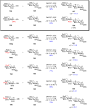
- in the subsequent nucleophilic attack by the acceptor [137]. This α-glycosyl triflate was readily converted to its skew-boat conformation 62 which led to the attack of the glycosyl acceptor 64 from the β-face of the sugar pyranoside ring exclusively to form the 1,2-trans glycoside 65. Thus, the N
- protecting groups in the C-2 position in glycosyl donors, on the elimination of the activated leaving group from the anomeric position, the flattened oxocarbenium ion formed causes the incoming nucleophilic acceptor to attack from either the β or the α-face of the sugar ring, thereby leading to the formation




Advances in the use of metal-free tetrapyrrolic macrocycles as catalysts
Beilstein J. Org. Chem. 2024, 20, 3085–3112, doi:10.3762/bjoc.20.257
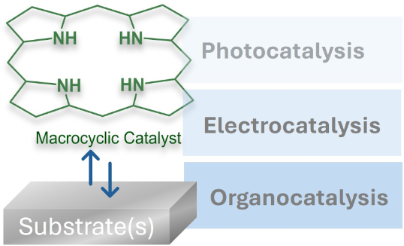
- other binding sites required for substrate binding and/or promotion of the catalytic activity. Past studies have shown that modifying the porphyrin core with urea functionalities and amino acid substituents leads to the formation of ureaporphyrins, which significantly enhance sugar binding in non-polar


Cyclodextrin-based rotaxanes for polymer materials: challenge on simultaneous realization of inexpensive production and defined structures
Beilstein J. Org. Chem. 2024, 20, 3026–3049, doi:10.3762/bjoc.20.252
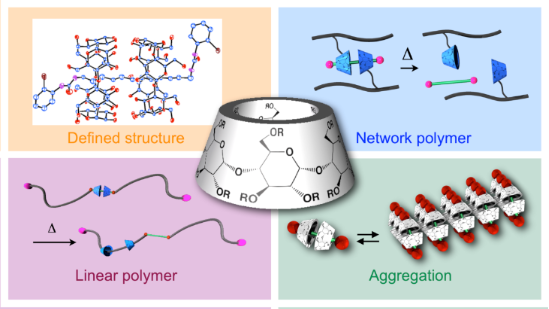
- Synthesis and structure of cyclodextrin-based (poly)rotaxanes CDs are cyclic sugar molecules in which multiple glucose units that are connected by α-1,4 bonds, e.g., α-CD, β-CD, and γ-CD (glucose-unit numbers 6, 7, and 8, respectively), are used for scientific studies and industrial productions (Figure 2






N-Glycosides of indigo, indirubin, and isoindigo: blue, red, and yellow sugars and their cancerostatic activity
Beilstein J. Org. Chem. 2024, 20, 2840–2869, doi:10.3762/bjoc.20.240
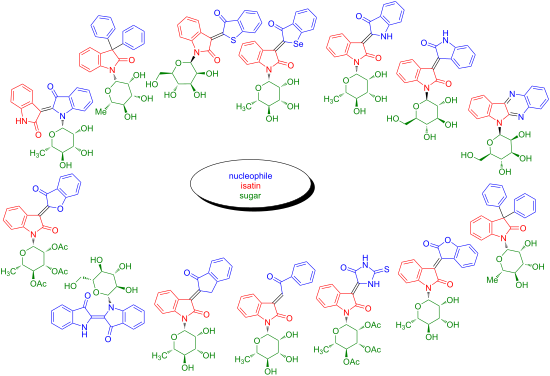
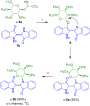
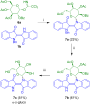
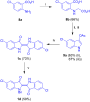
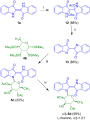
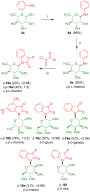
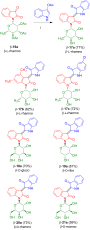
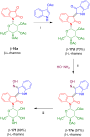
- containing the sugar moiety attached to the amine-type nitrogen are less stable than the corresponding compounds containing the sugar moiety attached to the amide-type nitrogen atom. Unfortunately, the synthesis of β-31a was not a general method for the synthesis of indirubin-N-glycosides. Analogues of











Computational toolbox for the analysis of protein–glycan interactions
Beilstein J. Org. Chem. 2024, 20, 2084–2107, doi:10.3762/bjoc.20.180
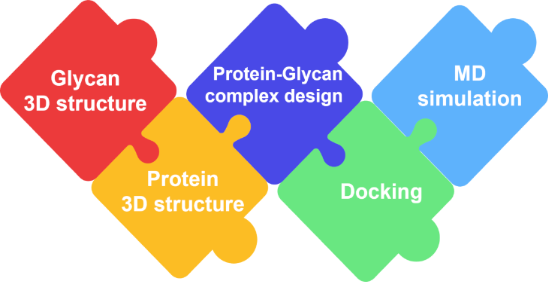
- , proteins, and nucleic acids. In humans and animals, they form the so-called glycocalyx, a protecting sugar coat decorating the cell surface and modulating a myriad of cell–cell interactions [1]. It is composed of branched or elongated glycan chains covalently linked to proteins or lipids, hereby
- in bacteria, which are able to use most of the mammalian sugar units to construct their glycoconjugates but, in addition, can also use a wide variety of particular, and potentially endless, monosaccharides that are instead not present in eukaryotes (Figure 2). This huge diversity and complexity
- able to add branching points and some sugar derivatisation, including methylation and acetylation. The user has also the possibility to choose the ring type and the anomeric configuration of each monosaccharide. Once the structure is complete, it is possible to download not only the generated .pdb


Multicomponent syntheses of pyrazoles via (3 + 2)-cyclocondensation and (3 + 2)-cycloaddition key steps
Beilstein J. Org. Chem. 2024, 20, 2024–2077, doi:10.3762/bjoc.20.178
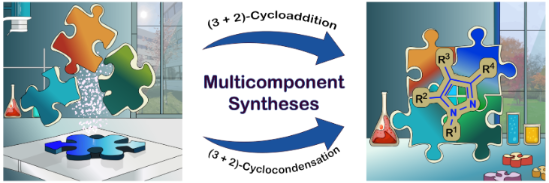
- solution and in the solid state [127]. Furthermore, even sugar-functionalized pyrazoles have been accessed by this approach [128], and it was readily implemented in a continuous flow reactor [129]. Besides traditional Sonogashira catalyst systems, highly reactive and reusable immobilized Pd-complexes, such




The Groebke–Blackburn–Bienaymé reaction in its maturity: innovation and improvements since its 21st birthday (2019–2023)
Beilstein J. Org. Chem. 2024, 20, 1839–1879, doi:10.3762/bjoc.20.162
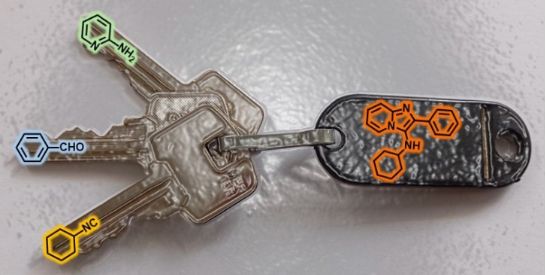
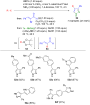
- the tolerability of a wide range of aldehydes, starting from one of the most used, benzaldehyde, passing through heteroaromatic and aliphatic structures with different substituents. In this context, some examples where the aldehyde functionality is incorporated into sugar derivatives, natural
- yields up to 87%. The use of sugar-derived building blocks has been reported by various authors. Prasad et al. studied the synthesis of 2-(β-ᴅ-glucopyranosyl)-3-N-alkylamino-1-azaindolizines 28 to get novel bioconjugates [38] and of 5-(3”-alkyl/arylamino-1”-azaindolizin-2”-yl)-2’-deoxyuridines 31 to
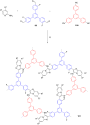
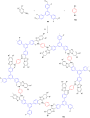
- potassium carbonate was almost quantitative (97–99% yield). It is worth mentioning that the GBB reaction starting from the deacetylated substrate also leads to good results (83–91% of yield), but the overall yield is lowered due to a sluggish deacetylation reaction of 29. Sugar-based aldehydes were employed






Chemo-enzymatic total synthesis: current approaches toward the integration of chemical and enzymatic transformations
Beilstein J. Org. Chem. 2024, 20, 1693–1712, doi:10.3762/bjoc.20.151
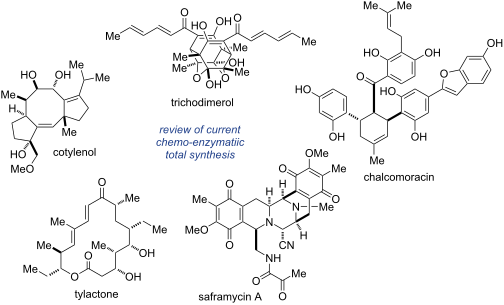
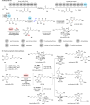
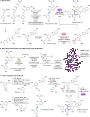
- considered a remarkable example of utilizing the complementarity between chemical and enzymatic transformations (Scheme 1 and Scheme 2). The cotylenin and fusicoccin families comprise structurally related diterpene glucosides with a 5/8/5 fused tricyclic aglycon and a sugar moiety linked through the C9




Photoswitchable glycoligands targeting Pseudomonas aeruginosa LecA
Beilstein J. Org. Chem. 2024, 20, 1486–1496, doi:10.3762/bjoc.20.132
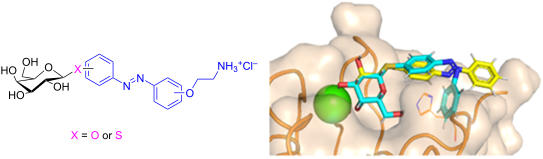
- formation of the 1,2-anhydro sugar through intramolecular attack of the 2-hydroxy group of the DMC-activated β-intermediate, followed by dihydroxyazobenzene attacking the anomeric center in an SN2 manner, or by direct nucleophilic SN2 attack on the DMC-activated α-intermediate, to produce the corresponding


Synthesis of 1,4-azaphosphinine nucleosides and evaluation as inhibitors of human cytidine deaminase and APOBEC3A
Beilstein J. Org. Chem. 2024, 20, 1088–1098, doi:10.3762/bjoc.20.96
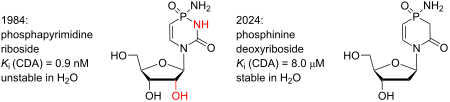
- ssDNA. Results and Discussion Synthesis of nucleosides It is more straightforward to start the synthesis of a modified nucleoside from the assembly of a nucleobase that can be coupled to the sugar afterwards using the Hilbert–Johnson reaction or a silyl variation of it as described in the literature [65
- C5 and C6 atoms (Figure 1). Towards this end, we developed a synthetic strategy for these nucleosides and identified that assembly of the nucleobase on the sugar was more viable than coupling of the final nucleobase to Hoffer’s chlorosugar (13). It is interesting that only the charge-neutral


Monitoring carbohydrate 3D structure quality with the Privateer database
Beilstein J. Org. Chem. 2024, 20, 931–939, doi:10.3762/bjoc.20.83
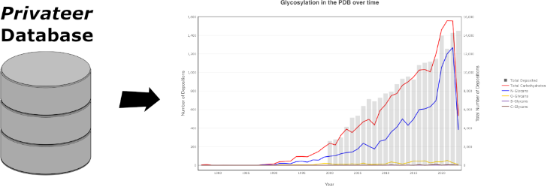
- sugar model [3], checks that structures match the nomenclature used for deposition in the PDB [14], compares glycan compositions to known structures as reported by glycomics (e.g., GlyConnect [19]) and glyco-informatics (e.g., GlyTouCan [20]) databases and repositories [15], and checks how close the
- nomenclature for glycan SVG, and an array of sugar entries. The validation data calculated by Privateer for each sugar entry is shown in Table 2, and that for each linkage is shown in Table 3. Visualising a validation report While the database is available on GitHub for programmatic access, viewing a
- available alongside the Privateer Web App [26], https://privateer.york.ac.uk/database. The first section of this visual report displays a global outlook on the validity of the model through two graphs. The first graph shows the conformational landscape for the pyranose sugars. For a sugar model to be deemed


Synthesis and properties of 6-alkynyl-5-aryluracils
Beilstein J. Org. Chem. 2024, 20, 898–911, doi:10.3762/bjoc.20.80
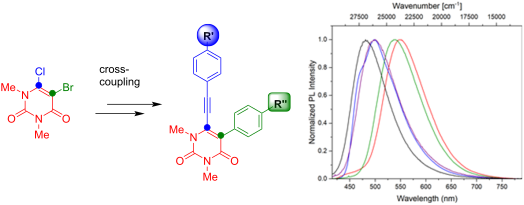
- proven medical potential of uracil, further investigation was carried out to fully utilize the synthetic possibilities uracil has to offer and to synthesize new drugs against existing or hitherto unknown targets. Moreover, studies have even shown that a sugar moiety is not always required to act against





Methodology for awakening the potential secondary metabolic capacity in actinomycetes
Beilstein J. Org. Chem. 2024, 20, 753–766, doi:10.3762/bjoc.20.69
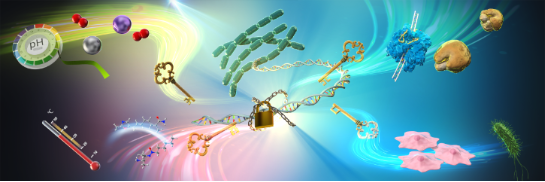
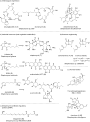
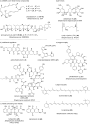
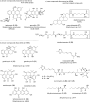
- higher yield of validamycin A (25) from Streptomyces hygroscopicus 5008 together with more rapid protein synthesis and sugar consumption by subjecting cultures to one or more NaOH shocks [66]. Ren et al. obtained enhanced ε-poly-ʟ-lysine (ε-PL, 26) production by acidic pH shock of Streptomyces sp. M-Z18


Chemoenzymatic synthesis of macrocyclic peptides and polyketides via thioesterase-catalyzed macrocyclization
Beilstein J. Org. Chem. 2024, 20, 721–733, doi:10.3762/bjoc.20.66
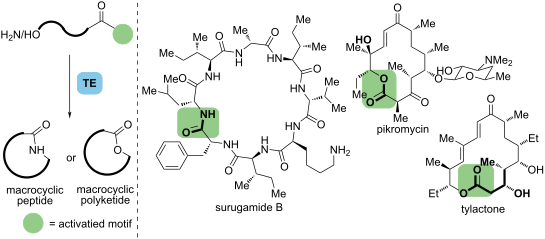
- , tylactone (39), and a dimethylamino sugar, which are synthetically challenging. Therefore, the synthesis and evaluation of tylosin-related macrolides are hot topics in medicinal chemistry [66][74]. With the experience in pikromycins synthesis, Sherman and co-workers investigated the capabilities of two


Isolation and structure determination of a new analog of polycavernosides from marine Okeania sp. cyanobacterium
Beilstein J. Org. Chem. 2024, 20, 645–652, doi:10.3762/bjoc.20.57
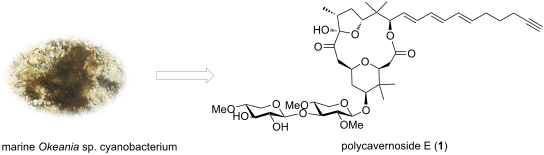
- HMBC, δH 3.64 (H-3’)/δC 103.0 (C-1”), indicated that these two sugar structures were connected through a glycosidic bond. The geometries of the two olefins at C-16 and C-20 were determined to be trans based on the large coupling constants, 3JH-16/H-17 15.0 Hz and 3JH-20/H-21 15.0 Hz, respectively. The





