Search results
Search for "umpolung" in Full Text gives 59 result(s) in Beilstein Journal of Organic Chemistry.
Reactivity umpolung of the cycloheptatriene core in hexa(methoxycarbonyl)cycloheptatriene
Beilstein J. Org. Chem. 2026, 22, 64–70, doi:10.3762/bjoc.22.2
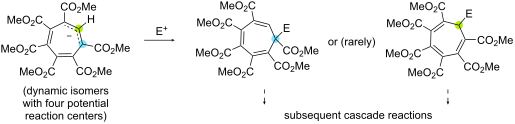
- , Russian Federation 10.3762/bjoc.22.2 Abstract A reactivity umpolung approach for the derivatization of cycloheptatrienes was extended to hexa(methoxycarbonyl)cycloheptatriene, which forms the corresponding anion reactive towards electrophiles. Despite the presence of four potential reactive sites, the
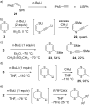
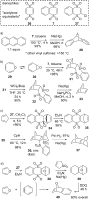
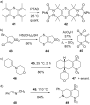
- , include the formation of norcaradienes, dihydroindazoles, a tetracyclodecene and a hydrazonocycloheptatriene derivative. Keywords: azo shift; cascade reactions; cycloheptatriene; relief of antiaromaticity; umpolung; Introduction Reactivity umpolung [1] is a synthetic concept in organic chemistry that
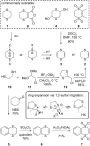
- ]. Other methods necessitate the umpolung modification and the reestablishment of the original group in separate reaction steps [3][4]. Additionally, there are approaches that represent only conceptual umpolung, utilizing synthetic equivalents that are not directly related to the target functional group


Visible-light-driven NHC and organophotoredox dual catalysis for the synthesis of carbonyl compounds
Beilstein J. Org. Chem. 2025, 21, 2584–2603, doi:10.3762/bjoc.21.200
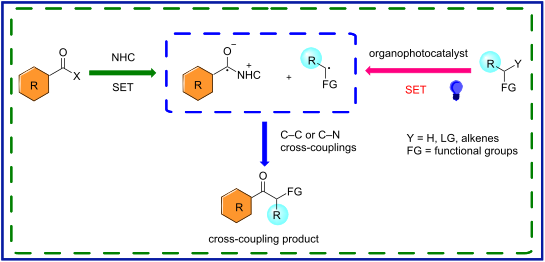
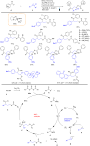
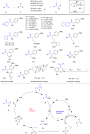
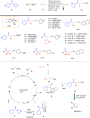
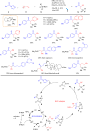
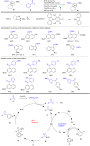
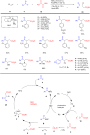
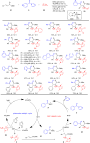
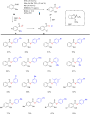
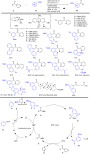
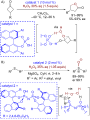
- presence of NHC (10 mol %) and 4CzIPN (2 mol %) and Na2HPO4 in DMSO at rt for 10–24 h. The key to success lies in the photocatalytic dual system, which combines two organocatalysts (NHC/4CzIPN) and visible light irradiation to permit a novel umpolung single-electron reduction of respective imino ester 2
- development, mechanistic understanding, and obtained results are expected to expand the applicability of NHC-photoredox dual or triple catalysis, enabling the efficient and eco-friendly synthesis of increasingly complex molecular architectures. NHC-catalyzed umpolung strategy for the metal-free synthesis of





Pathway economy in cyclization of 1,n-enynes
Beilstein J. Org. Chem. 2025, 21, 2260–2282, doi:10.3762/bjoc.21.173
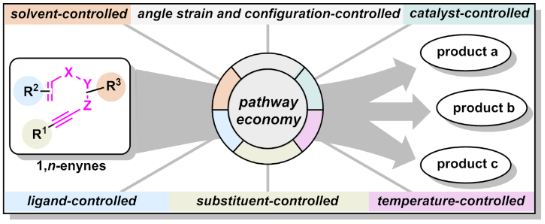
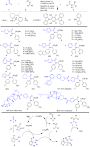
- conditions, the authors attenuated the silver catalyst’s activity through ligand addition. This allowed for a umpolung addition of the substrate 87, affording six-membered spirocyclic intermediate 88. When the NFSI was used as ligand without nucleophiles, the tricyclic azepinoindole 89 was obtained via a


Aryl iodane-induced cascade arylation–1,2-silyl shift–heterocyclization of propargylsilanes under copper catalysis
Beilstein J. Org. Chem. 2025, 21, 1984–1994, doi:10.3762/bjoc.21.154
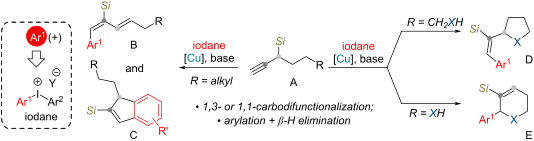
- the reagents of choice for arylation reactions, where an umpolung of reactivity is required [1]. Arylations employing diaryl-λ3-iodanes can be performed under metal-free [2] or metal-catalyzed conditions. For alkyne arylations [Cu] [3] or [Pd] catalysis [4][5][6] is typically employed. Internal


Photochemical reduction of acylimidazolium salts
Beilstein J. Org. Chem. 2025, 21, 1973–1983, doi:10.3762/bjoc.21.153
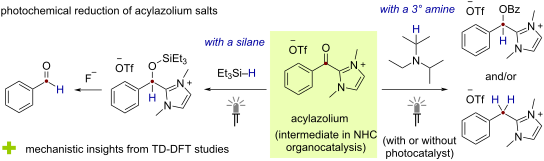
- transformations of carbonyl substrates with umpolung processes of aldehydes such as the benzoin condensation and Stetter reaction being particularly well studied [4][5][6][7][8][9][10][11]. In these processes, addition of the NHC to the aldehyde followed by proton transfer generates the enamine-like Breslow


Photocatalyzed elaboration of antibody-based bioconjugates
Beilstein J. Org. Chem. 2025, 21, 616–629, doi:10.3762/bjoc.21.49
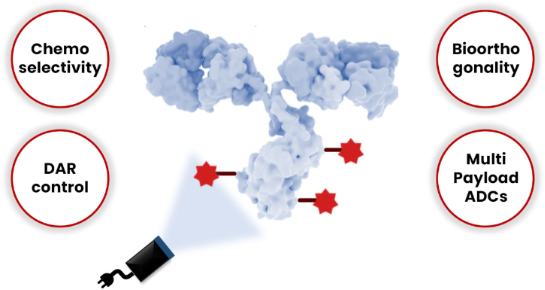
- 2010s that the first publications on the subject emerged. An overview of reported photoredox approaches for the functionalization of antibodies is outlined below. Histidine In 2021, the group of Sato developed a selective functionalization method for histidine using an umpolung approach based on singlet


Reactivity of hypervalent iodine(III) reagents bearing a benzylamine with sulfenate salts
Beilstein J. Org. Chem. 2024, 20, 3281–3289, doi:10.3762/bjoc.20.272
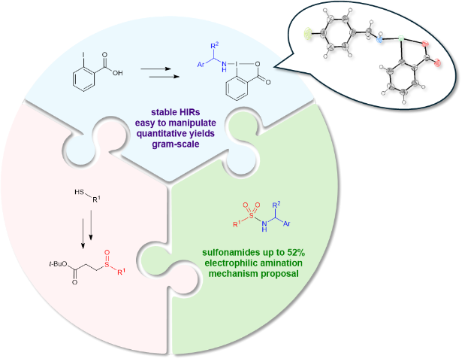
- in electrophilic transfer reactions, with emphasis on umpolung reactivity of usually nucleophilic functional groups. Thus constituting a powerful synthetic tool, opening room for new synthetic disconnections [10]. Within the benziodoxol(on)e class, a range of HIRs featuring nitrogen-containing groups
- a central theme of the work carried out by our research group in recent years, focusing on the formation of the S–N bond by applying the umpolung reactivity of HIRs, in particular in the preparation of sulfonamides and sulfonyl hydrazides [22][23]. In both approaches, a sulfonyl-containing
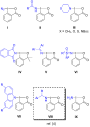
- transformations. The umpolung reactivity provided by these iodine reagents enables chemical transformations that would typically demand less environmentally friendly conditions. The investigations conducted in this work confirmed the ability of the novel hypervalent iodine(III) reagents 2 to transfer their amine



Divergent role of PIDA and PIFA in the AlX3 (X = Cl, Br) halogenation of 2-naphthol: a mechanistic study
Beilstein J. Org. Chem. 2024, 20, 1580–1589, doi:10.3762/bjoc.20.141
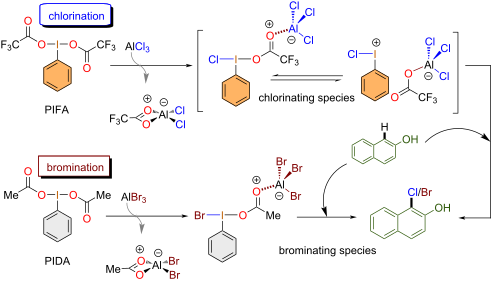
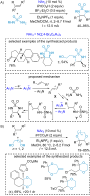
- generated in situ simply by mixing PIFA with a Lewis acid, in this case AlCl3. The importance of this protocol arises from the oxidation of an AlCl3-based chlorine atom, which is an available and cheap reagent. Then it is used as an electrophile source in the chlorination process with an umpolung reactivity


Asymmetric synthesis of a stereopentade fragment toward latrunculins
Beilstein J. Org. Chem. 2023, 19, 428–433, doi:10.3762/bjoc.19.32
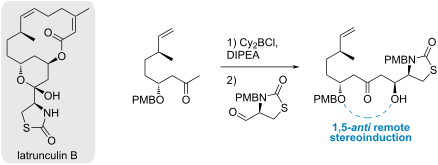
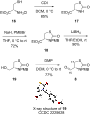
- . Unfortunately, it was not possible to set up an appropriate nucleophile through the umpolung of aldehyde 8 to react with this epoxide, which led us to envisage the following aldol strategy through ketone 15. Attempts of Wacker reactions to produce 15 were unsuccessful on 12, presumably due to a competition




1,4-Dithianes: attractive C2-building blocks for the synthesis of complex molecular architectures
Beilstein J. Org. Chem. 2023, 19, 115–132, doi:10.3762/bjoc.19.12
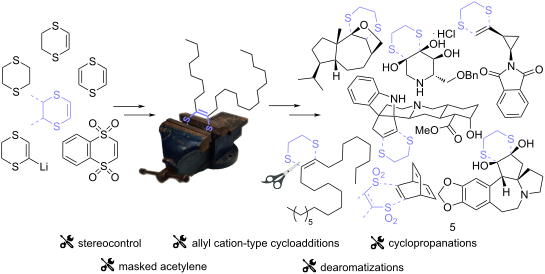
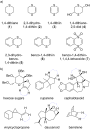
- 1,3-Dithianes are text book examples of versatile organic synthesis building blocks. They are familiar carbonyl protecting groups, but are more commonly known as ‘umpolung’ reagents, or acyl anion equivalents [1][2][3][4][5][6]. This is because they can be readily metalated and alkylated, allowing the
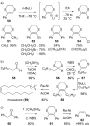
- synthesis starts from a carbonyl compound, wherein an aldehyde can undergo ‘umpolung’ into a cis-vinyl anion equivalent via a 1,3-dithiolane-to-1,4-dithiane rearrangement (Scheme 10b). The potential of the method is demonstrated by the synthesis of (Z)-9-tricosene or muscalure (59), which is the natural sex









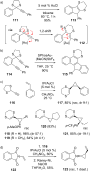

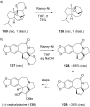

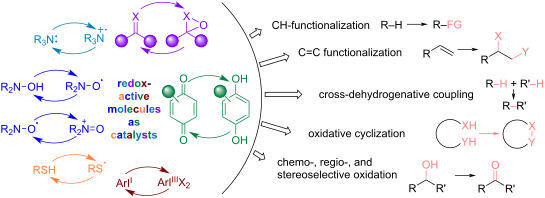
Redox-active molecules as organocatalysts for selective oxidative transformations – an unperceived organocatalysis field
Beilstein J. Org. Chem. 2022, 18, 1672–1695, doi:10.3762/bjoc.18.179
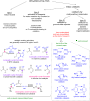
- a nucleophilic reacting center. In addition to umpolung reactions with electrophiles, Breslow intermediates can undergo oxidation with the formation of radical cations or electrophilic acylazolium cations. The acylazolium cation in turn can undergo nucleophilic attack resulting in C–O and C–N











Derivatives of benzo-1,4-thiazine-3-carboxylic acid and the corresponding amino acid conjugates
Beilstein J. Org. Chem. 2022, 18, 1195–1202, doi:10.3762/bjoc.18.124
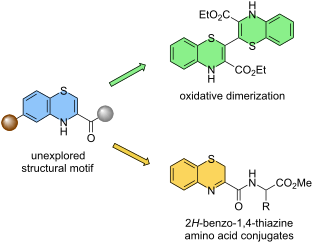
- intramolecular amination of aryl bromides [27]. Recently, Nguyen and Retailleau introduced a TFA-catalyzed umpolung strategy with 2-aminothiophenols, preparing several 2H-benzo-1,4-thiazine derivatives 5 in high yield [28]. 3-Phenyl-2H-benzo-1,4-thiazine, an earlier representative of this family, was found to
First example of organocatalysis by cathodic N-heterocyclic carbene generation and accumulation using a divided electrochemical flow cell
Beilstein J. Org. Chem. 2022, 18, 979–990, doi:10.3762/bjoc.18.98
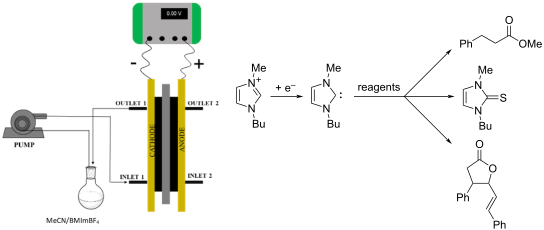
- used as organocatalyst in two classical umpolung reactions of cinnamaldehyde: its cyclodimerization and its oxidative esterification. Keywords: Breslow intermediate; cathodic reduction; flow electrochemistry; N-heterocyclic carbene; oxidative esterification; Introduction Ionic liquids (ILs) are well
- atom is reversed (umpolung) from electrophilic to nucleophilic (Scheme 3). This approach can be exploited in many organic reactions, such as: the benzoin condensation [16][17], esterification and amidation of benzaldehydes and cinnamaldehydes [18][19], synthesis of γ-butyrolactones [20], synthesis of
- electrochemically generated NHC into the corresponding thione by its reaction with elemental sulfur. Umpolung of the aldehyde carbonyl carbon atom. Formation of the Breslow intermediate using NHCs. Electrogenerated NHC-catalyzed self-annulation of cinnamaldehyde. Byproduct obtained from the reaction between


Unexpected chiral vicinal tetrasubstituted diamines via borylcopper-mediated homocoupling of isatin imines
Beilstein J. Org. Chem. 2022, 18, 303–308, doi:10.3762/bjoc.18.34
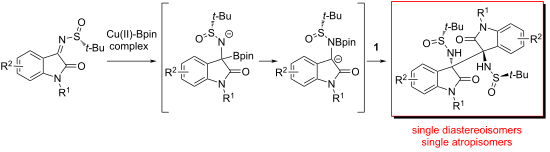
- products, besides relying on performed control experiments, we also refer to the underdeveloped umpolung reactions of imines, considering, in particular, the copper-catalyzed process reported quite recently by Zhang, Hou and co-workers [29]. In our case, we presume the possible reaction mechanism shown in
- intermediate spontaneously turns into the carbanion C, thus realizing the imine umpolung and allowing the cross-coupling reaction with the remaining electrophilic ketimine 1. The complete diastereoselectivity would arise from the mutual approach of the two oxindole nuclei from the less hindered side, that is


Advances in mercury(II)-salt-mediated cyclization reactions of unsaturated bonds
Beilstein J. Org. Chem. 2021, 17, 2348–2376, doi:10.3762/bjoc.17.153
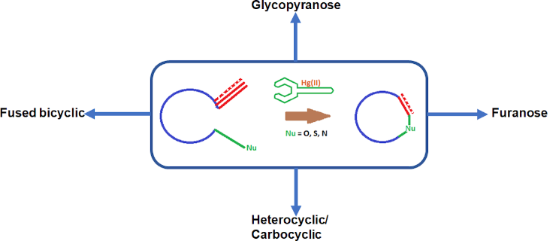
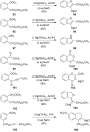
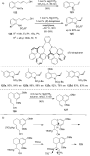
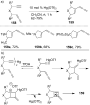
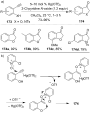
- temperature. It was an example of cycloisomerization of 2-ethynylaniline derivatives utilizing mild reaction conditions (Scheme 50) [110]. Rong et al. had demonstrated the Hg(II)-salt-catalyzed enolate umpolung reaction for the efficient synthesis of various 3-indolinones and 3-coumaranones 174. They had












Electron-rich triarylphosphines as nucleophilic catalysts for oxa-Michael reactions
Beilstein J. Org. Chem. 2021, 17, 1689–1697, doi:10.3762/bjoc.17.117
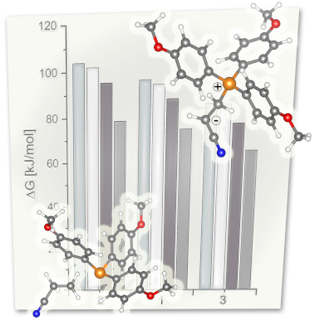
- reactions [17], or in umpolung [3 + 2] annulations [18]. In all these cases, the reactions were performed without protective gas indicating that electronically modified arylphosphines tolerate the presence of oxygen. Herein we wish to report the scope of three different triarylphosphine catalysts in the oxa


Benzothiazolium salts as reagents for the deoxygenative perfluoroalkylthiolation of alcohols
Beilstein J. Org. Chem. 2021, 17, 83–88, doi:10.3762/bjoc.17.8

- of an alkyl electrophile has been reported to date [35]. This process used an umpolung strategy with activation of typically electrophilic perfluoroalkylsulfenamide reagents by iodide, releasing −SC2F5 or −SC3F7 anions in situ, which could then react with a selection of alkyl halides (Scheme 1b). In


Metal-free nucleophilic trifluoromethylselenolation via an iodide-mediated umpolung reactivity of trifluoromethylselenotoluenesulfonate
Beilstein J. Org. Chem. 2020, 16, 3032–3037, doi:10.3762/bjoc.16.252
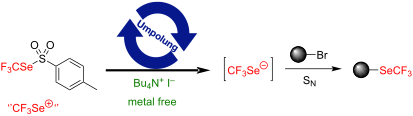
- ). Even though this umpolung strategy is efficient, the use of the sensitive TDAE, a strong reducing agent, could constitute a drawback for some applications. Consequently, we decided to develop a new umpolung method in non-reductive conditions. Results and Discussion A few years ago, we have demonstrated
- reagent able to perform electrophilic, radical or nucleophilic reactions depending on the conditions. The iodide-mediated, metal-free method is complementary to the previous one using TDAE. Thus, the umpolung reactivity of trifluoromethylselenotoluenesulfonate can be performed under reductive or oxidative


Bifurcated synthesis of methylene-lactone- and methylene-lactam-fused spirolactams via electrophilic amide allylation of γ-phenylthio-functionalized γ-lactams
Beilstein J. Org. Chem. 2020, 16, 2769–2775, doi:10.3762/bjoc.16.227
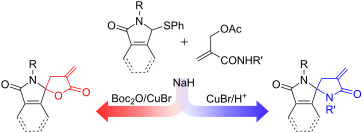
- methylene-lactams (C) through zinc-catalyzed addition to N-carbonyl imides [13][14][16]. Meanwhile, we also developed an umpolung electrophilic allylation of 3-heterosubstituted oxindole D for the synthesis of lactam analog of A (Scheme 1c) [17]. The oxindole D readily reacted with 2-(acetoxy)methyl
- acrylamides 1 in the presence of a catalytic amount of Pd(PPh3)4 to give the corresponding adducts which could be delivered into an methylene-lactam-fused oxindole. On the basis of this umpolung strategy, spirolactams 4 and 5, which are N-alkyl or N-phenyl-substituted analogs of B and C and unable to be

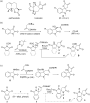


When metal-catalyzed C–H functionalization meets visible-light photocatalysis
Beilstein J. Org. Chem. 2020, 16, 1754–1804, doi:10.3762/bjoc.16.147
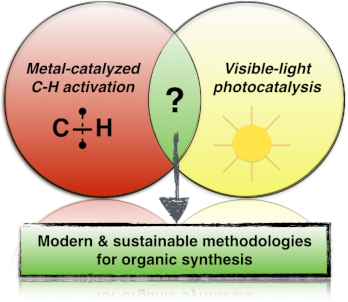
- catalysts and further cross-coupling-type reactivity provides a unique tool to solve this critical issue. Besides, dual catalytic systems enable also umpolung-type reactivity, thus promoting unique bond-forming reactions, inaccessible via standard approaches due to the polarity mismatch. Finally, the


Distinctive reactivity of N-benzylidene-[1,1'-biphenyl]-2-amines under photoredox conditions
Beilstein J. Org. Chem. 2020, 16, 1335–1342, doi:10.3762/bjoc.16.114
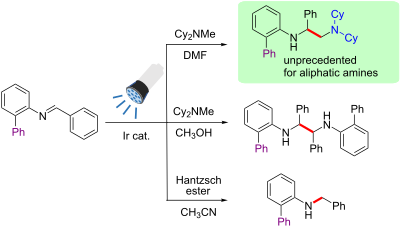
- ]. Among these diverse applications, the Rueping group has reported excellent examples of the reductive umpolung homocoupling of imines and heterocoupling with α-amino radicals for the synthesis of symmetrical and unsymmetrical vicinal diamines (Scheme 1b) [23][26]. Notably, 1,2-diamines have widespread

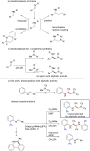


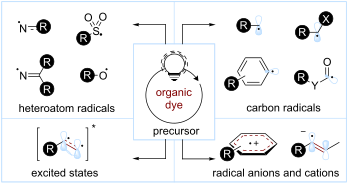
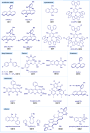
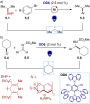
Photocatalysis with organic dyes: facile access to reactive intermediates for synthesis
Beilstein J. Org. Chem. 2020, 16, 1163–1187, doi:10.3762/bjoc.16.103





Recent advances in Cu-catalyzed C(sp3)–Si and C(sp3)–B bond formation
Beilstein J. Org. Chem. 2020, 16, 691–737, doi:10.3762/bjoc.16.67
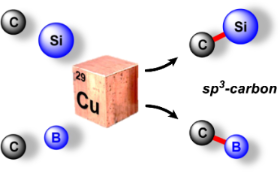
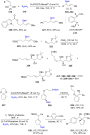
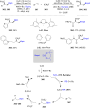
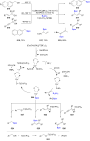
- )-(DTBM)-Segphos as the active catalyst in THF for the formation of chiral, nonracemic α-alkoxyorganoboronate esters (up to 99% ee; 454–457). MeOH was used as the proton source. Further functionalization can be considered as an umpolung pathway for the formation of enantioenriched tertiary alcohols






Allylic cross-coupling using aromatic aldehydes as α-alkoxyalkyl anions
Beilstein J. Org. Chem. 2020, 16, 185–189, doi:10.3762/bjoc.16.21

- summary, we developed an umpolung strategy for catalytically formed α-alkoxyalkyl anions from aromatic aldehydes for the use in allylic cross-coupling reactions. The synergistic palladium/copper-catalyzed reaction of aromatic aldehydes, allylic carbonates, and a silylboronate delivered the homoallylic


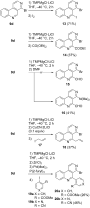
Functionalization of 4-bromobenzo[c][2,7]naphthyridine via regioselective direct ring metalation. A novel approach to analogues of pyridoacridine alkaloids
Beilstein J. Org. Chem. 2019, 15, 2304–2310, doi:10.3762/bjoc.15.222
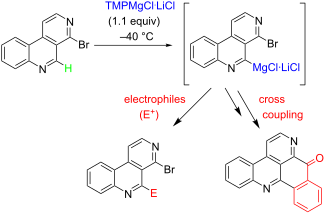
- , phenolates), acyl anions (generated by umpolung of aldehydes with imidazolium salts) and by palladium-catalyzed cross-coupling reactions (Suzuki, Stille) [10]. A related Stille cross coupling of a benzo[c][2,7]naphthyridine bearing a triflate group at C-5 gave an intermediate for the total synthesis of