


Search results
Search for "π-conjugation" in Full Text gives 77 result(s) in Beilstein Journal of Organic Chemistry.
Synthesis, structure, and properties of switchable cross-conjugated 1,4-diaryl-1,3-butadiynes based on 1,8-bis(dimethylamino)naphthalene
Beilstein J. Org. Chem. 2023, 19, 674–686, doi:10.3762/bjoc.19.49
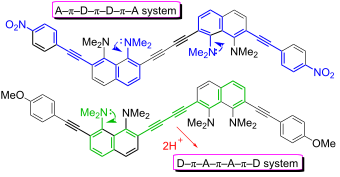
- the extent of π-conjugation and the efficiency of particular donor–acceptor conjugation path in these new compounds. X-ray structures and absorption spectra of doubly protonated tetrafluoroborate salts of the oligomers are also discussed. Keywords: 1,8-bis(dimethylamino)naphthalene; cross-conjugated
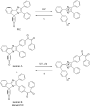
- which although conjugated to a third unsaturated center are not conjugated to each other” [16]. It is easy to see that there are two π-conjugation paths in molecules 5: a donor–acceptor conjugation path (Figure 2, highlighted in blue) and the π-conjugation of naphthalene rings through a butadiyne linker
- , Figure 9). However, unlike salts 11a,c,d, methoxy derivative 11b demonstrates end absorption up to 415 nm and, thus, the lowest optical band gap in the series (2.99 eV). Evidently, protonation of 5b gives rise to a push–pull D–π–A–π–A–π–D system, in which the π-conjugation between the donating



Naphthalimide-phenothiazine dyads: effect of conformational flexibility and matching of the energy of the charge-transfer state and the localized triplet excited state on the thermally activated delayed fluorescence
Beilstein J. Org. Chem. 2022, 18, 1435–1453, doi:10.3762/bjoc.18.149
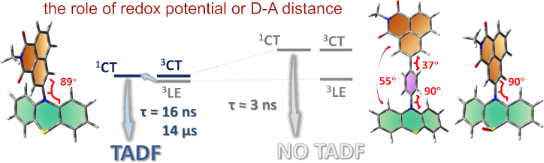
- ). For NI-Ph-PTZ, the NI•− absorption bands in the 350–600 nm range are less resolved than for NI-PTZ. This likely comes from the effect of the π-conjugation of the phenyl ring with the NI moiety in NI-Ph-PTZ. In contrast, the PTZ•+ absorption band of NI-Ph-PTZ resembles the one of NI-PTZ, indicating
Introducing a new 7-ring fused diindenone-dithieno[3,2-b:2',3'-d]thiophene unit as a promising component for organic semiconductor materials
Beilstein J. Org. Chem. 2022, 18, 944–955, doi:10.3762/bjoc.18.94
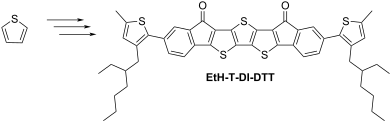
- , which extends the degree of π-conjugation [1]. In this way, the HOMO–LUMO gap can be narrowed [2]. Low HOMO–LUMO gaps are desirable for organic solar cells as the maximum photoflux density of the sun is at ca. 700 nm, corresponding to 1.77 eV [3]. However, fused systems have the drawback of being prone


Thiophene/selenophene-based S-shaped double helicenes: regioselective synthesis and structures
Beilstein J. Org. Chem. 2022, 18, 809–817, doi:10.3762/bjoc.18.81
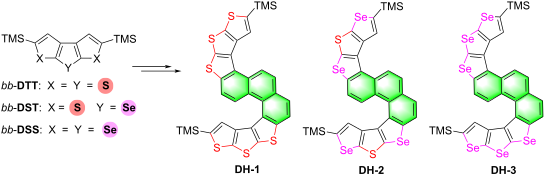
- ; selenophene; thiophene; Introduction Given their esthetically pleasing helical structures, inherent helical chirality, and extended π-conjugation, helicenes have attracted extensive research attention. Helicenes are generally divided into carbohelicenes and heterohelicenes. The rapid development of


Comparative study of thermally activated delayed fluorescent properties of donor–acceptor and donor–acceptor–donor architectures based on phenoxazine and dibenzo[a,j]phenazine
Beilstein J. Org. Chem. 2022, 18, 459–468, doi:10.3762/bjoc.18.48
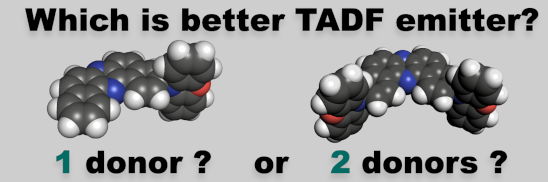
- -type compound (λPL = 521 nm for POZ-DBPHZ) in cyclohexane. These data indicate that the effective length of π-conjugation is not affected by the number of donors, probably due to the right D–A dihedral angle for both compounds in the ground state. In contrary, the slight blue-shift of the PL spectra of


Efficient synthesis of ethyl 2-(oxazolin-2-yl)alkanoates via ethoxycarbonylketene-induced electrophilic ring expansion of aziridines
Beilstein J. Org. Chem. 2022, 18, 70–76, doi:10.3762/bjoc.18.6
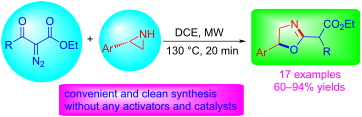
- p–π conjugation. This stabilization is not possible with alkyl groups, explaining why 2-alkylaziridines did not generate the corresponding products. Intermediates C undergo an intramolecular nucleophilic attack to yield ethyl (oxazolidin-2-ylidene)alkanoates D, which further isomerize to more stable


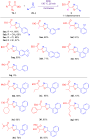


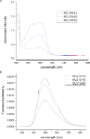
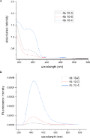
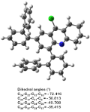
Synthesis and investigation on optical and electrochemical properties of 2,4-diaryl-9-chloro-5,6,7,8-tetrahydroacridines
Beilstein J. Org. Chem. 2021, 17, 2450–2461, doi:10.3762/bjoc.17.162

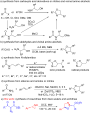
- 3,5-dibromoanthranilic acid (1) [61] with cyclohexanone in POCl3 through an adapted reported procedure [62] (Scheme 1). With precursor 2 in hand, we intended to expand the π-conjugation of the tetrahydroacridine core by adding diversely substituted aryl groups using the Suzuki–Miyaura cross-coupling






Chemical syntheses and salient features of azulene-containing homo- and copolymers
Beilstein J. Org. Chem. 2021, 17, 2164–2185, doi:10.3762/bjoc.17.139
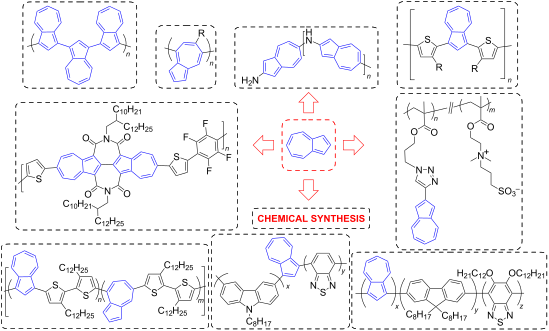
- stability as well. The absorption maxima displayed by polymer 18 (409 nm) in dichloromethane solution was comparable to the above-discussed 1,3-polyazulene 5 (404 nm), however, the long alkyl substituents present at the 6-position of 19 and 20 were disrupting the effective π-conjugation along the polymer





Cationic oligonucleotide derivatives and conjugates: A favorable approach for enhanced DNA and RNA targeting oligonucleotides
Beilstein J. Org. Chem. 2021, 17, 1828–1848, doi:10.3762/bjoc.17.125
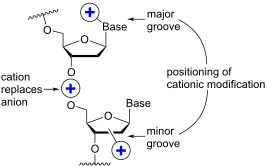
- better hybridization properties than LNA-thymidine; however, only modification 22 gave significant increases in Tm relative to modification 19 used as control. This finding was ascribed to both the extended π-conjugation of the alkynyl-functionalized nucleobase and stabilizing electrostatic interactions


2,4-Bis(arylethynyl)-9-chloro-5,6,7,8-tetrahydroacridines: synthesis and photophysical properties
Beilstein J. Org. Chem. 2021, 17, 1629–1640, doi:10.3762/bjoc.17.115
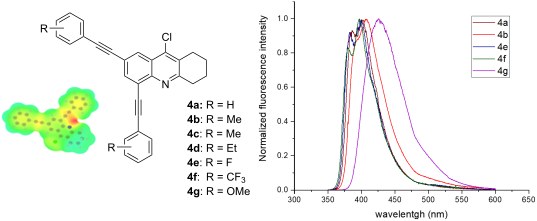
- catalysis. With this precursor in hand, we intended to expand the π-conjugation by introducing two arylethynyl groups by Sonogashira reactions [66][67][68][69]. For the optimization, we studied the reaction of 2 with phenylacetylene (3a) and we obtained the desired product 4a in up to 72% as best yield
- )-9-chloro-5,6,7,8-tetrahydroacridine derivatives via a double Sonogashira cross-coupling method. The arylethynyl groups expand the π-conjugation of the tetrahydroacridine core. The substituents located at the aryl group influenced the photophysical properties of the prepared molecules. In particular


Recent advances in the application of isoindigo derivatives in materials chemistry
Beilstein J. Org. Chem. 2021, 17, 1533–1564, doi:10.3762/bjoc.17.111
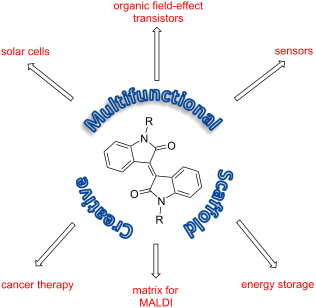
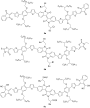
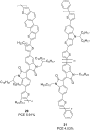
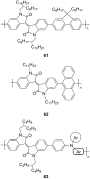
- ][103][104][105]. Thus, two polymers 56 were obtained in which isoindigo fragments are condensed on the indacenedione scaffold [102]. Despite the presence of an extended π-conjugation system, which determines the ambipolar properties of a transistor based on these polymers, the charge mobility values
- polymers for OFETs. Isoindigoid homopolymers with differing rigidity. Isoindigo-based materials with extended π-conjugation. Poly(isoindigothiophene) compounds as sensors for ammonia. Sensor devices based on poly(isoindigoaryl) compounds. Isoindigo polymers for miscellaneous applications. Mono-, rod-like






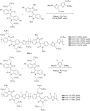


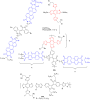


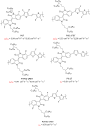


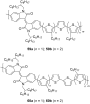


Styryl-based new organic chromophores bearing free amino and azomethine groups: synthesis, photophysical, NLO, and thermal properties
Beilstein J. Org. Chem. 2020, 16, 2282–2296, doi:10.3762/bjoc.16.189

- electron-accepting group coupled with various donors connected via a π-conjugation bridge [31][32][33]. Such dyes offer good NLO characteristics when compared to Disperse Red 1 as well as remarkable thermal stabilities with dissociation temperatures up to 300 °C [31][32]. Schiff bases containing an
- organic NLO chromophore is related to the presence of donor (D) and acceptor (A) groups linked through a π-conjugation path and is characterized by a large first-order hyperpolarizability value (β). However, a small energy gap between the HOMO and the LUMO (Egap) is an important indicator for high NLO


Synthetic approaches to bowl-shaped π-conjugated sumanene and its congeners
Beilstein J. Org. Chem. 2020, 16, 2212–2259, doi:10.3762/bjoc.16.186
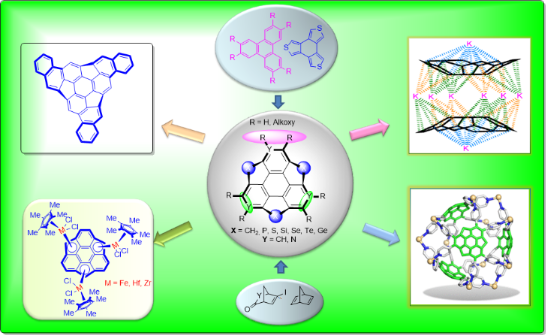
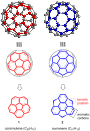
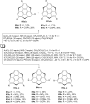
- mono-substituted sumanene derivatives 49b–d in a stereoselective manner as can be inspected from Scheme 10 [41][42]. In another event, Amaya, Ito, Katoh and Hirao reported a vital building block 53 to extend the π-conjugation bidirectionally through regioselective functionalization (Scheme 11) [43]. To





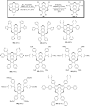


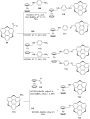


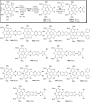


Aryl-substituted acridanes as hosts for TADF-based OLEDs
Beilstein J. Org. Chem. 2020, 16, 989–1000, doi:10.3762/bjoc.16.88
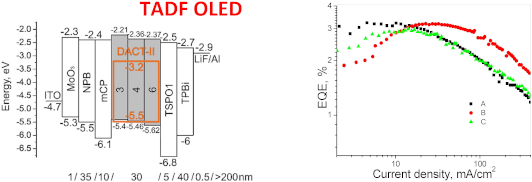
- explained by the dihedral angle between the acridanyl and naphthyl moieties, that is the largest one among all the studied compounds, leading to a reduction of π-conjugation. This observation explains the distinct ICT character of the luminescence of compound 4. The dihedral angles in the molecules of 3 and


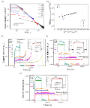
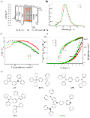
Synthesis and properties of tetrathiafulvalenes bearing 6-aryl-1,4-dithiafulvenes
Beilstein J. Org. Chem. 2020, 16, 974–981, doi:10.3762/bjoc.16.86
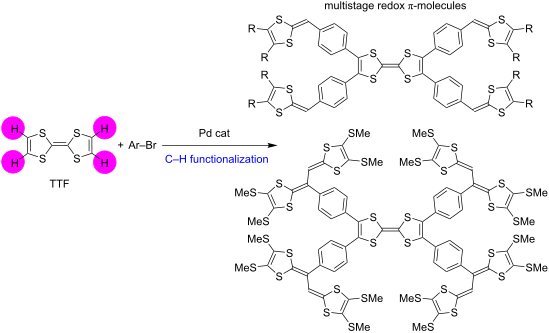
- systems; electrochemical properties; extended π-conjugation; digital simulation analysis; tetrathiafulvalene; Introduction Tetrathiafulvalenes (TTFs) with extended π-conjugation have attracted attention as possible components of functional materials, such as molecular conductors, field-effect transistors


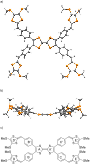


Towards triptycene functionalization and triptycene-linked porphyrin arrays
Beilstein J. Org. Chem. 2020, 16, 763–777, doi:10.3762/bjoc.16.70

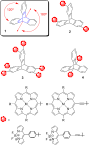
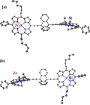
- emission at 617 nm (16207 cm−1) with two equally intense bands (a characteristic of symmetric porphyrins). The nearly similar λmax of both these dimers reinforces the lack of extended π-conjugation or communication that is present in these molecules. Comparatively, the zinc dimer 9 has an increased
- dimer 9 with a gap of 2.03 eV and the butadiyne-linked dimer 20 with 1.87 eV. These values give an initial indication of the extent of π-conjugation occurring within these systems, as the more conjugation present in the system the lower the HOMO–LUMO gap. A spectroscopic comparison of the porphyrin





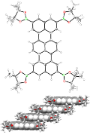
Direct borylation of terrylene and quaterrylene
Beilstein J. Org. Chem. 2020, 16, 621–627, doi:10.3762/bjoc.16.58
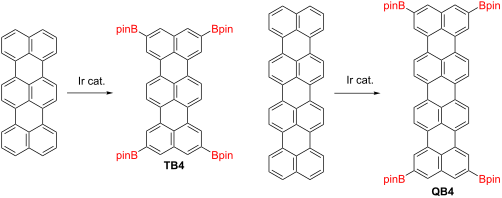
- tetra-borylated quaterrylene despite a low yield. The post modification of rylenes enables us to prepare their borylated products as versatile units after creating the rylene skeletons. Keywords: borylation; π-conjugation; oligorylene; single crystal X-ray structure; solubility; Introduction Compared






Regioselectively α- and β-alkynylated BODIPY dyes via gold(I)-catalyzed direct C–H functionalization and their photophysical properties
Beilstein J. Org. Chem. 2020, 16, 587–595, doi:10.3762/bjoc.16.53
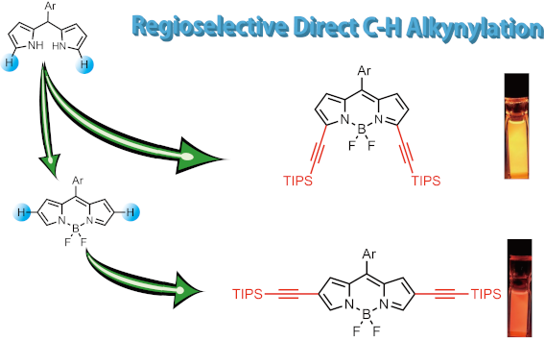
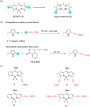
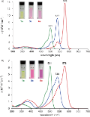
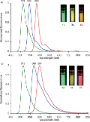
- comparative NMR analysis and mass spectrometry (see Supporting Information File 1). Optical properties The α- and β-ethynyl-substituted BODIPYs exhibit large bathochromic shifts in the absorption and fluorescence spectra relative to the unsubstituted 1a with extended π-conjugation (Figure 4 and Figure 5). The



Copper-catalyzed remote C–H arylation of polycyclic aromatic hydrocarbons (PAHs)
Beilstein J. Org. Chem. 2020, 16, 530–536, doi:10.3762/bjoc.16.49
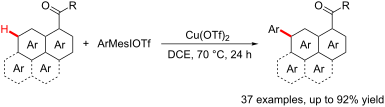
- fluorescence, and have been widely applied in many scientific areas including chemistry, biomedicine and materials science [1][2][3][4][5][6]. The arylation reaction of PAHs is an important strategy to further extend the π-conjugation length, which can effectively adjust the photophysical properties of




Formal preparation of regioregular and alternating thiophene–thiophene copolymers bearing different substituents
Beilstein J. Org. Chem. 2020, 16, 317–324, doi:10.3762/bjoc.16.31
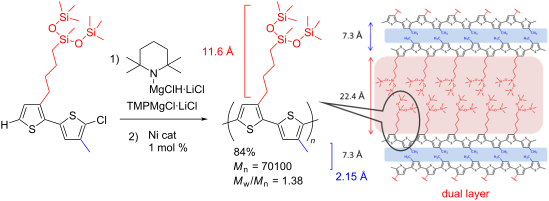
- copolymer; nickel(II) catalyst; oligosiloxane; regioregular polythiophene; solubility; Introduction Polythiophenes attract much attention in materials science because of their extended π-conjugation, which is applied for a wide range of electronic materials. In particular, the regioregular polymers with a


Excited state dynamics for visible-light sensitization of a photochromic benzil-subsituted phenoxyl-imidazolyl radical complex
Beilstein J. Org. Chem. 2019, 15, 2369–2379, doi:10.3762/bjoc.15.229
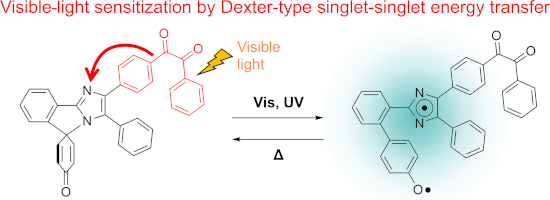
- of the photochromic reactions to visible light are to extend the π-conjugation and to utilize photosensitizers. Especially, triplet photosensitizers, which form the triplet state of a molecule by the triplet–triplet energy transfer, have been frequently used in photoresists, photodynamic therapy, and
- assigned to the transient absorption of the benzil unit of Benzil-PIC. The absorption is slightly shifted to the red as compared to those of benzil probably due to the extended π-conjugation of the benzil unit connected to the PIC unit. The two peaks continuously shift to the shorter wavelength (503 and



Small anion-assisted electrochemical potential splitting in a new series of bistriarylamine derivatives: organic mixed valency across a urea bridge and zwitterionization
Beilstein J. Org. Chem. 2019, 15, 2277–2286, doi:10.3762/bjoc.15.220

- )•+ radical cations having dithienylethene bridges [21][22]. This was achieved by a regulation of the π-conjugation length through photoinduced formation/dissociation of σ bonds in the bridge, which was accomplished with changeovers from a localized system (class I) to a moderately delocalized one (class II
- means that the π orbital of the central C=O moiety does not contribute to the π-conjugation in the HOMOs. Such HOMO properties would be understood by comparison with a well-known reference bis(NAr3) derivative MeO-TPD, in which the NAr3 units are directly connected through a σ-bond [6]. MeO-TPD shows a


Synthesis, photophysical and electrochemical properties of pyridine, pyrazine and triazine-based (D–π–)2A fluorescent dyes
Beilstein J. Org. Chem. 2019, 15, 1712–1721, doi:10.3762/bjoc.15.167
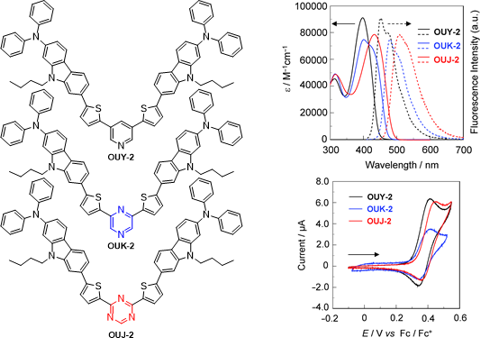
- electron-donating and electron-accepting abilities of the D and A moieties and the expansion of π conjugation, respectively, can lead to a decrease in the energy gap between the HOMO and LUMO because the highest occupied molecular orbital (HOMO) is localized over the π-conjugated system containing the D




Diazocine-functionalized TATA platforms
Beilstein J. Org. Chem. 2019, 15, 1485–1490, doi:10.3762/bjoc.15.150
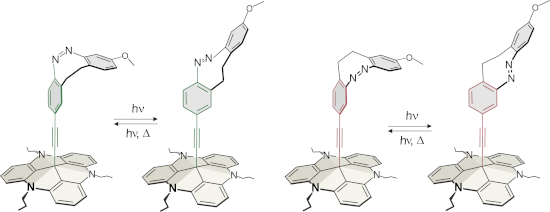
- the metal surface [11][18]. With increasing π-conjugation from the azobenzene into the platform, and thus coupling to the gold surface, the activation barrier drops to almost zero (≈8 kJ mol−1) and the frequency factors (log A) become negative [11]. Vanishing barriers and low frequency factors are
- the azo group, providing a full π-conjugation path of the N=N unit through the ethynyl spacer into the platform. Diazocine-TATA 2 is connected in meta-position and thus interrupting conjugation [24][25]. Both diazocine-TATAs are equipped with methoxy groups, which serve as “reporter units” indicating

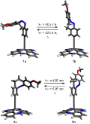


Oxidative and reductive cyclization in stiff dithienylethenes
Beilstein J. Org. Chem. 2018, 14, 2812–2821, doi:10.3762/bjoc.14.259
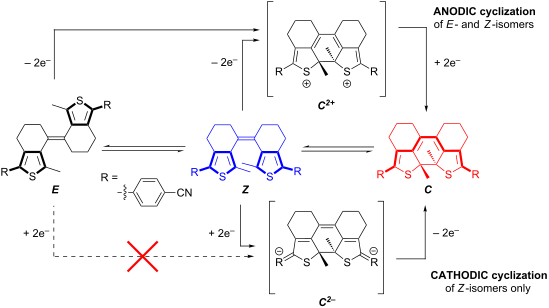
- approximation reflecting the HOMO–LUMO gap. The sole exception to this trend is the only derivative with an H-substituted double bond ethene-Me, which exhibit the expected behavior of a less facile oxidation of the Z-isomer due to its somewhat twisted π-system leading to less pronounced π-conjugation and
- , similarly to what is known for normal DAEs [40][41]. The differences between the first and second oxidation wave seem to depend on the nature of the substituents with donors reducing the gap, presumably by more efficient stabilization of the dication, and on conformational rigidity dictating the extent of π
- -conjugation between both hemispheres. Similar to the model compound sDTE66-Me, all available sDTE66 derivatives as well as both Z-configured sDTE77 derivatives undergo electrocyclization upon oxidation. This also holds true for all cyclopentene-bridged DTE derivatives. However, in butene-Me the formation of





