


Search results
Search for "axial chirality" in Full Text gives 45 result(s) in Beilstein Journal of Organic Chemistry.
Catalytic asymmetric oxo-Diels–Alder reactions with chiral atropisomeric biphenyl diols
Beilstein J. Org. Chem. 2019, 15, 955–962, doi:10.3762/bjoc.15.92
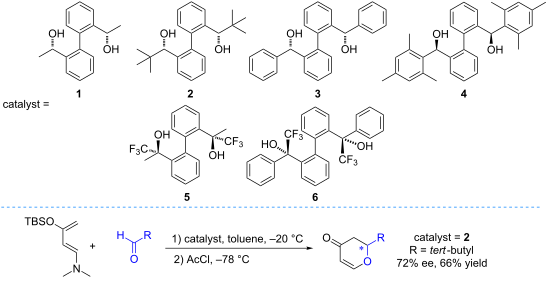
- : asymmetric organocatalysis; axial chirality; biaryls; hydrogen bond; oxo-Diels–Alder reaction; Introduction The Diels–Alder (DA) reaction is a useful and easy-to-perform method for the synthesis of six-membered rings through the direct formation of C–C bonds between a diene and a dienophile (a substituted
- supramolecular helices or dimers through intermolecular hydrogen bonding of two axially chiral biphenyl hybrid diols (1 and 2 in Scheme 1) which contain point chirality at the side arms and axial chirality at the biphenyl backbone [37]. We envisage the structural similarity and the ability of our scaffold to
- , entries 5 and 6). It should be noted that the absolution configuration of the catalytic product seems to be determined by the axial chirality (P or M) of 5 rather than its point chirality at the side arms (both have the same R-chirality) [40]. The axial chirality of other catalysts have been reported


A diastereoselective approach to axially chiral biaryls via electrochemically enabled cyclization cascade
Beilstein J. Org. Chem. 2019, 15, 795–800, doi:10.3762/bjoc.15.76
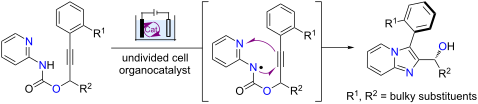
- the biaryls with good to excellent central-to-axial chirality transfer. Keywords: axial chirality; biaryl; electrochemistry; oxidation; radical; Introduction Axially chiral biaryls are prevalent in natural products, bioactive molecules and organocatalysts [1][2]. Among the many methods that have
- been developed for the synthesis of chiral biaryls [3][4][5][6][7][8][9][10], reactions that take avantage of the central-to-axial chirality transfer have been less explored [11][12][13][14]. In addition, an antroposelective synthesis of imidazopyridine-based biaryls has not been reported. Nitrogen
- imidazopyridine-containing biaryls via central-to-axial chirality transfer (Scheme 1). Results and Discussion The substituents on the phenyl ring (R1) and at the propargylic position (R2) of carbamate 2 were varied to study their effects on the diastereoselectivity (Table 1). The electrolysis was conducted under




Synthesis of indole–cycloalkyl[b]pyridine hybrids via a four-component six-step tandem process
Beilstein J. Org. Chem. 2018, 14, 2907–2915, doi:10.3762/bjoc.14.269
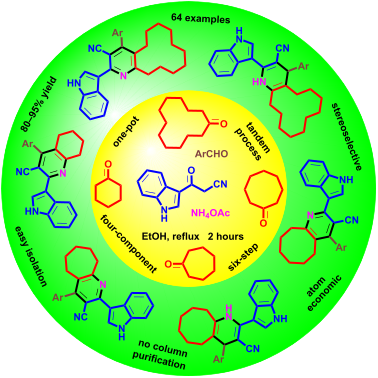
- –cyclododeca[b]pyridine-3-carbonitriles 7 with ortho/ortho-para/ortho-meta substituted phenyl ring at C-4, exhibited axial chirality. For instance, in the case of 7f with p-Cl substituted phenyl ring at C-4, the 5- and 14-CH2 protons appeared as triplets at 2.56 and 3.01 ppm, respectively. However, in 7l
- [b]pyridine-3-carbonitrile hybrid heterocycles 7 with an ortho/ortho-para/ortho-meta substituted phenyl ring at C-4 may be attributed to the axial chirality induced in these molecules due to the restricted rotation of the C–C single bond. The steric hindrance exerted between the nitrile group at C-3
- and the ortho/ortho-para/ortho-meta substitution in the phenyl ring at C-4 restricts the free rotation of the C-4–phenyl C–C single bond thereby inducing axial chirality in these molecules (representative examples, Figure 2). Interestingly in some cases this reaction afforded the unaromatized indole


Some mechanistic aspects regarding the Suzuki–Miyaura reaction between selected ortho-substituted phenylboronic acids and 3,4,5-tribromo-2,6-dimethylpyridine
Beilstein J. Org. Chem. 2018, 14, 2384–2393, doi:10.3762/bjoc.14.214
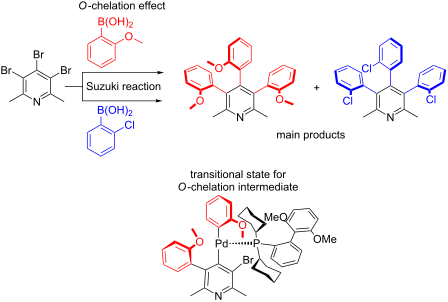
- , Poland 10.3762/bjoc.14.214 Abstract Background: Atropisomers are very interesting stereoisomers having axial chirality resulting from restricted rotation around single bonds and are found in various classes of compounds. ortho-Substituted arylpyridines are an important group of them. A regio- and
- , Tanaka presented an atropselective synthesis of axially chiral all-benzenoid biaryls by gold-catalysed intramolecular hydroarylation of alkynones to give the desired atropisomeric product with a good ee value of 70% [26]. Conventional approaches to the synthesis of biaryl compounds having axial chirality


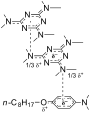
Design, synthesis and structure of novel G-2 melamine-based dendrimers incorporating 4-(n-octyloxy)aniline as a peripheral unit
Beilstein J. Org. Chem. 2018, 14, 1704–1722, doi:10.3762/bjoc.14.145
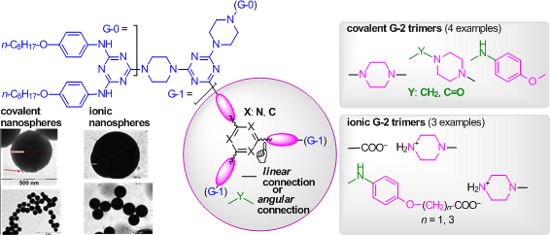
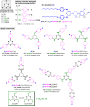
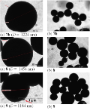
- solution, for example, asymmetric vs propeller (C3-symmetric) [30][36][45][46], “dendritic choreography” [47], “open-gates closed-gates” frontier rotamerism [31] and “in out” axial chirality [33]. In addition, in the targeted G-2 dendrimers (Figure 1), different connections of branches around the core



A survey of chiral hypervalent iodine reagents in asymmetric synthesis
Beilstein J. Org. Chem. 2018, 14, 1244–1262, doi:10.3762/bjoc.14.107
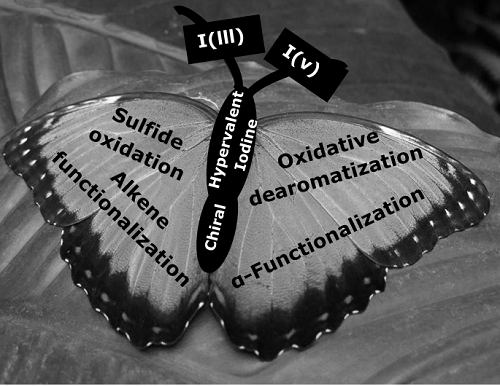
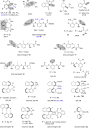
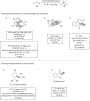
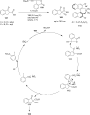
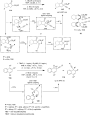
- introduction of axial chirality through the iodoarene backbone. A series of chiral iodine reagents are documented below (Scheme 1). In many cases chiral I(I) reagents get oxidized in situ to the hypervalent I(III) reagents and/or these chiral I(III)/I(V) reagents are used in a catalytic amount in the presence



From dipivaloylketene to tetraoxaadamantanes
Beilstein J. Org. Chem. 2018, 14, 1–10, doi:10.3762/bjoc.14.1

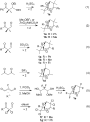
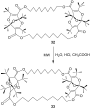
- exhibit axial chirality [21], as has been demonstrated by 1H NMR spectroscopy using the optically active shift reagent Eu(hfc)3 [19]. The enantiomers of the dicarboxylic acid 11 have been separated by flash chromatography of their diastereomeric salts with 1-phenethylamine, and the structures of the acids
- [29]. It should be noted that both the bisdioxines [19] and the tetraoxaadamantanes [29] exhibit axial chirality as confirmed by 1H NMR spectroscopy with the Eu(hfc)3 chiral shift reagent. Bisdioxine oxime and hydrazine derivatives 26 and 27 (Scheme 8) are formed from 3 at room temperature without the



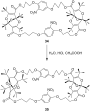


Bifunctional organocatalysts for the asymmetric synthesis of axially chiral benzamides
Beilstein J. Org. Chem. 2017, 13, 1518–1523, doi:10.3762/bjoc.13.151

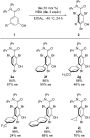
- . Moderate to good enantioselectivities were afforded with a range of benzamide substrates. Mechanistic investigations were also carried out. Keywords: axial chirality; benzamide; bifunctional organocatalyst; molecular conformation; multipoint recognition; Introduction Bifunctional organocatalysts have
- resolution [42][43][44][45][46][47], desymmetrization [48][49][50][51][52][53][54], de novo annulation [55][56][57][58][59][60][61], and point-to-axial chirality transfer [58][59] (for reviews, see references [31][62][63]), motivated us to expand on the utility of this class of small-molecule catalysts. We
- axial chirality [36][37]. Thus, we assumed that this method could be further applied to the enantioselective synthesis of a range of axially chiral compounds. In this study, we present the enantioselective synthesis of 3-hydroxybenzamides via aromatic electrophilic bromination [28][29]. The 3




Varioloid A, a new indolyl-6,10b-dihydro-5aH-[1]benzofuro[2,3-b]indole derivative from the marine alga-derived endophytic fungus Paecilomyces variotii EN-291
Beilstein J. Org. Chem. 2016, 12, 2012–2018, doi:10.3762/bjoc.12.188
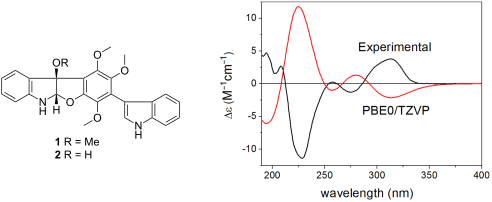
- Cotton effects (CEs) had the same sign for conformer A and B, while the lower-wavelength (<250 nm) CEs were significantly different. The hindered rotation along the biaryl linkage may have implied an additional stereogenic element, which would have enabled atropodiastereomers with axial chirality. In
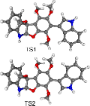
- order to explore the possibility of axial chirality, torsional angle scans were performed on the lowest-energy M (conformer A) and P (conformer B) helicity gas-phase conformers or atropodiastereomers. Rotational energy barriers between the two isomers were estimated to be ca. 35–42 kJ/mol for TS1 (ωC12
- showed that there is no axial chirality in 1, and equilibrating conformers with M and P helicity are present in solution as obtained in the conformational analysis. The Boltzmann-weighted ECD spectra calculated for both the gas-phase and the solvent model conformers of (2R,3R)-1 at B3LYP/TZVP, BH&HLYP



Stereodynamic tetrahydrobiisoindole “NU-BIPHEP(O)”s: functionalization, rotational barriers and non-covalent interactions
Beilstein J. Org. Chem. 2016, 12, 1453–1458, doi:10.3762/bjoc.12.141
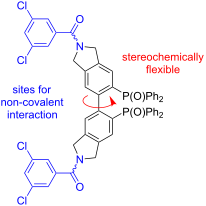
- ][6], palladium [7][8], platinum [9][10] and gold [11][12][13] in combination with chiral co-ligands or counter ions that are used after alignment of the ligand’s axial chirality. One major advantage of stereodynamic ligands is that there is no need for separate preparation of one ligand enantiomer as


Recent advances in copper-catalyzed asymmetric coupling reactions
Beilstein J. Org. Chem. 2015, 11, 2600–2615, doi:10.3762/bjoc.11.280
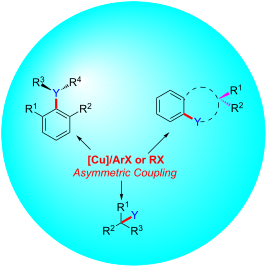
- into the substrates, has emerged as a powerful tool for constructing natural products and useful ligands with axial chirality. Based on asymmetric desymmetrization and kinetic resolution strategies, a series of efficient copper-catalyzed systems have been developed for the formation of C–C, C–N, C–O


Chiroptical properties of 1,3-diphenylallene-anchored tetrathiafulvalene and its polymer synthesis
Beilstein J. Org. Chem. 2015, 11, 972–979, doi:10.3762/bjoc.11.109
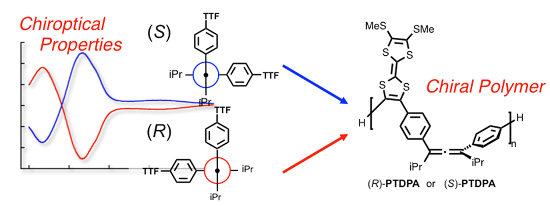
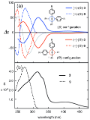
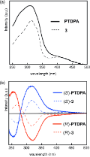
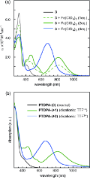
- carried out by direct C–H activation of the TTF unit, and the chiroptical properties of the resulting polymer were also investigated. Keywords: allene; axial chirality; chiroptical properties; redox; tetrathiafulvalene; Introduction Recently, there has been a growing interest in chiral π-conjugated




P(O)R2-directed Pd-catalyzed C–H functionalization of biaryl derivatives to synthesize chiral phosphorous ligands
Beilstein J. Org. Chem. 2014, 10, 2071–2076, doi:10.3762/bjoc.10.215
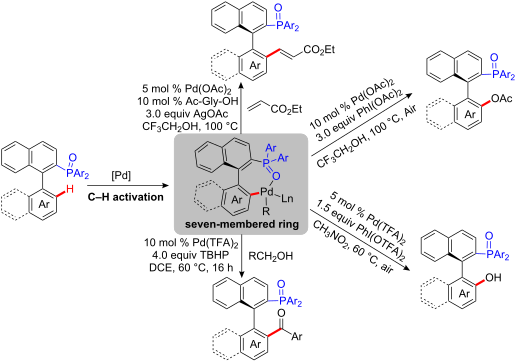
- reported operation, the substrates of biaryl derivatives that contained phosphate with axial chirality were obtained in high yields using the Suzuki–Miyaura coupling reaction with the assistance of this versatile chiral ligand [31][32][33][34]. We used substituted naphthylboronic acid or ortho-substituted
- -phenylboronic acid to synthesize the corresponding substituted binaphthyl or phenyl-naphthyl skeleton substrates with axial chirality. To maintain the axial chirality within the substrates, a steric hindrance effect at the ortho position of phenylboronic acids was required, rendering the non-ortho substituted


Homolytic substitution at phosphorus for C–P bond formation in organic synthesis
Beilstein J. Org. Chem. 2013, 9, 1269–1277, doi:10.3762/bjoc.9.143

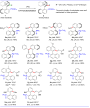
- phosphorus. Plausible mechanism of radical phosphination (Si = (Me3Si)3Si). Stereoselective phosphination leading to (S,S)-aminophosphine derivative. Phosphination with retention of axial chirality. Chemodivergent phosphination. Bis(phosphoryl)-bridged biphenyls by radical phosphination. Bis(phosphoryl


Design and synthesis of quasi-diastereomeric molecules with unchanging central, regenerating axial and switchable helical chirality via cleavage and formation of Ni(II)–O and Ni(II)–N coordination bonds
Beilstein J. Org. Chem. 2012, 8, 1920–1928, doi:10.3762/bjoc.8.223
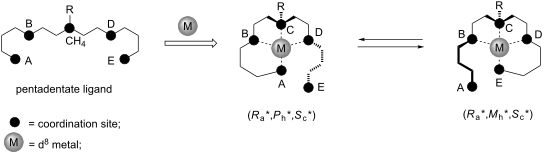
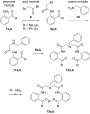
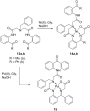
- *) and (Ra*,Ph*,Rc*) occurs by intramolecular trans-coordination of Ni–NH and Ni–O bonds providing a basis for a chiral switch model. Keywords: axial chirality; central chirality; chiral switches; coordination bonds; functional materials; helical chirality; modular structural design; molecular devices
- concurrent and unidirectional motion of arms ED and AB is expected to have the following desired stereochemical consequences: Thus, the axial chirality on the arm CDE in 5 will disappear with simultaneous generation of a new chiral axis on the arm CBA in 6, of the same stereochemical sense. Next, this
- envisioned mode of transcoordination must proceed also with a loss and regeneration of helical chirality, but, in contrast to the loss/regeneration of axial chirality, with the inversion of the stereochemical sense, providing quasi-diastereomeric relationships between complexes 5 and 6 [26]. As one can



The interplay of configuration and conformation in helical perylenequinones: Insights from chirality induction in liquid crystals and calculations
Beilstein J. Org. Chem. 2012, 8, 155–163, doi:10.3762/bjoc.8.16
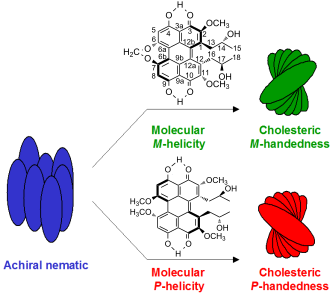
- essentially determined by the axial chirality (helicity) of the core of the perylenequinones. Keywords: chirality; conformational analysis; DFT calculations; helical twisting power; nematic liquid crystals; Introduction The phenomenon of chiral induction in nematic mesophases has been known for a long time
- the determination of the absolute configuration [2][3][5][6][12][13][14][15][16][17][18][19][20][21][22][23][24]. In fact, this technique has been fruitfully applied to different classes of systems, possessing either stereogenic centers or axial chirality. In this work, chirality induction in liquid
- ) [27], shown in Figure 1. They have the same stereochemical features: Two bulky methoxy groups or a strained seven-membered ring in positions 6 and 7, two side chains in positions 1 and 12 and a nonplanar helical shape. The helicity generates axial chirality, which, when associated with the presence of


Bromine–lithium exchange: An efficient tool in the modular construction of biaryl ligands
Beilstein J. Org. Chem. 2011, 7, 1278–1287, doi:10.3762/bjoc.7.148
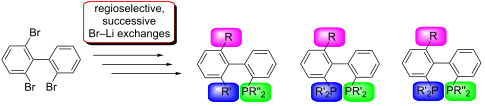
- . Catalytic studies as well as the control of biaryl axial chirality are currently underway and will be reported in due course. Modular synthesis of bis(diarylphosphino)-, bis(dialkylphosphino)- and dialkyl(diaryl)phosphinobiphenyls as well as monophosphinobiphenyls by means of polar organometallic chemistry


Cationic gold(I) axially chiral biaryl bisphosphine complex-catalyzed atropselective synthesis of heterobiaryls
Beilstein J. Org. Chem. 2011, 7, 944–950, doi:10.3762/bjoc.7.105
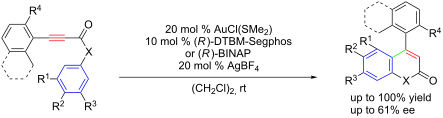
- complex catalyzes the atropselective intramolecular hydroarylation of alkynes leading to enantioenriched axially chiral 4-aryl-2-quinolinones and 4-arylcoumarins with up to 61% ee. Keywords: asymmetric catalysis; axial chirality; gold; heterobiaryls; hydroarylation; Introduction Atropselective biaryl


Molecular recognition of organic ammonium ions in solution using synthetic receptors
Beilstein J. Org. Chem. 2010, 6, No. 32, doi:10.3762/bjoc.6.32










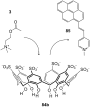


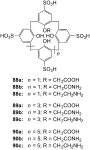


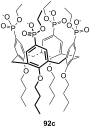


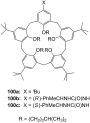


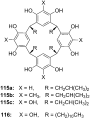
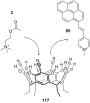


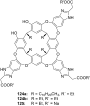
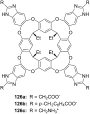


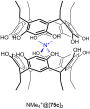


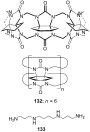


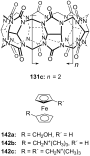


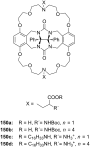
















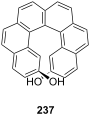


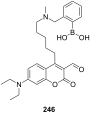


Control of asymmetric biaryl conformations with terpenol moieties: Syntheses, structures and energetics of new enantiopure C2- symmetric diols
Beilstein J. Org. Chem. 2008, 4, No. 25, doi:10.3762/bjoc.4.25
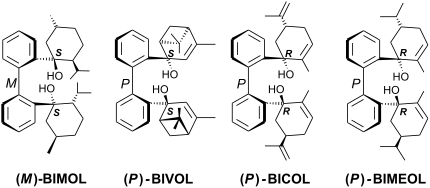
- : chiral diols; hydrogen bonds; axial chirality; terpenes; Introduction Enantiopure biaryl systems with flexible chiral axes are widespread, e.g. in pharmacological natural products or as ligands in enantioselective catalyses [1]. Chelating C2-symmetric diols such as BINOLs [2][3][4] and TADDOLs [5][6





