


Search results
Search for "breast cancer" in Full Text gives 100 result(s) in Beilstein Journal of Organic Chemistry.
Combretastatins D series and analogues: from isolation, synthetic challenges and biological activities
Beilstein J. Org. Chem. 2023, 19, 399–427, doi:10.3762/bjoc.19.31
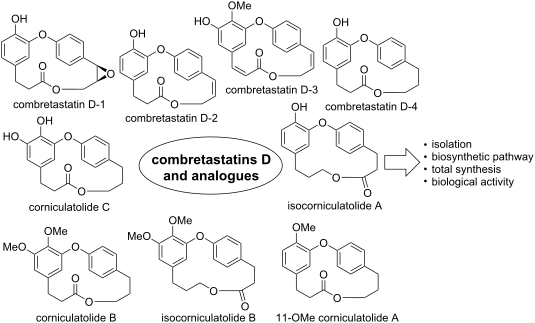
- with a median effective dose values (ED50) of 3.3 and 5.2 μg·mL−1 (10.56 and 17.55 μM), respectively [16][17]. Vongvanich and co-workers performed a cytotoxicity assay of combretastatins D-3 (3) and D-4 (4) against human breast cancer cells (BC-1), human epidermoid carcinoma of the mouth (KB), a small


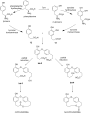


An accelerated Rauhut–Currier dimerization enabled the synthesis of (±)-incarvilleatone and anticancer studies
Beilstein J. Org. Chem. 2023, 19, 204–211, doi:10.3762/bjoc.19.19
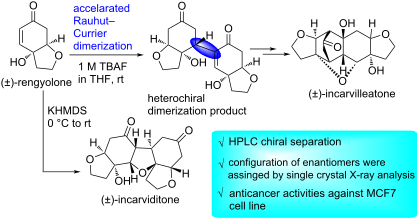
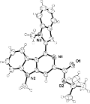
- configuration of each enantiomer was determined by single-crystal X-ray analysis. In addition, a one-pot synthesis of (±)-incarviditone has been achieved from rac-rengyolone by using KHMDS as a base. We have also assessed the anticancer activity of all the synthesized compounds in breast cancer cells
- on the growth of the breast cancer cell line MCF7. For instance, we did not observe the 50% growth inhibition event at 100 µM. In contrast, 5-fluorouracil potently inhibited the growth of MCF7 cells with 50% growth inhibition at 7.1 ± 0.62 µM (Figure 2). Conclusion In summary, we have successfully
- -rengyolone (3) by using KHMDS as a base. The antiproliferative activity of these compounds was tested using MTT assays and the results revealed that these compounds are less efficient in inhibiting the growth of breast cancer cells. Structures of (±)-incarvilleatone (1), (±)-incarviditone (2), and


Insight into oral amphiphilic cyclodextrin nanoparticles for colorectal cancer: comprehensive mathematical model of drug release kinetic studies and antitumoral efficacy in 3D spheroid colon tumors
Beilstein J. Org. Chem. 2023, 19, 139–157, doi:10.3762/bjoc.19.14
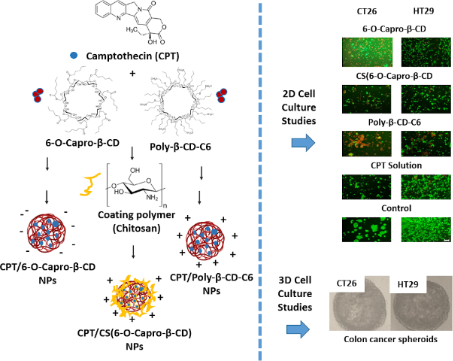
- also had better release, physical stability, and cytotoxicity [13]. CPT is an anticancer small molecule drug that inhibits the topoisomerase I enzyme, which has a critical role in cellular DNA functions [14], and is effective in a wide spectrum of cancers such as metastatic colon cancer, breast cancer
- -C6 nanoparticle formulation decreased upon incubation. Based on previous studies with breast cancer cell lines, it is comprehensible that anionic nanoparticles induce cell proliferation inhibition earlier than polycationic nanoparticles. The impact of anionic nanoparticles on free cholesterol level


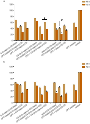
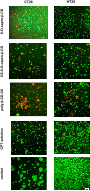

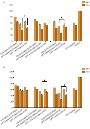

Preparation of β-cyclodextrin/polysaccharide foams using saponin
Beilstein J. Org. Chem. 2023, 19, 78–88, doi:10.3762/bjoc.19.7
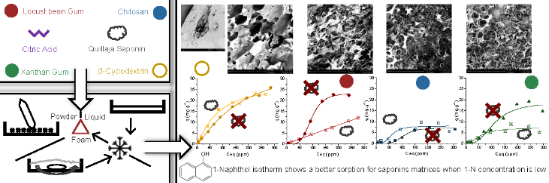
- that saponins possess anticancer properties, by limiting proliferation and metastasis. This has been tested on different cancers such as leukemia [16], breast cancer [17] or prostate cancer to cite only a few of them [18]. They also present antimicrobial, antioxidant, anti-inflammatory, antidiabetic



Synthesis of new bile acid-fused tetrazoles using the Schmidt reaction
Beilstein J. Org. Chem. 2021, 17, 2611–2620, doi:10.3762/bjoc.17.174
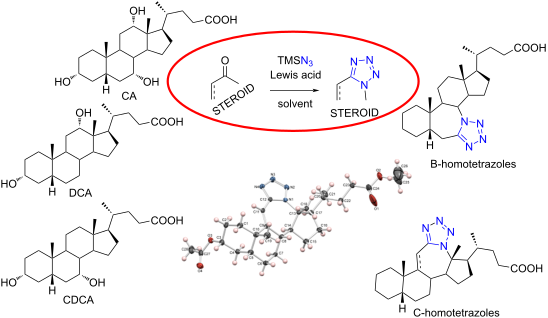
- activity toward the HeLa cell line (IC50 = 6.97 μM), while tetrazole 22 showed strong and selective activity toward the HT-29 cell line (IC50 = 6.06 µM). Compounds 7, 23, and 24, which showed strong cytotoxicity to the breast cancer cell line MDA-MB-231 (in addition to compound 3), also exhibited a
- compound 3 against MDA-MB-231 and HeLa cell lines. B) Cytotoxicity of compounds 7, 23, and 24 on breast cancer cell line MDA-MB-231. Synthesis of 12-oxo intermediates. Reagents and conditions: a) EtOAc, pTsOH, reflux, 14 h (81%); b) K2Cr2O7, H3O+, H2O/Et2O, rt, 3 h (76% for 3; 71% for 7); c) SeO2, acetic


Cryogels: recent applications in 3D-bioprinting, injectable cryogels, drug delivery, and wound healing
Beilstein J. Org. Chem. 2021, 17, 2553–2569, doi:10.3762/bjoc.17.171
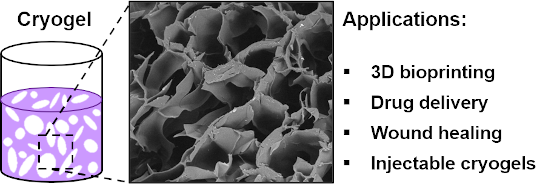
- the doxorubicin-loaded cryogels, suggesting delivery of the drug was successful. These cryogels were also injected into mice, adjacent to an orthotopic breast cancer tumour, impeding tumour growth and metastasis. Several groups have reported on the use of composite cryogels for drug delivery, whereby






Natural products in the predatory defence of the filamentous fungal pathogen Aspergillus fumigatus
Beilstein J. Org. Chem. 2021, 17, 1814–1827, doi:10.3762/bjoc.17.124

- breast cancer cells by arresting the cell cycle and promoting apoptosis while showing no cytotoxicity against RAW 264.7 cells, thus demonstrating their selectivity [65][67]. Further, fumigaclavine was shown to exhibit antibacterial properties and to contribute to virulence in the model insect Galleria
- [72]. It was further shown to be cytotoxic and inhibiting cell cycle progression at G2/M phase [163]. Fumitremorgin C was shown to effect mammalian cells and inhibit the breast cancer resistance protein which imparts multidrug resistance and thus resistance to chemotherapeutics in breast cancer


A systems-based framework to computationally describe putative transcription factors and signaling pathways regulating glycan biosynthesis
Beilstein J. Org. Chem. 2021, 17, 1712–1724, doi:10.3762/bjoc.17.119
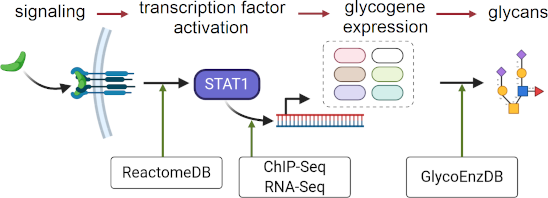
- relate cell-signaling pathways to TFs and cellular glycosylation state. Whereas analysis results are presented for all 29 cancer types, specific focus is placed on human luminal and basal breast cancer disease progression. Overall, the article presents a computational approach to describe TF–glycogene
- processes and specific glycosylation pathways. TF–pathway relationships in breast cancer We provide a more detailed description of our findings in breast cancer as an example. This disorder appears in 5 unique molecular subtypes based on the PAM50 classification [17]. These include the following: i) normal
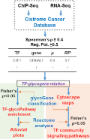
- mechanisms that may contribute to different glycan signatures. In our analysis, TF–glycogene relationships for breast cancer derived by filtering Cistrome Cancer DB were enriched for the glycosylation pathways. Figure 3 summarizes these cancer-related TF–glycosylation pathway relationships for luminal (type




Chemical approaches to discover the full potential of peptide nucleic acids in biomedical applications
Beilstein J. Org. Chem. 2021, 17, 1641–1688, doi:10.3762/bjoc.17.116
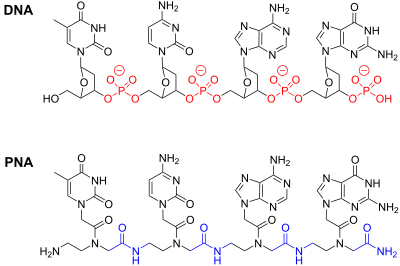


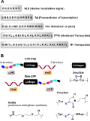


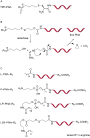

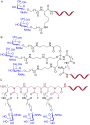




Synthesis of 1-indolyl-3,5,8-substituted γ-carbolines: one-pot solvent-free protocol and biological evaluation
Beilstein J. Org. Chem. 2021, 17, 1453–1463, doi:10.3762/bjoc.17.101
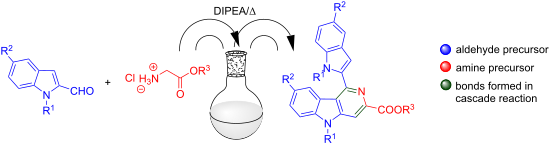
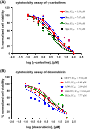
- with a standard drug, doxorubicin, were screened for their cytotoxicity against various cancer lines (Figure 5, Table 3 and Figure S2, in Supporting Information File 1) such as MCF-7 (breast cancer), HeLa (cervical cancer), HEK293 (human embryonic kidney cells), A431 (skin cancer), A549 (lung cancer
- , 3ca, 3ga in the breast cancer cell line, MCF7 and (B) doxorubicin against the panel of tested cancer cell lines. Dose–response curve of γ-carbolines 3ac, 3bc, 3ca, 3ga in macrophage cell line, RAW264.7. Laser scanning confocal microscopy studies (λex = 405 nm; collection range = 420–470 nm) for uptake







Synthetic accesses to biguanide compounds
Beilstein J. Org. Chem. 2021, 17, 1001–1040, doi:10.3762/bjoc.17.82
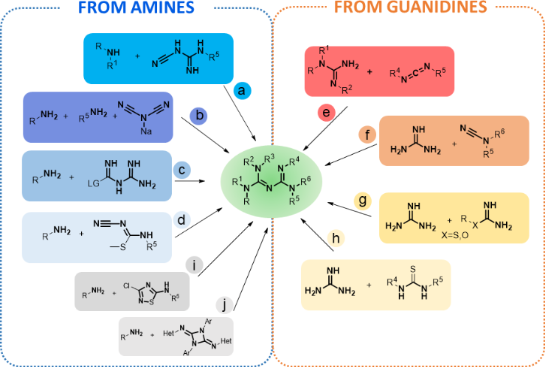
- pancreatic carcinoma and triple-negative breast cancer (Scheme 23B) [55]. Konteatis et al. adopted a similar approach by using the direct fusion for the preparation of bisdifluorocyclic biguanides as IDH1/2 inhibitor intermediates (Scheme 23C) [56]. However, sodium dicyanamide has been mainly used as an


Enhanced target cell specificity and uptake of lipid nanoparticles using RNA aptamers and peptides
Beilstein J. Org. Chem. 2021, 17, 891–907, doi:10.3762/bjoc.17.75
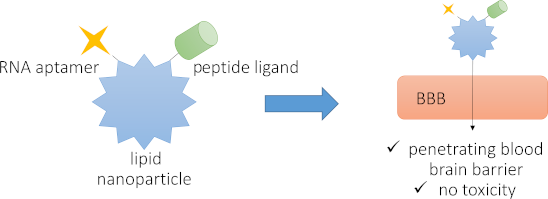
- their LNP formulation to functionalize LNPs with an aptamer specific for the human epidermal growth factor 2 (HER2) receptor. Therein, functionalized LNPs increased siRNA delivery and subsequent sensitivity of the doxorubicin-resistant HER2-positive breast cancer cell lines by ≈2-fold over LNPs with no



Simulating the enzymes of ganglioside biosynthesis with Glycologue
Beilstein J. Org. Chem. 2021, 17, 739–748, doi:10.3762/bjoc.17.64
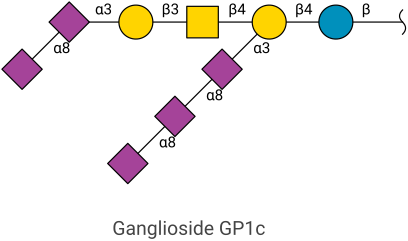
- disorders of ganglioside biosynthesis can lead to a number of neuropathies, including motor deficits, microcephaly, sensory loss, and autistic features [10][11]. Certain gangliosides, such as GM2, have been identified as tumor markers for breast cancer stem cells [12], while members of the alpha-series




Amino- and polyaminophthalazin-1(2H)-ones: synthesis, coordination properties, and biological activity
Beilstein J. Org. Chem. 2021, 17, 558–568, doi:10.3762/bjoc.17.50
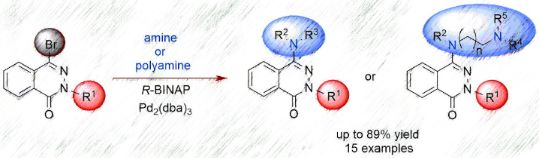
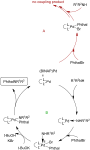
- production [11] that plays an important role in the growth of various cancerous tissues (colon, lung, and breast cancer) and as antagonists of the human A3 adenosine receptor [12]. Aminophthalazines have been also evaluated for their inhibitory activity toward phosphodiesterases such as PDE-5 (Figure 1) [13






The synthesis of chiral β-naphthyl-β-sulfanyl ketones via enantioselective sulfa-Michael reaction in the presence of a bifunctional cinchona/sulfonamide organocatalyst
Beilstein J. Org. Chem. 2021, 17, 494–503, doi:10.3762/bjoc.17.43
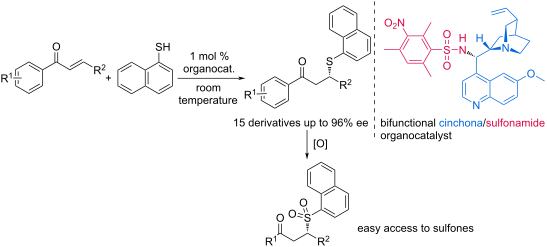
- a low (1 mol %) catalyst loading, to obtain enantiomerically enriched β-naphthyl-β-sulfanyl ketones with up to 96% ee. The target adducts are the core structure of seco-raloxifene derivatives, which are potent anti-breast cancer agents [32]. In addition, the same scaffold has also shown urease
- , which have potent activity against breast cancer. The easy access to the corresponding sulfones presents a versatile route for the implementation of a new biologically active moiety, the sulfone, to the β-naphthyl-β-sulfanyl ketones. The enantioenriched products of both classes can be evaluated as


19F NMR as a tool in chemical biology
Beilstein J. Org. Chem. 2021, 17, 293–318, doi:10.3762/bjoc.17.28
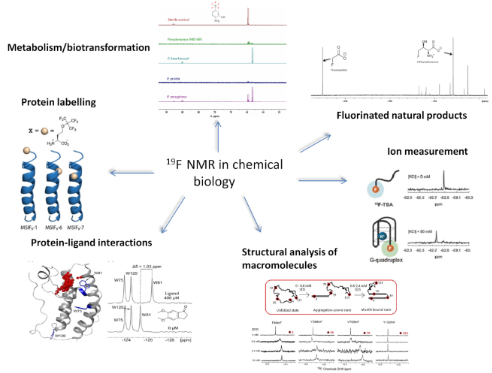
- presence of DNA, and another intrinsically disordered binding partner, breast cancer antigen 1 (BRCA1) (Figure 12). In this work the strategy employed involved the introduction of a perfluorinated [19F]3,5‐bis(trifluoromethyl)benzyl-based tag into the single cysteine residue of Myc. This modification


Comparative ligand structural analytics illustrated on variably glycosylated MUC1 antigen–antibody binding
Beilstein J. Org. Chem. 2020, 16, 2540–2550, doi:10.3762/bjoc.16.206
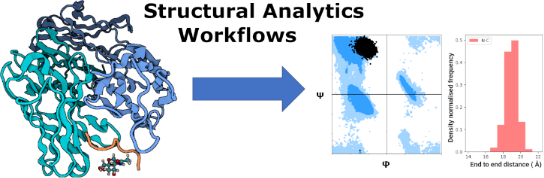
- epithelial cells, the mixture of O-glycans that glycosylate mucins are extended core 2 structures, while in breast cancer cells, O-glycan mass decreases (hypoglycosylation), and there is an increase in abundance of sialylated core 1 [15]. The upregulation of Tn (αGalNAc) and STn (αNeuAc-2,6-αGalNAc) antigens
- breast cancer [11][13]. We use MD simulations to investigate the conformational behavior of (glyco)peptide antigens bound to the AR20.5 antibody and to investigate the hypothesis that the glycan modulates the conformation of the peptide portion of the antigen. Primarily showcasing a structural analytics



One-step route to tricyclic fused 1,2,3,4-tetrahydroisoquinoline systems via the Castagnoli–Cushman protocol
Beilstein J. Org. Chem. 2020, 16, 1456–1464, doi:10.3762/bjoc.16.121
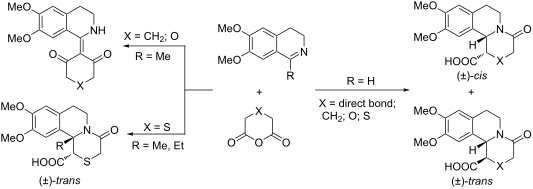
- heterocycle is present in several alkaloids such as emetine (1) and related compounds, that exhibit biological activities such as glucosidase inhibition, anti-amoebic properties as well as activity against breast cancer cell lines [2]. Notable examples of synthetic compounds include the dipeptidyl peptidase


Extension of the 5-alkynyluridine side chain via C–C-bond formation in modified organometallic nucleosides using the Nicholas reaction
Beilstein J. Org. Chem. 2020, 16, 1–8, doi:10.3762/bjoc.16.1
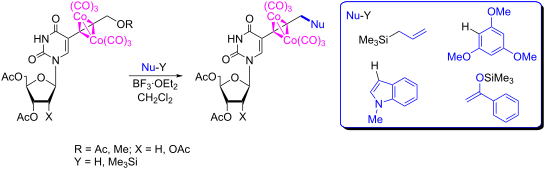
- hexacarbonyls with 2'-deoxyuridines revealed pronounced in vitro activity against MCF-7 and MDA-MB-231 human breast cancer cells [32][33]. A recent investigation of hexacarbonyl dicobalt adducts of nucleosides containing derivatives of propargyl alcohol demonstrated their antiproliferative activities for the


α,ß-Didehydrosuberoylanilide hydroxamic acid (DDSAHA) as precursor and possible analogue of the anticancer drug SAHA
Beilstein J. Org. Chem. 2019, 15, 2524–2533, doi:10.3762/bjoc.15.245

- three steps. Biological studies Although approved for the treatment of CTCL, SAHA has been shown to display anticancer activity over a large range of other hematological and solid malignancies such as leukemia [24], lung cancer [25], cervical cancer (HeLa), breast cancer (MCF-7) [26], mesothelioma [27


Fluorescent phosphorus dendrimers excited by two photons: synthesis, two-photon absorption properties and biological uses
Beilstein J. Org. Chem. 2019, 15, 2287–2303, doi:10.3762/bjoc.15.221
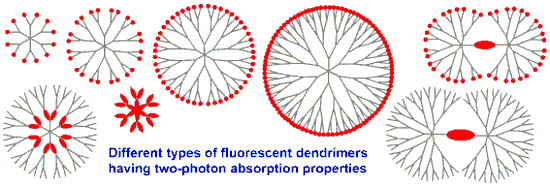
- shown in Figure 11 was tested in vitro on human breast cancer cells MCF-7. One-photon absorption induced fluorescence demonstrated that this dendrimer is efficiently internalized after 3 h of incubation, more after 24 h, and was non-toxic at 50 μg mL−1 without irradiation. Two-photon irradiation was









Isolation and characterisation of irinans, androstane-type withanolides from Physalis peruviana L.
Beilstein J. Org. Chem. 2019, 15, 2003–2012, doi:10.3762/bjoc.15.196
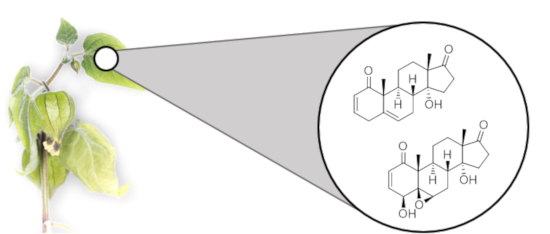
- following cell lines were used: mouse fibroblast cell line L929 (DSM ACC 2), human cervix carcinoma cell line KB-3-1 (DSM ACC 158), the human lung carcinoma cell line A549 (DSMZ ACC 107) and human breast cancer cell line MCF-7 (DSM ACC 115). The subconfluent cells were briefly washed with Earle’s Balanced
- ppm, J in Hz). For carbon numbering see Figure 1 and Figure 2. Antiproliferative activities in different cell lines. Data indicate EC50 values ± SD in µM. A549 = human lung carcinoma; L929 = mouse fibroblast; KB-3-1 = human cervix carcinoma; MCF-7 = human breast cancer cell line. Supporting



Synthesis and fluorescent properties of N(9)-alkylated 2-amino-6-triazolylpurines and 7-deazapurines
Beilstein J. Org. Chem. 2019, 15, 474–489, doi:10.3762/bjoc.15.41
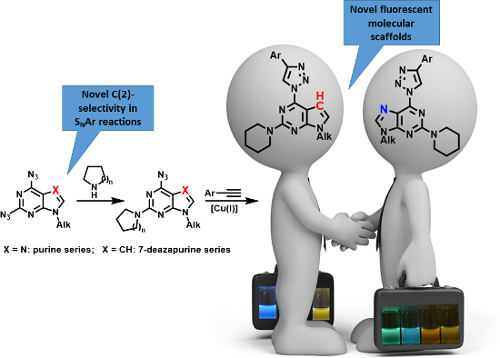
- lines – luminal A breast cancer cell line MCF7 and triple negative breast cancer cell line MDAMB231. The results were compared with those obtained on normal breast epithelial cell line (MCF-10A). All compounds showed low cytotoxicity on all tested cell lines (for Figure S81 see Supporting Information
- fluorescence quantum yield to 74% in the case of 7-deazapurine derivative 11c. The solvent change provided a fluorescence shift from dark blue (≈440 nm) to orange (≈620 nm) color. Finally, the purines and 7-deazapurines were tested in live cell imaging on breast cancer cell lines MCF-7 and MDAMB231. They are




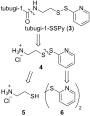
Synthesis of a tubugi-1-toxin conjugate by a modulizable disulfide linker system with a neuropeptide Y analogue showing selectivity for hY1R-overexpressing tumor cells
Beilstein J. Org. Chem. 2019, 15, 96–105, doi:10.3762/bjoc.15.11
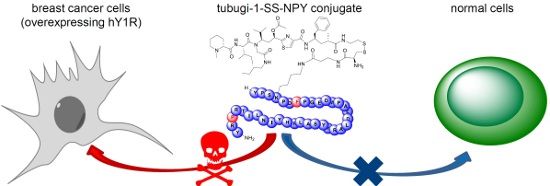
- (Ewing`s sarcoma), MDA-MB-468, MDA-MB-231 (both breast cancer) and 184B5 (normal breast; chemically transformed) were investigated. As hoped, the toxicity of tubugi-1 was masked, with IC50 values decreased by ca. 1,000-fold compared to the free toxin. Due to intracellular linker cleavage, the cytotoxic
- triple-negative breast cancer MDA-MB-468 cells. Keywords: drug targeting; neuropeptide Y; PDC; peptide–drug conjugate; targeted tumor therapy; tubugi; tubulysin A; Ugi reaction; Introduction Until recently, the medication of tumor diseases was primarily based on more or less unspecific
- breast tissue was found to express negligible amounts of hY1R but predominantly the closely related Y2 receptor subtype (hY2R) [23]. Hence, a switch from hY2R to hY1R expression during pathogenic breast-cell transformation was hypothesized. Furthermore, many breast cancers of all major breast cancer




Pd-Catalyzed microwave-assisted synthesis of phosphonated 13α-estrones as potential OATP2B1, 17β-HSD1 and/or STS inhibitors
Beilstein J. Org. Chem. 2018, 14, 2838–2845, doi:10.3762/bjoc.14.262
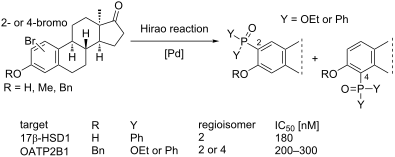
- organic anion transporting polypeptides (OATP) protein family [3][4]. Human OATP2B1 is one of the OATPs transporting estrone 3-sulfate, expressed in the intestine, blood–brain barrier, liver and placenta [5][6][7][8][9]. Moreover, OATP2B1 is overexpressed in certain malignancies, including breast cancer





