Search results
Search for "catalytic activity" in Full Text gives 327 result(s) in Beilstein Journal of Organic Chemistry. Showing first 200.
Synthesis and antimycotic activity of new derivatives of imidazo[1,2-a]pyrimidines
Beilstein J. Org. Chem. 2024, 20, 2806–2817, doi:10.3762/bjoc.20.236
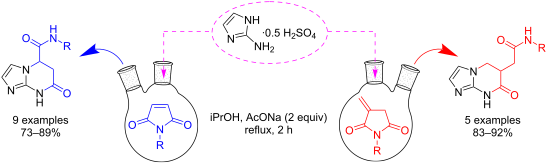
- of the catalytic activity of CYP51. A number of previous studies confirmed the efficacy of azole compounds and their derivatives against a variety of strains and clinical isolates of the genus Candida. Nevertheless, the increased use of azole antifungals for the therapy of both mucosal and systemic


5th International Symposium on Synthesis and Catalysis (ISySyCat2023)
Beilstein J. Org. Chem. 2024, 20, 2704–2707, doi:10.3762/bjoc.20.227
- carbene (NHC) framework from polysubstituted aminoimidazo[5,1-b]oxazol-6-ium salts, which demonstrated strong catalytic activity in gold-catalyzed alkyne hydration and arylative cyclization reactions [14]. The synthesis of this new carbene involved the use of a novel nitrenoid reagent that was
- time-consuming, complex, and expensive. Consequently, it is of utmost interest to immobilize them for reuse but without affecting their catalytic activity. The main factors discussed were the type of support, immobilization, and interaction between the support and the organocatalyst. The particular

Computational design for enantioselective CO2 capture: asymmetric frustrated Lewis pairs in epoxide transformations
Beilstein J. Org. Chem. 2024, 20, 2668–2681, doi:10.3762/bjoc.20.224
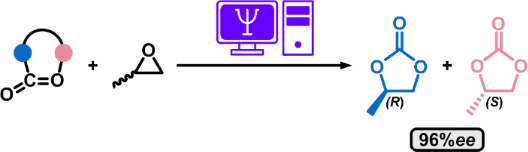
- catalysts located at the top. The top of the volcano plot corresponds to the scenario where the catalyst exhibits high catalytic activity, as it achieves an optimal balance in binding to the reactants, neither too strongly nor too weakly (Figure 1A, purple points). The catalysts with binding energies lower
- than the catalysts at the top show lower catalytic activity due to insufficient activation of the substrate (Figure 1A, green points). Conversely, catalysts that bind too strongly impede the detachment of the catalyst–reactant complex, thereby reducing the catalyst turnover (Figure 1A, pink points) [26
- F1_PB_Ph_CF3 from family 1 are exceptions as they exhibit acceptable catalytic activity. To identify the most suitable substituents, compounds of family 1 were excluded (except F1_PB_Ph_H and F1_PB_Ph_CF3), and a new volcano plot (Figure 6B) was generated. This plot employs the same axes as before (ΔG(pre-TS01


Efficient modification of peroxydisulfate oxidation reactions of nitrogen-containing heterocycles 6-methyluracil and pyridine
Beilstein J. Org. Chem. 2024, 20, 2599–2607, doi:10.3762/bjoc.20.219
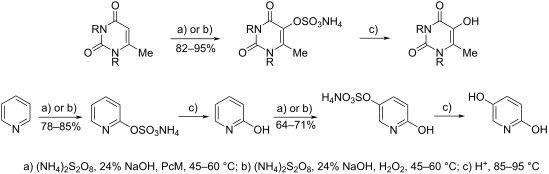
- ][19][20]. The catalytic activity of metallophthalocyanines originates from their planar, cyclic structure with a developed π-conjugation system. This makes the fifth and sixth coordination sites of the central metal ion available for coordination with the reactant molecules of the catalytic reaction


Evaluating the halogen bonding strength of a iodoloisoxazolium(III) salt
Beilstein J. Org. Chem. 2024, 20, 2401–2407, doi:10.3762/bjoc.20.204
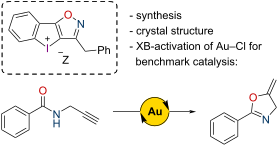
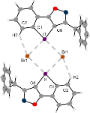
- resulting order of catalytic activity of these halogen-bond donors is in line with the above-mentioned previous benchmark of these activators [13]. Finally, also the new iodoloisoxazolium salt 7BArF was applied and a comparably high activity was observed (ca. 85% conversion after 2 h). This result marks




Catalysing (organo-)catalysis: Trends in the application of machine learning to enantioselective organocatalysis
Beilstein J. Org. Chem. 2024, 20, 2280–2304, doi:10.3762/bjoc.20.196
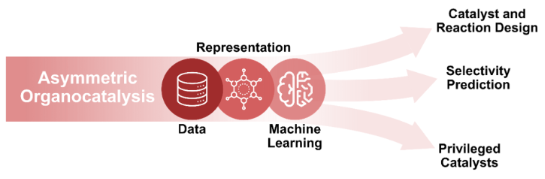
- optimization algorithm allowed them to discover multiple trade-off optima, enabling a scientist to select the ideal catalyst based on the specific requirements of catalytic activity and selectivity, while still accounting for catalyst generality through design of the objectives. Noticeably, data analysis
- witnessed a surge in data-driven approaches to improve the design of reactions, e.g., by inferring mechanistic features through statistical modelling, the generation of catalyst structures with increased catalytic activity, or optimising the reaction conditions to maximise the yield or selectivity. In




Factors influencing the performance of organocatalysts immobilised on solid supports: A review
Beilstein J. Org. Chem. 2024, 20, 2129–2142, doi:10.3762/bjoc.20.183
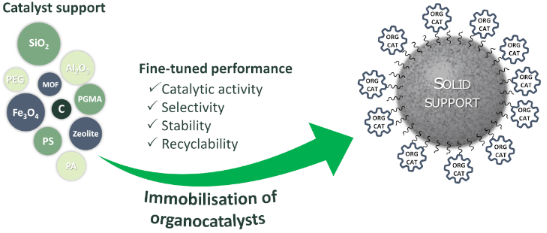
- , including the type of support, immobilisation techniques and the resulting interactions. In addition, the influence of these factors on catalytic activity, selectivity and recyclability is discussed, providing an insight into optimising the performance of immobilised organocatalysts for practical
- reaction components and the catalyst are in the same phase. Active catalytic sites are readily accessible to the reactants and therefore generally result in higher catalytic activity and selectivity [8]. As a result, homogeneous catalysis is generally preferred to heterogeneous catalysis, especially in the
- influence on the properties and thus performance of the resulting heterogeneous catalyst. However, immobilisation and structural modification introduce additional steps in the synthesis of the catalyst. Moreover, the catalytic activity and selectivity of immobilised catalysts are often lower than those of


2-Heteroarylethylamines in medicinal chemistry: a review of 2-phenethylamine satellite chemical space
Beilstein J. Org. Chem. 2024, 20, 1880–1893, doi:10.3762/bjoc.20.163
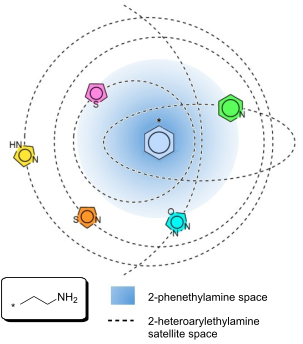
- tumor bed of a vast diversity of human tumor types. As phenylalanine is the preferred substrate of IL4I1 catalytic activity, Presset et al. [6] reported novel phenylalanine derivatives as a strategy to inhibit IL4I1 activity, as this enzyme has a preference for hydrophobic amino acids. Among them




The Groebke–Blackburn–Bienaymé reaction in its maturity: innovation and improvements since its 21st birthday (2019–2023)
Beilstein J. Org. Chem. 2024, 20, 1839–1879, doi:10.3762/bjoc.20.162
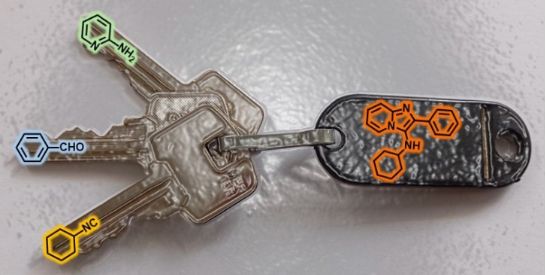
- conditions can also be found. 1.1 Metal and Brønsted acid catalysts As previously mentioned, Sc triflate is the most widely used Lewis acid for the GBB reaction, generally exhibiting higher catalytic activity compared to other metal triflates, such as Yb, In or Bi. No extensive work had been done on rare
- catalysts Noncovalent organocatalysts display a few advantages compared to the traditional metal Lewis acids, such as lower environmental impact, higher stability to air and moisture, easier removal from the GBB products. In this regard, Bolotin et al. in 2022 have reported the high catalytic activity of
- an effective chalcogen bond donation to the substrates, in place of the halogen bonding previously described. Although their catalytic activity was reported to be lower than the one of aryl iodonium derivatives, this research contributed to the scarce number of publications on the catalytic activity


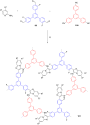
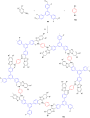


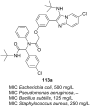


Discovery of antimicrobial peptides clostrisin and cellulosin from Clostridium: insights into their structures, co-localized biosynthetic gene clusters, and antibiotic activity
Beilstein J. Org. Chem. 2024, 20, 1800–1816, doi:10.3762/bjoc.20.159
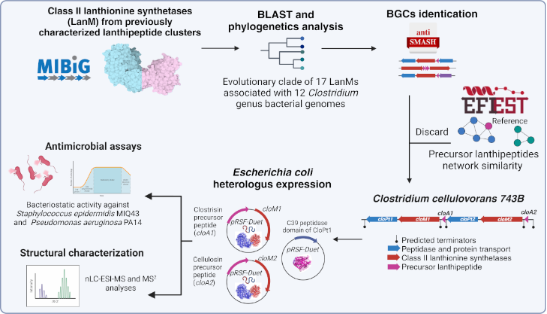
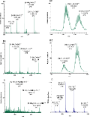
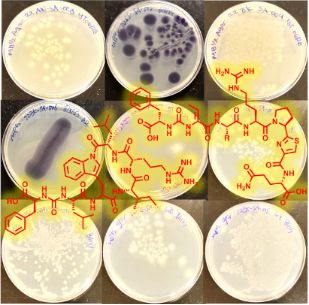
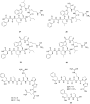
- domain from the clostrisin cluster). The latter contains the peptidase domain of CloPt1, as the complete ABC transporter was deemed too large to synthesize and express in this system. This strategy was functional in previous studies and retained catalytic activity without the rest of the transporter




Polymer degrading marine Microbulbifer bacteria: an un(der)utilized source of chemical and biocatalytic novelty
Beilstein J. Org. Chem. 2024, 20, 1635–1651, doi:10.3762/bjoc.20.146
- surfactants. Structural analysis and site-directed mutagenesis identified residues important for the catalytic activity of ChSase B6 [60]. In addition, a novel laminarinase, MaLamNA, was characterized and expressed in Pichia pastoris from the same bacterium. It functioned exclusively towards the substrate




Phenotellurazine redox catalysts: elements of design for radical cross-dehydrogenative coupling reactions
Beilstein J. Org. Chem. 2024, 20, 1292–1297, doi:10.3762/bjoc.20.112
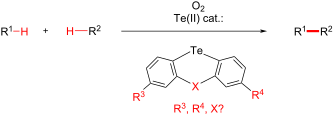
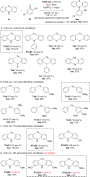
- substitution patterns on the redox catalytic activity. Keywords: cross-dehydrogenative coupling; O2 activation; phenotellurazine; redox catalysis; Te catalysis; Introduction Tellurium catalysis has become increasingly important in recent years. This is due to its unique chalcogen bonding ability, thus
- in the structure, or else at different positions, in order to establish how their redox catalytic reactivity might be affected. Indeed, we learned recently that amino-arenes possess some level of redox catalytic activity by themselves, in the absence of a Te-center [34], and therefore wished to
- diverse electron-donating or -withdrawing functional groups all featured significantly inferior catalytic activity in the selected benchmark reaction (O2-mediated dehydrogenative phenothiazination of 4-phenylphenol). It can therefore be deduced that the N-bridging atom is important for catalytic activity



Cofactor-independent C–C bond cleavage reactions catalyzed by the AlpJ family of oxygenases in atypical angucycline biosynthesis
Beilstein J. Org. Chem. 2024, 20, 1198–1206, doi:10.3762/bjoc.20.102
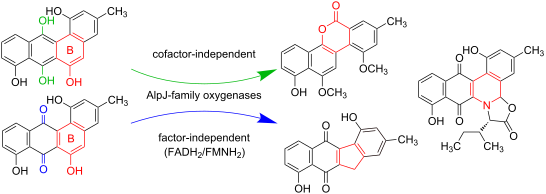
- contraction reactions, yielding a benzofluorene intermediate 4 and the dimer 5, both featuring a kinamycin skeleton (Scheme 1) [11][12]. Recent investigations unveiled the catalytic activity of the O-methyltransferase-like protein AlpH, which catalyzes a unique SAM-independent coupling of ʟ-glutamylhydrazine




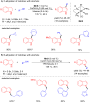
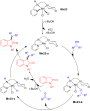
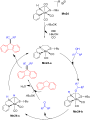
Manganese-catalyzed C–C and C–N bond formation with alcohols via borrowing hydrogen or hydrogen auto-transfer
Beilstein J. Org. Chem. 2024, 20, 1111–1166, doi:10.3762/bjoc.20.98


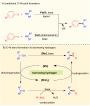


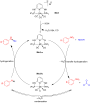


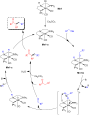

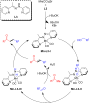


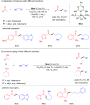


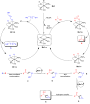


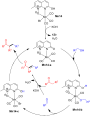


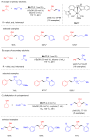

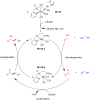


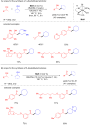
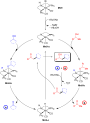


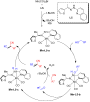







Synthesis of 1,4-azaphosphinine nucleosides and evaluation as inhibitors of human cytidine deaminase and APOBEC3A
Beilstein J. Org. Chem. 2024, 20, 1088–1098, doi:10.3762/bjoc.20.96
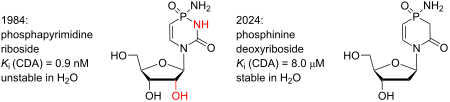
- partially localised in the nucleus of cells and, in cancer cells, become genotoxic [24]. A3A and A3H are single-domain enzymes, whereas A3B is a double-domain enzyme, in which only the C-terminal domain (CTD) has catalytic activity, and the N-terminal domain (NTD) is responsible for binding of DNA and for


Research progress on the pharmacological activity, biosynthetic pathways, and biosynthesis of crocins
Beilstein J. Org. Chem. 2024, 20, 741–752, doi:10.3762/bjoc.20.68
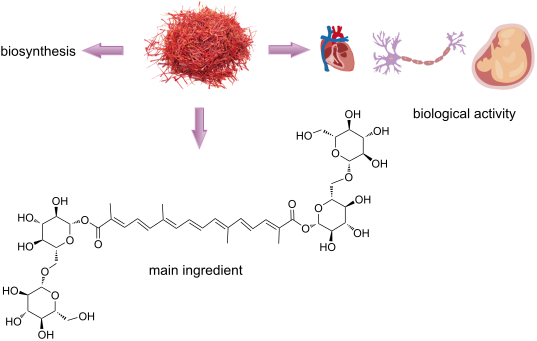
- supply, overexpressing PsBCH-CsCCD2, and optimizing the fermentation medium, the yield of crocetin (1) reached 12.43 ± 0.62 mg/L in a 5 L bioreactor [115]. While CCD has a higher catalytic activity at low temperature, the biosynthesis of zeaxanthin (7) is more suited to a higher temperature. As such, Liu
- , and UGTs are the key players in crocin biosynthesis. Empowered by the genomic, transcriptomic, and metabolomic analysis and biochemical characterization, many such enzymes have been identified. Some proteins, exemplified by GjCCD4a and GjUGT94E13, exhibit broad substrate promiscuity and high catalytic
- activity. Screening of novel enzymes for crocin biosynthesis and the directed evolution of known enzymes should facilitate the high-titer production of the key intermediates 5–7 etc. and the efficient conversion of these precursors into crocetin (1) and crocins. In conclusion, crocins are high-value plant


Evaluation of the enantioselectivity of new chiral ligands based on imidazolidin-4-one derivatives
Beilstein J. Org. Chem. 2024, 20, 684–691, doi:10.3762/bjoc.20.62
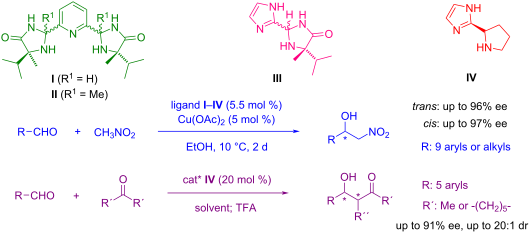
- based on derivatives of imidazolidin-4-one were synthesised and characterised. The catalytic activity and enantioselectivity of their corresponding copper(II) complexes were studied in asymmetric Henry reactions. It was found that the enantioselectivity of these catalysts is overall very high and
- donor ability to pyridine. This change reduces the ring size within the ligand structure, potentially increasing the space available for coordinating reacting species, thereby possibly enhancing catalytic activity and enantioselectivity. We also aimed to assess the impact of alkyl groups at the 5
- (i.e., temperature, reaction time, amount of catalyst, solvent) were adopted from the pilot study [5] for relevant comparison of catalyst characteristics. From Table 1 and Table 2, which summarise results obtained using tridentate ligands Ia–c and IIa–c, it is evident that the catalytic activity their


Switchable molecular tweezers: design and applications
Beilstein J. Org. Chem. 2024, 20, 504–539, doi:10.3762/bjoc.20.45
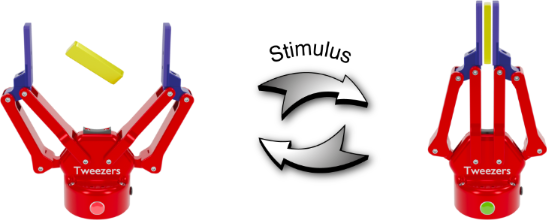
- tweezers 16 were then synthetized by Vives and co-workers using a 6,6”-substituted terpyridine this time bearing zinc(II)–salphen complexes [47]. The catalytic activity was evaluated in an acetyl transfer reaction between pyridinemethanol derivatives and anhydrides. For the ortho derivative, a rate


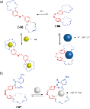


Ligand effects, solvent cooperation, and large kinetic solvent deuterium isotope effects in gold(I)-catalyzed intramolecular alkene hydroamination
Beilstein J. Org. Chem. 2024, 20, 479–496, doi:10.3762/bjoc.20.43
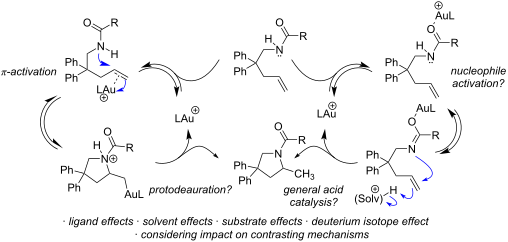
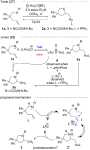
- were shown to proceed with anti-selectivity and that was used as support for gold catalysis [15], but mechanism studies of triflic acid catalysis showed a preference for anti-selectivity as well [31]. Despite similarities, control studies indicate meaningful differences in catalytic activity between
- generally acidic conditions that initiate cyclization [34][35]. These observations are critical for informing future discussion and experiments related to this important reaction. Results Ligand effect To examine the catalytic activity of gold with ligands of different electronic properties, we used our
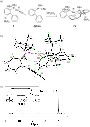
- concerted attack and protonation [59]) may be being mimicked by the gold-catalyzed processes here, further supporting the viability of a mechanism like that shown in Scheme 2. Finally, at its extreme, increasing nitrogen basicity inhibits gold catalytic activity, but within this low basicity regime, the






Green and sustainable approaches for the Friedel–Crafts reaction between aldehydes and indoles
Beilstein J. Org. Chem. 2024, 20, 379–426, doi:10.3762/bjoc.20.36
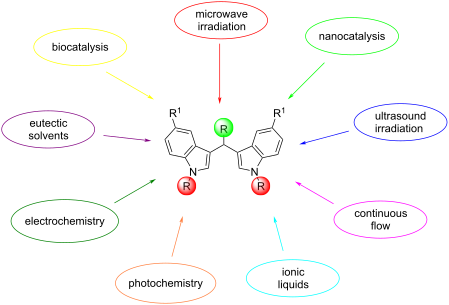
- counterparts, due to their recyclability, ease of handling, and low cost [40]. Carbon-based solid acid catalysts especially are an interesting catalyst class, because they display low corrosiveness, toxicity, and higher catalytic activity, while also being insoluble in most organic solvents. The large amount
- reaction of aldehydes and ketones with indole [93][94]. Bidentate halogen-bond donors are efficient catalysts, since they can form two halogen bonds with each substrate, instead of just one. Thus, compounds 24, 25 and 26 were screened for their catalytic activity with 26 emerging as the optimum choice
- 100 nm, exhibit various benefits, such as tailoring the scaffold of the catalyst, the recyclability of the nanocompounds, as well as the elevated catalytic activity offered. These benefits stem from their high surface area, that provides more active sites for the reactants to absorb into and collide




Identification of the p-coumaric acid biosynthetic gene cluster in Kutzneria albida: insights into the diazotization-dependent deamination pathway
Beilstein J. Org. Chem. 2024, 20, 1–11, doi:10.3762/bjoc.20.1
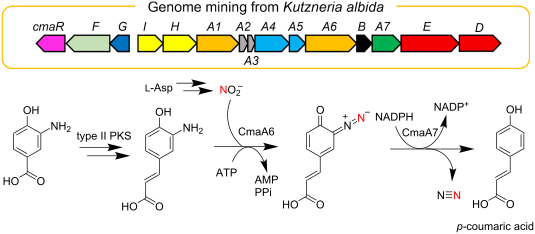
- -coumaric acid via diazotization-dependent deamination. The diazotase CmaA6 had a high catalytic activity, which enabled us to determine the kinetics of the denitrification reaction catalyzed by AvaA7. Furthermore, careful comparison between ava and cma clusters provided insights into (i) the mechanism of


Anion–π catalysis on carbon allotropes
Beilstein J. Org. Chem. 2023, 19, 1881–1894, doi:10.3762/bjoc.19.140
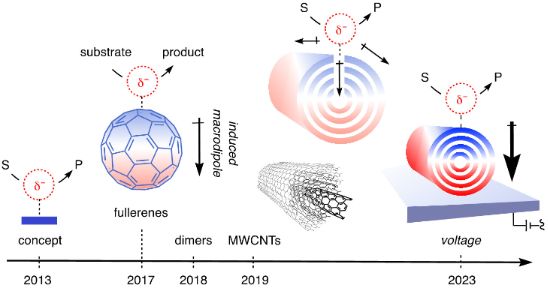
- fullerenes as well. The unique polarizability of fullerene monomers like 1 is thought to induce strong anion–π interactions and thus account for the observed catalytic activity (Figure 7A) [12]. This polarizability should further increase in fullerene dimers like 36 [80]. Anions, anionic reactive
- activity did not originate from a change in intrinsic anion–π interactions. The computed polarizability of dimer 37 (α = 1499 a.u.) was almost twice as high as that of monomer 22 (α = 903 a.u.), confirming that powerful induced anion–π interactions account for the high catalytic activity. Twenty
- equivalents of the π-acidic intercalator 38 increased the catalytic activity of fullerene dimer 37 by 20%. This increase was consistent with the formation of the π-stacked complex 39 with increased polarizability and electron deficiency. With the π-basic intercalator 40, the catalytic activity of fullerene




A novel recyclable organocatalyst for the gram-scale enantioselective synthesis of (S)-baclofen
Beilstein J. Org. Chem. 2023, 19, 1811–1824, doi:10.3762/bjoc.19.133
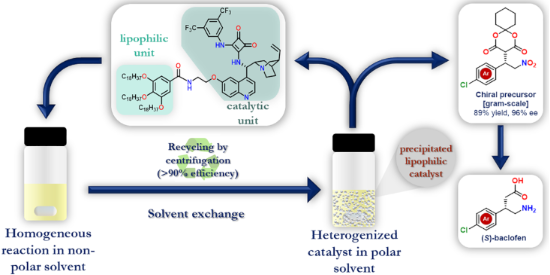
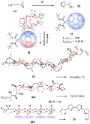
- homogeneous reaction. For example, by incorporating a lipophilic side chain [28] on the organocatalyst that does not interfere with its catalytic activity thanks to a linker between the catalyst and lipophilic units. In this way, a significant difference in polarity can be achieved between the catalyst and
- cinchona squaramide organocatalyst. Its catalytic activity and recyclability were examined in a new stereoselective synthesis of baclofen, which is used to treat muscle spasms [30]. Finally, the catalyst was easily recycled by centrifugation over five reaction cycles without significant loss of activity
- applied between the catalytic and lipophilic units to avoid a decrease in the catalytic activity. The demethylated cinchona squaramide 6 was reacted with O-p-toluenesulfonyl-N-Boc-ethanolamine. The protecting group was removed using trifluoroacetic acid, followed by a neutralization step, gaining the


Selectivity control towards CO versus H2 for photo-driven CO2 reduction with a novel Co(II) catalyst
Beilstein J. Org. Chem. 2023, 19, 1766–1775, doi:10.3762/bjoc.19.129
- detect, if the two polymorphs show different catalytic activity, as in the following investigations the amorphic powder was used. Spectroscopic and electrochemical characterization The Co(II) complex 1 was characterized by UV–vis absorption spectroscopy in N,N-dimethylacetamide (DMA), as it was the
- . Thus, aiming at enhancing the catalytic activity, we performed some additional photocatalytic tests, upon the addition of different concentrations of 1,1,1,3,3,3-hexafluoropropan-2-ol (HFIP). This alcohol has interesting physical and chemical properties, and, being well miscible with many organic


Application of N-heterocyclic carbene–Cu(I) complexes as catalysts in organic synthesis: a review
Beilstein J. Org. Chem. 2023, 19, 1408–1442, doi:10.3762/bjoc.19.102
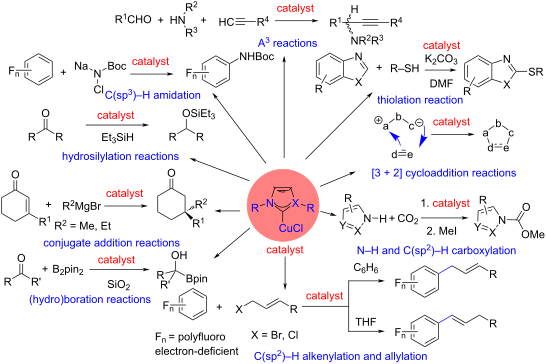
- yield by reacting [Cu(CH3CN)4]BF4 with 2 equiv of benzimidazolium salt 38 in the presence of NaOt-Bu (Scheme 14) [28]. The catalytic activity of the complex 39 was studied in the [3 + 2] cycloaddition of azides with alkynes [28]. Coyle et al. reported the synthesis of a series of NHC and ADC (acyclic
- [(IMes)2Cu]+FHF− (91) was also obtained. These complexes exhibit an interesting catalytic activity that will be described later. 2 Application as catalysts In 2001, Woodward, for the first time, reported an NHC–Cu-mediated catalysis in the conjugate addition of diethylzinc to enones (Scheme 33) [46
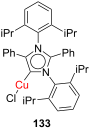
- been found to be highly efficient catalysts in this transformation. Nolan and co-workers reported the catalytic activity of [Cu(IPr)Cl] in the hydrosilylation of carbonyl compounds to form silyl ethers in high yield [48][49]. A series of bis-NHC–copper complexes was synthesized and the compounds were