


Search results
Search for "configuration" in Full Text gives 1071 result(s) in Beilstein Journal of Organic Chemistry. Showing first 200.
Configuration–packing synergy enabling integrated crystalline-state RTP and amorphous-state TADF
Beilstein J. Org. Chem. 2026, 22, 224–236, doi:10.3762/bjoc.22.16
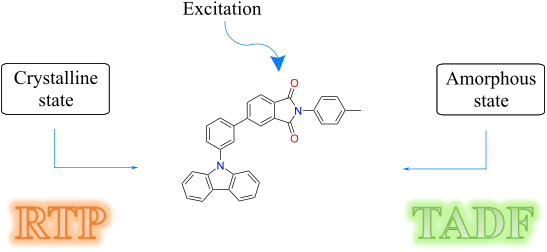
- single molecule under different environments or phases are still relatively rare [33]. The underlying challenge lies in the different demands that RTP and TADF place on the microscopic configuration and solid-state environment. RTP typically favors molecular rigidity, confinement, and specific
- configuration design and material-scale packing/confinement engineering to enable the controlled switching between RTP and TADF. Among the potential receptor units, imide, with its strong electron-withdrawing nature and prominent n→π* contribution from the two carbonyl groups, offers a dual advantage: it
- facilitating thermally activated reverse intersystem crossing (RISC) and enabling TADF. Therefore, a molecular platform based on imide is expected to achieve programmable triplet management through a “configuration-decoupling + packing/confinement synergy” strategy. This platform can enable the selective


Screwing the helical chirality through terminal peri-functionalization
Beilstein J. Org. Chem. 2026, 22, 205–212, doi:10.3762/bjoc.22.14
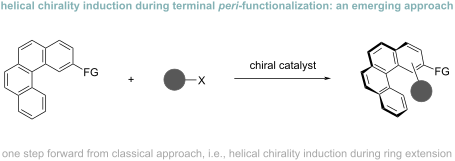
- phosphine oxide and the nitro-functionalized oxa[5]helicene. This ion-pairing interaction was also studied using NMR titration and Job’s plot analysis. The transition state depicted in Figure 3 was found to be most favorable providing the product with M-configuration. Looking ahead, these strategies may


Streptoquinolines A and B, new antibacterial meroterpenoids produced by Streptomyces sp. TMPU-A0679
Beilstein J. Org. Chem. 2026, 22, 185–191, doi:10.3762/bjoc.22.12
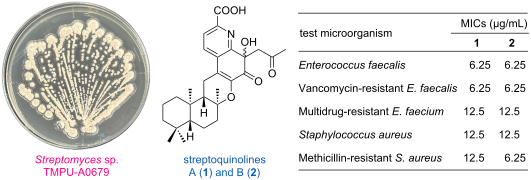
- between C-11 and C-1'. Consequently, the planar structure of compound 1 was elucidated as shown in Figure 1, consistent with the molecular formula and degree of unsaturation. The relative configuration of compound 1 was elucidated based on ROESY correlations, as shown in Figure 3. Clear ROESY cross-peaks
- between H3-14 and H3-15, suggested that these protons resided on the opposite face. These results support a relative configuration of 5R*, 8S*, 9S*, and 10R* for the drimane skeleton of compound 1. However, it was not possible to elucidate the configuration at C-4' from available NMR data
- 1H,1H COSY and HMBC correlations as those observed for 1 (Figure 2), confirming that compound 2 shared the same planar structure. The specific rotations of 1 and 2 were similar in both sign and magnitude, suggesting that they shared the same absolute configuration for most chiral centers. However, a


Asymmetric Mannich reaction of aromatic imines with malonates in the presence of multifunctional catalysts
Beilstein J. Org. Chem. 2026, 22, 151–157, doi:10.3762/bjoc.22.8
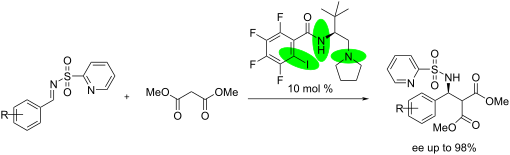
- of the iodine atom cannot be excluded in the emergence of the stereoselectivity. To determine the absolute configuration of product 3 the nitrogen atom was additionally protected with Boc2O followed by the removal of the pyridinesulfonyl group with Mg in MeOH (see Supporting Information File 1) [28
- ]. Although basic conditions caused partial racemization during the protection or deprotection step, the Boc-protected amine was obtained in low enantiomeric purity. Chiral HPLC analysis and comparison with an authentic sample revealed the S-configuration of the Mannich adduct [29]. Absolute configurations of
- catalyst and the imine and malonate attacks from si-face affording the product in S-configuration (Figure 2). To demonstrate the utility of the elaborated catalytic system, the Mannich reaction between aromatic imines, both with electron-withdrawing and electron-donating substituents in the phenyl ring


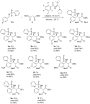
Highly electrophilic, gem- and spiro-activated trichloromethylnitrocyclopropanes: synthesis and structure
Beilstein J. Org. Chem. 2026, 22, 123–130, doi:10.3762/bjoc.22.5
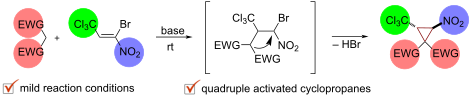
- . Conditions for obtaining the target cyclopropanes were optimized. The process is characterized by high diastereoselectivity and allows obtaining cyclopropanes with trans-configuration of -NO2 and -CCl3 groups. Monocyclic (based on malonic acid dinitrile, methyl cyanoacetate, ethyl cyanoacetate
- and 9b (1.3:1 dr, according to the 1H NMR spectrum) due to the axial chirality of this molecule. The mixture was easily separated by silica gel column chromatography. Each of the isomers is characterized by the trans-configuration of the nitro- and trichloromethyl groups in the cyclopropane ring (3JH
- to the bromonitroalkene afford the intermediate anion II, followed by tautomerization and formation of anion IV, which undergoes intramolecular nucleophilic substitution of the bromide along the C-alkylation pathway [37][38][39] (Scheme 6). The trans-configuration of the methine protons of the


Total synthesis of natural products based on hydrogenation of aromatic rings
Beilstein J. Org. Chem. 2026, 22, 88–122, doi:10.3762/bjoc.22.4
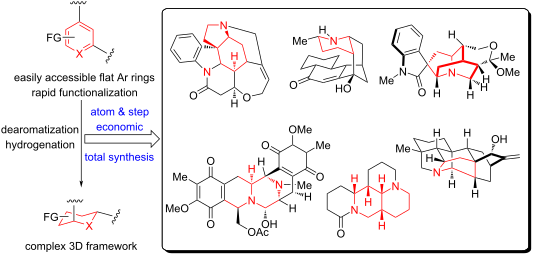
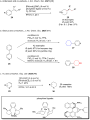
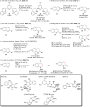
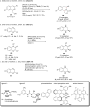
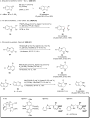
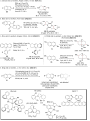
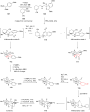
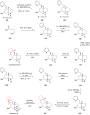
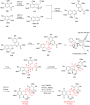
- diastereoselective hydrogenation of symmetrical 2,5-DKP (2,5-dipiperazinone) 67 using a rhodium complex (Scheme 8) [63]. The saturated pentacyclic compound 68 was obtained in high yield and excellent diastereoselectivity. The hydrogen atoms in the final product were all arranged in cis configuration. Key features of


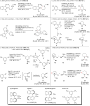








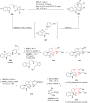

Total synthesis of asperdinones B, C, D, E and terezine D
Beilstein J. Org. Chem. 2025, 21, 2730–2738, doi:10.3762/bjoc.21.210
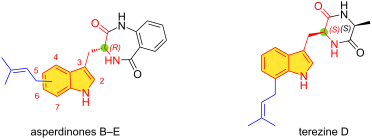
- gene clusters that code for a (3R) configuration. Keywords: C–H activation; indole alkaloid; Negishi reaction; prenylation; Introduction Alkaloids constitute an important family of naturally occurring compounds with a rich history in the annals of bioactive compounds [1]. Among these, the family of
- Bock in 1987 [16]. It is of interest that although the biosynthesis of 3-indolylbenzoquinone-2,5-dione ent-5 is initiated with ʟ-tryptophan and anthranilic acid [17], the resulting natural products 1–4 possess a (3R) configuration. This is because of an epimerization mediated by the non-ribosomal


Competitive cyclization of ethyl trifluoroacetoacetate and methyl ketones with 1,3-diamino-2-propanol into hydrogenated oxazolo- and pyrimido-condensed pyridones
Beilstein J. Org. Chem. 2025, 21, 2716–2729, doi:10.3762/bjoc.21.209
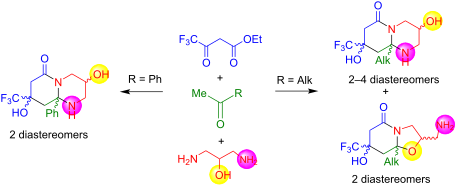
- configuration of other diastereomers (Figure 2 and Figure 3). Analysis of the XRD results shows that the formation of bicyclic compounds are formed with two types of ring fusion: trans- and cis-type, similar to the structure of decalin [68]. In all studied structures 4аcc, 4аct, 4аtt, 4аtc, 4dct, 5ctc, 5ctt
- substituent R at the bridgehead carbon atom can occupy only an axial position with respect to both cycles. On the other hand, the CF3 group is a conformational anchor and always occupies a pseudo-equatorial position, which is why it leads to the trans-configuration of the piperidone cycle. In the cis-junction
- -configuration of the piperidone ring. At the same time, in relation to the hexahydropyrimidine ring, the bridgehead substituent R occupies a pseudo-axial position. The relative configuration of the hexahydropyrimidine ring in compounds 4 is determined by the pseudo-axial (trans) or equatorial (cis) position of


Recent advancements in the synthesis of Veratrum alkaloids
Beilstein J. Org. Chem. 2025, 21, 2657–2693, doi:10.3762/bjoc.21.206
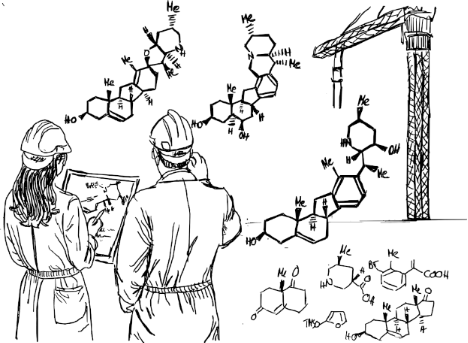
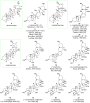
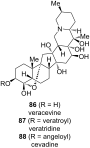
- trans-fusion of the A,B-rings and the configuration of the methyl group at C25, among other features [13]. Like the related subclasses, cevanine-type alkaloids exhibit toxicity in humans by acting on the sodium channels of nerve cells. Increased stimulation, associated with the vagal nerve results in a
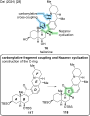
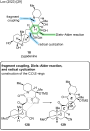
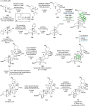
- introduced by addition of 2-lithio-5-methylpyridine (94) to methyl ketone 93, with the major addition product 95 exhibiting the desired configuration at C20. Tosylation of the primary C18–OH in 95 (and secondary C3–OH) was followed by intramolecular nucleophilic substitution through the pyridine nitrogen
- . The pyridinium species was reduced to reveal the piperidine E-ring with correct configuration of the stereocenters at C22 and C25. Reduction of the C3-tosylate afforded deoxoverticinone (96), a known congener of verticine. Seven more redox manipulation steps were required to install the C6–OH group
















Chemoenzymatic synthesis of the cardenolide rhodexin A and its aglycone sarmentogenin
Beilstein J. Org. Chem. 2025, 21, 2637–2644, doi:10.3762/bjoc.21.204
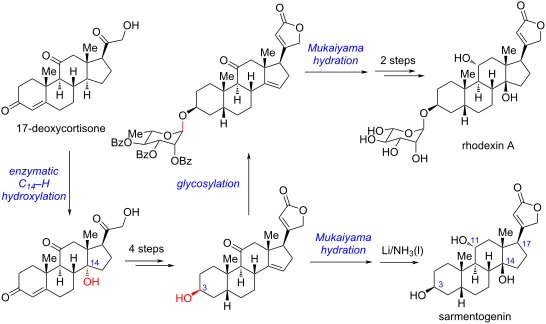
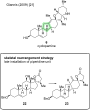
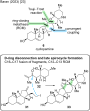
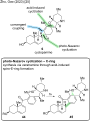
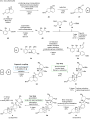
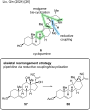
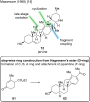
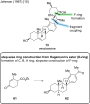
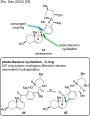
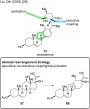
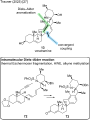
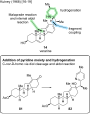
- -electron demand Diels–Alder (IEDDA) reaction was utilized to successfully construct the BCD tricyclic structure with the correct configuration of the four contiguous stereocenters in just one step. However, the requirement of a series of protecting group manipulations undermined the step-economy and


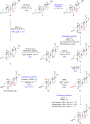

Recent advances in total synthesis of illisimonin A
Beilstein J. Org. Chem. 2025, 21, 2571–2583, doi:10.3762/bjoc.21.199
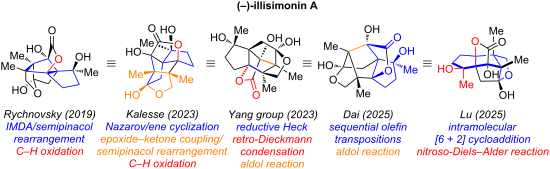
- as “illisimonane skeleton”. The absolute configuration of (−)-illisimonin A was determined to be 1R,4R,5R,6R,7S,9S,10S by comparing the calculated electronic circular dichroism (EDC) spectrum with experimental CD data (Figure 2). Biological evaluation revealed that illisimonin A exhibits
- Rychnovsky [28], Kalesse [29], Yang [30], Dai [31] and Lu [32] have achieved the total synthesis of this molecule. Notable, Rychnovsky and co-workers revised the absolute configuration of (−)-illisimonin A to 1S,4S,5S,6S,7R,9R,10R. This review summarizes the reported synthetic routes toward illisimonin A
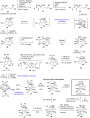
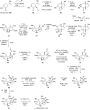
- , including uncompleted approaches. Review Rychnovsky’s synthesis and the absolute configuration revision of (−)-illisimonin A In 2019, Rychnovsky’s group reported the first total synthesis of illisimonin A [28]. Recognizing that the strained trans-pentalene moiety in the molecule is challenging to construct






Total syntheses of highly oxidative Ryania diterpenoids facilitated by innovations in synthetic strategies
Beilstein J. Org. Chem. 2025, 21, 2553–2570, doi:10.3762/bjoc.21.198
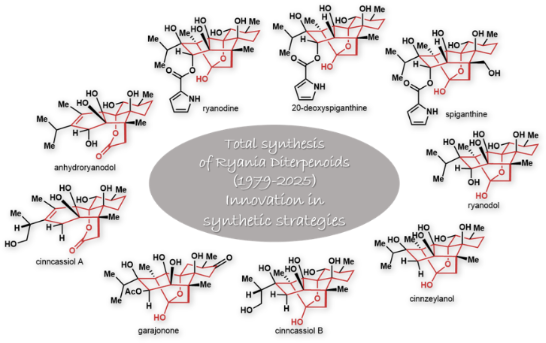
- limitations in technical capabilities at the time, its absolute configuration remained undetermined. Over the subsequent two decades, its hydrolysis product ryanodol (4) and several structurally related analogs were isolated sequentially [9][10][11][12][13][14]. The absolute configurations of both 1 and 4
- the correct structure of ryanodol to be 3-epi-ryanodol (5), thereby revising the previously accepted configuration [15]. Since then, numerous analogs based on the ryanodol scaffold have been identified and characterized. As of now, 18 natural products from this family have been successfully isolated
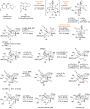
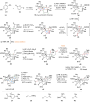
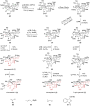
- the correct relative configuration undergoes hydrolysis of its spirocyclic lactone moiety under basic conditions to yield 13, establishing the critical C5 chiral center. Under acidic conditions, intermediate 13 undergoes ketal deprotection followed by successive intramolecular aldol reactions







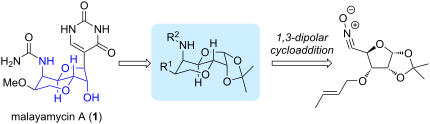
Rapid access to the core of malayamycin A by intramolecular dipolar cycloaddition
Beilstein J. Org. Chem. 2025, 21, 2542–2547, doi:10.3762/bjoc.21.196
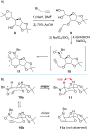
- undesired stereochemistry at C3 due to a possible chair-like transition state like 10a (Scheme 2B). This phenomenon is consistent with the observations from previous syntheses [31][35][36]. We anticipated that late-stage epimerization might invert the configuration once the acyl group is revealed at the C2
- nitrile oxide. At this stage, it is not clear that the diastereomeric ratio (dr 4:1) may share with the same configuration at the C2 or C2’ position. The mixture of 18 was subjected to reduction of the imine motif by NaBH3CN in AcOH–MeOH and immediately protected with the Boc group. The isolated yield of
- from the INOC cycloaddition can be converted to a single stereoisomer of 20. With all required stereogenic centers embedded in the 6-5 trans-fused bicyclic skeleton, the remaining problem is converting C to O to install the secondary alcohol at C2 with retention of the β-configuration. The programmed




Effect of a photoswitchable rotaxane on membrane permeabilization across lipid compositions
Beilstein J. Org. Chem. 2025, 21, 2498–2512, doi:10.3762/bjoc.21.192
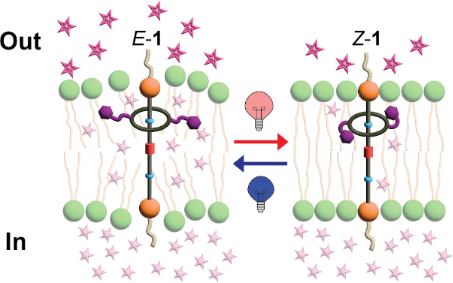
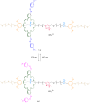
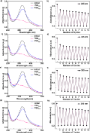
- the macrocycle, and is consistent with the higher dye release observed for 1-E compared to 1-Z in EYPC/Chol 8:2 LUVs. By contrast, the azobenzene configuration has little effect in the more rigid EYPC/Chol 6:4 bilayers. In highly fluid pure EYPC bilayers, however, the rapid release within the first
- bilayer, which is influenced by azobenzene isomerization. However, in the highly disordered EYPC membranes, the macrocycle appears to retain sufficient mobility regardless of the azobenzene configuration, enabling it to reach the lipid–water interface and trigger membrane permeabilization in both isomeric




The high potential of methyl laurate as a recyclable competitor to conventional toxic solvents in [3 + 2] cycloaddition reactions
Beilstein J. Org. Chem. 2025, 21, 2389–2415, doi:10.3762/bjoc.21.184
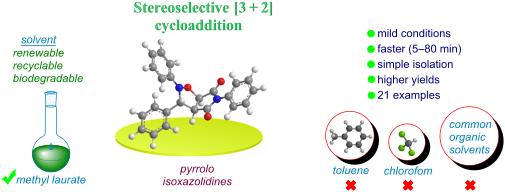
- purification techniques [62][63][64]. Synthesis of pyrrolo-isoxazolidines utilizing nitrosoarenes via the multicomponent strategy is indeed feasible [65][66]. In a similar manner, Chakraborty obtained diastereomer products, primarily in cis configuration, from the cycloaddition reaction of a fluoro or a furyl
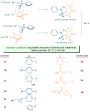
- aromatic aldehydes exhibit a Z-configuration [112][113] and it appears that endo-coupling of the Z-configured C,N-diphenylnitrone with maleimide is more favorable. Indeed, the distribution of the cis/trans product is also found to be significantly influenced by the nature of the substituents present in the







Synthetic study toward vibralactone
Beilstein J. Org. Chem. 2025, 21, 2376–2382, doi:10.3762/bjoc.21.182

- lactone 13 through allylic oxidation and cross metathesis. For the construction of the cyclopentene ring, an alkylidene carbene-mediated C–H insertion would be applied [35]. The synthetic route could be traced back to β-lactone 14, which contains two continuous stereogenic centers with trans configuration


Rotaxanes with integrated photoswitches: design principles, functional behavior, and emerging applications
Beilstein J. Org. Chem. 2025, 21, 2345–2366, doi:10.3762/bjoc.21.179
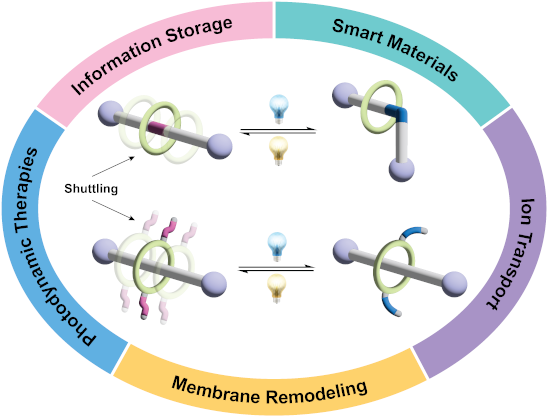
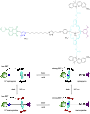
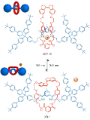
- ring appended to it, capable of capturing K+ ions (Figure 6) [51]. The authors demonstrated that this rotaxane can be incorporated into model lipid bilayers and mediate K+ ion transport across membranes through the shuttling motion of the macrocycle. In its trans configuration, the azobenzene allows
- pyridinium bisamide that forms a complex with the isophthalamide unit of the macrocycle and a chloride anion when the stiff-stilbene is in the cis configuration (Figure 17). Upon switching to the trans isomer, the expanded geometry of the macrocycle disrupts the complex, resulting in the dethreading of the





Comparative analysis of complanadine A total syntheses
Beilstein J. Org. Chem. 2025, 21, 2334–2344, doi:10.3762/bjoc.21.178
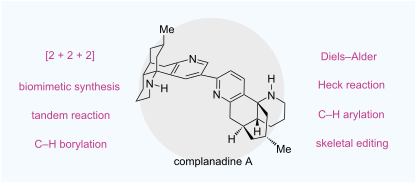
- enantiomers of 51 allowed Tsukano and co-workers to prepare both enantiomers of complanadine A. Their further biological evaluation of the complanadines and several synthetic intermediates revealed that the pseudo-dimeric structure, absolute configuration, and oxidation level are important for the observed



Recent advances in Norrish–Yang cyclization and dicarbonyl photoredox reactions for natural product synthesis
Beilstein J. Org. Chem. 2025, 21, 2315–2333, doi:10.3762/bjoc.21.177
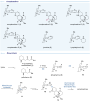
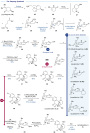
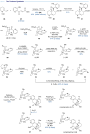
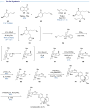
- room temperature, delivering spiroacetal (S)-114 with complete retention of configuration (>99% ee). The subsequent one-pot acetylation generated (S)-115 in 83% overall yield over three steps from (S)-112. The following functional group manipulations of (S)-115 – including debenzylation/debromination







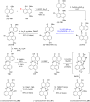
Halogenated butyrolactones from the biomass-derived synthon levoglucosenone
Beilstein J. Org. Chem. 2025, 21, 2297–2301, doi:10.3762/bjoc.21.175
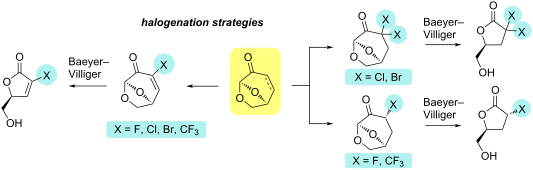
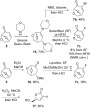
- epoxidations of 5 are highly stereoselective [44]. Unambiguous assignment of configuration for the diastereomers was not possible on the basis of the selective 1D NOE spectra due to the lack of informative crosspeaks. Limiting the amount of oxidant (H2O2 or peracetic acid) resulted in mixtures, suggesting that




Enantioselective radical chemistry: a bright future ahead
Beilstein J. Org. Chem. 2025, 21, 2283–2296, doi:10.3762/bjoc.21.174
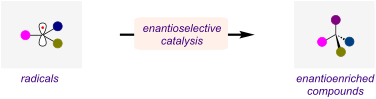
- -alkenylated products 43 with excellent enantioselectivities. Alkenyl trifluoroborates with (Z) configuration gave higher product yields than the analogous (E)-alkenyl trifluoroborates, but the corresponding alkenyl group in the product had (E) configuration in all cases. A key enabling aspect of the method


Pathway economy in cyclization of 1,n-enynes
Beilstein J. Org. Chem. 2025, 21, 2260–2282, doi:10.3762/bjoc.21.173
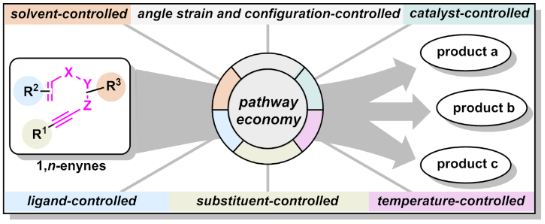
- copper-catalyzed tandem process initiated by endo-cyclization of indolyl homopropargyl amides, enabling atom-economical synthesis of therapeutically significant bridged aza[n.2.1] skeletons. Angle strain and configuration-controlled cyclization of 1,n-enynes In cyclization reactions, angle strain and
- configuration exert pronounced effects on reaction pathways. These substrate-specific geometric parameters directly dictate transition state formation during ring closure. Recent advances demonstrated that deliberate manipulation of angle strain and configuration enabled divergent skeletal outcomes under
- the regio- and stereoselective 5-exo-dig alkoxycyclization of 1,5-enynes via gold(I) catalysis. The cyclization mode was controlled by the configuration of the double bond in the substrate. In Z-configured substrates, steric constraints promoted 5-endo-dig cyclization, generating bicyclo[3.1.0]hexane


A chiral LC–MS strategy for stereochemical assignment of natural products sharing a 3-methylpent-4-en-2-ol moiety in their terminal structures
Beilstein J. Org. Chem. 2025, 21, 2243–2249, doi:10.3762/bjoc.21.171
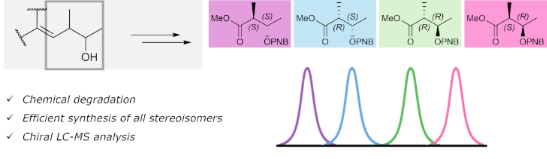
- all compounds. In this study, we developed a method to determine the absolute configuration of the terminal MPO moiety with high accuracy and sensitivity by a combination of chemical degradation, chemical synthesis, and chiral LC–MS analysis. The applicability of this method was demonstrated through
- typically determined using NMR-based techniques, such as coupling constant analysis and NOE experiments, sometimes with the aid of computational chemistry [3][4][5][6][7]. In contrast, absolute configuration remains more challenging to determine, as it frequently requires chemical degradation or
- groups. Total synthesis is a powerful approach for determining absolute configuration through the comparison of specific rotation or chromatographic behavior; however, it requires considerable time and effort. In this context, we have been working on developing effective approaches to determine the


Thiadiazino-indole, thiadiazino-carbazole and benzothiadiazino-carbazole dioxides: synthesis, physicochemical and early ADME characterization of representatives of new tri-, tetra- and pentacyclic ring systems and their intermediates
Beilstein J. Org. Chem. 2025, 21, 2220–2233, doi:10.3762/bjoc.21.169
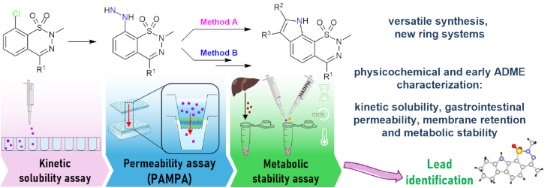
- (according to LC–MS) was always the (E) isomer. However, in the case of compounds 7c and 7h, the (Z) isomers were present in relatively high quantities and could also be successfully isolated and characterized after flash chromatography. The configuration of the C=N double bond was determined on the basis of
- both Figures, beside the selective 1D NOESY spectrum (upper part in Figure 2 and Figure 3), the 1H NMR spectrum (lower part) is also presented. The spatial proximity of NH with N=CH (marked with a red arrow in Figure 2) or with CH2 (red arrow in Figure 3) proves the (E) or (Z) configuration of the N=C


A m-quaterphenyl probe for absolute configurational assignments of primary and secondary amines
Beilstein J. Org. Chem. 2025, 21, 2211–2219, doi:10.3762/bjoc.21.168
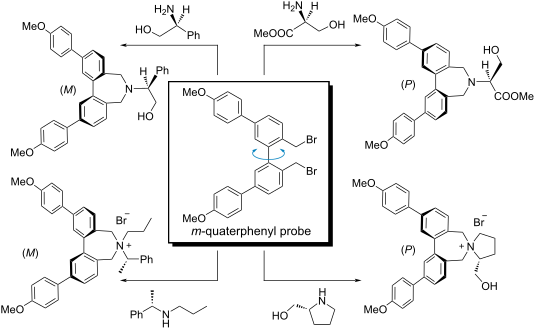
- conformers, obtained via DFT calculations, show a correlation with both the sign and intensity of the experimentally observed CD spectra. Keywords: absolute configuration; chiral amine; chiral quaternary ammonium salt; circular dichroism; DFT calculation; Introduction Determining the absolute
- effect in CD, the direction of twist can be estimated. The absolute configuration of amines can be determined by comparing the direction of the twist determined by CD with that obtained by conformational analysis using theoretical calculations. However, this method has only been applied to simple primary
- amines. In this work, we report that the method was applied to chiral amino alcohols and amino acid esters. We also applied the method to chiral secondary amines, for which it is generally difficult to determine the absolute configuration due to the conformational complexity of their derivatives [33]. By





