


Search results
Search for "dearomatization" in Full Text gives 51 result(s) in Beilstein Journal of Organic Chemistry.
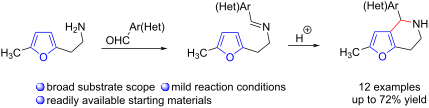
Synthesis of tetrahydrofuro[3,2-c]pyridines via Pictet–Spengler reaction
- Elena Y. Mendogralo and
- Maxim G. Uchuskin
Beilstein J. Org. Chem. 2023, 19, 991–997, doi:10.3762/bjoc.19.74
- the use of 3-substituted furans. For example, the intramolecular Friedel–Crafts alkylation reaction (Scheme 1a) of alcohols [9][10][11], alkenes [12] or acetylenes [13] affords the desired tetrahydrofuro[3,2-c]pyridines. A related method is based on a Au(I)-catalyzed domino sequence dearomatization

Graphical Abstract

Figure 1: Examples of natural and bioactive hydrogenated furo[3,2-c]pyridines.

Scheme 1: The described approaches to tetrahydrofuro[3,2-c]pyridines and our work.

Scheme 2: The synthesis of tetrahydrofuro[3,2-c]pyridines 4. Conditions: athe reaction was performed at 1 mmo...

Scheme 3: The acid-catalyzed reversible transformation of tetrahydrofuro[3,2-c]pyridine 4a and 3-(2-oxopropyl...

Scheme 4: Synthesis of tetrahydropyrrolo[3,2-c]pyridine 6a.

Scheme 5: Reactivity of tetrahydrofuro[3,2-c]pyridine 4a.
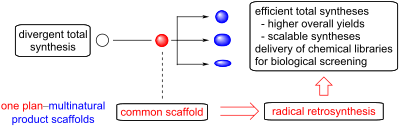
Combining the best of both worlds: radical-based divergent total synthesis
- Kyriaki Gennaiou,
- Antonios Kelesidis,
- Maria Kourgiantaki and
- Alexandros L. Zografos
Beilstein J. Org. Chem. 2023, 19, 1–26, doi:10.3762/bjoc.19.1
- commenced with the generation of 107 from cyclopentenone 105 and aryl aldehyde 106 in a three-step sequence. An oxidative dearomatization induced a [5 + 2] cycloaddition–pinacol rearrangement of 107 to 109, according to previous studies of the same group (Scheme 9) [59][60][61]. The key HAT-mediated

Graphical Abstract
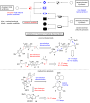
Scheme 1: The power of radical retrosynthesis and the tactic of divergent total synthesis.

Figure 1: Evolution of radical chemistry for organic synthesis.

Scheme 2: Divergent total synthesis of α-pyrone-diterpenoids (Baran).

Scheme 3: Divergent synthesis of pyrone diterpenoids by merged chemoenzymatic and radical synthesis (part I, ...

Scheme 4: Divergent synthesis of pyrone diterpenoids by merged chemoenzymatic and radical synthesis (part II,...
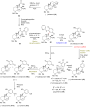
Scheme 5: Divergent synthesis of drimane-type hydroquinone meroterpenoids (Li).

Scheme 6: Divergent synthesis of natural products isolated from Dysidea avara (Lu).

Scheme 7: Divergent synthesis of kaurene-type terpenoids (Lei).

Scheme 8: Divergent synthesis of 6-oxabicyclo[3.2.1]octane meroterpenoids (Lou).
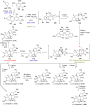
Scheme 9: Divergent synthesis of crinipellins by radical-mediated Dowd–Backwith rearrangement (Xie and Ding).

Scheme 10: Divergent total synthesis of Galbulimima alkaloids (Shenvi).
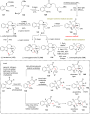
Scheme 11: Divergent synthesis of eburnane alkaloids (Qin).

Scheme 12: Divergent synthesis of Aspidosperma alkaloids (Boger).

Scheme 13: Photoredox based synthesis of (−)-FR901483 (160) and (+)-TAN1251C (162, Gaunt).
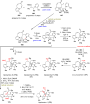
Scheme 14: Divergent synthesis of bipolamines (Maimone).

Scheme 15: Flow chemistry divergency between aporphine and morphinandione alkaloids (Felpin).
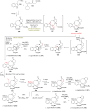
Scheme 16: Divergent synthesis of pyrroloazocine natural products (Echavarren).

Scheme 17: Using TEMPO to stabilize radicals for the divergent synthesis of pyrroloindoline natural products (...
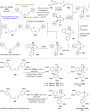
Scheme 18: Radical pathway for preparation of lignans (Zhu).

Scheme 19: Divergent synthesis of DBCOD lignans (Lumb).
Total synthesis of grayanane natural products
- Nicolas Fay,
- Rémi Blieck,
- Cyrille Kouklovsky and
- Aurélien de la Torre
Beilstein J. Org. Chem. 2022, 18, 1707–1719, doi:10.3762/bjoc.18.181
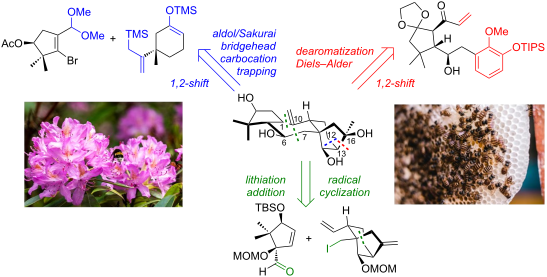
- group on C6 was introduced after cyclopropane ring-opening, ketone protection, epoxidation and reductive ring-opening of the resulting epoxide. A one-pot β-keto phosphonate formation/Horner–Wadsworth–Emmons reaction with formaldehyde afforded 38, a precursor for the key oxidative dearomatization-induced
- have a bicyclo[2.2.2]octane precursor, which can be obtained by a dearomatization/Diels–Alder cascade. For Luo, the 1,2-shift forms bond C12–C13 through a cationic Wagner–Meerwein-type rearrangement. The B ring is obtained by a key bridgehead carbocation trapping, while the skeleton arises from an A

Graphical Abstract

Figure 1: General structure of grayanane natural products.

Scheme 1: Grayanane biosynthesis.
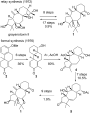
Scheme 2: Matsumoto’s relay approach.

Scheme 3: Shirahama’s total synthesis of (–)-grayanotoxin III.

Scheme 4: Newhouse’s syntheses of fragments 25 and 29.

Scheme 5: Newhouse’s total synthesis of principinol D.

Scheme 6: Ding’s total synthesis of rhodomolleins XX and XXII.

Scheme 7: First key step of Luo’s strategy.

Scheme 8: Luo’s total synthesis of grayanotoxin III.

Scheme 9: Synthesis of principinol E and rhodomollein XX.

Scheme 10: William’s synthetic effort towards pierisformaside C.
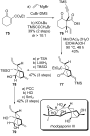
Scheme 11: Hong’s synthetic effort towards rhodojaponin III.

Scheme 12: Recent strategies for grayanane synthesis.
Synthetic strategies for the preparation of γ-phostams: 1,2-azaphospholidine 2-oxides and 1,2-azaphospholine 2-oxides
- Jiaxi Xu
Beilstein J. Org. Chem. 2022, 18, 889–915, doi:10.3762/bjoc.18.90
- - and stereoselectivities in the tandem intramolecular nucleophilic dearomatization of diphenyl-N-alkyl-N-benzylphosphinamides and reactions with different electrophiles under various reaction conditions [47]. They used both racemic and enantiopure diphenyl-N-methyl-N-(1-phenylethyl)phosphinamides 124
- intramolecular nucleophilic dearomatization and protonation or electrophilic alkylation reactions, affording the corresponding dihydronaphthylene-fused γ-phosphinolactams 135–142. Methanol was used as the electrophile for protonation, while methyl iodide and allyl bromide were used as electrophiles for

Graphical Abstract

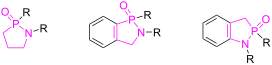
Figure 1: Biologically active 1,2-azaphospholine 2-oxide derivatives.

Figure 2: Diverse synthetic strategies for the preparation of 1,2-azaphospholidine and 1,2-azaphospholine 2-o...

Scheme 1: Synthesis of 1-phenyl-2-phenylamino-γ-phosphonolactam (2) from N,N’-diphenyl 3-chloropropylphosphon...

Scheme 2: Synthesis of 2-ethoxy-1-methyl-γ-phosphonolactam (6) from ethyl N-methyl-(3-bromopropyl)phosphonami...

Scheme 3: Synthesis of 2-aryl-1-methyl-2,3-dihydrobenzo[c][1,2]azaphosphole 1-oxides 13 from N-aryl-2-chlorom...

Scheme 4: Synthesis of 2,3-dihydrobenzo[c][1,2]azaphosphole 1-oxides from alkylarylphosphinyl or diarylphosph...

Scheme 5: Synthesis of 3-arylmethylidene-2,3-dihydrobenzo[c][1,2]azaphosphole 1-oxides via the TBAF-mediated ...
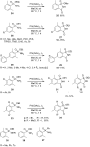
Scheme 6: Synthesis of 2-hydrobenzo[c][1,2]azaphosphol-3-one 1-oxides via the metal-free intramolecular oxida...

Scheme 7: Synthesis of 1,3-dihydrobenzo[d][1,2]azaphosphole 2-oxides 42 and 44 from ethyl/benzyl 2-bromobenzy...

Scheme 8: Synthesis of azaphospholidine 2-oxides/sulfide from 1,2-oxaphospholane 2-oxides/sulfides and 1,2-th...

Scheme 9: Synthesis of 1,3-dihydrobenzo[d][1,2]azaphosphole 2-oxides/sulfides from 2-aminobenzyl(phenyl)phosp...

Scheme 10: Synthesis of 1,3-dihydrobenzo[d][1,2]azaphosphole 2-sulfide (59) from zwitterionic 2-aminobenzyl(ph...

Scheme 11: Synthesis of 1,3-dihydrobenzo[d][1,2]azaphosphole 2-oxides from 2-aminobenzyl(methyl/phenyl)phosphi...

Scheme 12: Synthesis of ethyl 2-methyl-1,2-azaphospholidine-5-carboxylate 2-oxide 69 from 2-amino-4-(hydroxy(m...

Scheme 13: Synthesis of 2-methoxy-1,3-dihydrobenzo[d][1,2]azaphosphole 2-oxide 71 from dimethyl 2-(methylamino...

Scheme 14: Synthesis of tricyclic γ-phosphonolactams via formation of the P–C bond.

Scheme 15: Synthesis of γ-phosphonolactams 85 from ethyl 2-(3-chloropropyl)aminoalkanoates with diethyl chloro...

Scheme 16: Synthesis of N-phosphoryl- and N-thiophosphoryl-1,2-azaphospholidine 2-oxides 90/2-sulfides 91 from...

Scheme 17: Synthesis of 1-methyl-1,3-dihydrobenzo[d][1,2]azaphosphole 2-oxides 56a and 93 from P-(chloromethyl...

Scheme 18: Synthesis of 2-allylamino-1,5-dihydro-1,2-azaphosphole 2-oxides from N,N’-diallyl-vinylphosphonodia...

Scheme 19: Diastereoselective synthesis of 2-allylamino-1,5-dihydro-1,2-azaphosphole 2-oxides from N,N’-dially...

Scheme 20: Synthesis of 1-alkyl-3-benzoyl-2-ethoxy-1,3-dihydrobenzo[d][1,2]azaphosphole 2-oxides 106 from ethy...

Scheme 21: Synthesis of cyclohexadiene-fused γ-phosphinolactams from diphenyl-N-benzyl-N-methylphosphinamide (...

Scheme 22: Synthesis of cyclohexadiene-fused γ-phosphinolactams from diphenyl-N-alkyl-N-benzylphosphinamides.
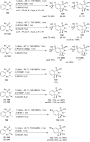
Scheme 23: Synthesis of cyclohexadiene-fused γ-phosphinolactams from diphenyl-N-methyl-N-(1-phenylethyl)phosph...
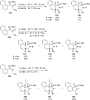
Scheme 24: Synthesis of benzocyclohexadiene-fused γ-phosphinolactams from dinaphth-1-yl-N-alkyl-N-benzylphosph...
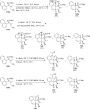
Scheme 25: Synthesis of benzocyclohexadiene-fused γ-phosphinolactams from dinaphth-1-yl-N-benzyl-N-methylphosp...
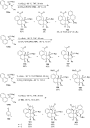
Scheme 26: Synthesis of carbonyl-containing benzocyclohexadiene-fused γ-phosphinolactams from dinaphth-1-yl-N-...

Scheme 27: Synthesis of benzocyclohexadiene-fused γ-phosphinolactams from dinaphthyl-N-benzyl-N-methylphosphin...
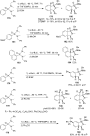
Scheme 28: Synthesis of cyclohexadiene-fused 1-(N-benzyl-N-methyl)amino-γ-phosphinolactams from aryl-N,N’-dibe...

Scheme 29: Synthesis of bis(cyclohexadiene-fused γ-phosphinolactam)s from bis(diphenyl-N-benzylphosphinamide)s....

Scheme 30: Synthesis of bis(hydroxymethyl-derived cyclohexadiene-fused γ-phosphinolactam)s from tetramethylene...

Scheme 31: Synthesis of 2-aryl/dimethylamino-1-ethoxy-2-hydrobenzo[c][1,2]azaphosphol-3-one 1-oxides from ethy...

Scheme 32: Synthesis of ethyl 2-ethoxy-1,2-azaphospholidine-4-carboxylate 2-oxides from ethyl 2-((chloro(ethox...

Scheme 33: Synthesis of (1S,3R)-2-(tert-butyldiphenylsilyl)-3-methyl-1-phenyl-2,3-dihydrobenzo[c][1,2]azaphosp...

Scheme 34: Synthesis of 2,3,3a,9a-tetrahydro-4H-1,2-azaphospholo[5,4-b]chromen-4-one (215) from 3-(phenylamino...

Scheme 35: Synthesis of quinoline-fused 1,2-azaphospholine 2-oxides from 2-azidoquinoline-3-carbaldehydes and ...

Scheme 36: Synthesis of 1-hydro-1,2-azaphosphol-5-one 2-oxide from cyanoacetohydrazide with phosphonic acid an...

Scheme 37: Synthesis of chromene-fused 5-oxo-1,2-azaphospolidine 2-oxides.

Scheme 38: Synthesis of (R)-1-phenyl-2-((R)-1-phenylethyl)-2-hydrobenzo[c][1,2]azaphosphol-3-one 1-oxide (239)...

Scheme 39: Synthesis of dihydro[1,2]azaphosphole 1-oxides from aryl/vinyl-N-phenylphosphonamidates and aryl-N-...

Scheme 40: Synthesis of 1,3-dihydro-[1,2]azaphospholo[5,4-b]pyridine 2-oxides.
Regioselectivity of the SEAr-based cyclizations and SEAr-terminated annulations of 3,5-unsubstituted, 4-substituted indoles
- Jonali Das and
- Sajal Kumar Das
Beilstein J. Org. Chem. 2022, 18, 293–302, doi:10.3762/bjoc.18.33
- -cd]indoles 21 from the intramolecular cyclization of Ugi adducts 20 in moderate to good yields and excellent chemo-, regio-, and diastereoselectivity (Scheme 7) [17]. Mechanistically, the reaction involves a tandem gold(I)-catalyzed dearomatization/ipso-cyclization/Michael addition sequence to

Graphical Abstract

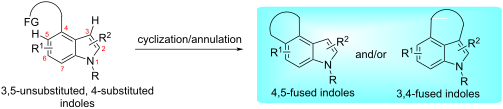
Scheme 1: SEAr-based, CAr–C bond-forming cyclization or annulation of: (A) substituted arenes/heteroarenes an...

Scheme 2: Indole C3 regioselective intramolecular alkylation of indolyl allyl carbonates.

Scheme 3: Indole C3 regioselective Michael-type cyclization in the total synthesis of (−)-indolactam V.

Scheme 4: Synthesis of azepino[4,3,2-cd]indoles via indole C3 regioselective aza-Michael addition/cyclization...

Scheme 5: Indole C3 regioselective Pictet−Spengler reaction of 2-(1H-indol-4-yl)ethanamines.

Scheme 6: Indole C3 regioselective hydroindolation of cis-β-(α′,α′-dimethyl)-4′-methindolylstyrenes.

Scheme 7: Indole C3 regioselective cyclization leading to the formation of polycyclic azepino[5,4,3-cd]indole...

Scheme 8: Synthesis of azepino[3,4,5-cd]indoles via iridium-catalyzed asymmetric [4 + 3] cycloaddition of rac...

Scheme 9: Aldimine condensation/1,6-hydride transfer/Mannich-type cyclization cascade of indole-derived pheny...

Scheme 10: Indole C5 regioselective intramolecular FC acylation of 4-substituted indoles.

Scheme 11: Catalyst-dependent regioselectivity switching in the cyclization of ethyl 2-diazo-4-(4-indolyl)-3-o...

Scheme 12: Indole C5 regioselective cyclization of α-carbonyl sulfoxonium ylides.

Scheme 13: Indole C5 regioselective cyclization of an indole-tethered donor–acceptor cyclopropane.

Scheme 14: Indole C5 regioselective epoxide–arene cyclization.
Iron-catalyzed domino coupling reactions of π-systems
- Austin Pounder and
- William Tam
Beilstein J. Org. Chem. 2021, 17, 2848–2893, doi:10.3762/bjoc.17.196
- 74. Hydrolysis of the imine affords the final product 69. In 2020, Sun and Liu reported the iminyl cyclization could also be achieved with DMSO as a methyl-radical precursor [88]. In 2017, the Zhu group developed an Fe(acac)3-catalyzed cyanoalkylative dearomatization of N-phenylcinnamamides 75 for
- of the aryl ring, a spirocyclic product 145 was formed via a radical cyclization/dearomatization process. Mechanistic investigations revealed the reaction operates through a radical pathway. In 2017, the Li group described a Ag-mediated, Fe-catalyzed alkylarylation of styrene derivatives 115 with α

Graphical Abstract

Figure 1: Price comparison among iron and other transition metals used in catalysis.

Scheme 1: Typical modes of C–C bond formation.

Scheme 2: The components of an iron-catalyzed domino reaction.
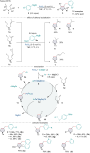
Scheme 3: Iron-catalyzed tandem cyclization and cross-coupling reactions of iodoalkanes 1 with aryl Grignard ...
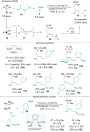
Scheme 4: Three component iron-catalyzed dicarbofunctionalization of vinyl cyclopropanes 14.
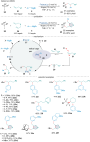
Scheme 5: Three-component iron-catalyzed dicarbofunctionalization of alkenes 21.

Scheme 6: Double carbomagnesiation of internal alkynes 31 with alkyl Grignard reagents 32.

Scheme 7: Iron-catalyzed cycloisomerization/cross-coupling of enyne derivatives 35 with alkyl Grignard reagen...
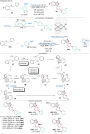
Scheme 8: Iron-catalyzed spirocyclization/cross-coupling cascade.
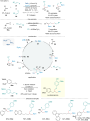
Scheme 9: Iron-catalyzed alkenylboration of alkenes 50.
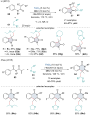
Scheme 10: N-Alkyl–N-aryl acrylamide 60 CDC cyclization with C(sp3)–H bonds adjacent to a heteroatom.

Scheme 11: 1,2-Carboacylation of activated alkenes 60 with aldehydes 65 and alcohols 67.
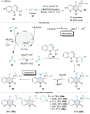
Scheme 12: Iron-catalyzed dicarbonylation of activated alkenes 68 with alcohols 67.
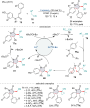
Scheme 13: Iron-catalyzed cyanoalkylation/radical dearomatization of acrylamides 75.

Scheme 14: Synergistic photoredox/iron-catalyzed 1,2-dialkylation of alkenes 82 with common alkanes 83 and 1,3...

Scheme 15: Iron-catalyzed oxidative coupling/cyclization of phenol derivatives 86 and alkenes 87.

Scheme 16: Iron-catalyzed carbosulfonylation of activated alkenes 60.

Scheme 17: Iron-catalyzed oxidative spirocyclization of N-arylpropiolamides 91 with silanes 92 and tert-butyl ...

Scheme 18: Iron-catalyzed free radical cascade difunctionalization of unsaturated benzamides 94 with silanes 92...

Scheme 19: Iron-catalyzed cyclization of olefinic dicarbonyl compounds 97 and 100 with C(sp3)–H bonds.

Scheme 20: Radical difunctionalization of o-vinylanilides 102 with ketones and esters 103.

Scheme 21: Dehydrogenative 1,2-carboamination of alkenes 82 with alkyl nitriles 76 and amines 105.

Scheme 22: Iron-catalyzed intermolecular 1,2-difunctionalization of conjugated alkenes 107 with silanes 92 and...

Scheme 23: Four-component radical difunctionalization of chemically distinct alkenes 114/115 with aldehydes 65...

Scheme 24: Iron-catalyzed carbocarbonylation of activated alkenes 60 with carbazates 117.
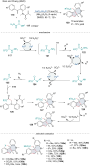
Scheme 25: Iron-catalyzed radical 6-endo cyclization of dienes 119 with carbazates 117.

Scheme 26: Iron-catalyzed decarboxylative synthesis of functionalized oxindoles 130 with tert-butyl peresters ...
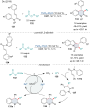
Scheme 27: Iron‑catalyzed decarboxylative alkylation/cyclization of cinnamamides 131/134.

Scheme 28: Iron-catalyzed carbochloromethylation of activated alkenes 60.

Scheme 29: Iron-catalyzed trifluoromethylation of dienes 142.

Scheme 30: Iron-catalyzed, silver-mediated arylalkylation of conjugated alkenes 115.

Scheme 31: Iron-catalyzed three-component carboazidation of conjugated alkenes 115 with alkanes 101/139b and t...

Scheme 32: Iron-catalyzed carboazidation of alkenes 82 and alkynes 160 with iodoalkanes 20 and trimethylsilyl ...

Scheme 33: Iron-catalyzed asymmetric carboazidation of styrene derivatives 115.

Scheme 34: Iron-catalyzed carboamination of conjugated alkenes 115 with alkyl diacyl peroxides 163 and acetoni...

Scheme 35: Iron-catalyzed carboamination using oxime esters 165 and arenes 166.

Scheme 36: Iron-catalyzed iminyl radical-triggered [5 + 2] and [5 + 1] annulation reactions with oxime esters ...

Scheme 37: Iron-catalyzed decarboxylative alkyl etherification of alkenes 108 with alcohols 67 and aliphatic a...

Scheme 38: Iron-catalyzed inter-/intramolecular alkylative cyclization of carboxylic acid and alcohol-tethered...

Scheme 39: Iron-catalyzed intermolecular trifluoromethyl-acyloxylation of styrene derivatives 115.

Scheme 40: Iron-catalyzed carboiodination of terminal alkenes and alkynes 180.

Scheme 41: Copper/iron-cocatalyzed cascade perfluoroalkylation/cyclization of 1,6-enynes 183/185.

Scheme 42: Iron-catalyzed stereoselective carbosilylation of internal alkynes 187.

Scheme 43: Synergistic photoredox/iron catalyzed difluoroalkylation–thiolation of alkenes 82.

Scheme 44: Iron-catalyzed three-component aminoazidation of alkenes 82.

Scheme 45: Iron-catalyzed intra-/intermolecular aminoazidation of alkenes 194.

Scheme 46: Stereoselective iron-catalyzed oxyazidation of enamides 196 using hypervalent iodine reagents 197.
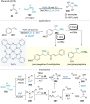
Scheme 47: Iron-catalyzed aminooxygenation for the synthesis of unprotected amino alcohols 200.

Scheme 48: Iron-catalyzed intramolecular aminofluorination of alkenes 209.
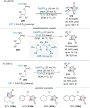
Scheme 49: Iron-catalyzed intramolecular aminochlorination and aminobromination of alkenes 209.

Scheme 50: Iron-catalyzed intermolecular aminofluorination of alkenes 82.

Scheme 51: Iron-catalyzed aminochlorination of alkenes 82.

Scheme 52: Iron-catalyzed phosphinoylazidation of alkenes 108.
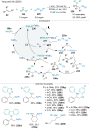
Scheme 53: Synergistic photoredox/iron-catalyzed three-component aminoselenation of trisubstituted alkenes 82.
Recent advances in the asymmetric phosphoric acid-catalyzed synthesis of axially chiral compounds
- Alemayehu Gashaw Woldegiorgis and
- Xufeng Lin
Beilstein J. Org. Chem. 2021, 17, 2729–2764, doi:10.3762/bjoc.17.185
- phosphoric acid catalysis, we developed a highly regio-, diastereo-, and enantioselective dearomatization reaction of 1-substituted 2-naphthols 115 and β,γ-alkynyl-α-imino esters 100. The highly functionalized naphthalenone derivatives 116 with an allene moiety, exhibiting both a quaternary stereocenter and

Graphical Abstract

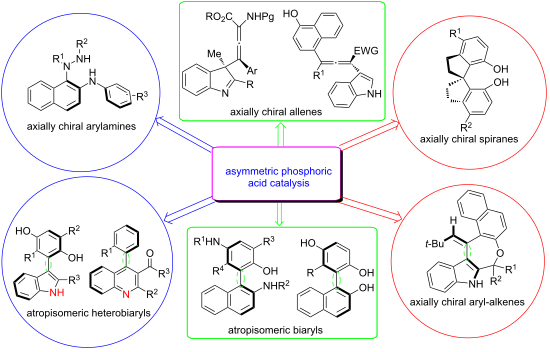
Figure 1: Representative examples of axially chiral biaryls, heterobiaryls, spiranes and allenes as ligands a...
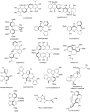
Figure 2: Selected examples of axially chiral drugs and bioactive molecules.

Figure 3: Axially chiral functional materials and supramolecules.

Figure 4: Important chiral phosphoric acid scaffolds used in this review.

Scheme 1: Atroposelective aryl–aryl-bond formation by employing a facile [3,3]-sigmatropic rearrangement.

Scheme 2: Atroposelective synthesis of axially chiral biaryl amino alcohols 5.

Scheme 3: The enantioselective reaction of quinone and 2-naphthol derivatives.

Scheme 4: Enantioselective synthesis of multisubstituted biaryls.

Scheme 5: Enantioselective synthesis of axially chiral quinoline-derived biaryl atropisomers mediated by chir...

Scheme 6: Pd-Catalyzed atroposelective C–H olefination of biarylamines.

Scheme 7: Palladium-catalyzed directed atroposelective C–H allylation.

Scheme 8: Enantioselective synthesis of axially chiral (a) aryl indoles and (b) biaryldiols.

Scheme 9: Asymmetric arylation of indoles enabled by azo groups.

Scheme 10: Proposed mechanism for the asymmetric arylation of indoles.
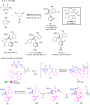
Scheme 11: Enantioselective synthesis of axially chiral N-arylindoles [38].

Scheme 12: Enantioselective [3 + 2] formal cycloaddition and central-to-axial chirality conversion.

Scheme 13: Organocatalytic atroposelective arene functionalization of nitrosonaphthalene with indoles.

Scheme 14: Proposed reaction mechanism for the atroposelective arene functionalization of nitrosonaphthalenes.

Scheme 15: Asymmetric construction of axially chiral naphthylindoles [65].

Scheme 16: Enantioselective synthesis of axially chiral 3,3’-bisindoles [66].
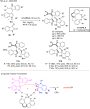
Scheme 17: Atroposelective synthesis of 3,3’-bisiindoles bearing axial and central chirality.

Scheme 18: Enantioselective synthesis of axially chiral 3,3’-bisindoles bearing single axial chirality.

Scheme 19: Enantioselective reaction of azonaphthalenes with various pyrazolones.
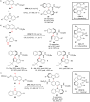
Scheme 20: Enantioselective and atroposelective synthesis of axially chiral N-arylcarbazoles [73].

Scheme 21: Atroposelective cyclodehydration reaction.

Scheme 22: Atroposelective construction of axially chiral N-arylbenzimidazoles [78].

Scheme 23: Proposed reaction mechanism for the atroposelective synthesis of axially chiral N-arylbenzimidazole...

Scheme 24: Atroposelective synthesis of axially chiral arylpyrroles [21].

Scheme 25: Synthesis of axially chiral arylquinazolinones and its reaction pathway [35].
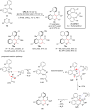
Scheme 26: Synthesis of axially chiral aryquinoline by Friedländer heteroannulation reaction and its proposed...

Scheme 27: Povarov cycloaddition–oxidative chirality conversion process.

Scheme 28: Atroposelective synthesis of oxindole-based axially chiral styrenes via kinetic resolution.

Scheme 29: Synthesis of axially chiral alkene-indole frame works [45].

Scheme 30: Proposed reaction mechanism for axially chiral alkene-indoles.

Scheme 31: Atroposelective C–H aminations of N-aryl-2-naphthylamines with azodicarboxylates.

Scheme 32: Synthesis of brominated atropisomeric N-arylquinoids.

Scheme 33: The enantioselective syntheses of axially chiral SPINOL derivatives.

Scheme 34: γ-Addition reaction of various 2,3-disubstituted indoles to β,γ-alkynyl-α-imino esters.

Scheme 35: Regio- and stereoselective γ-addition reactions of isoxazol-5(4H)-ones to β,γ-alkynyl-α-imino ester...

Scheme 36: Synthesis of chiral tetrasubstituted allenes and naphthopyrans.

Scheme 37: Asymmetric remote 1,8-conjugate additions of thiazolones and azlactones to propargyl alcohols.

Scheme 38: Synthesis of chiral allenes from 1-substituted 2-naphthols [107].
Halides as versatile anions in asymmetric anion-binding organocatalysis
- Lukas Schifferer,
- Martin Stinglhamer,
- Kirandeep Kaur and
- Olga García Macheño
Beilstein J. Org. Chem. 2021, 17, 2270–2286, doi:10.3762/bjoc.17.145
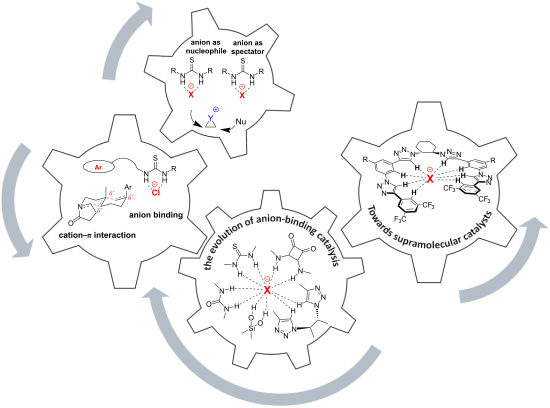
- ) [35]. During this early period, the group of Jacobsen also reported an asymmetric thiourea-catalyzed Reissert reaction of isoquinolines 21 (Scheme 5a) [36]. The mechanism proceeds by initial activation of the isoquinoline via N-acylation and subsequent dearomatization by a nucleophilic attack in the

Graphical Abstract
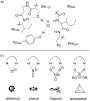
Figure 1: a) Binding interactions in the chloride channel of E. coli. and b) examples of chloride, cyanide, n...

Figure 2: a) H-bond vs anion-binding catalysis and b) activation modes in anion-binding catalysis.

Scheme 1: First proposed anion-binding mechanism in the thiourea-catalyzed acetalization of benzaldehyde.

Scheme 2: a) Thiourea-catalyzed enantioselective acyl-Pictet–Spengler reaction of tryptamine-derived imines 4...

Scheme 3: Proposed mechanism of the thiourea-catalyzed enantioselective Pictet–Spengler reaction of hydroxyla...

Scheme 4: a) Thiourea-catalyzed intramolecular Pictet–Spengler-type cyclization of hydroxylactam-derived N-ac...

Scheme 5: Enantioselective Reissert-type reactions of a) (iso)quinolines with silyl ketene acetals, and b) vi...

Figure 3: Role of the counter-anion: a) Anion acting as a spectator and b) anion participating directly as th...

Scheme 6: Enantioselective selenocyclization catalyzed by squaramide 28.

Scheme 7: Desymmetrization of meso-aziridines catalyzed by bifunctional thiourea catalyst 31.

Scheme 8: Anion-binding-catalyzed desymmetrization of a) meso-aziridines catalyzed by chiral triazolium catal...

Scheme 9: Bis-urea-catalyzed enantioselective fluorination of a) β-bromosulfides and b) β-haloamines by Gouve...

Scheme 10: a) Bifunctional thiourea anion-binding – basic/nucleophilic catalysts. Selected applications in b) ...

Scheme 11: Thiourea-catalyzed enantioselective polycyclization reaction of hydroxylactams 51 through cation–π ...

Scheme 12: Enantioselective aza-Sakurai cyclization of hydroxylactams 56 implicating additional cation–π and L...

Scheme 13: Enantioselective tail-to-head cyclization of neryl chloride derivatives.

Scheme 14: Cation–π interactions in anion binding-catalyzed asymmetric addition reactions: a) addition of indo...

Scheme 15: Bisthiourea catalyzed oxa-Pictet–Spengler reaction of indole-based alcohols and aromatic aldehydes ...

Scheme 16: Anion-binding catalyst development in the enantioselective addition of silyl ketene acetals to 1-ch...

Scheme 17: a) Macrocyclic bis-thiourea catalyst in a diastereoselective glycosylation reaction. b) Competing SN...

Scheme 18: a) Folding mechanism of oligotriazoles upon anion recognition. b) Representative tetratriazole 82 c...

Scheme 19: Switchable chiral tetratriazole catalyst 86 in the enantioselective addition of silyl ketene acetal...
Synthetic accesses to biguanide compounds
- Oleksandr Grytsai,
- Cyril Ronco and
- Rachid Benhida
Beilstein J. Org. Chem. 2021, 17, 1001–1040, doi:10.3762/bjoc.17.82
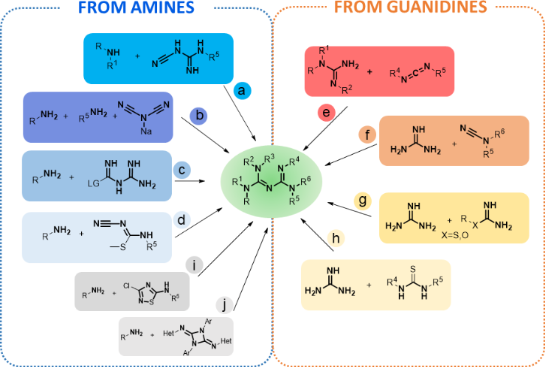
- benzothiazole and benzimidazole-based sulfonylguanidine compounds were derived by the sulfonylation of the corresponding 2-guanidinobenzazoles and assayed as potential antimelanoma agents (Scheme 11C) [33]. Of note, a dearomatization of the benzothiazole ring was observed while grafting a sulfoguanidinyl group

Graphical Abstract

Figure 1: Tautomeric forms of biguanide.

Figure 2: Illustrations of neutral, monoprotonated, and diprotonated structures biguanide.

Figure 3: The main approaches for the synthesis of biguanides. The core structure is obtained via the additio...

Scheme 1: The three main preparations of biguanides from cyanoguanidine.

Scheme 2: Synthesis of butylbiguanide using CuCl2 [16].

Scheme 3: Synthesis of biguanides by the direct fusion of cyanoguanidine and amine hydrochlorides [17,18].

Scheme 4: Synthesis of ethylbiguanide and phenylbiguanide as reported by Smolka and Friedreich [14].

Scheme 5: Synthesis of arylbiguanides through the reaction of cyanoguanidine with anilines in water [19].

Scheme 6: Synthesis of aryl- and alkylbiguanides by adaptations of Cohn’s procedure [20,21].

Scheme 7: Microwave-assisted synthesis of N1-aryl and -dialkylbiguanides [22,23].

Scheme 8: Synthesis of aryl- and alkylbiguanides by trimethylsilyl activation [24,26].

Scheme 9: Synthesis of phenformin analogs by TMSOTf activation [27].

Scheme 10: Synthesis of N1-(1,2,4-triazolyl)biguanides [28].

Scheme 11: Synthesis of 2-guanidinobenzazoles by addition of ortho-substituted anilines to cyanoguanidine [30,32] and...

Scheme 12: Synthesis of 2,4-diaminoquinazolines by the addition of 2-cyanoaniline to cyanoguanidine and from 3...

Scheme 13: Reactions of anthranilic acid and 2-mercaptobenzoic acid with cyanoguanidine [24,36,37].

Scheme 14: Synthesis of disubstituted biguanides with Cu(II) salts [38].

Scheme 15: Synthesis of an N1,N2,N5-trisubstituted biguanide by fusion of an amine hydrochloride and 2-cyano-1...

Scheme 16: Synthesis of N1,N5-disubstituted biguanides by the addition of anilines to cyanoguanidine derivativ...

Scheme 17: Microwave-assisted additions of piperazine and aniline hydrochloride to substituted cyanoguanidines ...

Scheme 18: Synthesis of N1,N5-alkyl-substituted biguanides by TMSOTf activation [27].

Scheme 19: Additions of oxoamines hydrochlorides to dimethylcyanoguanidine [49].

Scheme 20: Unexpected cyclization of pyridylcyanoguanidines under acidic conditions [50].

Scheme 21: Example of industrial synthesis of chlorhexidine [51].

Scheme 22: Synthesis of symmetrical N1,N5-diarylbiguanides from sodium dicyanamide [52,53].

Scheme 23: Synthesis of symmetrical N1,N5-dialkylbiguanides from sodium dicyanamide [54-56].

Scheme 24: Stepwise synthesis of unsymmetrical N1,N5-trisubstituted biguanides from sodium dicyanamide [57].

Scheme 25: Examples for the synthesis of unsymmetrical biguanides [58].

Scheme 26: Examples for the synthesis of an 1,3-diaminobenzoquinazoline derivative by the SEAr cyclization of ...

Scheme 27: Major isomers formed by the SEAr cyclization of symmetric biguanides derived from 2- and 3-aminophe...

Scheme 28: Lewis acid-catalyzed synthesis of 8H-pyrrolo[3,2-g]quinazoline-2,4-diamine [63].

Scheme 29: Synthesis of [1,2,4]oxadiazoles by the addition of hydroxylamine to dicyanamide [49,64].

Scheme 30: Principle of “bisamidine transfer” and analogy between the reactions with N-amidinopyrazole and N-a...

Scheme 31: Representative syntheses of N-amidino-amidinopyrazole hydrochloride [68,69].

Scheme 32: First examples of biguanide syntheses using N-amidino-amidinopyrazole [66].

Scheme 33: Example of “biguanidylation” of a hydrazide substrate [70].

Scheme 34: Example for the synthesis of biguanides using S-methylguanylisothiouronium iodide as “bisamidine tr...

Scheme 35: Synthesis of N-substituted N1-cyano-S-methylisothiourea precursors.

Scheme 36: Addition routes on N1-cyano-S-methylisothioureas.

Scheme 37: Synthesis of an hydroxybiguanidine from N1-cyano-S-methylisothiourea [77].

Scheme 38: Synthesis of an N1,N2,N3,N4,N5-pentaarylbiguanide from the corresponding triarylguanidine and carbo...

Scheme 39: Reactions of N,N,N’,N’-tetramethylguanidine (TMG) with carbodiimides to synthesize hexasubstituted ...

Scheme 40: Microwave-assisted addition of N,N,N’,N’-tetramethylguanidine to carbodiimides [80].

Scheme 41: Synthesis of N1-aryl heptasubstituted biguanides via a one-pot biguanide formation–copper-catalyzed ...

Scheme 42: Formation of 1,2-dihydro-1,3,5-triazine derivatives by the reaction of guanidine with excess carbod...

Scheme 43: Plausible mechanism for the spontaneous cyclization of triguanides [82].

Scheme 44: a) Formation of mono- and disubstituted (iso)melamine derivatives by the reaction of biguanides and...

Scheme 45: Reactions of 2-aminopyrimidine with carbodiimides to synthesize 2-guanidinopyrimidines as “biguanid...

Scheme 46: Non-catalyzed alternatives for the addition of 2-aminopyrimidine derivatives to carbodiimides. A) h...

Scheme 47: Addition of guanidinomagnesium halides to substituted cyanamides [90].

Scheme 48: Microwave-assisted synthesis of [11C]metformin by the reaction of 11C-labelled dimethylcyanamide an...

Scheme 49: Formation of 4-amino-6-dimethylamino[1,3,5]triazin-2-ol through the reaction of Boc-guanidine and d...

Scheme 50: Formation of 1,3,5-triazine derivatives via the addition of guanidines to substituted cyanamides [92].

Scheme 51: Synthesis of biguanide by the reaction of O-alkylisourea and guanidine [93].

Scheme 52: Aromatic nucleophilic substitution of guanidine on 2-O-ethyl-1,3,5-triazine [95].

Scheme 53: Synthesis of N1,N2-disubstituted biguanides by the reaction of guanidine and thioureas in the prese...

Scheme 54: Cyclization reactions involving condensations of guanidine(-like) structures with thioureas [97,98].

Scheme 55: Condensations of guanidine-like structures with thioureas [99,100].

Scheme 56: Condensations of guanidines with S-methylisothioureas [101,102].

Scheme 57: Addition of 2-amino-1,3-diazaaromatics to S-alkylisothioureas [103,104].

Scheme 58: Addition of guanidines to 2-(methylsulfonyl)pyrimidines [105].

Scheme 59: An example of a cyclodesulfurization reaction to a fused 3,5-diamino-1,2,4-triazole [106].

Scheme 60: Ring-opening reactions of 1,3-diaryl-2,4-bis(arylimino)-1,3-diazetidines [107].

Scheme 61: Formation of 3,5-diamino-1,2,4-triazole derivatives via addition of hydrazines to 1,3-diazetidine-2...

Scheme 62: Formation of a biguanide via the addition of aniline to 1,2,4-thiadiazol-3,5-diamines, ring opening...

Figure 4: Substitution pattern of biguanides accessible by synthetic pathways a–h.
Synthetic reactions driven by electron-donor–acceptor (EDA) complexes
- Zhonglie Yang,
- Yutong Liu,
- Kun Cao,
- Xiaobin Zhang,
- Hezhong Jiang and
- Jiahong Li
Beilstein J. Org. Chem. 2021, 17, 771–799, doi:10.3762/bjoc.17.67

- the dearomatization of β-naphthol promoted by visible light via intermolecular charge transfer (Scheme 29). In this method, β-naphthol anion 87 (β-naphthol 85 formed in the presence of base) is employed as electron donor to form EDA complex with electron acceptor perfluoroalkyl iodide 28. Single

Graphical Abstract

Scheme 1: The electron transfer process in EDA complexes.

Scheme 2: Synthesis of benzo[b]phosphorus oxide 3 initiated by an EDA complex.

Scheme 3: Mechanism of the synthesis of quinoxaline derivative 7.

Scheme 4: Synthesis of imidazole derivative 10 initiated by an EDA complex.

Scheme 5: Synthesis of sulfamoylation product 12 initiated by an EDA complex.

Scheme 6: Mechanism of the synthesis of sulfamoylation product 12.

Scheme 7: Synthesis of indole derivative 22 initiated by an EDA complex.

Scheme 8: Synthesis of perfluoroalkylated pyrimidines 26 initiated by an EDA complex.

Scheme 9: Synthesis of phenanthridine derivative 29 initiated by an EDA complex.

Scheme 10: Synthesis of cis-tetrahydroquinoline derivative 32 initiated by an EDA complex.

Scheme 11: Mechanism of the synthesis of cis-tetrahydroquinoline derivative 32.

Scheme 12: Synthesis of phenanthridine derivative 38 initiated by an EDA complex.

Scheme 13: Synthesis of spiropyrroline derivative 40 initiated by an EDA complex.

Scheme 14: Synthesis of benzothiazole derivative 43 initiated by an EDA complex.

Scheme 15: Synthesis of perfluoroalkyl-s-triazine derivative 45 initiated by an EDA complex.

Scheme 16: Synthesis of indoline derivative 47 initiated by an EDA complex.

Scheme 17: Mechanism of the synthesis of spirocyclic indoline derivative 47.

Scheme 18: Synthesis of cyclobutane product 50 initiated by an EDA complex.

Scheme 19: Mechanism of the synthesis of spirocyclic indoline derivative 50.

Scheme 20: Synthesis of 1,3-oxazolidine compound 59 initiated by an EDA complex.

Scheme 21: Synthesis of trifluoromethylated product 61 initiated by an EDA complex.

Scheme 22: Synthesis of indole alkylation product 64 initiated by an EDA complex.

Scheme 23: Synthesis of perfluoroalkylation product 67 initiated by an EDA complex.

Scheme 24: Synthesis of hydrotrifluoromethylated product 70 initiated by an EDA complex.

Scheme 25: Synthesis of β-trifluoromethylated alkyne product 71 initiated by an EDA complex.

Scheme 26: Mechanism of the synthesis of 2-phenylthiophene derivative 74.

Scheme 27: Synthesis of allylated product 80 initiated by an EDA complex.

Scheme 28: Synthesis of trifluoromethyl-substituted alkynyl product 84 initiated by an EDA complex.

Scheme 29: Synthesis of dearomatized fluoroalkylation product 86 initiated by an EDA complex.

Scheme 30: Mechanism of the synthesis of dearomatized fluoroalkylation product 86.

Scheme 31: Synthesis of C(sp3)–H allylation product 91 initiated by an EDA complex.

Scheme 32: Synthesis of perfluoroalkylation product 93 initiated by an EDA complex.

Scheme 33: Synthesis of spirocyclic indolene derivative 95 initiated by an EDA complex.

Scheme 34: Synthesis of perfluoroalkylation product 97 initiated by an EDA complex.

Scheme 35: Synthesis of alkylated indole derivative 100 initiated by an EDA complex.

Scheme 36: Mechanism of the synthesis of alkylated indole derivative 100.

Scheme 37: Synthesis of arylated oxidized indole derivative 108 initiated by an EDA complex.

Scheme 38: Synthesis of 4-ketoaldehyde derivative 111 initiated by an EDA complex.

Scheme 39: Mechanism of the synthesis of 4-ketoaldehyde derivative 111.

Scheme 40: Synthesis of perfluoroalkylated olefin 118 initiated by an EDA complex.

Scheme 41: Synthesis of alkylation product 121 initiated by an EDA complex.

Scheme 42: Synthesis of acylation product 123 initiated by an EDA complex.

Scheme 43: Mechanism of the synthesis of acylation product 123.

Scheme 44: Synthesis of trifluoromethylation product 126 initiated by an EDA complex.

Scheme 45: Synthesis of unnatural α-amino acid 129 initiated by an EDA complex.

Scheme 46: Synthesis of thioether derivative 132 initiated by an EDA complex.

Scheme 47: Synthesis of S-aryl dithiocarbamate product 135 initiated by an EDA complex.

Scheme 48: Mechanism of the synthesis of S-aryl dithiocarbamate product 135.

Scheme 49: Synthesis of thioether product 141 initiated by an EDA complex.

Scheme 50: Mechanism of the synthesis of borate product 144.

Scheme 51: Synthesis of boronation product 148 initiated by an EDA complex.

Scheme 52: Synthesis of boration product 151 initiated by an EDA complex.

Scheme 53: Synthesis of boronic acid ester derivative 154 initiated by an EDA complex.

Scheme 54: Synthesis of β-azide product 157 initiated by an EDA complex.

Scheme 55: Decarboxylation reaction initiated by an EDA complex.

Scheme 56: Synthesis of amidated product 162 initiated by an EDA complex.

Scheme 57: Synthesis of diethyl phenylphosphonate 165 initiated by an EDA complex.

Scheme 58: Mechanism of the synthesis of diethyl phenylphosphonate derivative 165.

Scheme 59: Synthesis of (Z)-2-iodovinyl phenyl ether 168 initiated by an EDA complex.

Scheme 60: Mechanism of the synthesis of (Z)-2-iodovinyl phenyl ether derivative 168.

Scheme 61: Dehalogenation reaction initiated by an EDA complex.
Copper catalysis with redox-active ligands
- Agnideep Das,
- Yufeng Ren,
- Cheriehan Hessin and
- Marine Desage-El Murr
Beilstein J. Org. Chem. 2020, 16, 858–870, doi:10.3762/bjoc.16.77
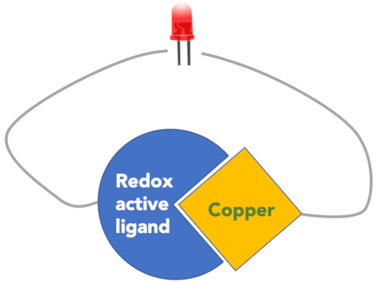
- ], and perform C–H functionalization through aerobic dearomatization of phenols [35]. These broad synthetic outcomes further led to a unified approach for the preparation of 1,2-oxy-aminoarenes by phenol–amine couplings (Scheme 10) [36]. We reported the formation of a C–N bond through copper-catalyzed

Graphical Abstract

Scheme 1: Copper complexes with amidophenolate type benzoxazole ligands for alcohol oxidations.

Scheme 2: Copper-catalyzed aerobic oxidation of alcohols and representative substrate scope.

Scheme 3: Introduction of H-bonding network in the ligand coordination sphere.

Scheme 4: Well-defined isatin copper complexes.

Scheme 5: Catalyst control in the biomimetic phenol ortho-oxidation.

Scheme 6: Structural diversity accessible by direct functionalization.

Scheme 7: Copper-catalyzed trifluoromethylation of heteroaromatics with redox-active iminosemiquinone ligands....

Scheme 8: Reversal of helical chirality upon redox stimuli and enantioselective Michael addition with a redox...

Scheme 9: Interaction of guanidine-copper catalyst with oxygen and representative coupling products. a4 mol %...

Scheme 10: Access to 1,2-oxy-aminoarenes by copper-catalyzed phenol–amine coupling.
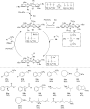
Scheme 11: Copper-catalyzed aziridination through molecular spin catalysis with redox-active iminosemiquinone ...
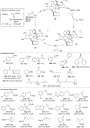
Scheme 12: Nitrogen-group and carbon-group transfer in copper-catalyzed aziridination and cyclopropanation thr...
Preparation and X-ray structure of 2-iodoxybenzenesulfonic acid (IBS) – a powerful hypervalent iodine(V) oxidant
- Irina A. Mironova,
- Pavel S. Postnikov,
- Rosa Y. Yusubova,
- Akira Yoshimura,
- Thomas Wirth,
- Viktor V. Zhdankin,
- Victor N. Nemykin and
- Mekhman S. Yusubov
Beilstein J. Org. Chem. 2018, 14, 1854–1858, doi:10.3762/bjoc.14.159
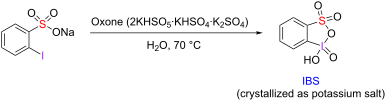
- of phenols to 1,2-quinones [15], the cyclization and cross-coupling reactions [16], and the site-selective hydroxylative dearomatization of 2-substituted phenols to either 1,2-benzoquinols or their cyclodimers [17]. The first preparation and isolation of IBS (1) was attempted in 2006 using two

Graphical Abstract

Scheme 1: Previously reported preparation of IBS (1) [17].

Scheme 2: Oxidation of 2-iodobenzenesulfonate 5 by Oxone in water.

Figure 1: X-ray structure of an independent crystal unit of IBS 6-K.

Figure 2: Simplified representation of structure 6-K. Selected interatomic distances (Å): I(1)=O(1) 1.79; I(1...

Scheme 3: Comparison of the oxidation of sodium 2-iodobenzenesulfonate (5) with NaIO4 and 2-iodobenzenesulfon...
Synthesis of spirocyclic scaffolds using hypervalent iodine reagents
- Fateh V. Singh,
- Priyanka B. Kole,
- Saeesh R. Mangaonkar and
- Samata E. Shetgaonkar
Beilstein J. Org. Chem. 2018, 14, 1778–1805, doi:10.3762/bjoc.14.152
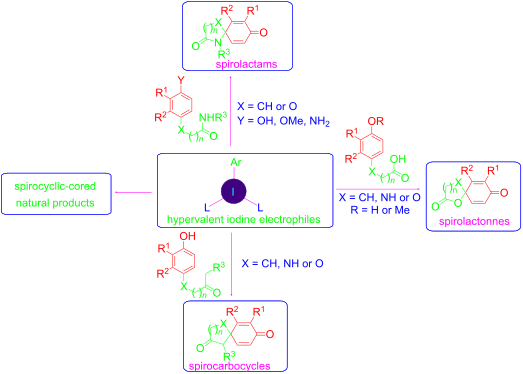
- stoichiometric or catalytic amounts. In addition, hypervalent iodine reagents have been employed for the synthesis of spirocyclic scaffolds via dearomatization processes. In this review, various approaches for the synthesis of spirocyclic scaffolds using hypervalent iodine reagents are covered including their
- who want to know the chemistry involved during the dearomatization of phenols and to find the relevant literature available until 2008. In this review article, various approaches for the synthesis of spirocyclic scaffolds using hypervalent iodine reagents are covered including stereoselective
- I (30) to its spirocyclic analogue arnottin II (32) by reaction with LiOH followed by PIFA (31). The spirocyclic product arnottin II (32) was isolated in 56% yield (Scheme 7). This approach is based on a tandem oxidative dearomatization process and will be quite useful for the conversion of

Graphical Abstract

Figure 1: The structures of biologically active natural and synthetic products having spirocyclic moiety.

Scheme 1: Iodine(III)-mediated spirocyclization of substituted phenols 7 and 11 to 10 and 13, respectively.

Scheme 2: PIDA-mediated spirolactonization of N-protected tyrosine 14 to spirolactone 16.

Figure 2: The structures of polymer-supported iodine(III) reagents 17a and 17b.

Scheme 3: Spirolactonization of substrates 14 to spirolactones 16 using polymer-supported reagents 17a and 17b...

Scheme 4: PIDA-mediated spirolactonization of 1-(p-hydroxyaryl)cyclobutanols 18 to spirolactones 19.

Scheme 5: Iodine(III)-mediated spirocyclization of aryl alkynes 24 to spirolactones 26 by the reaction with b...

Scheme 6: Bridged iodine(III)-mediated spirocyclization of phenols 27 to spirodienones 29.

Scheme 7: Iodine(III)-mediated spirocyclization of arnottin I (30) to its spirocyclic analogue arnottin II (32...

Scheme 8: Iodine(III)-catalyzed spirolactonization of p-substituted phenols 27 to spirolactones 29 using iodo...

Scheme 9: Iodine(III)-catalyzed oxylactonization of ketocarboxylic acid 34 to spirolactone 36 using iodobenze...

Scheme 10: Iodine(III)-mediated asymmetric oxidative spirocyclization of naphthyl acids 37 to naphthyl spirola...

Scheme 11: Oxidative cyclization of L-tyrosine 14 to spirocyclic lactone 16 using PIDA (15).

Scheme 12: Oxidative cyclization of oxazoline derivatives 41 to spirolactams 42 using PIDA (15).

Scheme 13: Oxidative cyclization of oxazoline 43 to spirolactam 44 using PIDA 15 as oxidant.

Scheme 14: PIFA-mediated spirocyclization of amides 46 to N-spirolactams 47 using PIFA (31) as an electrophile....

Scheme 15: Synthesis of spirolactam 49 from phenolic enamide 48 using PIDA (15).

Scheme 16: Iodine(III)-mediated spirocyclization of alkyl hydroxamates 50 to spirolactams 51 using stoichiomet...

Scheme 17: PIFA-mediated cyclization of substrate 52 to spirocyclic product 54.

Scheme 18: Synthesis of spiro β-lactams 56 by oxidative coupling reaction of p-substituted phenols 55 using PI...

Scheme 19: Iodine(III)-mediated spirocyclization of para-substituted amide 58 to spirolactam 59 by the reactio...

Scheme 20: Iodine(III)-mediated synthesis of spirolactams 61 from anilide derivatives 60.

Scheme 21: PIFA-mediated oxidative cyclization of anilide 60 to bis-spirobisoxindole 61.

Scheme 22: PIDA-mediated spirocyclization of phenylacetamides 65 to spirocyclic lactams 66.

Scheme 23: Oxidative dearomatization of arylamines 67 with PIFA (31) to give dieniminium salts 68.

Scheme 24: PIFA-mediated oxidative spirocarbocyclization of 4-methoxybenzamide 69 with diphenylacetylene (70) ...

Scheme 25: Synthesis of spiroxyindole 75 using I2O5/TBHP oxidative system.

Scheme 26: Iodine(III)-catalyzed spirolactonization of functionalized amides 76 to spirolactones 77 using iodo...

Scheme 27: Intramolecular cyclization of alkenes 78 to spirolactams 80 using Pd(II) 79 and PIDA (15) as the ox...

Scheme 28: Iodine(III)-catalyzed spiroaminocyclization of amides 76 to spirolactam 77 using bis(iodoarene) 81 ...

Scheme 29: Iodine(III)-catalyzed spirolactonization of N-phenyl benzamides 82 to spirolactams 83 using iodoben...

Scheme 30: Iodine(III)-mediated asymmetric oxidative spirocyclization of phenols 84 to spirolactams 86 using c...

Scheme 31: Iodine(III)-catalyzed asymmetric oxidative spirocyclization of N-aryl naphthamides 87 to spirocycli...

Scheme 32: Cyclization of p-substituted phenolic compound 89 to spirolactam 90 using PIDA (15) in TFE.

Scheme 33: Iodine(III)-mediated synthesis of spirocyclic compound 93 from substrates 92 using PIDA (15) as an ...

Scheme 34: Iodine(III)-mediated spirocyclization of p-substituted phenol 48 to spirocyclic compound 49 using P...

Scheme 35: Bridged iodine(III)-mediated spirocyclization of O-silylated phenolic compound 96 in the synthesis ...

Scheme 36: PIFA-mediated approach for the spirocyclization of ortho-substituted phenols 98 to aza-spirocarbocy...

Scheme 37: Oxidative cyclization of para-substituted phenols 102 to spirocarbocyclic compounds 104 using Koser...

Scheme 38: Iodine(III)-mediated spirocyclization of aryl alkynes 105 to spirocarbocyclic compound 106 by the r...

Scheme 39: Iodine(III)-mediated spirocarbocyclization of ortho-substituted phenols 107 to spirocarbocyclic com...

Scheme 40: PIFA-mediated oxidative cyclization of substrates 110 to spirocarbocyclic compounds 111.

Scheme 41: Iodine(III)-mediated cyclization of substrate 113 to spirocyclic compound 114.

Scheme 42: Iodine(III)-mediated spirocyclization of phenolic substrate 116 to the spirocarbocyclic natural pro...

Scheme 43: Iodine(III)-catalyzed spirocyclization of phenols 117 to spirocarbocyclic products 119 using iodoar...

Scheme 44: PIFA-mediated spirocyclization of 110 to spirocyclic compound 111 using PIFA (31) as electrophile.

Scheme 45: PIDA-mediated spirocyclization of phenolic sulfonamide 122 to spiroketones 123.

Scheme 46: Iodine(III)-mediated oxidative spirocyclization of 2-naphthol derivatives 124 to spiropyrrolidines ...

Scheme 47: PIDA-mediated oxidative spirocyclization of m-substituted phenols 126 to tricyclic spiroketals 127.

Figure 3: The structures of chiral organoiodine(III) catalysts 129a and 129b.

Scheme 48: Iodine(III)-catalyzed oxidative spirocyclization of substituted phenols 128 to spirocyclic ketals 1...

Scheme 49: Oxidative spirocyclization of para-substituted phenol 131 to spirodienone 133 using polymer support...

Scheme 50: Oxidative cyclization of bis-hydroxynaphthyl ether 135 to spiroketal 136 using PIDA (15) as an elec...

Scheme 51: Oxidative spirocyclization of phenolic compound 139 to spirodienone 140 using polymer-supported PID...

Scheme 52: PIFA-mediated oxidative cyclization of catechol derived substrate 142 to spirocyclic product 143.

Scheme 53: Oxidative spirocyclization of p-substituted phenolic substrate 145 to aculeatin A (146a) and aculea...

Scheme 54: Oxidative spirocyclization of p-substituted phenolic substrate 147 to aculeatin A (146a) and aculea...

Scheme 55: Oxidative spirocyclization of p-substituted phenolic substrate 148 to aculeatin D (149) using elect...

Scheme 56: Cyclization of phenolic substrate 131 to spirocyclic product 133 using polymer-supported PIFA 150.

Scheme 57: Iodine(III)-mediated oxidative intermolecular spirocyclization of 7-methoxy-α-naphthol (152) to spi...

Scheme 58: Oxidative cyclization of phenols 155 to spiro-ketals 156 using electrophilic species PIDA (15).

Scheme 59: Iodine(III)-catalyzed oxidative spirocyclization of ortho-substituted phenols 158 to spirocyclic ke...
Cobalt-catalyzed C–H cyanations: Insights into the reaction mechanism and the role of London dispersion
- Eric Detmar,
- Valentin Müller,
- Daniel Zell,
- Lutz Ackermann and
- Martin Breugst
Beilstein J. Org. Chem. 2018, 14, 1537–1545, doi:10.3762/bjoc.14.130
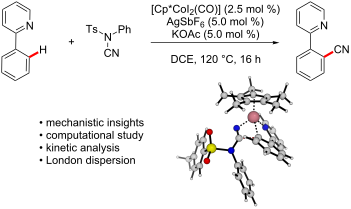
- comparison with previous computational investigations on copper-catalyzed ortho C–H cyanations of vinylarenes revealed that those reactions take place via a completely different mechanism involving two distinct catalytic cycles (copper-catalyzed electrophilic cyanative dearomatization and base-catalyzed

Graphical Abstract

Scheme 1: Cycloaddition reaction of in situ generated benzynes resulting in the sterically more hindered addu...
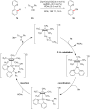
Scheme 2: Recently developed cobalt-catalyzed C–H cyanation [30].
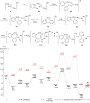
Figure 1: Calculated free-energy profile for the cobalt-catalyzed C–H cyanation of 2-phenylpyridine (1a) [in ...

Figure 2: Calculated structures, selected bond lengths (in Å), and imaginary frequencies for representative i...
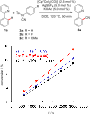
Scheme 3: Kinetic profile of the cobalt-catalyzed C–H cyanation with differently substituted cyanating agents ...

Figure 3: Noncovalent interaction (NCI) analysis for selected intermediates and transition states. The gradie...

Figure 4: Projected dispersion interaction density (DID) plots for selected intermediates and transition stat...
Hypervalent organoiodine compounds: from reagents to valuable building blocks in synthesis
- Gwendal Grelier,
- Benjamin Darses and
- Philippe Dauban
Beilstein J. Org. Chem. 2018, 14, 1508–1528, doi:10.3762/bjoc.14.128
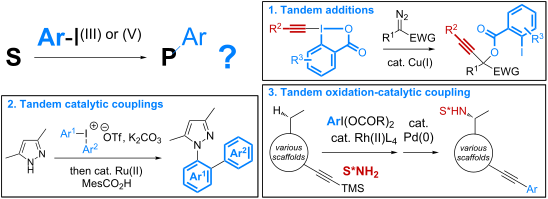
- , C–C, C–O, or C–N couplings, dearomatization of phenols, rearrangements, to name but a few, have been reported using these compounds thereby reflecting their versatility. A survey of the general structure of polyvalent organoiodine compounds reveals that they are prepared mostly from iodoarene

Graphical Abstract

Scheme 1: Strategies to address the issue of sustainability with polyvalent organoiodine reagents.
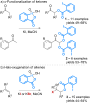
Scheme 2: Functionalization of ketones and alkenes with IBX.

Scheme 3: Functionalization of pyrroles with DMP.

Scheme 4: Catalytic benzoyloxy-trifluoromethylation reported by Szabó.

Scheme 5: Catalytic benzoyloxy-trifluoromethylation reported by Mideoka.

Scheme 6: Catalytic 1,4-benzoyloxy-trifluoromethylation of dienes.

Scheme 7: Catalytic benzoyloxy-trifluoromethylation of allylamines.

Scheme 8: Catalytic benzoyloxy-trifluoromethylation of enynes.

Scheme 9: Catalytic benzoyloxy-trifluoromethylation of allenes.
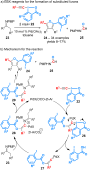
Scheme 10: Alkynylation of N-(aryl)imines with EBX for the formation of furans.

Scheme 11: Catalytic benzoyloxy-alkynylation of diazo compounds.

Scheme 12: Catalytic asymmetric benzoyloxy-alkynylation of diazo compounds.

Scheme 13: Catalytic 1,2-benzoyloxy-azidation of alkenes.

Scheme 14: Catalytic 1,2-benzoyloxy-azidation of enamides.

Scheme 15: Catalytic 1,2-benzoyloxy-iodination of alkenes.

Scheme 16: Seminal study with cyclic diaryl-λ3-iodane.

Scheme 17: Synthesis of alkylidenefluorenes from cyclic diaryl-λ3-iodanes.

Scheme 18: Synthesis of alkyne-substituted alkylidenefluorenes.

Scheme 19: Synthesis of phenanthrenes from cyclic diaryl-λ3-iodanes.

Scheme 20: Synthesis of dibenzocarbazoles from cyclic diaryl-λ3-iodanes.

Scheme 21: Synthesis of triazolophenantridines from cyclic diaryl-λ3-iodanes.

Scheme 22: Synthesis of functionalized benzoxazoles from cyclic diaryl-λ3-iodanes.

Scheme 23: Sequential difunctionalization of cyclic diaryl-λ3-iodanes.

Scheme 24: Double Suzuki–Miyaura coupling reaction of cyclic diaryl-λ3-iodanes.

Scheme 25: Synthesis of a δ-carboline from cyclic diaryl-λ3-iodane.

Scheme 26: Synthesis of N-(aryl)carbazoles from cyclic diaryl-λ3-iodanes.

Scheme 27: Synthesis of carbazoles from cyclic diaryl-λ3-iodanes.

Scheme 28: Synthesis of carbazoles and acridines from cyclic diaryl-λ3-iodanes.

Scheme 29: Synthesis of dibenzothiophenes from cyclic diaryl-λ3-iodanes.

Scheme 30: Synthesis of various sulfur heterocycles from cyclic diaryl-λ3-iodanes.

Scheme 31: Synthesis of dibenzothioheterocycles from cyclic diaryl-λ3-iodanes.

Scheme 32: Synthesis of dibenzosulfides and dibenzoselenides from cyclic diaryl-λ3-iodanes.

Scheme 33: Synthesis of dibenzosulfones from cyclic diaryl-λ3-iodanes.

Scheme 34: Seminal study with linear diaryl-λ3-iodanes.

Scheme 35: N-Arylation of benzotriazole with symmetrical diaryl-λ3-iodanes.

Scheme 36: Tandem catalytic C–H/N–H arylation of indoles with diaryl-λ3-iodanes.

Scheme 37: Tandem N-arylation/C(sp2)–H arylation with diaryl-λ3-iodanes.

Scheme 38: Catalytic intermolecular diarylation of anilines with diaryl-λ3-iodanes.

Scheme 39: Catalytic synthesis of diarylsulfides with diaryl-λ3-iodanes.

Scheme 40: α-Arylation of enolates using [bis(trifluoroacetoxy)iodo]arenes.

Scheme 41: Mechanism of the α-arylation using [bis(trifluoroacetoxy)iodo]arene.

Scheme 42: Catalytic nitrene additions mediated by [bis(acyloxy)iodo]arenes.

Scheme 43: Tandem of C(sp3)–H amination/sila-Sonogashira–Hagihara coupling.

Scheme 44: Tandem reaction using a λ3-iodane as an oxidant, a substrate and a coupling partner.

Scheme 45: Synthesis of 1,2-diarylated acrylamidines with ArI(OAc)2.
A survey of chiral hypervalent iodine reagents in asymmetric synthesis
- Soumen Ghosh,
- Suman Pradhan and
- Indranil Chatterjee
Beilstein J. Org. Chem. 2018, 14, 1244–1262, doi:10.3762/bjoc.14.107
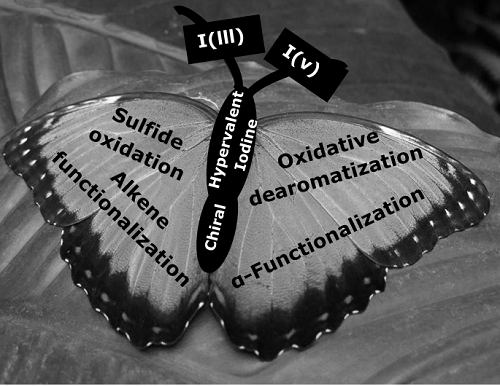
- electrophilicity and appreciable oxidizing properties. The transformations associated with asymmetric induction mainly focused on the asymmetric oxidation and oxidative dearomatization chemistry. Asymmetric difunctionalization of alkenes, α-functionalization of carbonyls and also some typical 1,2-aryl
- ) [31]. A summary of chiral hypervalent iodine reagents used in the asymmetric oxidation of sulfides is sketched below (Scheme 2). Asymmetric oxidative dearomatization, alkene functionalization and rearrangement strategy Oxidative dearomatization Asymmetric oxidative dearomatizations and the use of
- enantioselective oxidative dearomatization of phenolic derivatives 25 (spirolactonization) which is known as Kita oxidation to yield spirocyclic compounds 26 with good enantioselectivity [32]. The indication of an associative mechanism was also confirmed due to an increased enantioselectivity observed in polar

Graphical Abstract
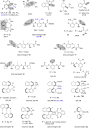
Scheme 1: An overview of different chiral iodine reagents or precursors thereof.
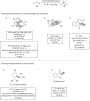
Scheme 2: Asymmetric oxidation of sulfides by chiral hypervalent iodine reagents.

Scheme 3: Oxidative dearomatization of naphthol derivatives by Kita et al.

Scheme 4: [4 + 2] Diels–Alder dimerization reported by Birman et al.

Scheme 5: m-CPBA guided catalytic oxidative naphthol dearomatization.

Scheme 6: Oxidative dearomatization of phenolic derivatives by Ishihara et al.

Scheme 7: Oxidative spirocyclization applying precatalyst 11 developed by Ciufolini et al.

Scheme 8: Asymmetric hydroxylative dearomatization.

Scheme 9: Enantioselective oxylactonization reported by Fujita et al.

Scheme 10: Dioxytosylation of styrene (47) by Wirth et al.

Scheme 11: Oxyarylation and aminoarylation of alkenes.

Scheme 12: Asymmetric diamination of alkenes.

Scheme 13: Stereoselective oxyamination of alkenes reported by Wirth et al.

Scheme 14: Enantioselective and regioselective aminofluorination by Nevado et al.

Scheme 15: Fluorinated difunctionalization reported by Jacobsen et al.

Scheme 16: Aryl rearrangement reported by Wirth et al.

Scheme 17: α-Arylation of β-ketoesters.

Scheme 18: Asymmetric α-oxytosylation of carbonyls.

Scheme 19: Asymmetric α-oxygenation and α-amination of carbonyls reported by Wirth et al.

Scheme 20: Asymmetric α-functionalization of ketophenols using chiral quaternary ammonium (hypo)iodite salt re...

Scheme 21: Oxidative Intramolecular coupling by Gong et al.

Scheme 22: α-Sulfonyl and α-phosphoryl oxylation of ketones reported by Masson et al.

Scheme 23: α-Fluorination of β-keto esters.
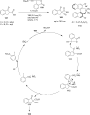
Scheme 24: Alkynylation of β-ketoesters and amides catalyzed by phase-transfer catalyst.
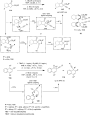
Scheme 25: Alkynylation of β-ketoesters and dearomative alkynylation of phenols.
Enantioselective dioxytosylation of styrenes using lactate-based chiral hypervalent iodine(III)
- Morifumi Fujita,
- Koki Miura and
- Takashi Sugimura
Beilstein J. Org. Chem. 2018, 14, 659–663, doi:10.3762/bjoc.14.53
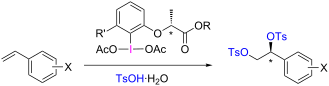
- iodine reagents using a lactate motif has been employed for several types of oxidation reaction since we first reported this procedure [18]. Enantioselective oxidative transformations include the dearomatization of phenols [19][20][21][22][23][24], α-functionalization of carbonyl compounds [25][26][27

Graphical Abstract

Scheme 1: Enantioselective dioxytosylation of styrene as a seminal example.

Figure 1: Series of lactate-based hypervalent iodine reagents.

Scheme 2: Plausible pathways in dioxytosylation of styrenes.
Oxidative cycloaddition of hydroxamic acids with dienes or guaiacols mediated by iodine(III) reagents
- Hisato Shimizu,
- Akira Yoshimura,
- Keiichi Noguchi,
- Victor N. Nemykin,
- Viktor V. Zhdankin and
- Akio Saito
Beilstein J. Org. Chem. 2018, 14, 531–536, doi:10.3762/bjoc.14.39
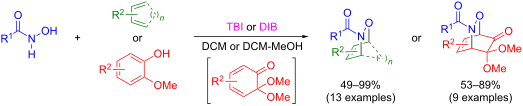
- moderate to high yields. The present method could be applied to the HDA reactions of acylnitroso species with o-benzoquinones generated by the oxidative dearomatization of guaiacols. Keywords: acylnitroso; benzoquinone; cycloaddition; dearomatization; iodine(III); Introduction The hetero-Diels–Alder (HDA
- , we report the HDA reaction of acylnitroso species generated from hydroxamic acids by [bis(trifluoroacetoxy)iodo]benzene (BTI) or DIB. The present method could be applied to HDA reactions with not only simple dienes but also with masked o-benzoquinones (MOBs) generated by the oxidative dearomatization
- NMR analysis). As a further application of the iodine(III)-mediated oxidative cycloaddition reactions, the present method was extended to HDA reactions with masked o-benzoquinones (MOBs) generated by the oxidative dearomatization [26][27][28][29] of guaiacols with methanol (Scheme 2). Liao’s and other

Graphical Abstract

Scheme 1: Hetero-Diels–Alder (HDA) reactions of N-acylnitroso species.

Scheme 2: DIB-mediated oxidative HDA reactions of 1a–c with various guaiacols.
Nucleophilic dearomatization of 4-aza-6-nitrobenzofuroxan by CH acids in the synthesis of pharmacology-oriented compounds
- Alexey M. Starosotnikov,
- Dmitry V. Shkaev,
- Maxim A. Bastrakov,
- Ivan V. Fedyanin,
- Svyatoslav A. Shevelev and
- Igor L. Dalinger
Beilstein J. Org. Chem. 2017, 13, 2854–2861, doi:10.3762/bjoc.13.277
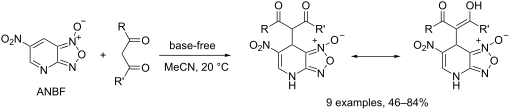
- the design of pharmacology-oriented heterocyclic systems. Keywords: CH acids; dearomatization; 1,4-dihydropyridines; furoxans; nitropyridines; Introduction The reactions of condensed furoxans with CH acidic compounds have been extensively studied. There are two main possibilities for these reactions

Graphical Abstract

Scheme 1: Beirut reaction.

Scheme 2: Reactivity of 4,6-dinitrobenzofuroxan.

Scheme 3: Reactivity of ANBF (1).

Scheme 4: Synthesis of ANBF.

Scheme 5: Reactions of ANBF with β-dicarbonyl compounds.

Figure 1: General view of molecule 12 in crystal. Anisotropic displacement parameters for non-hydrogen atoms ...

Scheme 6: Reaction of ANBF with 2,4,6-trinitrotoluene.

Figure 2: Partial 1H NMR spectrum of compound 15 in DMSO-d6.

Figure 3: General view of molecule 15 in crystal. Anisotropic displacement parameters for non-hydrogen atoms ...

Scheme 7: Plausible mechanism of adducts formation.
Chiral phase-transfer catalysis in the asymmetric α-heterofunctionalization of prochiral nucleophiles
- Johannes Schörgenhumer,
- Maximilian Tiffner and
- Mario Waser
Beilstein J. Org. Chem. 2017, 13, 1753–1769, doi:10.3762/bjoc.13.170
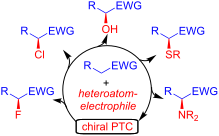
- -worker reported the use of phase-transfer catalysts to carry out the dearomatization of phenol and naphthol derivatives 25 via ortho-hydroxylation to obtain the highly-functionalized targets 26 [119]. Hereby oxaziridines 23 were found to be the best-suited hydroxylating agents. Unfortunately, the
- reaction has so far only been successful in a racemic fashion, whereas the use of chiral PTCs like A7 gave very little enantioselectivity only (er = 56:44, Scheme 12). Nevertheless, this inspiring report very nicely demonstrated the potential of phase-transfer catalysis for such dearomatization reactions
- dearomatization of phenols and naphthols. Ishihara’s ammonium salt-catalysed oxidative cycloetherification. Chiral phase-transfer-catalysed α-sulfanylation reactions. Chiral phase-transfer-catalysed α-trifluoromethylthiolation of β-ketoesters 1. Chiral phase-transfer-catalysed α-amination of β-ketoesters 1 using

Graphical Abstract

Scheme 1: Generally accepted ion-pairing mechanism between the chiral cation Q+ of a PTC and an enolate and s...

Scheme 2: Reported asymmetric α-fluorination of β-ketoesters 1 using different chiral PTCs.

Scheme 3: Asymmetric α-fluorination of benzofuranones 4 with phosphonium salt PTC F1.

Scheme 4: Asymmetric α-fluorination of 1 with chiral phosphate-based catalysts.

Scheme 5: Anionic PTC-catalysed α-fluorination of enamines 7 and ketones 10.

Scheme 6: PTC-catalysed α-chlorination reactions of β-ketoesters 1.

Scheme 7: Shioiri’s seminal report of the asymmetric α-hydroxylation of 15 with chiral ammonium salt PTCs.

Scheme 8: Asymmetric ammonium salt-catalysed α-hydroxylation using oxygen together with a P(III)-based reduct...

Scheme 9: Asymmetric ammonium salt-catalysed α-photooxygenations.

Scheme 10: Asymmetric ammonium salt-catalysed α-hydroxylations using organic oxygen-transfer reagents.

Scheme 11: Asymmetric triazolium salt-catalysed α-hydroxylation with in situ generated peroxy imidic acid 24.

Scheme 12: Phase-transfer-catalysed dearomatization of phenols and naphthols.

Scheme 13: Ishihara’s ammonium salt-catalysed oxidative cycloetherification.

Scheme 14: Chiral phase-transfer-catalysed α-sulfanylation reactions.

Scheme 15: Chiral phase-transfer-catalysed α-trifluoromethylthiolation of β-ketoesters 1.

Scheme 16: Chiral phase-transfer-catalysed α-amination of β-ketoesters 1 using diazocarboxylates 38.

Scheme 17: Asymmetric α-fluorination of benzofuranones 4 using diazocarboxylates 38 in the presence of phospho...

Scheme 18: Anionic phase-transfer-catalysed α-amination of β-ketoesters 1 with aryldiazonium salts 41.

Scheme 19: Triazolium salt L-catalysed α-amination of different prochiral nucleophiles with in situ activated ...

Scheme 20: Phase-transfer-catalysed Neber rearrangement.
Phosphazene-catalyzed desymmetrization of cyclohexadienones by dithiane addition
- Matthew A. Horwitz,
- Elisabetta Massolo and
- Jeffrey S. Johnson
Beilstein J. Org. Chem. 2017, 13, 762–767, doi:10.3762/bjoc.13.75

- nucleophile. Mild reaction conditions allow the formation of diversely functionalized fused bicyclic lactones. The products participate in facially selective additions from the convex surface, leading to allylic alcohol derivatives. Keywords: conjugate addition; cyclohexadienones; dearomatization

Graphical Abstract

Scheme 1: Desymmetrization of cyclohexadienone by tethered nucleophile.
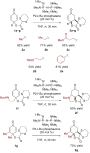
Scheme 2: Scope of the transformation.

Figure 1: Chiral iminophosphorane catalysts surveyed.

Scheme 3: Convex facial additions.

Scheme 4: Attempted oxidative deacylation.

Scheme 5: Attempted desulfurization with Raney nickel.
New approaches to organocatalysis based on C–H and C–X bonding for electrophilic substrate activation
- Pavel Nagorny and
- Zhankui Sun
Beilstein J. Org. Chem. 2016, 12, 2834–2848, doi:10.3762/bjoc.12.283
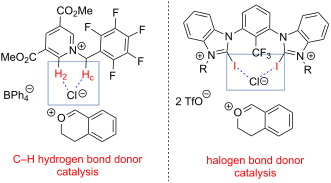
- with halides (Ka ≈ 103–104 M−1 in acetone-d6). Not surprisingly, a higher number of hydrogen bonds with an anion correlated with the higher stability of the receptor/anion complex. 1,2,3-Triazole-based catalysts for the dearomatization of N-heteroarenes The Mancheno group recently explored triazole
- the titration of L4 with TBAC [37]. Catalysts L3 and L4 were successfully applied to the asymmetric dearomatization of electron-deficient N-heteroarenes (Scheme 3). Various nitrogen-containing heterocycles such as pyridines [36], quinolines [38], isoquinolines [38], etc. were reacted with TrocCl to
- bond-donor catalysts by Bibal and co-workers [53][54]. Tetraalkylammonium catalyst (L6)-catalyzed dearomatization of isoquinolinium salts [50]. Tetraalkylammonium catalyst L6 complexation to halogen-containing substrates [51]. Tetraalkylammonium-catalyzed aza-Diels–Alder reaction by Maruoka and co

Graphical Abstract

Figure 1: Electrophile Activation by Hydrogen Bond Donors [1-16].

Figure 2: Early examples of C–H hydrogen bonds and their recent use in supramolecular chemistry [18,19,32-34].

Scheme 1: Design of 1,2,3-triazole-based catalysts for trityl group transfer through chloride anion binding b...

Scheme 2: Examples of chiral triazole-based catalysts for anion activation designed by Mancheno and co-worker...

Scheme 3: Application of chiral triazole-based catalysts L3 and L4 for counterion activation of pyridinium, q...
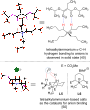
Scheme 4: Ammonium salt anion binding via C–H hydrogen bonds in solid state [40-45,50,51].
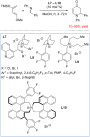
Scheme 5: Early examples of ammonium salts being used for electrophilic activation of imines in aza-Diels–Ald...
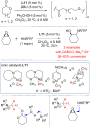
Scheme 6: Ammonium salts as hydrogen bond-donor catalysts by Bibal and co-workers [53,54].

Scheme 7: Tetraalkylammonium catalyst (L6)-catalyzed dearomatization of isoquinolinium salts [50].

Scheme 8: Tetraalkylammonium catalyst L6 complexation to halogen-containing substrates [51].

Scheme 9: Tetraalkylammonium-catalyzed aza-Diels–Alder reaction by Maruoka and co-workers [52].
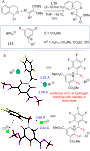
Scheme 10: (A) Alkylpyridinium catalysts L13-catalyzed reaction of 1-isochroman and silyl ketene acetals by Be...
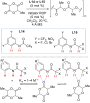
Scheme 11: Mixed N–H/C–H two hydrogen bond donors L14 and L15 as organocatalysts for ROP of lactide by Bibal a...

Scheme 12: Examples of stable complexes based on halogen bonding [68,69].

Scheme 13: Interaction between (−)-sparteine hydrobromide and (S)-1,2-dibromohexafluoropropane in the cocrysta...

Scheme 14: Iodine-catalyzed reactions that are computationally proposed to proceed through halogen bond to car...

Scheme 15: Transfer hydrogenation of phenylquinolines catalyzed by haloperfluoroalkanes by Bolm and co-workers ...
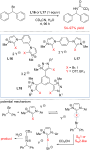
Scheme 16: Halogen bond activation of benzhydryl bromides by Huber and co-workers [82].

Scheme 17: Halogen bond-donor-catalyzed addition to oxocarbenium ions by Huber and co-workers [89].

Scheme 18: Halogen bond-donor activation of α,β-unsaturated carbonyl compounds in the [2 + 4] cycloaddition re...

Scheme 19: Halogen bond donor activation of imines in the [2 + 4] cycloaddition reaction of imine and Danishef...
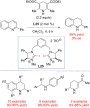
Scheme 20: Transfer hydrogenation catalyzed by a chiral halogen bond donor by Tan and co-workers [91].

Scheme 21: Allylation of benzylic alcohols by Takemoto and co-workers [92].

Scheme 22: NIS induced semipinacol rearrangement via C–X bond cleavage [93].
Catalytic asymmetric synthesis of biologically important 3-hydroxyoxindoles: an update
- Bin Yu,
- Hui Xing,
- De-Quan Yu and
- Hong-Min Liu
Beilstein J. Org. Chem. 2016, 12, 1000–1039, doi:10.3762/bjoc.12.98
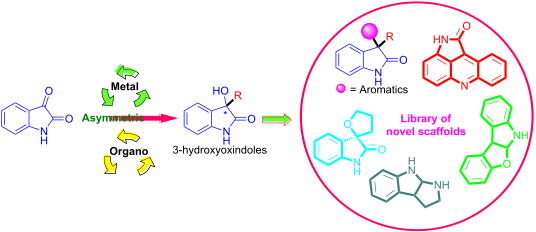
- cyclization, giving the tricyclic N-heterocyclic core. Very recently, Shi and co-workers reported the chiral phosphoric acid (CPA, cat. 31)-catalyzed asymmetric dearomatization reactions of tryptamines with 3-indolyl-3-hydroxyoxindoles, affording the indole-containing tricyclic N-heterocycles in a highly

Graphical Abstract

Figure 1: 3-Hydroxyoxindole-containing natural products and biologically active molecules.

Scheme 1: Chiral CNN pincer Pd(II) complex 1 catalyzed asymmetric allylation of isatins.

Scheme 2: Asymmetric allylation of ketimine catalyzed by the chiral CNN pincer Pd(II) complex 2.

Scheme 3: Pd/L1 complex-catalyzed asymmetric allylation of 3-O-Boc-oxindoles.

Scheme 4: Cu(OTf)2-catalyzed asymmetric direct addition of acetonitrile to isatins.

Scheme 5: Chiral tridentate Schiff base/Cu complex catalyzed asymmetric Friedel–Crafts alkylation of isatins ...

Scheme 6: Guanidine/CuI-catalyzed asymmetric alkynylation of isatins with terminal alkynes.

Scheme 7: Asymmetric intramolecular direct hydroarylation of α-ketoamides.

Scheme 8: Plausible catalytic cycle for the direct hydroarylation of α-ketoamides.

Scheme 9: Ir-catalyzed asymmetric arylation of isatins with arylboronic acids.

Scheme 10: Enantioselective decarboxylative addition of β-ketoacids to isatins.

Scheme 11: Ruthenium-catalyzed hydrohydroxyalkylation of olefins and 3-hydroxy-2-oxindoles.

Scheme 12: Proposed catalytic mechanism and stereochemical model.

Scheme 13: In-catalyzed allylation of isatins with stannylated reagents.

Scheme 14: Modified protocol for the synthesis of allylated 3-hydroxyoxindoles.

Scheme 15: Hg-catalyzed asymmetric allylation of isatins with allyltrimethylsilanes.

Scheme 16: Enantioselective additions of organoborons to isatins.

Scheme 17: Asymmetric aldol reaction of isatins with cyclohexanone.

Scheme 18: Enantioselective aldol reactions of aliphatic aldehydes with isatin derivatives and the plausible t...

Scheme 19: Enantioselective aldol reaction of isatins and 2,2-dimethyl-1,3-dioxan-5-one.

Scheme 20: Asymmetric aldol reactions between ketones and isatins.

Scheme 21: Phenylalanine lithium salt-catalyzed asymmetric synthesis of 3-alkyl-3-hydroxyoxindoles.

Scheme 22: Aldolization between isatins and dihydroxyacetone derivatives.

Scheme 23: One-pot asymmetric synthesis of convolutamydine A.

Scheme 24: Asymmetric aldol reactions of cyclohexanone and acetone with isatins.

Scheme 25: Aldol reactions of acetone with isatins.

Scheme 26: Aldol reactions of ketones with isatins.

Scheme 27: Enantioselective allylation of isatins.

Scheme 28: Asymmetric aldol reaction of trifluoromethyl α-fluorinated β-keto gem-diols with isatins.

Scheme 29: Plausible mechanism proposed for the asymmetric aldol reaction.
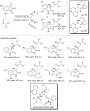
Scheme 30: Asymmetric aldol reaction of 1,1-dimethoxyacetone with isatins.

Scheme 31: Enantioselective Friedel-Crafts reaction of phenols with isatins.

Scheme 32: Enantioselective addition of 1-naphthols with isatins.

Scheme 33: Enantioselective aldol reaction between 3-acetyl-2H-chromen-2-ones and isatins.

Scheme 34: Stereoselective Mukaiyama–aldol reaction of fluorinated silyl enol ethers with isatins.

Scheme 35: Asymmetric vinylogous Mukaiyama–aldol reaction between 2-(trimethylsilyloxy)furan and isatins.

Scheme 36: β-ICD-catalyzed MBH reactions of isatins with maleimides.

Scheme 37: β-ICD-catalyzed MBH reactions of 7-azaisatins with maleimides and activated alkenes.

Scheme 38: Enantioselective aldol reaction of isatins with ketones.

Scheme 39: Direct asymmetric vinylogous aldol reactions of allyl ketones with isatins.

Scheme 40: Enantioselective aldol reactions of ketones with isatins.

Scheme 41: The MBH reaction of isatins with α,β-unsaturated γ-butyrolactam.

Scheme 42: Reactions of tert-butyl hydrazones with isatins followed by oxidation.

Scheme 43: Aldol reactions of isatin derivatives with ketones.

Scheme 44: Enantioselective decarboxylative cyanomethylation of isatins.

Scheme 45: Catalytic kinetic resolution of 3-hydroxy-3-substituted oxindoles.

Scheme 46: Lewis acid catalyzed Friedel–Crafts alkylation of 3-hydroxy-2-oxindoles with electron-rich phenols.

Scheme 47: Lewis acid catalyzed arylation of 3-hydroxyoxindoles with aromatics.

Scheme 48: Synthetic application of 3-arylated disubstituted oxindoles in the construction of core structures ...

Scheme 49: CPA-catalyzed dearomatization and arylation of 3-indolyl-3-hydroxyoxindoles with tryptamines and 3-...

Scheme 50: CPA-catalyzed enantioselective decarboxylative alkylation of β-keto acids with 3-hydroxy-3-indolylo...

Scheme 51: BINOL-derived imidodiphosphoric acid-catalyzed enantioselective Friedel–Crafts reactions of indoles...

Scheme 52: CPA-catalyzed enantioselective allylation of 3-indolylmethanols.

Scheme 53: 3-Indolylmethanol-based substitution and cycloaddition reactions.

Scheme 54: CPA-catalyzed asymmetric [3 + 3] cycloaddtion reactions of 3-indolylmethanols with azomethine ylide...

Scheme 55: CPA-catalyzed three-component cascade Michael/Pictet–Spengler reactions of 3-indolylmethanols and a...

Scheme 56: Acid-promoted chemodivergent and stereoselective synthesis of diverse indole derivatives.

Scheme 57: CPA-catalyzed asymmetric formal [3 + 2] cycloadditions.

Scheme 58: CPA-catalyzed enantioselective cascade reactions for the synthesis of C7-functionlized indoles.

Scheme 59: Lewis acid-promoted Prins cyclization of 3-allyl-3-hydroxyoxindoles with aldehydes.

Scheme 60: Ga(OTf)3-catalyzed reactions of allenols and phenols.

Scheme 61: I2-catalyzed construction of pyrrolo[2.3.4-kl]acridines from enaminones and 3-indolyl-3-hydroxyoxin...

Scheme 62: CPA-catalyzed asymmetric aza-ene reaction of 3-indolylmethanols with cyclic enaminones.

Scheme 63: Asymmetric α-alkylation of aldehydes with 3-indolyl-3-hydroxyoxindoles.

Scheme 64: Organocatalytic asymmetric α-alkylation of enolizable aldehydes with 3-indolyl-3-hydroxyoxindoles a...
Synthesis and reactivity of aliphatic sulfur pentafluorides from substituted (pentafluorosulfanyl)benzenes
- Norbert Vida,
- Jiří Václavík and
- Petr Beier
Beilstein J. Org. Chem. 2016, 12, 110–116, doi:10.3762/bjoc.12.12
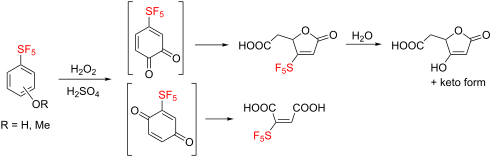
- : dearomatization; decarboxylation; Diels–Alder reaction; oxidation; pentafluorosulfanyl group; Introduction Fluorinated organic compounds have been one of the foci of chemical industry for the last several decades. The unique properties of fluorine atoms and fluorinated groups have been exploited in various

Graphical Abstract

Scheme 1: Oxidation of SF5-anisole and phenol. 19F NMR yields are shown (isolated yields in parentheses).

Scheme 2: Proposed mechanism for the formation of 3 and 4 from SF5 aromatics 1 and 2.

Scheme 3: Oxidation of anisole 10 and phenol 11. 19F NMR yields are given.

Scheme 4: Synthesis of para-benzoquinone 12 and oxidation to maleic acid 4. 19F NMR yields are shown, in pare...

Scheme 5: Catalytic hydrogenation and Diels–Alder reaction of benzoquinone 12.

Figure 1: Optimized geometries of transition states of Diels–Alder reaction of cyclopentadiene with 12. Selec...

Scheme 6: Decomposition of 3 in water.

Scheme 7: Formation of acids 5, 18 and 19 from lactone 3.

Scheme 8: Synthesis of maleic anhydride 20 and Diels–Alder adducts 21.

Scheme 9: Reaction of maleic acid 4 with diazomethane.

Scheme 10: Decarboxylation of maleic acid 4 to acrylic acid 23 in DMSO and the preparation of deuterium labell...
Synthesis of 2-substituted tryptophans via a C3- to C2-alkyl migration
- Michele Mari,
- Simone Lucarini,
- Francesca Bartoccini,
- Giovanni Piersanti and
- Gilberto Spadoni
Beilstein J. Org. Chem. 2014, 10, 1991–1998, doi:10.3762/bjoc.10.207
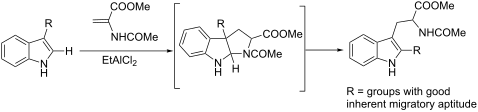
- (Dha) derivatives under Lewis acid-mediated conditions has been investigated. The formation of 2-substituted tryptophans is proposed to occur through a selective alkylative dearomatization–cyclization followed by C3- to C2-alkyl migration and rearomatization. Keywords: Dehydroalanine; Friedel–Crafts
- superior to previous methods with respect to its simplicity as it employs easily accessible 3-substituted indoles. Results and Discussion Initially, the optimal conditions for the critical alkylative dearomatization–cyclization followed by the migration/rearomatization reaction process were explored. Our
- . Conclusion In summary, we have developed the synthesis of 2-functionalized/substituted tryptophans through a novel alkylative dearomatization–cyclization/migration/rearomatization sequence between easily accessible 3-substituted indoles and commercially available Dha 2a for the construction of 2-substituted

Graphical Abstract

Scheme 1: Friedel–Crafts alkylation of 3-substituted indoles.



