


Search results
Search for "dehydration" in Full Text gives 276 result(s) in Beilstein Journal of Organic Chemistry. Showing first 200.
Recent advances in organocatalytic atroposelective reactions
Beilstein J. Org. Chem. 2025, 21, 55–121, doi:10.3762/bjoc.21.6
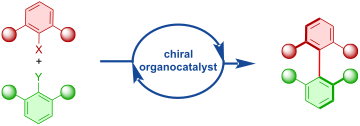
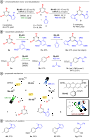
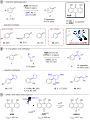
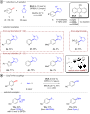
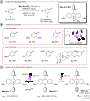
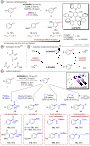
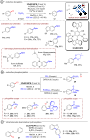
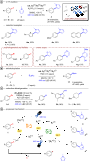
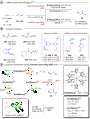
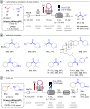
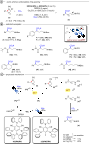
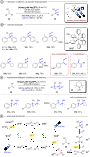
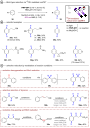
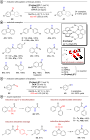
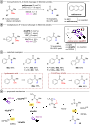
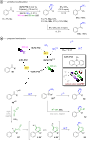
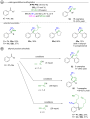
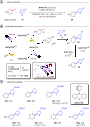
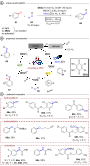
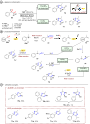
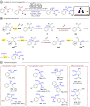
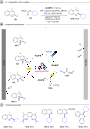
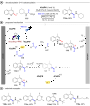
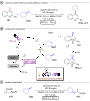
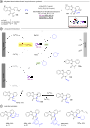
- activation, atroposelective aza-Michael addition, and intramolecular aldol reaction to form the cationic intermediate Int-6. Release of the catalyst C2, reduction with NaBH4, and dehydration with acetic acid leads to the desired product 6. Recently, an organocatalytic atroposelective intramolecular (4 + 2
- ) annulation of enals with ynamides 8 to afford axially chiral 7-arylindolines 9 was reported [20]. The reaction mechanism, rationalized by DFT calculations, is believed to occur through catalyst C3 activation of the substrate 8, dehydration, and deprotonation with tautomerization leading to the enamine
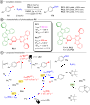
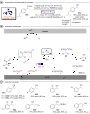
- reaction pathway was proposed [56]. The first step is a CPA C27-catalyzed condensation giving rise to the imine intermediate followed by isomerization to the enamine stabilized by CPA. An enantioselective intramolecular cyclization followed by dehydration then afford the aromatic ring and desired product











Hot shape transformation: the role of PSar dehydration in stomatocyte morphogenesis
Beilstein J. Org. Chem. 2025, 21, 47–54, doi:10.3762/bjoc.21.5
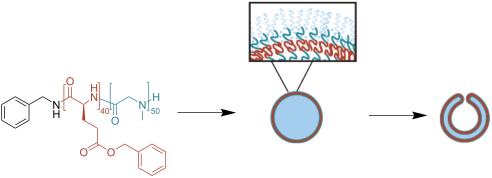
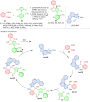
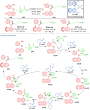
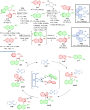
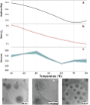
- transformation is restricted to bowl-shaped vesicles due to the membrane's flexibility and permeability. However, dehydration of the polysarcosine broadens the possibilities for shape transformation. These novel structures exhibit asymmetry and possess the capability to encapsulate smaller structures, thereby
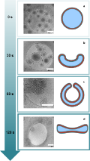
- demonstrated that polysarcosine-based self-assemblies could undergo shape transformation via dehydration induced by heating [16]. This dehydration of the polysarcosine caused in their system a complete shape transformation but it would effectively also reduce membrane permeability and enhance osmotic pressure
- , as temperature is a factor in the van ‘t Hoff formula for osmotic pressure [21]. Additionally, dehydration strengthens polysarcosine chains interactions [16], potentially rendering the membrane too rigid for shape transformation. This means that the heating of the vesicles made with polysarcosine


Deciphering the mechanism of γ-cyclodextrin’s hydrophobic cavity hydration: an integrated experimental and theoretical study
Beilstein J. Org. Chem. 2024, 20, 2635–2643, doi:10.3762/bjoc.20.221
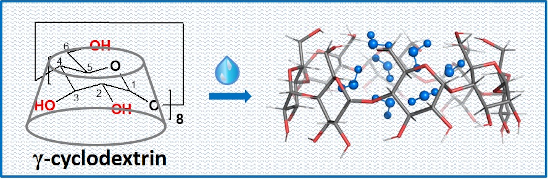
- substances. Host CDs are highly accommodative to water molecules as well and usually contain water in the native state. There is still an ongoing discussion on both the total number of water molecules and their preferred binding position inside the cavities of the CDs. To understand the hydration/dehydration
- in the cavity of the CD (with which the hydration reaction is thermodynamically favorable) is a particularly important result. Thermal dehydration of γ-CD γ-CD molecules in the crystal are stacked in such a pattern to form cage-type packing [24]. Both ends (rims) of the cyclodextrin cavity are closed
- ΔH78 values (−2.6, −2.8, and −4.4 kcal mol−1 for α-, β-, and γ-CD, respectively). Dissimilarities CDs differ in both the number of water molecules that they sequester in their cavity and the manner in which the dehydration process occurs. Both experiments and theory agree that α-CD can accommodate up


HFIP as a versatile solvent in resorcin[n]arene synthesis
Beilstein J. Org. Chem. 2024, 20, 2469–2475, doi:10.3762/bjoc.20.211
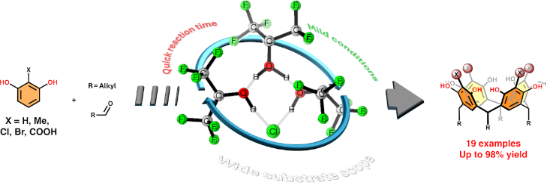
- from intermolecular dehydration, nowadays known as alkyl resorcin[4]arene. Forty years later in 1980, Höegberg noticed that short alkyl chain resorcin[n]arenes develop stereoisomers in the reaction mixture; however, since the condensation reaction is reversible, once the macrocycle adopts the bowl


Asymmetric organocatalytic synthesis of chiral homoallylic amines
Beilstein J. Org. Chem. 2024, 20, 2349–2377, doi:10.3762/bjoc.20.201
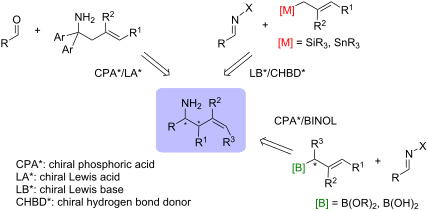
- molecule. The BINOL catalyst 39 forming arylboronate species, enables the shift to occur asymmetrically. In the second step, the hydrolysis of unreactive diaminonaphthalene derivative 42 gives the poorly reactive and highly air-sensitive trifluoromethylallylboronic acid 43, but after the dehydration forms








Deuterated reagents in multicomponent reactions to afford deuterium-labeled products
Beilstein J. Org. Chem. 2024, 20, 2270–2279, doi:10.3762/bjoc.20.195
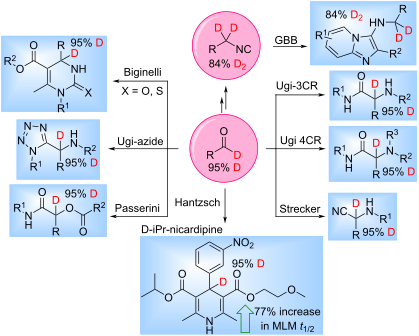
- ]. Results and Discussion We hypothesized that [D1]-aldehydes could be converted to [D2]-benzylic isocyanides using [D2]-formic acid via Leuckart–Wallach reaction followed by dehydration. Surprisingly, the Leuckart–Wallach reaction gave [D3]-formamides which are scarce in the primary literature. The common


Heterocycle-guided synthesis of m-hetarylanilines via three-component benzannulation
Beilstein J. Org. Chem. 2024, 20, 2208–2216, doi:10.3762/bjoc.20.188
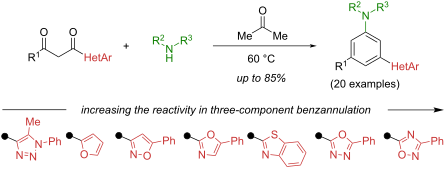
- intramolecular addition of enamine I to the C3=O to form intermediate II, which dehydrates to cyclic carbinol III. Finally, dehydration of intermediate III yields anilines 3. Conclusion In summary, a method for the synthesis of substituted meta-hetarylanilines under mild conditions starting from 1,3-diketones


The Groebke–Blackburn–Bienaymé reaction in its maturity: innovation and improvements since its 21st birthday (2019–2023)
Beilstein J. Org. Chem. 2024, 20, 1839–1879, doi:10.3762/bjoc.20.162
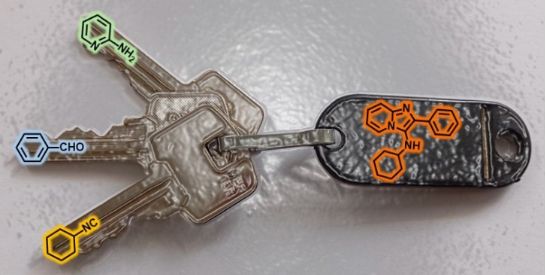
- hydrogen iodide, deriving from the mixture of I2, PPh3 and Et3N used for the dehydration of the formamide into isocyanide [31]. All substances are mixed from the very beginning, and the reaction could be carried out at room temperature for 12 h, or heated under MW at 60 °C for 30 min. Although this
- underwent cyclization and dehydration to produce linked polyheterocyclic indoles 75. The authors managed to prepare five adducts in 15–33% yield. Another mechanistic scenario occurred at higher temperature (Scheme 25, conditions b). The secondary amine of diol 73 substituted both secondary alcohols to






Chemo-enzymatic total synthesis: current approaches toward the integration of chemical and enzymatic transformations
Beilstein J. Org. Chem. 2024, 20, 1693–1712, doi:10.3762/bjoc.20.151
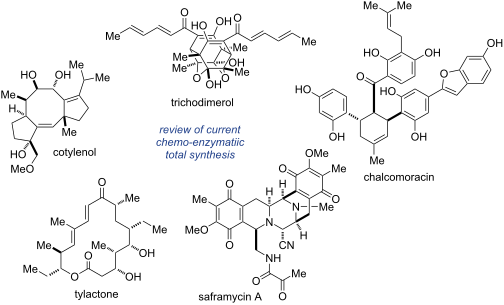
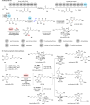
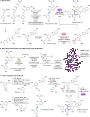
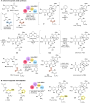
- isolated [47][49]. As shown in Scheme 5A, the proposed biosynthetic pathway of chalcomoracin (3) commence with the addition of three C2 units from the acetate pathway to 4-coumaroyl-CoA supplied from the shikimate pathway, leading to compound 42 [47]. Subsequent Claisen condensation, dehydration and
- -ketoreductase (KR) and dehydratase (DH) domains, sequentially catalyze the carbonyl reduction and dehydration of the extended polyketide chains to provide thioester 62 connecting to the ACP domain of module 3. TylGII then iterates similar conversions including carbon chain extension reaction, carbonyl reduction
- , and dehydration to generate the thioester 63 on its ACP domain. Module 5 of TylGIII further extends the carbon chain with incorporation of methylmalonyl-CoA and ethylmalonyl-CoA. Then the KR, DH, and enoylreductase (ER) domains of module 6 catalyze the formation and reduction of enone to furnish




Bioinformatic prediction of the stereoselectivity of modular polyketide synthase: an update of the sequence motifs in ketoreductase domain
Beilstein J. Org. Chem. 2024, 20, 1476–1485, doi:10.3762/bjoc.20.131
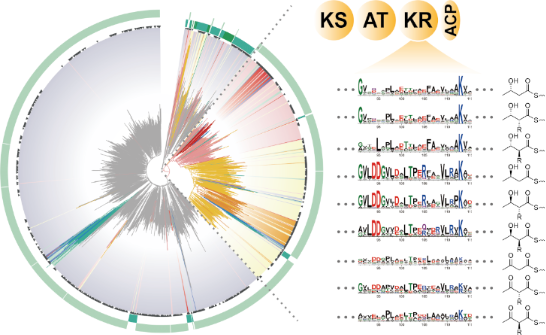
- obscured by the following dehydration by the DH domain. It is widely believed that an α,β-trans (E) double bond is generated from a ᴅ-β-hydroxy intermediate produced by a B-type KR, whereas a cis (Z) double bond is from an ʟ-β-hydroxy intermediate generated by an A-type KR via syn elimination [21]. However
- either A2- or B2-KRs, but are likely to contain mutations in NADPH binding site [31]. Sequence logo analysis of KRC from γ- and δ-modules In the actinobacterial γ- and δ-modules, the stereochemical outcome of a KR is obscured by further dehydration catalyzed by DH. The dehydration mechanism by DH has


Competing electrophilic substitution and oxidative polymerization of arylamines with selenium dioxide
Beilstein J. Org. Chem. 2024, 20, 1221–1235, doi:10.3762/bjoc.20.105
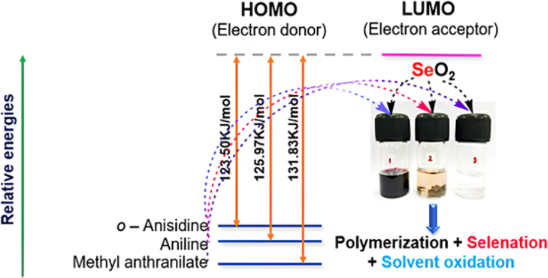
- rise to either diaryl selenoxide via dehydration or diaryl monoselenide via reductive elimination by eliminating H2O2 [39]. Observation of m/z peaks for compound 8 clearly confirmed the formation of diaryl selenoxide in the reaction. Mechanism for the formation of oxamides The possible reaction


Cofactor-independent C–C bond cleavage reactions catalyzed by the AlpJ family of oxygenases in atypical angucycline biosynthesis
Beilstein J. Org. Chem. 2024, 20, 1198–1206, doi:10.3762/bjoc.20.102
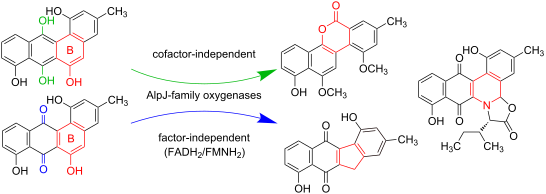
- aldehyde–acid intermediate 11. In JadG-catalyzed reactions, compound 11 participated in a reaction with ʟ-isoleucine to yield 6. In contrast, in AlpJ- or Flu17-catalyzed reactions, 11 underwent decarboxylation and an aldol reaction, giving rise to intermediate 12. Subsequent dehydration of 12 led to the




One-pot Ugi-azide and Heck reactions for the synthesis of heterocyclic systems containing tetrazole and 1,2,3,4-tetrahydroisoquinoline
Beilstein J. Org. Chem. 2024, 20, 912–920, doi:10.3762/bjoc.20.81
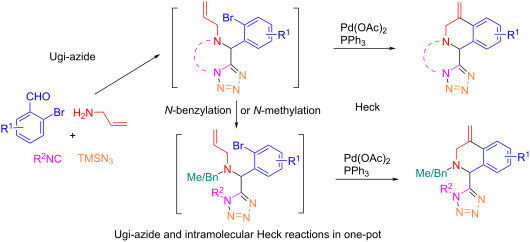
- fused imidazotetrazolodiazepinones (Scheme 2A) [37]. The Gámez-Montaño group introduced a one-pot synthesis of Ugi-azide/N-acylation/Diels–Alder/dehydration reactions for isoindolin-1-one and 1,5-DS-T in a linked manner (Scheme 2B) [41]. The Ding group developed sequential Ugi-azide/Ag-catalyzed


Substrate specificity of a ketosynthase domain involved in bacillaene biosynthesis
Beilstein J. Org. Chem. 2024, 20, 734–740, doi:10.3762/bjoc.20.67
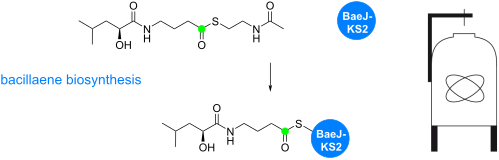
- are suggested not to catalyse elongations, but the KS domains of modules 5 and 9 may only act in the translocation of the intermediate from the ACP of the previous module to the ACP of modules 5 and 9, respectively. Modules 5 and 9 then only catalyse the dehydration of the alcohol functions installed


Possible bi-stable structures of pyrenebutanoic acid-linked protein molecules adsorbed on graphene: theoretical study
Beilstein J. Org. Chem. 2024, 20, 570–577, doi:10.3762/bjoc.20.49
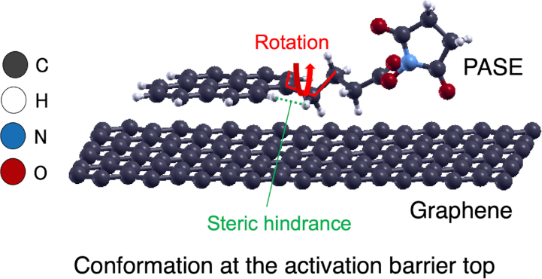
- is widely used as a linker to connect carbon materials and proteins (Figure 1a) [1][4][5]. The PASE linker and a certain protein can be connected through a dehydration condensation reaction so that the succinimidyl ester group is replaced by an amido group with a protein (Figure 1b). This dehydration
- structures on graphene [1]. Therefore, the pyrene moiety is bound to graphene, and at the same time, the protein is supplemented by a dehydration-condensed linker with the protein. As introduced, on graphene, PASE is found to be straight as the most stable conformation (conformation1 in Figure 1c) [9]. On
- , respectively. The solid, broken, and dotted red lines represent the rotation axis. Atomic geometry is visualized by Xcrysden [10] throughout this paper. (b) Schematic diagram of the dehydration-condensation structure of a hypothetical protein and PASE. Lys indicates lysine, and RC is the active center of the


Trifluoromethylated hydrazones and acylhydrazones as potent nitrogen-containing fluorinated building blocks
Beilstein J. Org. Chem. 2023, 19, 1741–1754, doi:10.3762/bjoc.19.127
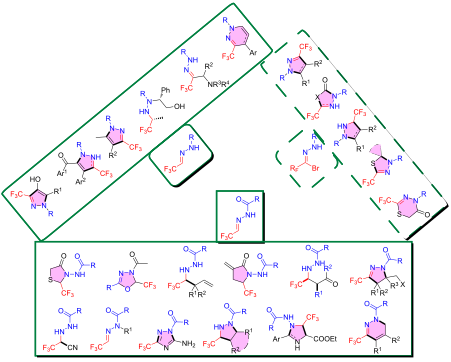
- a surrogate of acetylene reacted with trifluoroacetonitrile imine to form 1-aryl-3-trifluoromethylpyrazoles, followed by a series of cascade annulation/dehydration/ring contraction reactions when treated with p-TsCl [65] (Scheme 10b). The chemistry of pyrazoles with a fluorine or a fluoroalkylated


Decarboxylative 1,3-dipolar cycloaddition of amino acids for the synthesis of heterocyclic compounds
Beilstein J. Org. Chem. 2023, 19, 1677–1693, doi:10.3762/bjoc.19.123
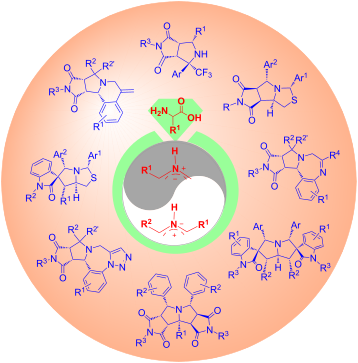
- aldehydes and α-amino esters (via dehydration) or α-amino acids (via decarboxylation) could be classified based on the substitution groups on the N atom to: 1) N-substituted (N–R type), 2) hydrogen containing (N–H type), and 3) metal complexes (N–M type) (Figure 1) [16][17]. These AMYs could also be




Cyclization of 1-aryl-4,4,4-trichlorobut-2-en-1-ones into 3-trichloromethylindan-1-ones in triflic acid
Beilstein J. Org. Chem. 2023, 19, 1460–1470, doi:10.3762/bjoc.19.105
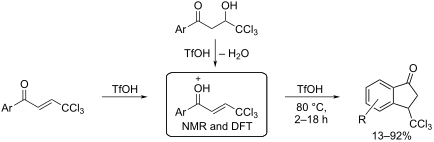
- -4,4,4-trichloro-3-hydroxybutan-1-ones; ArCOCH2CH(OH)CCl3) undergo dehydration to the corresponding CCl3-enones, which are further cyclized into CCl3-indanones. The yields of CCl3-indanones starting from CCl3-hydroxy ketones are up to 86% in TfOH at 80 °C within 3–18 h. Keywords: carbocations; enones
- , exact structures of compounds 1g,h,s,t,v were confirmed by X-ray analysis (see Supporting Information File 1). The hydroxy ketones 1 were used as precursors for the synthesis of 1-aryl-4,4,4-trichlorobut-2-en-1-ones (CCl3-enones) 2 by dehydration of compounds 1 with p-toluenesulfonic acid monohydrate at
- electron-donating substituents in the aromatic ring gave oligomeric materials. Presumably, in these cases, after dehydration and formation of the corresponding enone 2, the latter underwent subsequent cationic oligomerization. Next we studied the intramolecular cyclization of compounds 1 and 2 in TfOH. It


Unravelling a trichloroacetic acid-catalyzed cascade access to benzo[f]chromeno[2,3-h]quinoxalinoporphyrins
Beilstein J. Org. Chem. 2023, 19, 1216–1224, doi:10.3762/bjoc.19.89
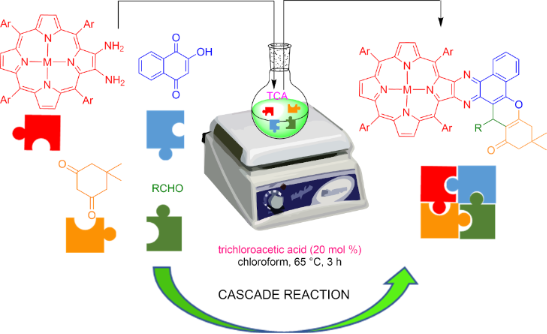
- condensation of intermediate 17 with 2-arylidene-5,5-dimethylcyclohexane-1,3-dione 18 (formed in situ through an Aldol condensation of aldehydes with dimedone), to generate copper(II) benzo[f]chromeno[2,3-h]dihydroquinoxalinoporphyrins which on dehydration produce the desired copper(II) benzo[f]chromeno[2,3-h


Photoredox catalysis harvesting multiple photon or electrochemical energies
Beilstein J. Org. Chem. 2023, 19, 1055–1145, doi:10.3762/bjoc.19.81

























Aromatic C–H bond functionalization through organocatalyzed asymmetric intermolecular aza-Friedel–Crafts reaction: a recent update
Beilstein J. Org. Chem. 2023, 19, 956–981, doi:10.3762/bjoc.19.72

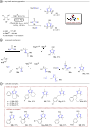
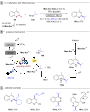
- dehydration to generate isoxazolium cation 80 paired with a phosphate anion. This chiral phosphate is engaged in H-bonding with the free NH of the heteroarene ring to ease the stereoselective 1,2-addition to in situ generate the cationic heterocyclic scaffold 81. The reaction proceeded faster with pyrroles
- , Li and co-workers developed an aza-Friedel–Crafts technique involving 3-alkynylated 3-hydroxy-1-oxoisoindolines 88 as electrophiles in combination with unsubstituted indoles 4 in the presence of chiral phosphoric acid ent-P17 as the catalytic agent. Facile dehydration of 88 was facilitated by the




Clauson–Kaas pyrrole synthesis using diverse catalysts: a transition from conventional to greener approach
Beilstein J. Org. Chem. 2023, 19, 928–955, doi:10.3762/bjoc.19.71
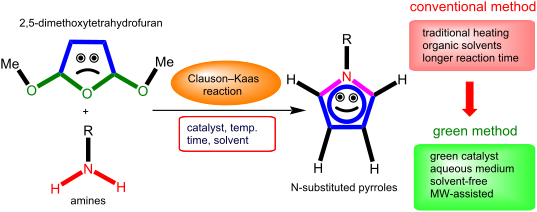
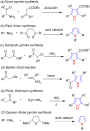
- subsequent removal of MeOH, dehydration and aromatization affords N-substituted pyrroles 21. In 2013, Chatzopoulou [63] and co-workers reported a high-yielding Clauson–Kaas pyrrolyl-phenol synthesis using nicotinamide, which is a cheap and nontoxic catalyst and a vitamin and enzyme cofactor. The authors
- hydrolysis of 2,5-DMTHF (2), which provide intermediate C after the removal of methanol in the presence of CuCl2. In the next steps, nucleophilic addition reaction of amines 34 with intermediate C, dehydration, and intramolecular aromatization affords N-substituted pyrroles 35. In 2018, Patil and Kumar [70
- by a water molecule to form intermediate B. Further, dehydration and protonation leads to the formation of intermediate E. Nucleophilic attack of amine 36 on E then affords intermediate F. Finally, protonation, cyclization, and dehydration afford N-substituted pyrrole 37. The authors also




Photoredox catalysis enabling decarboxylative radical cyclization of γ,γ-dimethylallyltryptophan (DMAT) derivatives: formal synthesis of 6,7-secoagroclavine
Beilstein J. Org. Chem. 2023, 19, 918–927, doi:10.3762/bjoc.19.70
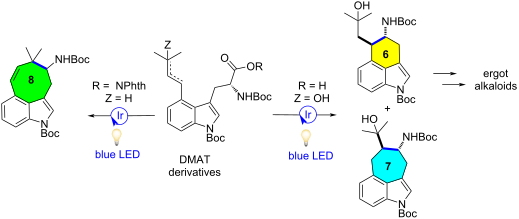
- interconvertible to each other by hydration or dehydration, i.e., a plausible precursor of the allylic alcohol would be the diene, and vice versa [90]. Since both 8 and 10 are easily obtainable from 2 by Mozoroki–Heck coupling with commercially available 2-methyl-3-buten-2-ol, ester hydrolysis (LiOH in THF/H2O
- ), and, finally for 10, dehydration of the tertiary alcohol (mesylation and elimination) (Scheme 3), we decided to test their roles in the photoredox-catalyzed decarboxylative cyclization. With 8 and 10 in hand with the C4-prenyl side-chain already oxidized/functionalized, we recognized that this


Asymmetric tandem conjugate addition and reaction with carbocations on acylimidazole Michael acceptors
Beilstein J. Org. Chem. 2023, 19, 881–888, doi:10.3762/bjoc.19.65

- probe their reactivity with the Zn-enolate derived from 1a (Scheme 3). The onium compounds 2a and 2b were obtained by anion exchange using LiNTf2 from the commercially available tetrafluoroborate salts. Onium compounds 2c and 2d were obtained by acidic dehydration of the corresponding hydroxy




Eschenmoser coupling reactions starting from primary thioamides. When do they work and when not?
Beilstein J. Org. Chem. 2023, 19, 808–819, doi:10.3762/bjoc.19.61
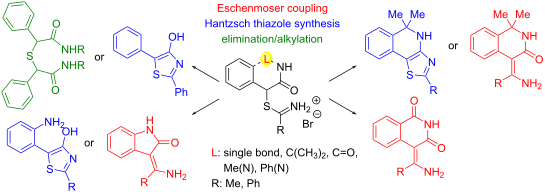
- formation of products 8a and 8a-Me was observed, but their combined yield was lower than in DMF or MeCN. The introduction of the N-methyl group coming from trimethyl phosphite must occur prior to the dehydration step of the intermediary thiazole 7a because heating of independently prepared 8a with trimethyl





