


Search results
Search for "formyl group" in Full Text gives 56 result(s) in Beilstein Journal of Organic Chemistry.
An overview of the cycloaddition chemistry of fulvenes and emerging applications
Beilstein J. Org. Chem. 2019, 15, 2113–2132, doi:10.3762/bjoc.15.209

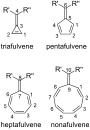
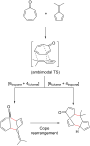
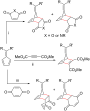
- found to occur between the fulvene and an enamine generated through the reaction of the formyl group with the organocatalyst, diphenylprolinol silyl ether. Variation of the spacer structure provided access to a range of triquinane derivatives (Scheme 11), an important precursor in biomimetic and natural







Reactions of 2-carbonyl- and 2-hydroxy(or methoxy)alkyl-substituted benzimidazoles with arenes in the superacid CF3SO3H. NMR and DFT studies of dicationic electrophilic species
Beilstein J. Org. Chem. 2019, 15, 1962–1973, doi:10.3762/bjoc.15.191
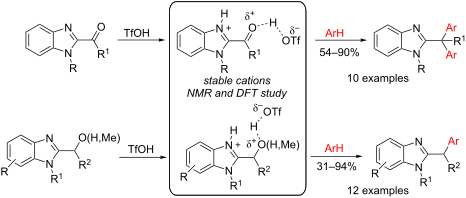
- –8 with arenes under the action of Brønsted acids (H2SO4, TfOH) or Lewis acids (AlX3, X = Cl, Br). Reactions of 2-formyl-1-methylbenzimidazole (1) with various arenes (benzene, and its methyl, methoxy or chloro-substituted derivatives) are given in Table 3. These reactions proceed on the formyl group


Introduction of an isoxazoline unit to the β-position of porphyrin via regioselective 1,3-dipolar cycloaddition reaction
Beilstein J. Org. Chem. 2019, 15, 1434–1440, doi:10.3762/bjoc.15.143
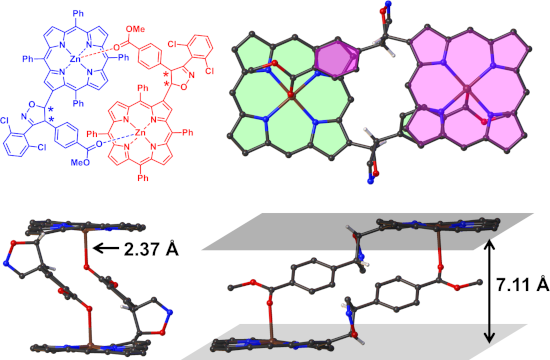
- Vilsmeier reaction was carried out after insertion of Cu2+ into the cavity of TPP. In the presence of concentrated H2SO4 the Cu2+ was removed to give the 2-formyl derivative TPP-CHO. Subsequently, the formyl group was reduced by NaBH4, accompanied with chlorination by SOCl2, to afford the chloromethyl


Multicomponent reactions (MCRs): a useful access to the synthesis of benzo-fused γ-lactams
Beilstein J. Org. Chem. 2019, 15, 1065–1085, doi:10.3762/bjoc.15.104
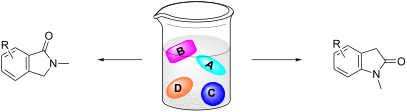
- through an addition of copper acetylide, generated from terminal alkyne and copper, to the imine formed by the reaction between the amine and the formyl group. Then, the secondary propargylamine intermediate would act as a nucleophile in a cyclization process to form the lactam ring. The same










The LANCA three-component reaction to highly substituted β-ketoenamides – versatile intermediates for the synthesis of functionalized pyridine, pyrimidine, oxazole and quinoxaline derivatives
Beilstein J. Org. Chem. 2019, 15, 655–678, doi:10.3762/bjoc.15.61
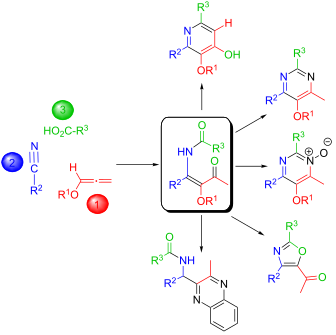
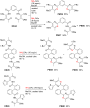
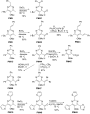
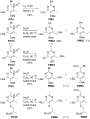
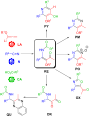
- . The easily introduced C-2 alkenyl groups may also be oxidized. Thus, dihydroxylation of the vinyl group in PM7 followed by oxidative cleavage afforded pyrimidine derivative PM50 having a formyl group at C-2 (Scheme 12) [31]. Next, the conversion of the 5-alkoxy groups of the pyrimidine derivatives PM
- oxidations of PM5, PM9, PM15 and PM19 furnishing aldehydes PM41, PM42, PM44 and PM48 are shown in Scheme 11 [33]. In case of the benzyl-substituted substrate PM5, the (probably faster) oxidation of the C-2 benzyl group could not be avoided and hence the dicarbonyl compound PM41 was isolated [50]. The formyl
- group of the prepared intermediates allows further conversion into other functional groups as depicted in the scheme. Wittig reactions provided 4-alkenyl-substituted pyrimidine derivatives such as PM43 or PM47, whereas further oxidation of PM44 afforded the carboxylic acid PM45 in good yield [33






A selective removal of the secondary hydroxy group from ortho-dithioacetal-substituted diarylmethanols
Beilstein J. Org. Chem. 2018, 14, 1229–1237, doi:10.3762/bjoc.14.105
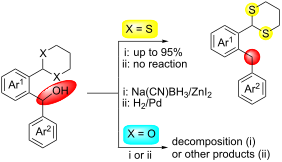
- procedure shown in Scheme 2 including: 1) protection of the formyl group in ortho-bromoaldehydes 1 and 2 with 1,3-propanedithiol, 2) the Br/Li exchange reaction in the resulting ortho-bromo-1,3-dithianes 3 and 4 with n-BuLi followed by condensation with a second (hetero)aromatic aldehyde Ar2-CHO. The




Nucleophilic fluoroalkylation/cyclization route to fluorinated phthalides
Beilstein J. Org. Chem. 2018, 14, 182–186, doi:10.3762/bjoc.14.12
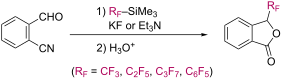
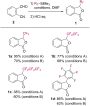
- assuming the pathway shown in Scheme 2. The formyl group in aldehyde 2 undergoes nucleophilic trifluoromethylation triggered by a catalytic amount of KF to give the ortho-cyanobenzyl silyl ether 3. Upon treatment with aq HCl, the subsequent lactonization of 4 takes place to afford trifluoromethylphthalide




Conjugated nitrosoalkenes as Michael acceptors in carbon–carbon bond forming reactions: a review and perspective
Beilstein J. Org. Chem. 2017, 13, 2214–2234, doi:10.3762/bjoc.13.220
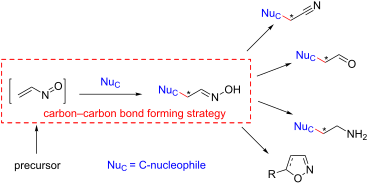
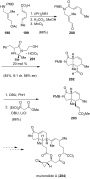
- corresponding adduct 44 in 93% yield. Importantly, both stereoisomers obtained were oxime E,Z-isomers with the C-7 relative configuration being the same as in myrioneurinol. Subsequent deoxygenation and reduction of aldoxime followed by transformation of the malonate unit to the formyl group furnished


The chemistry and biology of mycolactones
Beilstein J. Org. Chem. 2017, 13, 1596–1660, doi:10.3762/bjoc.13.159
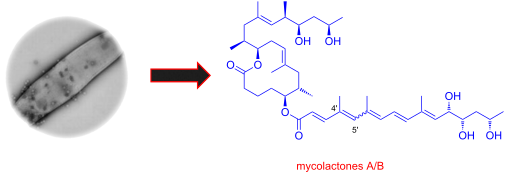
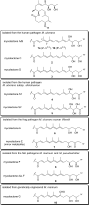
- a formyl group attached to C8’ and a single bond between C8’ and C9’ (mycolactone G, 10). Due to its unspecific appearance at early stages, the diagnosis of Buruli ulcer is non-trivial and no point-of-care rapid diagnostic test is currently available [64]. Identification of the infection generally









New electroactive asymmetrical chalcones and therefrom derived 2-amino- / 2-(1H-pyrrol-1-yl)pyrimidines, containing an N-[ω-(4-methoxyphenoxy)alkyl]carbazole fragment: synthesis, optical and electrochemical properties
Beilstein J. Org. Chem. 2017, 13, 1583–1595, doi:10.3762/bjoc.13.158

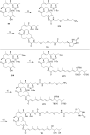
- substituent at the C3 atom of the carbazole cycle: 2a,b – formyl group, 3a,b – acetyl group, 4a,b – 1-chloro-3-oxoprop-1-en-1-yl moiety and 5a,b – 5-acetylthiophen-2-yl unit. That’s why it is interesting to compare their optical properties. So, we have fulfilled the overlapping of the absorption and emission


Nitration of 5,11-dihydroindolo[3,2-b]carbazoles and synthetic applications of their nitro-substituted derivatives
Beilstein J. Org. Chem. 2017, 13, 1396–1406, doi:10.3762/bjoc.13.136

- performed by using the Suzuki–Miyaura cross-coupling reaction with phenylboronic acid under Pd catalysis (Scheme 5). The location of the formyl group and bromine atoms in ICZ derivatives 12 and 13 has been established by X-ray crystallography analysis, performed for single crystals of 12b and 13b (Figure 5


Biosynthesis of oxygen and nitrogen-containing heterocycles in polyketides
Beilstein J. Org. Chem. 2016, 12, 1512–1550, doi:10.3762/bjoc.12.148






Reactions of N,3-diarylpropiolamides with arenes under superelectrophilic activation: synthesis of 4,4-diaryl-3,4-dihydroquinolin-2(1H)-ones and their derivatives
Beilstein J. Org. Chem. 2016, 12, 950–956, doi:10.3762/bjoc.12.93

- superelectrophilic activation of the N-formyl group by TfOH in the reaction with benzene resulted in the formation of N-(diphenylmethyl)-substituted dihydroquinolinones. Keywords: alkynes; quinolinones; Friedel–Crafts reactions; superacids; superelectrophilic activation; Introduction Quinoline derivatives are a
- of compounds 5 and 6 with arenes in TfOH were checked. Analogously to other heteroaromatic aldehydes of the series of pyridine [19], quinolone [20], pyrazol [21], and imidazole [22], the superelectrophilic activation of the formyl group in 5 was expected. Indeed, compounds 5a,b and d reacted with
- two positive charges in C substantially increases the electrophilic properties of the carbon of the O-protonated N-formyl group and explains its reactivity. The reactions of 5 with other arenes, such as 1,2-dichlorobenzene, toluene, or isomeric xylenes, gave deformylation products 2. In this case


A convenient route to symmetrically and unsymmetrically substituted 3,5-diaryl-2,4,6-trimethylpyridines via Suzuki–Miyaura cross-coupling reaction
Beilstein J. Org. Chem. 2016, 12, 835–845, doi:10.3762/bjoc.12.82
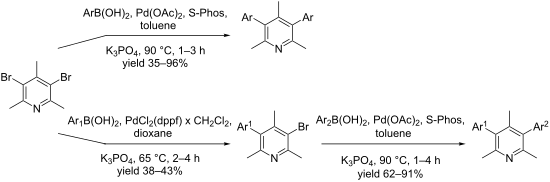
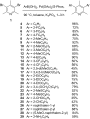
- valuable but unstable 2-formyl group gave again a low yield of product 24 (35%). Initially, our attempts to obtain pyridine 29 completely failed due to a very low solubility of 2-aminophenylboronic acid hydrochloride in toluene. The problem was overcome by addition of a small amount of water (approx 10 mol




Cross metathesis of unsaturated epoxides for the synthesis of polyfunctional building blocks
Beilstein J. Org. Chem. 2015, 11, 1876–1880, doi:10.3762/bjoc.11.201
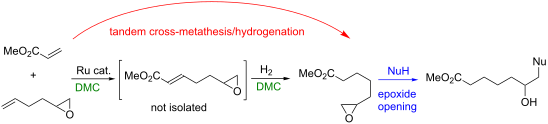
- electron- deficient olefin cross metathesis partner has received attention for the synthesis of polymer precursors. For instance, we have reported the reduction of the nitrile functional group into primary amine [22] and the reduction of the formyl group into alcohol [23][24]. Herein, we focused on the


Development of variously functionalized nitrile oxides
Beilstein J. Org. Chem. 2015, 11, 1241–1245, doi:10.3762/bjoc.11.138

- -methylcarbamoyl group to an acyl or formyl group was achieved upon treatment with a Grignard reagent or with DIBAL (Table 3, entries 7 and 8). The chemical conversion of N-methylamides to versatile carbonyl functions was systematically studied. In this protocol, the tosyl group was found to be effective for the


The preparation of new functionalized [2.2]paracyclophane derivatives with N-containing functional groups
Beilstein J. Org. Chem. 2015, 11, 437–445, doi:10.3762/bjoc.11.50
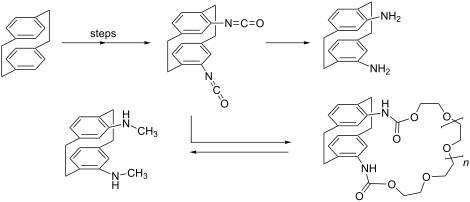
- tetrahedral intermediate thus generated, the polyether bridge functions as a leaving group to form an aldehyde intermediate. This is subsequently reduced a second time to the N-CH3 moiety. In compound 22 one formyl group is still present whereas in 23 this has been lost completely. Both compounds were





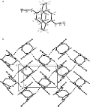
Enantioselective synthesis of polyhydroxyindolizidinone and quinolizidinone derivatives from a common precursor
Beilstein J. Org. Chem. 2014, 10, 3104–3110, doi:10.3762/bjoc.10.327

- oxidative cleavage of the vicinal diol unit in the latter to a formyl group (not isolated) followed by its in situ reduction with NaBH4 delivered the hydroxymethyl chain in 17. Hydrogenolytic removal of the two benzyl ether functionalities with Pearlman’s catalyst then afforded the tetrahydroxyindolizidine


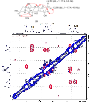
Preparation of neuroprotective condensed 1,4-benzoxazepines by regio- and diastereoselective domino Knoevenagel–[1,5]-hydride shift cyclization reaction
Beilstein J. Org. Chem. 2014, 10, 2594–2602, doi:10.3762/bjoc.10.272

- acid (13) and malononitrile (14) all containing active methylene groups, which initiated a domino reaction (Scheme 2). The Knoevenagel reaction of the formyl group in rac-5 and the active methylene groups of 12–14 afforded the intermediates rac-6a–c (Scheme 1), which underwent regioselective [1,5


The regulation and biosynthesis of antimycins
Beilstein J. Org. Chem. 2013, 9, 2556–2563, doi:10.3762/bjoc.9.290
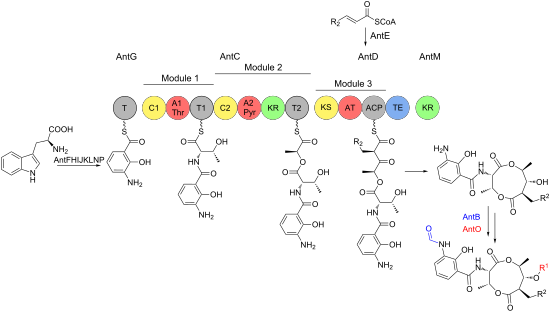
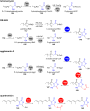
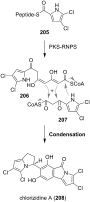
- utilise acyl-SNACs provides the possibility to employ feeding studies to introduce new chemistry at C-8. AntO is a lipase homologue and is predicted to install the N-formyl group resulting in the 3-formamidosalicylate moiety. AntO is required for bioactivity against the human pathogenic fungus, Candida
- albicans (Seipke and Hutchings, unpublished results), but the exact time in which AntO installs the N-formyl group is unclear and requires investigation. Regulation of the ant gene cluster Antimycin biosynthesis is linked to development, as is the case for many Streptomyces secondary metabolites. However


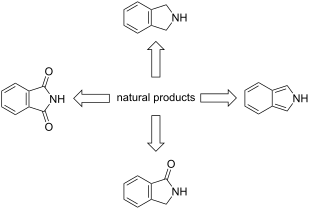
The chemistry of isoindole natural products
Beilstein J. Org. Chem. 2013, 9, 2048–2078, doi:10.3762/bjoc.9.243
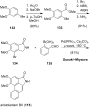
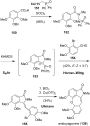
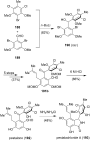
- prenyl side chain and introduction of the formyl group was accomplished within five steps to give 191a (Scheme 25). The envisioned deprotection of 191a using Lewis acidic conditions led to an unexpected and unprecedented metal-free carbonyl–olefin metathesis. Coordination of boron trifluoride etherate to
















Formal synthesis of (−)-agelastatin A: an iron(II)-mediated cyclization strategy
Beilstein J. Org. Chem. 2013, 9, 860–865, doi:10.3762/bjoc.9.99
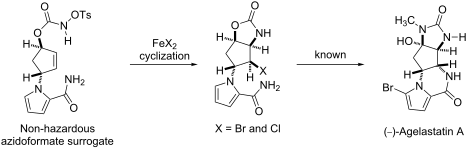
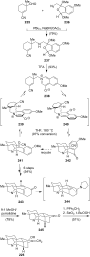
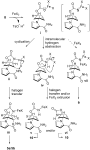
- significant [42]. Various yields of 9 obtained by loading consistent amounts (1.2–1.5 equiv) of Bu4NX salts also indicated the poor contribution of the pathway. Chan and co-workers demonstrated that an iron–imido complex generated from FeCl2/PhI=NTs underwent radical hydrogen abstraction from a formyl group





Bioactive selaginellins from Selaginella tamariscina (Beauv.) Spring
Beilstein J. Org. Chem. 2012, 8, 1884–1889, doi:10.3762/bjoc.8.217

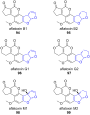
- ). The assignment of all 1H and 13C NMR data (shown in Table 1) was confirmed by 2D NMR techniques. The NMR spectra of 1 showed the typical signals of a formyl group (δH 10.73 and δC 190.9), an alkynyl band (δC 82.4, 101.0), three phenolic hydroxyl (δH 8.94 and 8.59), and five aromatic rings, including
- E-ring, and one ABMN system (δH 7.61, 7.42, 6.41 and 6.35, each 1H, d, J = 10.0 Hz) for the C-ring. The above structural features suggested 1 was a selaginellin with a formyl group. Key evidence for the structure of 1 obtained from the HMBC experiment further confirmed this suggestion (Figure 2
- ). The HMBC correlations H16/C-26 and H-26/C-15 concluded the substitution of the formyl group at C-15 of the A-ring. The alkynyl group was connected to the B-ring based on correlations between H-29,33 and C-28. The linkage between the C-ring and the B-ring was located at C-7 demonstrated by the HMBC


Stereoselective synthesis of trans-fused iridoid lactones and their identification in the parasitoid wasp Alloxysta victrix, Part I: Dihydronepetalactones
Beilstein J. Org. Chem. 2012, 8, 1246–1255, doi:10.3762/bjoc.8.140
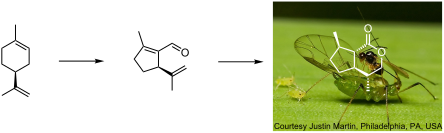
- steric strain. Due to the CH-acidity at the α-position of the formyl group, epimerization of the all-trans product 24 under acidic or basic conditions could be expected. Lange et al. reported the catalytic hydrogenation of a structurally close analogue, (5R)-1-formyl-2-methyl-5-isopropylcyclopent-1-ene


The effect of the formyl group position upon asymmetric isomeric diarylethenes bearing a naphthalene moiety
Beilstein J. Org. Chem. 2012, 8, 1018–1026, doi:10.3762/bjoc.8.114
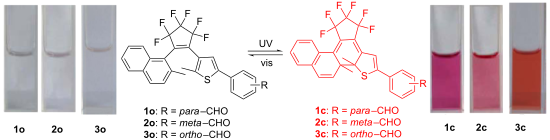
- Renjie Wang Shouzhi Pu Gang Liu Shiqiang Cui Jiangxi Key Laboratory of Organic Chemistry, Jiangxi Science & Technology Normal University, Nanchang 330013, PR China 10.3762/bjoc.8.114 Abstract Three new isomeric asymmetric diarylethenes with a naphthyl moiety and a formyl group at the para, meta
- or ortho position of the terminal benzene ring were synthesized. Their photochromism, fluorescent-switch, and electrochemical properties were investigated. Among these diarylethenes, the one with a formyl group at the ortho position of benzene displayed the largest molar absorption coefficients and
- solution and PMMA films. Cyclic voltammograms proved that the formyl group and its position could effectively modulate the electrochemical behaviors of these diarylethene derivatives. Keywords: chemical diversity; diarylethene; electrochemistry; formyl group; photochromism; substituent position effect





