Search results
Search for "fungi" in Full Text gives 189 result(s) in Beilstein Journal of Organic Chemistry.
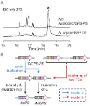
Genome mining of labdane-related diterpenoids: Discovery of the two-enzyme pathway leading to (−)-sandaracopimaradiene in the fungus Arthrinium sacchari
Beilstein J. Org. Chem. 2024, 20, 714–720, doi:10.3762/bjoc.20.65
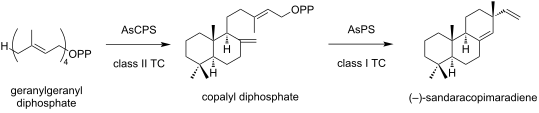
- Fumito Sato Terutaka Sonohara Shunta Fujiki Akihiro Sugawara Yohei Morishita Taro Ozaki Teigo Asai Graduate School of Pharmaceutical Sciences, Tohoku University, Sendai 980-8578, Japan 10.3762/bjoc.20.65 Abstract Labdane-related diterpenoids (LRDs) in fungi are a pharmaceutically important, but
- of TCs in fungi. Keywords: diterpenoids; fungi; genome mining; labdane; terpene cyclase; Introduction Terpenoids are a structurally diverse family of natural products, including more than 80,000 compounds [1]. In the biosynthesis of terpenoids, terpene cyclases (TCs) add structural diversity and
- employed [8]. In fungi, only bifunctional enzymes consisting of αβγ tri-domains have been identified to date [9][10][11][12][13]. In the evolutionary aspects, fungal bifunctional TCs are proposed to have been acquired from plants by a horizontal gene transfer event [14] and eukaryotic tri-domain TCs are


Production of non-natural 5-methylorsellinate-derived meroterpenoids in Aspergillus oryzae
Beilstein J. Org. Chem. 2024, 20, 638–644, doi:10.3762/bjoc.20.56
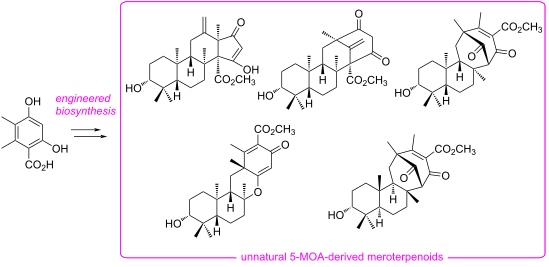
- secondary metabolites, filamentous fungi stand out as the most prolific producers of meroterpenoids [1][2][3]. Representative fungal meroterpenoids of medicinal importance include pyripyropene A, a cholesterol acyltransferase inhibitor [4]; fumagillin, an antimicrobial agent [5]; and mycophenolic acid, a



Chemical and biosynthetic potential of Penicillium shentong XL-F41
Beilstein J. Org. Chem. 2024, 20, 597–606, doi:10.3762/bjoc.20.52
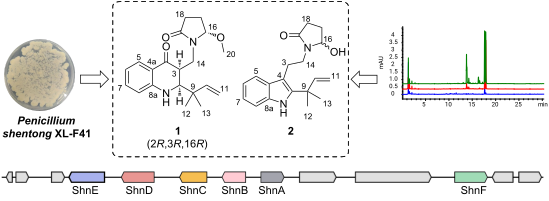
- enzymatic ring-expansion process in their respective fungi. Both shentonins A (1) and B (2) also feature a reduction of a carbonyl to a hydroxy group within the succinimide ring. All isolated compounds were subjected to antimicrobial evaluations, and compound 12 was found to have moderate inhibitory
- ]. Recent studies have revealed that certain fungi are also prolific sources of indole alkaloids, which are among the largest classes of nitrogen-containing secondary metabolites. Characterized by at least one indole moiety and derived from tryptophan or tryptamine, indole alkaloids are known for their
- −1; for 1H NMR (CDCl3, 600 MHz) and 13C NMR (CDCl3, 125 MHz) spectral data, see Table 1; LC–MS (m/z): [M − H]− calcd for 283.2; found, 283.2. Antimicrobial activity evaluation All isolated compounds were dissolved in 1% DMSO and introduced to pathogenic bacteria or fungi in LB or PDB media. The 96




Recent developments in the engineered biosynthesis of fungal meroterpenoids
Beilstein J. Org. Chem. 2024, 20, 578–588, doi:10.3762/bjoc.20.50
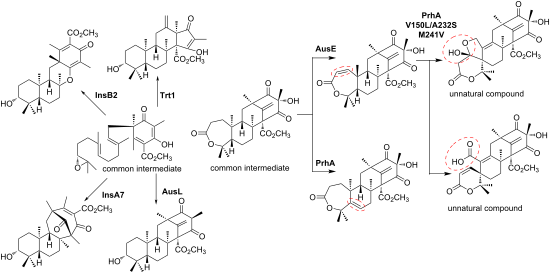
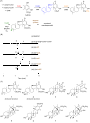
- ) were expressed in A. oryzae to produce the intermediate 15. Next, genes encoding a short-chain oxidoreductase (SDR), methyltransferase (MT), cytochrome P450 oxygenase (P450), and FMO from various fungi were additionally expressed in A. oryzae expessing subABCDE to produce 22 bioactive meroterpenoids
- enzyme that oxidizes C-5, thereby reacting with the electron between C-1 and C-2 [38]. In the future, such mutagenesis strategies will be applied to a wider range of oxidases to alter their reactivities and create an expanded range of products. Construction of artificial fungi–plant hybrid biosynthetic






A new analog of dihydroxybenzoic acid from Saccharopolyspora sp. KR21-0001
Beilstein J. Org. Chem. 2024, 20, 497–503, doi:10.3762/bjoc.20.44
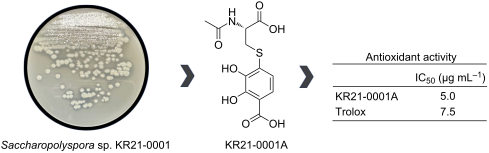
- the presence of a new compound designated KR21-0001A (1). The structure was elucidated by NMR, and the absolute stereochemistry was determined by advanced Marfey’s method. The results indicated that 1 is a new analog of dihydroxybenzoic acid. 1 has no antimicrobial activity against bacteria and fungi
- and fungi at 20 µg per disc in the paper disc diffusion method. Dihydroxybenzoic acid (DHBA) plays a role in anti-inflammatory, antihyperglycemic, antiapoptotic, and antioxidant processes [14]. 2,3-DHBA is found in nature and is produced by various plants (e.g., Gentiana rigerscense and Vinca minor
- ), fungi (e.g., Aspergillus sojae and Penicillium roquefortii), and bacteria (e.g., Acinetobacter calcoaceticus, Brucella abortus, and Bacillus sp.) [15]. It is also known to be a component of some natural products, such as enterobactin, showing strong radical scavenging activity or antioxidant activity



Pseudallenes A and B, new sulfur-containing ovalicin sesquiterpenoid derivatives with antimicrobial activity from the deep-sea cold seep sediment-derived fungus Pseudallescheria boydii CS-793
Beilstein J. Org. Chem. 2024, 20, 470–478, doi:10.3762/bjoc.20.42
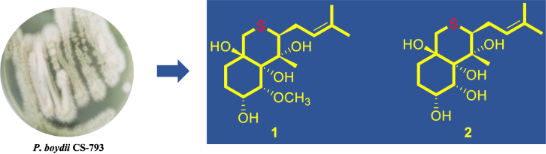
- alkaloids containing an unprecedented spiro[bicyclo[2.2.2]octane-diketopiperazine] skeleton, chevalinulins A and B, and the first cytochalasin homodimer containing a thioether bridge, verruculoid A, were identified from deep-sea cold seeps-derived fungi and were described to have potent proangiogenic and
- antimicrobial activities [3][4]. As part of our continuing search for bioactive metabolites from deep-sea-derived fungi [3][4][5][6], the fungal strain Pseudallescheria boydii CS-793, which was obtained from sediments collected at the deep-sea cold seep area in the Northeast of the South China Sea, attracted
- –3 were tested against seven human- and marine-derived aquatic pathogenetic bacteria (Edwardsiella tarda, Escherichia coli, Micrococcus luteus, Pseudomonas aeruginosa, Vibrio anguillarum, Vibrio harveyi, and Vibrio vulnificus), and six plant pathogenic fungi (Alternaria brassicae, Colletotrichum


Green and sustainable approaches for the Friedel–Crafts reaction between aldehydes and indoles
Beilstein J. Org. Chem. 2024, 20, 379–426, doi:10.3762/bjoc.20.36
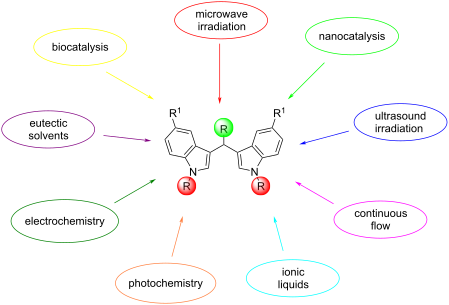
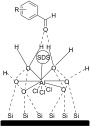
- strands of TMV, inhibiting their ability to multiply and cause damage to the plant. At the same time, they also display fungicidal activities against more than fourteen types of common fungi, such as Phytophthora alternaria, based on their DNA damaging properties with the thiourea derivative, showing the




Facile approach to N,O,S-heteropentacycles via condensation of sterically crowded 3H-phenoxazin-3-one with ortho-substituted anilines
Beilstein J. Org. Chem. 2024, 20, 336–345, doi:10.3762/bjoc.20.34
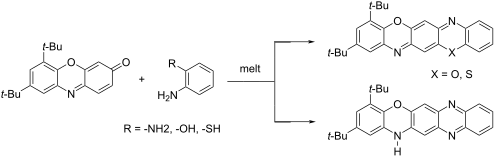
- and its derivatives are widely distributed in nature in microorganisms and fungi, and they represent the key structural units of many important drugs with antibacterial, antifungal, anticancer, anti-inflammatory, and antiviral activities [1][2]. Due to the presence of several reactive centers in the


Secondary metabolites of Diaporthe cameroonensis, isolated from the Cameroonian medicinal plant Trema guineensis
Beilstein J. Org. Chem. 2023, 19, 1555–1561, doi:10.3762/bjoc.19.112
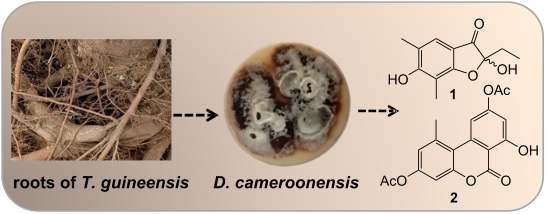
- Abstract From a fresh root of Trema guineensis (Ulmaceae), endophytic fungi were isolated, among which a taxon belonging to the new species Diaporthe cameroonensis. This strain was fermented in shake flask batch cultures and the broth was extracted with ethyl acetate. From the crude extract, a hemiketal
- ; endophytic fungi; hemiketal polyketide; Introduction Endophytic fungi are organisms that reside almost ubiquitously inside the fresh healthy tissue of plants, and they may increase the resistance of the host tropical trees to survive in extreme conditions [1]. As the global diversity of endophytic fungi is
- far from being accessed [2][3], they have been considered as an untapped microbial reservoir capable of producing a wide range of structurally unique natural products with potent pharmacological effects [4]. However, the production of biologically active compounds by filamentous fungi, especially


Synthesis and biological evaluation of Argemone mexicana-inspired antimicrobials
Beilstein J. Org. Chem. 2023, 19, 1511–1524, doi:10.3762/bjoc.19.108
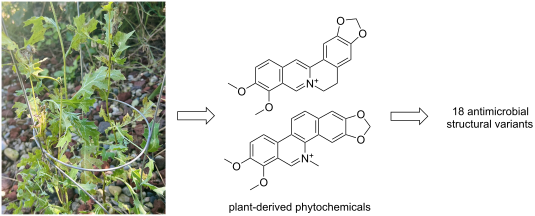
- (five Gram-positive and four Gram-negative bacteria, and three fungi). Additionally, the crystal structures of two berberine variants are described. Several berberine variants show enhanced antibacterial activity compared to the unaltered plant-derived molecule. We also report promising preliminary
- concern, antimicrobial-resistant microbes are also a threat to the health of the individuals on the international space station (ISS). According to recent studies, a diverse population of bacteria and fungi, including several opportunistic pathogens, have colonized the ISS [5], and many of these strains
- cereus, Bacillus subtilis, Staphylococcus epidermidis, Corynebacterium pseudodiphtheriticum), four Gram-negative bacteria (Escherichia coli, Proteus mirabilis, Enterobacter aerogenes, Enterobacter cloacae), and three fungi (Saccharomyces cerevisiae, Candida albicans, Penicillium chrysogenum). The goal of


Functions of enzyme domains in 2-methylisoborneol biosynthesis and enzymatic synthesis of non-natural analogs
Beilstein J. Org. Chem. 2023, 19, 1452–1459, doi:10.3762/bjoc.19.104
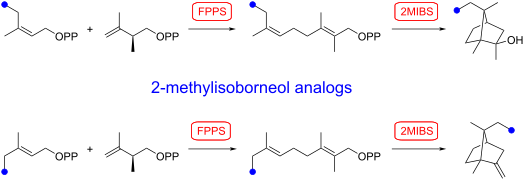
- bacterial lineages including actinobacteria [4][5][6][7][8][9], myxobacteria [10] and aquatic cyanobacteria [11][12], as well as in liverwort [13] and ascomycete fungi [14]. The odour qualities of 1 may be concentration dependent and range from musty at low concentrations (<1 μg L−1) to camphoraceous at


Two new lanostanoid glycosides isolated from a Kenyan polypore Fomitopsis carnea
Beilstein J. Org. Chem. 2023, 19, 1161–1169, doi:10.3762/bjoc.19.84
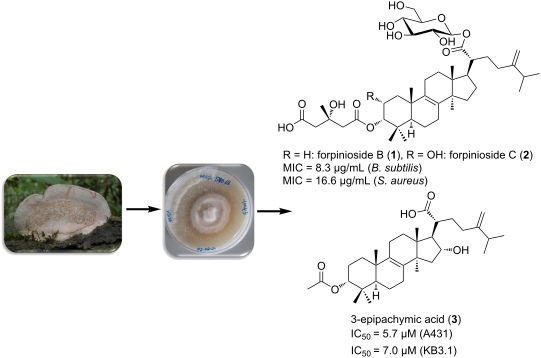
- configuration at C-3', it was assigned as S by careful comparison of the 1H and 13C NMR data of compound 1 with those of related lanostane derivatives comprising the 3-hydroxy-3-methylglutaryl moiety produced by some fungi including Fomitopsis pinicola [23], Piptoporus betulinus [13], and Pholiota populnea [35
- , compound 2 was identified as 2α-hydroxy,3α-[(3′S)-4′-carboxyl-3′-hydroxy-3′-methylbutanoyloxy]lanosta-8,24(31)-dien-21-oic acid 21-O-β-ᴅ-glucopyranoside that was named as forpinioside C. Biological activities Compounds 1–4 were tested for their antimicrobial effects against fungi and bacteria; where
- 128: HRESIMS profiles and NMR spectroscopic data of 1, 2 and 4 in CD3OD, and of 3 in (CD3)2S=O; half inhibitory concentrations (IC50) for various mammalian cell lines as well as minimum inhibitory concentrations (MIC) of 1–4 for bacteria, yeasts and filamentous fungi. Acknowledgements The technical


Combretastatins D series and analogues: from isolation, synthetic challenges and biological activities
Beilstein J. Org. Chem. 2023, 19, 399–427, doi:10.3762/bjoc.19.31
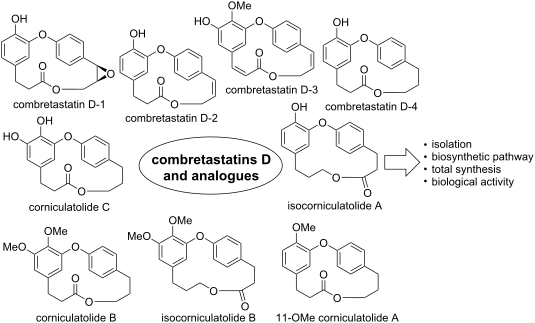
- ) against the bacteria Staphylococcus aureus, Bacillus subtilis, Micrococcus luteus, Escherichia coli, Klebsiella pneumoniae, and the fungi Aspergillus niger, Aspergillus terreus, and Aspergillus flavus. Unfortunately, all compounds were found to be inactive [14]. The use of compounds capable to delay


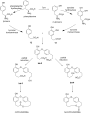


Nostochopcerol, a new antibacterial monoacylglycerol from the edible cyanobacterium Nostochopsis lobatus
Beilstein J. Org. Chem. 2023, 19, 133–138, doi:10.3762/bjoc.19.13
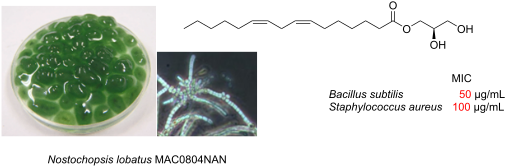
- -hexane. The resulting three layers were tested against four Gram-positive bacteria, five Gram-negative bacteria, six fungi, and two yeasts, which detected antibacterial activity against two Gram-positive bacteria, Bacillus subtilis and Staphylococcus aureus, from the 90% aqueous MeOH layer. The


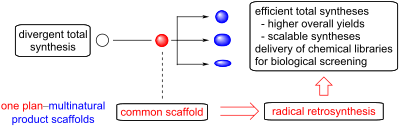
Combining the best of both worlds: radical-based divergent total synthesis
Beilstein J. Org. Chem. 2023, 19, 1–26, doi:10.3762/bjoc.19.1
- total synthesis of (−)-FR901483 (160) through an aldol reaction, and an intramolecular condensation resulted in the synthesis of (+)-TAN1251C (162, Scheme 13). Divergent synthesis of bipolamine alkaloids (Maimone 2022) [88]: Bipolamines were isolated from the fungi Curvularia sp. IFB Z10 and Bipolaris

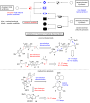


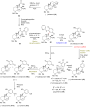


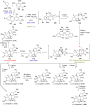

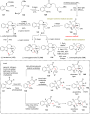





Navigating and expanding the roadmap of natural product genome mining tools
Beilstein J. Org. Chem. 2022, 18, 1656–1671, doi:10.3762/bjoc.18.178
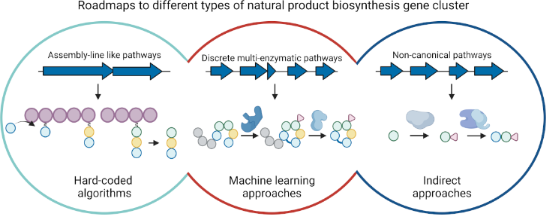
- sequence-independent manner via analysis of operon-like structures (e.g., promoters or transcription start sites) as shown in fungi by the tool CASSIS/SMIPS [60]. This concept contrasts the commonly used principles that rely on the direct detection of genes via (p)HMMs- or ML-based approaches, both of




Using UHPLC–MS profiling for the discovery of new sponge-derived metabolites and anthelmintic screening of the NatureBank bromotyrosine library
Beilstein J. Org. Chem. 2022, 18, 1544–1552, doi:10.3762/bjoc.18.164
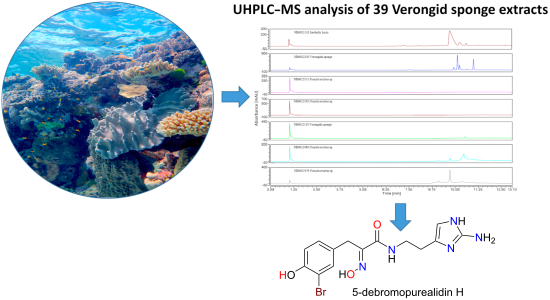
- natural product chemists have shifted their attention to marine-derived microorganisms such as bacteria and fungi over the past 10 years [2], sponges continue to be a source of novel and biologically active metabolites and remain an important taxonomic phylum for the discovery of new and bioactive natural


A facile approach to spiro[dihydrofuran-2,3'-oxindoles] via formal [4 + 1] annulation reaction of fused 1H-pyrrole-2,3-diones with diazooxindoles
Beilstein J. Org. Chem. 2022, 18, 1532–1538, doi:10.3762/bjoc.18.162
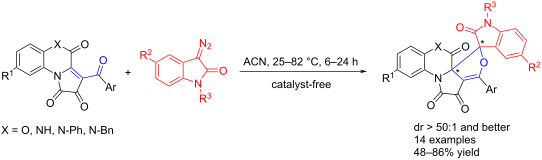
- constructing spirooxindole systems by employing different approaches [6][7][8][9][10][11][12]. Cyclopiazonic acid derivatives such as aspergillins A–E [13] (Figure 1) and speradines C and F [14][15] are secondary metabolites of fungi, and include a furan fragment spiro-fused with 2-oxindole. Cyclopiamides I


Cyclometalated iridium complexes-catalyzed acceptorless dehydrogenative coupling reaction: construction of quinoline derivatives and evaluation of their antimicrobial activities
Beilstein J. Org. Chem. 2022, 18, 1507–1517, doi:10.3762/bjoc.18.159
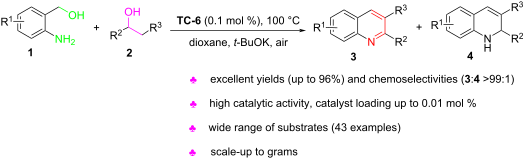
- -triazoquinoline derivatives, and the biological activity evaluation showed that most of the compounds had a higher antibacterial activity (the optimal MIC value was 6.25 mg/mL) against Gram-positive bacteria, Gram-negative bacteria and all tested fungi than the standard ciprofloxacin (Figure 1a). Bodke's group
- compounds was evaluated against Staphylococcus aureus (Gram-positive), Escherichia coli (Gram-negative), and Candida albicans (fungi) mainly by examining the minimum inhibitory concentration (MIC) (Table 4). As shown in Table 4, the compounds 3ab, 3ah, and 3ad showed high antibacterial activities against


Characterization of a new fusicoccane-type diterpene synthase and an associated P450 enzyme
Beilstein J. Org. Chem. 2022, 18, 1396–1402, doi:10.3762/bjoc.18.144
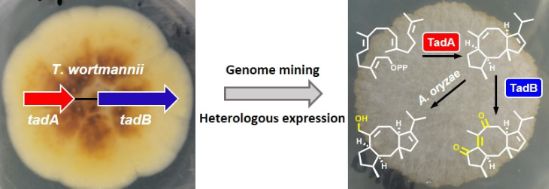
- their abundant structural architectures [1]. Fusicoccane (FC)-type terpenoids are a subgroup of diterpenoids possessing a unique 5-8-5 tricyclic skeleton, which can be produced by plants, fungi and bacteria [2]. This type of diterpenoids, represented by fusicoccin A and cotylenin A, can serve as
- nature. To date, only five distinct FC-type DTSs, including fungi-derived PaFS/SdnA/MgMS and bacteria-derived CotB2/CpCS, have been reported (Figure 1) [20][21][22][23][24], implying that there still exists a large enzymatic space remaining to be explored. Herein, we characterize a two-gene cluster from
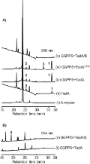
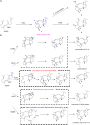
- analyze the function of TadA, we introduced tadA into the quadruple auxotrophic host Aspergillus oryzae NSAR1 (niaD−, sC−, ∆argB, adeA−) (Supporting Information 1, Tables S1 and S2) [26], which has been widely used for biosynthesis of fungi-derived natural products due to its genetic tractability [27


A Streptomyces P450 enzyme dimerizes isoflavones from plants
Beilstein J. Org. Chem. 2022, 18, 1107–1115, doi:10.3762/bjoc.18.113
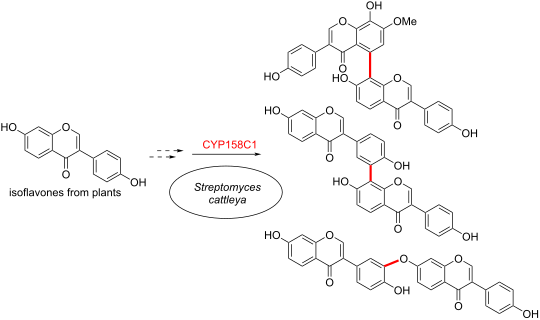
- , which extends the insights into P450-mediated biaryl coupling reactions in biosynthesis. Keywords: biaryl coupling; cytochrome P450; dimerization; isoflavone; natural product; Introduction Dimerization is a ubiquitous biotransformation in nature. Almost all forms of life, including bacteria, fungi
- [1][10][11][12][13][14]. In plants and fungi, laccases and cytochrome P450 monooxygenases play pivotal roles in the biaryl bond formation of various polyketide dimers [10][15][16]. In contrast, in bacteria, P450 enzymes are the dominant catalysts, but no laccases have been reported for dimerization


New azodyrecins identified by a genome mining-directed reactivity-based screening
Beilstein J. Org. Chem. 2022, 18, 1017–1025, doi:10.3762/bjoc.18.102
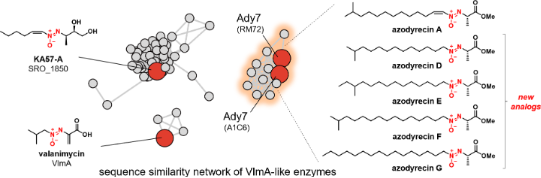
- , fungi, plants, and marine sponges [1][2][3]. Azoxy natural products have occasionally been discovered by conventional isolation schemes guided by biological activities or physicochemical properties, which are not selective for the azoxy functionality. Consequently, there are only a few examples of azoxy




Isolation and biosynthesis of daturamycins from Streptomyces sp. KIB-H1544
Beilstein J. Org. Chem. 2022, 18, 1009–1016, doi:10.3762/bjoc.18.101
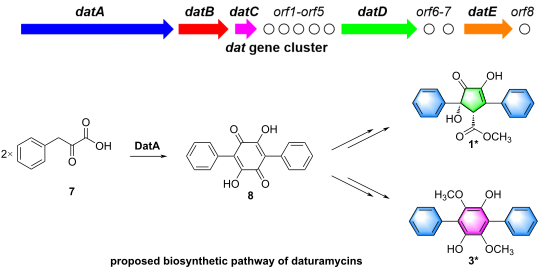
- rare class of a tricyclic 6/5/6 system, could also belong to p-terphenyl derivatives from a biosynthetic perspective. To date, more than 230 natural products containing p-terphenyl have been unearthed in nature, among them many p-terphenyls were isolated from fungi, only a few were discovered from


Efficient production of clerodane and ent-kaurane diterpenes through truncated artificial pathways in Escherichia coli
Beilstein J. Org. Chem. 2022, 18, 881–888, doi:10.3762/bjoc.18.89
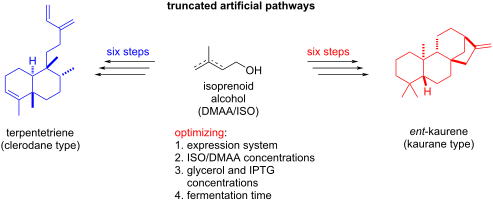
- diterpenoids are two categories of diterpenoids that are widely distributed in terrestrial plants, fungi, and a few bacteria and possess broad pharmacological bioactivities [1][2][3]. Representative natural products containing these skeletons are terpentecin (cytotoxic and antibiotic), salvinorin A (kappa


The stereochemical course of 2-methylisoborneol biosynthesis
Beilstein J. Org. Chem. 2022, 18, 818–824, doi:10.3762/bjoc.18.82
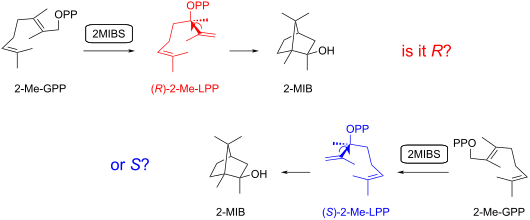
- in other foodstuff such as fish and coffee contaminations with 1 are perceived as unpleasant flavor constituents [15][16][17][18]. Despite its occurrence in fungi, 1 also has moderate antifungal activity as observed for its inhibition of mycelial growth and sporulation in Fusarium moniliforme [19