


Search results
Search for "gold" in Full Text gives 324 result(s) in Beilstein Journal of Organic Chemistry. Showing first 200.
Red light excitation: illuminating photocatalysis in a new spectrum
Beilstein J. Org. Chem. 2025, 21, 296–326, doi:10.3762/bjoc.21.22
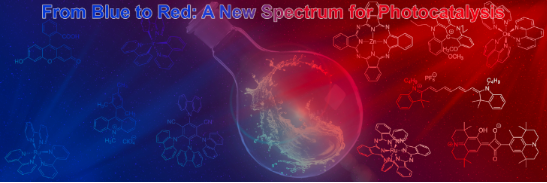
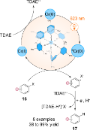
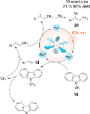
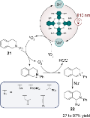
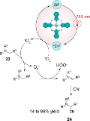
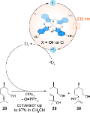
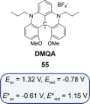
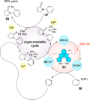
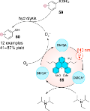
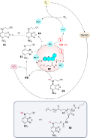
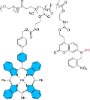
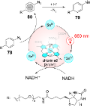
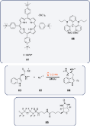
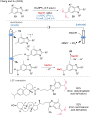
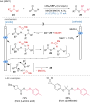
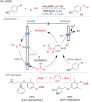
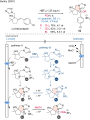
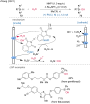
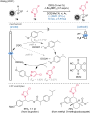
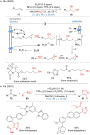
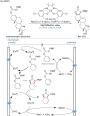
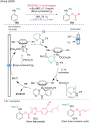
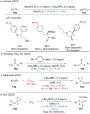
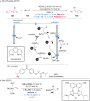
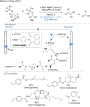
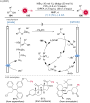
- of side reactions. This latter advantage has been notably exploited in the case of ring-closing olefin metathesis reactions, where Weizmann et al. utilized the photothermal response of plasmons from gold nanoparticles to activate the catalyst [17]. This approach contrasts with the work of Rovis et al
















Streamlined modular synthesis of saframycin substructure via copper-catalyzed three-component assembly and gold-promoted 6-endo cyclization
Beilstein J. Org. Chem. 2025, 21, 226–233, doi:10.3762/bjoc.21.14
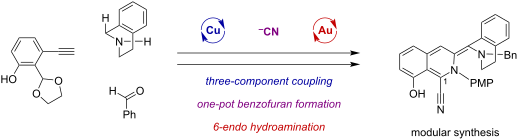
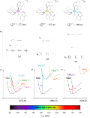
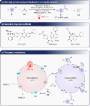
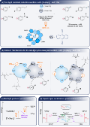
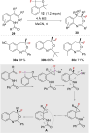
- coupling with gold(I)-mediated 6-endo cyclization streamlines the rapid and modular assembly of the substructure of bis-tetrahydroisoquinoline (THIQ) alkaloids. The design of the key synthetic intermediate bearing a 2,3-diaminobenzofuran moiety allows both gold(I)-mediated regiocontrolled 6-endo
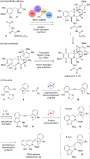
- involvement of a fluorescent intermediate in the cascade synthetic process. Keywords: cascade reactions; copper-catalyzed three-component coupling; gold-mediated 6-endo hydroamination; tandem cyclizations; tetrahydroisoquinoline alkaloids; Introduction The bis-tetrahydroisoquinoline (THIQ) alkaloid family
- , followed by gold(I)-promoted 6-endo cyclization between the internal alkyne and 2,3-diaminobenzofuran moieties with spontaneous transformations into the left THIQ segment in 14. Results and Discussion As outlined in our modular synthetic approach (Scheme 1c), the copper(I)-catalyzed three-component




Hypervalent iodine-mediated intramolecular alkene halocyclisation
Beilstein J. Org. Chem. 2024, 20, 3113–3133, doi:10.3762/bjoc.20.258
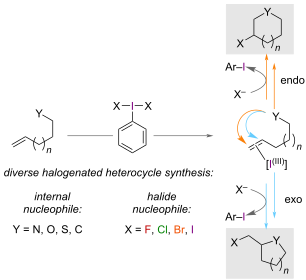
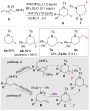
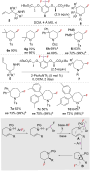
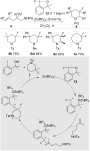
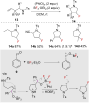
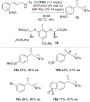
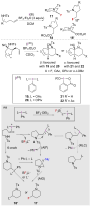
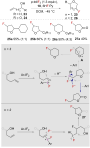
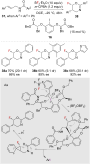
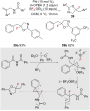
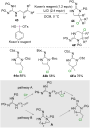
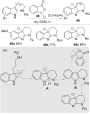
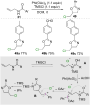
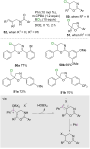
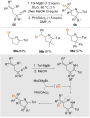
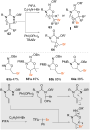
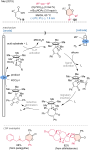
- instead proceeded with addition of dichloro(pyridine-2-carboxylato)gold(III) complex in combination with silver triflimide, AgNTf2. A range of β-fluoroazepanes 7 were successfully synthesised with high enantiomeric purity in good yields. A mechanism for the synthesis of β-fluorinated piperidines was





















Synthesis and antimycotic activity of new derivatives of imidazo[1,2-a]pyrimidines
Beilstein J. Org. Chem. 2024, 20, 2806–2817, doi:10.3762/bjoc.20.236
- ) Superposition of docked compounds 4a–e and 5e in a CYP51 ACb. aThe amino acid residues of the protein are colored green, compound 4e is colored gold and the haem is colored grey. The heterocyclic nitrogen of compound 5e appears to be orientated towards iron and is located 2.8 Å away from it, which may indicate


Synthesis of spiroindolenines through a one-pot multistep process mediated by visible light
Beilstein J. Org. Chem. 2024, 20, 2722–2731, doi:10.3762/bjoc.20.230
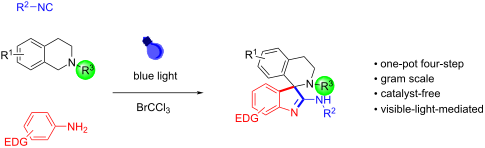
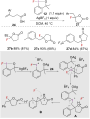
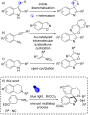
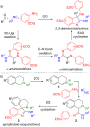
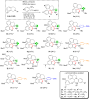
- cyclization of the indole derivatives is the most popular (Scheme 1a). For instance, the efficient synthesis of spiro[indoline-3,2′-pyrrolidines] [8][9][10] or spiro-isoxazoles [11] through different dearomatization processes has been reported. Recently, Ramana and Dothe have proposed an elegant gold




5th International Symposium on Synthesis and Catalysis (ISySyCat2023)
Beilstein J. Org. Chem. 2024, 20, 2704–2707, doi:10.3762/bjoc.20.227
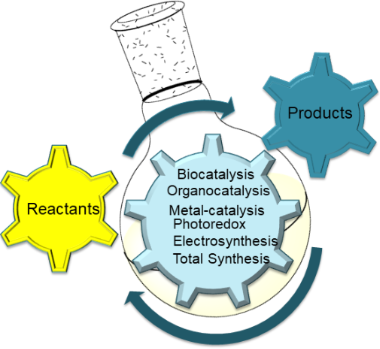
- carbene (NHC) framework from polysubstituted aminoimidazo[5,1-b]oxazol-6-ium salts, which demonstrated strong catalytic activity in gold-catalyzed alkyne hydration and arylative cyclization reactions [14]. The synthesis of this new carbene involved the use of a novel nitrenoid reagent that was

Applications of microscopy and small angle scattering techniques for the characterisation of supramolecular gels
Beilstein J. Org. Chem. 2024, 20, 2608–2634, doi:10.3762/bjoc.20.220
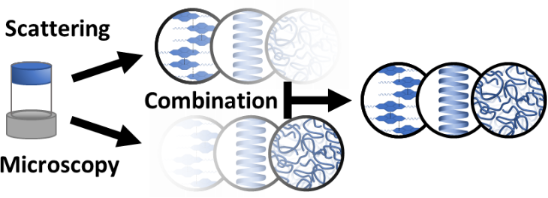
- number of structural features, but the sample preparation required can lead to significant changes in the materials morphology. EM requires many preparative steps to allow structures to be imaged including the application of an ultrathin coating of carbon, gold, or platinum. These are applied to conduct


A review of recent advances in electrochemical and photoelectrochemical late-stage functionalization classified by anodic oxidation, cathodic reduction, and paired electrolysis
Beilstein J. Org. Chem. 2024, 20, 2500–2566, doi:10.3762/bjoc.20.214
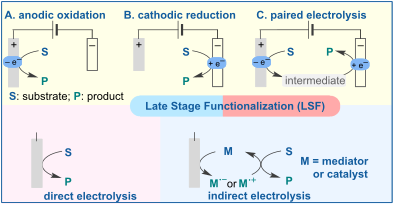
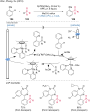
- pargyline and ethisterone (Scheme 43). 1.3.8 Au-assisted anodic oxidation. A gold-catalyzed C(sp3)–C(sp) coupling of diverse alkynes and arylhydrazines under mild electrochemical conditions with the dinuclear gold complex, bis(diphenylphosphino)methane digold(I) dichloride (dppm(AuCl)2) as catalyst and n




























Evaluating the halogen bonding strength of a iodoloisoxazolium(III) salt
Beilstein J. Org. Chem. 2024, 20, 2401–2407, doi:10.3762/bjoc.20.204
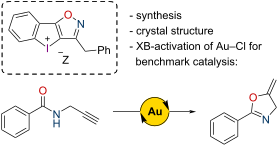
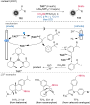
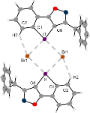
- . Finally, the potential as halogen-bonding activator was benchmarked in solution in the gold-catalyzed cyclization of a propargyl amide. Keywords: diaryliodonium; gold catalysis; halogen bonding; hypervalent iodine; non-covalent interactions; Introduction The compound class of diaryliodonium (DAI) salts
- abstractions, e.g. to activate gold chloride complexes [18][19]. Therefore, besides the development of new bidentate catalyst motifs, we were still interested in the optimization of these “simpler” derivatives. Thus, we designed a new catalyst motif [20] featuring an isoxazole ring, XB donor 7Z, and compared
- 7Br, which hints that also in solution stronger binding to Lewis bases and therefore higher activity as catalyst may be expected (compared to prototypic iodolium 1Z). As a benchmark for the halogen-bonding strength in solution, the activation of (PPh3)AuCl was chosen. The activated gold(I) complex was




Computational toolbox for the analysis of protein–glycan interactions
Beilstein J. Org. Chem. 2024, 20, 2084–2107, doi:10.3762/bjoc.20.180
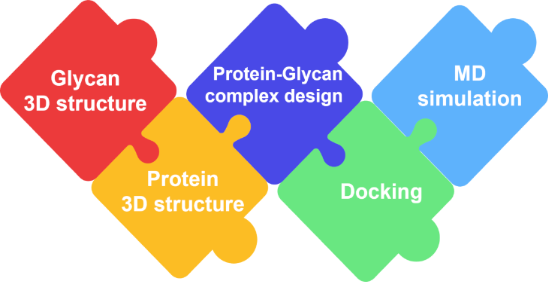
- search space, can be done by comparing the target protein to related proteins or those co-crystallised with ligands [103] and manually superimposing the new ligand to the reference structure. Some payment software like Glide [116][117], GOLD [118] and Molecular Operating Environment (MOE) dock [119] can
- docking algorithms. Unlike other docking programs such as AutoDock, AutoDock Vina, DOCK, FlexX, Glide, and GOLD, which are primarily designed for small, rigid ligands, GlycanDock is specifically optimized to address the flexibility and complex structural features of glycans. The carbohydrate chains are


Solvent-dependent chemoselective synthesis of different isoquinolinones mediated by the hypervalent iodine(III) reagent PISA
Beilstein J. Org. Chem. 2024, 20, 1914–1921, doi:10.3762/bjoc.20.167
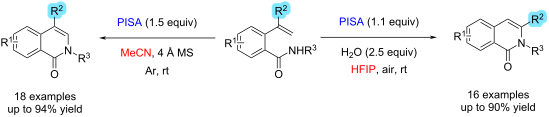
- metal reagents, including cobalt [10], copper [11], rhodium [12][13][14], palladium [15][16][17], silver [18], and gold [19] catalysts, have been reported. However, compared to the widespread use of metal catalysts, the synthesis of isoquinolinone scaffolds mediated by environmentally friendly




Photoswitchable glycoligands targeting Pseudomonas aeruginosa LecA
Beilstein J. Org. Chem. 2024, 20, 1486–1496, doi:10.3762/bjoc.20.132
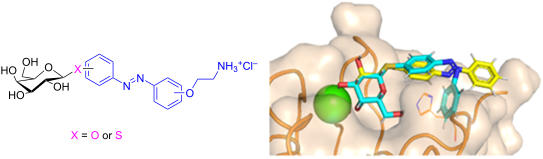
- [11][12][13][14][15][16][17][18]. The group of Lindhorst has reported a series of mannosyl azobenzenes targeting E. coli lectin FimH, demonstrating the possibility to control the type 1 fimbriae-mediated bacterial adhesion to a self-assembled monolayer of mannosyl azobenzene on a gold surface [19][20
- with 10% H2SO4 in EtOH and heating about 30 s at 400–600 °C. Column chromatography purification was performed on CombiFlash® Rf+ and RediSep® RF or RF Gold normal phase silica columns (with UV detection at 254 and 350 nm for all azobenzene derivatives), or by flash column chromatography employing


Synthesis and optical properties of bis- and tris-alkynyl-2-trifluoromethylquinolines
Beilstein J. Org. Chem. 2024, 20, 1246–1255, doi:10.3762/bjoc.20.107
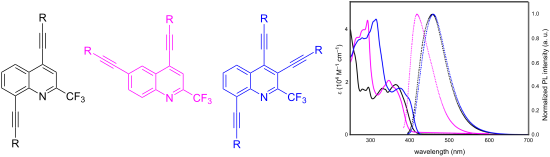
- with trifluoroacetoacetate [17], the synthesis from enaminoketones [18] and the gold-catalysed cyclisation of propargylanilines [19]. Aside from its pharmaceutical significance quinoline compounds have been reported as strongly fluorescent with applications as electroluminescence materials [20][21][22




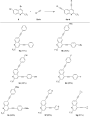


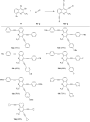


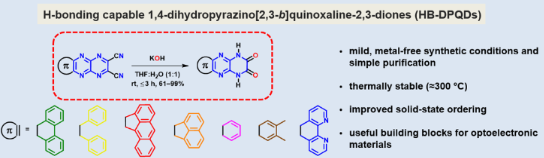
Structure–property relationships in dicyanopyrazinoquinoxalines and their hydrogen-bonding-capable dihydropyrazinoquinoxalinedione derivatives
Beilstein J. Org. Chem. 2024, 20, 1037–1052, doi:10.3762/bjoc.20.92
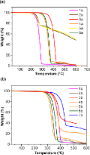
- suspension was heated to 115 °C for 20 hours with vigorous stirring. After 20 hours, the reaction was cooled, and yellow-gold shimmering particles began to settle out. The mixture was filtered, and the resulting gold-colored solid was recrystallized from hot DMF to obtain pure compound 4a (0.12 g, 0.39 mmol
- ), and 1,4-dioxane (2 mL). The resulting orange suspension was heated at 110 °C for 48 hours. After completion, the tube was allowed to cool to room temperature and placed in a freezer overnight. Gold-colored crystals of 5a were collected by filtration and dried in vacuo (430 mg, 1.28 mmol, 74%). 1H NMR




Three-component N-alkenylation of azoles with alkynes and iodine(III) electrophile: synthesis of multisubstituted N-vinylazoles
Beilstein J. Org. Chem. 2024, 20, 891–897, doi:10.3762/bjoc.20.79
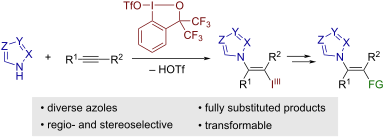
- agents, preferably with well-defined stereochemistry, is a nontrivial task. The addition of azoles to alkynes represents an alternative approach to N-vinylazoles. For example, Nolan and co-workers recently reported a gold-catalyzed addition of azoles to alkynes (hydroazolation; Scheme 1b) [10]. The gold
- catalysis encompassed various azoles such as pyrazole, indazole, and (benzo)triazole, exhibiting high Z-selectivity. In addition, Cao et al. reported a gold-catalyzed addition of 5-substituted tetrazoles to terminal alkynes [11]. Analogous hydroazolation reactions of alkynes have also been achieved under



Activity assays of NnlA homologs suggest the natural product N-nitroglycine is degraded by diverse bacteria
Beilstein J. Org. Chem. 2024, 20, 830–840, doi:10.3762/bjoc.20.75
- products. Experimental General reagents and protocols Isopropyl β-ᴅ-1-thiogalactopyranoside (IPTG) and 5-aminolevulinic acid (5-ALA) were purchased from Gold Biotechnology. NNG was purchased from AAblocks. 2-NAE was purchased from Toronto Research Chemicals. General buffers and media components were




Advancements in hydrochlorination of alkenes
Beilstein J. Org. Chem. 2024, 20, 787–814, doi:10.3762/bjoc.20.72
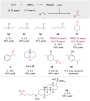
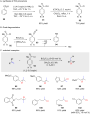
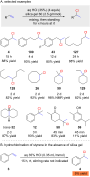
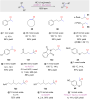
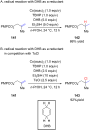
- functional group tolerance. Yang reported a hydrochlorination promoted by visible light over platinum, gold, and palladium supported on zirconia [74]. The reaction demonstrated moderate efficiency, yielding an 85:15 mixture of products 100 and 126 with low conversion (Scheme 20). The use of hydrochloric acid












Research progress on the pharmacological activity, biosynthetic pathways, and biosynthesis of crocins
Beilstein J. Org. Chem. 2024, 20, 741–752, doi:10.3762/bjoc.20.68
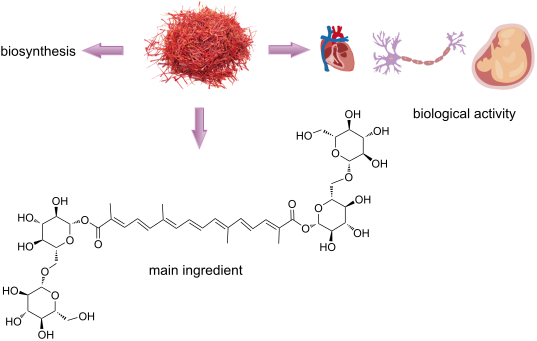
- isolated from the fruit of Gardenia jasminoides Ellis and the stigma tissue of Crocus sativus L. Crocins are the main active ingredients of C. sativus, a precious medicinal plant known as the "gold of spices". They are also responsible for the characteristic red color of saffron. Compounds of the crocin


A laterally-fused N-heterocyclic carbene framework from polysubstituted aminoimidazo[5,1-b]oxazol-6-ium salts
Beilstein J. Org. Chem. 2024, 20, 621–627, doi:10.3762/bjoc.20.54
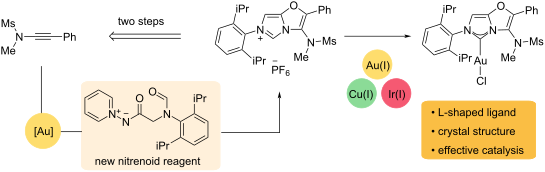
- -step ynamide annulation and imidazolium ring-formation sequence. Metalation with Au(I), Cu(I) and Ir(I) at the C2 position provides an L-shaped NHC ligand scaffold that has been validated in gold-catalysed alkyne hydration and arylative cyclisation reactions. Keywords: annulation; carbene; gold
- introduced by the groups of Lassaletta [4] and Glorius [5], is the most widely explored framework for L-shaped ligands (Figure 1a). Even when only considering gold catalysis [6], the ImPy framework has been used to great effect [7]. The motif has been used to introduce sterically demanding NHCs with
- secondary gold-ligand interactions [8][9][10], chiral environments [11][12][13] including those enabling secondary interactions with substrates for asymmetric catalysis [14], cooperative and bimetallic catalysis [7][15], and redox-enabling function for Au(I)/(III) cycles [16][17]. Such L-shaped ligands


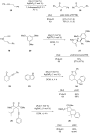
Ligand effects, solvent cooperation, and large kinetic solvent deuterium isotope effects in gold(I)-catalyzed intramolecular alkene hydroamination
Beilstein J. Org. Chem. 2024, 20, 479–496, doi:10.3762/bjoc.20.43
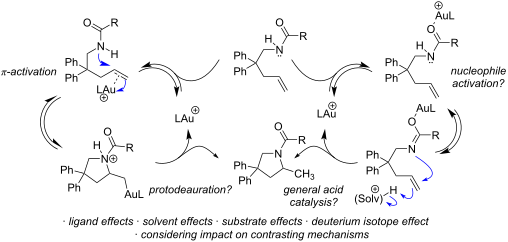
- out under a variety of conditions with cationic gold catalysts supported by phosphine ligands. The impact of ligand on gold, protecting group on nitrogen, and solvent and additive on reaction rates was determined. The most effective reactions utilized more Lewis basic ureas, and more electron
- both within the context of a classic gold π-activation/protodeauration mechanism and a general acid-catalyzed mechanism without intermediate gold alkyls. Keywords: alkene hydroamination; general acid catalysis; gold catalysis; isotope effect; phosphine ligand effect; solvent effect; Introduction
- Since the seminal 1998 report by Teles et al. on the gold(I)-catalyzed addition of alcohols to alkynes [1], a multitude of gold-catalyzed reactions have been reported. Great successes in mechanistic analysis and synthetic methods have been achieved for allene and alkyne activation, while the activation

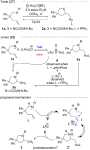


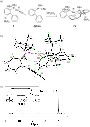



Synthesis of π-conjugated polycyclic compounds by late-stage extrusion of chalcogen fragments
Beilstein J. Org. Chem. 2024, 20, 287–305, doi:10.3762/bjoc.20.30
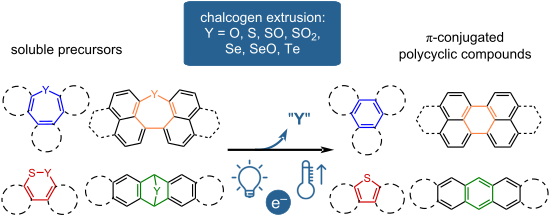
- annealing at 230 °C for 5 min to induce SO-extrusion and subsequent vacuum deposition of the source and drain gold electrodes, the resulting OFET exhibited a typical n-type behavior with an electron mobility up to 0.41 cm2 V−1 s−1, comparable to vacuum deposited films of pristine PBI. When repeating the




Synthesis of the 3’-O-sulfated TF antigen with a TEG-N3 linker for glycodendrimersomes preparation to study lectin binding
Beilstein J. Org. Chem. 2024, 20, 173–180, doi:10.3762/bjoc.20.17
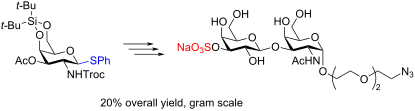
- concentrated under reduced pressure. Flash chromatography on silica gel (toluene→toluene/acetone, 7:3) yielded 5 as a gold-coloured syrup (7.83 g, 96%). Rf = 0.4 (toluene/EtOAc, 3:2); [α]D +67 (c 1.0, CHCl3); 1H NMR (500 MHz, CDCl3) δ 5.58 (d, J = 9.8 Hz, 1H, NH), 4.93 (d, J = 3.6 Hz, 1H, H-1), 4.77 (d, J


Synthetic approach to 2-alkyl-4-quinolones and 2-alkyl-4-quinolone-3-carboxamides based on common β-keto amide precursors
Beilstein J. Org. Chem. 2023, 19, 1804–1810, doi:10.3762/bjoc.19.132
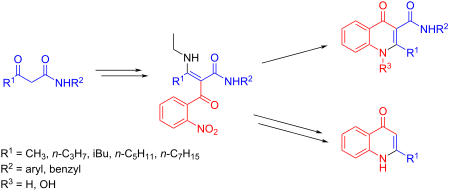
- -mediated domino reaction of chromone-3-carboxaldehydes and amines [41], Pd-catalyzed redox-neutral C–N coupling reaction of iminoquinones with electron-deficient alkenes [42], NH3 insertion into o‑haloarylynones [43], gold(III)-catalyzed azide-yne cyclization [44], Michael/Truce-Smiles rearrangement


Quinoxaline derivatives as attractive electron-transporting materials
Beilstein J. Org. Chem. 2023, 19, 1694–1712, doi:10.3762/bjoc.19.124
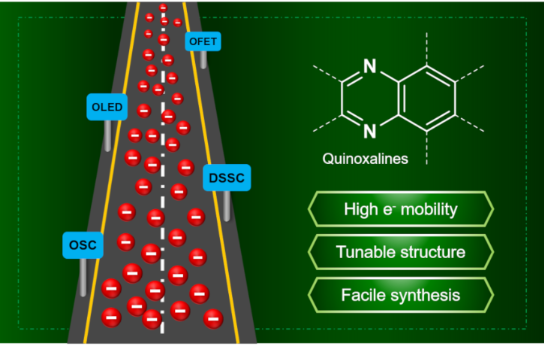
- self-assembled monolayer in devices. The molecular dipole and work function of gold was adjusted by using fluorine and CN as well as dimethylamino substituents on the quinoxaline. Notably, the researchers tuned the work function of gold over a range of 1.0 eV [59]. The study by You et al. quoted in the




Cyclodextrins as building blocks for new materials
Beilstein J. Org. Chem. 2023, 19, 889–891, doi:10.3762/bjoc.19.66
- biocompatible. Thus, these supra-architectures have a multitude of uses in food, biomedicine, regenerative medicine, cosmetics, molecular electronics, polymer chemistry, gold recovery, gas absorption, depollution, biochemical material sciences, nanotechnology, self-healing materials, 3D printing, and so on [19



