Search results
Search for "kinetics" in Full Text gives 382 result(s) in Beilstein Journal of Organic Chemistry. Showing first 200.
Acyclic cucurbit[n]uril bearing alkyl sulfate ionic groups
Beilstein J. Org. Chem. 2025, 21, 717–726, doi:10.3762/bjoc.21.55
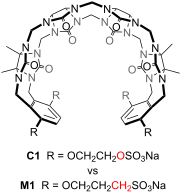
- 4b), we observe separate resonances for free Me6PXDA and complexed C1·Me6PXDA which means that the rate of guest exchange is slow on the chemical shift timescale. Slow kinetics of guest exchange is commonly observed for tight host·guest complexes. In contrast, the kinetics of guest exchange are in


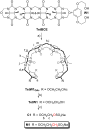


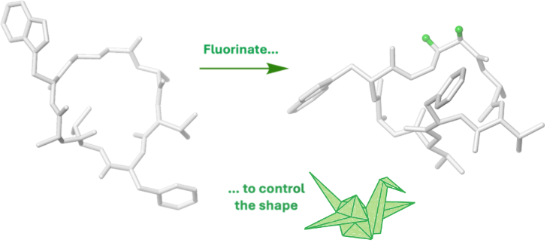
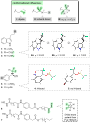
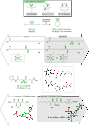
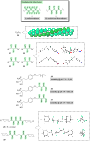
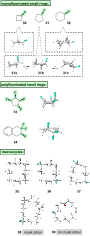
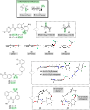
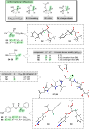
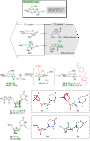
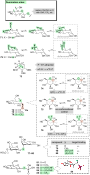
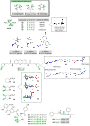
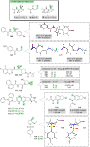
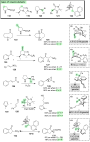
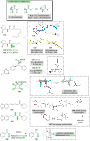
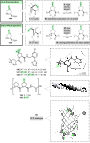
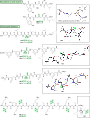
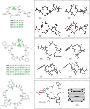
Origami with small molecules: exploiting the C–F bond as a conformational tool
Beilstein J. Org. Chem. 2025, 21, 680–716, doi:10.3762/bjoc.21.54



Unprecedented visible light-initiated topochemical [2 + 2] cycloaddition in a functionalized bimane dye
Beilstein J. Org. Chem. 2025, 21, 500–509, doi:10.3762/bjoc.21.37
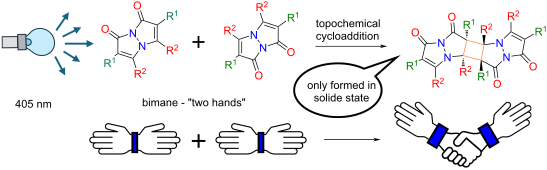
- in P-1 and the molecules pack in a different arrangement, where the double bonds are neither coplanar nor parallel. This product was obtained from propan-2-ol, which may have influenced the crystallization kinetics. The reactive packing mode of Cl2B is enhanced by the hydrogen bonding where the ester


Synthesis of electrophile-tethered preQ1 analogs for covalent attachment to preQ1 RNA
Beilstein J. Org. Chem. 2025, 21, 483–489, doi:10.3762/bjoc.21.35
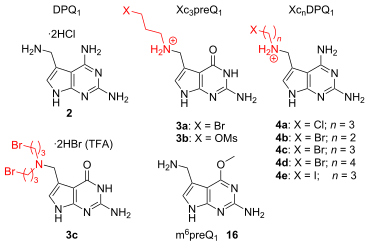
- reasonably fast labeling kinetics and up to quantitative conversion under quasi-physiological conditions [4]. Obviously, the rapid dissemination and widespread acceptance of such labeling methods depend on fast and simple access to the small molecule probes. Here, we report efficient synthetic routes to


Red light excitation: illuminating photocatalysis in a new spectrum
Beilstein J. Org. Chem. 2025, 21, 296–326, doi:10.3762/bjoc.21.22
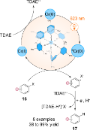
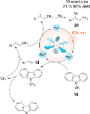
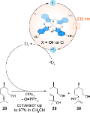
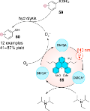
- oxidize boronic acids such as 47, producing the corresponding alcohols 48 via a single-electron-transfer mechanism that leverages atmospheric oxygen (Scheme 13). While the initial photocatalytic results using NIR-irradiated 46 were promising, the overall reaction kinetics were relatively slow. In response
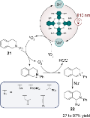
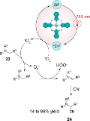
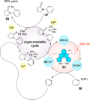
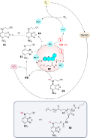
- heptamethin chain have been proven to be the most effective photocatalysts for accelerating the aza-Henry reaction. The differing reaction kinetics and tests with 9,10-dimethylanthracene suggest that a cooperative mechanism involving both single-electron transfer and singlet oxygen generation via energy
















Effect of substitution position of aryl groups on the thermal back reactivity of aza-diarylethene photoswitches and prediction by density functional theory
Beilstein J. Org. Chem. 2025, 21, 242–252, doi:10.3762/bjoc.21.16
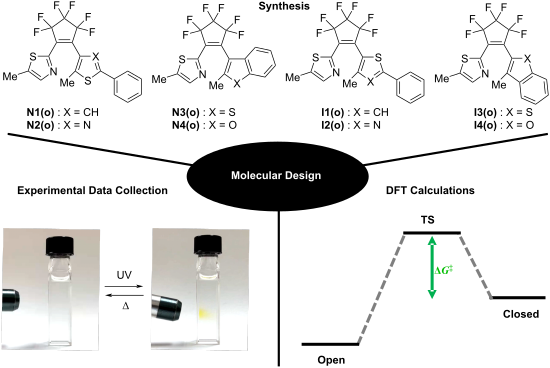
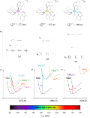
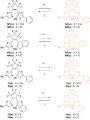
- To quantitatively evaluate the thermal back reaction of compounds N3, N4, and I1–I4, we measured the absorbance decay of the close-ring isomer at various temperatures as shown in Figure 2a,d, and Figure S2 in Supporting Information File 1. The absorbance decay curves obeyed the first-order kinetics
- -hexane at 253 K for N3 and 203 K for I3: open-ring isomer (black line) and under irradiation at 365 nm (yellow line). (c) Photochromic reaction of N4 in n-hexane at room temperature ([N4] = 7.0 × 10⁻⁴ M). Absorbance decay curves and first-order kinetics profiles for (a,b) N3 and (d,e) I3 in n-hexane at



Recent advances in electrochemical copper catalysis for modern organic synthesis
Beilstein J. Org. Chem. 2025, 21, 155–178, doi:10.3762/bjoc.21.9
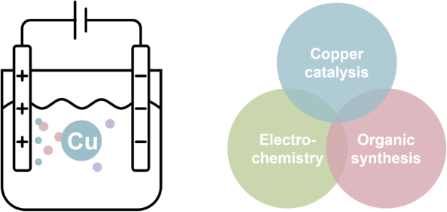
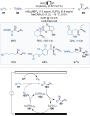
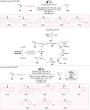
- reactions of copper catalysts without ligands face limitations owing to slow electron transfer kinetics, irreversible copper plating, and competing substrate oxidation. To overcome these challenges, Sevov et al. developed a ligand-free, Cu-catalyzed electrochemical Chan–Lam coupling using a ferrocenium salt








Emerging trends in the optimization of organic synthesis through high-throughput tools and machine learning
Beilstein J. Org. Chem. 2025, 21, 10–38, doi:10.3762/bjoc.21.3
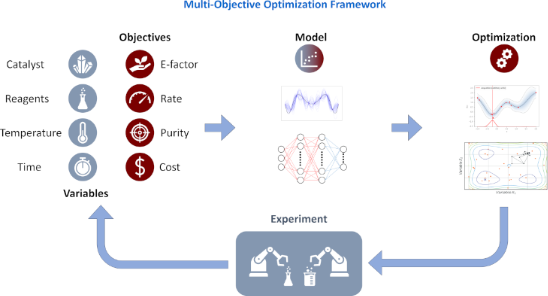
- consisting of multiple independent parallel reactors. This parallelization enables the collection of high-fidelity data for reaction kinetics and optimization for at least six different chemical reactions. The major bottleneck in HTE synthesis lies in the challenge of isolating and purifying reaction
- of the optimization processes. Liu et al. [69] developed a custom-built Python script to study the kinetics of carbonyldiimidazole-mediated amide formation by analyzing data from online HPLC and in-line FTIR-spectroscopic measurements. Their algorithm was able to automatically detect peaks from


Extension of the π-system of monoaryl-substituted norbornadienes with acetylene bridges: influence on the photochemical conversion and storage of light energy
Beilstein J. Org. Chem. 2024, 20, 3061–3068, doi:10.3762/bjoc.20.254
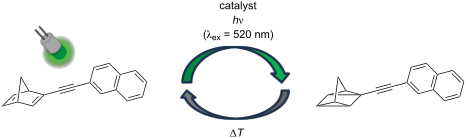
- . From these data, the rate constants of the cycloreversion reactions were generated according to first-order kinetics and used to calculate the enthalpy and entropy of activation with the Eyring equation (Table 1, cf. Supporting Information File 1, equation S5). The analyses revealed half-lives of the


Computational design for enantioselective CO2 capture: asymmetric frustrated Lewis pairs in epoxide transformations
Beilstein J. Org. Chem. 2024, 20, 2668–2681, doi:10.3762/bjoc.20.224
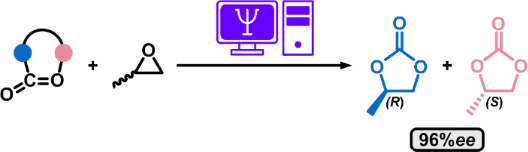
- free energy correction at double-zeta. The kinetics of some reactions were calculated, applying the transition state theory [40]. Within this theory, the rate constant of an elementary reaction with the free energy barrier ΔG‡ is given by Equation 1, where k is the rate constant in s−1, kB is the


Applications of microscopy and small angle scattering techniques for the characterisation of supramolecular gels
Beilstein J. Org. Chem. 2024, 20, 2608–2634, doi:10.3762/bjoc.20.220
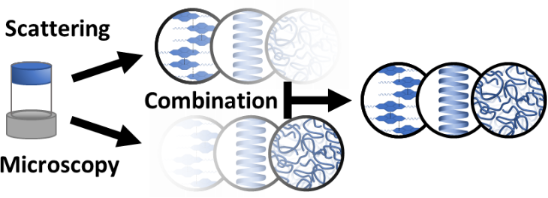
- entangle each other. By obtaining images in three dimensions, the orthogonal assembly could be directly visualised throughout the materials microstructure (Figure 2) [17]. This in situ method of CLSM also allows the kinetics of self-assembly to be elucidated, as demonstrated by Wang et al. [23]. By using


A review of recent advances in electrochemical and photoelectrochemical late-stage functionalization classified by anodic oxidation, cathodic reduction, and paired electrolysis
Beilstein J. Org. Chem. 2024, 20, 2500–2566, doi:10.3762/bjoc.20.214
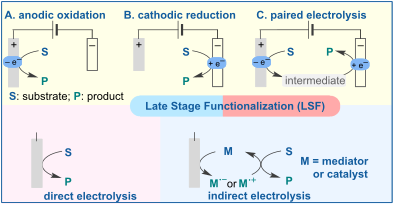
- efficient method for C–H functionalization. The continuous flow setup allows for precise control over reaction conditions, enhanced mass transfer, and improved reaction kinetics, leading to higher efficiency and faster reaction times. In 2023, the Chiang group reported the photoelectrochemical homo-coupling




























Homogeneous continuous flow nitration of O-methylisouronium sulfate and its optimization by kinetic modeling
Beilstein J. Org. Chem. 2024, 20, 2408–2420, doi:10.3762/bjoc.20.205
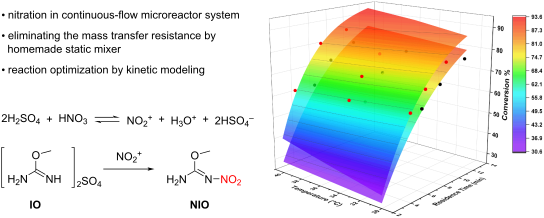
- for highly viscous reaction systems, especially at higher reactant concentrations. It is still difficult to eliminate the mass transfer effect using conventional microreactors, leading to errors in the determination of nitration kinetics. Therefore, more efficient mixers are needed to overcome the
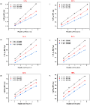
- -order (Equation 3) reaction kinetics, where xIO represented the conversion of IO and t denoted the reaction time. The outcome of these fittings is presented in Figure 3a for first-order and Figure 3b for second-order. Notably, the higher R2 observed in Figure 3a compared to Figure 3b suggests that the
- reaction of IO follows first-order kinetics. Given that the reaction order of IO was determined to be 1, Equation 1 was subsequently transformed into Equation 4. As nitration reactions are predominantly second-order, we explored the potential for the reaction order of HNO3 (β) to be either 0 or 1 by


![[Graphic 1]](/bjoc/content/inline/1860-5397-20-205-i17.svg?max-width=637&scale=1.18182)


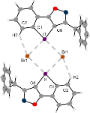
Evaluating the halogen bonding strength of a iodoloisoxazolium(III) salt
Beilstein J. Org. Chem. 2024, 20, 2401–2407, doi:10.3762/bjoc.20.204
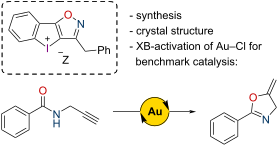
- significantly slower activation, which results in an amide consumption of only ca. 30% after 4 hours. To quantify the activity differences of these XB donors, the reaction kinetics were fitted according to a pseudo-first-order rate. Only selected periods (the first four data points within the first 1.5 hours of
- kinetics of the gold-catalyzed cyclization shown in Scheme 2. An equimolar amount of the gold complex was applied, respectively. Every experiment was performed three times (see Supporting Information File 1). Synthesis of the iodoloisoxazolium salts 7Z: (a) 1.5 equiv 9, 0.2 equiv CuI, 2.0 equiv K2CO3, (THF
- TOFs of the strongest activators 2BArF, 7BArF, and 4BArF (and their calculated standard deviation). The TOFs were determined from the kinetics (see Supporting Information File 1 for further details). Supporting Information Supporting Information File 107: Synthesis, catalyses, and characterization




Improved deconvolution of natural products’ protein targets using diagnostic ions from chemical proteomics linkers
Beilstein J. Org. Chem. 2024, 20, 2323–2341, doi:10.3762/bjoc.20.199
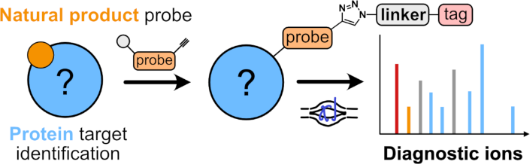
- (IEDDA), and recently, azomethine imine (AMIs)–isonitrile ligation [37][55][56][57][58][59][60]. The kinetics, chemoselectivity, stability, and steric demand of the bioorthogonal tag attached on the probe are decisive factors during the selection procedure [61][62]. The most commonly used strategy is
- CuAAC due to its rapid reaction kinetics, robustness, and relatively small steric hindrance of the terminal alkyne, which is usually attached to the probe core scaffold to form an alkyne probe [5][63]. Once the covalent bond between the probe and protein is formed, the cells are lysed, and the probe
- thus introduces a searchable moiety and therefore clearly tags the MS/MS spectra derived from probe–peptide conjugates [113]. Another DADPS-based linker improves the CuAAC kinetics by using picolyl azide [115]. Together, the application of the acid-cleavable DADPS linkers is a feasible alternative to




Hydrogen-bond activation enables aziridination of unactivated olefins with simple iminoiodinanes
Beilstein J. Org. Chem. 2024, 20, 2305–2312, doi:10.3762/bjoc.20.197
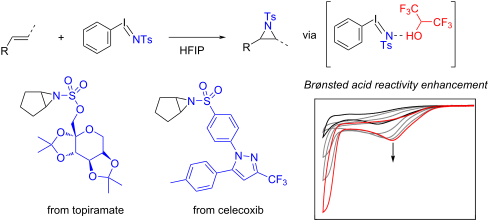
- , signaling the binding of HFIP to 2c enhanced the electron transfer kinetics between the hypervalent iodine reagent and the electrode [45]. Further additions of HFIP further increased the current response and shifted the peak potential, with 10 µL and 15 µL of HFIP showing responses with Epr at −1.55 V and


Catalysing (organo-)catalysis: Trends in the application of machine learning to enantioselective organocatalysis
Beilstein J. Org. Chem. 2024, 20, 2280–2304, doi:10.3762/bjoc.20.196




Metal-free double azide addition to strained alkynes of an octadehydrodibenzo[12]annulene derivative with electron-withdrawing substituents
Beilstein J. Org. Chem. 2024, 20, 2234–2241, doi:10.3762/bjoc.20.191
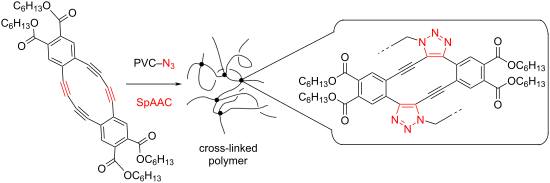
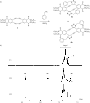
- indicates that the formed double azide adduct is 6a, which is consistent with our previous report [18]. The double azide addition was further investigated by changing the reaction temperature. The rate constant was determined by the temperature-dependent 1H NMR spectra in CDCl3. The reaction kinetics




Factors influencing the performance of organocatalysts immobilised on solid supports: A review
Beilstein J. Org. Chem. 2024, 20, 2129–2142, doi:10.3762/bjoc.20.183
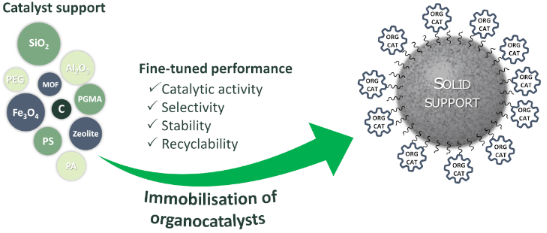
- and changes in the reaction kinetics. The non-covalent immobilisation of chiral organocatalysts can also be carried out within deep eutectic solvents (DESs). Very recently, a cinchonidine-squaramide organocatalyst was immobilised in three types of natural DESs, namely betaine/sorbitol/water, betaine


Computational toolbox for the analysis of protein–glycan interactions
Beilstein J. Org. Chem. 2024, 20, 2084–2107, doi:10.3762/bjoc.20.180
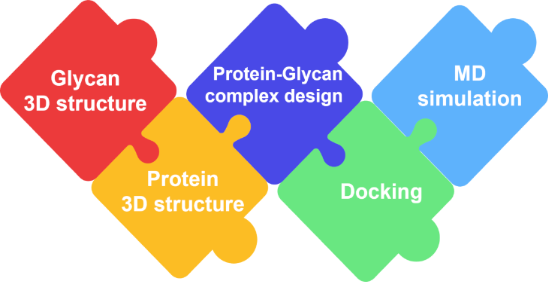
- –ligand complexes, and analyse MD outcomes. Moreover, selected case studies have been reported to highlight the importance of computational tools in studying protein–glycan systems, revealing the capability of these tools to provide valuable insights into the binding kinetics, energetics, and structural


Understanding X-ray-induced isomerisation in photoswitchable surfactant assemblies
Beilstein J. Org. Chem. 2024, 20, 2005–2015, doi:10.3762/bjoc.20.176
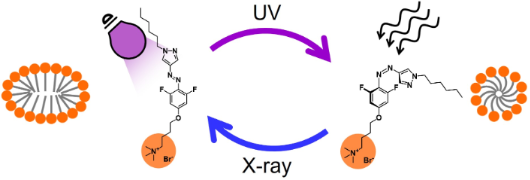
- brilliance of synchrotron X-ray sources enables the mechanisms of structural changes in PS to be studied, using in-situ light irradiation with time-resolved data collection. For example, Tribet and co-workers used this approach to explore the kinetics of micellisation and dissolution of cationic Azo-PS, both



A fiber-optic spectroscopic setup for isomerization quantum yield determination
Beilstein J. Org. Chem. 2024, 20, 1684–1692, doi:10.3762/bjoc.20.150
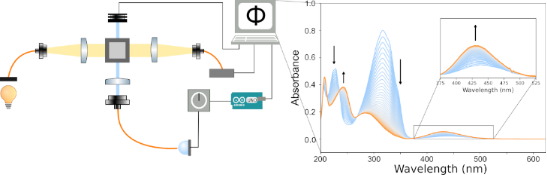
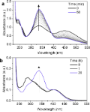
- measurement altering the kinetics of isomerization, a known problem for similar setups [24]. The power readings from the thermal power sensor were recorded by using Thorlabs’ Optical Power Monitor (OPM) software. The resulting data showed some fluctuations depending on environment temperature and air movement


Benzylic C(sp3)–H fluorination
Beilstein J. Org. Chem. 2024, 20, 1527–1547, doi:10.3762/bjoc.20.137

- and oxidation potentials. Electrochemical methods Synthetic electrochemistry is a powerful tool offering excellent control over reaction kinetics and selectivity [86]. Electrochemical oxidation has been demonstrated as an efficient means for generating benzylic cations, allowing for the introduction






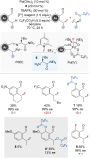


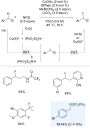


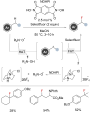


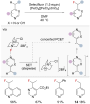







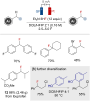
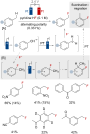

Advancements in hydrochlorination of alkenes
Beilstein J. Org. Chem. 2024, 20, 787–814, doi:10.3762/bjoc.20.72
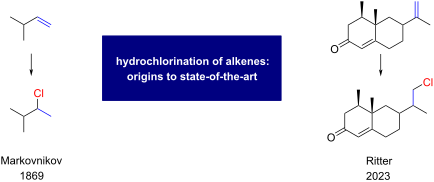
- investigations into the kinetics and stereochemistry of hydrochlorination reactions. However, both aspects are highly dependent on the reaction conditions and substrates, and no general conclusions could be drawn [3][4][5][6][7][8][9]. Research activity in this field remained relatively dormant until the early
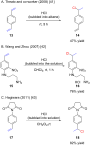
- dependence. Brown also explored the influence of solvents (Figure 4). While reactions conducted in neat α-methylstyrene (11) or dichloromethane showed identical kinetics, the reaction was delayed when pentane was employed as a solvent. The method of bubbling HCl gas through neat alkenes or solutions of












Enhanced reactivity of Li+@C60 toward thermal [2 + 2] cycloaddition by encapsulated Li+ Lewis acid
Beilstein J. Org. Chem. 2024, 20, 653–660, doi:10.3762/bjoc.20.58
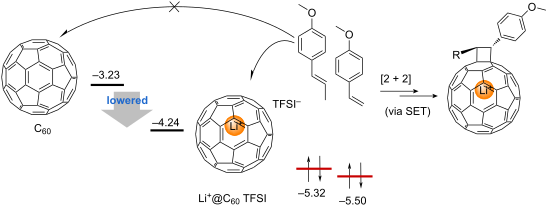
- approaches have diligently explored the details of reaction kinetics, quantitatively elucidating the impact of encapsulated Li+ on the reactivity of the outer fullerene cage as a specialized “encapsulated” Lewis acid catalyst [10][11]. While previous studies have revealed valuable insights, such as