Search results
Search for "metal-organic frameworks" in Full Text gives 47 result(s) in Beilstein Journal of Organic Chemistry.
Learning from B12 enzymes: biomimetic and bioinspired catalysts for eco-friendly organic synthesis
Beilstein J. Org. Chem. 2018, 14, 2553–2567, doi:10.3762/bjoc.14.232
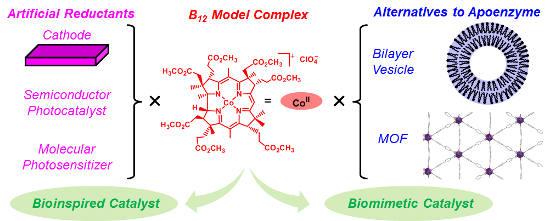
- B12 [30]. Indeed, in the crystal structure, 1 maintained the same corrin framework as natural B12 [31]. We combined the hydrophobic B12 derivatives with bilayer vesicles [32][33], a protein [34], organic polymers [35][36][37][38][39][40], and metal organic frameworks (MOFs) [41]. Furthermore, to


Design, synthesis and structure of novel G-2 melamine-based dendrimers incorporating 4-(n-octyloxy)aniline as a peripheral unit
Beilstein J. Org. Chem. 2018, 14, 1704–1722, doi:10.3762/bjoc.14.145
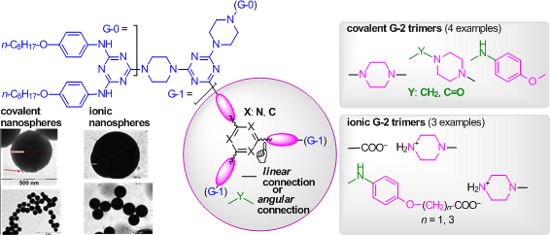
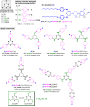
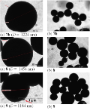
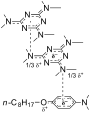
- branch-cells, (ii) basicity and conformational nature of the diaza-six-membered saturated heterocycle as linker and (iii) the global molecular shape, the resulted 4-aminophenol-based melamines displayed relevant redox properties [36] and, in some cases, selective aptitudes to produce MOFs (metal-organic
- frameworks) [35]. All the above information prompted us towards an ab initio exploration of 4-(n-octyloxy)aniline (seen as the n-octyl ether derivative of 4-aminophenol) as starting material towards new melamine-based dendrimers as synthesis (feasibility and limits), structure and self-assembly propensity



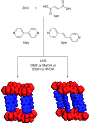
Exploring mechanochemistry to turn organic bio-relevant molecules into metal-organic frameworks: a short review
Beilstein J. Org. Chem. 2017, 13, 2416–2427, doi:10.3762/bjoc.13.239
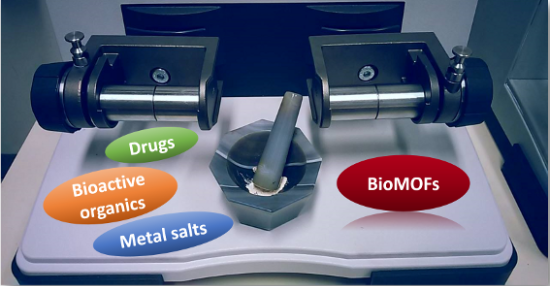
- technique successfully employed in different fields of synthetic chemistry. Application spans from organic to inorganic chemistry including the synthesis of coordination compounds. Metal-organic frameworks (MOFs) are a class of compounds with numerous applications, from which we highlight herein their
- field of supramolecular chemistry [27][28][29], for solvent-free preparation of co-crystals, and adducts [30][31][32][33][34][35][36][37][38], polymorphs [12], supramolecular aggregates [4][30][39][40][41][42], host–guest complexes [5][43][44][45], metal-organic frameworks (MOFs) [8][28][44][46][47][48
- centers, in order to obtain compounds with enhanced biological properties. New metal-organic frameworks, BioMOFs, for the use of controlled drug delivery and/or release or other biological applications, were successfully synthesized either by direct incorporation of the bioactive molecule in the framework




The effect of milling frequency on a mechanochemical organic reaction monitored by in situ Raman spectroscopy
Beilstein J. Org. Chem. 2017, 13, 2160–2168, doi:10.3762/bjoc.13.216
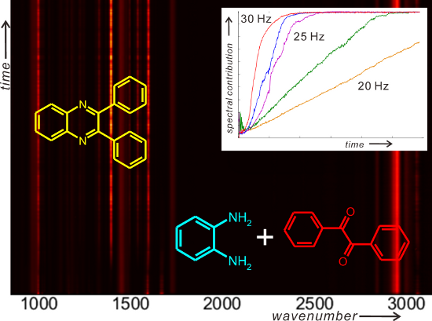
- studies have focused on reactions of inorganic substances converting into metal-organic frameworks (MOFs) [17][28][37] or supramolecular reactions of cocrystallisation [38]. Real-time monitoring of an organic mechanochemical reaction was only recently reported by Tireli and co-workers, who utilized Raman


Novel approach to hydroxy-group-containing porous organic polymers from bisphenol A
Beilstein J. Org. Chem. 2017, 13, 2131–2137, doi:10.3762/bjoc.13.211
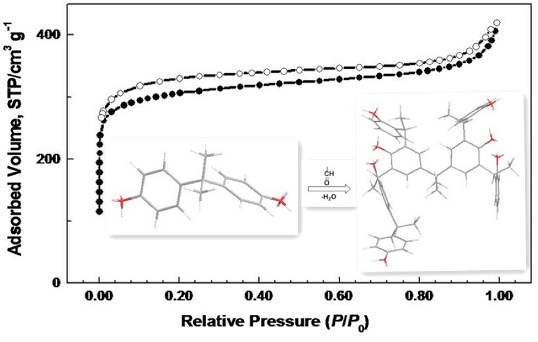
- : bisphenol A; carbon dioxide uptake; hydrogen storage; OH-containing; porous organic polymers; Introduction Porous organic polymers standing out from kinds of porous materials such as zeolite, activated carbon, metal-organic frameworks [1][2], and covalent organic frameworks [3][4], with their prominent


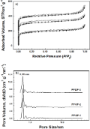


Main group mechanochemistry
Beilstein J. Org. Chem. 2017, 13, 2068–2077, doi:10.3762/bjoc.13.204
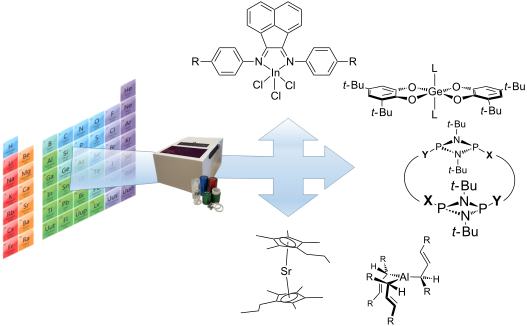
- , and during the last 25 years, mechanochemical methods have been applied to various fields, including catalysis [47], organic synthesis [5][7][48][49], metal-organic frameworks (MOFs) [50][51], coordination [52], organometallic [11], supramolecular [53], environmental [54][55], APIs [56], medicinal [57


New bio-nanocomposites based on iron oxides and polysaccharides applied to oxidation and alkylation reactions
Beilstein J. Org. Chem. 2017, 13, 1982–1993, doi:10.3762/bjoc.13.194
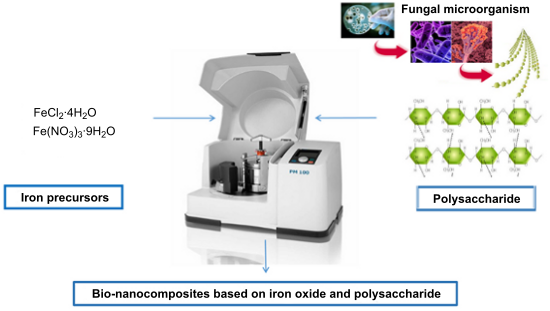
- potential applicability due to the extreme simplicity, cleanliness, reproducibility and versatility, haven been already demonstrated to be highly useful for the development of a range of advanced nanomaterials including metal-organic frameworks (MOFs), supported metal and metal oxide nanoparticles and


Mechanochemical synthesis of small organic molecules
Beilstein J. Org. Chem. 2017, 13, 1907–1931, doi:10.3762/bjoc.13.186
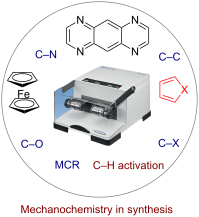
- mechanochemistry [31], mechanistic aspects [32], mechanochemical synthesis of inorganic material [33], co-crystals [34], metal–ligand complexes [35], metal organic frameworks [36], polymers [37], etc. are well documented in seminal reviews and will not be discussed here. The organic mechanochemistry has remained




Mechanochemical synthesis of thioureas, ureas and guanidines
Beilstein J. Org. Chem. 2017, 13, 1828–1849, doi:10.3762/bjoc.13.178
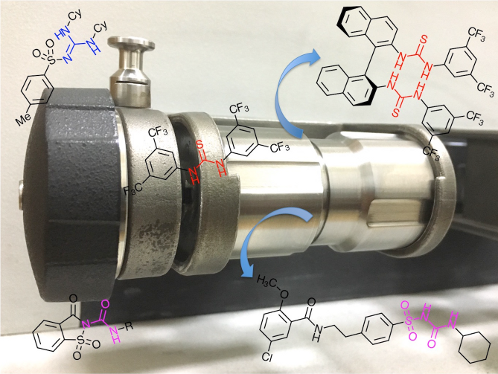
- research, Friščić et al. introduced the so called "ion and liquid-assisted grinding" or ILAG by recognizing the effect of cations such as Na+, K+ or NH4+ or anions like Cl−, NO3− and SO42− on the formation of polymorphs during LAG synthesis of metal-organic frameworks [21]. Recently, Jones et al. employed






Biomimetic molecular design tools that learn, evolve, and adapt
Beilstein J. Org. Chem. 2017, 13, 1288–1302, doi:10.3762/bjoc.13.125
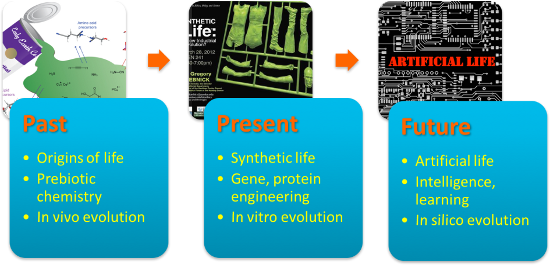
- characterization facility at CSIRO Manufacturing in Melbourne Australia. This can generate and test hundreds of polymers, nanomaterials, catalysts, or metal organic frameworks in a day. Clearly, certain types of chemistries (benzodiazepines, click reactions, etc.) are amenable to large chemical library synthesis
- of porous materials for hydrogen storage and CO2 capture and reduction Porous materials, such as metal organic frameworks (MOFs), covalent organic frameworks (COFs) and zeolitic imidazolate frameworks (ZIFs) are attracting much interest because of the large numbers of bespoke materials that can be




Fast and efficient synthesis of microporous polymer nanomembranes via light-induced click reaction
Beilstein J. Org. Chem. 2017, 13, 558–563, doi:10.3762/bjoc.13.54
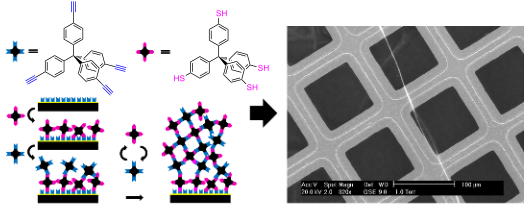
- reaction (TYC); Introduction The synthesis of microporous organic and inorganic materials such as zeolites [1], mesoporous silica [2] as well as metal-organic frameworks (MOF) [3][4] and covalent organic frameworks (COF) [5][6][7] attracted large attention because of their high potential in catalysis, gas


Extrusion – back to the future: Using an established technique to reform automated chemical synthesis
Beilstein J. Org. Chem. 2017, 13, 65–75, doi:10.3762/bjoc.13.9
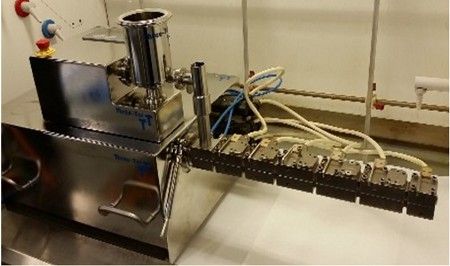
- compounds including metal-organic frameworks (MOFs). To date, a vast amount of research has already been conducted into reactive extrusion (REX), particularly in the polymer industry, which in many cases has involved organic transformations, however, it has not received significant recognition for this
- material obtained, which may in turn make them a more accessible media for metal processing or an alternative green solvent for synthesis [44]. Metal-organic frameworks (MOFs) The above examples of cocrystal and DES formation describe systems which involve the formation of eutectic and intermolecular
- interactions upon mixing, but these did not involve the formation of a covalent bond. However, James et al. report on the formation of covalent bonds in metal-organic frameworks (MOFs) and discrete metal complexes by TSE, under solvent-free conditions or in the presence of stoichiometric amounts of MeOH [2


Supramolecular frameworks based on [60]fullerene hexakisadducts
Beilstein J. Org. Chem. 2017, 13, 1–9, doi:10.3762/bjoc.13.1
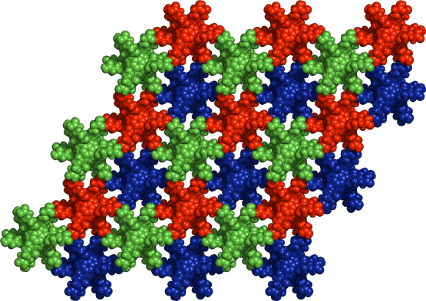
- materials with the prospect of applications in gas storage [2][3], catalysis [4][5], luminescence [6][7][8][9] and sensing [10][11][12][13] or optoelectronics [14][15][16]. Owing to a modular approach, building blocks and cross-linking interactions can be varied over a wide range resulting in metal-organic
- frameworks (MOFs) [17][18], covalent organic frameworks (COFs) [19][20] or covalent organic cage compounds [21][22][23][24][25][26][27][28] as the most prominent examples for such artificial porous materials. Purely organic systems such as COFs usually benefit from very low densities, high thermal


Elongated and substituted triazine-based tricarboxylic acid linkers for MOFs
Beilstein J. Org. Chem. 2016, 12, 2267–2273, doi:10.3762/bjoc.12.219

- the methoxy group gave the respective amino and hydroxy-substituted triazine linkers. Keywords: isoreticular; linker; MOF; Suzuki coupling; triazine; Introduction A typical building block for many metal–organic frameworks (MOFs) [1][2][3][4] carries two functional groups such as carboxylic acids or
- Forschungsgemeinschaft (Lu 378/24) as part of the priority program SPP 1362 (porous metal–organic frameworks). We thank Dr. Torsten Winkler for carrying out the calculations.


Hydroxy-functionalized hyper-cross-linked ultra-microporous organic polymers for selective CO2 capture at room temperature
Beilstein J. Org. Chem. 2016, 12, 1981–1986, doi:10.3762/bjoc.12.185
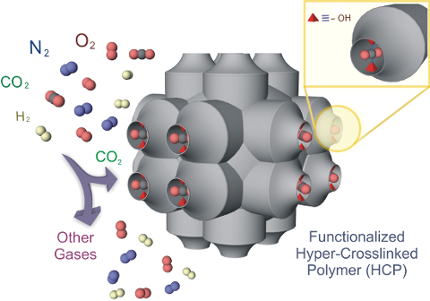
- study the CO2 capture, but the need of high energy to regenerate the amine solutions after CO2 capture, hinders their applications further [2]. In the domain of porous materials, zeolites, metal-organic frameworks (MOFs), cage molecules, etc. have been introduced for selective uptake of CO2 [3][4][5
- ]. In terms of surface area, tuneable porosity and feasible host–guest interaction, MOFs have scored over other above mentioned porous materials [6]. But the less hydrolytic stability of metal-organic frameworks limits their real time application [7][8]. So the search for new materials having high


Superstructures with cyclodextrins: chemistry and applications III
Beilstein J. Org. Chem. 2016, 12, 937–938, doi:10.3762/bjoc.12.91
- therapy [1]. Furthermore, it was found that lactose-appended β-CD lowers the cholesterol level in HepG2 cells – a result that is relevant for the treatment of Niemann–Pick-type C disease [2]. Metal-organic frameworks (MOFs) created from native CDs can be applied for the separation of isomeric xylenes or
Supramolecular chemistry: from aromatic foldamers to solution-phase supramolecular organic frameworks
Beilstein J. Org. Chem. 2015, 11, 2057–2071, doi:10.3762/bjoc.11.222
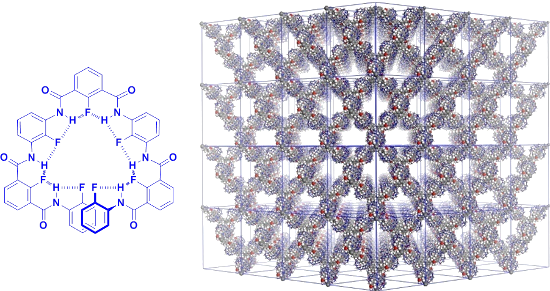
- Li+. Solution-phase supramolecular metal–organic frameworks (MOFs) Periodicity is the key feature of single crystals in which molecules arrange repeatedly in the three-dimensional space. Porous crystals such as metal–organic frameworks (MOFs) exhibit many unique properties mainly due to their large


![[Graphic 1]](/bjoc/content/inline/1860-5397-11-222-i19.png?max-width=637&scale=1.18182) 16 and dynamic [2]catenane formed by compounds 17–19.
16 and dynamic [2]catenane formed by compounds 17–19.


Carboxylated dithiafulvenes and tetrathiafulvalene vinylogues: synthesis, electronic properties, and complexation with zinc ions
Beilstein J. Org. Chem. 2015, 11, 957–965, doi:10.3762/bjoc.11.107
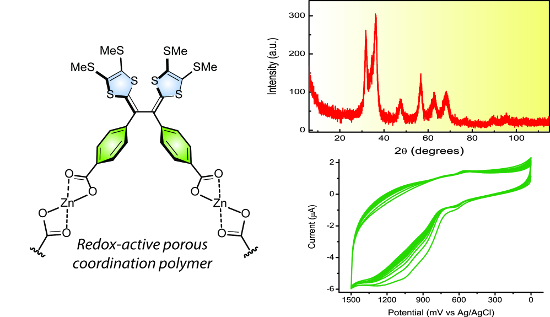
- carboxyl group also presents a reliable and useful ligand to coordinate with transition metal ions, which in turn provides easy access to novel organic–inorganic hybrid materials. The most notable example of research in this context is the recent development of metal organic frameworks (MOFs), wherein the





Synthesis, characterization and DNA interaction studies of new triptycene derivatives
Beilstein J. Org. Chem. 2014, 10, 1290–1298, doi:10.3762/bjoc.10.130
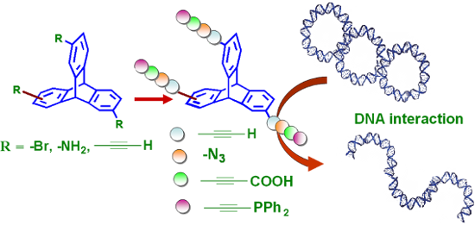
- , LRMS and elemental analysis (Supporting Information File 1). Functional group transformation of ethynyl-substituted triptycenes. Molecules with multiple carboxylate functional groups are an important class of compounds that have often been used as building blocks in the design of metal-organic
- frameworks (MOFs) with applications including but not limited to catalysis and gas uptake/storage [37][38][39][40][41][42]. It is well known that terminal alkynes can be conveniently subjected to carboxylation using CO2 to yield the corresponding alkynyl carboxylic acids. As shown in Scheme 2, 2,6,14


Silica: An efficient catalyst for one-pot regioselective synthesis of dithioethers
Beilstein J. Org. Chem. 2014, 10, 26–33, doi:10.3762/bjoc.10.5
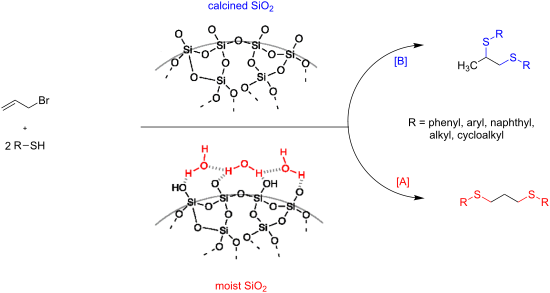
- and also as spacers in metal-organic frameworks [9][10][11][12][13][14]. For example, vicinal dithioether-based zirconium and titanium complexes have been used for alkene polymerization and hydroamination [15][16][17][18]. Chiral dithioethers have been prepared and their iridium complexes have been


Spin state switching in iron coordination compounds
Beilstein J. Org. Chem. 2013, 9, 342–391, doi:10.3762/bjoc.9.39
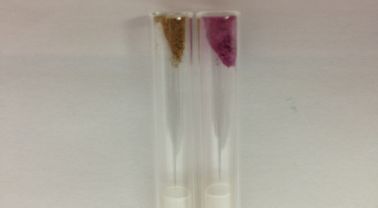


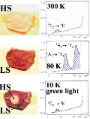
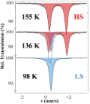


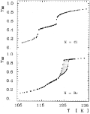

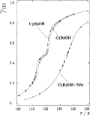


![[Graphic 1]](/bjoc/content/inline/1860-5397-9-39-i3.png?max-width=637&scale=1.18182) ) modes versus the anion volu...
) modes versus the anion volu...






Versatile supramolecular reactivity of zinc-tetra(4-pyridyl)porphyrin in crystalline solids: Polymeric grids with zinc dichloride and hydrogen-bonded networks with mellitic acid
Beilstein J. Org. Chem. 2009, 5, No. 77, doi:10.3762/bjoc.5.77
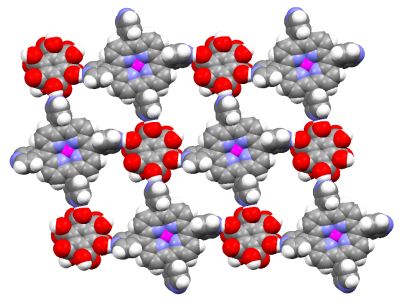
- further significance to studies of surface-based crystallizations of monolayer and multilayer hydrogen-bonded networks and metal–organic frameworks on various substrates [26][27], in the context of the design of novel molecular devices. Experimental The ZnTPyP, 1,4,5,8-naphthalenetetracarboxylic acid