


Search results
Search for "nitration" in Full Text gives 72 result(s) in Beilstein Journal of Organic Chemistry.
Design, synthesis and application of carbazole macrocycles in anion sensors
Beilstein J. Org. Chem. 2020, 16, 1901–1914, doi:10.3762/bjoc.16.157
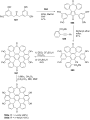
- protected biscarbazolyl derivative 7. TFA was used for deprotecting 7, which led to the corresponding free amine derivative 8 that could directly be used for cyclization. We were unable to successfully follow all steps in the synthesis scheme by Sanchez et al. [6]. The problematic step was the nitration
- reaction. Due to the highly acidic environment partial loss of one of the tert-butyl groups in 2 took place. This considerably reduced the yield and resulted in a mixture of products 3a and 3b that was challenging to separate due to similar properties. Careful optimization of the nitration process did not
- reference [6]. It is worth noting that the described cleavage problem during nitration was specific to tert-butyl groups. We also studied the possibility of hexyl substituents instead of tert-butyl groups [25]. In this case, the nitration process yielded only the desired product. However, since this




One-pot and metal-free synthesis of 3-arylated-4-nitrophenols via polyfunctionalized cyclohexanones from β-nitrostyrenes
Beilstein J. Org. Chem. 2020, 16, 1830–1836, doi:10.3762/bjoc.16.150
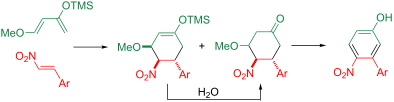
- group hinder the electrophilic modification at the 3-position. Generally, the aryl group is introduced by a Suzuki–Miyaura cross-coupling reaction [4][5], for which 3-bromo-4-nitrophenol must be prepared by the nitration of 3-bromophenol [6][7]. An alternative approach is the nitration of 3-arylphenol
- [8][9]. However, these nitration methods are less effective because the yield of the desired product is reduced by the formation of regioisomers. Although the hydroxylation of 3-arylated-1-fluoro-4-nitrobenzene has also been reported as a related strategy, multistep reactions are necessary for


Recent developments in photoredox-catalyzed remote ortho and para C–H bond functionalizations
Beilstein J. Org. Chem. 2020, 16, 248–280, doi:10.3762/bjoc.16.26
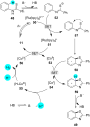
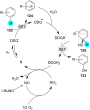
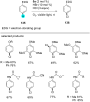
- assembled using this strategy, as displayed in Scheme 15, and a plausible mechanism for the reaction is shown in Figure 16. C–H nitration of protected anilines Nitroanilines are an important class of compounds and found in many drugs and dyes [144]. Therefore, recently, König and co-worker reported the
- in the literature, earlier methods applied harsher conditions, such as a strong acid and high temperature. Although in some cases, a mild nitration agent such as tert-butyl nitrite (TBN) was used, the reaction required an elevated temperature [146][147][148][149][150]. As can be seen in Figure 17
- catalyst. Proposed mechanism for the trifluoromethylation of 88. Plausible mechanism for the synthesis of substituted coumarins. Mechanism proposed for the phosphonylation reaction of 100. Plausible mechanism for the nitration of aniline derivatives via photoredox catalysis. Proposed mechanism for the












One hundred years of benzotropone chemistry
Beilstein J. Org. Chem. 2018, 14, 1120–1180, doi:10.3762/bjoc.14.98
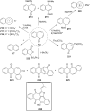
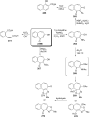
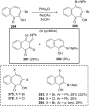
- of azo, nitro, and amino derivatives of 6-hydroxy-2,3-benzotropone (239) (Scheme 42) [164]. While 7-amino derivative 264 was prepared via diazo coupling of 239 with diazotized p-toluidine in a pyridine solution followed by hydrogenation, the nitration of 239 in acetic acid solution afforded nitro
- ) [174]. Catalytic hydrogenation of 241 over Adams's catalyst (PtO2.H2) gave the diol 295 (Scheme 49) [162][165][174]. Treatment of 241 with alkaline hydrogen peroxide caused degradative fission to give o-carboxycinnamic acid (296) [165], while nitration of 241 with nitric acid in an acetic acid solution








The first Pd-catalyzed Buchwald–Hartwig aminations at C-2 or C-4 in the estrone series
Beilstein J. Org. Chem. 2018, 14, 998–1003, doi:10.3762/bjoc.14.85

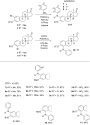
- ]. Classical nitration methods have, however, many drawbacks concerning elevated reaction temperatures, long reaction times, and poor yields. The introduction of amino or substituted amino groups onto ring A of estrone is fascinating from both organic chemical and biological points of view. Certain ring A
- -aminated estrone derivatives are described as inhibitors of estrogen biosynthesis. They are often synthesized via a three-step method including nitration, reduction, and functionalization of the amino group [1][2]. This three-step protocol may be simplified to involve only one or two steps by the
- coupling procedure, the synthesis of 2-amino-13α-estrone 13 could be achieved in only two steps without the first, aromatic nitration step used extensively earlier. The newly synthesized amino derivatives of 13α-estrone 5–13 may possess important biological activities without hormonal effect. Pd-catalyzed


Synthetic and semi-synthetic approaches to unprotected N-glycan oxazolines
Beilstein J. Org. Chem. 2018, 14, 416–429, doi:10.3762/bjoc.14.30
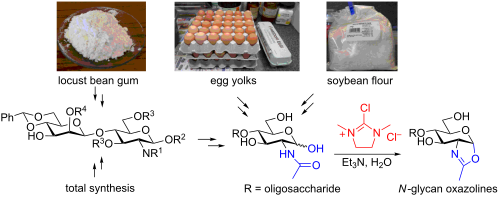
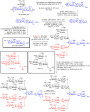
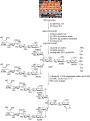
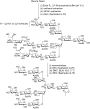
- % overall yield, Scheme 8). In the key transformation, the mannose residue at the reducing terminus was then converted into a glucosamine derivative (in fact possessing an azide at C2) first by conversion to the glycal and then an azido nitration reaction. This innovative method is considerably shorter than



Nitration of 5,11-dihydroindolo[3,2-b]carbazoles and synthetic applications of their nitro-substituted derivatives
Beilstein J. Org. Chem. 2017, 13, 1396–1406, doi:10.3762/bjoc.13.136

- , Russia 10.3762/bjoc.13.136 Abstract A new general approach to double nitration of 6,12-di(hetero)aryl-substituted and 6,12-unsubstituted 5,11-dialkyl-5,11-dihydroindolo[3,2-b]carbazoles by acetyl nitrate has been developed to obtain their 2,8-dinitro and 6,12-dinitro derivatives, respectively. A
- both nitro groups, unlike potassium salts of indole or carbazole, which have caused substitution of only one nitro group. Keywords: electrophilic aromatic substitution; indolo[3,2-b]carbazole; N-heteroacenes; nitration; nucleophilic aromatic substitution; Introduction Organic π-conjugated compounds
- ICZs [37], as well as C2- and C2,8-bromination of 6,12-disubstituted ICZs [23][38]. Bromo-containing ICZ derivatives have also been involved in further lithiation and metal-catalyzed cross-coupling reactions. Herein, we describe an effective protocol for nitration of 5,11-dihydroindolo[3,2-b]carbazoles


Regioselective (thio)carbamoylation of 2,7-di-tert-butylpyrene at the 1-position with iso(thio)cyanates
Beilstein J. Org. Chem. 2017, 13, 1032–1038, doi:10.3762/bjoc.13.102

- has been reported that nitration and bromination of 2 take place at the 1-position (however, the bromine atom in 1-bromopyrene can migrate into the 4-position in the presence of AlCl3) [8][9], whereas Friedel–Crafts acylation and Vilsmeier formylation take place at the 4-position [10]. We recently




Molecular-level architectural design using benzothiadiazole-based polymers for photovoltaic applications
Beilstein J. Org. Chem. 2017, 13, 863–873, doi:10.3762/bjoc.13.87

- , 1,2-difluorobenzene was reacted with trimethylsilyl chloride in the presence of lithium diisopropylamide to afford the 1,4-disilylated intermediate 4 and bromination of the latter compound in neat bromine afforded the desired 1,4-dibromo-2,3-difluorobenzene (5). Nitration of 5 by treatment with fuming



Novel β-cyclodextrin–eosin conjugates
Beilstein J. Org. Chem. 2017, 13, 543–551, doi:10.3762/bjoc.13.52
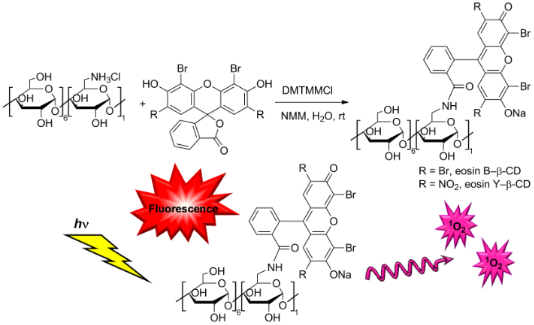
- standard nitration conditions to obtain the desired dye eosin B (4) (Figure 1). The NMR spectra showing the structure elucidation of the free dyes eosin Y (2) and eosin B (4) are shown in Supporting Information File 1, Figures S3–S7 and Figures S15–S19, respectively. Synthesis of eosin Y–β-CD and eosin B–β



Continuous-flow synthesis of primary amines: Metal-free reduction of aliphatic and aromatic nitro derivatives with trichlorosilane
Beilstein J. Org. Chem. 2016, 12, 2614–2619, doi:10.3762/bjoc.12.257
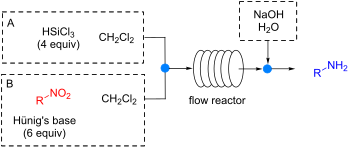
- synthetically relevant intermediates (precursors of baclofen and boscalid). Keywords: chemoselectivity; continuous processes; flow synthesis; nitro reduction; trichlorosilane; Introduction The reduction of nitro compounds to amines is a fundamental transformation in organic synthesis. The nitration of


Economical and scalable synthesis of 6-amino-2-cyanobenzothiazole
Beilstein J. Org. Chem. 2016, 12, 2019–2025, doi:10.3762/bjoc.12.189

- slightly reduced reaction yield on this scale. For scale-up of the DABCO-catalysed cyanation, 6 was synthesised by straight-forward nitration of the significantly cheaper starting material 2-chlorobenzothiazole (16) [15], and isolated in 82% yield after crystallisation from ethanol (Scheme 3



Amidofluorene-appended lower rim 1,3-diconjugate of calix[4]arene: synthesis, characterization and highly selective sensor for Cu2+
Beilstein J. Org. Chem. 2016, 12, 1749–1757, doi:10.3762/bjoc.12.163

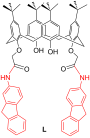
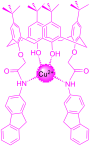
- 1 afforded the 5,11,17,23-tetra-tert-butyl-25,27-di(hydroxycarbonylmethoxy)-26-28-dihydroxy calix[4]arene (2) in high yield. Coupling of this diacid 2 with 9H-fluoren-2-amine (4, obtained from nitration of fluorene and reduction of the resulting 2-nitrofluorene, (3)) in the presence of N,N




Synthesis of 2-substituted tetraphenylenes via transition-metal-catalyzed derivatization of tetraphenylene
Beilstein J. Org. Chem. 2016, 12, 1302–1308, doi:10.3762/bjoc.12.122
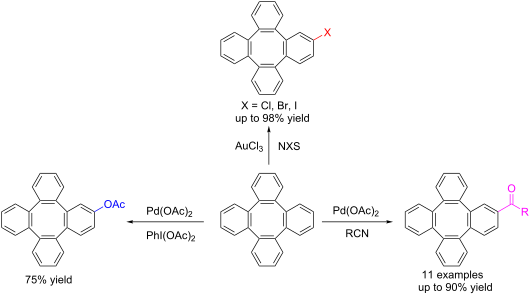
- substituted ones. Although direct bromination [22], nitration [22], and acetylation [45] of tetraphenylene via electrophilic aromatic substitution have been reported, it is still desirable to develop new methods for the derivatization of tetraphenylenes. Herein we report several synthetic protocols for the


Efficient syntheses of climate relevant isoprene nitrates and (1R,5S)-(−)-myrtenol nitrate
Beilstein J. Org. Chem. 2016, 12, 1081–1095, doi:10.3762/bjoc.12.103

- , rac-12 and (E)-4. A comprehensive survey of the literature revealed three general synthesis routes to IPNs. In summary, Shepson et al. [17] reacted isoprene epoxide with concentrated nitric acid (Scheme 2, path A); Kames et al. outlined the O-nitration of simple alcohols using dinitrogen pentoxide [18
- the diols or execute a regioselective 1° or 2° mono-O-nitration was not. Eliminating the former problem Hodgson et al. [26] reported rac-17 could be generated from cheap, commercially available 2,5-dihydrofuran which, after epoxidation with meta-chloroperbenzoic acid (mCPBA), afforded epoxide 21 in a
- 65% yield. Subsequent reaction of 21 with methyllithium (2.5 equiv, −78 °C, THF) in an alkylative double ring-opening process afforded, exclusively, (±)-3-methylbut-3-ene-1,2-diol (rac-17) in a 54% yield (Scheme 4). The next step required the mild regioselective O-nitration of rac-17. Olah et al


Study on the synthesis of the cyclopenta[f]indole core of raputindole A
Beilstein J. Org. Chem. 2016, 12, 334–342, doi:10.3762/bjoc.12.36

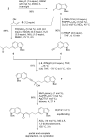
- reactions with α,β-unsaturated ketones to obtain indanones and dihydronaphthones [39][40]. Aminophenol 9 was converted to iodophenol 10 in good yield through a Sandmeyer reaction (Scheme 3) [41]. Various nitration conditions were tested, yet only the use of concentrated HNO3 in CH2Cl2, as reported by




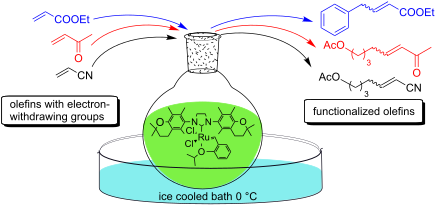
New metathesis catalyst bearing chromanyl moieties at the N-heterocyclic carbene ligand
Beilstein J. Org. Chem. 2015, 11, 2795–2804, doi:10.3762/bjoc.11.300
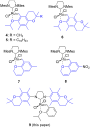
- -enol [27]. Chromane 10 was nitrated with fuming nitric acid to give 6-nitrochromane 11 in 58% yield according to Mahdavian [28] (Scheme 1). Nitration using the Smith procedure [29] led to the expected nitrochromane 11, however, formation of an admixture of 5a,6-dinitrochromane was observed. Reduction




Heronapyrrole D: A case of co-inspiration of natural product biosynthesis, total synthesis and biodiscovery
Beilstein J. Org. Chem. 2014, 10, 1228–1232, doi:10.3762/bjoc.10.121
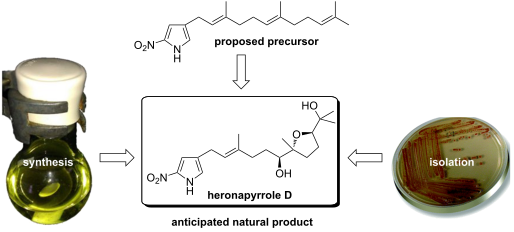
- sequence, which incorporates a regioselective pyrrole alkylation, an electrophilic aromatic nitration and a regio- and stereoselective Corey–Noe–Lin dihydroxylation [18], has previously been described (in the total synthesis of heronapyrrole C) [3]. The procedure of Shi et al. [19][20][21] was then used to


Continuous flow nitration in miniaturized devices
Beilstein J. Org. Chem. 2014, 10, 405–424, doi:10.3762/bjoc.10.38
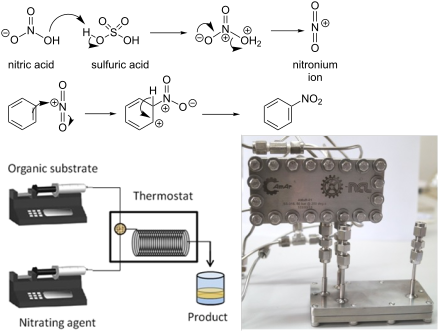
- Amol A. Kulkarni Chem. Eng. & Proc. Dev. Division, CSIR-National Chemical Laboratory, Pune – 411 008, India, phone: +91-20-25902153 10.3762/bjoc.10.38 Abstract This review highlights the state of the art in the field of continuous flow nitration with miniaturized devices. Although nitration has
- been one of the oldest and most important unit reactions, the advent of miniaturized devices has paved the way for new opportunities to reconsider the conventional approach for exothermic and selectivity sensitive nitration reactions. Four different approaches to flow nitration with microreactors are
- presented herein and discussed in view of their advantages, limitations and applicability of the information towards scale-up. Selected recent patents that disclose scale-up methodologies for continuous flow nitration are also briefly reviewed. Keywords: continuous flow; flow chemistry; nitration; nitric


Synthesis, characterization and initial evaluation of 5-nitro-1-(trifluoromethyl)-3H-1λ3,2-benziodaoxol-3-one
Beilstein J. Org. Chem. 2014, 10, 1–6, doi:10.3762/bjoc.10.1
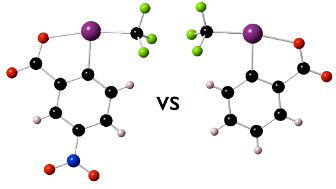
- trifluoromethylation; 19F NMR kinetics; nitration; organo-fluorine; Introduction Since the advent of the hypervalent-iodine-based electrophilic trifluoromethylation reagents 1 and 2 in 2006 they have found widespread application in organic synthesis (Figure 1) [1][2][3][4]. Recently, increasing interest has been
- potential. Therefore, based on a recent report by Togo et al. [9], the nitration of the reagent scaffold to afford the new derivative 5-nitro-1-(trifluoromethyl)-3H-1λ3,2-benziodaoxol-3-one (3) was taken into consideration. Results and Discussion The direct nitration of 2-iodobenzoic acid (4) has been
- ppm). Furthermore, this comparison highlights that the replacement of the chlorine atom by the CF3 group to a certain degree compensates the electronic effects imposed by the NO2 group as indicated by the lessened extent of deshielding. Nitration also had a distinct effect on the electronic spectrum


Charge-transfer interaction mediated organogels from 18β-glycyrrhetinic acid appended pyrene
Beilstein J. Org. Chem. 2013, 9, 2877–2885, doi:10.3762/bjoc.9.324
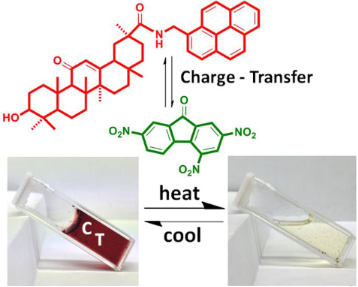
- other hand, the 2,4,7-trinitrofluorenone (TNF, 4) was obtained with 93% yield by nitration of 9-fluorenone. Gelation test GA-Pyrene (3) was heated in different solvents with 1 equiv of TNF (4) until a clear solution was formed. Then, the mixture was allowed to cool down to room temperature, and kept for




New syntheses of 5,6- and 7,8-diaminoquinolines
Beilstein J. Org. Chem. 2013, 9, 2669–2674, doi:10.3762/bjoc.9.302

- method, the Skraup reaction of 3-chloroaniline led to 7-chloroquinoline which, after nitration, replacement of the chlorine atom by the amino group and catalytic hydrogenation on 5% palladium on charcoal, yielded 7,8-diaminoquinoline [10]. The preparation of 5,6-diaminoquinoline is more effective because


An overview of the synthetic routes to the best selling drugs containing 6-membered heterocycles
Beilstein J. Org. Chem. 2013, 9, 2265–2319, doi:10.3762/bjoc.9.265


Damage of polyesters by the atmospheric free radical oxidant NO3•: a product study involving model systems
Beilstein J. Org. Chem. 2013, 9, 1907–1916, doi:10.3762/bjoc.9.225

- deprotonation. This mechanism is supported by previous findings in the reaction of aromatic amino acids with NO3• in the presence of NO2•, O3, and O2, where it was shown that dinitrated products result from a step-wise nitration of the aromatic ring [10]. On the other hand, to our knowledge, formation of


Aerobic radical multifunctionalization of alkenes using tert-butyl nitrite and water
Beilstein J. Org. Chem. 2013, 9, 1713–1717, doi:10.3762/bjoc.9.196

- γ-lactols, whereas the reaction in the presence of water produces 4-hydroxy-5-nitropentyl nitrate or 4-hydroxy-3-nitropentyl nitrate derivatives. Keywords: C−H oxidation; free radical; nitration; oxygen; radicals; water; Introduction Multifunctionalization reactions of simple organic molecules are





