


Search results
Search for "silylation" in Full Text gives 97 result(s) in Beilstein Journal of Organic Chemistry.
Catalyzed and uncatalyzed procedures for the syntheses of isomeric covalent multi-indolyl hetero non-metallides: an account
- Ranadeep Talukdar
Beilstein J. Org. Chem. 2021, 17, 2102–2122, doi:10.3762/bjoc.17.137

- silylation of N-methylindole (1) with observed H2 evolution [54]. Here the di(indol-2-yl)silane (31) was found as a minor product though (Scheme 5a). The reaction has a high turnover number of 92 and it was halted in the presence of radical scavengers. However, the mechanism was unidentified, although it was
- ). A repetition of the processes leads to the bis(indol-3-yl)silanes 40. Han described a Lewis acid-promoted C3-silylation of N-protected substituted indoles by a disproportionation mechanism of the latter. He used both B(C6F5)3 and Al(C6F5)3 in the reactions (Scheme 8a and Scheme 8c) which followed a
- similar mechanism (Scheme 8b) [62][63]. The reduced form of indole, i.e., indoline 50 coordinates with the Lewis acid to form a complex which activates PhSiH3 (frustrated Lewis pair) for silylation (69, Scheme 8b). Phosphines The base-mediated syntheses of bis(indol-2-yl)phosphines 76 and 78 were

Graphical Abstract

Scheme 1: Synthesis of 2,2’-bis(indole)borinic ester 3.

Scheme 2: Synthesis of 2,2’-bisindole NHC·boranes by an SEAr mechanism.

Scheme 3: Syntheses of indolyl amines through Buchwald–Hartwig cross coupling.

Scheme 4: Synthesis of 3,3’-bis(indolyl) ethers.

Scheme 5: C–H silylation of indoles.

Scheme 6: n-BuLi-mediated syntheses of bis(indol-3-yl)silanes.
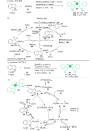
Scheme 7: Acid-catalyzed syntheses of bis(indol-3-yl)silanes and mechanisms.

Scheme 8: B(C6F5)3 and Al(C6F5)3-catalyzed syntheses of bis(indol-3-yl)silanes reported by Han.

Scheme 9: Base-mediated syntheses of bis and tris(indol-2-yl)phosphines.

Scheme 10: Synthesis of bis(indol-2-yl)sulfides using SL2-type reagents.

Scheme 11: Synthesis of 2,3’- and 2,2’-bis(indolyl)sulfides using disulfides as substrates.

Scheme 12: Synthesis of diindol-2-ylsulfide (84) from 2-iodoindole (92) and thiourea.

Scheme 13: Synthesis of bis(indol-3-yl)sulfides using N-silylated 3-bromoindole 93.

Scheme 14: Fischer indole synthesis of bis(indol-3-yl)sulfides using thio diketones.
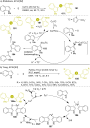
Scheme 15: Oxidative synthesis of bis(indol-3-yl)sulfides using indoles and elemental sulfur.
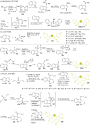
Scheme 16: Synthesis of bis(indol-3-yl)sulfides using sulfoxides as sulfur source.

Scheme 17: Syntheses of bis(indol-2-yl)selanes.
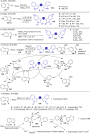
Scheme 18: Syntheses of bis(indol-3-yl)selanes.

Scheme 19: Synthesis of bis(indol-2-yl)tellane 147.

Scheme 20: Synthesis of tris(indolyl)borane 154.

Scheme 21: Synthesis of bis(indol-4-yl)amines 159.

Scheme 22: Synthesis of bis(indol-5-yl)amines.

Scheme 23: Synthesis of 6,5’/6,6’-bis(indolyl)amines.

Scheme 24: Synthesis of potent HIV-inhibitors 6,6’-bis(indolyl) ethers.

Scheme 25: Synthesis of bis(indol-7-yl) ether.

Scheme 26: Synthesis of di(indol-5-yl)sulfide (183).

Scheme 27: Syntheses of 2,2’-diformyl-7,7’-bis(indolyl)selenides.
On the application of 3d metals for C–H activation toward bioactive compounds: The key step for the synthesis of silver bullets
- Renato L. Carvalho,
- Amanda S. de Miranda,
- Mateus P. Nunes,
- Roberto S. Gomes,
- Guilherme A. M. Jardim and
- Eufrânio N. da Silva Júnior
Beilstein J. Org. Chem. 2021, 17, 1849–1938, doi:10.3762/bjoc.17.126
- efficient antibacterial compounds (Scheme 24A) [146]. In 2021, a divergent silylation of alkenes via a manganese-catalyzed C–H activation was reported by Xie et al. by using a ligand-tuned metalloradical reactivity strategy (Scheme 24B and C) [147]. Using Mn2(CO)10 as a catalyst precursor, the authors

Graphical Abstract

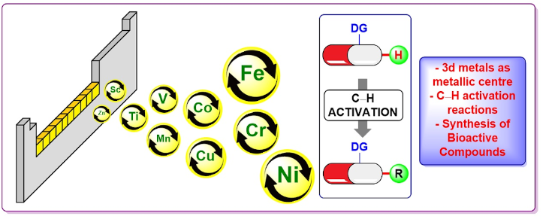
Scheme 1: Schematic overview of transition metals studied in C–H activation processes.

Scheme 2: (A) Known biological activities related to benzimidazole-based compounds; (B and C) an example of a...

Scheme 3: (A) Known biological activities related to quinoline-based compounds; (B and C) an example of a sca...

Scheme 4: (A) Known biological activities related to sulfur-containing compounds; (B and C) an example of a s...

Scheme 5: (A) Known biological activities related to aminoindane derivatives; (B and C) an example of a scand...

Scheme 6: (A) Known biological activities related to norbornane derivatives; (B and C) an example of a scandi...

Scheme 7: (A) Known biological activities related to aniline derivatives; (B and C) an example of a titanium-...

Scheme 8: (A) Known biological activities related to cyclohexylamine derivatives; (B) an example of an intram...

Scheme 9: (A) Known biologically active benzophenone derivatives; (B and C) photocatalytic oxidation of benzy...

Scheme 10: (A) Known bioactive fluorine-containing compounds; (B and C) vanadium-mediated C(sp3)–H fluorinatio...

Scheme 11: (A) Known biologically active Lythraceae alkaloids; (B) synthesis of (±)-decinine (30).

Scheme 12: (A) Synthesis of (R)- and (S)-boehmeriasin (31); (B) synthesis of phenanthroindolizidines by vanadi...
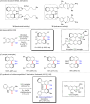
Scheme 13: (A) Known bioactive BINOL derivatives; (B and C) vanadium-mediated oxidative coupling of 2-naphthol...

Scheme 14: (A) Known antiplasmodial imidazopyridazines; (B) practical synthesis of 41.
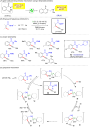
Scheme 15: (A) Gold-catalyzed drug-release mechanism using 2-alkynylbenzamides; (B and C) chromium-mediated al...

Scheme 16: (A) Examples of anti-inflammatory benzaldehyde derivatives; (B and C) chromium-mediated difunctiona...

Scheme 17: (A and B) Manganese-catalyzed chemoselective intramolecular C(sp3)–H amination; (C) late-stage modi...

Scheme 18: (A and B) Manganese-catalyzed C(sp3)–H amination; (C) late-stage modification of a leelamine deriva...
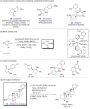
Scheme 19: (A) Known bioactive compounds containing substituted N-heterocycles; (B and C) manganese-catalyzed ...

Scheme 20: (A) Known indoles that present GPR40 full agonist activity; (B and C) manganese-catalyzed C–H alkyl...

Scheme 21: (A) Examples of known biaryl-containing drugs; (B and C) manganese-catalyzed C–H arylation through ...
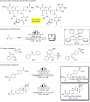
Scheme 22: (A) Known zidovudine derivatives with potent anti-HIV properties; (B and C) manganese-catalyzed C–H...

Scheme 23: (A and B) Manganese-catalyzed C–H organic photo-electrosynthesis; (C) late-stage modification.
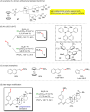
Scheme 24: (A) Example of a known antibacterial silylated dendrimer; (B and C) manganese-catalyzed C–H silylat...
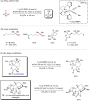
Scheme 25: (A and B) Fe-based small molecule catalyst applied for selective aliphatic C–H oxidations; (C) late...

Scheme 26: (A) Examples of naturally occurring gracilioethers; (B) the first total synthesis of gracilioether ...
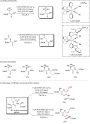
Scheme 27: (A and B) Selective aliphatic C–H oxidation of amino acids; (C) late-stage modification of proline-...
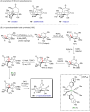
Scheme 28: (A) Examples of Illicium sesquiterpenes; (B) first chemical synthesis of (+)-pseudoanisatin (80) in...

Scheme 29: (A and B) Fe-catalyzed deuteration; (C) late-stage modification of pharmaceuticals.

Scheme 30: (A and B) Biomimetic Fe-catalyzed aerobic oxidation of methylarenes to benzaldehydes (PMHS, polymet...

Scheme 31: (A) Known tetrahydroquinolines with potential biological activities; (B and C) redox-selective Fe c...
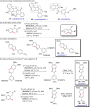
Scheme 32: (A) Known drugs containing a benzofuran unit; (B and C) Fe/Cu-catalyzed tandem O-arylation to acces...

Scheme 33: (A) Known azaindolines that act as M4 muscarinic acetylcholine receptor agonists; (B and C) intramo...
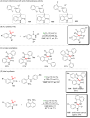
Scheme 34: (A) Known indolinones with anticholinesterase activity; (B and C) oxidative C(sp3)–H cross coupling...
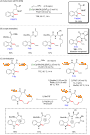
Scheme 35: (A and B) Cobalt-catalyzed C–H alkenylation of C-3-peptide-containing indoles; (C) derivatization b...
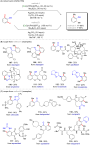
Scheme 36: (A) Cobalt-Cp*-catalyzed C–H methylation of known drugs; (B and C) scope of the o-methylated deriva...
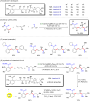
Scheme 37: (A) Known lasalocid A analogues; (B and C) three-component cobalt-catalyzed C–H bond addition; (D) ...

Scheme 38: (A and B) Cobalt-catalyzed C(sp2)–H amidation of thiostrepton.
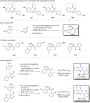
Scheme 39: (A) Known 4H-benzo[d][1,3]oxazin-4-one derivatives with hypolipidemic activity; (B and C) cobalt-ca...

Scheme 40: (A and B) Cobalt-catalyzed C–H arylation of pyrrole derivatives; (C) application for the synthesis ...
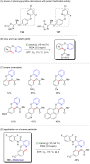
Scheme 41: (A) Known 2-phenoxypyridine derivatives with potent herbicidal activity; (B and C) cobalt-catalyzed...
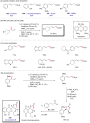
Scheme 42: (A) Natural cinnamic acid derivatives; (B and C) cobalt-catalyzed C–H carboxylation of terminal alk...

Scheme 43: (A and B) Cobalt-catalyzed C–H borylation; (C) application to the synthesis of flurbiprofen.

Scheme 44: (A) Benzothiazoles known to present anticonvulsant activities; (B and C) cobalt/ruthenium-catalyzed...

Scheme 45: (A and B) Cobalt-catalyzed oxygenation of methylene groups towards ketone synthesis; (C) synthesis ...
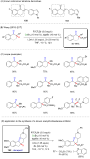
Scheme 46: (A) Known anticancer tetralone derivatives; (B and C) cobalt-catalyzed C–H difluoroalkylation of ar...
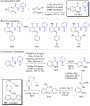
Scheme 47: (A and B) Cobalt-catalyzed C–H thiolation; (C) application in the synthesis of quetiapine (153).
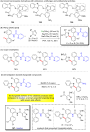
Scheme 48: (A) Known benzoxazole derivatives with anticancer, antifungal, and antibacterial activities; (B and...
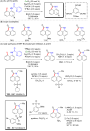
Scheme 49: (A and B) Cobalt-catalyzed C–H carbonylation of naphthylamides; (C) BET inhibitors 158 and 159 tota...
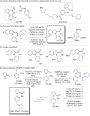
Scheme 50: (A) Known bioactive pyrrolo[1,2-a]quinoxalin-4(5H)-one derivatives; (B and C) cobalt-catalyzed C–H ...
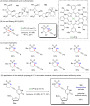
Scheme 51: (A) Known antibacterial cyclic sulfonamides; (B and C) cobalt-catalyzed C–H amination of propargyli...

Scheme 52: (A and B) Cobalt-catalyzed intramolecular 1,5-C(sp3)–H amination; (C) late-stage functionalization ...

Scheme 53: (A and B) Cobalt-catalyzed C–H/C–H cross-coupling between benzamides and oximes; (C) late-state syn...
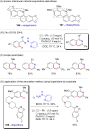
Scheme 54: (A) Known anticancer natural isoquinoline derivatives; (B and C) cobalt-catalyzed C(sp2)–H annulati...
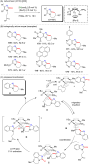
Scheme 55: (A) Enantioselective intramolecular nickel-catalyzed C–H activation; (B) bioactive obtained motifs;...

Scheme 56: (A and B) Nickel-catalyzed α-C(sp3)–H arylation of ketones; (C) application of the method using kno...

Scheme 57: (A and B) Nickel-catalyzed C(sp3)–H acylation of pyrrolidine derivatives; (C) exploring the use of ...
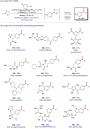
Scheme 58: (A) Nickel-catalyzed C(sp3)–H arylation of dioxolane; (B) library of products obtained from biologi...
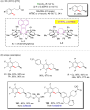
Scheme 59: (A) Intramolecular enantioselective nickel-catalyzed C–H cycloalkylation; (B) product examples, inc...

Scheme 60: (A and B) Nickel-catalyzed C–H deoxy-arylation of azole derivatives; (C) late-stage functionalizati...
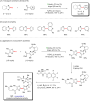
Scheme 61: (A and B) Nickel-catalyzed decarbonylative C–H arylation of azole derivatives; (C) application of t...
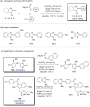
Scheme 62: (A and B) Another important example of nickel-catalyzed C–H arylation of azole derivatives; (C) app...
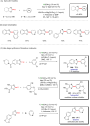
Scheme 63: (A and B) Another notable example of a nickel-catalyzed C–H arylation of azole derivatives; (C) lat...
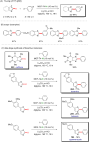
Scheme 64: (A and B) Nickel-based metalorganic framework (MOF-74-Ni)-catalyzed C–H arylation of azole derivati...
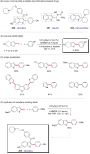
Scheme 65: (A) Known commercially available benzothiophene-based drugs; (B and C) nickel-catalyzed C–H arylati...
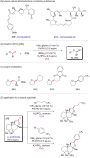
Scheme 66: (A) Known natural tetrahydrofuran-containing substances; (B and C) nickel-catalyzed photoredox C(sp3...
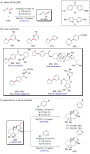
Scheme 67: (A and B) Another notable example of a nickel-catalyzed photoredox C(sp3)–H alkylation/arylation; (...

Scheme 68: (A) Electrochemical/nickel-catalyzed C–H alkoxylation; (B) achieved scope, including three using na...

Scheme 69: (A) Enantioselective photoredox/nickel catalyzed C(sp3)–H arylation; (B) achieved scope, including ...

Scheme 70: (A) Known commercially available trifluoromethylated drugs; (B and C) nickel-catalyzed C–H trifluor...
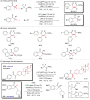
Scheme 71: (A and B) Stereoselective nickel-catalyzed C–H difluoroalkylation; (C) late-stage functionalization...

Scheme 72: (A) Cu-mediated ortho-amination of oxalamides; (B) achieved scope, including derivatives obtained f...

Scheme 73: (A) Electro-oxidative copper-mediated amination of 8-aminoquinoline-derived amides; (B) achieved sc...

Scheme 74: (A and B) Cu(I)-mediated C–H amination with oximes; (C) derivatization using telmisartan (241) as s...

Scheme 75: (A and B) Cu-mediated amination of aryl amides using ammonia; (C) late-stage modification of proben...
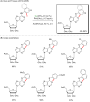
Scheme 76: (A and B) Synthesis of purine nucleoside analogues using copper-mediated C(sp2)–H activation.

Scheme 77: (A) Copper-mediated annulation of acrylamide; (B) achieved scope, including the synthesis of the co...
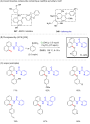
Scheme 78: (A) Known bioactive compounds containing a naphthyl aryl ether motif; (B and C) copper-mediated eth...

Scheme 79: (A and B) Cu-mediated alkylation of N-oxide-heteroarenes; (C) late-stage modification.
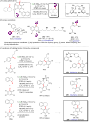
Scheme 80: (A) Cu-mediated cross-dehydrogenative coupling of polyfluoroarenes and alkanes; (B) scope from know...

Scheme 81: (A) Known anticancer acrylonitrile compounds; (B and C) Copper-mediated cyanation of unactivated al...
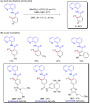
Scheme 82: (A) Cu-mediated radiofluorination of 8-aminoquinoline-derived aryl amides; (B) achieved scope, incl...
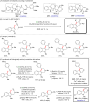
Scheme 83: (A) Examples of natural β-carbolines; (B and C) an example of a zinc-catalyzed C–H functionalizatio...
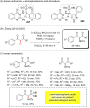
Scheme 84: (A) Examples of anticancer α-aminophosphonic acid derivatives; (B and C) an example of a zinc-catal...
α,γ-Dioxygenated amides via tandem Brook rearrangement/radical oxygenation reactions and their application to syntheses of γ-lactams
- Mikhail K. Klychnikov,
- Radek Pohl,
- Ivana Císařová and
- Ullrich Jahn
Beilstein J. Org. Chem. 2021, 17, 688–704, doi:10.3762/bjoc.17.58
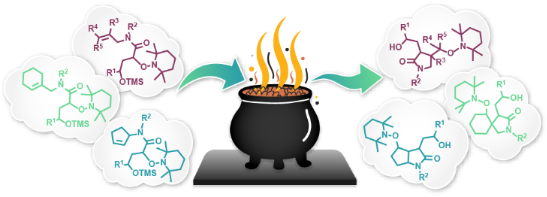
- corresponding acyclic or cyclic allylic amines in very good yields (see Supporting Information File 1 for details). Their subsequent α-deprotonation by LDA followed by treatment with chlorotrimethylsilane at −78 °C [81] resulted in clean C-silylation of the corresponding enolate providing silylacetamides 8a–m

Graphical Abstract
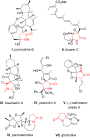
Figure 1: Selected alkaloids containing the pyrrolidone motif.
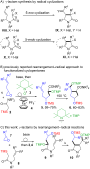
Scheme 1: A) Classical γ-lactam synthesis by atom transfer radical cyclizations; B) previously developed tand...
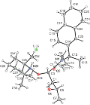
Figure 2: X-ray crystal structure of the major (2R,4S)-alkoxyamine hydrochloride derived from 9j. Displacemen...

Scheme 2: Formation of the α-(aminoxy)amides 9o,p.

Figure 3: X-ray crystal structure of the minor cis-diastereomers of the keto lactam 13j (left) and the hydrox...
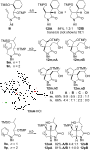
Scheme 3: Thermal radical cyclization reactions of amides 9l–p bearing cyclic units. Conditions: a) t-BuOH, 1...

Scheme 4: Epimerization of spirolactams 12m,n.

Scheme 5: The Dess–Martin oxidation of lactams 12l–o. Conditions: a) DMP (1.3 equiv), t-BuOH (10 mol %), CH2Cl...
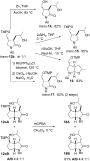
Scheme 6: Selected transformations of the lactams trans-12b and 12o.

Scheme 7: Diastereoselectivity for the formation of α-(aminoxy)amides 9i–k.

Scheme 8: Rationalization of the diastereoselectivity for the formation of the α-(aminoxy)amide 9l.
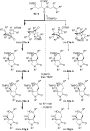
Scheme 9: Rationalization of the thermal radical cyclization diastereoselectivity of alkoxyamines 9a–k. (S)-C...
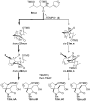
Scheme 10: The stereochemical course for the formation of products 12m,n by thermal radical cyclization of alk...
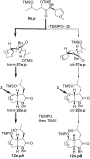
Scheme 11: Formation of bicycles 12o,p.
Recent progress in the synthesis of homotropane alkaloids adaline, euphococcinine and N-methyleuphococcinine
- Dimas J. P. Lima,
- Antonio E. G. Santana,
- Michael A. Birkett and
- Ricardo S. Porto
Beilstein J. Org. Chem. 2021, 17, 28–41, doi:10.3762/bjoc.17.4
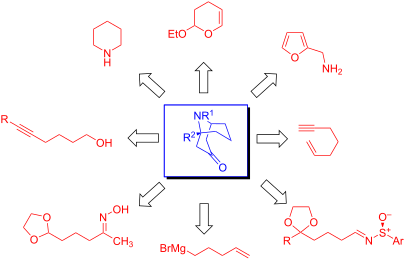
- (1). Alternatively, the (±)-euphococcinine precursor 6 was prepared from 4, via deprotonation, silylation, and finally, silyl ether cleavage. Swern oxidation of alcohols 5 and 6 gave aldehydes 7 and 8, treated with allylmagnesium bromide, to generate secondary alcohols 9 and 10. These alcohols were

Graphical Abstract

Figure 1: Homotropane (azabicyclononane) systems.

Figure 2: Alkaloids (−)-adaline (1), (+)-euphococcinine (2) and (+)-N-methyleuphococcinine (3).

Scheme 1: Synthetic strategies before 1995.

Scheme 2: Synthesis (±)-adaline (1) and (±)-euphococcinine (2). Reagents and conditions: i) 1. dihydropyran, ...

Scheme 3: Synthesis (+)-euphococcinine (2). Reagents and conditions: i) H2O2, SeO2 (cat), acetone, rt, 88%; i...

Scheme 4: Synthesis (+)-euphococcinine (2). Reagents and conditions: i) 2,4-bis(4-phenoxyphenyl)-1,3-dithia-2...

Scheme 5: Synthesis of (±)-euphococcinine precursor (±)-42. Reagents and conditions: i) Bu3SnH, AIBN, toluene...

Scheme 6: Synthesis of (−)-adaline (1). Reagents and conditions: i) LiH2NBH3, THF, 40 °C, 88%; ii) TPAP, NMO,...

Scheme 7: Synthesis of (−)-adaline (1) and (−)-euphococcinine (2). Reagents and conditions: i) 1. BuLi, t-BuO...

Scheme 8: Synthesis of (−)-adaline (1). Reagents and conditions: i) Ref. [52]; ii) Et3N, TBDMSOTf, CH2Cl2, 0 °C t...

Scheme 9: Synthesis of (+)-euphococcinine (2). Reagents and conditions: i) 1. Cp2ZrCl2,AlMe3, CH2Cl2; 2. p-me...

Scheme 10: Synthesis of (−)-adaline 1. Reagents and conditions: i) 1. CuBr.DMS, Et2O/DMS, -42 ºC; 2. 1-heptyne...

Scheme 11: Synthesis of (−)-euphococcinine (2) and (−)-adaline (1). Reagents and conditions: i) 102, KHMDS, Et2...

Scheme 12: Synthesis of N-methyleuphococcinine 3. Reagents and conditions: i) 108 (1.5 equiv), 3,5-di-F-C6H3B(...
All-carbon [3 + 2] cycloaddition in natural product synthesis
- Zhuo Wang and
- Junyang Liu
Beilstein J. Org. Chem. 2020, 16, 3015–3031, doi:10.3762/bjoc.16.251
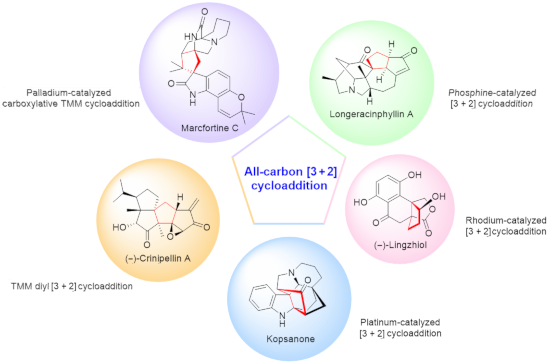
- the desired alcohol 133 in 75% yield as a single diastereomer. Allylic oxidation of freshly prepared 133 with SeO2 followed by silylation with TBSOTf/Et3N afforded enyne 134. Enyne 134 was subjected to rhodium-catalyzed intramolecular [3 + 2] cycloaddition with a catalytic amount of [Rh(cod)OH]2 to

Graphical Abstract

Figure 1: Highly-substituted five-membered carbocycle in biologically significant natural products.

Figure 2: Natural product synthesis featuring the all-carbon [3 + 2] cycloaddition. (Quaternary carbon center...

Scheme 1: Representative natural product syntheses that feature the all-carbon [3 + 2] cyclization as the key...
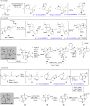
Scheme 2: (A) An intramolecular trimethylenemethane diyl [3 + 2] cycloaddition with allenyl diazo compound 38...
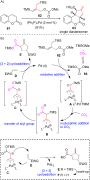
Scheme 3: (A) Palladium-catalyzed intermolecular carboxylative TMM cycloaddition [36]. (B) The proposed mechanism....

Scheme 4: Natural product syntheses that make use of palladium-catalyzed intermolecular [3 + 2] cycloaddition...
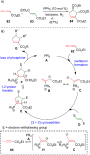
Scheme 5: (A) Phosphine-catalyzed [3 + 2] cycloaddition [17]. (B) The proposed mechanism.

Scheme 6: Lu’s [3 + 2] cycloaddition in natural product synthesis. (A) Synthesis of longeracinphyllin A (10) [41]...

Scheme 7: (A) Phosphine-catalyzed [3 + 2] annulation of unsymmetric isoindigo 100 with allene in the preparat...
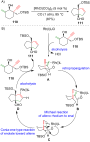
Scheme 8: (A) Rhodium-catalyzed intracmolecular [3 + 2] cycloaddition [49]. (B) The proposed catalytic cycle of t...
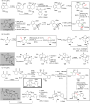
Scheme 9: Total synthesis of natural products reported by Yang and co-workers applying rhodium-catalyzed intr...
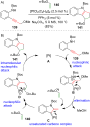
Scheme 10: (A) Platinum(II)-catalyzed intermolecular [3 + 2] cycloaddition of propargyl ether 139 and n-butyl ...
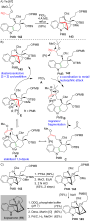
Scheme 11: (A) Platinum-catalyzed intramolecular [3 + 2] cycloaddition of propargylic ketal derivative 142 to ...

Scheme 12: (A) Synthesis of phyllocladanol (21) features a Lewis acid-catalyzed formal intramolecular [3 + 2] ...

Scheme 13: The recent advances of [3 + 2] annulation in natural product synthesis. (A) The preparation of melo...
Changed reactivity of secondary hydroxy groups in C8-modified adenosine – lessons learned from silylation
- Jennifer Frommer and
- Sabine Müller
Beilstein J. Org. Chem. 2020, 16, 2854–2861, doi:10.3762/bjoc.16.234

- conjugation of the desired moiety. A C8-alkynyl-modified adenosine derivative was synthesized, reviving an old synthetic pathway for iodination of purine nucleobases. Silylation of the C8-alkynyl-modified adenosine revealed unexpected selectivity of the two secondary sugar hydroxy groups, with the 3'-O-isomer
- charge transfer [23][24]. In the course of monomer synthesis, we encountered unexpected results regarding the reactivity and selectivity of the two secondary hydroxy groups of the adenosine derivative 7 (Scheme 1) in the silylation step, leading to non-satisfactory overall reaction yields. Therefore, the
- synthesis strategy was re-designed, allowing the preparation of building block 9 (Scheme 2) ready for use in solid-phase RNA synthesis with excellent yield. Here, we report on the selectivity problem in 2’-O-silylation of adenosine derivative 7 (Scheme 1) and the optimized synthesis strategy for the

Graphical Abstract

Scheme 1: Synthesis of a C8-linker-modified adenosine derivative. (a) 4 equiv TBDMS-Cl, 5 equiv imidazole, DM...

Figure 1: Characterization and assignment of the TBDMS isomers via HSQC (red) and HMBC (blue) NMR measurement...

Scheme 2: New synthetic route to the C8-linker modified adenosine building block. (a) i) 1.2 equiv di-tert-bu...
The McKenna reaction – avoiding side reactions in phosphonate deprotection
- Katarzyna Justyna,
- Joanna Małolepsza,
- Damian Kusy,
- Waldemar Maniukiewicz and
- Katarzyna M. Błażewska
Beilstein J. Org. Chem. 2020, 16, 1436–1446, doi:10.3762/bjoc.16.119
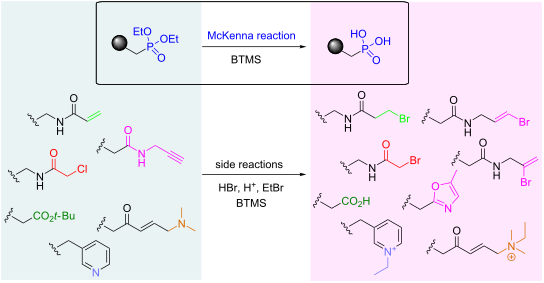
- occurring during the silylation step could be usually prevented. On the other hand, the side reactions during the solvolysis step are usually obviated by the use of a buffer or weak base, which neutralize the final organophosphorus acids. Herein we mainly addressed the problems related to the silylation
- for studying the possibility of an N-alkylation by alkyl bromide, formed during the silylation step. Finally, compound 13 was included to study the possibility of a chlorine for bromine exchange reaction. The phosphonocarboxylates 8 and 9 were used to explore whether the carboxyester group could be
- phosphonate ester instead of the diethyl analogs. Even though the silylation step required longer times in case of the diisopropyl phosphonate ester [1], which may promote the formation of side products, no N-alkylated product was observed, neither for diisopropyl phosphonates 9c,d (even during 13 days), nor

Graphical Abstract

Scheme 1: Schematic overview of the McKenna reaction including the decomposition of BTMS in protic solvents. ...

Figure 1: The model compounds used for this study (in red: the functionality of the molecules vulnerable to s...

Scheme 2: Formation of the side products derived from 10. Conditions: An equimolar mixture of propargylamide ...

Scheme 3: Addition of HBr to compound 11.

Scheme 4: N-Alkylation of 9.

Scheme 5: N-Alkylation of 12.

Scheme 6: Exchange of the chlorine substituent with bromine in 2-chloro-N-phenethylacetamide (13) under McKen...
Recent advances in Cu-catalyzed C(sp3)–Si and C(sp3)–B bond formation
- Balaram S. Takale,
- Ruchita R. Thakore,
- Elham Etemadi-Davan and
- Bruce H. Lipshutz
Beilstein J. Org. Chem. 2020, 16, 691–737, doi:10.3762/bjoc.16.67
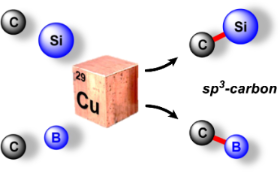
- reactions are discussed. Keywords: C–B bonds; copper catalysis; C–Si bonds; enantioselective reactions; sp3 carbon functionalization; Introduction Transition-metal-catalyzed silylation and borylation are useful transformations [1], widely studied because organosilicon [2][3] and organoboron compounds [4
- the in situ-formed Cu–Si species leading ultimately to the formation of the desired C–Si bond. This process could be applied to a variety of substrates leading to the desired products 29 and 38–40 (Scheme 9) [31]. This silylation reaction was also performed on geminal dibromides 41. In such cases
- , both bromides were replaced by silyl groups. The reaction supposedly occurred partly via ionic silylation (of the first bromide), and partly via a radical pathway (silylation of the second bromide), effected by the presence of catalytic amounts of CuBr·SMe2 along with dtbpy as ligand. Whatever the

Graphical Abstract

Scheme 1: Pharmaceuticals possessing a silicon or boron atom.

Scheme 2: The first Cu-catalyzed C(sp3)–Si bond formation.

Scheme 3: Conversion of benzylic phosphate 6 to the corresponding silane.

Scheme 4: Conversion of alkyl triflates to alkylsilanes.

Scheme 5: Conversion of secondary alkyl triflates to alkylsilanes.

Scheme 6: Conversion of alkyl iodides to alkylsilanes.

Scheme 7: Trapping of intermediate radical through cascade reaction.

Scheme 8: Radical pathway for conversion of alkyl iodides to alkylsilanes.

Scheme 9: Conversion of alkyl ester of N-hydroxyphthalimide to alkylsilanes.

Scheme 10: Conversion of gem-dibromides to bis-silylalkanes.

Scheme 11: Conversion of imines to α-silylated amines (A) and the reaction pathway (B).

Scheme 12: Conversion of N-tosylimines to α-silylated amines.

Scheme 13: Screening of diamine ligands.

Scheme 14: Conversion of N-tert-butylsulfonylimines to α-silylated amines.

Scheme 15: Conversion of aldimines to nonracemic α-silylated amines.

Scheme 16: Conversion of N-tosylimines to α-silylated amines.

Scheme 17: Reaction pathway [A] and conversion of aldehydes to α-silylated alcohols [B].

Scheme 18: Conversion of aldehydes to benzhydryl silyl ethers.

Scheme 19: Conversion of ketones to 1,2-diols (A) and conversion of imines to 1,2-amino alcohols (B).

Scheme 20: Ligand screening (A) and conversion of aldehydes to α-silylated alcohols (B).

Scheme 21: Conversion of aldehydes to α-silylated alcohols.

Scheme 22: 1,4-Additions to α,β-unsaturated ketones.

Scheme 23: 1,4-Additions to unsaturated ketones to give β-silylated derivatives.

Scheme 24: Additions onto α,β-unsaturated lactones to give β-silylated lactones.

Scheme 25: Conversion of α,β-unsaturated to β-silylated lactams.

Scheme 26: Conversion of N-arylacrylamides to silylated oxindoles.

Scheme 27: Conversion of α,β-unsaturated carbonyl compounds to silylated tert-butylperoxides.

Scheme 28: Catalytic cycle for Cu(I) catalyzed α,β-unsaturated compounds.

Scheme 29: Conversion of p-quinone methides to benzylic silanes.

Scheme 30: Conversion of α,β-unsaturated ketimines to regio- and stereocontrolled allylic silanes.

Scheme 31: Conversion of α,β-unsaturated ketimines to enantioenriched allylic silanes.

Scheme 32: Regioselective conversion of dienedioates to allylic silanes.

Scheme 33: Conversion of alkenyl-substituted azaarenes to β-silylated adducts.

Scheme 34: Conversion of conjugated benzoxazoles to enantioenriched β-silylated adducts.

Scheme 35: Conversion of α,β-unsaturated carbonyl indoles to α-silylated N-alkylated indoles.

Scheme 36: Conversion of β-amidoacrylates to α-aminosilanes.

Scheme 37: Conversion of α,β-unsaturated ketones to enantioenriched β-silylated ketones, nitriles, and nitro d...

Scheme 38: Regio-divergent silacarboxylation of allenes.

Scheme 39: Silylation of diazocarbonyl compounds, (A) asymmetric and (B) racemic.

Scheme 40: Enantioselective hydrosilylation of alkenes.

Scheme 41: Conversion of 3-acylindoles to indolino-silanes.

Scheme 42: Proposed mechanism for the silylation of 3-acylindoles.

Scheme 43: Silyation of N-chlorosulfonamides.

Scheme 44: Conversion of acyl silanes to α-silyl alcohols.

Scheme 45: Conversion of N-tosylaziridines to β-silylated N-tosylamines.

Scheme 46: Conversion of N-tosylaziridines to silylated N-tosylamines.

Scheme 47: Conversion of 3,3-disubstituted cyclopropenes to silylated cyclopropanes.

Scheme 48: Conversion of conjugated enynes to 1,3-bis(silyl)propenes.

Scheme 49: Proposed sequence for the Cu-catalyzed borylation of substituted alkenes.

Scheme 50: Cu-catalyzed synthesis of nonracemic allylic boronates.

Scheme 51: Cu–NHC catalyzed synthesis of α-substituted allylboronates.
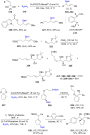
Scheme 52: Synthesis of α-chiral (γ-alkoxyallyl)boronates.

Scheme 53: Cu-mediated formation of nonracemic cis- or trans- 2-substituted cyclopropylboronates.

Scheme 54: Cu-catalyzed synthesis of γ,γ-gem-difluoroallylboronates.

Scheme 55: Cu-catalyzed hydrofunctionalization of internal alkenes and vinylarenes.

Scheme 56: Cu-catalyzed Markovnikov and anti-Markovnikov borylation of alkenes.

Scheme 57: Cu-catalyzed borylation/ortho-cyanation/Cope rearrangement.
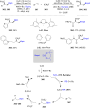
Scheme 58: Borylfluoromethylation of alkenes.

Scheme 59: Cu-catalyzed synthesis of tertiary nonracemic alcohols.

Scheme 60: Synthesis of densely functionalized and synthetically versatile 1,2- or 4,3-borocyanated 1,3-butadi...

Scheme 61: Cu-catalyzed trifunctionalization of allenes.

Scheme 62: Cu-catalyzed selective arylborylation of arenes.

Scheme 63: Asymmetric borylative coupling between styrenes and imines.

Scheme 64: Regio-divergent aminoboration of unactivated terminal alkenes.

Scheme 65: Cu-catalyzed 1,4-borylation of α,β-unsaturated ketones.

Scheme 66: Cu-catalyzed protodeboronation of α,β-unsaturated ketones.

Scheme 67: Cu-catalyzed β-borylation of α,β-unsaturated imines.

Scheme 68: Cu-catalyzed synthesis of β-trifluoroborato carbonyl compounds.

Scheme 69: Asymmetric 1,4-borylation of α,β-unsaturated carbonyl compounds.

Scheme 70: Cu-catalyzed ACB and ACA reactions of α,β-unsaturated 2-acyl-N-methylimidazoles.

Scheme 71: Cu-catalyzed diborylation of aldehydes.

Scheme 72: Umpolung pathway for chiral, nonracemic tertiary alcohol synthesis (top) and proposed mechanism for...

Scheme 73: Cu-catalyzed synthesis of α-hydroxyboronates.

Scheme 74: Cu-catalyzed borylation of ketones.

Scheme 75: Cu-catalyzed borylation of unactivated alkyl halides.

Scheme 76: Cu-catalyzed borylation of allylic difluorides.

Scheme 77: Cu-catalyzed borylation of cyclic and acyclic alkyl halides.

Scheme 78: Cu-catalyzed borylation of unactivated alkyl chlorides and bromides.

Scheme 79: Cu-catalyzed decarboxylative borylation of carboxylic acids.
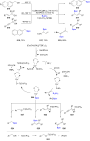
Scheme 80: Cu-catalyzed borylation of benzylic, allylic, and propargylic alcohols.
Synthesis of six-membered silacycles by borane-catalyzed double sila-Friedel–Crafts reaction
- Yafang Dong,
- Masahiko Sakai,
- Kazuto Fuji,
- Kohei Sekine and
- Yoichiro Kuninobu
Beilstein J. Org. Chem. 2020, 16, 409–414, doi:10.3762/bjoc.16.39
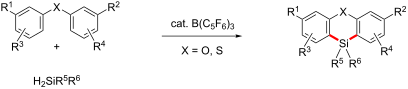
- been demonstrated. Keywords: borane; cyclic compound; organosilane; sila-Friedel–Crafts; silylation; Introduction Six-membered silacyclic compounds, such as phenoxasilin and phenothiasilin derivatives, are attractive compounds for applications as organic electronic materials [1][2][3][4], ligands [5
- dilithiated diaryl thioethers with a range of dichlorosilane derivatives (Scheme 1a) [15][16][17][18][19][20][21][22][23][24]. An intramolecular silylation via Si–C bond cleavage can also be used to prepare a variety of six-membered silacyclic derivatives (Scheme 1b) [25]. However, some problems still remain
- -Friedel–Crafts reaction is emerging as a powerful tool for C–H silylation [28][29]. In addition, intra- and intermolecular sila-Friedel–Crafts reactions have been recently developed [30][31][32][33][34][35][36][37][38][39], which have great potential as efficient synthetic strategies to construct

Graphical Abstract

Scheme 1: Synthetic methods of six-membered silacyclic compounds.

Scheme 2: Scope of dihydrosilanes. Conditions: a: conditions B (Table 1, entry 5); b: conditions A (Table 1, entry 3).
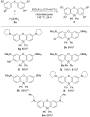
Scheme 3: Scope of diaryl ether and diaryl thioether derivatives. Conditions: a: conditions B (Table 1, entry 5); b:...

Scheme 4: Gram-scale Synthesis of 3a.

Scheme 5: Transformation of the amino groups in 3a.
Allylic cross-coupling using aromatic aldehydes as α-alkoxyalkyl anions
- Akihiro Yuasa,
- Kazunori Nagao and
- Hirohisa Ohmiya
Beilstein J. Org. Chem. 2020, 16, 185–189, doi:10.3762/bjoc.16.21

- silyl ether, which are derived from the Pd-catalyzed allylic silylation of 2a and the Cu-catalyzed silylation of 1a and the subsequent [1,2]-Brook rearrangement, respectively. In this coupling reaction, (SIPr)CuCl was a slightly better copper complex than (IPr)CuCl (62%), (SIMes)CuCl (60%) and (IMes

Graphical Abstract

Scheme 1: Our strategy.

Scheme 2: Allylic cross-coupling using aldehydes as α-alkoxyalkyl anions.

Scheme 3: Substrate scope and reaction conditions. a) reactions were carried out with 1 (0.4 mmol), 2 (0.2 mm...

Scheme 4: Stoichiometric reaction.

Scheme 5: Possible pathway.
A review of asymmetric synthetic organic electrochemistry and electrocatalysis: concepts, applications, recent developments and future directions
- Munmun Ghosh,
- Valmik S. Shinde and
- Magnus Rueping
Beilstein J. Org. Chem. 2019, 15, 2710–2746, doi:10.3762/bjoc.15.264
- 2e− reduction under electrochemical conditions followed by O-silylation and afforded 192 with high diastereoselectivity. Further treatment of 192 with TBAF resulted in highly substituted optically active 193 with concomitant release of chiral auxiliary 194 (Table 1) [105]. Application in the

Graphical Abstract

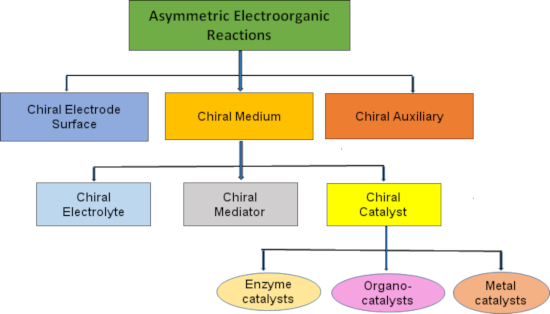
Figure 1: General classification of asymmetric electroorganic reactions.

Scheme 1: Asymmetric reduction of 4-acetylpyridine using a modified graphite cathode.

Scheme 2: Asymmetric hydrogenation of ketones using Raney nickel powder electrodes modified with optically ac...

Scheme 3: Asymmetric reduction of prochiral activated olefins with a poly-ʟ-valine-coated graphite cathode.

Scheme 4: Asymmetric reduction of prochiral carbonyl compounds, oximes and gem-dibromides on a poly-ʟ-valine-...

Scheme 5: Asymmetric hydrogenation of prochiral ketones with poly[RuIII(L)2Cl2]+-modified carbon felt cathode...

Scheme 6: Asymmetric hydrogenation of α-keto esters using chiral polypyrrole film-coated cathode incorporated...

Scheme 7: Quinidine and cinchonidine alkaloid-induced asymmetric electroreduction of acetophenone.

Scheme 8: Asymmetric electroreduction of 4- and 2-acetylpyridines at a mercury cathode in the presence of a c...

Scheme 9: Enantioselective reduction of 4-methylcoumarin in the presence of catalytic yohimbine.

Scheme 10: Cinchonine-induced asymmetric electrocarboxylation of 4-methylpropiophenone.

Scheme 11: Enantioselective hydrogenation of methyl benzoylformate using an alkaloid entrapped silver cathode.

Scheme 12: Alkaloid-induced enantioselective hydrogenation using a Cu nanoparticle cathode.

Scheme 13: Alkaloid-induced enantioselective hydrogenation of aromatic ketones using a bimetallic Pt@Cu cathod...

Scheme 14: Enantioselective reduction of ketones at mercury cathode using N,N'-dimethylquininium tetrafluorobo...

Scheme 15: Asymmetric synthesis of an amino acid using an electrode modified with amino acid oxidase and elect...

Scheme 16: Asymmetric oxidation of p-tolyl methyl sulfide using chemically modified graphite anode.

Scheme 17: Asymmetric oxidation of unsymmetric sulfides using poly(amino acid)-coated electrodes.

Scheme 18: Enantioselective, electocatalytic oxidative coupling on TEMPO-modified graphite felt electrode in t...

Scheme 19: Asymmetric electrocatalytic oxidation of racemic alcohols on a TEMPO-modified graphite felt electro...

Scheme 20: Asymmetric electrocatalytic lactonization of diols on TEMPO-modified graphite felt electrodes.

Scheme 21: Asymmetric electrochemical pinacolization in a chiral solvent.

Scheme 22: Asymmetric electroreduction using a chiral supporting electrolyte.

Scheme 23: Asymmetric anodic oxidation of enol acetates using chiral supporting electrolytes.

Scheme 24: Kinetic resolution of primary amines using a chiral N-oxyl radical mediator.

Scheme 25: Chiral N-oxyl-radical-mediated kinetic resolution of secondary alcohols via electrochemical oxidati...

Scheme 26: Chiral iodoarene-mediated asymmetric electrochemical lactonization.

Scheme 27: Os-catalyzed electrochemical asymmetric dihydroxylation of olefins using the Sharpless ligand and i...

Scheme 28: Asymmetric electrochemical epoxidation of olefins catalyzed by a chiral Mn-salen complex.

Scheme 29: Asymmetric electrooxidation of 1,2-diols, and amino alcohols using a chiral copper catalyst.

Scheme 30: Mechanism of asymmetric electrooxidation of 1,2-diols, and amino alcohols using a chiral copper cat...

Scheme 31: Enantioselective electrocarboxylation catalyzed by an electrogenerated chiral [CoI(salen)]− complex....

Scheme 32: Asymmetric oxidative cross coupling of 2-acylimidazoles with silyl enol ethers.

Scheme 33: Ni-catalyzed asymmetric electroreductive cleavage of allylic β-keto ester 89.

Scheme 34: Asymmetric alkylation using a combination of electrosynthesis and a chiral Ni catalyst.

Scheme 35: Mechanism of asymmetric alkylation using a combination of electrosynthesis and a chiral Ni catalyst....

Scheme 36: Asymmetric epoxidation by electrogenerated percarbonate and persulfate ions in the presence of chir...

Scheme 37: α-Oxyamination of aldehydes via anodic oxidation catalyzed by chiral secondary amines.

Scheme 38: The α-alkylation of aldehydes via anodic oxidation catalyzed by chiral secondary amines.
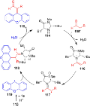
Scheme 39: Mechanism of α-alkylation of aldehydes via anodic oxidation catalyzed by chiral secondary amines.

Scheme 40: Electrochemical chiral secondary amine-catalyzed intermolecular α-arylation of aldehydes.

Scheme 41: Mechanism of electrochemical chiral secondary amine-catalyzed intermolecular α-arylation of aldehyd...

Scheme 42: Asymmetric cross-dehydrogenative coupling of tertiary amines with simple ketones via an electrochem...

Scheme 43: Electroenzymatic asymmetric reduction using enoate reductase.

Scheme 44: Assymetric reduction using alcohol dehydrogenase as the electrocatalyst.

Scheme 45: Asymmetric electroreduction catalyzed by thermophilic NAD-dependent alcohol dehydrogenase.

Scheme 46: Asymmetric epoxidation of styrene by electrochemical regeneration of flavin-dependent monooxygenase....

Scheme 47: Asymmetric electroreduction using a chloroperoxidase catalyst.

Scheme 48: Asymmetric electrochemical transformation mediated by hydrophobic vitamin B12.

Scheme 49: Diastereoselective cathodic reduction of phenylglyoxalic acids substituted with amines as chiral au...

Scheme 50: Ni-catalyzed asymmetric electroreductive cross coupling of aryl halides with α-chloropropanoic acid...

Scheme 51: Electrochemical Mannich addition of silyloxyfuran to in situ-generated N-acyliminium ions.

Scheme 52: Stereoselective electroreductive homodimerization of cinnamates attached to a camphor-derived chira...
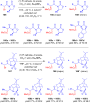
Scheme 53: Diastereoselective electrochemical carboxylation of chiral α-bromocarboxylic acid derivatives.

Scheme 54: Electrocatalytic stereoselective conjugate addition of chiral β-dicarbonyl compounds to methyl viny...

Scheme 55: Stereoselective electrochemical carboxylation of chiral cinnamic acid derivatives under a CO2 atmos...

Scheme 56: Electrochemical diastereoselective α-alkylation of pyrrolidines attached with phosphorus-derived ch...

Scheme 57: Electrogenerated cyanomethyl anion-induced synthesis of chiral cis-β-lactams from amides bearing ch...

Scheme 58: Diastereoselective anodic oxidation followed by intramolecular cyclization of ω-hydroxyl amides bea...

Scheme 59: Electrochemical deprotonation of Ni(II) glycinate containing (S)-BPB as a chiral auxiliary: diaster...

Scheme 60: Enantioselective electroreductive coupling of diaryl ketones with α,β-unsaturated carbonyl compound...

Scheme 61: Asymmetric total synthesis of ropivacaine and its analogues using a electroorganic reaction as a ke...

Scheme 62: Asymmetric total synthesis of (−)-crispine A and its natural enantiomer via anodic cyanation of tet...

Scheme 63: Asymmetric oxidative electrodimerization of cinnamic acid derivatives as key step for the synthesis...
N-(1-Phenylethyl)aziridine-2-carboxylate esters in the synthesis of biologically relevant compounds
- Iwona E. Głowacka,
- Aleksandra Trocha,
- Andrzej E. Wróblewski and
- Dorota G. Piotrowska
Beilstein J. Org. Chem. 2019, 15, 1722–1757, doi:10.3762/bjoc.15.168

- ,1′S)-5b (Scheme 38) [91]. A two-carbon fragment came from tert-butyl acetate while the required R configuration at C3 in the final product was secured by stereoselective reduction (10:1) of the ketone (2R,1′S)-149 to give the aziridine alcohol (2R,1′R,1''S)-150 as the major product. Silylation of
- with AD-mix-β provided an inseparable 82:18 mixture of diastereoisomers with the diol 196 as a major product. Silylation of the terminal hydroxy group was followed by mesylation of a secondary one to facilitate the piperidine ring closure triggered by hydrogenolytic removal of the chiral auxiliary to

Graphical Abstract

Figure 1: Examples of three-carbon chirons.

Figure 2: Structures of derivatives of N-(1-phenylethyl)aziridine-2-carboxylic acid 5–8.

Figure 3: Synthetic equivalency of aziridine aldehydes 6.

Scheme 1: Synthesis of N-(1-phenylethyl)aziridine-2-carboxylates 5. Reagents and conditions: a) TEA, toluene,...

Scheme 2: Absolute configuration at C2 in (2S,1'S)-5a. Reagents and conditions: a) 20% HClO4, 80 °C, 30 h the...

Scheme 3: Major synthetic strategies for a 2-ketoaziridine scaffold [R* = (R)- or (S)-1-phenylethyl; R′ = Alk...

Scheme 4: Synthesis of cyanide (2S,1'S)-13. Reagents and conditions: a) NH3, EtOH/H2O, rt, 72 h; b) Ph3P, CCl4...

Scheme 5: Synthesis of key intermediates (R)-16 and (R)-17 for (R,R)-formoterol (14) and (R)-tamsulosin (15)....

Scheme 6: Synthesis of mitotic kinesin inhibitors (2R/S,1'R)-23. Reagents and conditions: a) H2, Pd(OH)2, EtO...

Scheme 7: Synthesis of (R)-mexiletine ((R)-24). Reagents and conditions: a) TsCl, TEA, DMAP, CH2Cl2, rt, 1 h;...

Scheme 8: Synthesis of (−)-cathinone ((S)-27). Reagents and conditions: a) PhMgBr, ether, 0 °C; b) H2, 10% Pd...

Scheme 9: Synthesis of N-Boc-norpseudoephedrine ((1S,2S)-(+)-29) and N-Boc-norephedrine ((1R,2S)-29). Reagent...

Scheme 10: Synthesis of (−)-ephedrine ((1R,2S)-31). Reagents and conditions: a) TfOMe, MeCN then NaBH3CN, rt; ...

Scheme 11: Synthesis of xestoaminol C ((2S,3R)-35), 3-epi-xestoaminol C ((2S,3S)-35) and N-Boc-spisulosine ((2S...

Scheme 12: Synthesis of ʟ-tryptophanol ((S)-41). Reagents and conditions: a) CDI, MeCN, rt, 1 h then TMSI, MeC...

Scheme 13: Synthesis of ʟ-homophenylalaninol ((S)-42). Reagents and conditions: a) NaH, THF, 0 °C to −78 °C, 1...

Scheme 14: Synthesis of ᴅ-homo(4-octylphenyl)alaninol ((R)-47) and a sphingolipid analogue (R)-48. Reagents an...

Scheme 15: Synthesis of florfenicol ((1R,2S)-49). Reagents and conditions: a) (S)-1-phenylethylamine, TEA, MeO...

Scheme 16: Synthesis of natural tyroscherin ((2S,3R,6E,8R,10R)-55). Reagents and conditions: a) I(CH2)3OTIPS, t...

Scheme 17: Syntheses of (−)-hygrine (S)-61, (−)-hygroline (2S,2'S)-62 and (−)-pseudohygroline (2S,2'R)-62. Rea...

Scheme 18: Synthesis of pyrrolidine (3S,3'R)-68, a fragment of the fluoroquinolone antibiotic PF-00951966. Rea...

Scheme 19: Synthesis of sphingolipid analogues (R)-76. Reagents and conditions: a) BnBr, Mg, THF, reflux, 6 h;...

Scheme 20: Synthesis of ᴅ-threo-PDMP (1R,2R)-81. Reagents and conditions: a) TMSCl, NaI, MeCN, rt, 1 h 50 min,...

Scheme 21: Synthesis of the sphingolipid analogue SG-14 (2S,3S)-84. Reagents and conditions: a) LiAlH4, THF, 0...

Scheme 22: Synthesis of the sphingolipid analogue SG-12 (2S,3R)-88. Reagents and conditions: a) 1-(bromomethyl...

Scheme 23: Synthesis of sphingosine-1-phosphate analogues DS-SG-44 and DS-SG-45 (2S,3R)-89a and (2S,3R)-89a. R...

Scheme 24: Synthesis of N-Boc-safingol ((2S,3S)-95) and N-Boc-ᴅ-erythro-sphinganine ((2S,3R)-95). Reagents and...

Scheme 25: Synthesis of ceramide analogues (2S,3R)-96. Reagents and conditions: a) NaBH4, ZnCl2, MeOH, −78 °C,...

Scheme 26: Synthesis of orthogonally protected serinols, (S)-101 and (R)-102. Reagents and conditions: a) BnBr...

Scheme 27: Synthesis of N-acetyl-3-phenylserinol ((1R,2R)-105). Reagents and conditions: a) AcOH, CH2Cl2, refl...

Scheme 28: Synthesis of (S)-linezolid (S)-107. Reagents and conditions: a) LiAlH4, THF, 0 °C to reflux; b) Boc2...

Scheme 29: Synthesis of (2S,3S,4R)-2-aminooctadecane-1,3,4-triol (ᴅ-ribo-phytosphingosine) (2S,3S,4R)-110. Rea...

Scheme 30: Syntheses of ᴅ-phenylalanine (R)-116. Reagents and conditions: a) AcOH, CH2Cl2, reflux, 4 h; b) MsC...

Scheme 31: Synthesis of N-Boc-ᴅ-3,3-diphenylalanine ((R)-122). Reagents and conditions: a) PhMgBr, THF, −78 °C...

Scheme 32: Synthesis of ethyl N,N’-di-Boc-ʟ-2,3-diaminopropanoate ((S)-125). Reagents and conditions: a) NaN3,...

Scheme 33: Synthesis of the bicyclic amino acid (S)-(+)-127. Reagents and conditions: a) BF3·OEt2, THF, 60 °C,...

Scheme 34: Synthesis of lacosamide, (R)-2-acetamido-N-benzyl-3-methoxypropanamide (R)-130. Reagents and condit...

Scheme 35: Synthesis of N-Boc-norfuranomycin ((2S,2'R)-133). Reagents and conditions: a) H2C=CHCH2I, NaH, THF,...

Scheme 36: Synthesis of MeBmt (2S,3R,4R,6E)-139. Reagents and conditions: a) diisopropyl (S,S)-tartrate (E)-cr...

Scheme 37: Synthesis of (+)-polyoxamic acid (2S,3S,4S)-144. Reagents and conditions: a) AD-mix-α, MeSO2NH2, t-...

Scheme 38: Synthesis of the protected 3-hydroxy-ʟ-glutamic acid (2S,3R)-148. Reagents and conditions: a) LiHMD...

Scheme 39: Synthesis of (+)-isoserine (R)-152. Reagents and conditions: a) AcCl, MeCN, rt, 0.5 h then Na2CO3, ...

Scheme 40: Synthesis of (3R,4S)-N3-Boc-3,4-diaminopentanoic acid (3R,4S)-155. Reagents and conditions: a) Ph3P...

Scheme 41: Synthesis of methyl (2S,3S,4S)-4-(dimethylamino)-2,3-dihydroxy-5-methoxypentanoate (2S,3S,4S)-159. ...

Scheme 42: Syntheses of methyl (3S,4S) 4,5-di-N-Boc-amino-3-hydroxypentanoate ((3S,4S)-164), methyl (3S,4S)-4-N...

Scheme 43: Syntheses of (3R,5S)-5-(aminomethyl)-3-(4-methoxyphenyl)dihydrofuran-2(3H)-one ((3R,5S)-168). Reage...

Scheme 44: Syntheses of a series of imidazolin-2-one dipeptides 175–177 (for R' and R'' see text). Reagents an...

Scheme 45: Syntheses of (2S,3S)-N-Boc-3-hydroxy-2-hydroxymethylpyrrolidine ((2S,3S)-179). Reagents and conditi...

Scheme 46: Syntheses of enantiomers of 1,4-dideoxy-1,4-imino-ʟ- and -ᴅ-lyxitols (2S,3R,4S)-182 and (2R,3S,4R)-...

Scheme 47: Synthesis of 1,4-dideoxy-1,4-imino-ʟ-ribitol (2S,3S,4R)-182. Reagents and conditions: a) AcOH, CH2Cl...

Scheme 48: Syntheses of 1,4-dideoxy-1,4-imino-ᴅ-arabinitol (2R,3R,4R)-182 and 1,4-dideoxy-1,4-imino-ᴅ-xylitol ...

Scheme 49: Syntheses of natural 2,5-imino-2,5,6-trideoxy-ʟ-gulo-heptitol ((2S,3R,4R,5R)-184) and its C4 epimer...

Scheme 50: Syntheses of (−)-dihydropinidine ((2S,6R)-187a) (R = C3H7) and (2S,6R)-isosolenopsins (2S,6R)-187b ...

Scheme 51: Syntheses of (+)-deoxocassine ((2S,3S,6R)-190a, R = C12H25) and (+)-spectaline ((2S,3S,6R)-190b, R ...

Scheme 52: Synthesis of (−)-microgrewiapine A ((2S,3R,6S)-194a) and (+)-microcosamine A ((2S,3R,6S)-194b). Rea...

Scheme 53: Syntheses of ʟ-1-deoxynojirimycin ((2S,3S,4S,5R)-200), ʟ-1-deoxymannojirimycin ((2S,3S,4S,5S)-200) ...

Scheme 54: Syntheses of 1-deoxy-ᴅ-galacto-homonojirimycin (2R,3S,4R,5S)-211. Reagents and conditions: a) MeONH...

Scheme 55: Syntheses of 7a-epi-hyacinthacine A1 (1S,2R,3R,7aS)-220. Reagents and conditions: a) TfOTBDMS, 2,6-...

Scheme 56: Syntheses of 8-deoxyhyacinthacine A1 ((1S,2R,3R,7aR)-221). Reagents and conditions: a) H2, Pd/C, PT...

Scheme 57: Syntheses of (+)-lentiginosine ((1S,2S,8aS)-227). Reagents and conditions: a) (EtO)2P(O)CH2COOEt, L...

Scheme 58: Syntheses of 8-epi-swainsonine (1S,2R,8S,8aR)-231. Reagents and conditions: a) Ph3P=CHCOOMe, MeOH, ...

Scheme 59: Synthesis of a protected vinylpiperidine (2S,3R)-237, a key intermediate in the synthesis of (−)-sw...

Scheme 60: Synthesis of a modified carbapenem 245. Reagents and conditions: a) AcOEt, LiHMDS, THF, −78 °C, 1.5...
Alkylation of lithiated dimethyl tartrate acetonide with unactivated alkyl halides and application to an asymmetric synthesis of the 2,8-dioxabicyclo[3.2.1]octane core of squalestatins/zaragozic acids
- Herman O. Sintim,
- Hamad H. Al Mamari,
- Hasanain A. A. Almohseni,
- Younes Fegheh-Hassanpour and
- David M. Hodgson
Beilstein J. Org. Chem. 2019, 15, 1194–1202, doi:10.3762/bjoc.15.116
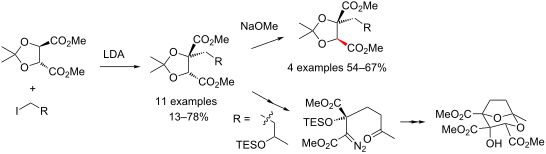
- group strategy led us to TES protection at both alcohols, on the basis that this group should be robust enough to withstand the enolate manipulation chemistry, that desilylation of the secondary TES ether during acetonide removal could be restored in the subsequent tertiary alcohol silylation step, that
- and TES groups in hydroxy acetonide 25. Subsequent silylation using TESOTf gave the bis-TES ketone 26, which was not purified but taken on through diazo formation and desilylation to give diazo alcohol 27 (17% from 25). The efficiency of the sequence from hydroxy acetonide 25 to diazo alcohol 27 could
- be improved (to 37%) using ZnCl2 for the initial deprotection and TESCl in the silylation; the latter minimises formation of the undesired silylated six-membered lactol form of 26. The remaining steps to the model core 31 (Scheme 7) closely mirrored our previous racemic synthesis of 31 (from the

Graphical Abstract

Figure 1: Squalestatin S1/zaragozic acid A (1) and DDSQ (2).

Scheme 1: Carbonyl ylide cycloaddition–rearrangement to the squalestatin core [12,13].

Scheme 2: Tartrate alkylation strategy to cycloaddition substrate.

Scheme 3: Conversion of α-ketoester to α-diazoester.

Scheme 4: Seebach’s tartrate alkylation and rationalisation of stereoselectivity [17-19].

Scheme 5: Tartrate alkylation with a non-activated alkyl iodide.

Scheme 6: Alkylated tartrate to diazoester sequence.

Scheme 7: TES protection approach to the squalestatin core.

Scheme 8: Tartrate acetonide methylation.

Scheme 9: Tartrate alkylation with various alkyl halides.

Scheme 10: Rationalisation of dialkylation observations.

Scheme 11: Tartrate alkylation chemistry with more complex alkyl iodides [12,13].

Figure 2: Natural product examples containing the monoalkylated tartaric acid motif.

Scheme 12: Epimerisation of monoalkylated tartrates.
Synthesis of the polyketide section of seragamide A and related cyclodepsipeptides via Negishi cross coupling
- Jan Hendrik Lang and
- Thomas Lindel
Beilstein J. Org. Chem. 2019, 15, 577–583, doi:10.3762/bjoc.15.53
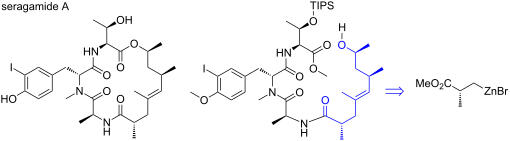
- with literature data we converted 7 to the free carboxylic acid carrying a TBS-protected hydroxy group at C8 by silylation with TBSOTf/2,6-lutidine, followed by saponification with LiOH. To investigate whether polyketide 7 could be coupled in an unprotected form with the peptide fragment of seragamide

Graphical Abstract

Scheme 1: Actin-binding cyclodepsipeptides, photo amino acids, retrosynthetic cuts of polyketide 7 leading to...

Scheme 2: Synthesis of γ-hydroxy esters 11 and 12, followed by Mitsunobu inversion.
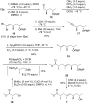
Scheme 3: Synthesis of the polyketide section 7.

Scheme 4: Access to methylated D-iodotyrosine derivatives 22, 23, and 25.

Scheme 5: Synthesis of the doubly protected open chain peptide-polyketide 31.
Syntheses and chemical properties of β-nicotinamide riboside and its analogues and derivatives
- Mikhail V. Makarov and
- Marie E. Migaud
Beilstein J. Org. Chem. 2019, 15, 401–430, doi:10.3762/bjoc.15.36
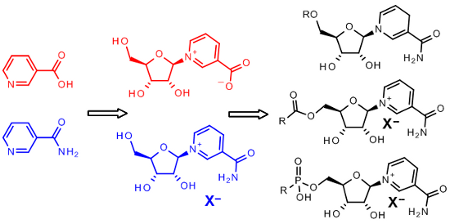
- on the glycosylation of silylated heterocyclic bases with acylated (halo)ribofuranoses and Friedel–Crafts catalysts. The main advantage of this method is that the silylation converts polar, often poorly soluble, heterocyclic bases into lipophilic silyl derivatives, resulting in homogeneous reaction
- glycosylation (Figure 3). This intermediate is subsequently approached by Nam from the less hindered side. Subsequently, Franchetti et al. [30] modified the above TMSOTf-protocol by introducing the preliminary silylation of the amide group of Nam, a procedure based on the chemistry developed by Vorbrüggen [24
- ]. This approach was also applied to nicotinic acid (1b), for which the corresponding silyl ester 10b was prepared (Scheme 5) [30]. Nam (1a) was silylated to the bis-silylated nicotinamide 10a using 2 equivalents of TMSCl. The silylation was followed by the reaction of the crude mixture with 1,2,3,5-tetra

Graphical Abstract

Figure 1: Structural formulas of Nam, NA, NR+, NMN, and NAD+.

Figure 2: Main synthetic routes to nicotinamide riboside (NR+X−).
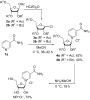
Scheme 1: Synthesis of NR+Cl− based on the reaction of peracylated chlorosugars with Nam.

Figure 3: Predominant formation of β-anomer over α-anomer of NR+X−.

Scheme 2: Synthesis of NR+Cl− by reacting 3,5-di-O-benzoyl-D-ribofuranosyl chloride (5) with Nam (1a).

Figure 4: Mechanism of the formation of the β-anomer of the glycosylated product in the case of the reaction ...
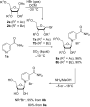
Scheme 3: Synthesis of NR+Br− by reacting bromosugars with Nam (1a).

Scheme 4: Synthesis of NR+OTf− based on the glycosylation of Nam (1a) with tetra-O-acetyl-β-D-ribofuranose (2a...

Scheme 5: Improved synthesis of NR+OTfˉ and NAR+OTfˉ based on the glycosylation of pre-silylated Nam or NA wi...

Scheme 6: Synthesis of triacetylated NAR+OTf− by glycosylation of nicotinic acid trimethylsilyl ester with te...

Scheme 7: Synthesis of NR+Cl− from NR+OTf− by means of ion exchange with sodium chloride solution.

Scheme 8: Synthesis of acylated NR+OTf− by means of ion exchange with sodium chloride.

Scheme 9: Synthesis of triacetylated derivatives of NAR+ by glycosylation of nicotinic acid esters with ribos...

Scheme 10: Synthesis of NR+OTf− from the triflate salt of ethyl nicotinate-2,3,5-triacetyl-β-D-riboside in met...

Scheme 11: Reaction of 2,3,5-tri-O-acetyl-β-phenyl nicotinate riboside triflate salt with secondary and tertia...

Scheme 12: Synthesis of NMN based on the Zincke reaction of N-(2,4-dinitrophenyl)-3-carbamoylpyridinium chlori...

Scheme 13: Synthesis of NMN based on the Zincke reaction of N-(2,4-dinitrophenyl)-3-carbamoylpyridinium chlori...

Scheme 14: Efficacious protection of 2′,3′-hydroxy groups of NR+X−.

Scheme 15: Protection of the 2′,3′-hydroxy groups of NR+Cl– with a mesitylmethylene acetal group.

Figure 5: Reduction of derivatives of NR+Xˉ into corresponding 1,2-; 1,4-; 1,6-NRH derivatives.

Figure 6: Mechanism of the reduction of the pyridinium core with dithionite as adapted from [67].

Scheme 16: Reduction of triacylated NR+OTf– derivatives by sodium dithionite followed by complete removal of a...

Figure 7: Structural formulas of iridium and rhodium catalysts (a)–(d) for regeneration of NAD(P)H from NAD(P)...

Figure 8: Two approaches to synthesis of 5′-derivatives of NR+.

Scheme 17: Synthesis of NMN starting from NR+ salt.

Scheme 18: Efficient synthesis of NMN by phosphorylation of 2′,3′-O-isopropylidene-NR+ triflate followed by re...
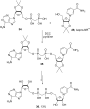
Scheme 19: Synthesis of a bisphosphonate analogue of β-NAD+ based on DCC-induced conjugation of 2′,3′-O-isopro...

Scheme 20: Synthesis of 5′-acyl and 2′,3′,5′-triacyl derivatives of NR+.

Figure 9: Structural formulas of NMN analogues 39–41.
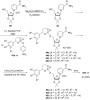
Scheme 21: Synthesis of 5′-phosphorylated derivatives of NR+ using a “reduction–modification–oxidation” approa...

Scheme 22: Synthesis of 5′-phosphorylated derivatives of NR+ using a “reduction–modification–reoxidation” appr...

Figure 10: Structural formulas of 5′-phosphorylated derivatives of NR+.

Scheme 23: Synthesis of 5′-phosphorylated derivatives of NR+ using a direct NR+ phosphorylation approach.

Figure 11: Structural formulas of amino acid NR+ conjugates.

Scheme 24: Synthesis of amino acid NR+ conjugates using NRH and protected amino acid under CDI-coupling condit...

Figure 12: Chemical structures of known isotopically labelled NR+ analogues and derivatives.

Scheme 25: Synthesis of [2′-3H]-NR+ and [2′-3H]-NMN.

Scheme 26: Synthesis of α- and β-anomers of [1′-2H]-NMN.
Sigmatropic rearrangements of cyclopropenylcarbinol derivatives. Access to diversely substituted alkylidenecyclopropanes
- Guillaume Ernouf,
- Jean-Louis Brayer,
- Christophe Meyer and
- Janine Cossy
Beilstein J. Org. Chem. 2019, 15, 333–350, doi:10.3762/bjoc.15.29
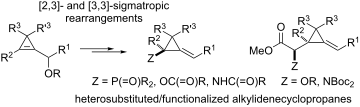
- ketene acetals of (Z)-configuration 57a–l, arising from O-silylation of the corresponding chelated potassium enolates [60], underwent an efficient [3,3]-sigmatropic rearrangement upon warming to room temperature. After an acidic work-up and treatment of the crude carboxylic acids with
- 60 was converted into glycolate 61 under standard conditions and the latter ester was engaged in the Ireland–Claisen rearrangement. Because the gem-diester substitution at C3 increased the acidity of the proton at C2 in substrate 61 [64], silylation of that position took place under the reaction

Graphical Abstract
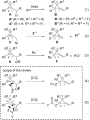
Scheme 1: Representative strategies for the formation of alkylidenecyclopropanes from cyclopropenes and scope...

Scheme 2: [2,3]-Sigmatropic rearrangement of phosphinites 2a–h.

Scheme 3: [2,3]-Sigmatropic rearrangement of a phosphinite derived from enantioenriched cyclopropenylcarbinol...

Scheme 4: Selective reduction of phosphine oxide (E)-3f.

Scheme 5: Attempted thermal [2,3]-sigmatropic rearrangement of phosphinite 6a.

Scheme 6: Computed activation barriers and free enthalpies.

Scheme 7: [2,3]-Sigmatropic rearrangement of phosphinites 6a–j.

Scheme 8: Proposed mechanism for the Lewis base-catalyzed rearrangement of phosphinites 6.

Scheme 9: [3,3]-Sigmatropic rearrangement of tertiary cyclopropenylcarbinyl acetates 10a–c.

Scheme 10: [3,3]-Sigmatropic rearrangement of secondary cyclopropenylcarbinyl esters 10d–h.

Scheme 11: [3,3]-Sigmatropic rearrangement of trichoroacetimidates 12a–i.

Scheme 12: Reaction of trichloroacetamide 13f with pyrrolidine.

Scheme 13: Catalytic hydrogenation of (arylmethylene)cyclopropropane 13f.

Scheme 14: Instability of trichloroacetimidates 21a–c derived from cyclopropenylcarbinols 20a–c.
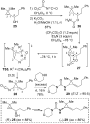
Scheme 15: [3,3]-Sigmatropic rearrangement of cyanate 27 generated from cyclopropenylcarbinyl carbamate 26.

Scheme 16: Synthesis of alkylidene(aminocyclopropane) derivatives 30–37 from carbamate 26.

Scheme 17: Scope of the dehydration–[3,3]-sigmatropic rearrangement sequence of cyclopropenylcarbinyl carbamat...

Scheme 18: Formation of trifluoroacetamide 50 from carbamate 49.

Scheme 19: Formation of alkylidene[(N-trifluoroacetylamino)cyclopropanes] 51–54.

Scheme 20: Diastereoselective hydrogenation of alkylidenecyclopropane 51.

Scheme 21: Ireland–Claisen rearrangement of cyclopropenylcarbinyl glycolates 56a–l.
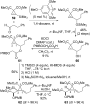
Scheme 22: Synthesis and Ireland–Claisen rearrangement of glycolate 61 possessing gem-diester substitution at ...

Scheme 23: Synthesis of alkylidene(gem-difluorocyclopropanes) 66a–h, and 66k–n from propargyl glycolates 64a–n....

Scheme 24: Ireland–Claisen rearrangement of N,N-diBoc glycinates 67a and 67b.

Scheme 25: Diastereoselective hydrogenation of alkylidenecyclopropanes 58a and 74.

Scheme 26: Synthesis of functionalized gem-difluorocyclopropanes 76 and 77 from alkylidenecyclopropane 66a.

Scheme 27: Access to oxa- and azabicyclic compounds 78–80.
Synthesis of nonracemic hydroxyglutamic acids
- Dorota G. Piotrowska,
- Iwona E. Głowacka,
- Andrzej E. Wróblewski and
- Liwia Lubowiecka
Beilstein J. Org. Chem. 2019, 15, 236–255, doi:10.3762/bjoc.15.22
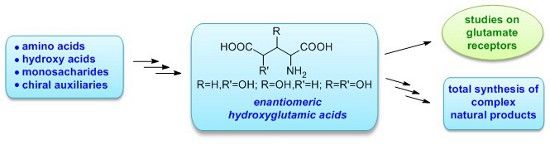
- hydrolysis, formation of methyl ester and silylation to give 7 after separation from the minor diastereoisomer. After selective hydrolysis of the acetal the hydroxymethyl fragment was oxidized and all protective groups were removed to give (2S,3R)-2 as the hydrochloride (Scheme 1). The observed
- )-2 N-Boc protection preceded the cleavage of the oxazolidine ring while silylation of the hydroxy group was necessary before oxidation of the C=C bond (Scheme 9) [58]. Further applications of the ketopinic acid framework as a chiral auxiliary relied on fine tuning of the steric environment around the
- intramolecular lactonization to form 83 by implementation of the Mitsunobu reaction. After opening of the lactone ring with trichloroethanol and silylation of the hydroxy group oxidation at C5 was performed in the usual way to give a pyroglutamate 84. Benzyl or p-methoxybenzyl esters 85a or 85b were next

Graphical Abstract

Figure 1: Structure of L-glutamic acid.

Figure 2: 3-Hydroxy- (2), 4-hydroxy- (3) and 3,4-dihydroxyglutamic acids (4).

Figure 3: Enantiomers of 3-hydroxyglutamic acid (2).

Scheme 1: Synthesis of (2S,3R)-2 from (R)-Garner's aldehyde. Reagents and conditions: a) MeOCH=CH–CH(OTMS)=CH2...

Scheme 2: Synthesis of (2S,3R)-2 and (2S,3S)-2 from (R)-Garner’s aldehyde. Reagents and conditions: a) H2C=CH...

Scheme 3: Two-carbon homologation of the protected L-serine. Reagents and conditions: a) Fmoc-succinimide, Na2...

Scheme 4: Synthesis of di-tert-butyl ester of (2R,3S)-2 from L-serine. Reagents and conditions: a) PhSO2Cl, K2...

Scheme 5: Synthesis of (2R,3S)-2 from O-benzyl-L-serine. Reagents and conditions: a) (CF3CH2O)2P(O)CH2COOMe, ...

Scheme 6: Synthesis of (2S,3R)-2 employing a one-pot cis-olefination–conjugate addition sequence. Reagents an...

Scheme 7: Synthesis of the orthogonally protected (2S,3R)-2 from a chiral aziridine. Reagents and conditions:...

Scheme 8: Synthesis of N-Boc-protected (2S,3R)-2 from D-phenylglycine. Reagents and conditions: a) BnMgCl, et...

Scheme 9: Synthesis of (2S,3R)-2 employing ketopinic acid as chiral auxiliary. Reagents and conditions: a) Br2...

Scheme 10: Synthesis of dimethyl ester of (2S,3R)-2 employing (1S)-2-exo-methoxyethoxyapocamphane-1-carboxylic...

Scheme 11: Synthesis of N-Boc-protected dimethyl ester of (2S,3R)-2 from (S)-N-(1-phenylethyl)thioacetamide. R...

Scheme 12: Synthesis of N-Boc-protected dimethyl ester of (2S,3R)-2 via Sharpless epoxidation. Reagents and co...

Scheme 13: Synthesis of (2S,3S)-2 from the imide 51. Reagents and conditions: a) NaBH4, MeOH/CH2Cl2; b) Ac2O, ...

Scheme 14: Synthesis of (2R,3S)-2 and (2S,3S)-2 from the acetolactam 55 (PMB = p-methoxybenzyl). Reagents and ...

Scheme 15: Synthesis of (2S,3R)-2 from D-glucose. Reagents and conditions: a) NaClO2, 30% H2O2, NaH2PO4, MeCN;...

Figure 4: Enantiomers of 3-hydroxyglutamic acid (3).

Scheme 16: Synthesis of (4S)-4-hydroxy-L-glutamic acid [(2S,4S)-3] by electrophilic hydroxylation. Reagents an...

Scheme 17: Synthesis of all stereoisomers of 4-hydroxyglutamic acid (3). Reagents and conditions: a) Br2, PBr5...

Scheme 18: Synthesis of the orthogonally protected 4-hydroxyglutamic acid (2S,4S)-73. Reagents and conditions:...

Scheme 19: Synthesis of (2S,4R)-4-acetyloxyglutamic acid as a component of a dipeptide. Reagents and condition...

Scheme 20: Synthesis of N-Boc-protected dimethyl esters of (2S,4R)- and (2S,4S)-3 from (2S,4R)-4-hydroxyprolin...

Scheme 21: Synthesis of orthogonally protected (2S,4S)-3 from (2S,4R)-4-hydroxyproline. Reagents and condition...

Scheme 22: Synthesis of the protected (4R)-4-hydroxy-L-pyroglutamic acid (2S,4R)-87 by electrophilic hydroxyla...

Figure 5: Enantiomers of 3,4-dihydroxy-L-glutamic acid (4).

Scheme 23: Synthesis of (2S,3S,4R)-4 from the epoxypyrrolidinone 88. Reagents and conditions: a) MeOH, THF, KC...

Scheme 24: Synthesis of (2S,3R,4R)-4 from the orthoester 92. Reagents and conditions: a) OsO4, NMO, acetone/wa...

Scheme 25: Synthesis of (2S,3S,4S)-4 from the aziridinolactone 95. Reagents and conditions: a) BnOH, BF3·OEt2,...

Scheme 26: Synthesis of (2S,3S,4R)-4 and (2R,3S,4R)-4 from cyclic imides 106. Reagents and conditions: a) NaBH4...

Scheme 27: Synthesis of (2R,3R,4R)-4 and (2S,3R,4R)-4 from the cyclic meso-imide 110. Reagents and conditions:...

Scheme 28: Synthesis of (2S,3S,4S)-4 from the protected serinal (R)-23. Reagents and conditions: a) Ph3P=CHCOO...

Scheme 29: Synthesis of (2S,3S,4S)-4 from O-benzyl-N-Boc-D-serine. Reagents and conditions: a) ClCOOiBu, TEA, ...

Scheme 30: Synthesis of (2S,3S,4R)-127 by enantioselective conjugate addition and asymmetric dihydroxylation. ...

Figure 6: Structures of selected compounds containing hydroxyglutamic motives (in blue).
Stereodivergent approach in the protected glycal synthesis of L-vancosamine, L-saccharosamine, L-daunosamine and L-ristosamine involving a ring-closing metathesis step
- Pierre-Antoine Nocquet,
- Aurélie Macé,
- Frédéric Legros,
- Jacques Lebreton,
- Gilles Dujardin,
- Sylvain Collet,
- Arnaud Martel,
- Bertrand Carboni and
- François Carreaux
Beilstein J. Org. Chem. 2018, 14, 2949–2955, doi:10.3762/bjoc.14.274
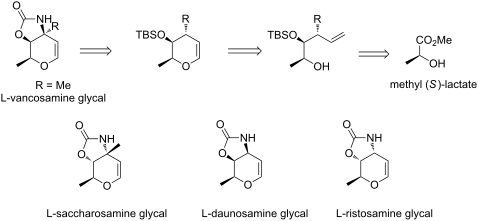
- )-geometry of the crotylboronate, while the 2,3-anti relationship can be rationalized by invoking Cornforth-like transition states [40][41][42][43]. Eventually, silylation of the homoallylic alcohol 12b afforded the expected compound 13b in 68% overall yield from 5 after purification, compared to 29% using a
- the syn diastereomer 18 in high stereoselectivity (93:7). After silylation of the free hydroxy group, the cleavage of the PMB ether with DDQ led to alcohol 20 in 77% yield for the two steps. Ring-closing metathesis of diene 21, obtained by O-vinylation of 20, gave the dihydropyran 22 in 53% overall

Graphical Abstract

Figure 1: N,N-Dimethyl-L-vancosamine as substructure of kidamycin and pluramycin.

Figure 2: Glycals as relevant scaffolds for constructing aryl C-glycosidic linkage.

Figure 3: Strategy including a ring-closing metathesis of vinyl ethers as key step for the preparation of sev...

Scheme 1: Evans aldol reaction for the preparation of diastereomeric compounds 13a and 13b.

Scheme 2: Alternative preparation of 13b based on a diastereoselective allylboration.

Scheme 3: O-Vinylation-ring-closing metathesis sequence for access to 3-amino glycals.

Scheme 4: Synthesis of key intermediate 23 for the C-3 unbranched amino glycals preparation.

Scheme 5: Access to diastereoisomeric compounds 3 and 4 from 23.
Mechanochemistry of nucleosides, nucleotides and related materials
- Olga Eguaogie,
- Joseph S. Vyle,
- Patrick F. Conlon,
- Manuela A. Gîlea and
- Yipei Liang
Beilstein J. Org. Chem. 2018, 14, 955–970, doi:10.3762/bjoc.14.81
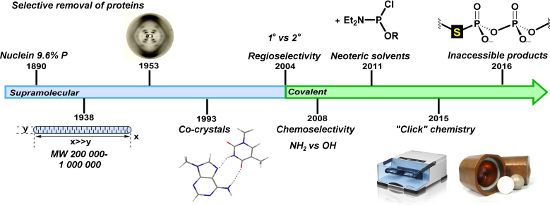
- cytosine was also effected following addition of benzoic anhydride and catalytic DMAP to the crude reaction mixture and extending the milling time. Quantitative silylation of 5′-O-dimethoxytritylthymidine under these conditions was also reported. Prompted by the insolubility of adenosine 5′-carboxylic acid
- generally required longer to achieve complete reaction and yielded the corresponding O6,N2,N2-tri-Boc derivatives with variable recoveries (25–70%). The scope of this reaction was extended to unprotected nucleosides by effecting a one-pot, two-step reaction sequence (Scheme 4). Initial transient silylation
- and carboxylic acid Boc protection using an improvised attritor-type mill. Nucleobase Boc protection via transient silylation using an improvised attritor-type mill. Chemoselective N-acylation of an aminonucleoside using LAG in a MBM. Azide–alkyne cycloaddition reactions performed in a copper vessel

Graphical Abstract

Figure 1: Examples of equipment used to perform mechanochemistry on nucleoside and nucleotide substrates (not...

Figure 2: Ganciclovir.

Scheme 1: Nucleoside tritylation effected by hand grinding in a heated mortar and pestle.

Scheme 2: Persilylation of ribonucleoside hydroxy groups (and in situ acylation of cytidine) in a MBM.

Scheme 3: Nucleoside amine and carboxylic acid Boc protection using an improvised attritor-type mill.

Scheme 4: Nucleobase Boc protection via transient silylation using an improvised attritor-type mill.

Scheme 5: Chemoselective N-acylation of an aminonucleoside using LAG in a MBM.

Scheme 6: Azide–alkyne cycloaddition reactions performed in a copper vessel in a MBM.

Figure 3: a) Custom-machined copper vessel and zirconia balls used to perform CuAAC reactions (showing: upper...

Scheme 7: Thiolate displacement reactions of nucleoside derivatives in a MBM.

Scheme 8: Selenocyanate displacement reactions of nucleoside derivatives in a MBM.

Scheme 9: Nucleobase glycosidation reactions and subsequent deacetylation performed in a MBM.

Scheme 10: Regioselective phosphorylation of nicotinamide riboside in a MBM.

Scheme 11: Preparation of nucleoside phosphoramidites in a MBM using ionic liquid-stabilised chlorophosphorami...

Scheme 12: Preparation of a nucleoside phosphite triester using LAG in a MBM.

Scheme 13: Internucleoside phosphate coupling linkages in a MBM.

Scheme 14: Preparation of ADPR analogues using in a MBM.

Scheme 15: Synthesis of pyrophosphorothiolate-linked dinucleoside cap analogues in a MBM to effect hydrolytic ...

Figure 4: Early low temperature mechanised ball mill as described by Mudd et al. – adapted from reference [78].

Scheme 16: Co-crystal grinding of alkylated nucleobases in an amalgam mill (N.B. no frequency was recorded in ...

Figure 5: Materials used to prepare a smectic phase.

Figure 6: Structures of 5-fluorouracil (5FU) and nucleoside analogue prodrugs subject to mechanochemical co-c...

Scheme 17: Preparation of DNA-SWNT complex in a MBM.
Synthesis of a sucrose-based macrocycle with unsymmetrical monosaccharides "arms"
- Karolina Tiara,
- Mykhaylo A. Potopnyk and
- Sławomir Jarosz
Beilstein J. Org. Chem. 2018, 14, 634–641, doi:10.3762/bjoc.14.50

- (19) readily available by a selective silylation of 1’,2,3,3’,4,4’-hexa-O-benzylsucrose (7) [36]. Aldehyde 20 [37] – obtained by Swern oxidation [38] of alcohol 19 – was reacted with amine 17 to afford the desired amine isolated as acetate 21 in 85% total yield. Removal of the TBDPS protecting group

Graphical Abstract

Scheme 1: Synthesis of macrocyclic derivative 4.

Figure 1: Possible route to sucrose cryptands 6.

Figure 2: Possible route to dienes of type 9.

Scheme 2: Unsuccessful attempts to amines 12a and 13b.

Scheme 3: Syntheses of "elongated" amines 17 and 18.
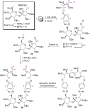
Scheme 4: Synthesis of macrocycle 25.
Transition-metal-free [3 + 3] annulation of indol-2-ylmethyl carbanions to nitroarenes. A novel synthesis of indolo[3,2-b]quinolines (quindolines)
- Michał Nowacki and
- Krzysztof Wojciechowski
Beilstein J. Org. Chem. 2018, 14, 194–202, doi:10.3762/bjoc.14.14
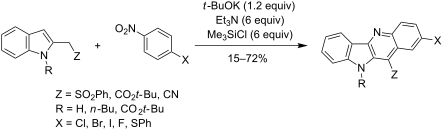
- , which in the presence of base (triethylamine or DBU) and trimethylchlorosilane transform into indolo[3,2-b]quinoline derivatives in moderate to good yields. Keywords: carbanions; cyclization; heterocycles; nitroarenes; nucleophilic substitution; silylation; Introduction The indolo[3,2-b]quinoline
- used N-silylated indol-3-ylacetonitrile as a carbanion precursor in the reaction with nitroarenes. Attempts to obtain tert-butyl N-trimethylsilylindol-2-ylacetate via direct silylation of the ester 1c with trimethylchlorosilane was unsuccessful, the product proved unstable and decomposed rapidly. Thus
- , we decided to perform a one-pot reaction in which in situ N-silylation furnished the expected carbanion precursor. Thus, when we treated tert-butyl indol-2-ylacetate (1c) and p-chloronitrobenzene (2a) with triethylamine and potassium tert-butoxide and then added trimethylchlorosilane we obtained

Graphical Abstract

Figure 1: Selected indolo[3,2-b]quinolines (quindolines) with biological activity.

Scheme 1: Selected starting materials for the construction of the quindoline system.

Scheme 2: Synthesis of condensed pyridines mediated by a σH-adduct.

Scheme 3: Formation of condensed isoxazole derivatives.

Scheme 4: Reaction of unprotected indole ester 1c with 4-chloronitrobenzene.

Scheme 5: A plausible mechanism for the formation of 11-(phenylsulfonyl)indolo[3,2-b]quinolines.
Reagent-controlled regiodivergent intermolecular cyclization of 2-aminobenzothiazoles with β-ketoesters and β-ketoamides
- Irwan Iskandar Roslan,
- Kian-Hong Ng,
- Gaik-Khuan Chuah and
- Stephan Jaenicke
Beilstein J. Org. Chem. 2017, 13, 2739–2750, doi:10.3762/bjoc.13.270

- silylation [72]. In these reactions, the single electron transfer (SET) is initiated by KOt-Bu/DMF [63][67][69][71] or KOt-Bu in combination with additives such as bidentate diamine ligands [61][62][63][64][65], 18-crown-6 [70] or azobisisobutyronitrile (AIBN) [62][66]. Herein, we report the synthesis of

Graphical Abstract

Scheme 1: Two different intermolecular cyclization pathways controlled by reagents used.

Scheme 2: Scope of reaction. Reaction conditions: 1 (1.2 mmol), 2 (1.0 mmol), KOt-Bu (2 mmol), in 3 mL CBrCl3...

Scheme 3: Scope of the reaction. Reaction conditions: 1 (1.0 mmol), 2 (1.5 mmol), In(OTf)3 (0.1 mmol), in 1.5...
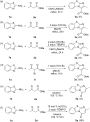
Scheme 4: Control experiments.

Figure 1: Proposed mechanism (benzo[d]imidazo[2,1-b]thiazoles).

Figure 2: Proposed mechanism (benzo[4,5]thiazolo[3,2-a]pyrimidin-4-ones).
Conjugated nitrosoalkenes as Michael acceptors in carbon–carbon bond forming reactions: a review and perspective
- Yaroslav D. Boyko,
- Valentin S. Dorokhov,
- Alexey Yu. Sukhorukov and
- Sema L. Ioffe
Beilstein J. Org. Chem. 2017, 13, 2214–2234, doi:10.3762/bjoc.13.220
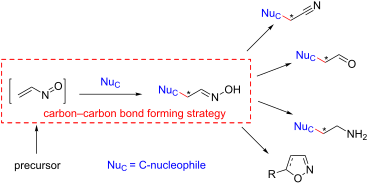
- nitrosoacetals 3 are not halocarbonyl compounds as in the case of oximes 1 and 2, but aliphatic nitro derivatives, which are readily transformed into enamines 3 by double silylation involving an internal redox process [19][20][21]. This allows the preparation of nitrosoalkenes, which are difficult to access by

Graphical Abstract

Scheme 1: Precursors of nitrosoalkenes NSA.

Scheme 2: Reactions of cyclic α-chlorooximes 1 with 1,3-dicarbonyl compounds.

Scheme 3: C-C-coupling of N,N-bis(silyloxy)enamines 3 with 1,3-dicarbonyl compounds.

Scheme 4: Reaction of N,N-bis(silyloxy)enamines 3 with nitronate anions.

Scheme 5: Reaction of α-chlorooximes TBS ethers 2 with ester enolates.

Scheme 6: Assembly of bicyclooctanone 14 via an intramolecular cyclization of nitrosoalkene NSA2.

Scheme 7: A general strategy for the assembly of bicyclo[2.2.1]heptanes via an intramolecular cyclization of ...

Scheme 8: Stereochemistry of Michael addition to cyclic nitrosoalkene NSA3.

Scheme 9: Stereochemistry of Michael addition to acyclic nitrosoalkenes NSA4.

Scheme 10: Stereochemistry of Michael addition to γ-alkoxy nitrosoalkene NSA5.

Scheme 11: Oppolzer’s total synthesis of 3-methoxy-9β-estra(1,3,5(10))trien(11,17)dione (25).

Scheme 12: Oppolzer’s total synthesis of (+/−)-isocomene.

Figure 1: Alkaloids synthesized using stereoselective Michael addition to conjugated nitrosoalkenes.

Scheme 13: Weinreb’s total synthesis of alstilobanines A, E and angustilodine.

Scheme 14: Weinreb’s approach to the core structure of apparicine alkaloids.

Scheme 15: Weinreb’s synthesis of (+/−)-myrioneurinol via stereoselective conjugate addition of malonate to ni...

Scheme 16: Reactions of cyclic α-chloro oximes with Grignard reagents.

Scheme 17: Corey’s synthesis of (+/−)-perhydrohistrionicotoxin.

Scheme 18: Addition of Gilman’s reagents to α,β-epoxy oximes 53.

Scheme 19: Addition of Gilman’s reagents to α-chlorooximes.

Scheme 20: Reaction of silyl nitronate 58 with organolithium reagents via nitrosoalkene NSA12.

Scheme 21: Reaction of β-ketoxime sulfones 61 and 63 with lithium acetylides.

Scheme 22: Electrophilic addition of nitrosoalkenes NSA14 to electron-rich arenes.

Scheme 23: Addition of nitrosoalkenes NSA14 to pyrroles and indoles.

Scheme 24: Reaction of phosphinyl nitrosoalkenes NSA15 with indole.

Scheme 25: Reaction of pyrrole with α,α’-dihalooximes 70.

Scheme 26: Synthesis of indole-derived psammaplin A analogue 72.

Scheme 27: Synthesis of tryptophanes by reduction of oximinoalkylated indoles 68.

Scheme 28: Ottenheijm’s synthesis of neoechinulin B analogue 77.

Scheme 29: Synthesis of 1,2-dihydropyrrolizinones 82 via addition of pyrrole to ethyl bromopyruvate oxime.

Scheme 30: Kozikowski’s strategy to indolactam-based alkaloids via addition of indoles to ethyl bromopyruvate ...

Scheme 31: Addition of cyanide anion to nitrosoalkenes and subsequent cyclization to 5-aminoisoxazoles 86.

Scheme 32: Et3N-catalysed addition of trimethylsilyl cyanide to N,N-bis(silyloxy)enamines 3 leading to 5-amino...

Scheme 33: Addition of TMSCN to allenyl N-siloxysulfonamide 89.

Scheme 34: Reaction of nitrosoallenes NSA16 with malodinitrile and ethyl cyanoacetic ester.

Scheme 35: [4 + 1]-Annulation of nitrosoalkenes NSA with sulfonium ylides 92.

Scheme 36: Reaction of diazo compounds 96 with nitrosoalkenes NSA.

Scheme 37: Tandem Michael addition/oxidative cyclization strategy to isoxazolines 100.
Phosphonic acid: preparation and applications
- Charlotte M. Sevrain,
- Mathieu Berchel,
- Hélène Couthon and
- Paul-Alain Jaffrès
Beilstein J. Org. Chem. 2017, 13, 2186–2213, doi:10.3762/bjoc.13.219
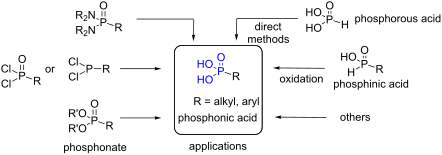
- -(trimethylsilyl) phosphonate. It is worth noticing that these silylated phosphonates produced quantitatively phosphonic acid derivatives after water or alcohol (methanol, ethanol) treatment [157]. In this initial work, NMR data indicated that silylation of dimethyl or diethyl phosphonate with bromotrimethylsilane
- the terminal oxygen doubly bonded to the phosphorus atom was indeed the nucleophilic atom that attacks the silicon atom [159]. Regarding the mechanism of this reaction, the oxophilic silylation involving the oxygen atom which is doubly bonded to the phosphorus atom, thus producing the intermediate I
- phosphonate moiety. Finally, it must be noted that BrSiMe3 selectively induced the silylation of phosphonate without affecting ketone, amide, halogenoalkane or alkyne [163]. The preparation of phosphonic acid from phosphonate with bromotrimethylsilane was also applied to methylene-tris-phosphonic acids [164

Graphical Abstract

Figure 1: Summary of the synthetic routes to prepare phosphonic acids detailed in this review. The numbers in...

Figure 2: Chemical structure of dialkyl phosphonate, phosphonic acid and illustration of the simplest phospho...

Figure 3: Illustration of some phosphonic acid exhibiting bioactive properties. A) Phosphonic acids for biome...

Figure 4: Illustration of the use of phosphonic acids for their coordination properties and their ability to ...

Figure 5: Hydrolysis of dialkyl phosphonate to phosphonic acid under acidic conditions.

Figure 6: Examples of phosphonic acids prepared by hydrolysis of dialkylphosphonate with HCl 35% at reflux (16...

Figure 7: A) and B) Observation of P–C bond breaking during the hydrolysis of phosphonate with concentrated H...

Figure 8: Mechanism of the hydrolysis of dialkyl phosphonate with HCl in water.

Figure 9: Hydrolysis of bis-tert-butyl phosphonate 28 into phosphonic acid 29 [137].

Figure 10: A) Hydrolysis of diphenyl phosphonate into phosphonic acid in acidic media. B) Examples of phosphon...

Figure 11: Suggested mechanism occurring for the first step of the hydrolysis of diphenyl phosphonate into pho...

Figure 12: A) Hydrogenolysis of dibenzyl phosphonate to phosphonic acid. B) Compounds 33, 34 and 35 were prepa...

Figure 13: A) Preparation of phosphonic acid from diphenyl phosphonate with the Adam’s catalyst. B) Compounds ...

Figure 14: Suggested mechanism for the preparation of phosphonic acid from dialkyl phosphonate using bromotrim...

Figure 15: A) Reaction of the phosphonate-thiophosphonate 37 with iodotrimethylsilane followed by methanolysis...

Figure 16: Synthesis of hydroxymethylenebisphosphonic acid by reaction of tris(trimethylsilyl) phosphite with ...

Figure 17: Synthesis of the phosphonic acid disodium salt 48 by reaction of mono-hydrolysed phosphonate 47 wit...

Figure 18: Phosphonic acid synthesized by the sequence 1) bromotrimethylsilane 2) methanolysis or hydrolysis. ...

Figure 19: Polyphosphonic acids and macromolecular compounds prepared by the hydrolysis of dialkyl phosphonate...

Figure 20: Examples of organometallic complexes functionalized with phosphonic acids that were prepared by the...

Figure 21: Side reaction observed during the hydrolysis of methacrylate monomer functionalized with phosphonic...

Figure 22: Influence of the reaction time during the hydrolysis of compound 76.

Figure 23: Dealkylation of dialkyl phosphonates with boron tribromide.

Figure 24: Dealkylation of diethylphosphonate 81 with TMS-OTf.

Figure 25: Synthesis of substituted phenylphosphonic acid 85 from the phenyldichlorophosphine 83.

Figure 26: Hydrolysis of substituted phenyldichlorophosphine oxide 86 under basic conditions.

Figure 27: A) Illustration of the synthesis of chiral phosphonic acids from phosphonodiamides. B) Examples of ...

Figure 28: A) Illustration of the synthesis of the phosphonic acid 98 from phosphonodiamide 97. B) Use of cycl...

Figure 29: Synthesis of tris(phosphonophenyl)phosphine 109.

Figure 30: Moedritzer–Irani reaction starting from A) primary amine or B) secondary amine. C) Examples of phos...

Figure 31: Phosphonic acid-functionalized polymers prepared by Moedritzer–Irani reaction.

Figure 32: Reaction of phosphorous acid with imine in the absence of solvent.

Figure 33: A) Reaction of phosphorous acid with nitrile and examples of aminomethylene bis-phosphonic acids. B...

Figure 34: Reaction of carboxylic acid with phosphorous acid and examples of compounds prepared by this way.

Figure 35: Synthesis of phosphonic acid by oxidation of phosphinic acid (also identified as phosphonous acid).

Figure 36: Selection of reaction conditions to prepare phosphonic acids from phosphinic acids.

Figure 37: Synthesis of phosphonic acid from carboxylic acid and white phosphorus.

Figure 38: Synthesis of benzylphosphonic acid 136 from benzaldehyde and red phosphorus.

Figure 39: Synthesis of graphene phosphonic acid 137 from graphite and red phosphorus.
Selective enzymatic esterification of lignin model compounds in the ball mill
- Ulla Weißbach,
- Saumya Dabral,
- Laure Konnert,
- Carsten Bolm and
- José G. Hernández
Beilstein J. Org. Chem. 2017, 13, 1788–1795, doi:10.3762/bjoc.13.173
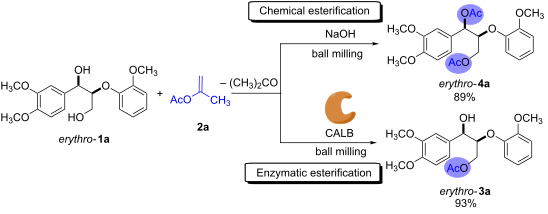
- lipophilicity, for instance through sulfation [18], silylation or esterification [19] of the aliphatic hydroxy and phenolic groups found in lignin. Chemical esterification of lignin [19][20][21] or its model compounds [22], using acetic anhydride in organic solvents such as DCM or pyridine have previously been

Graphical Abstract

Scheme 1: Enzymatic reactions under ball milling conditions.

Figure 1: (a) Molecular representation of lignin. (b) Lignin model compound erythro-1a.

Scheme 2: Chemical and enzymatic esterification of erythro-1a with isopropenyl acetate (2a) in the ball mill....
Scheme 3: CALB-catalyzed esterification of lignin model compounds in the ball mill.

Scheme 4: Selective esterification of erythro-1a using long-chain vinyl esters as acyl donors in the ball mil...



