


Search results
Search for "stability" in Full Text gives 1460 result(s) in Beilstein Journal of Organic Chemistry. Showing first 200.
Synthesis and anti-cancer activity of naphthalimide–organylselanyl conjugates
Beilstein J. Org. Chem. 2026, 22, 416–435, doi:10.3762/bjoc.22.29
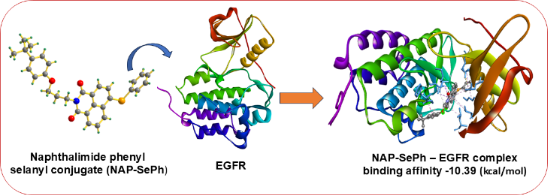
- transformation. The phenyl selenolate is widely used in organoselenium chemistry as a source of selenium due to its high reactivity toward halogenated substrates and excellent chemical stability. The n-octyl selenolate is comparatively less explored but readily undergoes substitution reactions with halogenated
- energy gap, which are key parameters for understanding the compound's chemical reactivity and stability. In both compounds, the HOMO is mainly localised on the tert-butyl-substituted phenyl ring, while the LUMO is localised on the naphthalimide moiety. For both structures, the estimated energy gaps are
- and 8 have similar electronic structure and stability. The computed HOMO–LUMO gaps for the compounds are in good agreement with the experimentally measured HOMO–LUMO gaps measured using UV–visible spectroscopy. The UV–visible absorption spectra of compounds 7 and 8 were recorded in chloroform at a


Electrosynthetic access to unsymmetrical oxaza[8]helicenes with high chiral stability and strong circularly polarized luminescence (CPL)
Beilstein J. Org. Chem. 2026, 22, 372–382, doi:10.3762/bjoc.22.25
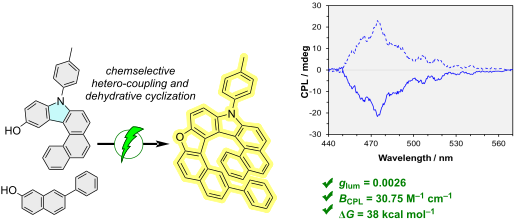
- enables selective oxidative hetero-coupling followed by dehydrative cyclization, furnishing the extended [8]helical scaffold efficiently under mild, oxidant-free conditions. Structural analyses show retained aromaticity, increased helical distortion, and higher configurational stability (≈38 kcal/mol
- chiral stability, typically strengthening chiroptical responses [27][28][29]; however, it also escalates synthetic difficulty due to heightened strain and more demanding regio- and chemoselective construction. While [7]helicenes have been extensively explored, their [8]helicene counterparts remain
- that integrate synthetic accessibility with superior chiral stability and chiroptical performance. Conclusion In summary, we have established an electrosynthetic strategy to access a novel class of unsymmetrical oxaza[8]helicenes by exploiting the differential oxidation potentials of appropriately




Recent advances in the cleavage of non-activated amides
Beilstein J. Org. Chem. 2026, 22, 352–369, doi:10.3762/bjoc.22.23
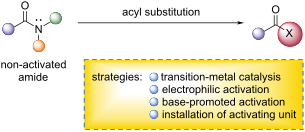
- . Its characteristic hydrogen-bonding ability strongly influences molecular conformation and intermolecular interactions, while the exceptional thermodynamic stability of the amide moiety contributes to its persistence in diverse atmospheric and biological environments [1][2][3][4][5]. Owing to these
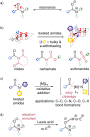
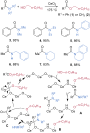
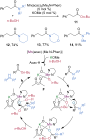
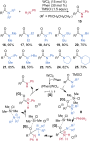
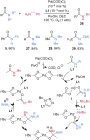
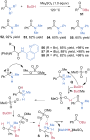
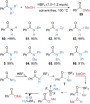
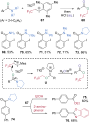
- , non-activated amides have only recently begun to mature. To address the inherent stability of these classical amides, several complementary activation strategies have emerged. Transition-metal Lewis acids, long recognized for their ability to enhance carbonyl electrophilicity through coordination










Synthesis of tricyclic fused pyrrolidine nitroxides from 2-alkynylpyrrolidine-1-oxyls
Beilstein J. Org. Chem. 2026, 22, 344–351, doi:10.3762/bjoc.22.22

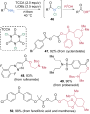
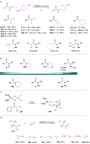
- by ascorbate showed that the formation of the rigid tricyclic framework does not lead to a significant increase in stability of the radical center to chemical reduction. Keywords: annulated tricyclic system; nitroxide; pyrazole; pyrrolidine; triazole; Introduction Stable nitroxides are functional
- tricyclic nitroxyl radicals of the pyrrolidine series annulated with 5,6-dihydro-4H-pyrrolo[1,2-c][1,2,3]triazole or 5,6-dihydro-4H-pyrrolo[1,2-b]pyrazole systems have been synthesized and characterized. Despite these nitroxides showed relatively low stability to reduction, the general strategy suggested




Arene activation via π-bond localization: concepts and opportunities
Beilstein J. Org. Chem. 2026, 22, 257–273, doi:10.3762/bjoc.22.19
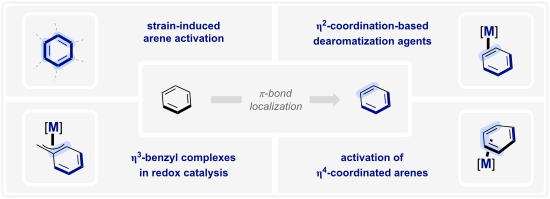
- single and double bonds (Figure 1A) [5]. However, despite its strength in representing a planar cyclic arrangement of tetravalent carbon atoms, this formalism fails to accurately depict the observed reactivity, structure, and stability of benzene. It implies three rapidly equilibrating, localized double
- behavior of aromatic compounds, finally establishing the concept of aromaticity. This behavior manifests itself in numerous illustrative criteria, such as bond-length equalization, enhanced stability, and distinct magnetic and spectroscopic properties, none of which are entirely free of ambiguity [3
- ]. Today, aromatic compounds are essential in both academic and industrial chemical applications (Figure 1B) [9][10]. Their ubiquity is the result of a decades-spanning effort devoted to leveraging aromatic stability in the development of methods that functionalize the periphery of arenes without




A mild and atom-efficient four-component cascade strategy for the construction of biologically relevant 4-hydroxyquinolin-2(1H)-one derivatives
Beilstein J. Org. Chem. 2026, 22, 244–256, doi:10.3762/bjoc.22.18
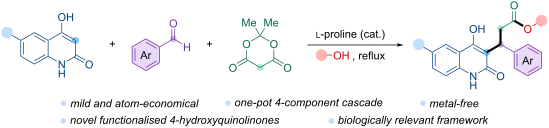
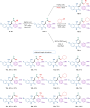
- reaction conditions, the lactone forms predominantly (Scheme 1B). However, the lactone appears capable of slow transesterification in the presence of excess alcohol, converting it into the open-chain ester upon prolonged heating. The lower stability of the cyclic product, compared to the open-chain ester


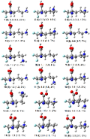
Conformational analysis of difluoromethylornithine: factors influencing its gas-phase and bioactive conformations
Beilstein J. Org. Chem. 2026, 22, 237–243, doi:10.3762/bjoc.22.17
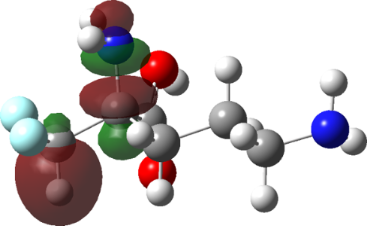
- conformational stability. High-level DLPNO-CCSD(T)/CBS calculations revealed that type-I conformers – those maximizing gauche interactions between C–F and C–N bonds – dominate the equilibrium population, confirming the presence of the fluorine gauche effect. natural bond orbital (NBO) analysis showed that this
- preference arises primarily from hyperconjugative stabilization, particularly the σCH → σ*CN interaction, while steric effects modulate the relative stability among low-energy conformers. The gauche effect is intensified in the zwitterionic form due to electrostatic interactions. In contrast, the
- this work, we present a quantum-chemical study aimed at elucidating the origin of the conformational stability of DFMO. Particular emphasis is placed on natural bond orbital (NBO) analysis [12], which enables a detailed characterization of hyperconjugative interactions and other stereoelectronic




Configuration–packing synergy enabling integrated crystalline-state RTP and amorphous-state TADF
Beilstein J. Org. Chem. 2026, 22, 224–236, doi:10.3762/bjoc.22.16
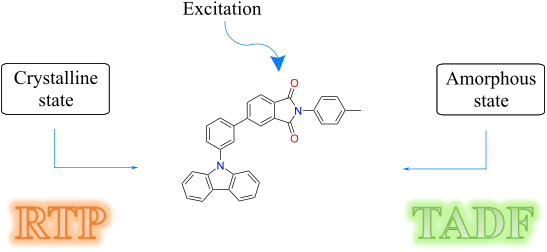
- suppression of these unwanted decay processes further promotes the stability of the excited-state and allows for efficient emission. The π–π interactions between the two molecules in the compound are thus crucial for stabilizing the triplet excitons, which leads to the observed RTP. This finding underscores
- spin–orbit coupling in determining the emission behavior of organic materials, particularly in amorphous states where the TADF process becomes the dominant emission pathway under thermal activation. The thermal stability of compound 1 was evaluated using thermogravimetric analysis (TGA) and
- differential scanning calorimetry (DSC). The results show that 1 exhibits excellent thermal stability. As shown in Figure 8, TGA measurements indicate a 5% weight-loss temperature of 354 °C, suggesting that the material undergoes significant decomposition at temperatures much higher than those typically


Base-promoted deacylation of 2-acetyl-2,5-dihydrothiophenes and their oxygen-mediated hydroxylation
Beilstein J. Org. Chem. 2026, 22, 192–204, doi:10.3762/bjoc.22.13
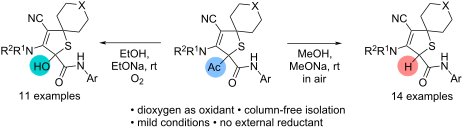
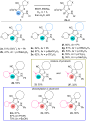
- ethanol makes the proton transfer to anion B quasi-irreversible. This could be the cause for the selective formation of deacetylated dihydrothiophene 3a in methanolic solution. The observed deacetylation for product 2m in ethanol on Scheme 2 can be caused by a decrease of the stability of the formed anion
- double bond, sulfur and amide group. The difference in the stability of these types of anions results in their distinct reactivity. Conclusion We have reported the solvent dependent transformation of dihydrothiophenes 1 under mild conditions. It was found that, in ethanolic solution in the presence of




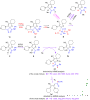
Improved synthesis and physicochemical characterization of the selective serotonin 2A receptor agonist 25CN-NBOH
Beilstein J. Org. Chem. 2026, 22, 175–184, doi:10.3762/bjoc.22.11
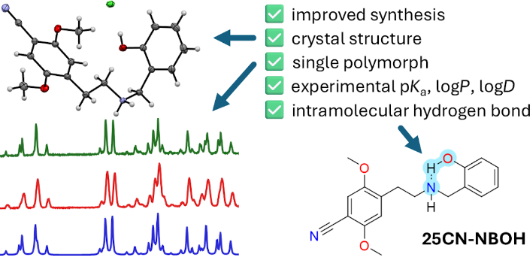
- characterization of 25CN-NBOH and report key physicochemical properties in the solid state as well as in the solution state, namely stability, ionization, solubility, partition coefficient, and membrane permeability. We show that the hydrochloride salt is a stable and well-defined crystalline compound that is also
- respect to the physiochemical properties and handling of the compound in various research scenarios. Keywords: intramolecular hydrogen bond; membrane permeability; solubility; stability; synthesis; Introduction In recent years, classical psychedelics such as psilocybin and LSD have re-emerged as
- (Agilent Technologies). Cary WinUV Simple Reads Application (Version 5.0.0, Agilent Technologies) was used for instrument control and data collection. The experiment was performed in triplicate. Stability in solution The stability of 1 was determined in 67 mM sodium phosphate buffer (pH 7.40, I = 0.18 M


Symmetrical D–π–A–π–D indanone dyes: a new design for nonlinear optics and cyanide detection
Beilstein J. Org. Chem. 2026, 22, 131–142, doi:10.3762/bjoc.22.6
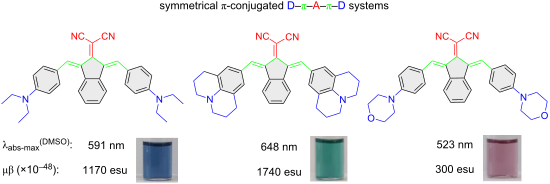
- NLO responses over inorganic counterparts [8][9][10]. Conjugated organic molecules containing electron-donating and accepting groups exhibit higher second-order nonlinearity due to having planar structures, long π-conjugations, and thermal stability [11]. Organic dyes that display efficient second
- have higher polarizability values and dipole moments (μ) than 2c. TGA analysis Thermogravimetric analyses (TGA) were performed to determine the thermal stability of the dyes. The TGA method allows the determination of thermal and gravimetric changes in the material following temperature increases. Dyes


Total synthesis of natural products based on hydrogenation of aromatic rings
Beilstein J. Org. Chem. 2026, 22, 88–122, doi:10.3762/bjoc.22.4
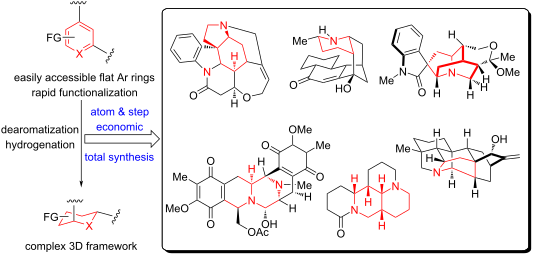
- catalytic hydrogenation are relatively rare. This is partly due to the high stability of six-membered aromatic heterocycles, such as pyridine, making it difficult to interrupt the aromaticity under mild conditions [34]. Furthermore, the heteroatoms (such as nitrogen and oxygen atoms) within the saturated


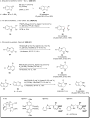
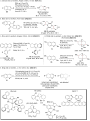


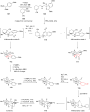


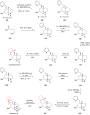





Reactivity umpolung of the cycloheptatriene core in hexa(methoxycarbonyl)cycloheptatriene
Beilstein J. Org. Chem. 2026, 22, 64–70, doi:10.3762/bjoc.22.2
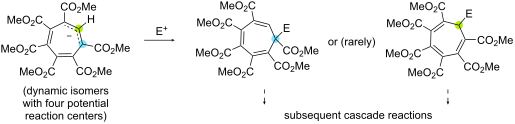
- reactions mainly involve the initial electrophilic attack onto the α-position relative to the hydrogen atom. The selectivity is either due to the high stability of the α-nucleophilic conformer or due to the promotion by the adjacent ester group. Cascade reactions upon the target connection, if installed
- transition states with an adjacent ester group, not to the stability of the main conformer. Conversely, the reactions with halogens and diazonium salts are immediate at room temperature and the α-selectivity, when observed, can be due to the stability of the main conformer. The transition from iodine to


Synthesis and applications of alkenyl chlorides (vinyl chlorides): a review
Beilstein J. Org. Chem. 2026, 22, 1–63, doi:10.3762/bjoc.22.1
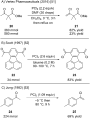
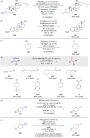
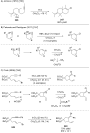
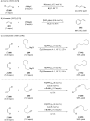
- high-yielding synthesis of 23 by heating diketone 22 with PCl5 for several hours in toluene (Scheme 6B) [52]. Similarly, Jung obtained 25 in 69% yield after heating neat ketone and PCl5 (Scheme 6C) [53]. The high yield of 25 is somewhat surprising, considering the limited stability thereof. In our























One-pot synthesis of ethylmaltol from maltol
Beilstein J. Org. Chem. 2025, 21, 2755–2760, doi:10.3762/bjoc.21.212

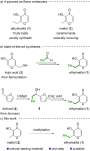
- explore a modified and more selective approach with milder reaction parameters. In our revised strategy, we planned to introduce a transient protecting group for the free hydroxy group, thereby avoiding the necessity of dianion formation with the aim of improving solubility and stability (Table 2). We
- to ethylmaltol (1) combined with the rather harsh deprotection conditions, led us to investigate other masking groups. Next, we turned towards silyl protecting groups as they offered (a) facile tuning of stability and (b) the opportunity for acid-mediated deprotection during aqueous work-up
- aqueous hydrochloric acid in a one-pot protocol. To our surprise, this consistently resulted in a 1:1 mixture of ethylmaltol (1) and maltol (2), each isolated in 30% yield. Assuming insufficient silyl stability during the methylation step, we opted to investigate the bulkier tert-butyl(dimethyl)silyl (TBS


Total synthesis of asperdinones B, C, D, E and terezine D
Beilstein J. Org. Chem. 2025, 21, 2730–2738, doi:10.3762/bjoc.21.210
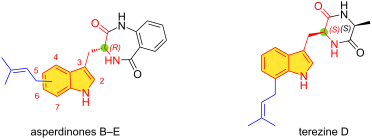
- corresponding bromoindoles (Scheme 3) [43][55]. Grubbs cross-coupling [56] afforded the corresponding prenylindoles 14–17 in excellent yields. Prior to initiating a synthesis toward our intended target molecules 1–4 (Figure 1), we tested the stability of prenylindoles under acidic conditions. Not surprisingly
- . Asperidinones 1–4 were obtained in 7% average yields via the direct prenylation route, and 14% from the allylation/cross-metathesis route, whereas terezine D (6) was isolated in 44% overall yield. Insights into the reactivity and stability of the iodozinc N-Fmoc-ᴅ-alanyl anthranilamide reagent derived from 29


Tandem hydrothiocyanation/cyclization of CF3-iminopropargyl alcohols with NaSCN in the presence of AcOH
Beilstein J. Org. Chem. 2025, 21, 2694–2702, doi:10.3762/bjoc.21.207
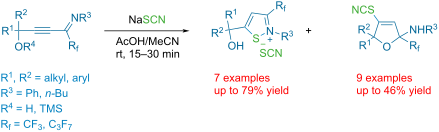
- dihydrofurans 3d,e remained comparable to those of 3a,b. Perhaps the yields of salts 2d,e were affected by steric factors hindering the intramolecular cyclization or their stability under the reaction conditions. Using TMS-protected secondary and primary iminopropargyl alcohols 1f,g (due to their instability
- imino group in the E-isomer of adduct A leads to 4-thiocyano-2,5-dihydrofuran 3. Taking into account the NMR monitoring data, it can be assumed that the yield and ratio of products are influenced by the stereoselectivity of the reaction and the stability of salts 2 under reaction conditions. We also



Recent advancements in the synthesis of Veratrum alkaloids
Beilstein J. Org. Chem. 2025, 21, 2657–2693, doi:10.3762/bjoc.21.206
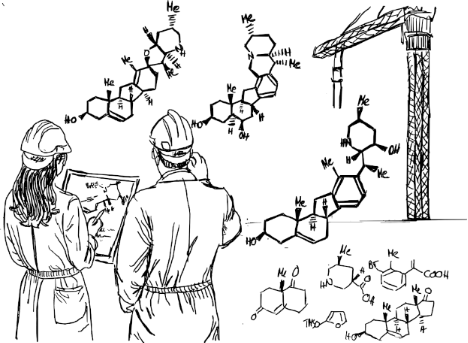
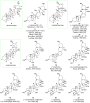
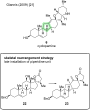
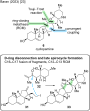
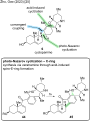
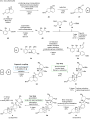
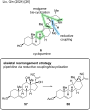
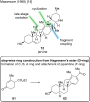
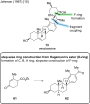
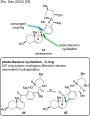
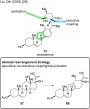
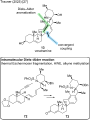
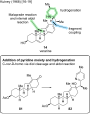
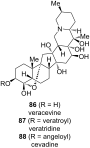
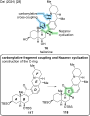
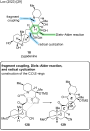
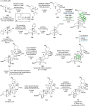
- -Methylenegermine The total synthesis of (±)-4-methylenegermine (17) was reported by Stork and co-workers in 2017 [22]. It represents an unnatural derivative of germine (20) with an additional methylene unit at C4 that was introduced to increase the stability of synthetic intermediates by avoiding the base
















Thiazolidinones: novel insights from microwave synthesis, computational studies, and potentially bioactive hybrids
Beilstein J. Org. Chem. 2025, 21, 2618–2636, doi:10.3762/bjoc.21.203
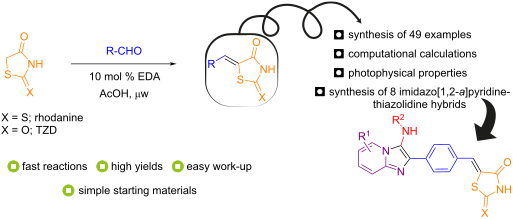
- multiple tautomers (Scheme 7a) [37][39]. Relative stability of these tautomers is ranked as follows: 2-i > 2-ii > 2-iii > 2-iv > 2-v [74][75][76]. Therefore, compounds 3n and 4n may exist in equilibrium, with the enolic form being slightly more stable, which could explain the unusual behavior in their NMR
- through intramolecular hydrogen bonding. By comparing the data for λabs and λem, it is evident that the compounds exhibit significant Stokes shifts with values above 2,100 cm−1, reflecting their stability in the excited state [87][88][89]. The highest values of Stokes shifts were observed in polar protic
- , protonation of these compounds resulted in a lowering of the HOMO energy level, leading to an increase in the HOMO–LUMO gap and, consequently, greater molecular stability. In contrast, deprotonation led to an increase in the LUMO energy level, with little influence on the HOMO energy. Notably, the neutral






Efficient solid-phase synthesis and structural characterization of segetalins A–H, J and K
Beilstein J. Org. Chem. 2025, 21, 2612–2617, doi:10.3762/bjoc.21.202

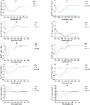
- stability of intramolecular hydrogen bonds in the peptide backbone, thereby promoting the formation of stable secondary structures (such as α-helices or β-sheets) in cyclic peptides. Spectra acquired in H2O, 0.01×PBS, and 30% TFE (Table S1, Supporting Information File 1) demonstrate: (i) definitive β-sheet
- signatures (217 nm minima) in 1, 3, 4; (ii) enhanced β-sheet stability from constrained macrocycles in 2, 7, 8, 10; (iii) universal α-helix induction by TFE in 1–10, with 5 and 6 retaining helicity in aqueous buffers. Conclusion We have developed an efficient and reliable solid-phase synthesis strategy for


Silica gel with covalently attached bambusuril macrocycle for dicyanoaurate sorption from water
Beilstein J. Org. Chem. 2025, 21, 2604–2611, doi:10.3762/bjoc.21.201
- competing dicyanoargentate(I) anions. We also examine the recyclability of the material and assess its stability in organic solvents, comparing its performance with that of a previously developed material containing noncovalently bound bambusuril. Keywords: anion binding; anion extraction; anion receptor
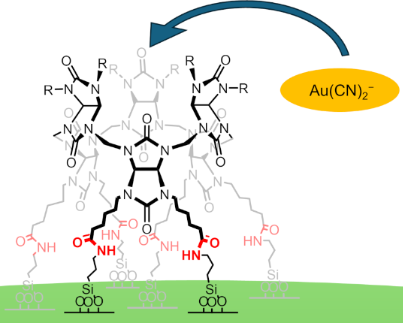
- report a new material, SG-NHCO-BU1, in which the BU1 macrocycle is covalently grafted onto the surface of silica gel. We demonstrate that this hybrid material can be used for the selective dicyanoaurate(I) sorption from water. Moreover, it is shown that unlike SG-BnBU, SG-NHCO-BU1 exhibits good stability
- minimal decomposition at temperatures below 800 °C as confirmed by the analysis. In contrast, a-SG, SG-NHCO-BU1, and SG-BU1 exhibited reduced thermal stability due to the presence of organic substituents (Figure 1A and Supporting Information File 1, Figure S1C). A weight loss of 10% for BU1, SG-NHCO-BU1


Visible-light-driven NHC and organophotoredox dual catalysis for the synthesis of carbonyl compounds
Beilstein J. Org. Chem. 2025, 21, 2584–2603, doi:10.3762/bjoc.21.200
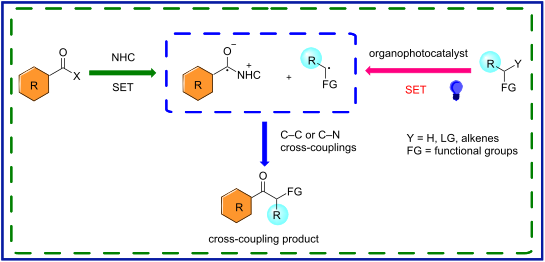
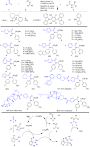
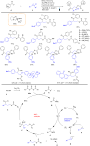
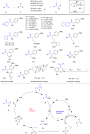
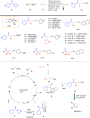
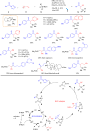
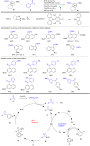
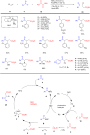
- equivalents, which is crucial in dual or triple catalytic cycles. The electron-rich carbene center facilitates faster SET processes in photocatalytic reactions. Triazolium-based NHCs exhibit higher oxidative and photochemical stability, making them well-suited for visible-light-driven catalytic


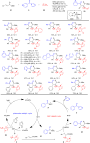

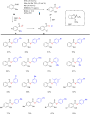

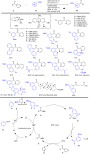

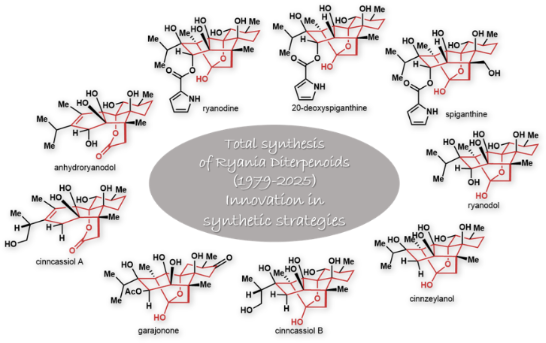
Total syntheses of highly oxidative Ryania diterpenoids facilitated by innovations in synthetic strategies
Beilstein J. Org. Chem. 2025, 21, 2553–2570, doi:10.3762/bjoc.21.198
- atmosphere significantly suppressed side reactions, yielding the cyclized product in excellent yield and selectivity. This indicates that N-formylsaccharin, beyond acting as a CO-releasing agent, may function as a ligand in the catalytic cycle to regulate the palladium catalyst’s activity and stability


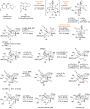

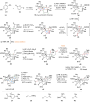

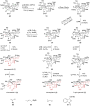


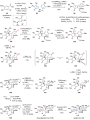

Synthesis and characterization of a isothiouronium-calix[4]arene derivative: self-assembly and anticancer activity
Beilstein J. Org. Chem. 2025, 21, 2535–2541, doi:10.3762/bjoc.21.195
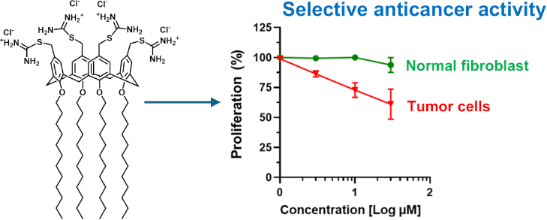
- , it is generally accepted that values higher than ±40 mV are associated with strong stability by repulsion, preventing further aggregation phenomena. Cytotoxicity and cancer cell selectivity Thiouronium-containing molecules can inhibit cancer cells, inducing apoptosis or necrosis, by different


Isoorotamide-based peptide nucleic acid nucleobases with extended linkers aimed at distal base recognition of adenosine in double helical RNA
Beilstein J. Org. Chem. 2025, 21, 2513–2523, doi:10.3762/bjoc.21.193
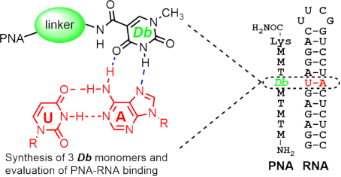
- nucleobases that showed enhanced triplex stability through cooperative effects compared to the control thymine base. In a follow up study, the pendant amide was removed from the Io core to determine the importance of the third hydrogen bond. To our surprise, these second-generation Io derivatives retained
- phenomenon was observed previously with V and this design element was intentionally incorporated with an expectation toward aiding in triplex stability [33]. For Db1, calculations reveal that the intended H-bond between the cationic –NH2+– moiety did in fact form (ca. 2.1 Å, Figure 7A). However, the distal
- stabilizing H-bond but rather formed a hydrogen bond with the U in the U–A base pair (ca. 2.2 Å, Figure 7B). This interaction resulted in pushing the entire residue towards the RNA backbone where the Io base could further bind to a phosphate which likely explains why Db2 shows the lowest triplex stability of





