Search results
Search for "thiophene" in Full Text gives 267 result(s) in Beilstein Journal of Organic Chemistry. Showing first 200.
Synthesis of acenaphthylene-fused heteroarenes and polyoxygenated benzo[j]fluoranthenes via a Pd-catalyzed Suzuki–Miyaura/C–H arylation cascade
Beilstein J. Org. Chem. 2024, 20, 3290–3298, doi:10.3762/bjoc.20.273
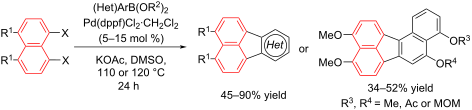
- , Ankara 06800, Türkiye 10.3762/bjoc.20.273 Abstract Acenaphthylene-fused heteroarenes with a variety of five- and six-membered heterocycles such as thiophene, furan, benzofuran, pyrazole, pyridine and pyrimidine were synthesized via an efficient Pd-catalyzed reaction cascade in good to high yields (45–90
- from certain plant species (Figure 1) [12]. The acenaphthylene-fused thiophene-based heteroarene 3 is another heterocyclic fluoranthene analogue, which was used as an organic semiconductor in transistors [13]. The synthesis and coordination complexes of the acenaphthylene-fused N-heterocyclic (NHC
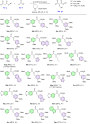
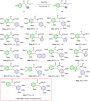
- -catalyzed annulation reaction between bromo-chloronaphthalene dicarboximides 6 and heteroarylboronic esters that enabled the syntheses of acenaphthylene-fused thiophene and indole derivatives 7 having donor-acceptor units (Scheme 1a) [40]. In 2021, Jin and co-workers developed an elegant Pd-catalyzed




Surprising acidity for the methylene of 1,3-indenocorannulenes?
Beilstein J. Org. Chem. 2024, 20, 3144–3150, doi:10.3762/bjoc.20.260
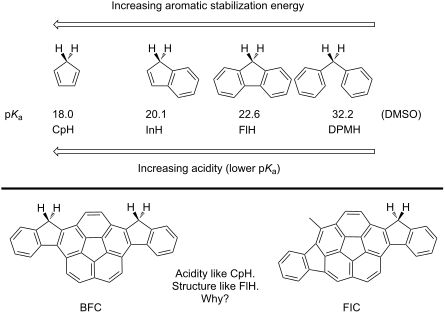
- . Access to the dianion of BFC presages an interesting diradical and this was achieved by inclusion of mesityl protecting groups [27]. Extension of the BFC model with thiophene provides further interesting materials [28]. A reasonable corollary to this behavior would assert that derivatives of TBF and


Advances in the use of metal-free tetrapyrrolic macrocycles as catalysts
Beilstein J. Org. Chem. 2024, 20, 3085–3112, doi:10.3762/bjoc.20.257
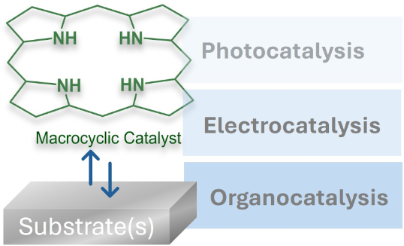
- by sunlight [99]. This marked the first application of these corroles as photoredox catalysts. They synthesized three free base corroles 98–100 featuring electron-withdrawing substituents at the meso-positions and tested them for the arylation of furan (75), thiophene (102), and N-Boc-pyrrole (103


Recent advances in transition-metal-free arylation reactions involving hypervalent iodine salts
Beilstein J. Org. Chem. 2024, 20, 2891–2920, doi:10.3762/bjoc.20.243

- with thiophene favored the formation of phenylated products as the major outcome. Additionally, mercaptoazoles were found to be compatible with this protocol, expanding its applicability to include these compounds. The functionalization of peptides and proteins plays a vital role in the development of




N-Glycosides of indigo, indirubin, and isoindigo: blue, red, and yellow sugars and their cancerostatic activity
Beilstein J. Org. Chem. 2024, 20, 2840–2869, doi:10.3762/bjoc.20.240
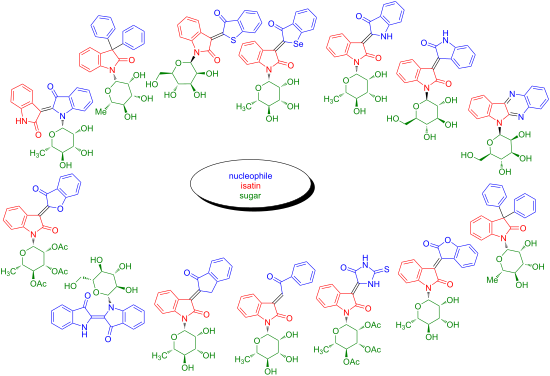
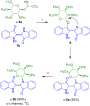
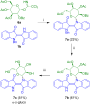
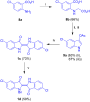
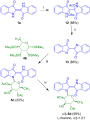
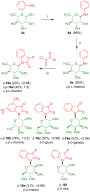
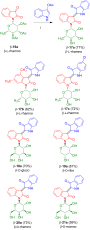
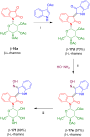
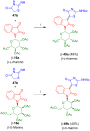
- . Thioisoindigo-N-glycosides The condensation of isatin-N-rhamnoside β-16a with 2,3-dihydrobenzo[b]thiophen-2-one (73), available in two steps from benzo[b]thiophene [61], afforded thioisoindigo-N-rhamnoside β-74a in 45% yield (Scheme 41) [60]. Like in the case of β-64a, deprotection proved to be unsuccessful











C–C Coupling in sterically demanding porphyrin environments
Beilstein J. Org. Chem. 2024, 20, 2784–2798, doi:10.3762/bjoc.20.234
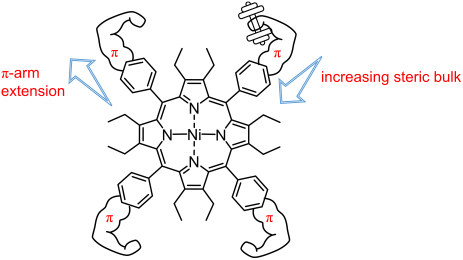
- (Table 3, entries 7 and 8). The same success could not be replicated for OET-o-BrPPs with no reactivity being observed by TLC or by mass spectrometry. Likewise, a microwave-assisted coupling [48], resulted in no product formation (Table 3, entry 9). Thiophene-3-ylboronic acid (21) was also chosen for
- illustrates that coupling phenyl, thiophene or other aryl moieties at this position would be extremely difficult. Furthermore, the distance between the o-bromine atoms and the nearest carbon neighbor of the β-ethyl groups is 3.7 Å, further complicates the success of coupling at this position. As discussed


Copper-catalyzed yne-allylic substitutions: concept and recent developments
Beilstein J. Org. Chem. 2024, 20, 2739–2775, doi:10.3762/bjoc.20.232
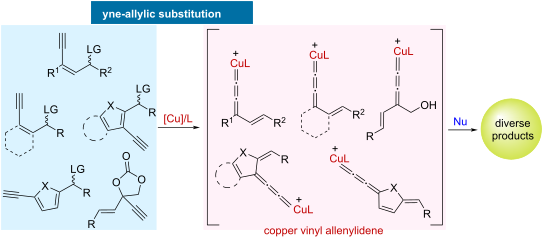
- that the dinuclear copper complex is the precursor of the active monocopper species which is involved in the turnover-limiting step (Scheme 27). Subsequently, Zhu and Xu et al. [73] also achieved the distal enantioselective heteroarylation of yne-thiophene carbonates by applying a simpler p-OMe
- substituted pybox ligand (Scheme 28, 26a–m). The thiophene unit of the carbonate could also be replaced by benzothiophene (Scheme 28, 26h) or furan (Scheme 28, 26m), and pyrrole (Scheme 28, 26j), phenol (Scheme 28, 26k); coumarin derivative (Scheme 28, 26n), and dibenzylamine (Scheme 28, 24a) could also
- substitutions of 5-ethynylthiophene esters. A series of C-, N-, O-, and S-nucleophiles could react smoothly to obtain various thiophene derivatives with different functional groups (Scheme 29, 28a–t). Control experiments showed that terminal alkyne and copper catalysts are crucial for the smooth progress of the













Synthesis of fluoroalkenes and fluoroenynes via cross-coupling reactions using novel multihalogenated vinyl ethers
Beilstein J. Org. Chem. 2024, 20, 2691–2703, doi:10.3762/bjoc.20.226

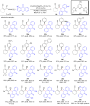
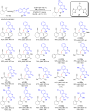
- cyclopropylboronic acid (4n) achieved to give 2n in a 71% yield (Table 3, entry 13). When thiopheneboronic acid 4o was used as a coupling partner, the thiophene ring could be installed on 1a in a comparatively low yield of 31% (Table 3, entry 14). In addition, we investigated the substrate scope of 1 in the Suzuki
- 5l) could be introduced into 1a in 76% or 52% yields, respectively (Table 4, entries 10 and 11). Reactions using acetylenes possessing a hydroxy group, amino group and thiophene proceeded well (3m–o) (Table 4, entries 12–14). Hexa-1-yne 5p and cyclopropylacetylene (5q) afforded 3p and 3q


Multicomponent syntheses of pyrazoles via (3 + 2)-cyclocondensation and (3 + 2)-cycloaddition key steps
Beilstein J. Org. Chem. 2024, 20, 2024–2077, doi:10.3762/bjoc.20.178

- heteroaryls other than thiophene under standard conditions. Schreiner et al. established a further protocol for the one-pot synthesis of pyrazoles, where the alkynoyl moiety is generated by copper-catalyzed carboxylation of terminal alkynes followed by alkylation with methyl iodide, forming propiolic acid




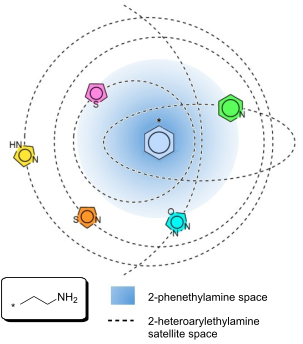
2-Heteroarylethylamines in medicinal chemistry: a review of 2-phenethylamine satellite chemical space
Beilstein J. Org. Chem. 2024, 20, 1880–1893, doi:10.3762/bjoc.20.163
- hydration reaction of carbon dioxide to bicarbonate, cyanates to carbamic acids, aldehydes to gem-diols, etc., and represent a potential therapeutic target for diseases like osteoporosis, edema, obesity or cancer [29]. Alım et al. [30] evaluated a series of thiophene sulfonamides based on the high stability
- of this aromatic ring. Molecular docking studies combined with in vitro studies showed that only the thiophene-based phenethylamine derivative 30 possesses a weak hCA I/II activity compared with analogues lacking the 2-aminoethyl moiety. Carrol et al. [31][32] explored bupropion analogues for their
- capacity to antagonize human nAChRs (nicotinic acetylcholine receptor) as these are of clinical importance in developing tobacco-derived diseases. From the range of propiophenone derivatives elaborated tackling dopaminergic activities, thiophene 31 showed weak inhibitory activity towards α3β4 and α4β2




Hetero-polycyclic aromatic systems: A data-driven investigation of structure–property relationships
Beilstein J. Org. Chem. 2024, 20, 1817–1830, doi:10.3762/bjoc.20.160
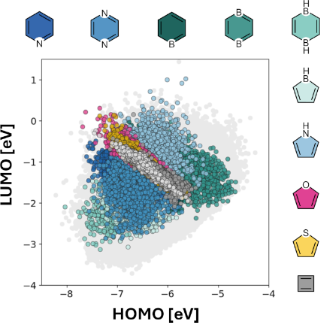
- in size, composition, and aromatic character: benzene, pyridine, pyrazine, borinine, 1,4-diborinine, 1,4-dihydro-1,4-diborinine, borole, pyrrole, furan, thiophene, and cyclobutadiene (Figure 1A). These building blocks encompass 6-, 5-, and 4-membered rings with aromatic and antiaromatic character
- of the property space covered differs noticeably. Furan, thiophene, and cyclobutadiene all cover a similar region of the property space as the baseline PBHs, which is a relatively small swath that shows a linear relationship – meaning, molecules with higher HOMOs have lower LUMOs and vice versa. In
- values than either furan or thiophene, and that 1,4-diborinine has the strongest LUMO-lowering effect of all building blocks in our library. In addition, these plots can provide further insight into the three building blocks that showed similar coverage as the cc-PBHs, namely, furan, thiophene, and



Domino reactions of chromones with activated carbonyl compounds
Beilstein J. Org. Chem. 2024, 20, 1256–1269, doi:10.3762/bjoc.20.108
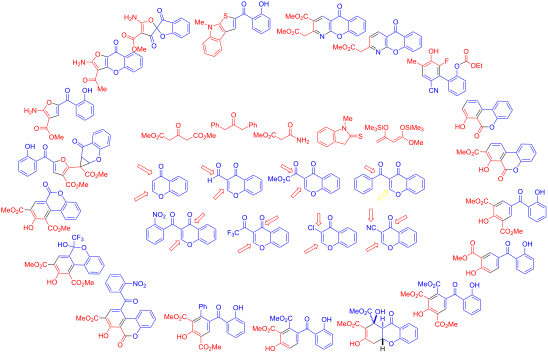
- group which might be explained by the electron-rich nature of the thiophene and, thus, a reduced electrophilicity of the neighboring carbonyl group. Likewise, a poor yield (23%) was observed for a 2-fluorophenyl group, presumably due to steric hindrance because of the ortho-substituent. Excellent yields









Synthesis and optical properties of bis- and tris-alkynyl-2-trifluoromethylquinolines
Beilstein J. Org. Chem. 2024, 20, 1246–1255, doi:10.3762/bjoc.20.107
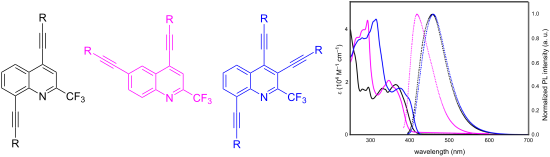
- the 6-position in comparison to the 8-position. The structure of product 9f was confirmed by X-ray crystallography (Figure 3). The thiophene ring in 4-position is in plane with the quinoline core, while the other ring is twisted in an angle of approximately 85°. This might be explained by an
- electronic push–pull interaction of the thiophene and the quinoline moieties via the alkyne. Finally, we focussed on the synthesis of tris-alkynylated quinolines starting from 3,4,8-tribromo-2-(trifluoromethyl)quinoline (11). Starting material 11 was synthesized in very good yield from quinolone 3 by








Bismuth(III) triflate: an economical and environmentally friendly catalyst for the Nazarov reaction
Beilstein J. Org. Chem. 2024, 20, 1167–1178, doi:10.3762/bjoc.20.99
- desired products were obtained in good to excellent yields and E-selectivities (Figure 2) [71][72][73][74]. Various substrates (9aa–gc), containing electron-donating, electron-withdrawing, electroneutral groups, and heteroaryl units (2-thiophene and 3-benzothiophene) were obtained in good to excellent
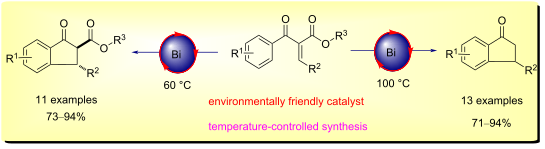
- cyclization of 3-substituted thiophene derivatives. When carrying out the reactions at 60 °C for 24 h, the formation of a 9:1 mixture of the products 13 and 14 in 61% combined yield was observed (Scheme 1) [75]. Under more vigorous conditions (100 °C for 5 h), there was a slight increase in the yield of




Manganese-catalyzed C–C and C–N bond formation with alcohols via borrowing hydrogen or hydrogen auto-transfer
Beilstein J. Org. Chem. 2024, 20, 1111–1166, doi:10.3762/bjoc.20.98

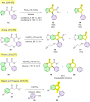
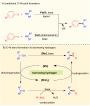
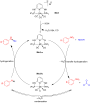
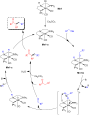
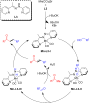
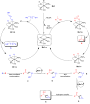
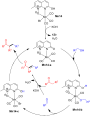
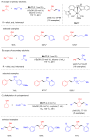
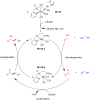
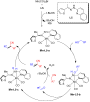
- studies showed that the hemilability and bifunctionality of the thiophene arm attached to the metal play an important role in this transformation for the dehydrogenation and hydrogenation steps. Later, the same complex was successfully used for the α-alkylation of ketones with secondary alcohols to



























Novel analogues of a nonnucleoside SARS-CoV-2 RdRp inhibitor as potential antivirotics
Beilstein J. Org. Chem. 2024, 20, 1029–1036, doi:10.3762/bjoc.20.91
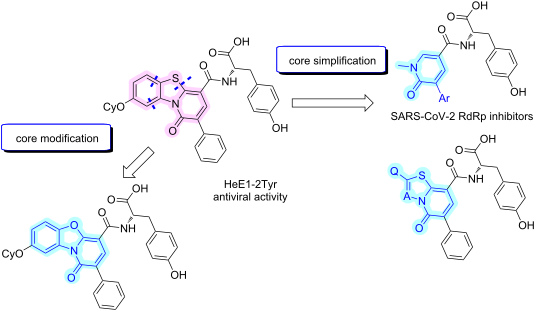
- compensate this difference. The pyridone derivatives 3a–c exerted an activity resulting in IC50 values of 128.7 μM, 203.8 μM and 88.1 μM, respectively, highlighting that even significantly truncated molecules are capable of RdRp inhibition. A thiophene substituent in position 5 (i.e., 3c) proved to be the


A Diels–Alder probe for discovery of natural products containing furan moieties
Beilstein J. Org. Chem. 2024, 20, 1001–1010, doi:10.3762/bjoc.20.88
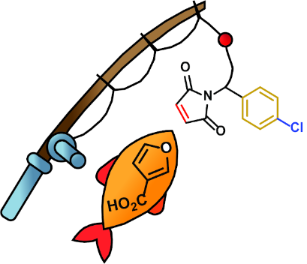
- described [24]. Thiophene (22) also did not produce any product, which may be due to the differences in the electronics of the sulfur or the lack of electron-withdrawing groups on the molecule. The phenyl-substituted compound 17 was tested but ultimately showed no conversion as well. Although it does have




Synthesis and properties of 6-alkynyl-5-aryluracils
Beilstein J. Org. Chem. 2024, 20, 898–911, doi:10.3762/bjoc.20.80
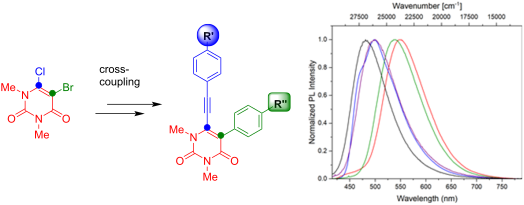
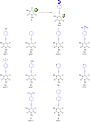
- ring instead of a benzene moiety. This was demonstrated by the introduction of thiophene (5r) and furan (5t) to the uracil structure. The molecules 5n and 5o could not be obtained, due to decomposition during the reaction. The structure of 5a was confirmed by X-ray crystallographic analysis. Crystals





Advancements in hydrochlorination of alkenes
Beilstein J. Org. Chem. 2024, 20, 787–814, doi:10.3762/bjoc.20.72
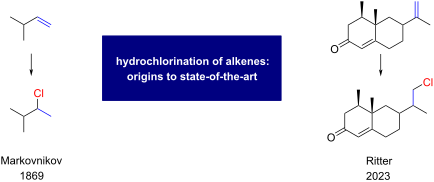
- functional tolerance of this methodology is striking. Especially examples with sensitive aldehyde (175), nitrile (176), N-Boc (177), furan (178), thiophene (179), and even tertiary alcohols (180 and 181) are impressive. The primary drawback of this methodology lies in the synthesis of the ligand L3












SOMOphilic alkyne vs radical-polar crossover approaches: The full story of the azido-alkynylation of alkenes
Beilstein J. Org. Chem. 2024, 20, 701–713, doi:10.3762/bjoc.20.64
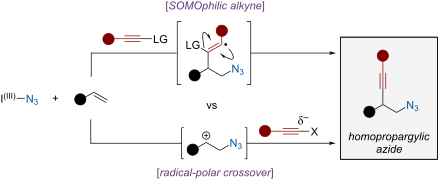
- azides substituted with heteroaryls such as thiophene (4i) or a bromofuran (4j) were obtained in 62% and 54% yield, respectively. When the azido-alkynylation was carried out on 1,2-dihydronaphthalene, 4k could be obtained in 71% yield and 3.8:1 dr. As expected, the configuration of the major
- worked well in the transformation, affording homopropargylic azides 4n–q in 60–77% yield. The reaction appears to be sensitive to the steric hindrance of the nucleophile: addition of a mesitylalkyne only formed 33% of 4r. Pleasingly, heteroaryl substituents were tolerated, 4s bearing a thiophene was


Evaluation of the enantioselectivity of new chiral ligands based on imidazolidin-4-one derivatives
Beilstein J. Org. Chem. 2024, 20, 684–691, doi:10.3762/bjoc.20.62
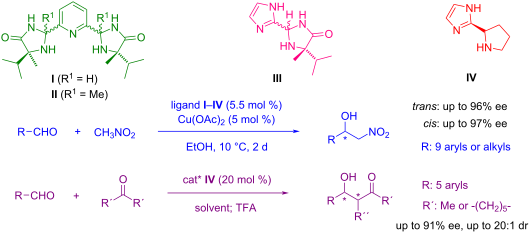
- ligand IIIa possesses lower catalytic activity than the pyridine derivative (for TON and TOF parameters see Supporting Information File 1, part S5). The conversions were poor in the case of less reactive aldehydes, e.g., thiophene-2-carbaldehyde, and 3-phenylpropionaldehyde. To achieve satisfactory


Synthesis of photo- and ionochromic N-acylated 2-(aminomethylene)benzo[b]thiophene-3(2Н)-ones with a terminal phenanthroline group
Beilstein J. Org. Chem. 2024, 20, 552–560, doi:10.3762/bjoc.20.47
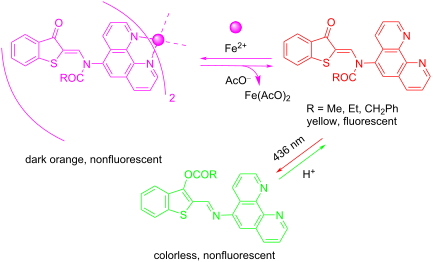
- Physical and Organic Chemistry, Southern Federal University, Rostov-on-Don 344090, Russian Federation North Caucasus Federal University, Stavropol 355009, Russian Federation 10.3762/bjoc.20.47 Abstract A series of novel photo- and ionochromic N-acylated 2-(aminomethylene)benzo[b]thiophene-3(2Н)-ones with
- sequential addition of Fe2+ and AcO−, we synthesized N-acylated 2-(aminomethylene)benzo[b]thiophene-3(2Н)-ones with a terminal phenanthroline substituent and studied the spectral-luminescent, photochromic and ionochromic properties. The phenanthroline moiety was incorporated into the molecule due to the
- ]thiophene-3(2Н)-ones 2a–c with a terminal phenanthroline substituent was (E)-2-(((1,10-phenanthrolin-5-yl)amino)methylene)benzo[b]thiophen-3(2H)-one (1), obtained by condensation of 3-hydroxybenzo[b]thiophene-2-carbaldehyde with 5-aminophenanthroline in acetonitrile (Scheme 1). (Z)-N-((3-Oxobenzo[b]thiophen


Mono or double Pd-catalyzed C–H bond functionalization for the annulative π-extension of 1,8-dibromonaphthalene: a one pot access to fluoranthene derivatives
Beilstein J. Org. Chem. 2024, 20, 427–435, doi:10.3762/bjoc.20.37
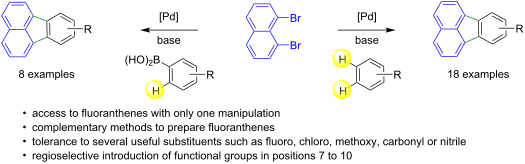
- substituted at positions 2 and 5 with 1,8-dibromonaphthalene using 5 mol % PdCl(C3H5)(dppb) catalyst with KOPiv as the base in DMA (Scheme 3). From 2,5-dimethylthiophene or 1,2,5-trimethylpyrrole, the desired acenaphtho[1,2-c]thiophene 16 and acenaphtho[1,2-c]pyrrole and 17 were obtained in 60% and 56% yield


Synthesis of π-conjugated polycyclic compounds by late-stage extrusion of chalcogen fragments
Beilstein J. Org. Chem. 2024, 20, 287–305, doi:10.3762/bjoc.20.30
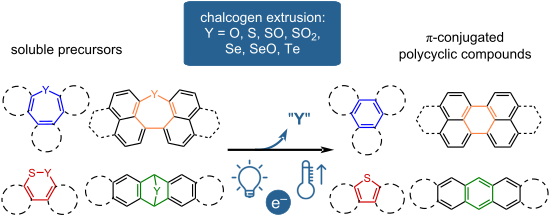
- dithienonaphthalene products (e.g., 16) exhibit very different fluorescence properties, S-extrusion from thiophene-annelated thiepines was consequently exploited for peroxide sensing. Very recently, Zhou et al. reported the synthesis of S-doped phenanthrene and triphenylene derivatives via the thermally-induced ring
- contraction of thiepine scaffolds, fused with two or three thiophene, thiopyran or polycyclic hydrocarbon moieties [64]. Indeed, a series of polyannelated thiepine derivatives were prepared according to an original approach, consisting in the introduction of the bridging sulfur atom from the outset of the
- naphthyl substituents carrying each an alkyne moiety on the ortho position. Ring expansion of both thiophene units in 19 was then triggered by platinum catalysis to generate the corresponding thiopyrans, and finally the bromine atoms located on the latter rings were exploited for the ring closure of the




Nucleophilic functionalization of thianthrenium salts under basic conditions
Beilstein J. Org. Chem. 2024, 20, 257–263, doi:10.3762/bjoc.20.26
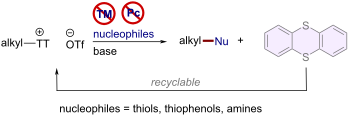
- reaction system, yielding product 3ak in good yield. Furthermore, heteroaromatic rings, such as pyridine (2l), thiophene (2m), benzoxazole (2n), and benzimidazole (2o) all afforded the desired products (3al–ao) in satisfactory yields. Subsequently, we investigated the substrate scope of amines, which is