


Search results
Search for "cross couplings" in Full Text gives 74 result(s) in Beilstein Journal of Organic Chemistry.
A convenient route to symmetrically and unsymmetrically substituted 3,5-diaryl-2,4,6-trimethylpyridines via Suzuki–Miyaura cross-coupling reaction
Beilstein J. Org. Chem. 2016, 12, 835–845, doi:10.3762/bjoc.12.82
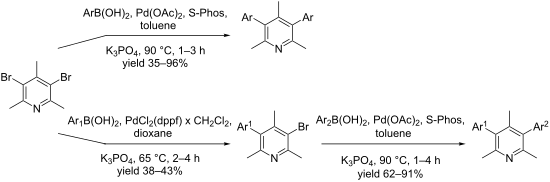
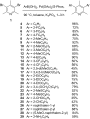
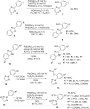
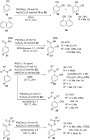
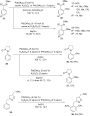
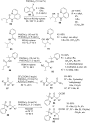
- construction of unsymmetrically arylated pyrroles, thiophenes and 2,6- and 3,5-diarylpyridines. In order to test the utility of the above mentioned approach, a series of trial cross couplings were performed on a microscale according to route 3 with a variety of electron-poor and electron-rich boronic acids
- diarylpyridines 46–56, directly from 1 by two sequential cross couplings with the isolation and full characterization of the intermediates 3 and 43–45. Thus, the treatment of 1 with 1.1 equiv of phenyl-, 2-methylphenyl-, 4-methylphenyl and 2-naphthylboronic acid in dioxane in the presence of PdCl2(dppf) × CH2Cl2




Copper-mediated arylation with arylboronic acids: Facile and modular synthesis of triarylmethanes
Beilstein J. Org. Chem. 2016, 12, 496–504, doi:10.3762/bjoc.12.49
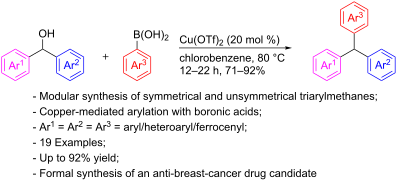
- towards transition metal-catalyzed cross-couplings [43][44][45][46][47][48] or CH arylation followed by an arylative desulfonation [49][50]. The coupling reactions provide an opportunity to install an unactivated aryl group on a carbon bearing two more aryl groups to synthesize the triarylmethane motif


Versatile synthesis and biological evaluation of novel 3’-fluorinated purine nucleosides
Beilstein J. Org. Chem. 2015, 11, 2509–2520, doi:10.3762/bjoc.11.272

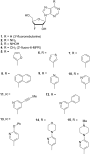
- -ribofuranosyl purine derivatives began with a palladium-catalyzed cross coupling [45][46] to install the aromatic moieties to the 6-position of the purine ring. In order to accomplish efficient cross-couplings of a wide range of aromatic rings, we utilized three different protocols that were employed for Stille
- deprotected with a saturated solution of ammonia in methanol to give the desired analogue 5 with furan-2-yl substituent at position 6 of the purine base. Considering the possible toxicity of organostannyl reagents, we then utilized various organoboronic acids for Suzuki cross couplings [49][50][51] to



Copper-catalyzed arylation of alkyl halides with arylaluminum reagents
Beilstein J. Org. Chem. 2015, 11, 2400–2407, doi:10.3762/bjoc.11.261
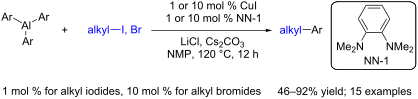
- bromides in good to excellent yields. Results and Discussion Recently, we [23][24][25][26][27] and others [10][28][29][30][31][32][33][34][35][36][37][38][39] reported efficient cross-couplings of oganometallic reagents of Si, B, In, Zr, Zn, Mg and Sn with organo halides [40][41]. Under our reaction
- bromides (Table 2, entries 12 and 14) [43]. Based on literature reports and our recent mechanistic work on Cu-catalyzed cross-couplings [23][24][25], we propose a catalytic cycle for the current reaction (Scheme 2). It is evident from the optimization of reaction conditions that both NN-1 and LiCl improve


Multivalent polyglycerol supported imidazolidin-4-one organocatalysts for enantioselective Friedel–Crafts alkylations
Beilstein J. Org. Chem. 2015, 11, 730–738, doi:10.3762/bjoc.11.83
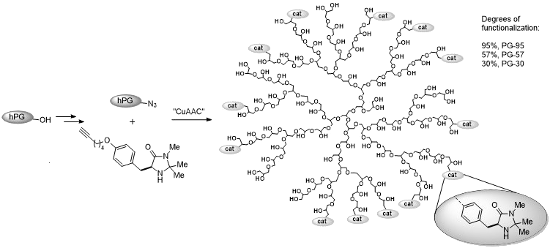
- properties. Hyperbranched polymers like polytriallylsilane or polyglycerol have been used in a wide range of transformations including aldol condensations [22], Suzuki cross-couplings [23] and Diels–Alder reactions [24], to name a few, with metal complexes as catalytically active principle. The advent of


Bis(vinylenedithio)tetrathiafulvalene analogues of BEDT-TTF
Beilstein J. Org. Chem. 2015, 11, 403–415, doi:10.3762/bjoc.11.46
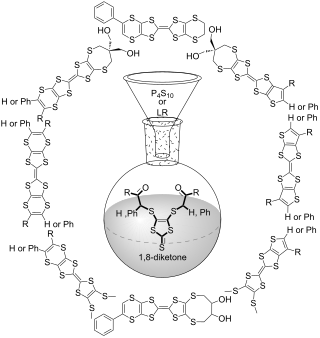
- coupling reactions. While the cross couplings of 26a–d with 28 and 31 [53] led to the formation of 29a–d and 32a–d, respectively, along with the self coupling products 4, 30 and 3, coupling of 27a–c with 28 gave 33a–c and the self coupling products 34a–c and 30. The cross coupled product 35 from 27c and 31


Cross-dehydrogenative coupling for the intermolecular C–O bond formation
Beilstein J. Org. Chem. 2015, 11, 92–146, doi:10.3762/bjoc.11.13
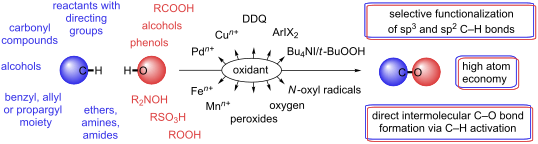
- compounds to form C–C, C–N, C–O, C–Hal, C–P, and N–N bonds [10], the Bu4NI/t-BuOOH oxidative system [22], selective functionalization of molecules [23], the oxidative esterification and oxidative amidation of aldehydes [24], and the transition metal-catalyzed radical oxidative cross-couplings [13]. The









Synthesis of rigid p-terphenyl-linked carbohydrate mimetics
Beilstein J. Org. Chem. 2014, 10, 1749–1758, doi:10.3762/bjoc.10.182
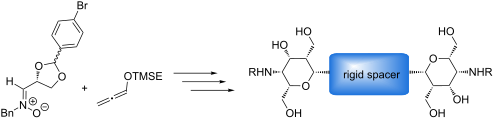
- . Unnatural divalent rigid p-terphenyl-linked C-aryl glycosides with 2.0 nm dimension are available using Suzuki cross-couplings. The key compound, a p-bromophenyl-substituted 1,2-oxazine, was prepared by a stereoselective [3 + 3]-cyclization of a D-isoascorbic acid-derived (Z)-nitrone and lithiated TMSE
- are among the best methods to prepare C-arylglycosides, C-nucleosides and C-glycosidic oligomers when new artificial pharmacophores are approached [17]. With Suzuki cross-couplings C-glycoside analogues of phloriain with antidiabetic properties [18] or aryl-scaffolded dimers and trimers were
- prepared p-bromophenyl-substituted bicyclic 1,2-oxazine derivatives 12, 13, 15 and 16 provide options to perform cross-coupling reactions such as Buchwald/Hartwig, Heck, Hiyama, Kumada, Sonogashira or Stille couplings. In order to examine the conditions for Suzuki cross-couplings we subjected bicyclic


The Flögel-three-component reaction with dicarboxylic acids – an approach to bis(β-alkoxy-β-ketoenamides) for the synthesis of complex pyridine and pyrimidine derivatives
Beilstein J. Org. Chem. 2014, 10, 394–404, doi:10.3762/bjoc.10.37
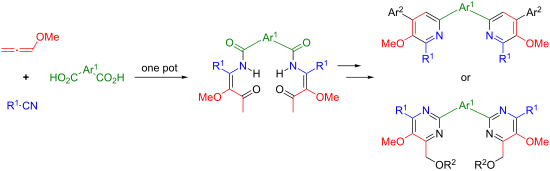
- addition we exemplarily investigated subsequent transformations of these compounds either by palladium-catalyzed cross-couplings or by oxidations of the 4-methyl groups of the pyrimidine subunits. Although the yields for the crucial initial multicomponent reactions leading to the bis(β-methoxy-β


A practical synthesis of long-chain iso-fatty acids (iso-C12–C19) and related natural products
Beilstein J. Org. Chem. 2013, 9, 1807–1812, doi:10.3762/bjoc.9.210

- approaches have been used: (1) two-component cross-couplings that include α-ketoester alkylation/decarboxylation [32][33], aldehyde–olefin photoaddition [34], acetylide alkylation (sp3–sp) [35][36], Wittig coupling [3][21][37][38][39], Kolbe electrosynthesis [35][40][41][42], organocadmium (sp2–sp3) [43][44
- ][45][46], organomagnesium (sp2–sp3) [47], or organocopper (sp3–sp3) [48][49] cross-couplings; or (2) bidirectional extension of a central thiophene C4-fragment [50]. Two fundamentally different approaches worth special mention are the synthesis of the iso-C14 acid 3 by direct hydro-isopropylation of


Synthesis of phenanthridines via palladium-catalyzed picolinamide-directed sequential C–H functionalization
Beilstein J. Org. Chem. 2013, 9, 891–899, doi:10.3762/bjoc.9.102
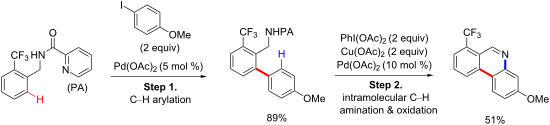
- –Hubert condensation [9], radical-mediated reactions [10][11][12][13], metal-catalyzed cross-couplings [14][15][16][17][18], cycloadditions [19], and others [20][21][22]. More recently, methods based on the metal-catalyzed functionalization of carbon–hydrogen (C–H) bonds have also emerged as viable



Stereoselective synthesis of tetrasubstituted alkenes via a sequential carbocupration and a new sulfur–lithium exchange
Beilstein J. Org. Chem. 2012, 8, 2202–2206, doi:10.3762/bjoc.8.248
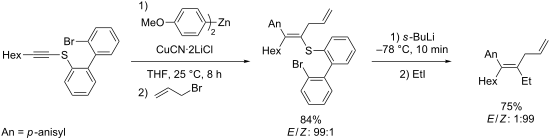
- thioether 4. Extensive experimentation showed that thioethers 4 do not undergo Ni- or Pd-catalyzed cross couplings leading to products of type 5 (R = Me, Ph) [15][16]. Thus, we designed a new sulfur–lithium exchange (Scheme 1). Sulfur–lithium exchanges proceed only readily with sulfoxides [17][18][19] and


Diarylethene-modified nucleotides for switching optical properties in DNA
Beilstein J. Org. Chem. 2012, 8, 905–914, doi:10.3762/bjoc.8.103
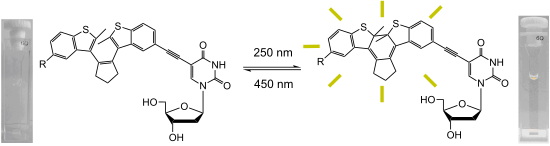
- ) is based on Sonogashira-type cross couplings as key steps [51] to attach the photoactive chromophore to the nucleoside. For the synthesis of the first nucleoside 4 (Scheme 2), commercially available 5-bromobenzothiazole (7) is deprotonated with LDA and methylated by methyl iodide in quantitative
- form of the diarylethene interferes with stacking to the neighboring bases by the two methyl groups pointing up and down from the chromophore. Conclusion Three different diarylethene-modified 2‘-deoxyuridines 4–6 were prepared by using Sonogashira-type cross couplings as key steps. The photochromic




An intramolecular inverse electron demand Diels–Alder approach to annulated α-carbolines
Beilstein J. Org. Chem. 2012, 8, 829–840, doi:10.3762/bjoc.8.93
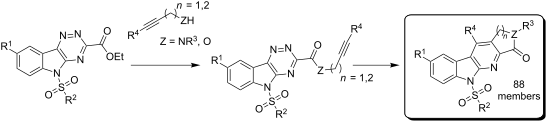
- 3-arylpyridines also found application [43][44], and likewise falls into the category of indole ring closure onto an existing substituted pyridine, though in this case with the formation of the C–N bond. More recently, the group of Cuny has reported two strategies that exploit cross-couplings to


Functionalization of heterocyclic compounds using polyfunctional magnesium and zinc reagents
Beilstein J. Org. Chem. 2011, 7, 1261–1277, doi:10.3762/bjoc.7.147
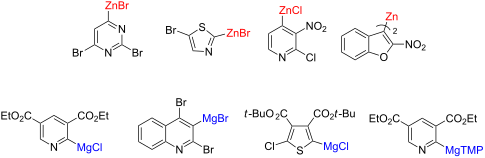
- readily converted to the desired zinc reagents 31. The Pd-catalyzed cross-coupling of 31 with the iodoquinoline 32 and with S-Phos as ligand [15][16][17] provides the alkaloid papaverine (33) in 68% yield (Scheme 5) [13]. Ni-catalyzed cross-couplings can also be realized [14]. Thus, the reaction of the
- New Pd- and Ni-cross-coupling procedures Although numerous cross-coupling methods have been recently described in the literature [50][51][52], there is still the need for new convenient procedures. We would like to focus on the chemoselectivity problem in cross-couplings in this short section and
- The ability to perform cross-couplings is certainly one of the most versatile functions of heterocyclic zinc intermediates. Recently, we have shown that NiCl2 (0.05 mol %) constitutes an economical method for performing Negishi cross-couplings [18][19], however, it does not solve the problem of the


When cyclopropenes meet gold catalysts
Beilstein J. Org. Chem. 2011, 7, 717–734, doi:10.3762/bjoc.7.82
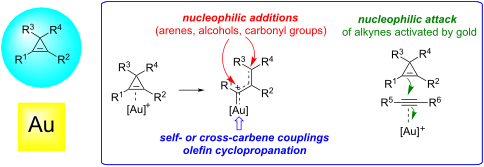
- this gold powder (MeCN, 60 °C), 3,3-diphenylcyclopropene (1) gave 1,1,6,6-tetraphenylhexa-1,3,5-triene (45), arising from self-coupling of a surface bound gold carbene, as a 40:60 mixture of Z/E-geometric isomers (82%). Cross-couplings of carbenes derived from cyclopropene 1 and phenyldiazomethane or




An efficient and practical entry to 2-amido-dienes and 3-amido-trienes from allenamides through stereoselective 1,3-hydrogen shifts
Beilstein J. Org. Chem. 2011, 7, 410–420, doi:10.3762/bjoc.7.53
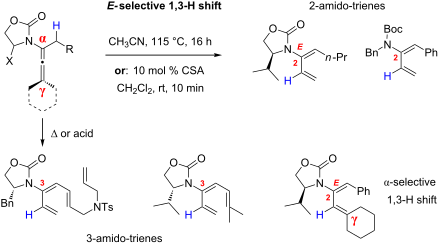
- ][57][58]) suffer from limited access as well as the instability of halo-dienes (Scheme 2). In contrast, multi-substituted allenamides can be concisely prepared through α-alkylations of a parent allenamide [47][59] (for the synthesis of parent allenamides see [60]) or amidative cross-couplings of


Suzuki–Miyaura cross-coupling reaction of 1-aryltriazenes with arylboronic acids catalyzed by a recyclable polymer-supported N-heterocyclic carbene–palladium complex catalyst
Beilstein J. Org. Chem. 2010, 6, No. 70, doi:10.3762/bjoc.6.70
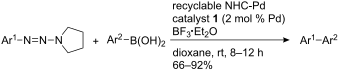
- , arylsulfonyl chlorides and arenediazonium salts with arylboronic acids that gave biaryls in good to excellent yields [28][31][32]. As part of our ongoing investigations aimed at the development of transition metal catalysis, we report here that the Suzuki–Miyaura cross-couplings of 1-aryltriazenes with
- cooling and the resulting precipitate isolated by filtration. The damp solid was recrystallized from EtOH and dried under reduced pressure. General procedure for the Suzuki–Miyaura cross-couplings of 1-aryltriazenes and arylboronic acids Polystyrene-supported Pd–NHC catalyst 1 (100 mg, 10 μmol Pd), 1


Pd-catalyzed decarboxylative Heck vinylation of 2-nitrobenzoates in the presence of CuF2
Beilstein J. Org. Chem. 2010, 6, No. 43, doi:10.3762/bjoc.6.43

- protodecarboxylation of particularly electron-rich, ortho-substituted benzoic acids, e.g. 2,6-dimethoxybenzoic acid, whereas electron-poor derivatives are not easily decarboxylated. The palladium-catalyzed protodecarboxylation reported by Kozlowski [25], and the palladium-catalyzed decarboxylative cross-couplings


Preparation of pyridine-3,4-diols, their crystal packing and their use as precursors for palladium-catalyzed cross-coupling reactions
Beilstein J. Org. Chem. 2010, 6, No. 42, doi:10.3762/bjoc.6.42

- possible palladium-catalyzed cross-couplings we performed several Sonogashira-reactions [28][29][30]. As described in Scheme 3, the pyridinyl-bistriflates or -nonaflates 3 were coupled with alkynes like phenylacetylene or (triisopropylsilyl)acetylene using Pd(PPh3)4 or alternatively, Pd(OAc)2/PPh3 as


Efficient and improved synthesis of Telmisartan
Beilstein J. Org. Chem. 2010, 6, No. 25, doi:10.3762/bjoc.6.25
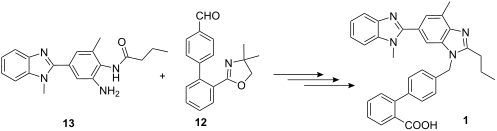
- iodides 5 and 6 using 5 equiv of copper [7]. Modern syntheses of 7 involve cross-couplings of sensitive aryl magnesium [8], zinc [9], or boron [10][11] compounds with alkyl 2-halobenzoates. Since the commercialization of Telmisartan, 7 has become readily available at low cost, so that most subsequent


Palladium- catalyzed cross coupling reactions of 4-bromo- 6H-1,2-oxazines
Beilstein J. Org. Chem. 2009, 5, No. 44, doi:10.3762/bjoc.5.44

- furnishing 4,5-dichloro-substituted compound 7a as a by-product in 13% yield. With the 4-halogenated 6H-1,2-oxazines 2 and 6 in hand, palladium-catalyzed cross couplings offer an efficient and useful approach for the synthesis of novel functionalized 6H-1,2-oxazines. The Suzuki-coupling of the 4-bromo
- the expected product 9d and a byproduct bearing a 4-enyne moiety at 4-position. This indicates an addition of a second alkyne molecule to the primary product 9. Similar results were observed for the Sonogashira reaction of 2a with propargylic alcohol [33]. After successful simple cross couplings of


Polyionic polymers – heterogeneous media for metal nanoparticles as catalyst in Suzuki–Miyaura and Heck–Mizoroki reactions under flow conditions
Beilstein J. Org. Chem. 2009, 5, No. 21, doi:10.3762/bjoc.5.21
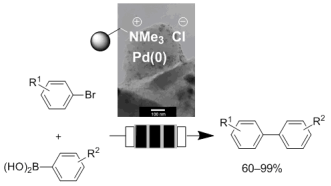
- heterogeneous supports for palladium(0) nanoparticles is described. These functionalized polymers were incorporated inside a flow reactor and employed in Suzuki–Miyaura and Heck cross couplings under continuous flow conditions. Keywords: Heck–Mizoroki reaction; heterogeneous catalysis; ion exchange resin


Convenient methods for preparing π-conjugated linkers as building blocks for modular chemistry
Beilstein J. Org. Chem. 2009, 5, No. 11, doi:10.3762/bjoc.5.11
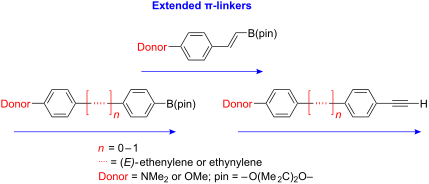
- crucial for such a synthetic approach. Hence, we report here a convenient synthesis as well as characterization of either unsubstituted (R = H) or donor substituted (R = NMe2, OMe) π-conjugated linkers designed for the Suzuki–Miyaura and Sonogashira cross-couplings with a systematically varied and





