


Search results
Search for "phosphine ligands" in Full Text gives 79 result(s) in Beilstein Journal of Organic Chemistry.
Phosphinocyclodextrins as confining units for catalytic metal centres. Applications to carbon–carbon bond forming reactions
Beilstein J. Org. Chem. 2014, 10, 2388–2405, doi:10.3762/bjoc.10.249
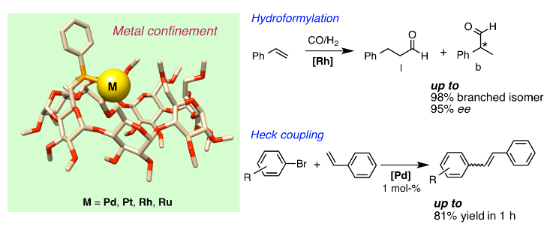
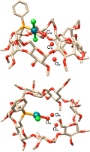
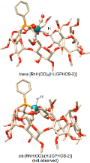
- ). The mass spectrum of the mixture of products showed an intense peak at m/z = 1866.61 (100%), corresponding to the [M + Na]+ cation, as well as a peak resulting from the loss of PhCN (m/z = 1763.57 (11) [M – PhCN + Na]+). No peaks corresponding to compounds with two phosphine ligands were detected in






Exploration of C–H and N–H-bond functionalization towards 1-(1,2-diarylindol-3-yl)tetrahydroisoquinolines
Beilstein J. Org. Chem. 2014, 10, 2186–2199, doi:10.3762/bjoc.10.226

- requires phosphine ligands and high reaction temperatures. Thus, we considered the C2-arylation conditions reported by Yang et al. to be the better choice since mild conditions can be applied and only oxygen is required as oxidant (Table 6) [59]. Additionally, Pd(OAc)2 is a readily available and relatively


Rational design of cyclopropane-based chiral PHOX ligands for intermolecular asymmetric Heck reaction
Beilstein J. Org. Chem. 2014, 10, 1536–1548, doi:10.3762/bjoc.10.158
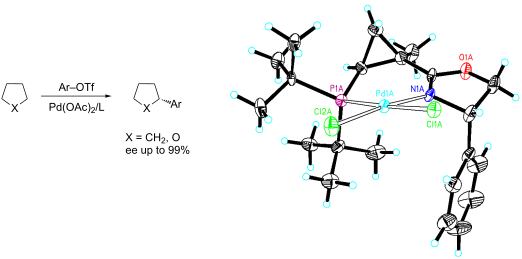
- the isomerization were identified. It was shown that the nature of this isomerization is different from that demonstrated previously using chiral diphosphine ligands. Keywords: asymmetric catalysis; chiral phosphine ligands; cyclopropane; Heck reaction; organophosphorus; transition metal catalysis


Phosphinate-containing heterocycles: A mini-review
Beilstein J. Org. Chem. 2014, 10, 732–740, doi:10.3762/bjoc.10.67
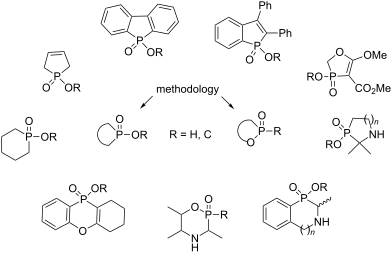
- and broader structural diversity. While, like with any other P-heterocycles the phosphinates can be employed for the synthesis of novel phosphine ligands, their potential for the discovery of novel biologically active motifs is tantalizing. McCormack synthesis. Ring-closing metathesis. Phospha


Silver and gold-catalyzed multicomponent reactions
Beilstein J. Org. Chem. 2014, 10, 481–513, doi:10.3762/bjoc.10.46
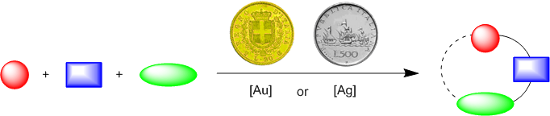
- chiral phosphine ligands and AgOAc via bidentate chelation of a properly substituted aldimine. Chiral phosphine–silver(I) complexes are emerging as a valuable tool for carbon–carbon bond forming reactions. These catalysts are effective in promoting enantioselective allylations, aldol reactions, Mannich


Continuous-flow Heck synthesis of 4-methoxybiphenyl and methyl 4-methoxycinnamate in supercritical carbon dioxide expanded solvent solutions
Beilstein J. Org. Chem. 2013, 9, 2886–2897, doi:10.3762/bjoc.9.325
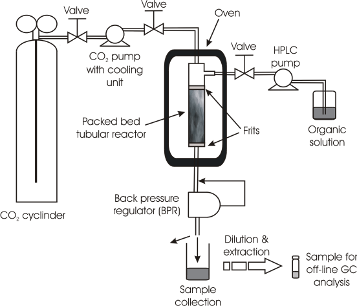
- and even “solventless” systems [9][10][11][12]. Pioneering work using SCFs as reaction media was carried out independently in the late 1990s [13][14] using a palladium complex with fluorinated phosphine ligands. Most of the published results utilising supercritical fluid media have been based on


Advancements in the mechanistic understanding of the copper-catalyzed azide–alkyne cycloaddition
Beilstein J. Org. Chem. 2013, 9, 2715–2750, doi:10.3762/bjoc.9.308
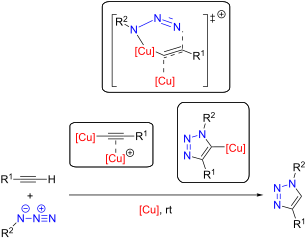
- byproducts [56][57][58] as well as lack of phosphine ligands for the copper(I) species. With toluene as solvent, only 40% conversion in the reaction of benzyl azide with phenylacetylene was observed after 24 hours at room temperature when copper(II) sulfate pentahydrate (1 mol %) was used as catalyst
- [PPh2(OPh-2-OMe)]} (Figure 3, second row, left) in water proceeds at room temperature to give >95% conversion after three hours. In organometallic catalysis, N-heterocyclic carbene ligands (NHCs) have superseded phosphine ligands in many fields of application [145]. It was thus only a matter of time


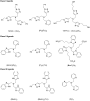


Synthesis of axially chiral gold complexes and their applications in asymmetric catalyses
Beilstein J. Org. Chem. 2013, 9, 2224–2232, doi:10.3762/bjoc.9.261
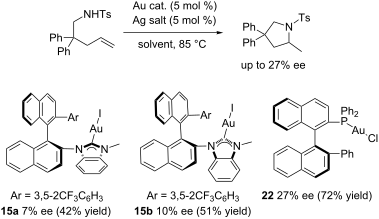
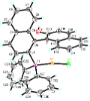
- Chemistry, Shanghai Institute of Organic Chemistry, Chinese Academy of Sciences, 354 Fenglin Road, Shanghai 200032, People’s Republic of China 10.3762/bjoc.9.261 Abstract Several novel chiral N-heterocyclic carbene and phosphine ligands were prepared from (S)-BINOL. Moreover, their ligated Au complexes



Acid, silver, and solvent-free gold-catalyzed hydrophenoxylation of internal alkynes
Beilstein J. Org. Chem. 2013, 9, 2002–2008, doi:10.3762/bjoc.9.235
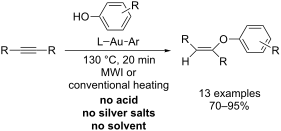
- reactor (Scheme 1) [14]. Although microwave-assisted reactions are legion in organic chemistry, they are rare in organometallic synthesis [15][16][17][18][19][20][21]. Our initial report on this chemistry was focused on gold compounds bearing Buchwald-type phosphine ligands such as JohnPhos and t-BuXPhos


Palladium(II)-catalyzed Heck reaction of aryl halides and arylboronic acids with olefins under mild conditions
Beilstein J. Org. Chem. 2013, 9, 1578–1588, doi:10.3762/bjoc.9.180
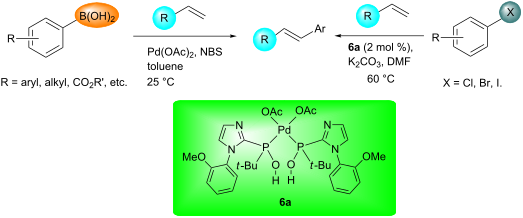
- compared to the conventional trisubstituted phosphine ligands. Despite this advantage, the potential of these ligands has not been fully realized in Heck arylation reactions. Up to now, only a few examples of utilizing SPO-ligated palladium complexes in oxidative Heck reactions have been demonstrated [28


True and masked three-coordinate T-shaped platinum(II) intermediates
Beilstein J. Org. Chem. 2013, 9, 1352–1382, doi:10.3762/bjoc.9.153
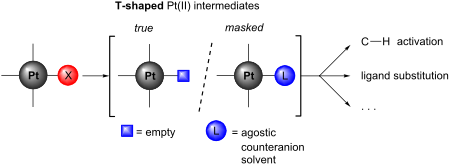
- complexes were prepared by using phosphine ligands (Figure 5). In the 80s, Goel et al. proposed, from nuclear magnetic resonance (NMR) data, a T-shaped structure for the cationic hydride trans-[(t-Bu3P)2Pt(H)]+ T1 containing bulky phosphine ligands [19]. However, it was not until 2005 when Braunschweig et
- presence of bulky ligands, it is the most common motif for the stabilization of three-coordinate complexes. Early works on T-shaped Pt(II) species are related to complexes stabilized with phosphine ligands (Figure 7). Pioneering studies on alkyl complexes from Orpen’s and Spencer’s research groups reported
- compounds in brackets (A2a, A2d, A2e and A3a in Figure 7) is the hydrido–alkene isomer instead of the agostic–alkyl one. Later, Baratta et al. succeeded in the isolation of 14-electron Pt(II) complexes bearing bulky phosphine ligands [39]. The usage of trans-[Pt(Me)Cl(PR3)2] as a starting material, followed





Homolytic substitution at phosphorus for C–P bond formation in organic synthesis
Beilstein J. Org. Chem. 2013, 9, 1269–1277, doi:10.3762/bjoc.9.143

- photoinduced addition of tetrafluorodiphosphine to alkenes and alkynes in the gas phase (Table 3) [31][32][33][34]. The addition provides a series of intriguing bidentate phosphine ligands. The addition to alkynes yields 1:1 mixtures of E/Z isomers. Due to the high reactivity of a difluorophosphanyl radical
- sciences, (Me3Sn)2PPh will serve as a key reagent. Ogawa developed photoinduced phosphination of perfluoroalkyl iodides with tetraorganodiphosphines (Scheme 22) [48]. Remarkably, the phosphination proceeds quantitatively. The phosphine ligands thus synthesized are fluorophilic. Particularly, two molecules


Palladium-catalyzed synthesis of N-arylated carbazoles using anilines and cyclic diaryliodonium salts
Beilstein J. Org. Chem. 2013, 9, 1202–1209, doi:10.3762/bjoc.9.136

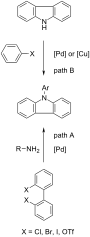
- isolated in 35% yield (Table 1, entry 3). Next, we varied the phosphine ligands (Table 1, entries 4–9). Xantphos was the most efficient bidentate ligand yielding 3a in 46% yield (Table 1, entry 6). Xylenes as the solvent, for example p-xylene, were also suitable for the reaction; in contrast to DME, where




N-Heterocyclic carbene–palladium catalysts for the direct arylation of pyrrole derivatives with aryl chlorides
Beilstein J. Org. Chem. 2013, 9, 303–312, doi:10.3762/bjoc.9.35

- ]. This is especially true for palladium-catalyzed coupling reactions. Pd–NHC catalysts [15] have proven to be excellent alternatives to catalytic systems involving palladium associated to tertiary phosphine ligands [16][17][18][19]. The introduction of aryl groups at C2 or C5 positions of pyrroles is an


Palladium-catalyzed C–N and C–O bond formation of N-substituted 4-bromo-7-azaindoles with amides, amines, amino acid esters and phenols
Beilstein J. Org. Chem. 2012, 8, 2004–2018, doi:10.3762/bjoc.8.227

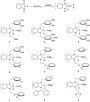
- arylation of the heterocyclic N–H nitrogen [49][50]. To find a suitable condition for amide coupling with 7-azaindole derivatives, various biaryl/alkyl phosphine ligands, palladium catalysts, bases and reaction times, etc., were screened by using electron-deficient N-protected 4-bromo-7-azaindoles 1 as
- (Table 5, entry 1). Other bidentate aryl phosphine ligands L2 and L3 did not result in any product formation (Table 5, entries 2 and 3). The tertiary phosphine ligand PCy3 (L4) was ineffective in the arylation of N-methyl-4-bromo-7-azaindole (1c) with D-alanine (6a) (Table 5, entry 4). It is believed


N-Heterocyclic carbene–palladium(II)-1-methylimidazole complex catalyzed Mizoroki–Heck reaction of aryl chlorides with styrenes
Beilstein J. Org. Chem. 2012, 8, 1916–1919, doi:10.3762/bjoc.8.222

- carbon–carbon bonds [1][2][3][4][5][6][7]. Usually, in order to achieve the highest efficiency of the palladium-catalyzed Mizoroki–Heck reaction, toxic, air-sensitive and expensive phosphine ligands are introduced to facilitate the corresponding transformations [8][9]. In order to overcome the drawbacks
- associated with the phosphine ligands, the development of alternative stable, inexpensive and easily available phosphine-free ligands is still in great demand. In the meantime, N-heterocyclic carbenes (NHCs), possessing the advantages of being stronger σ-donors and weaker π-acceptors than traditional
- phosphine ligands, which can then increase the catalytic activity of the metal centre and the stability of the NHC–metal complexes, have attracted growing attention in the metal-catalyzed carbon–carbon and carbon–heteroatom bond-formation reactions during the past two decades [10][11][12][13][14][15


Iridium-catalyzed intramolecular [4 + 2] cycloadditions of alkynyl halides
Beilstein J. Org. Chem. 2012, 8, 1765–1770, doi:10.3762/bjoc.8.201
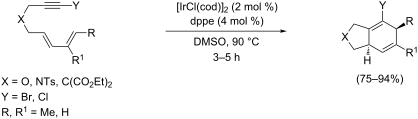
- (Table 1, entries 3 and 4), but this resulted in decomposition of the starting material, both at room temperature and at 90 °C. A variety of phosphine ligands were screened in conjunction with [IrCl(cod)]2 [16][26], and these provided low to moderate yields of 2a, with little to no formation of the


C2-Alkylation of N-pyrimidylindole with vinylsilane via cobalt-catalyzed C–H bond activation
Beilstein J. Org. Chem. 2012, 8, 1536–1542, doi:10.3762/bjoc.8.174
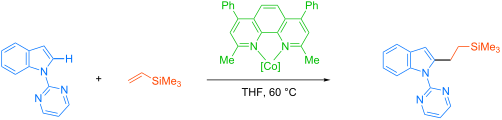
- pyphos, which was the optimum ligand for the alkenylation reaction [33], was poorly effective (Table 1, entry 6). Additional screening of N-heterocyclic carbene (NHC) and phosphine ligands did not lead to an improvement of the catalytic efficiency (Table 1, entries 7–9). The reaction turned out to be


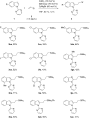


Screening of ligands for the Ullmann synthesis of electron-rich diaryl ethers
Beilstein J. Org. Chem. 2012, 8, 1105–1111, doi:10.3762/bjoc.8.122

- phenols developed by Buchwald [10][11] and Hartwig [12][13] in the 1990s. Nevertheless, the use of this expensive metal in combination with sensitive and costly phosphine ligands limits the use of palladium catalysis for industrial-scale applications and economic aspects have led to a renaissance of the

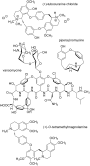
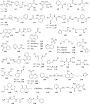

One-pot Diels–Alder cycloaddition/gold(I)-catalyzed 6-endo-dig cyclization for the synthesis of the complex bicyclo[3.3.1]alkenone framework
Beilstein J. Org. Chem. 2011, 7, 1007–1013, doi:10.3762/bjoc.7.114
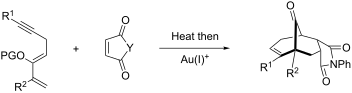
- generate carbon-bridged frameworks of various sizes through a gold(I)-catalyzed carbocyclization [13]. Although the cyclization of enol ether 5 can produce 5-exo and 6-endo products, we found that gold complexes 6, having bulky phosphine ligands such as 2-bis(tert-butylphosphino)biphenyl, gave exclusively


Recent advances in the gold-catalyzed additions to C–C multiple bonds
Beilstein J. Org. Chem. 2011, 7, 897–936, doi:10.3762/bjoc.7.103
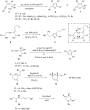
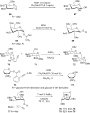
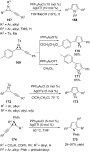
- -activated olefins catalyzed by the combination of gold(I) and electron deficient phosphine ligands has been developed [35]. Gold-catalyzed hydroalkoxylations of non-activated olefins 52 and simple aliphatic alcohols 53 gave unsatisfactory results. However, a significant improvement of reaction efficiency








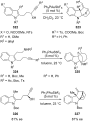
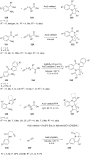
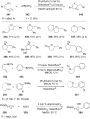


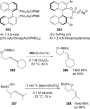


Au(I)/Au(III)-catalyzed Sonogashira-type reactions of functionalized terminal alkynes with arylboronic acids under mild conditions
Beilstein J. Org. Chem. 2011, 7, 808–812, doi:10.3762/bjoc.7.92
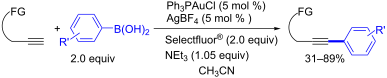
- , commonly employed well recognized and commercially available phosphine ligands [17][18], such as dppm, dppe, dppp, dppf, and XPhos, were screened to test the feasibility of this gold-catalyzed cross-coupling (Table 1, entries 10–12, see also Supporting Information File 1). In addition, a series of


Highly efficient gold(I)-catalyzed Overman rearrangement in water
Beilstein J. Org. Chem. 2011, 7, 781–785, doi:10.3762/bjoc.7.88
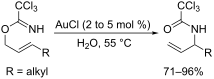
- % yield in a reaction time of 1 h (Table 1, entry 1). Gold(I) complexes with phosphine ligands, Au(PPh3)Cl or Au[P(t-Bu)2(o-Ph)Ph]Cl, in place of AuCl gave none of the desired product (Table 1, entries 2 and 3). Further screening revealed that AuCl alone could catalyze this reaction with high efficiency


When cyclopropenes meet gold catalysts
Beilstein J. Org. Chem. 2011, 7, 717–734, doi:10.3762/bjoc.7.82
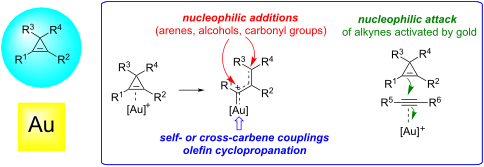
- carbocationic structure (Z)-4a. Upon raising the temperature, organogold (Z)-4a was found to isomerize into its geometric isomer (E)-4a. Switching to more electron-donating phosphine ligands such as PMe3 or PCy3, also led to the organogold species 4b and 4c, respectively, possessing a dioxacarbenium structure




Synthesis of cross-conjugated trienes by rhodium-catalyzed dimerization of monosubstituted allenes
Beilstein J. Org. Chem. 2011, 7, 578–581, doi:10.3762/bjoc.7.67

- -catalyzed reaction and the other a different isomer, were produced by the rhodium-catalyzed reaction. Next, several phosphine ligands were examined (Table 1, entries 2–5). To our delight, the use of the dppe ligand suppressed the formation of 2a and the unidentified compounds, and increased the NMR yield of





