


Search results
Search for "platforms" in Full Text gives 110 result(s) in Beilstein Journal of Organic Chemistry.
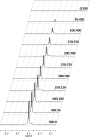
Automated high-content imaging for cellular uptake, from the Schmuck cation to the latest cyclic oligochalcogenides
Beilstein J. Org. Chem. 2020, 16, 2007–2016, doi:10.3762/bjoc.16.167
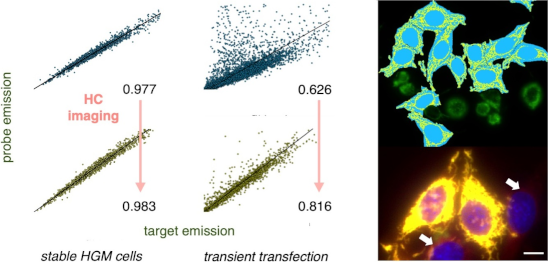
- for help with the high-content microscopy and analysis, J. A. Kritzer (Tufts University) and M. Hensel (Osnabrück University) for providing materials, and the Bioimaging and ACCESS platforms for services. Funding We thank the University of Geneva, the NCCR Chemical Biology, the NCCR Molecular Systems




Anthelmintic drug discovery: target identification, screening methods and the role of open science
Beilstein J. Org. Chem. 2020, 16, 1203–1224, doi:10.3762/bjoc.16.105
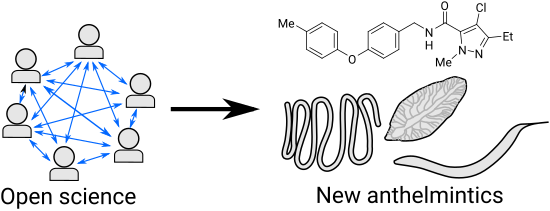
- new anthelmintics, phenotypic screens involving assays of parasites or models in vitro remain important [83]. As a result, several methods and screening platforms have been developed to improve the screening speed and reliability. In this section we discuss recent phenotyping methods and systems, and





Combination of multicomponent KA2 and Pauson–Khand reactions: short synthesis of spirocyclic pyrrolocyclopentenones
Beilstein J. Org. Chem. 2020, 16, 200–211, doi:10.3762/bjoc.16.23
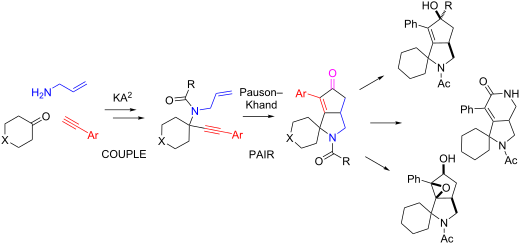
- conformational entropy penalty upon binding to a protein target, and the approach of constraining the ligand conformation with a ring is widely used in drug design [2]. Accordingly, with increasing interest for sp3-rich molecules, spirocyclic compounds are being considered valuable as molecular platforms for the
- molecular platforms for the generation of high-quality small molecule collections, taking advantage of their three-dimensional shape and structural bias to develop lead compounds. The combination of multicomponent KA2 and Pauson–Khand reactions using representative cyclic ketones, allylamine and




Bacterial terpene biosynthesis: challenges and opportunities for pathway engineering
Beilstein J. Org. Chem. 2019, 15, 2889–2906, doi:10.3762/bjoc.15.283
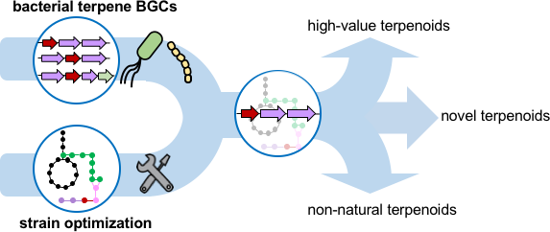
- comparatively small number of characterized bacterial terpenes can likely be attributed to three factors: 1) the early misconception that bacteria are not capable of producing complex terpenoids, 2) the lack of genome mining platforms for terpene biosynthetic gene clusters and the inability to perform rational
- NRPSs), bacterial TCs show only little overall sequence similarity [1]. The lack of conservation in primary sequence has slowed down our understanding of terpene cyclization and, as a result, hampered the development of efficient genome mining platforms for the detection of bacterial terpene BGCs
- powerful chemoinformatic platforms is likely to assist in detecting putative terpenoids. In the future, synthetic biology will likely allow the expansion of terpene chemical space by efficiently producing novel terpenes in genome-optimized host strains and the generation of non-natural terpenes through the




Combining the Ugi-azide multicomponent reaction and rhodium(III)-catalyzed annulation for the synthesis of tetrazole-isoquinolone/pyridone hybrids
Beilstein J. Org. Chem. 2019, 15, 2447–2457, doi:10.3762/bjoc.15.237

- processes has remained underexploited [27]. Thus, we envisioned that the combination of an Ugi-azide-4CR with modern metal-catalyzed C–C bond-forming methods would enable access to structurally novel compounds featuring hybrid heterocycle platforms. We focused on metal-catalyzed annulation approaches that




Norbornadiene-functionalized triazatriangulenium and trioxatriangulenium platforms
Beilstein J. Org. Chem. 2019, 15, 1815–1821, doi:10.3762/bjoc.15.175
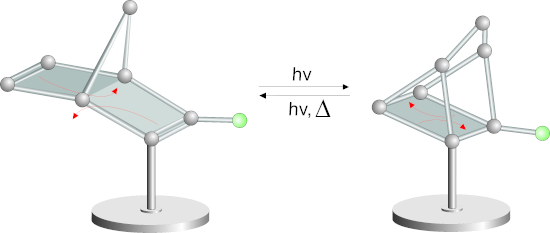
- 10.3762/bjoc.15.175 Abstract Triazatriangulenium (TATA) and trioxatriangulenium (TOTA) ions are particularly suited systems to mount functional molecules onto atomically flat surfaces such as Au(111). The TATA and TOTA units serve as platforms that absorb onto the surface and form ordered monolayers
- (NBD) and quadricyclanes (QC) attached to TATA and TOTA platforms which can be used to check if these accelerated rates and the spin change mechanism also apply to [2 + 2] cycloreversions (QC→NBD). Keywords: [2 + 2] cycloaddition; [2 + 2] cycloreversion; norbornadiene; photochemical isomerization
- ]. Three molecular units are combined in a modular way to achieve a controlled adsorption on the surface: the platform, a spacer and the functional molecule. Triazatriangulenium (TATA) and trioxatriangulenium (TOTA) units are used as molecular platforms. They adsorb on the surface and form ordered


An azobenzene container showing a definite folding – synthesis and structural investigation
Beilstein J. Org. Chem. 2019, 15, 1534–1544, doi:10.3762/bjoc.15.156
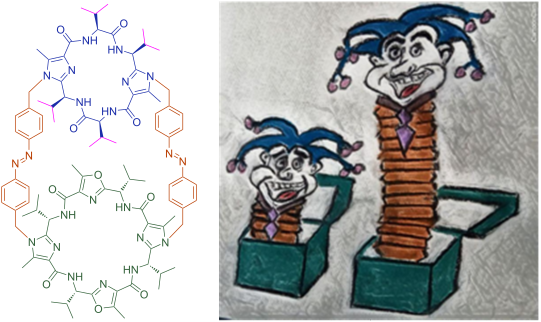
- are determined by the type and size of the macrocyclic platform, e.g., if all of the amino acid side chains are of the same configuration, they are presented on one face of the macrocycle in a convergent manner. The artificial Lissoclinum cyclopeptide platforms feature C2, C3 and C4 symmetry [3]. So
- strategy and we tried to synthesize the chiral foldable container 10 in a one pot reaction. For this purpose, the platforms 2a and 3a and the dibromide 9 were dissolved in acetonitrile in the ratio 1:1:2.2. To this solution potassium carbonate as base was added and the whole mixture was refluxed for one
- -D3 [56][57] as well as the def2-TZVP [60][61] basis set. Some examples for artificial C2- and C3-symmetric platforms based on Lissoclinum cyclopeptide alkaloids. a) Principle of a chiral foldable platform and container based on Lissoclinum cyclopeptide alkaloids. b) Switchable molecular platform 4


Diazocine-functionalized TATA platforms
Beilstein J. Org. Chem. 2019, 15, 1485–1490, doi:10.3762/bjoc.15.150
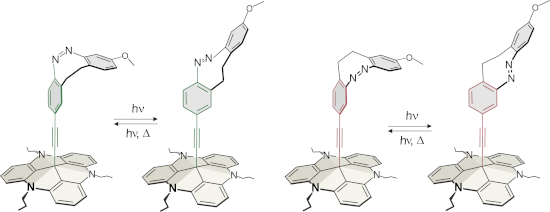
- ” (triazatriangulenium) platforms which adsorb on Au(111) surfaces. A spacer, such as an ethynyl group is connected to the central carbon atom like a post and the azobenzene is mounted on top of the spacer. After preparation of an ordered self-assembled monolayer on gold, the azobenzene units are freestanding upright on
- that are more stable in their trans-configurations [23]. To investigate the electronic coupling effects, we synthesized two diazocine derivatized TATA platforms with ethynyl spacers (diazocine-TATAs). In compound 1 the diazocine is connected to the platform with the ethynyl group in para-position to
- different diazocines mounted on TATA platforms (1, 2). The photochemical switching between the stable cis and metastable trans-isomers was investigated. Upon irradiation with light of 405 nm diazocine-TATAs 1 and 2 convert to their trans-configurations in moderate to good yields. The metastable trans



Borylation and rearrangement of alkynyloxiranes: a stereospecific route to substituted α-enynes
Beilstein J. Org. Chem. 2019, 15, 1416–1424, doi:10.3762/bjoc.15.141

- -Enynes are also important building blocks in organic syntheses or platforms for further synthesis [19]. Accordingly, significant efforts have been made to develop efficient syntheses of enynes [17][18][19][20]. The most common routes relied on Wittig-type reactions [21][22] and transition-metal-catalyzed


Steroid diversification by multicomponent reactions
Beilstein J. Org. Chem. 2019, 15, 1236–1256, doi:10.3762/bjoc.15.121
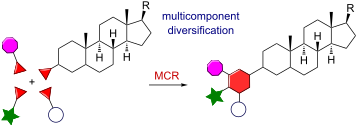
- materials for relevant MCRs such as those based on imine and isocyanide. The focus is mainly posed on proving the amenability of MCRs for the diversity-oriented derivatization of naturally occurring steroids and the construction of complex steroid-based platforms for drug discovery, chemical biology and



Diaminoterephthalate–α-lipoic acid conjugates with fluorinated residues
Beilstein J. Org. Chem. 2019, 15, 981–991, doi:10.3762/bjoc.15.96
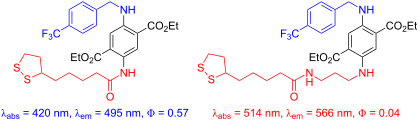
- sensorics [19], microcontact printing [20], dip-pen nanolithography [21], microfluidics [22], and protection of nanoparticles [23]. Initially, surface modification aimed on controlling physical properties of surfaces [24][25], while nowadays chemical surface properties can be tuned to yield platforms for


First synthesis of cryptands with sucrose scaffold
Beilstein J. Org. Chem. 2019, 15, 210–217, doi:10.3762/bjoc.15.20
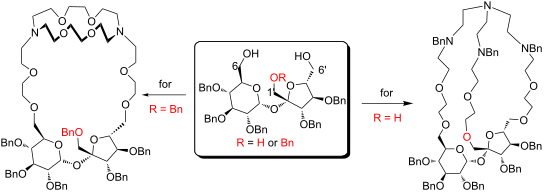
- ring, functional groups etc. Carbohydrates are especially useful platforms for macrocycles being able to recognize enantiomers. Special attention is directed to native and modified cyclodextrins, cyclic oligosaccharides, which have found wide application in many aspects of chemistry and industry [3][4


Assessing the possibilities of designing a unified multistep continuous flow synthesis platform
Beilstein J. Org. Chem. 2018, 14, 1917–1936, doi:10.3762/bjoc.14.166
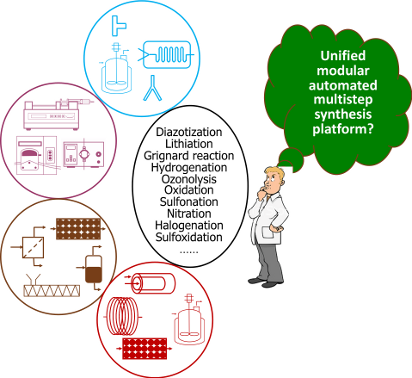
- ’, in reality, such an envisaged system would be much more complex than these examples. Keywords: automation; continuous flow synthesis; cybernetics; multistep flow synthesis; unified platforms; Review Introduction Flow chemistry is now seen as a reliable approach for the synthesis of simple organic
- experimental set-ups and even automated self-optimizing platforms were also tested [33]. The natural evolution was an archetype for the multistep flow synthesis. The integration of in-line separation has taken the confidence of the synthesis community one step ahead [21][34][35]. In parallel to this, in-line
- protocols. However, the approaches adopted for several multistep flow synthesis still lack from seamless extrapolation to other synthesis platforms, including the non-availability of specific unit operation in continuous mode at the throughputs suitable for laboratory scale. Though, the multistep continuous



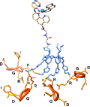
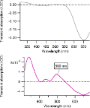
Synthesis and photophysical studies of a multivalent photoreactive RuII-calix[4]arene complex bearing RGD-containing cyclopentapeptides
Beilstein J. Org. Chem. 2018, 14, 1758–1768, doi:10.3762/bjoc.14.150
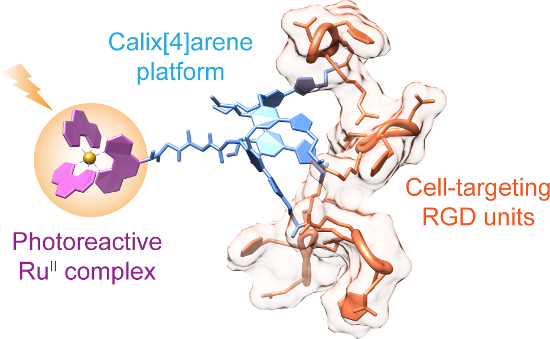
- theoretical isotope patterns confirms (inset Figure 6) that irradiation of conjugate 9 and GMP efficiently yielded the desired photoadduct. Conclusion The present work validates the design strategy that consists in using calix[4]arenes as addressable platforms for the elaboration of multivalent photoreactive





Hyper-reticulated calixarene polymers: a new example of entirely synthetic nanosponge materials
Beilstein J. Org. Chem. 2018, 14, 1498–1507, doi:10.3762/bjoc.14.127

- inorganic species such as copper oxide [54] or noble metals (Pt [55] and Pd [56]) able to catalyze organic reactions, our nanosponges undoubtedly appear as promising new platforms for the preparation of composite nanocatalysts or functional materials with improved performances. Experimental All the reagents


Recent applications of chiral calixarenes in asymmetric catalysis
Beilstein J. Org. Chem. 2018, 14, 1389–1412, doi:10.3762/bjoc.14.117
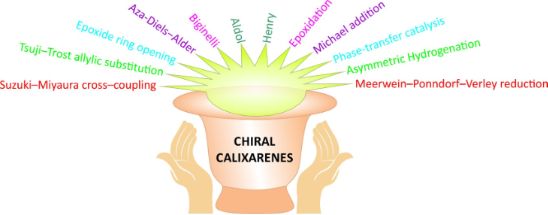
- -dimensional molecular platforms along with their easy syntheses and versatile modification at the upper and lower rims. This review summarizes the recent progress of synthesis and use of chiral calixarenes in asymmetric syntheses which emerged later than 2010. Keywords: asymmetric catalysis; chiral


A three-armed cryptand with triazine and pyridine units: synthesis, structure and complexation with polycyclic aromatic compounds
Beilstein J. Org. Chem. 2018, 14, 1370–1377, doi:10.3762/bjoc.14.115
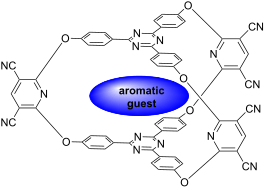
- -triazine units in cryptand 2 exhibit a slight steric hindrance with the phenyl groups located at positions 2, 4 and 6 and thus, the reference triphenyltriazine aromatic platforms can adopt a planar structure which is favorable for the binding of aromatic guests such as anthracene, pyrene or 1,5




Fluorocyclisation via I(I)/I(III) catalysis: a concise route to fluorinated oxazolines
Beilstein J. Org. Chem. 2018, 14, 1021–1027, doi:10.3762/bjoc.14.88
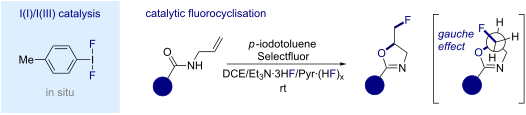
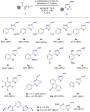
- siderophore antibiotic D-fluviabactin, the cytotoxic agent westiellamide, the antifungal macrodiolide leupyrrin A1 and the antitumour compound BE-70016 (Figure 1). In addition, synthetic polymers based on the 2-oxazoline building block constitute versatile platforms for a range of biomedical applications




2-Iodo-N-isopropyl-5-methoxybenzamide as a highly reactive and environmentally benign catalyst for alcohol oxidation
Beilstein J. Org. Chem. 2018, 14, 971–978, doi:10.3762/bjoc.14.82

- partially supported by a Grant-in-Aid for Scientific Research on Innovative Areas “Advanced Molecular Transformations by Organocatalysts” from the Ministry of Education, Culture, Sports, Science and Technology, Japan; JSPS Core-to-Core Program, B. Asia-Africa Science Platforms; and Toyama Prefecture







Nucleophilic dearomatization of 4-aza-6-nitrobenzofuroxan by CH acids in the synthesis of pharmacology-oriented compounds
Beilstein J. Org. Chem. 2017, 13, 2854–2861, doi:10.3762/bjoc.13.277
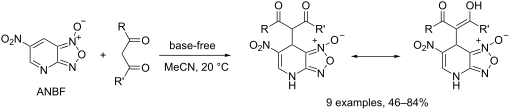
- reactions proceed in the absence of any added base emphasizing the highly electrophilic character of ANBF. The resulting compounds combine in one molecule NO-donor furoxan ring along with a pharmacologically important 1,4-dihydropyridine fragment and therefore can be considered as prospective platforms for
- ring along with the pharmacologically important 1,4-dihydropyridine fragment and therefore can be considered as prospective platforms for the design of pharmacology-oriented heterocyclic systems. General view of molecule 12 in crystal. Anisotropic displacement parameters for non-hydrogen atoms are


A recursive microfluidic platform to explore the emergence of chemical evolution
Beilstein J. Org. Chem. 2017, 13, 1702–1709, doi:10.3762/bjoc.13.164
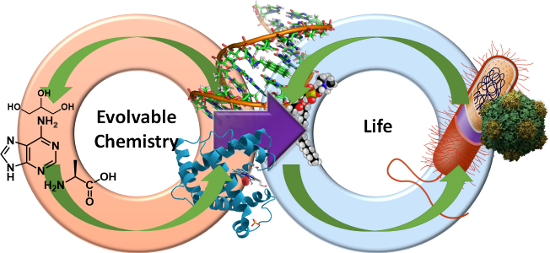
- : artificial life; autocatalysis; automated platforms; chemical evolution; evolution before genes; evolution first; microfluidics; Introduction The transition from an inanimate inorganic world, principally consisting of minerals, gases and small organic compounds, to the living world with the first life forms




Aqueous semisynthesis of C-glycoside glycamines from agarose
Beilstein J. Org. Chem. 2017, 13, 1222–1229, doi:10.3762/bjoc.13.121

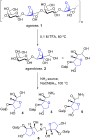
- available, these polysaccharides are far little explored as sources of chemical platforms for drug development. The rare monosaccharide 3,6-anhydro-α-L-galactopyranose (AnGal), naturally present in the agarose structure, is a valuable scaffold since it is a highly functionalized and a chiral-rich monomer



Glycoscience@Synchrotron: Synchrotron radiation applied to structural glycoscience
Beilstein J. Org. Chem. 2017, 13, 1145–1167, doi:10.3762/bjoc.13.114
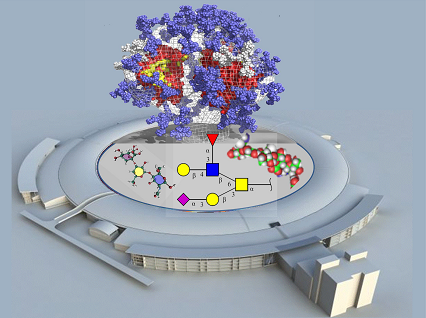
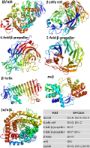
- -Asp form was present. There are other cases where crystallization may be facilitated by the presence of glycans that form stabilizing intermolecular contacts within the crystal. Platforms for the expression and crystallization of glycoproteins are available and can typically be successful in a few






Glyco-gold nanoparticles: synthesis and applications
Beilstein J. Org. Chem. 2017, 13, 1008–1021, doi:10.3762/bjoc.13.100
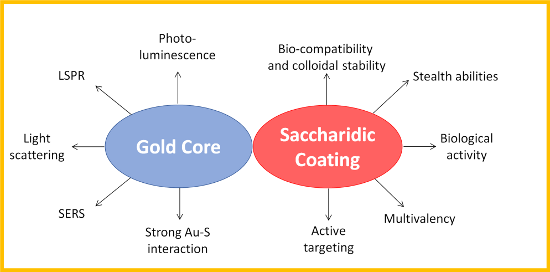
- -glycopeptide antigens were able to stimulate the immune system, suggesting GAuNPs are interesting platforms for developing new immunotherapeutics. The potential of AuNPs as antigen carriers for the development of synthetic vaccines is still being investigated in the context of bacterial infections. NPs are





