


Search results
Search for "Sonogashira coupling" in Full Text gives 116 result(s) in Beilstein Journal of Organic Chemistry.
SmI2-mediated dimerization of indolylbutenones and synthesis of the myxobacterial natural product indiacen B
Beilstein J. Org. Chem. 2015, 11, 1700–1706, doi:10.3762/bjoc.11.184

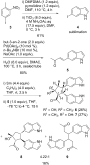
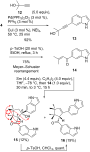
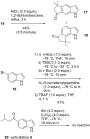
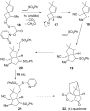
- Nicolaou and Procter [31][32]. The pattern of geometrical [3 + 2] cycloaddition was also obtained with inverted enone moieties. 6-Prenoylindole (14) was synthesized in two steps from 6-iodoindole (4) by Sonogashira coupling with propargylic alcohol 12 and subsequent Meyer–Schuster rearrangement [33



Star-shaped tetrathiafulvalene oligomers towards the construction of conducting supramolecular assembly
Beilstein J. Org. Chem. 2015, 11, 1596–1613, doi:10.3762/bjoc.11.175
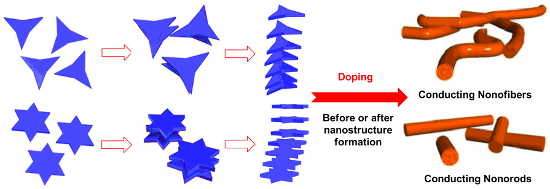
- in solution and in the solid state even in neutral state [18]. Compounds 22 and 23 were synthesized in good yields by Sonogashira coupling reaction of 1,3,5-triethynylbenzene with 20 and 1,3,5-triiodobenzene with 21, respectively (Scheme 1). X-ray analysis of 22 revealed the columnar structure, in
- )[12]annulenes 28 and 29 were pepared by Sonogashira coupling of 26 with 24 and 27 with 25 in 25 and 36% yields, respectively. For the synthesis of 30 and 31, cyclotrimerization of 24 and 25 with a stoichiometric amount of PdCl2(PPh3)2 and CuI in triethylamine–THF was employed to afford 30 and 31 in 32
- cyclic conjugation and the interaction of the two TTF units in the neutral and cationic states, TTF-fused annulenes 33 [69] and radiannulenes 34 and 35 [70] were synthesized using a Sonogashira coupling in moderate yields (Figure 9). The thermodynamic study on the self-aggregation of tris(TTF)annulenes


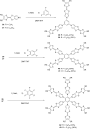


Synthesis and spectroscopic properties of β-triazoloporphyrin–xanthone dyads
Beilstein J. Org. Chem. 2015, 11, 1434–1440, doi:10.3762/bjoc.11.155
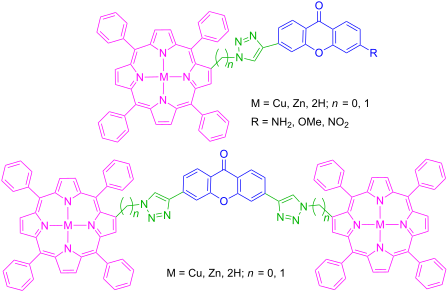
- -diethynylxanthen-9-one (11) was synthesized in three steps from 3,6-dihydroxyxanthen-9-one (8) as a starting material. The first step involved the reaction of xanthone (8) with triflic anhydride in CH2Cl2 containing pyridine at 0 °C to afford 3,6-di-OTf-xanthone [52] (9). Subsequent Sonogashira coupling with


Selected synthetic strategies to cyclophanes
Beilstein J. Org. Chem. 2015, 11, 1274–1331, doi:10.3762/bjoc.11.142
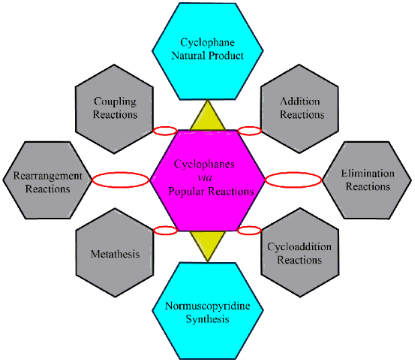
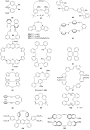
- moderate yield. RCM of the diene derived from the dialdehyde 111 afforded the macrocyclic cyclophane 113 as a less strained product (Scheme 16). Sonogashira coupling: Wegner and co-workers [125] have reported the synthesis of cyclophanes 122a–c via Sonogoshira coupling [126] (Scheme 17). To this end, the






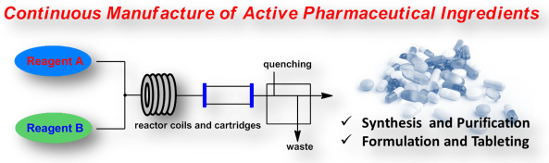
The synthesis of active pharmaceutical ingredients (APIs) using continuous flow chemistry
Beilstein J. Org. Chem. 2015, 11, 1194–1219, doi:10.3762/bjoc.11.134


Chiroptical properties of 1,3-diphenylallene-anchored tetrathiafulvalene and its polymer synthesis
Beilstein J. Org. Chem. 2015, 11, 972–979, doi:10.3762/bjoc.11.109
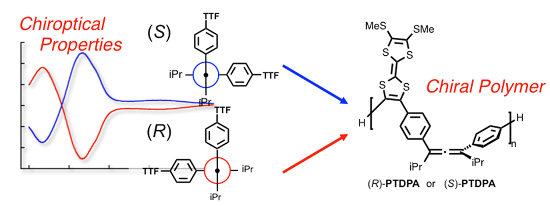
- process as shown in Scheme 1. Thus, starting with 1-(4-bromophenyl)-2-methylpropanone (4), which was prepared from bromobenzaldehyde (see Supporting Information File 1), which upon treatment with lithium acetylide at low temperature gave racemic propargyl alcohol 5 in 94% yield. Sonogashira coupling

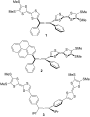

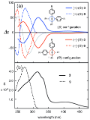

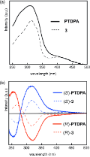

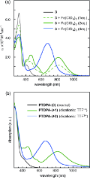
Interactions between tetrathiafulvalene units in dimeric structures – the influence of cyclic cores
Beilstein J. Org. Chem. 2015, 11, 930–948, doi:10.3762/bjoc.11.104
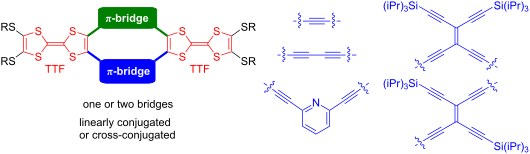
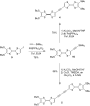
- conjugated buta-1,3-diynediyl bridge between the two TTFs. Results and Discussion Synthesis The synthesis of 4 and 5 was accomplished according to Scheme 1 starting from the known TTF-iodide 9, readily prepared from compound 3b [16]. A Sonogashira coupling with trimethylsilylacetylene gave 10 that after
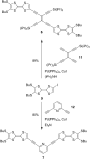
- desilylation was either subjected to a Sonogashira coupling with 9 to give 4 or to an oxidative Hay coupling to give 5 – using recently developed conditions where 4 Å molecular sieves were added to the reaction mixture to remove water [17]. Compounds 6 and 7 were prepared by treating 9 with either the trans
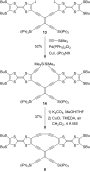
- -TEE 11 [18] or 2,6-diethynylpyridine 12 in Sonogashira coupling reactions (Scheme 2). The unsymmetrical radiaannulene 8 was prepared according to Scheme 3. The TEE-TTF derivative 13 [15] was reacted in a Sonogashira coupling with an excess of trimethylsilylacetylene to furnish the product 14. Removal






Gold-catalyzed formation of pyrrolo- and indolo-oxazin-1-one derivatives: The key structure of some marine natural products
Beilstein J. Org. Chem. 2015, 11, 897–905, doi:10.3762/bjoc.11.101

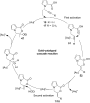
- and N-propargylindole-2-carboxylic acids 37, 41 and 45, which were synthesized by hydrolysis of the corresponding esters (Table 2). The Sonogashira cross-coupling reaction [56][57][58][59][60][61] was used for the synthesis of the desired starting materials 29 and 33. For the Sonogashira coupling


Synthesis and chemosensing properties of cinnoline-containing poly(arylene ethynylene)s
Beilstein J. Org. Chem. 2015, 11, 373–384, doi:10.3762/bjoc.11.43

- ethynylene)s comprising a cinnoline core were prepared in high yields via a three-step methodology. A Richter-type cyclization of 2-ethynyl- and 2-(buta-1,3-diynyl)aryltriazenes was used for cinnoline ring formation, followed by a Sonogashira coupling for the introduction of trimethylsilylethynyl moieties
- and a sila-Sonogashira coupling as the polycondensation technique. The fluorescence of the cinnoline-containing polymers in THF was highly sensitive to quenching by Pd2+ ions. Keywords: cinnolines; fluorescence quenching; Pd2+ detection; poly(arylene ethynylene)s; Sonogashira coupling; Introduction
- -dibromocinnolines 4a,b (Table 1). Triazenes 3a,b were synthesized from 4-bromo-2-iodophenyltriazene 1 by the Sonogashira coupling [44][45] with hexyne (2a) and TMS-protected diacetylene 2b using conditions for the one-pot TMS group removal and the Sonogashira coupling developed recently [46]. The last reaction


Anionic sigmatropic-electrocyclic-Chugaev cascades: accessing 12-aryl-5-(methylthiocarbonylthio)tetracenes and a related anthra[2,3-b]thiophene
Beilstein J. Org. Chem. 2015, 11, 273–279, doi:10.3762/bjoc.11.31
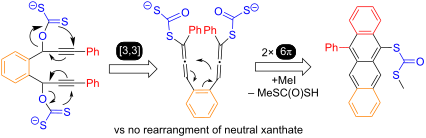
- meso:rac 8a. We assign this transformation to an equilibrium between dialkoxide 9 and the benzylic anion 10. Intramolecular proton delivery via cyclic transition state 11 is proposed to favour the meso dialkoxide prior to protonic quench. Samples of rac enriched 8a were prepared from Sonogashira coupling


Building complex carbon skeletons with ethynyl[2.2]paracyclophanes
Beilstein J. Org. Chem. 2014, 10, 2013–2020, doi:10.3762/bjoc.10.209

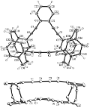
- Sonogashira coupling) [7]. For the smaller oligomers (dimers, trimers) the ortho-isomer with its opening angle of 60° between the ethynyl functions leads preferentially to (mono)cyclic hydrocarbons. For the meta-compound 3 we can expect both cyclic and acyclic (linear) products, and when the two ethynyl
- ] appears simple, we always obtained complex mixtures of products when 13 and excess 1,2-diiodobenzene (14) were subjected to Sonogashira coupling. The main product of this coupling process was the monoaldehyde 15 (i.e., the 1:1-coupling product of 13 and 14). The desired 2:1-product 16 was always isolated
- following pathway. Sonogashira coupling of iodide 15 with trimethylsilylacetylene furnished the TMS-protected aldehyde 23 in good yield. Deprotection and conversion of its formyl function into an ethynyl group by the Bestmann–Ohira protocol took place readily and provided the triacetylene 24, again in good




Synthesis of trifluoromethyl-substituted pyrazolo[4,3-c]pyridines – sequential versus multicomponent reaction approach
Beilstein J. Org. Chem. 2014, 10, 1759–1764, doi:10.3762/bjoc.10.183

- all obtained products. Keywords: microwave-assisted reactions; multicomponent reactions; NMR (1H; 13C; 15N; 19F); Sonogashira coupling; trifluoromethylpyrazoles; Introduction Fluorine-containing compounds play an important role in medicinal and pharmaceutical chemistry as well as in agrochemistry [1


Improving the reactivity of phenylacetylene macrocycles toward topochemical polymerization by side chains modification
Beilstein J. Org. Chem. 2014, 10, 1613–1619, doi:10.3762/bjoc.10.167
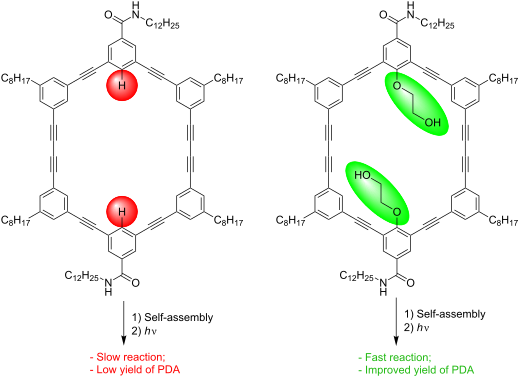
- protection of the hydroxy moiety with TBS in order to facilitate the further synthetic steps by increasing the solubility of the compound (57% yield over 2 steps). Then, by using a standard Castro–Stephens–Sonogashira coupling, TMS protecting groups were installed (73% yield). After basic removal of the
- alkyne protective group, the half-macrocycle 5 was obtained by Castro–Stephens–Sonogashira coupling with previously reported 3,5-diiodooctylbenzene [39] in good yields despite of the possible polymerization side reaction (54% yield). TMS-protected alkynes were, then, installed on the half-macrocycle to
- approach was used for PAM3. Starting from previously synthesized compound 3, the half-macrocycle 9 was obtained by standard Castro–Stephens–Sonogashira coupling with dialkyne 8 in good yield (59%). It is noteworthy that compound 8 was obtained from oxidative deprotection of compound 7. After installing TMS




One-pot three-component synthesis and photophysical characteristics of novel triene merocyanines
Beilstein J. Org. Chem. 2014, 10, 599–612, doi:10.3762/bjoc.10.51
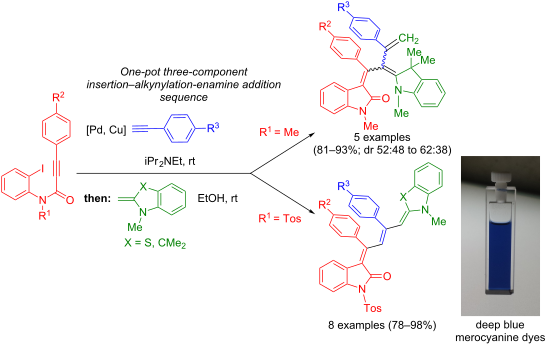
- -enylidene and 4-(1,3,3-trimethylindolin-2-ylidene)but-2-en-1-ylideneindolones are obtained in good to excellent yields in a consecutive three-component insertion Sonogashira coupling–addition sequence. The selectivity of either series is remarkable and has its origin in the stepwise character of the




Practical synthesis of aryl-2-methyl-3-butyn-2-ols from aryl bromides via conventional and decarboxylative copper-free Sonogashira coupling reactions
Beilstein J. Org. Chem. 2014, 10, 384–393, doi:10.3762/bjoc.10.36

- bromides rather than expensive iodides and using 4 or propiolic acid rather than TMS-acetylene as inexpensive alkyne sources are described. Keywords: alkynes; decarboxylative couplings; Erlotinib; palladium; propiolic acid; Introduction The Sonogashira coupling reaction of aryl or alkenyl halides with
- ][11][12][13]. The Sonogashira coupling reaction is usually carried out under Pd/Cu catalysis, in which the palladium has the function to promote the cross-coupling of an aryl fragment, added via oxidative addition of the corresponding halide, with an alkynyl residue to provide a disubstituted
- of symmetrical and unsymmetrical diarylacetylenes resides not only in its low cost, but also in the possibility to carry out a conventional and a decarboxylative Sonogashira coupling reaction in sequence at the two sp carbons with two different aryl halides. Therefore a disubstituted alkyne can be


Total synthesis of the endogenous inflammation resolving lipid resolvin D2 using a common lynchpin
Beilstein J. Org. Chem. 2013, 9, 2762–2766, doi:10.3762/bjoc.9.310
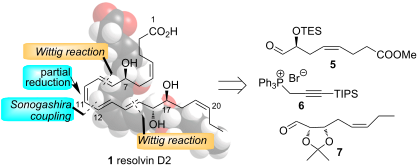
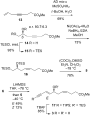
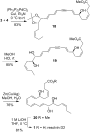
- . Desilylation of 11 followed by hydrozirconation and iodination gave the vinyl iodide 4 and Sonogashira coupling between this compound and enyne 3 provided alkyne 18. Acetonide deprotection, partial reduction and ester hydrolysis then gave resolvin D2 (1). Keywords: catalysis; eicosanoid; natural product
- ; resolvin D2; Sonogashira coupling; total synthesis; Wittig reaction; Introduction The resolution of inflammation is a tightly governed active process effectively mediated by a range of bioactive polyunsaturated fatty acids, peptides and proteins. In 2002, a new family of endogenously generated lipid
- can produce useful amounts of this important compound as well as novel isomers. Results and Discussion Retrosynthetic analysis A retrosynthetic analysis of RvD2 (1) is shown in Scheme 1. It was envisaged that the target compound 1 could be secured via a Sonogashira coupling to form the C11–C12 bond


Practical synthesis of indoles and benzofurans in water using a heterogeneous bimetallic catalyst
Beilstein J. Org. Chem. 2013, 9, 1426–1431, doi:10.3762/bjoc.9.160

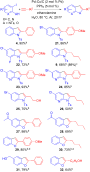
- efficiency of our catalytic system highlighting the role of water in solvating the substrates. We then evaluated the influence of the nitrogen protecting group for the cascade Sonogashira coupling–cyclization sequence on two model reactions (Scheme 2). We observed that the coupling of phenyl acetylene (2


Some aspects of radical chemistry in the assembly of complex molecular architectures
Beilstein J. Org. Chem. 2013, 9, 557–576, doi:10.3762/bjoc.9.61

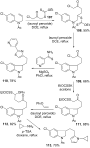
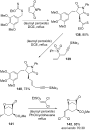
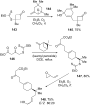
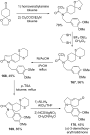
- starting xanthate. For instance, a regioselective Sonogashira coupling leading to compound 57 may be performed without affecting the less reactive chlorine substituent. The annelation commencing with xanthate 58 and furnishing indole derivative 59, an advanced intermediate in the formal synthesis of













Asymmetric total synthesis of smyrindiol employing an organocatalytic aldol key step
Beilstein J. Org. Chem. 2012, 8, 1112–1117, doi:10.3762/bjoc.8.123
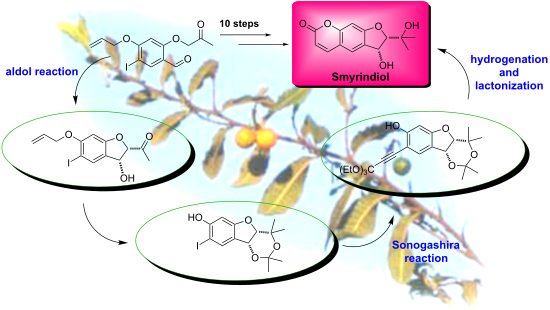
- an acetonide, whereupon lactonization would take place simultaneously. Alkyne 5 could be synthesized through a Sonogashira coupling with iodide 6. This acetonide could be formed by addition of a methyl anion equivalent to the carbonyl group of the aldol product 7 with subsequent protection of the 1,3


On the bromination of the dihydroazulene/vinylheptafulvene photo-/thermoswitch
Beilstein J. Org. Chem. 2012, 8, 958–966, doi:10.3762/bjoc.8.108
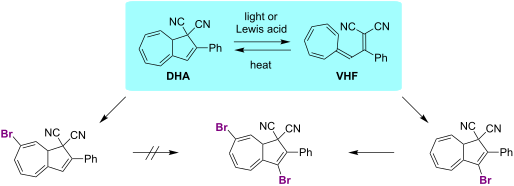
- optical and redox properties [13]. The two bromo positions of 14 showed very different reactivity. Thus, subjecting 14 to a Sonogashira coupling with triisopropylsilylacetylene by using the Pd(PPh3)2Cl2/CuI catalyst system only gave the monocoupled product 15 (Scheme 7), confirmed by X-ray crystal


Diarylethene-modified nucleotides for switching optical properties in DNA
Beilstein J. Org. Chem. 2012, 8, 905–914, doi:10.3762/bjoc.8.103
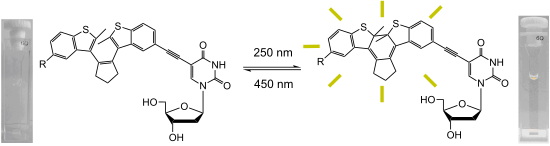
- last two synthetic steps are similar to those for nucleoside 4. Deprotection of 12 gave the doubly ethinylated diarylethene 15 in quantitative yield. The subsequent Sonogashira coupling with 14 at rt gave the mono-nucleosidic product 5 in 23% yield, and at 60 °C the di-nucleosidic product 6 in 35




Branching out at C-2 of septanosides. Synthesis of 2-deoxy-2-C-alkyl/aryl septanosides from a bromo-oxepine
Beilstein J. Org. Chem. 2012, 8, 522–527, doi:10.3762/bjoc.8.59

- acceptor moieties in C–C bond forming Heck, Suzuki and Sonogashira coupling reactions, thus affording 2-deoxy-2-C-alkyl/aryl septanosides. Whereas Heck and Sonogashira coupling reactions afforded 2-deoxy-2-C-alkenyl and -alkynyl derivatives, respectively, the Suzuki reaction afforded 2-deoxy-2-C-aryl
- , Heck, Suzuki and Sonogashira coupling reactions. Heck coupling reactions [24][25] were undertaken first. Thus, the reaction of bromo-oxepine 2 with methyl acrylate was performed, in the presence of Pd(OAc)2 (10 mol %) and Cs2CO3 in 1,4-dioxane, at 98 °C (Scheme 1), to afford diene 3, in 70% yield. The
- bromo-oxepine 2, efforts were undertaken to implement C–C bond forming Suzuki and Sonogashira coupling reactions. Suzuki reactions were undertaken by involving phenylboronic acid and substituted phenylboronic acids [26][27], in the presence of Pd(OAc)2 (10 mol %) and Cs2CO3 in 1,4-dioxane at 98 °C


Synthesis of multivalent host and guest molecules for the construction of multithreaded diamide pseudorotaxanes
Beilstein J. Org. Chem. 2012, 8, 234–245, doi:10.3762/bjoc.8.24
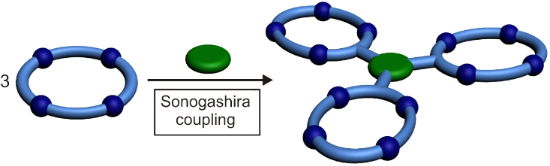
- wheel precursors. Keywords: multivalency; pseudorotaxanes; Sonogashira coupling; supramolecular chemistry; tetralactam macrocycles; Introduction Synthetic supramolecular complexes have the great potential to put those concepts to the test that govern much of the noncovalent chemistry in nature. Among
- " of multivalent host and guest molecules has been described, which can be obtained from the two easy-to-prepare building blocks 1 and 2 by Sonogashira coupling reactions to ethynyl-substituted spacers. This synthetic approach is convergent, and thus the sometimes limited yields do not detract from
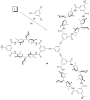
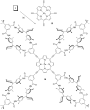
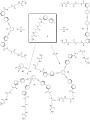
- Sonogashira coupling to the appropriate spacers: (a) EDC, HOBt, DMF, 22 h, 92%; (b) H2, Pd/C, EtOH, 3 d, 98%; (c) EDC.HCl, HOBt, DMF, 24 h, 73%; (d) I2, PIDA, AcOH/Ac2O, 1 h, 67%; (EDC = 1-ethyl-3-(3-dimethylaminopropyl)carbodiimide, HOBt = 1-hydroxybenzotriazole, DMF = N,N'-dimethylformamide, PIDA


Pseudo five-component synthesis of 2,5-di(hetero)arylthiophenes via a one-pot Sonogashira–Glaser cyclization sequence
Beilstein J. Org. Chem. 2011, 7, 1499–1503, doi:10.3762/bjoc.7.174
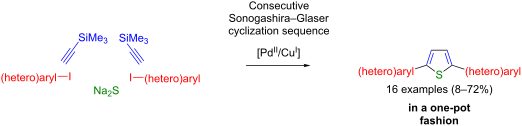
- . Deviating from the general procedure, in the case of m-bromo-iodobenzene (1d) only 1 equiv of TMSA was added in order to minimize a second alkynylation at the bromine position in the initial Sonogashira coupling step, which resulted in a moderate yield of the dibromo derivative (2d). Upon reaction of the m


Amines as key building blocks in Pd-assisted multicomponent processes
Beilstein J. Org. Chem. 2011, 7, 1387–1406, doi:10.3762/bjoc.7.163
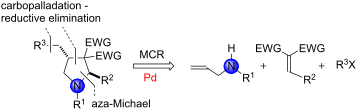
- reported by Wu and coworkers. Initial Sonogashira coupling was effected between a 2-bromobenzaldehyde and an alkyne in the presence of catalytic amounts of PdCl2(PPh3)2 and CuI. After complete conversion of the aldehyde into the coupling product 25 (TLC control), a primary amine and diethylphosphite were
- ynones were then treated in situ with sodium iodide and PTSA to yield 2-substituted N-Boc-4-iodopyrroles 32 in good overall yields. Interestingly, this product may be further transformed in situ into the corresponding N-Boc-4-alkynylpyrroles 33 by a further Sonogashira coupling that makes use of the
- -step reaction with, first, a Sonogashira coupling of o-haloanilines with terminal alkynes, followed by a cyclization reaction of the resulting 2-alkynyaniline derivatives [26][27]. A strategy for the preparation of indoles through a three-component reaction consisted of generating the terminal alkyne





