


Search results
Search for "antibiotics" in Full Text gives 227 result(s) in Beilstein Journal of Organic Chemistry. Showing first 200.
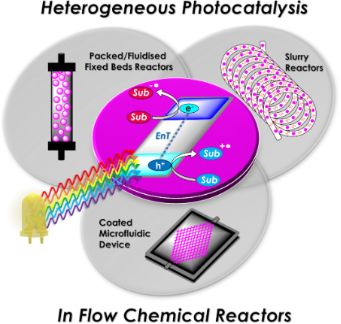
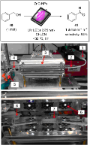
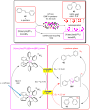
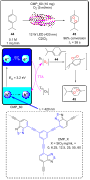
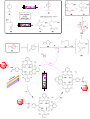
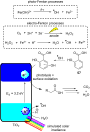
Heterogeneous photocatalysis in flow chemical reactors
Beilstein J. Org. Chem. 2020, 16, 1495–1549, doi:10.3762/bjoc.16.125














4-Hydroxy-3-methyl-2(1H)-quinolone, originally discovered from a Brassicaceae plant, produced by a soil bacterium of the genus Burkholderia sp.: determination of a preferred tautomer and antioxidant activity
Beilstein J. Org. Chem. 2020, 16, 1489–1494, doi:10.3762/bjoc.16.124
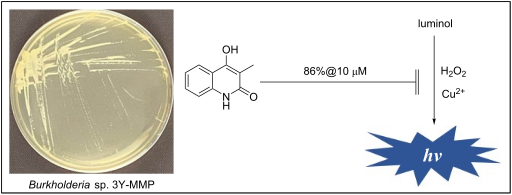
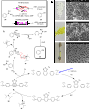
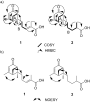
- . Though not alkylated, the close structural similarity to 3 suggests that 1 is also a member of the 2-alkyl-4-quinolone class signaling molecules/antibiotics known from Pseudomonas aeruginosa and some Burkholderia species [26][27]. Quinolones of this class are classified into two lineages, those with or


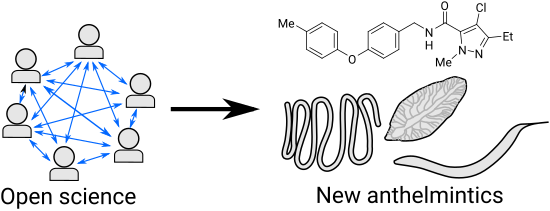
Anthelmintic drug discovery: target identification, screening methods and the role of open science
Beilstein J. Org. Chem. 2020, 16, 1203–1224, doi:10.3762/bjoc.16.105
- -Wolbachia treatments. These treatments target the bacterial symbiont Wolbachia which is essential for development, growth and survival of many filarial parasites. Targeting of Wolbachia with antibiotics has been shown to have curative efficacy against lymphatic filariasis [53] and importantly is safe to
- administer in L. loa co-endemic regions [54]. However, currently available effective antibiotics are unsuitable for public health MDA strategies due to contraindications and treatment duration and therefore novel compounds are required. Current anthelmintics – onchocerciasis Onchocerciasis (river blindness


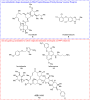



A cyclopeptide and three oligomycin-class polyketides produced by an underexplored actinomycete of the genus Pseudosporangium
Beilstein J. Org. Chem. 2020, 16, 1100–1110, doi:10.3762/bjoc.16.97
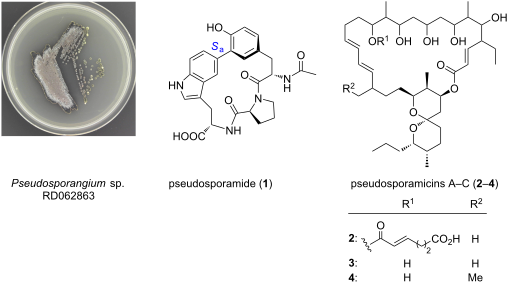
- appendage in compound 2 is unprecedented in natural products, only to see its (Z)-isomer in a siderophore of Mycobacterium avium [32]; the side chain on the spiroacetal rings in compounds 2–4 lack hydroxylation at C-31, which is the common modification shared with all oligomycin class antibiotics
- structure 1b were similarly simulated by using 44 structures as the OPLS3e-minimized structures and 7 conformers as the DFT-optimized structures. Antimicrobial assay The antimicrobial assay was carried out in the same manner as reported previously [49]. MICs of reference antibiotics, kanamycin and


Fabclavine diversity in Xenorhabdus bacteria
Beilstein J. Org. Chem. 2020, 16, 956–965, doi:10.3762/bjoc.16.84
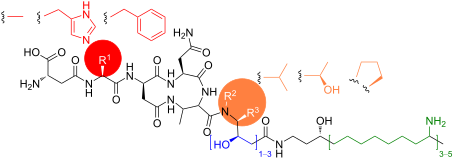
- global threat of multiresistant pathogens has to be answered by the development of novel antibiotics. Established antibiotic applications are often based on so-called secondary or specialized metabolites (SMs), identified in large screening approaches. To continue this successful strategy, new sources
- of fabclavines as major antibiotics in several entomopathogenic strains, our work lays the foundation for the rapid fabclavine identification and dereplication as the basis for future work of this widespread and bioactive SM class. Keywords: antibiotic; fabclavine; NRPS-PKS hybrid; secondary
- metabolite; Xenorhabdus; Introduction The constantly increasing threat of multiresistant pathogens requires the development of new antibiotics, as they are indispensable to maintain the state of health of our society [1]. Bacterial natural products, also called secondary or specialized metabolites (SM


Synthesis of new asparagine-based glycopeptides for future scanning tunneling microscopy investigations
Beilstein J. Org. Chem. 2020, 16, 888–894, doi:10.3762/bjoc.16.80

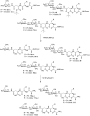
- example, in anti-HIV therapy, MUC1-based antitumor vaccines, or as antibiotics [12][13][14]. Especially glycans bearing noncanonical amino acids, which can only be introduced into a peptide by organic synthesis, are suitable for cancer therapy since they show better resistance to enzymatic degradation in


Microwave-assisted synthesis of 2-substituted 4,5,6,7-tetrahydro-1,3-thiazepines from 4-aminobutanol
Beilstein J. Org. Chem. 2020, 16, 32–38, doi:10.3762/bjoc.16.5
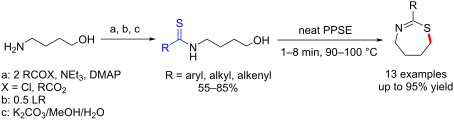
- applications as antibiotics [1], antiproliferative agents [2], anti-inflammatories [3] and antithrombotics [4]. They are also found in many bioactive natural products [5][6][7][8], some of which display anti-HIV-1 [9] and antimitotic activities [10], among others. Thiazolines also find use in organic synthesis


Synthesis of C-glycosyl phosphonate derivatives of 4-amino-4-deoxy-α-ʟ-arabinose
Beilstein J. Org. Chem. 2020, 16, 9–14, doi:10.3762/bjoc.16.2
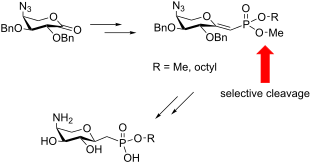
- mechanisms of pathogenic Gram-negative bacteria against antibiotics, such as polymyxin B and colistin [3]. The main effect of Ara4N incorporation into the lipid A part – and, less frequently, into the inner core region of LPS [4] – is thought to originate from blocking the electrostatic interaction of


Pigmentosins from Gibellula sp. as antibiofilm agents and a new glycosylated asperfuran from Cordyceps javanica
Beilstein J. Org. Chem. 2019, 15, 2968–2981, doi:10.3762/bjoc.15.293
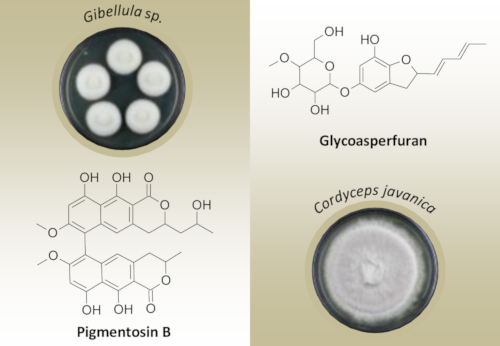
- , in particular orthopedic implant-related infections, since implants coated with proteins facilitate bacterial attachment and biofilm development [1]. In general, bacteria are known to employ different strategies to cope with the presence of antibiotics, of which a biofilm, an aggregate of
- microorganisms held together within a self-produced matrix of extracellular polymeric substances, plays an important role as a main virulence determinant in staph infections [1][2]. Within a biofilm, bacteria become tolerant toward antibiotics and host immune responses greater than their planktonic (free
- leave target microbes vulnerable to antibiotics [6]. A complementary approach of using a combination of an antibiotic with a biofilm inhibitor appears to be a promising solution to control biofilm-associated pathogens, as based on the evidence that traditional antibiotics were more effective when used


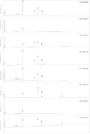
Chemical synthesis of tripeptide thioesters for the biotechnological incorporation into the myxobacterial secondary metabolite argyrin via mutasynthesis
Beilstein J. Org. Chem. 2019, 15, 2922–2929, doi:10.3762/bjoc.15.286
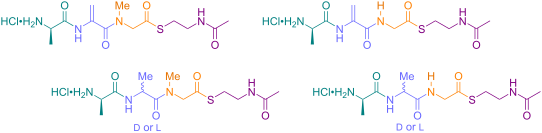
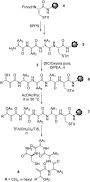
- ; mutasynthesis; NRPS; peptide synthesis; Introduction Resistance to antibiotics is currently a major threat to public health. Especially Gram-negative bacterial pathogens are of concern, due to their widespread development of resistance mechanisms. To address this general antimicrobial resistance problem, new
- variants of known antibiotics are being developed and were approved in the last few years, also comprising drugs active against Pseudomonas aeruginosa, one of the currently most problematic bacterial pathogens [1]. Especially among the quinolones, cephalosporins and carbapenems new compounds have been
- identified. In addition, the development of new β-lactamase inhibitors is ongoing and may restore the activity of known β-lactams against β-lactamase-producing strains [2]. Unfortunately, most of these antibiotics rely on known modes of action and do not target novel binding sites. To circumvent established

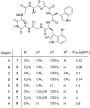


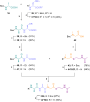
Synthesis of novel sulfide-based cyclic peptidomimetic analogues to solonamides
Beilstein J. Org. Chem. 2019, 15, 2544–2551, doi:10.3762/bjoc.15.247

- . Cyclic thioether peptides have been found in the chemical skeletons of natural products and synthetic ones that display a wide variety of activities, including antibiotics [31], vascular cell adhesion molecule-1 antagonists [32] and anticardiolipin antibodies [33][34]. Two MBH adducts (2) (R = Me, heptyl




Current understanding and biotechnological application of the bacterial diterpene synthase CotB2
Beilstein J. Org. Chem. 2019, 15, 2355–2368, doi:10.3762/bjoc.15.228
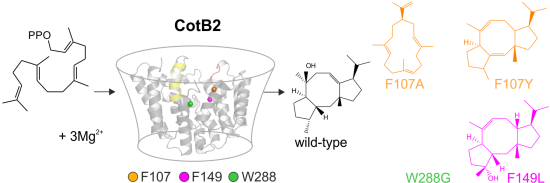
- ] variations will further enhance the production rate [25]. Alternatively, permanent integration of the heterologous genes into the host genome is an alternative strategy to circumvent metabolic stress by antibiotics, which are required to maintain a plasmid in the production host [28]. Nevertheless, genomic


Isolation of fungi using the diffusion chamber device FIND technology
Beilstein J. Org. Chem. 2019, 15, 2191–2203, doi:10.3762/bjoc.15.216
- antibiotics (e.g., cephalosporins), immunosuppressants (e.g., mycophenolic acid) and immunomodulators (e.g., fingolimod), as well as cholesterol lowering agents (statins). Generally, fungal metabolites were shown to have antiviral, cytotoxic, antineoplastic, cardiovascular, anti-inflammatory, immune
- -stimulating, and anticancer activities [2]. Since the World Health Organization (WHO) declared antibiotic resistance a global threat and urged the search for new antibiotics, the interest in fungal metabolites increased recently. In order to find new structural types, novel source organisms have to be
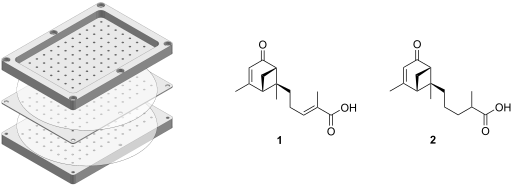
- with 15 mL agar solution. In summary, the diluted sample from experiment 1, the undiluted solutions from experiments 2 and 3, and the concentrated, resuspended sea water solution from experiment 4 were each mixed with a warm agar preparation, containing a minimal nutrient medium and antibiotics


Cyclopropanation–ring expansion of 3-chloroindoles with α-halodiazoacetates: novel synthesis of 4-quinolone-3-carboxylic acid and norfloxacin
Beilstein J. Org. Chem. 2019, 15, 2156–2160, doi:10.3762/bjoc.15.212
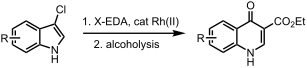
- ethyl group and yields quinolone (6) after tautomerization. Standard hydrolysis (LiOH, H2O/THF) of ester 6 gave the 4-quinolone-3-carboxylic acid (7) in 87% yield (not shown). Quinolones, and fluoroquinolones (FQs) in particular, are among the most commonly prescribed antibiotics in the world [34
- ]. Norfloxacin (1) is considered to be the first broad band antibiotic and its structurally related cousin ciprofloxacin (2) is one of the most prescribed antibiotics even after 20 years of clinical use. We elected 1 as a synthetic target for our novel approach towards FQs (Scheme 4). Chlorination of


N-(1-Phenylethyl)aziridine-2-carboxylate esters in the synthesis of biologically relevant compounds
Beilstein J. Org. Chem. 2019, 15, 1722–1757, doi:10.3762/bjoc.15.168

- as tert-butyldiphenylsilyl ethers, individually transformed into 2-(3-hydroxypropyl)pyrrolidines by LiAlH4 reduction and deprotected. Diamines PF-00951966 (Scheme 18) belongs to a fluoroquinolone family of antibiotics which is substituted at C7 with a (3R)-3-[(1S)-2-cyano-1-(methylamino)ethyl
- )-105 (Scheme 27) [78]. Application of other organometallics paved the way to synthesis of a variety of 3-substituted 2-amino-1,3-propanodiols. 1,3-Diamino-2-hydroxy derivatives Linezolid ((S)-107) represents a new class of 1,3-oxazolidin-2-one antibiotics and contains the (2S)-1,3-diamino-2


Synthesis and biological evaluation of truncated derivatives of abyssomicin C as antibacterial agents
Beilstein J. Org. Chem. 2019, 15, 1468–1474, doi:10.3762/bjoc.15.147
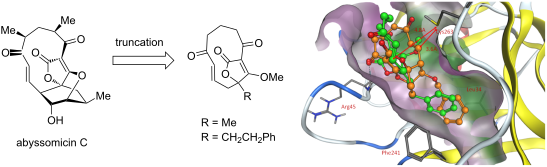
- structure–activity relationship studies towards novel antibiotics targeting 4-amino-4-deoxychorismate (ADC) synthase. Specifically, it is demonstrated that the synthetically challenging bicyclic motif is essential for activity towards methicillin-resistant Staphylococcus aureus (MRSA). Keywords
- develop new antibiotics, but the reevaluation of known natural products (NP) and the identification of new NPs and derivatives thereof is considered an especially important pathway in the search for more robust antibiotics [1][2]. The main reasons are the inherent high selectivity and appropriate


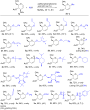
Robust perfluorophenylboronic acid-catalyzed stereoselective synthesis of 2,3-unsaturated O-, C-, N- and S-linked glycosides
Beilstein J. Org. Chem. 2019, 15, 1275–1280, doi:10.3762/bjoc.15.125
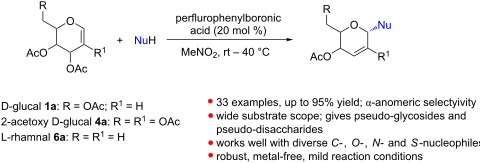
- molecular recognition, cell–cell interaction, immunological recognition and transmission of biological information [4][5][6]. They are easily transformed into important bioactive compounds such as oligosaccharides, glycopeptides, nucleosides, antibiotics, uronic acids and other natural products [1][2][3



Steroid diversification by multicomponent reactions
Beilstein J. Org. Chem. 2019, 15, 1236–1256, doi:10.3762/bjoc.15.121
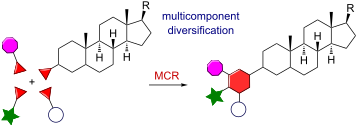
- the natural cationic peptide antibiotics [60] or as a way to constrain peptide sequences in protein epitope conformations [61]. In this regard, the groups of Rivera and Wessjohann have pioneered the utilization of MCRs for the conjugation of oligosaccharides [62] and peptides [63][64] to steroids



Phylogenomic analyses and distribution of terpene synthases among Streptomyces
Beilstein J. Org. Chem. 2019, 15, 1181–1193, doi:10.3762/bjoc.15.115
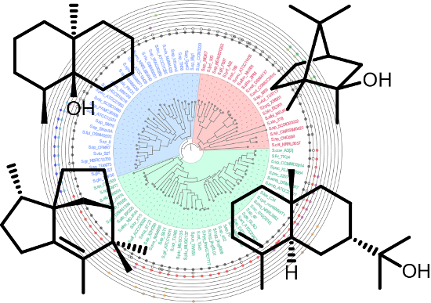
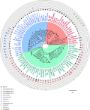
- remarkable genetic potential to produce a large variety of secondary metabolites with different functions including antibiotics, antifungals, pigments or immunosuppressants [1][2][3]. These are compounds of diverse chemical nature such as polyketides, peptides, aminoglycosides or terpenoids [4][5



Catalytic asymmetric oxo-Diels–Alder reactions with chiral atropisomeric biphenyl diols
Beilstein J. Org. Chem. 2019, 15, 955–962, doi:10.3762/bjoc.15.92
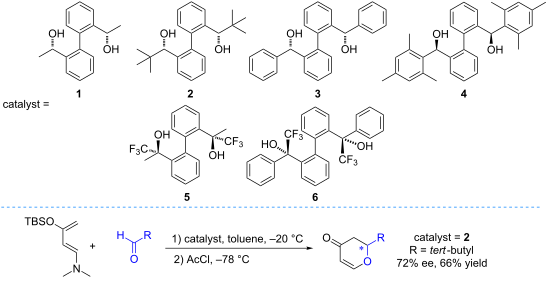
- stereogenic centers in a one-step [4 + 2] cycloaddition or cyclization reaction [6][7][8] and it has become hugely popular in preparing vital intermediates for the syntheses of key structural subunits of natural products with biological activities (e.g., carbohydrates, antibiotics, toxins etc.) [9][10


Solid-phase synthesis of biaryl bicyclic peptides containing a 3-aryltyrosine or a 4-arylphenylalanine moiety
Beilstein J. Org. Chem. 2019, 15, 761–768, doi:10.3762/bjoc.15.72
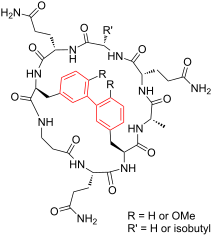
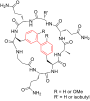
- amino acids [11]. Cyclic peptides containing biaryl linkages constitute attractive targets. On the one hand, a wide range of biaryl natural products have been reported to display interesting biological properties, such as biphenomycins, arylomycins and glycopeptide antibiotics [4]. On the other hand



Dirhodium(II)-catalyzed [3 + 2] cycloaddition of N-arylaminocyclopropane with alkyne derivatives
Beilstein J. Org. Chem. 2019, 15, 542–550, doi:10.3762/bjoc.15.48
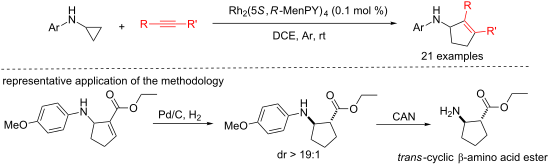
- cycloaddition protocol. Keywords: [3 + 2]; alkyne; cycloaddition; cyclopropanes; dirhodium catalysis; N-arylaminocyclopropanes; Introduction N-Arylaminocyclopropanes 1 are important structural motifs for pharmaceuticals and are found especially in marketed fluoroquinolone antibiotics [1], such as


Synthesis and SAR of the antistaphylococcal natural product nematophin from Xenorhabdus nematophila
Beilstein J. Org. Chem. 2019, 15, 535–541, doi:10.3762/bjoc.15.47
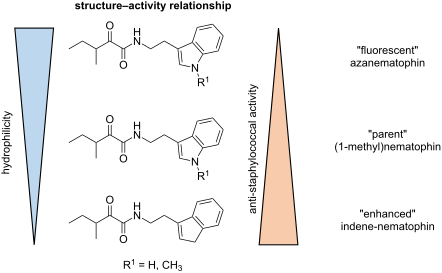
- Frankfurt, Max-von-Laue-Str. 15, D-60438 Frankfurt am Main, Germany 10.3762/bjoc.15.47 Abstract The repeated and improper use of antibiotics had led to an increased number of multiresistant bacteria. Therefore, new lead structures are needed. Here, the synthesis and an expanded structure–activity


Study on the regioselectivity of the N-ethylation reaction of N-benzyl-4-oxo-1,4-dihydroquinoline-3-carboxamide
Beilstein J. Org. Chem. 2019, 15, 388–400, doi:10.3762/bjoc.15.35

- ; regioselectivity; Introduction Since the discovery of the antibacterial agent nalidixic acid, as a byproduct from the synthesis of chloroquine, the medicinal interest in 4-oxoquinolines as bioactive substances has exponentially grown over the years. Nowadays, some of the most important antibiotics used in the


Lectins of Mycobacterium tuberculosis – rarely studied proteins
Beilstein J. Org. Chem. 2019, 15, 1–15, doi:10.3762/bjoc.15.1
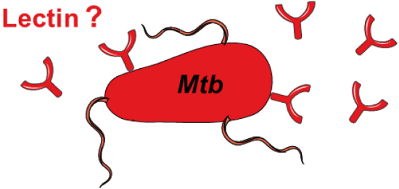
- More than 135 years after the discovery of Mycobacterium tuberculosis (Mtb) by Robert Koch [1], tuberculosis (TB) is still one of the world’s deadliest communicable diseases [2]. TB is theoretically curable and preventable, especially since effective antibiotics have been available since the 1940s [3
- connected to colonization of the kidney [64][65]. Inhibition of carbohydrate–lectin interactions by antiadhesive drugs is an emerging anti-infective therapeutic approach, particularly in light of increasing rates of bacterial resistance to traditional antibiotics. α-D-Mannosides containing aromatic aglycons





