


Search results
Search for "naphthalene" in Full Text gives 215 result(s) in Beilstein Journal of Organic Chemistry. Showing first 200.
The synthesis of chiral β-naphthyl-β-sulfanyl ketones via enantioselective sulfa-Michael reaction in the presence of a bifunctional cinchona/sulfonamide organocatalyst
Beilstein J. Org. Chem. 2021, 17, 494–503, doi:10.3762/bjoc.17.43
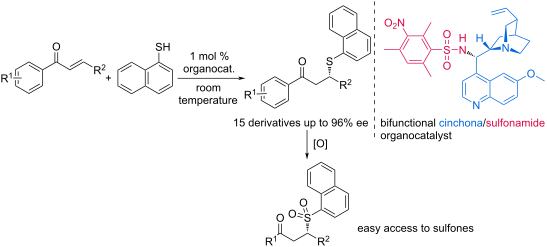
- respect, a bifunctional quinine-derived sulfonamide organocatalyst was developed to catalyze the asymmetric sulfa-Michael reaction of naphthalene-1-thiol with trans-chalcone derivatives. The target sulfa-Michael adducts were obtained with up to 96% ee under mild conditions and with a low (1 mol
- nucleophiles [27][28][29][30]. Thionaphthols, however, are overlooked in sulfa-Michael addition reactions. And to our best knowledge, no study is present concerned with SMAs with naphthalene-1-thiol as the nucleophile for the addition to enones. Encouraged by the good results obtained with enantioselective
- sulfa-Michael additions of thiols to chalcones with sulfonamide-type organocatalysts in the literature [30][31], in this study, a new quinine sulfonamide organocatalyst derivative was developed to catalyze the enantioselective SMA of naphthalene-1-thiol to trans-chalcones under mild conditions and with


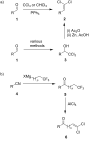
Unexpected rearrangements and a novel synthesis of 1,1-dichloro-1-alkenones from 1,1,1-trifluoroalkanones with aluminium trichloride
Beilstein J. Org. Chem. 2021, 17, 404–409, doi:10.3762/bjoc.17.36
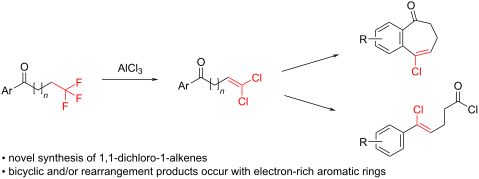
- %. Naphthalene 6h and 2-pyridine 6i were also successfully obtained, however, the reactions with the 3- and 4-pyridines 5j and 5k resulted in complex mixtures from which no desired product, nor starting material, could be observed. The scope of this chemistry also extends to substrates with a shorter




Helicene synthesis by Brønsted acid-catalyzed cycloaromatization in HFIP [(CF3)2CHOH]
Beilstein J. Org. Chem. 2021, 17, 396–403, doi:10.3762/bjoc.17.35
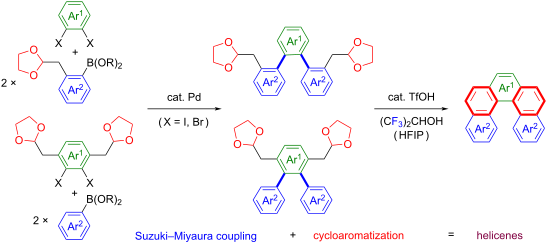
- can be successfully applied to cyclization at multiple reaction sites. By using bisacetals bearing a naphthalene core (Ar2) as substrates, tandem cyclization achieved the efficient synthesis of several ortho-fused six-hexagon benzenoids [21]. On the basis of our work mentioned above, we assumed that
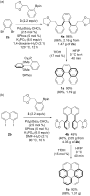
- , respectively. Thus, phenylboronic acid ester 3 bearing an acetal moiety functions as a reagent for fused naphthalene ring extension through our cross-coupling/cycloaromatization sequence [31][32][33][34][35]. Hetero[5]helicenes 12 were synthesized via tandem cycloaromatization using teraryl precursors, in
- silica gel column chromatography (hexane/EtOAc = 10:1) gave 1a (1.19 g, 80%). 1,8-Bis{2-[(1,3-dioxolan-2-yl)methyl]phenyl}naphthalene (4b) A DMF (6.7 mL) and H2O (3.3 mL) solution of 1,8-diiodonaphthalene (2b, 759 mg, 2.00 mmol), boronate ester 3 (1.28 g, 4.40 mmol), Pd2(dba)3·CHCl3 (52 mg, 50 μmol




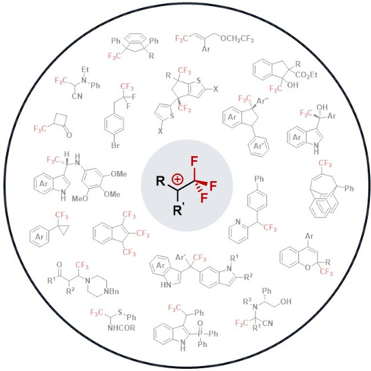
CF3-substituted carbocations: underexploited intermediates with great potential in modern synthetic chemistry
Beilstein J. Org. Chem. 2021, 17, 343–378, doi:10.3762/bjoc.17.32


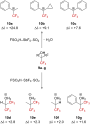

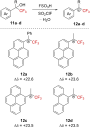

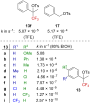


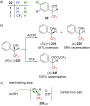


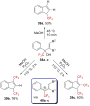


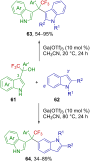


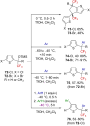

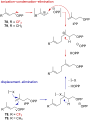


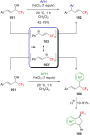
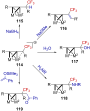
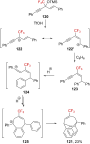
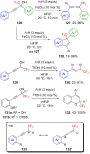
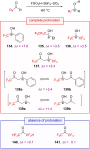


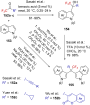

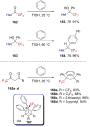


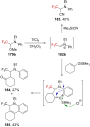


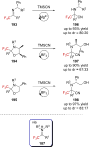
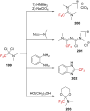


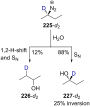


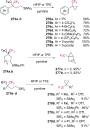


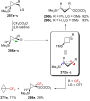




The preparation and properties of 1,1-difluorocyclopropane derivatives
Beilstein J. Org. Chem. 2021, 17, 245–272, doi:10.3762/bjoc.17.25
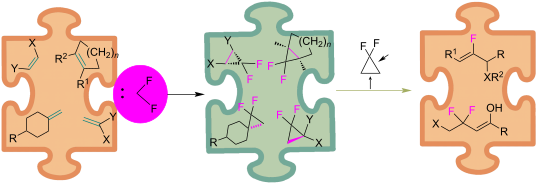
- isomerization [36]. Several nitrogen nucleophiles have been evaluated as catalysts to promote the difluorocarbene formation from TFDA in order to bring about the cyclopropanation of a 2-siloxybuta-1,3-diene derivative; 1,8-bis(dimethylamino)naphthalene (proton sponge) was found to be particularly effective [37
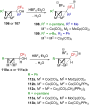
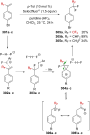
- reaction of 2-(2,2-difluorocyclopropyl)naphthalene (167) with sodium arylsulfinates 168 under palladium catalysis afforded the 2-fluoroallylic sulfones 166 in moderate to good yields with (Z)-selectivity. This method showed a good compatibility with a broad range of substrates and substituents. As




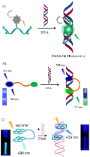
Selected peptide-based fluorescent probes for biological applications
Beilstein J. Org. Chem. 2020, 16, 2971–2982, doi:10.3762/bjoc.16.247

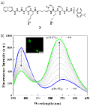
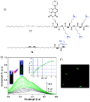
- excimer (490 nm) to monomer emission (406 nm, Figure 3B). Thus, monitoring the relative fluorescence intensities at two wavelengths (F406/F490) allowed the ratiometric detection of nucleic acids. Schmuck et al. reported a similar cationic peptide beacon 3 coupled with a FRET pair, a naphthalene donor and
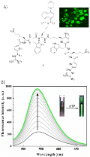
- a dansyl acceptor, for ratiometric detection of dsDNA (Figure 4 [33]. Compound 3 contains two Gly–Ser–Lys tripeptide arms attached via their C-terminus to a central lysine spacer (Figure 4A). Compound 3 is in unfolded form in unbound conditions as it exhibits the naphthalene emission at 383 nm upon
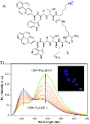
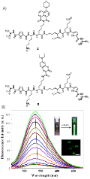
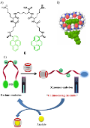
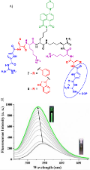
- arms attached through their C-terminus to a central lysine. Two heparin sensors 10 and 11 are developed by attaching the N-terminus of the peptide beacon with pyrenes and fluorescence resonance energy transfer (FRET) pair (naphthalene and dansyl), respectively for ratiometric detection of heparin




Naphthalonitriles featuring efficient emission in solution and in the solid state
Beilstein J. Org. Chem. 2020, 16, 2960–2970, doi:10.3762/bjoc.16.246
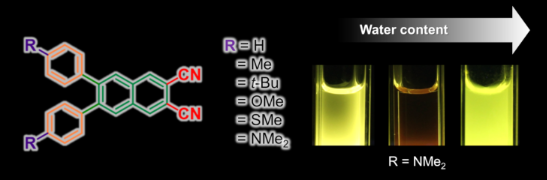
- or rotational modes [34][35]. Secondly, a considerably distorted conformation is also needed to prevent detrimental exciton interactions in the solid state. Currently, 6,7-disubstituted naphthalene-2,3-dicarbonitrile derivatives represent an intensively investigated class of compounds, due to their
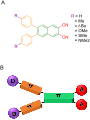
- reports on the DSE behavior of 6,7-disubstituted naphthalene-2,3-dicarbonitrile derivatives so far. Herein we have designed and synthesized donor–acceptor (D–A) naphthalonitriles (NCNs) symmetrically γ-disubstituted with two p-functionalized phenyl moieties and investigated their photophysical properties
- -disubstituted-6,7-diphenylnaphthalene derivatives with varying distal groups. B) Schematic depiction of the D–π–A system. Synthesis of p-phenyl-6,7-disubstituted naphthalene-2,3-dicarbonitrile. Photophysical properties of the samples in fluid at rt and 77 K. In all cases, the lifetimes were fitted mono



Using multiple self-sorting for switching functions in discrete multicomponent systems
Beilstein J. Org. Chem. 2020, 16, 2831–2853, doi:10.3762/bjoc.16.233

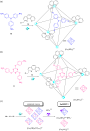
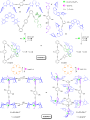
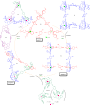
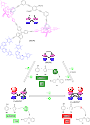
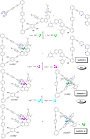
- )] (Figure 4e). Equally, Schalley and Nitschke developed a guest-induced self-sorting based on two new Zn4L6 cages (Figure 5a) using the aldehyde 9 and the diamine subcomponents 7 and 8 that contained either the naphthalene diimide or zinc porphyrin moiety [51]. Both cages respond selectively to distinct
- chemical stimuli yielding different supramolecular products. The porphyrin ligands of the cage [Zn4(8')6]8+ interacted favorably with C70 as a guest, whereas an electron-rich aromatic crown-ether did thread onto the electron-deficient naphthalene diimides of cage [Zn4(7')6]8+ forming mechanically









Thermodynamic and electrochemical study of tailor-made crown ethers for redox-switchable (pseudo)rotaxanes
Beilstein J. Org. Chem. 2020, 16, 2576–2588, doi:10.3762/bjoc.16.209
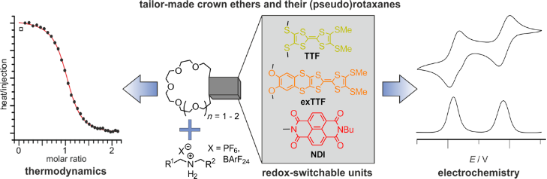
- synthetic molecular machines. Developing switchable and specifically designed crown ethers enables the implementation of function into molecular assemblies. Seven tailor-made redox-active crown ethers incorporating tetrathiafulvalene (TTF) or naphthalene diimide (NDI) as redox-switchable building blocks are
- motivated us to conduct the present study on the thermodynamic and electrochemical properties of seven redox-active crown ethers of different ring sizes in comparison to the unfunctionalized analogs DBC8 and BC7 (Figure 1). Crown ethers incorporating TTF, an extended TTF, and naphthalene diimide (NDI) as
- Information File 1). Slow diffusion of CH3CN into a concentrated solution of NDIC7 in CH2Cl2 yielded single crystals suitable for X-ray diffraction (Figure 2b). The macrocycle displays a folded conformation in the solid state due to the flexible linker, featuring an intramolecular NDI/naphthalene stacking




Design and synthesis of a bis-macrocyclic host and guests as building blocks for small molecular knots
Beilstein J. Org. Chem. 2020, 16, 2314–2321, doi:10.3762/bjoc.16.192

- ), whereas host 1 and guest 3 would lead to a 75 backbone-atom trefoil (and unknotted macrocycle). Results and Discussion The synthesis of bis-macrocyclic host 1 began by breaking the symmetry of naphthalene-1,5-diol (4) by alkylation of one of the alcohols with 2-azidoethyl mesylate to yield azide 5 in 27
- % yield (Scheme 1). Alkylation of 5 with 1,2-dibromoethane provided key intermediate azido-bromide 6 in 60% yield. This two-step route to 6 is efficient, but the 16% overall yield was lower than desired. An alternate route began by converting diol 4 to bis(2-hydroxyethoxy)naphthalene 7 in 92% yield by


Naphthalene diimide bis-guanidinio-carbonyl-pyrrole as a pH-switchable threading DNA intercalator
Beilstein J. Org. Chem. 2020, 16, 2201–2211, doi:10.3762/bjoc.16.185
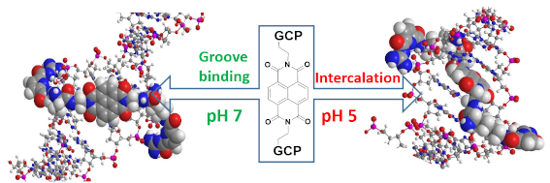
- naphthalene diimde analogue (NDI) equipped at the imide positions with two guanidinio-carbonyl-pyrrole (GCP) pendant arms interacted significantly stronger with ds-DNA at pH 5 than at pH 7, due to reversible protonation of the GCP arms. This was consequence of a pH-switchable threading intercalation into ds
- the DNA/RNA conjugate NDI-GCP2 showed also aggregation along the ds-polynucleotide and AFM and DLS demonstrated that NDI-GCP2 has pronounced ds-DNA condensation ability. Keywords: AFM; circular dichroism; DNA/RNA recognition; fluorescence; guanidinio-carbonyl-pyrrole; naphthalene diimide
- attention to a less common DNA/RNA binding motif: threading intercalation. This sterically very demanding binding mode is characterised by a central large aromatic moiety, in this case the well-known naphthalene diimide (NDI), equipped at both sides of the long axis with large substituents, which have to



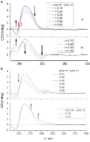


Naphthalene diimide–amino acid conjugates as novel fluorimetric and CD probes for differentiation between ds-DNA and ds-RNA
Beilstein J. Org. Chem. 2020, 16, 2032–2045, doi:10.3762/bjoc.16.170
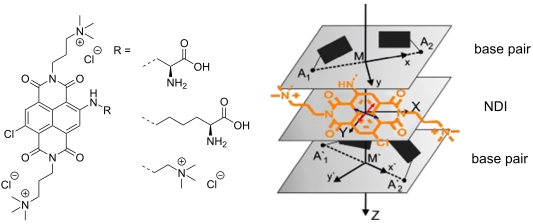
- Chemistry (CNC), Universität Würzburg, Theodor-Boveri-Weg, 97074 Würzburg, Germany 10.3762/bjoc.16.170 Abstract Two novel unnatural amino acids, prepared by linking a dicationic purple-coloured and fluorescent naphthalene diimide (NDI) at core position to amino acid side chains of variable length, strongly
- the type of polynucleotide, thus the studied NDI dyes act as dual fluorimetric/ICD probes for sensing the difference between here used GC-DNA, AT-DNA and AU-RNA. Keywords: amino acid–fluorophore conjugate; circular dichroism; DNA/RNA recognition; fluorescence; intercalation; naphthalene diimide
- ][13][14][15][16]. These inspiring results encouraged us to broaden the palette of available amino acid (AA)–chromophore conjugates. Therefore, in this work we have chosen a naphthalene diimide (NDI) chromophore [17][18][19][20], a well-known DNA/RNA binding moiety, which differs from previously used


The biomimetic synthesis of balsaminone A and ellagic acid via oxidative dimerization
Beilstein J. Org. Chem. 2020, 16, 2026–2031, doi:10.3762/bjoc.16.169
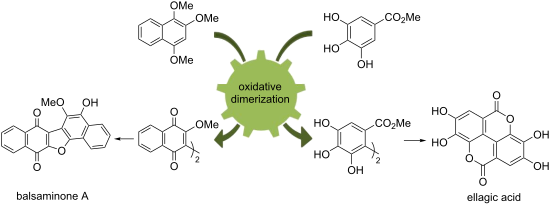
- 16 in 29, 34, and 19% yields, respectively (Table 1). As anticipated, the reaction of naphthalene 17 with CAN under aqueous conditions resulted in preferential oxidative demethylation to give quinone 7, as opposed to oxidative dimerization. The elimination of water from the reaction posed a few


When metal-catalyzed C–H functionalization meets visible-light photocatalysis
Beilstein J. Org. Chem. 2020, 16, 1754–1804, doi:10.3762/bjoc.16.147
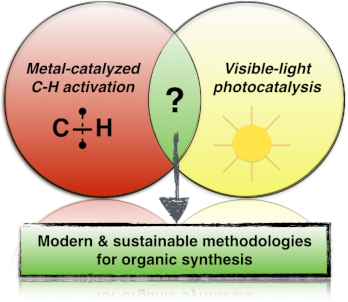
- naphthalene ring. The transformation proceeded under either Cu/Ag co-catalysis or using the dual Ru/Cu photoredox system. In the latter case, the methodology was operative at room temperature within a short reaction time, affording the desired products in good to excellent yields. The described sulfonylation


The charge-assisted hydrogen-bonded organic framework (CAHOF) self-assembled from the conjugated acid of tetrakis(4-aminophenyl)methane and 2,6-naphthalenedisulfonate as a new class of recyclable Brønsted acid catalysts
Beilstein J. Org. Chem. 2020, 16, 1124–1134, doi:10.3762/bjoc.16.99
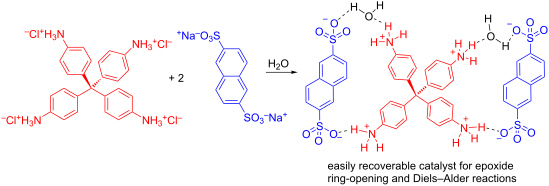
- crystals (Figure 5) reached a plateau at 160 °C after 5.9% of the mass was removed as water. The plateau was maintained until 340 °C, when the sample underwent an endothermic decomposition. The decomposition produced sulfur dioxide, naphthalene, and aniline, according to the infrared spectra of the




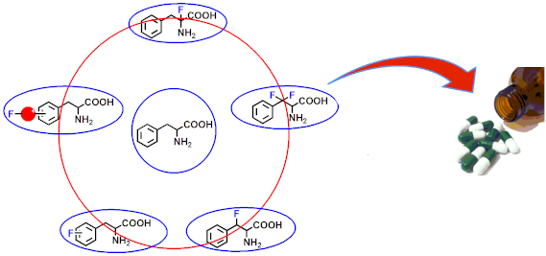
Fluorinated phenylalanines: synthesis and pharmaceutical applications
Beilstein J. Org. Chem. 2020, 16, 1022–1050, doi:10.3762/bjoc.16.91
- synthesized through alkylation of the benzophenone imine of glycine ester 73, with perfluorinated benzylbromide 19c or 2,4-bis(trifluoromethyl)benzyl bromide (74) in the presence of 2,7-bis[O(9)-allylhydrocinchonidinium-N-methyl]naphthalene dibromide, to afford the fluorinated phenylalanine imines 75a,b with


Towards the total synthesis of chondrochloren A: synthesis of the (Z)-enamide fragment
Beilstein J. Org. Chem. 2020, 16, 670–673, doi:10.3762/bjoc.16.64
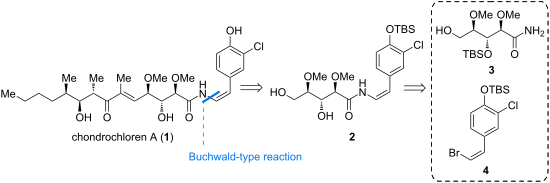
- -dichloro-1,1,3,3-tetraisopropyldisiloxane, TBSOTf = tert-butyldimethylsilyl trifluoromethanesulfonate, proton sponge = 1,8-bis(N,N-dimethylamino)naphthalene. Synthesis of (Z)-bromide 4 using a palladium-catalyzed, stereoselective dehalogenation [21][22][23][24]. TBSOTf = tert-butyldimethylsilyl


Copper-catalyzed remote C–H arylation of polycyclic aromatic hydrocarbons (PAHs)
Beilstein J. Org. Chem. 2020, 16, 530–536, doi:10.3762/bjoc.16.49
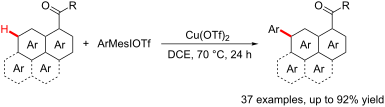
- arylation; nonprecious metal catalyst; copper catalysis; polycyclic aromatic hydrocarbons (PAHs); regioselectivity; Introduction Polycyclic aromatic hydrocarbons (PAHs) with rigid planar structure, such as naphthalene, phenanthrene, pyrene and their derivatives, can usually emit relatively strong
- Pd(II) species to more electrophilic high-valent cationic Pd(IV). In addition, this protocol is not compatible with other PAHs except naphthalene, such as phenanthrene, pyrene and fluoranthene, and cannot tolerate some special functional groups, such as alkenyl and alkynyl groups. As a component part
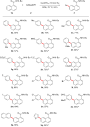
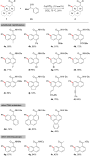
- lower yield (Scheme 2, 3q). We next examined the scope of various naphthalene substrates (Scheme 3, 4a–l). The electronic effect of C4-substituents on N-(tert-butyl)-1-naphthamide was not obvious. The 4-substituted 1-naphthamide substrates, whether with electron-donating methyl and methoxy groups, or




Visible-light-induced addition of carboxymethanide to styrene from monochloroacetic acid
Beilstein J. Org. Chem. 2020, 16, 398–408, doi:10.3762/bjoc.16.38
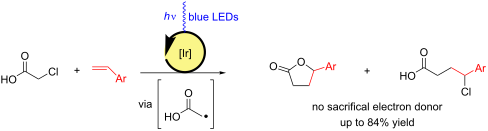
- form in case of fac-[Ir(ppy)3]), which was proven by mass spectrometry and EPR spectroscopy for one of the catalysts (N,N-5,10-di(2-naphthalene)-5,10-dihydrophenazine) used in this work. The generation of HCl resulting from lactone formation could be an additional problem for organometallic photoredox
- -yl)-10-(naphthalen-1-yl)-10H-phenoxazine instead of [Ir(ppy)3] as the photoredox catalyst had no beneficial effect on the yield or conversion, and also led to the formation of a precipitate. However, the precipitate that was formed when the organic dye 5,10-di(naphthalene-2-yl)-5,10-dihydrophenazine


Synthesis and herbicidal activities of aryloxyacetic acid derivatives as HPPD inhibitors
Beilstein J. Org. Chem. 2020, 16, 233–247, doi:10.3762/bjoc.16.25
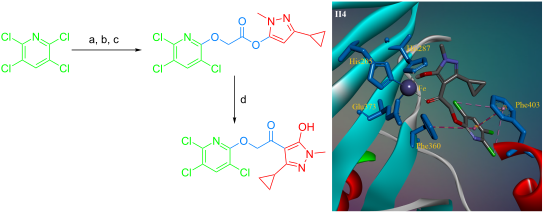
- , the introduction of large groups on the benzene ring appears to be beneficial to the activity and deserves further structural optimization. The herbicidal activities of compounds containing other aromatic rings, compound II and III bearing a pyridine ring and a naphthalene ring, were examined. The




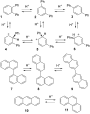
Acid-catalyzed rearrangements in arenes: interconversions in the quaterphenyl series
Beilstein J. Org. Chem. 2019, 15, 2655–2663, doi:10.3762/bjoc.15.258
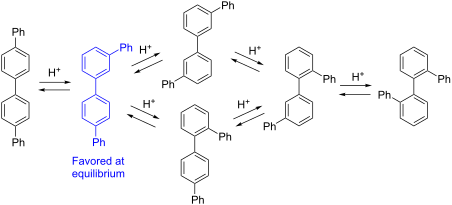
- favoring the 2,2'-isomer 9 (97%) at equilibrium [26]. Aryl shifts occur readily in naphthalene, with beta-substitution favored at equilibrium. Skeletal rearrangements of fused arene rings are also possible and can proceed through several mechanisms. The first example was reported by Dansi and Salvioni in



Experimental and computational electrochemistry of quinazolinespirohexadienone molecular switches – differential electrochromic vs photochromic behavior
Beilstein J. Org. Chem. 2019, 15, 2473–2485, doi:10.3762/bjoc.15.240
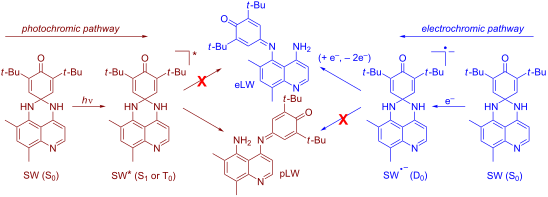
- photochemistry of two closely related and more reducible quinazolinespirohexadienones (QSHDs), wherein the naphthalene of the PSHD is replaced with a quinoline. In the present work, we report our investigation of the electrochemistry of these asymmetric QSHDs. In addition to the short wavelength and photochromic
- substrates [11][12][13][14][15], or vinylcarbazole or alkoxystyrene derivatives for radical cation cylcloaddition and polymerization reactions [16][17][18][19][20]). We thus proposed the replacement of the naphthalene in 1a with a more electron-deficient quinoline ring. Due to the saturated spirocyclic
- voltammogram in Figure 4. In terms of achieving more potent photooxidants through the exchange of the naphthalene ring of the PSHDs for the more electron-deficient quinoline in the QSHDs, we had expected the LW isomers to become more easily reducible, with minimal change in reduction potential for the SW




Combining the Ugi-azide multicomponent reaction and rhodium(III)-catalyzed annulation for the synthesis of tetrazole-isoquinolone/pyridone hybrids
Beilstein J. Org. Chem. 2019, 15, 2447–2457, doi:10.3762/bjoc.15.237

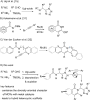
- rings, such as furan, benzofuran, pyrrole, benzopyrrole, thiophene, benzothiophene and naphthalene were also successfully synthesized (5d–l) in moderate to very good yields. The exceptions were the cases of indolopyridone 5i and thiazolopyridone 5k, the latter one could not be obtained even after many


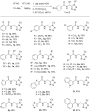
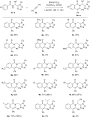


Perspective isomorphs – a new classification of molecular structures based on artistic and chemical concepts
Beilstein J. Org. Chem. 2019, 15, 2319–2326, doi:10.3762/bjoc.15.224

- . According to the viewpoint, one molecule can be assigned to different PI classes. In Figure 2 different aromatic compounds are shown. While 1,2-dihydroxybenzene is perspective isomorphic to 1,2-difluorobenzene or naphthalene, benzene and phenol can be grouped into the same PI class. These two compounds can
- to a group on the left: 1,2-dihydroxybenzene, 1,2-difluorobenzene, naphthalene. Molecules that can be allocated to a group on the right: diphenylacetylene, 4-fluorobiphenyl, benzoic acid. Molecules that can be allocated to both groups: benzene (not shown), phenol, fluorobenzene (the arrows in red and


Azologization and repurposing of a hetero-stilbene-based kinase inhibitor: towards the design of photoswitchable sirtuin inhibitors
Beilstein J. Org. Chem. 2019, 15, 2170–2183, doi:10.3762/bjoc.15.214
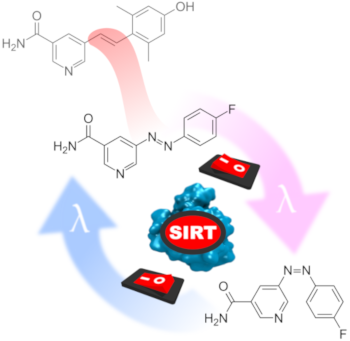
- available naphthalene-2-ylboronic acid or (3,4-dihydronaphthalen-2-yl)boronic acid (Scheme 1). The latter was synthesized according to a literature procedure [36]. Formation of compounds 2b–h was accomplished through Heck coupling of aryl bromides with the appropriate styrenes (Scheme 2) [37]. Compounds 2b





