


Search results
Search for "substitution reactions" in Full Text gives 146 result(s) in Beilstein Journal of Organic Chemistry.
Synthesis and application of trifluoroethoxy-substituted phthalocyanines and subphthalocyanines
Beilstein J. Org. Chem. 2017, 13, 2273–2296, doi:10.3762/bjoc.13.224
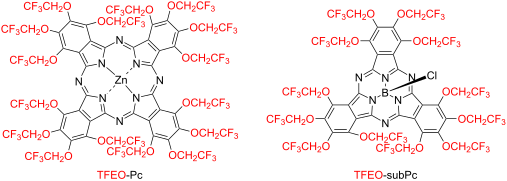
- conditions (Scheme 10) [129]. There are two methods to synthesize subphthalocyanine derivatives, mainly peripheral functionalization and substitution of axial positions. Among them, substitution reactions at the axial position can easily deliver many subphthalocyanine derivatives by coordinating various
- chemical species with one subphthalocyanine as a foothold. However, it is known that axial substitution reactions proceed with low yield with ordinary subphthalocyanine [130]. On the other hand, TFEO-subPc remarkably improves the substitution activity at its axial position, and the axial substitution








The effect of milling frequency on a mechanochemical organic reaction monitored by in situ Raman spectroscopy
Beilstein J. Org. Chem. 2017, 13, 2160–2168, doi:10.3762/bjoc.13.216
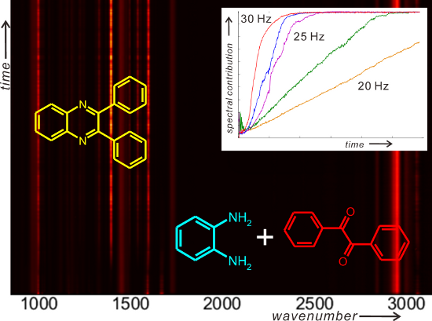
- situ XRPD monitoring of the formation of glycinium oxalate salts from γ-glycine and oxalic acid dihydrate [42]. Other examples of explorations of the effect of milling frequency on mechanochemical reactivity include aromatic substitution reactions [43] and the synthesis of nitrogen-doped titania [44


Preparation of imidazo[1,2-a]-N-heterocyclic derivatives with gem-difluorinated side chains
Beilstein J. Org. Chem. 2017, 13, 2115–2121, doi:10.3762/bjoc.13.208
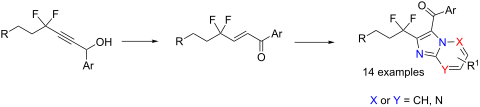
- , respectively. On the other hand, two nucleophilic substitution reactions using phenol and morpholine gave the expected heterocycles 10 and 11 in 73% and 23% yields, respectively. Conclusion In summary, we developed a short and completely regioselective method for the synthesis of imidazo[1,2-a]-N-heterocycles
- . Coupling and substitution reactions. Supporting Information Supporting Information File 310: Experimental details and characterization data of new compounds with copies of 1H, 13C and 19F NMR spectra. Acknowledgements This work was financially supported by the Research Grant Program at Lebanese


Main group mechanochemistry
Beilstein J. Org. Chem. 2017, 13, 2068–2077, doi:10.3762/bjoc.13.204
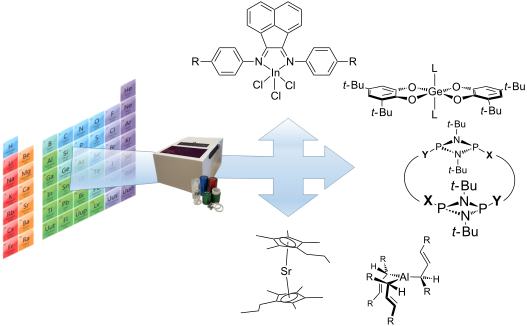
- ) (Cp′ = C5Me4(n-Pr)). Mechanochemical synthesis of the Ar-BIAN ligands and indium(III) complexes (top). One-pot synthesis of an indium complex (bottom). Synthesis of germanes from germanium (Ge) or germanium oxide (GeO2). Ball-milling nucleophilic substitution reactions to produce acyclic and cyclic


Mechanochemical synthesis of small organic molecules
Beilstein J. Org. Chem. 2017, 13, 1907–1931, doi:10.3762/bjoc.13.186
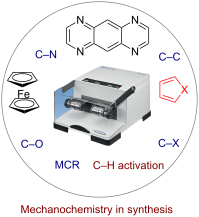
- Coville and co-workers presented solvent-free organometallic transformations (e.g., migratory insertion and ligand substitution reactions) at elevated temperature (Scheme 44) which have close resemblance to mechanochemistry [173]. The examples of mechanochemical organometallic complex synthesis are


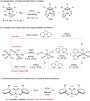


Influence of the milling parameters on the nucleophilic substitution reaction of activated β-cyclodextrins
Beilstein J. Org. Chem. 2017, 13, 1893–1899, doi:10.3762/bjoc.13.184
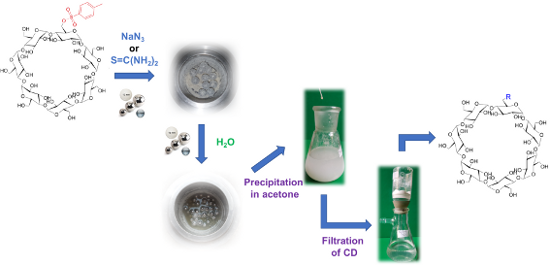
- . The reaction was performed in a planetary ball mill and the processing parameters were systematically varied with the aim of pointing out their influence on the nucleophilic substitution reactions in terms of rate and yield. Specifically systematic variation involved rotation speed, milling tool


α-Acetoxyarone synthesis via iodine-catalyzed and tert-butyl hydroperoxide-mediateded self-intermolecular oxidative coupling of aryl ketones
Beilstein J. Org. Chem. 2017, 13, 1079–1084, doi:10.3762/bjoc.13.107

- products and pharmaceuticals, and α-acetoxyaryl ketones are widely used as synthetic intermediates [1][2][3][4][5]. Traditional methods for the preparation of α-acyloxy ketones focus on the substitution reactions of α-halo carbonyl compounds with alkaline carboxylates or carboxylic acids [6][7], and




Metal-free hydroarylation of the side chain carbon–carbon double bond of 5-(2-arylethenyl)-3-aryl-1,2,4-oxadiazoles in triflic acid
Beilstein J. Org. Chem. 2017, 13, 883–894, doi:10.3762/bjoc.13.89

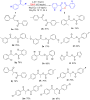
- xylenes, mesitylene, pseudocumene, or durene gave mixtures of oligomeric products. Probably, these products are formed through multiple electrophilic substitution reactions of these arenes by the reactive dication species D. When oxadiazole 1b reacted with tert-butylbenzene (Table 2, entry 10), product 2f


Fluorinated cyclohexanes: Synthesis of amine building blocks of the all-cis 2,3,5,6-tetrafluorocyclohexylamine motif
Beilstein J. Org. Chem. 2017, 13, 728–733, doi:10.3762/bjoc.13.72

- motif by the wider research community requires that a range of building blocks be prepared. It has proven relatively straightforward to prepare the phenyl derivative 2 and then subsequent elaboration to a range of functionalized analogues by standard electrophilic aromatic substitution reactions (Figure



Nucleophilic displacement reactions of 5′-derivatised nucleosides in a vibration ball mill
Beilstein J. Org. Chem. 2017, 13, 87–92, doi:10.3762/bjoc.13.11
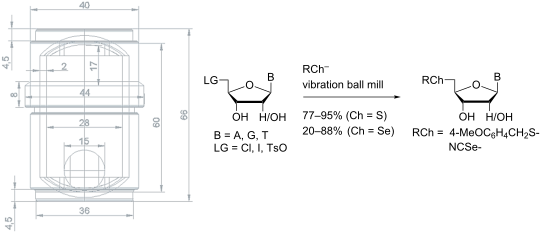
- liquid [13][14][15]. Recently, Jicsinszky et al. described using a planetary ball mill to perform substitution reactions of 6I-O-(p-toluenesulfonyl)-β-cyclodextrin (Ts-β-CD) with azide, halide or thiolate nucleophiles and thereby avoided intramolecular cyclisation (commonly found under solution-phase


Experimental and theoretical investigations into the stability of cyclic aminals
Beilstein J. Org. Chem. 2016, 12, 2280–2292, doi:10.3762/bjoc.12.221
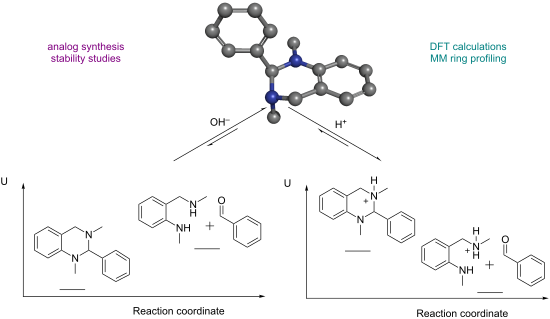
- the strong non-nucleophilic base t-BuOK to give compound 12a. The target compound 13a could then be obtained by reduction of 12 with LiAlH4. As the substitution reactions using 11 failed with iPrI, a second synthetic pathway was pursued to alter the substituents at the N-1 nitrogen atom of the



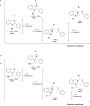


Synthesis of 2-oxindoles via 'transition-metal-free' intramolecular dehydrogenative coupling (IDC) of sp2 C–H and sp3 C–H bonds
Beilstein J. Org. Chem. 2016, 12, 1153–1169, doi:10.3762/bjoc.12.111
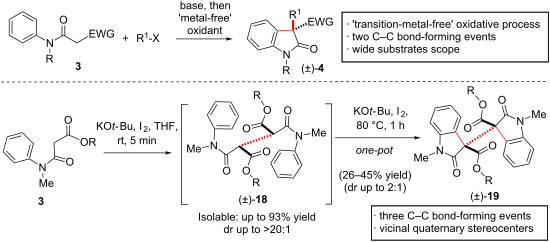
- -iodination at room temperature, where substitution reactions would be unlikely, considering the fact that the substitution has to occur at the sterically congested tertiary iodide 24. However, to our surprise, when C-iodination of 5a was carried out at rt, we found that it also afforded 2-oxindole 4a in 30





Chiral cyclopentadienylruthenium sulfoxide catalysts for asymmetric redox bicycloisomerization
Beilstein J. Org. Chem. 2016, 12, 1136–1152, doi:10.3762/bjoc.12.110
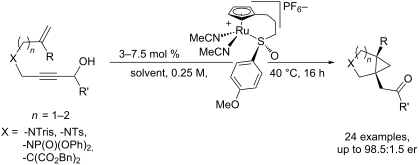
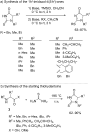
- substitution reactions [42] (Figure 1b), would be able to impart sufficiently useful enantioselectivities on these complex, drug-like molecules. While the idea certainly was appealing at first glance, this reaction is complicated by the fact that the 1,6- and 1,7-enyne substrates contain a stereogenic center




1H-Imidazol-4(5H)-ones and thiazol-4(5H)-ones as emerging pronucleophiles in asymmetric catalysis
Beilstein J. Org. Chem. 2016, 12, 918–936, doi:10.3762/bjoc.12.90
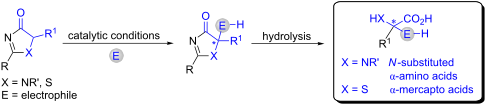
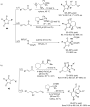
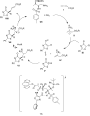
- bearing the quinoyl moiety provided once again better stereochemical results than 2-naphthylthiazolones. 2.2.3 Iridium-catalyzed allylic substitution reactions. Allylic substitution reactions catalyzed by cyclometalated iridium phosphoramidite complexes constitute a powerful tool for the construction of C
- of thiazol-4(5H)-ones as pronucleophiles in asymmetric catalytic reactions has been investigated in the Michael addition reaction to nitroalkenes and α-silyloxyenones, phosphine-catalyzed γ-addition to allenoates and alkynoates, α-amination reactions and iridium-catalyzed allylic substitution
- reactions. 2.2.1 Michael addition reactions, nitroalkenes as acceptors. The first example of the utility of the thiazol-4(5H)-ones 2 as pronucleophiles in asymmetric catalysis was reported in 2013 in the Michael addition to nitroalkenes catalyzed by the bifunctional ureidopeptide-like Brønsted base C5








Enantioselective carbenoid insertion into C(sp3)–H bonds
Beilstein J. Org. Chem. 2016, 12, 882–902, doi:10.3762/bjoc.12.87
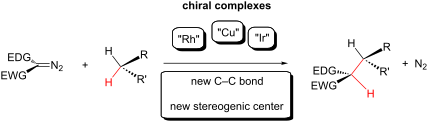
- activation; chiral catalysis; diazo compounds; total synthesis; Introduction One of the major challenges met in organic synthesis is the formation of carbon–carbon bonds, in particular in a stereoselective way. Nucleophilic substitution reactions, radical reactions, cross-coupling reactions and the Heck


Enabling technologies and green processes in cyclodextrin chemistry
Beilstein J. Org. Chem. 2016, 12, 278–294, doi:10.3762/bjoc.12.30
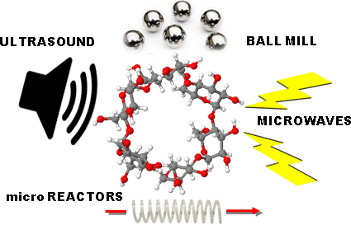
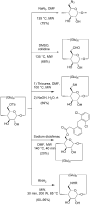
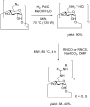
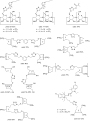
- halogenides – CDs are more important in industrial processes involving important CD derivatives. These activated derivatives are usually less soluble in water and their substitution reactions often require high boiling point dipolar aprotic solvents. The complete removal of these solvents is impossible even



Synthesis and nucleophilic aromatic substitution of 3-fluoro-5-nitro-1-(pentafluorosulfanyl)benzene
Beilstein J. Org. Chem. 2016, 12, 192–197, doi:10.3762/bjoc.12.21
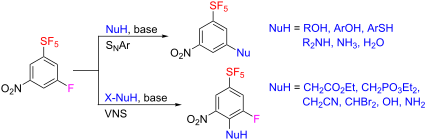
- oxidative nucleophilic substitution for hydrogen reactions (ONSH) with organolithium or magnesium species or in vicarious nucleophilic substitution reactions (VNS) with carbon, oxygen or nitrogen nucleophiles [29]. VNS is a very powerful process for selective alkylation, amination and hydroxylation of


Recent advances in copper-catalyzed asymmetric coupling reactions
Beilstein J. Org. Chem. 2015, 11, 2600–2615, doi:10.3762/bjoc.11.280
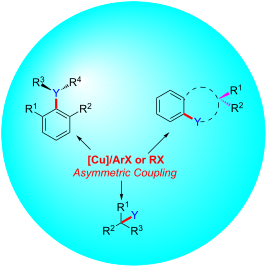
- other metals (Pd, Mo, and Ir), copper-catalyzed allylic substitution reactions allow the use of nonstabilized nucleophiles including organomagnesium, organoaluminum, organozinc and organoborane reagents. Moreover, copper-catalyzed allylic substitution reactions usually proceed with high SN2
- was later improved to 64% by using a new chiral ferrocenyl ligand [61][62]. Subsequently, great progress has been made in the development of copper-catalyzed asymmetric allylic substitution reactions. These considerable progresses have been reviewed by Hoveyda [56], Oshima [57], Alexakis [58], Feringa


Two strategies for the synthesis of the biologically important ATP analogue ApppI, at a multi-milligram scale
Beilstein J. Org. Chem. 2015, 11, 2189–2193, doi:10.3762/bjoc.11.237
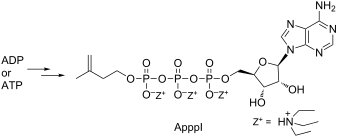
- organic addition and substitution reactions [8]. In method B, the bis(tetrabutylammonium) salt of ATP was treated with isopentenyl tosylate to produce ApppI. The crude products were purified by an ion-pair chromatographical approach, based on the method first reported by Ryu and Scott [7], using


An efficient synthesis of N-substituted 3-nitrothiophen-2-amines
Beilstein J. Org. Chem. 2015, 11, 1707–1712, doi:10.3762/bjoc.11.185
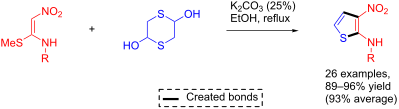
- allenes catalyzed by PPh3 [22] (Scheme 1a–c). On the other hand, studies on the synthesis of 3-nitrothiophenes are scarce. One of the traditional methods involves electrophilic aromatic substitution reactions of thiophenes, which introduces substituents at the 2- and 5-positions, but with some drawbacks



Tuning of tetrathiafulvalene properties: versatile synthesis of N-arylated monopyrrolotetrathiafulvalenes via Ullmann-type coupling reactions
Beilstein J. Org. Chem. 2015, 11, 860–868, doi:10.3762/bjoc.11.96
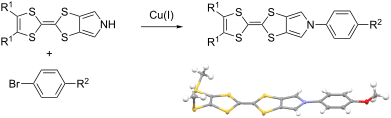
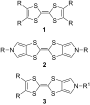
- different R- and R1-groups on the two sides of the TTF moiety. If R1 = alkyl (or a similar group with an sp3-hybridized carbon atom), such substituents can be readily attached to the pre-formed MPTTF moiety using a variety of common nucleophilic substitution reactions. In the case of R1 = aryl, two possible



Selenium halide-induced bridge formation in [2.2]paracyclophanes
Beilstein J. Org. Chem. 2014, 10, 2550–2555, doi:10.3762/bjoc.10.266
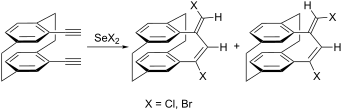
- ; Introduction Starting with their discovery in 1949, the [2.2]paracyclophane molecule and its derivatives have been intensely studied [1][2][3]. Of particular interest are the geometry and transannular interactions of these molecules, the study of electrophilic aromatic substitution reactions involving these


Superoxide chemistry revisited: synthesis of tetrachloro-substituted methylenenortricyclenes
Beilstein J. Org. Chem. 2014, 10, 2531–2538, doi:10.3762/bjoc.10.264

- ][11][12][13][14][15], hydrolysis and substitution reactions [16][17][18]. Filippo and co-workers [19][20][21][22] have extensively studied the substitution reactions of alkyl halides and tosylates; oxidative cleavage reactions and hydrolysis of esters. Frimer and co-workers [23][24] have studied its


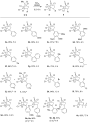


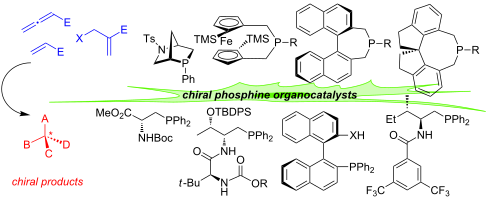
Chiral phosphines in nucleophilic organocatalysis
Beilstein J. Org. Chem. 2014, 10, 2089–2121, doi:10.3762/bjoc.10.218


Facile synthesis of 1-alkoxy-1H-benzo- and 7-azabenzotriazoles from peptide coupling agents, mechanistic studies, and synthetic applications
Beilstein J. Org. Chem. 2014, 10, 1919–1932, doi:10.3762/bjoc.10.200

- BtO− is a nucleofuge, several Bt-OCH2Ar substrates have been evaluated in nucleophilic substitution reactions. Finally, the possible formation of Pd π–allyl complexes by departure of BtO− has been queried. Thus, alpha-allylation of three cyclic ketones was evaluated with 1-(cinnamyloxy)-1H-benzo[d
- utilized in substitution reactions with cyanide, azide, phenoxide, and benzotriazole. These reactions were conducted in DMSO at 100 °C and the results are shown in Figure 3. In the presence of Cs2CO3, reactions with benzotriazole as nucleophile yielded the N1- and N2-alkyl products in variable ratios, but
- class of compounds. Whether the At-OR derivatives are more reactive in such reactions will be interesting to evaluate in the future. On the basis of the leaving group ability of BtO− in the substitution reactions shown above, our final question was about the reactivity of an allylic benzotriazolyl





