Search results
Search for "linkers" in Full Text gives 193 result(s) in Beilstein Journal of Organic Chemistry.
Preparation of trinucleotide phosphoramidites as synthons for the synthesis of gene libraries
Beilstein J. Org. Chem. 2018, 14, 397–406, doi:10.3762/bjoc.14.28
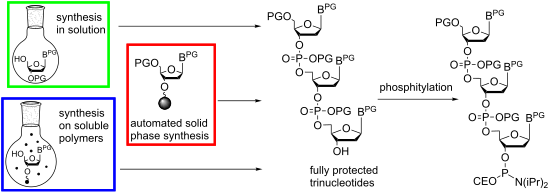
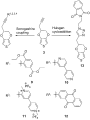
- . Instead, linkers that allow a release of the trimers by a non-nucleophilic and/or non-basic treatment are required. In terms of trimer synthesis only one report in the literature describes such a strategy: The start nucleoside was loaded onto controlled pore glass (CPG) via an oxalyl anchor (Figure 5A


Recent advances on organic blue thermally activated delayed fluorescence (TADF) emitters for organic light-emitting diodes (OLEDs)
Beilstein J. Org. Chem. 2018, 14, 282–308, doi:10.3762/bjoc.14.18
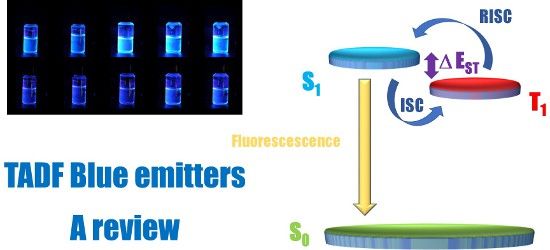
- distribution of the LUMO over the central pyrimidine acceptor core and the adjacent phenylene linkers small ΔEST were determined (0.16 and 0.15 eV for T29 and T30, respectively), indicative of reduced electronic correlations between frontier orbitals and accounting for their high performance. Indeed, EQEs of




Fluorogenic PNA probes
Beilstein J. Org. Chem. 2018, 14, 253–281, doi:10.3762/bjoc.14.17
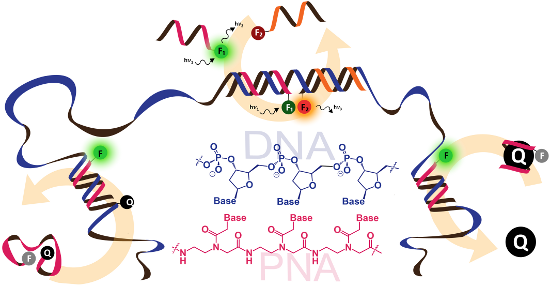
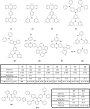
- , as well as the types of linkers, need to be fine-tuned in order to obtain optimal results. In this respect, the ability to site-specifically label anywhere in the PNA molecule using a pre-formed dye-labeled monomer or a functionalized monomer that allows post-synthetic labeling is important [84




Synthesis and spectroscopic properties of β-meso directly linked porphyrin–corrole hybrid compounds
Beilstein J. Org. Chem. 2018, 14, 187–193, doi:10.3762/bjoc.14.13
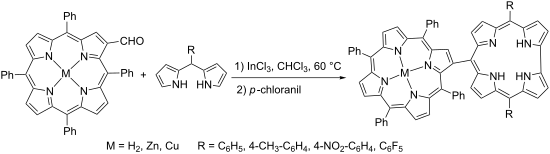
- applications [21][22][23]. In order to achieve rapid energy and electron transfer between macrocycles, the short distance between subunits keeps an important place. Therefore, two important factors affect the physical and electronic properties of porphyrin–corrole conjugates: (i) type of linkers and (ii
- ) position of substitution (meso or β). So far, corrole macrocyles have been integrated into porphyrin conjugates via anthracene, biphenylene, xanthene, dibenzofuran [16][17][18][19][20], amide [21] and triazole [22][23] linkers. Despite the large number of studies on the synthesis of porphyrin–corrole



Exploring mechanochemistry to turn organic bio-relevant molecules into metal-organic frameworks: a short review
Beilstein J. Org. Chem. 2017, 13, 2416–2427, doi:10.3762/bjoc.13.239
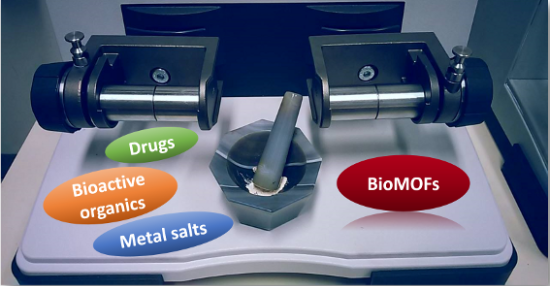
- further biomedical/pharmaceutical applications [71], such as cancer therapy [81][82][83]. MOFs combine coordination and supramolecular chemistry. Coordination chemistry is present in the coordination of organic molecules (linkers) to metal ions or clusters (coordination centers), while supramolecular
- chemistry relies on the formation of intermolecular interactions between linker molecules. This combination results in 1D, 2D or 3D porous frameworks. The pore size can be adjusted by varying the size of the linkers, a modification that can be associated to the change in functional groups in the organic
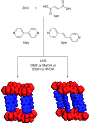
- environmental reasons. These issues also led to the quest for biodegradable MOFs, the first being prepared in 2010 by Miller et al. [77]. Another family of MOFs, ZIFs (zeolitic imidazolate frameworks), that involves organic imidazoles as linkers, has been explored for medicinal purposes as a result of the




Structure–property relationships and third-order nonlinearities in diketopyrrolopyrrole based D–π–A–π–D molecules
Beilstein J. Org. Chem. 2017, 13, 2374–2384, doi:10.3762/bjoc.13.235

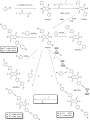
- to the first absorption bands. The positions of the emission maxima copy trends seen in the absorption spectra. Increasing the donating ability of the attached peripheral R1-substituents results in a slight bathochromic shift, whereas extension of the π-system by acetylene linkers has an opposite
- in modular way prepared by Suzuki–Miyaura, Migita–Stille, and Sonogashira cross-coupling reactions. The chromophores differ in the π-system extension as well as in the peripheral substitution. The thermal stability of 1–5 is mostly affected by the presence of acetylene linkers, 1,4-phenylene and 2,5
- -thienylene linkers, and ferrocene termini. From the electrochemical data we can conclude that variation of the peripheral donors influences mostly the HOMO, which dictates the HOMO–LUMO gap. Absorption spectra showed two bands localized around 600 nm, which position weakly depend on the peripheral




Synthesis and application of trifluoroethoxy-substituted phthalocyanines and subphthalocyanines
Beilstein J. Org. Chem. 2017, 13, 2273–2296, doi:10.3762/bjoc.13.224
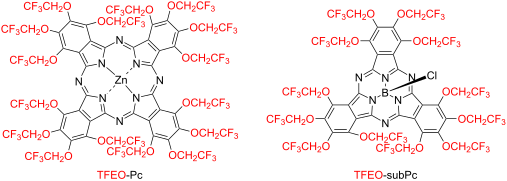
- diacetylene linkers, via a butadiyne and via an aryldiacetylene moiety (Figure 2). Such binuclear phthalocyanines that are connected via a rigid acetylene linker synthesized by Glaser or Sonogashira reactions have attracted attention due to their interesting effects resulting from further expansion of








Intramolecular glycosylation
Beilstein J. Org. Chem. 2017, 13, 2028–2048, doi:10.3762/bjoc.13.201
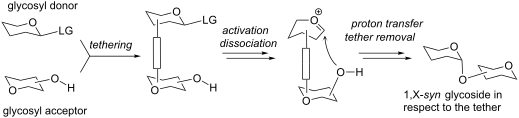
- , equal amounts of α- and β-anomers were obtained. Also, when a glucosyl acceptor was employed, mainly the 1,2-cis-linked product was obtained. Valverde et al. also investigated succinoyl tethers [54], but their studies were mainly focusing on phthaloyl and non-symmetrical linkers described below. Among
- other flexible linkers investigated are carbonate [57], as well as oxalic [57], malonic [53][57][58], and glutaric [59] dicarboxylic acids. However, like in the case of succinoyl linkers, higher flexibility led to more relaxed stereoselectivity. Further variations upon this method involved the
- freedom and also to form smaller ring sizes [81]. Templated oligosaccharide synthesis Recently, Demchenko and co-workers introduced templated oligosaccharide synthesis, wherein bisphenol A (BPA) was used as the template and succinoyl, glutaryl or phthaloyl linkers were used to tether glycosyl donors and


Sugar-based micro/mesoporous hypercross-linked polymers with in situ embedded silver nanoparticles for catalytic reduction
Beilstein J. Org. Chem. 2017, 13, 1212–1221, doi:10.3762/bjoc.13.120
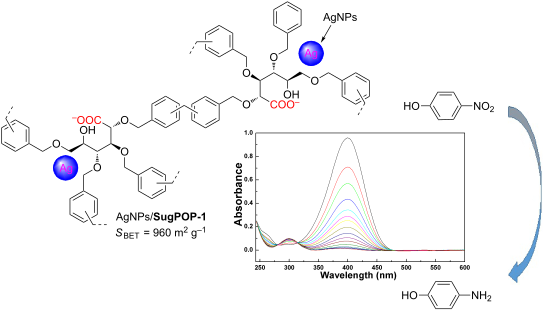
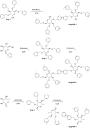
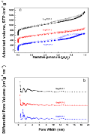
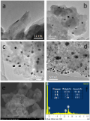
- -linkers [4], and self-polycondensation of small molecular monomers [5]. Since the Tan group proposed the new synthetic strategy that "knits" low functionality rigid aromatic compounds with formaldehyde dimethyl acetal (FDA) as an external cross-linking agent through a Friedel–Crafts reaction to synthesize




Strategies in megasynthase engineering – fatty acid synthases (FAS) as model proteins
Beilstein J. Org. Chem. 2017, 13, 1204–1211, doi:10.3762/bjoc.13.119
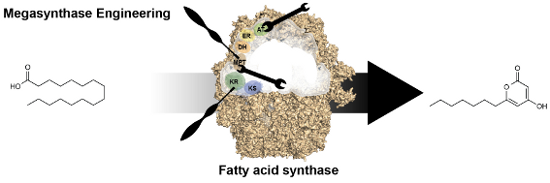
- restricted by ACP linkers and the protein scaffold. As calculated from the reported specific activity of 2,500 mU/mg [24], S. cerevisiae FAS runs about 18 iterative cycles per second (per set of active sites). Given that each cycle requires six productive interactions between the ACP and the catalytic
- the walls of the reaction chambers, while the ACP domains are held centrally in the chamber by two unstructured linkers of about 20 to 50 amino acid residues in length (40 and 25 amino acids in S. cerevisiae FAS). Interestingly, duplicated ACP domains have been observed in certain fungal FAS, and ACP
- phosphopantetheinylated [24][32], is located at the tip of the fold opposite to the N- and C-terminal attachment sites. This structural organization likely preserves linkers from interfering in ACP:domain interactions, and, concomitantly, may support the loading of the covalent acyl moiety by steering the acyl tail into


Glyco-gold nanoparticles: synthesis and applications
Beilstein J. Org. Chem. 2017, 13, 1008–1021, doi:10.3762/bjoc.13.100
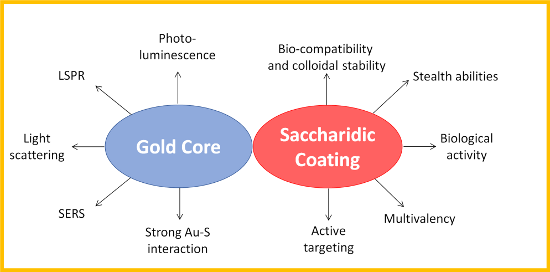
- space glycans from the Au surface is another fundamental factor to take into consideration in GAuNP design. Generally, the majority of the spacers are thiol-linkers, exploiting the strong soft–soft interaction between gold and sulfur. The spacer has the crucial role to stabilize GAuNPs in the
- spacer in the glycan–protein interaction [67]. The authors considered different types of spacer in terms of chemical structure, length and rigidity and demonstrated that longer linkers resulted as the best performing ones, giving a better access to the protein pocket. Furthermore, they showed that rigid


Interactions between shape-persistent macromolecules as probed by AFM
Beilstein J. Org. Chem. 2017, 13, 938–951, doi:10.3762/bjoc.13.95
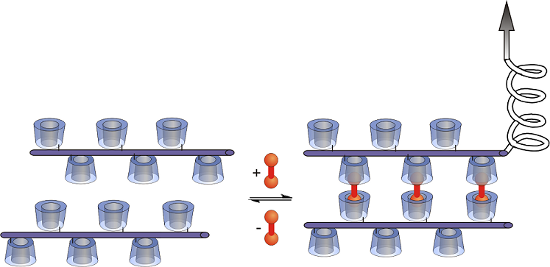
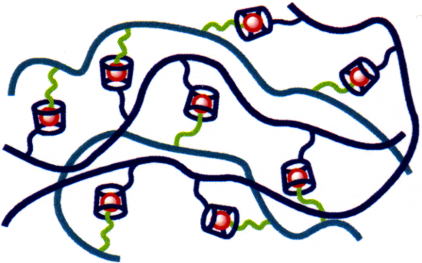
- and friction by applying external stimuli onto the responsive ditopic linkers [47][48][49]. In contrast to previous work our molecular toolkit, based on ditopic connector molecules, allows the independent determination of unspecific interactions between CD polymers at tip and planar surface as well as
- chains and their maximum length. Interaction of a shape-persistent CD polymer with ditopic guests. Schematic representation of tip and surface modifications realized in this study (bottom). Blue lines symbolize the CD polymers, red circles the complexed ditopic linkers. Absorption spectra of monomer 7


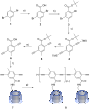


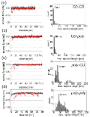


Synthesis of structurally diverse 3,4-dihydropyrimidin-2(1H)-ones via sequential Biginelli and Passerini reactions
Beilstein J. Org. Chem. 2017, 13, 54–62, doi:10.3762/bjoc.13.7
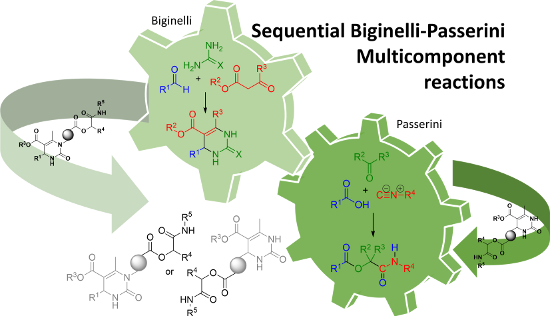
- various DHMP acids with different bifunctional linkers. Aliphatic aldehydes did not react well under these conditions (even after longer reaction periods of up to six days) and product isolation was not straightforward. For the subsequent Passerini reactions, the DHMP acids were dissolved in a mixture of



A versatile route to polythiophenes with functional pendant groups using alkyne chemistry
Beilstein J. Org. Chem. 2016, 12, 2682–2688, doi:10.3762/bjoc.12.265

- conditions leading to exomethylene-EDOT [19]. Therefore, the usage of basic nucleophiles is problematic. Moreover, these heteroatom-based linkers between the polymer backbone and the pendant group usually have limited tolerance to acidic or basic conditions promoting hydrolysis, and some of them are


Elongated and substituted triazine-based tricarboxylic acid linkers for MOFs
Beilstein J. Org. Chem. 2016, 12, 2267–2273, doi:10.3762/bjoc.12.219

- Arne Klinkebiel Ole Beyer Barbara Malawko Ulrich Luning Otto-Diels-Institut für Organische Chemie, Christian-Albrechts-Universität zu Kiel, Olshausenstr. 40, D-24098 Kiel, Germany 10.3762/bjoc.12.219 Abstract New triazine-based tricarboxylic acid linkers were prepared as elongated relatives of
- substituted) with two equivalents of an unsubstituted nitrile. Triple Suzuki coupling of the cores 3 with suitable phenyl- and biphenylboronic acid derivatives provided elongated tricarboxylic acid linkers as carboxylic acids 17 and 20 or their esters 16 and 19. Reduction of the nitro group and cleavage of
- the methoxy group gave the respective amino and hydroxy-substituted triazine linkers. Keywords: isoreticular; linker; MOF; Suzuki coupling; triazine; Introduction A typical building block for many metal–organic frameworks (MOFs) [1][2][3][4] carries two functional groups such as carboxylic acids or


DNA functionalization by dynamic chemistry
Beilstein J. Org. Chem. 2016, 12, 2136–2144, doi:10.3762/bjoc.12.203
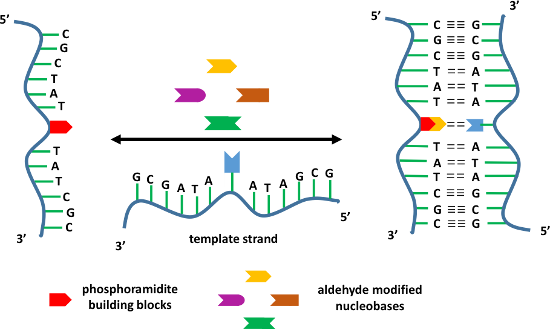
- generate libraries of molecules from simpler building blocks by reversible reactions under thermodynamic control. Here we focus on the chemical modification of DNA oligonucleotides with acyclic diol linkers and demonstrate their potential for the deoxyribonucleic acid functionalization and generation of


Application of Cu(I)-catalyzed azide–alkyne cycloaddition for the design and synthesis of sequence specific probes targeting double-stranded DNA
Beilstein J. Org. Chem. 2016, 12, 1348–1360, doi:10.3762/bjoc.12.128
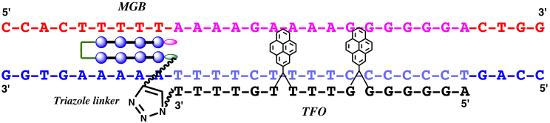
- synthesis of conjugates of pyrrole–imidazole polyamide minor groove binders (MGB) with fluorophores and with triplex-forming oligonucleotides (TFOs). Diverse bifunctional linkers were synthesized and used for the insertion of terminal azides or alkynes into TFOs and MGBs. The formation of stable triple
- part of the present article, we describe the synthesis of various linkers bearing different functional groups for simple and accessible introduction of azide and alkyne groups into biopolymers, fluorophores and ligands. Then, these linkers were introduced into the structure of MGBs and TFOs and used
- for the synthesis of MGB-fluorophore and MGB-TFO conjugates via CuAAC (Figure 2). Properties of the conjugates obtained are discussed. Results and Discussion Synthesis of bifunctional linkers Two components in MGB-TFO conjugates must be connected by a linker, which is at least 12 chemical bonds long


Creating molecular macrocycles for anion recognition
Beilstein J. Org. Chem. 2016, 12, 611–627, doi:10.3762/bjoc.12.60
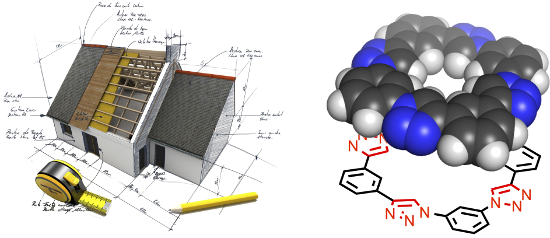
- microscopy (STM) imaging. Their shape persistence makes them ideal for the study of structure–property relationships to enable deep understanding of anion recognition phenomena. The identification of 1,2,3-triazoles as linkers, ligands and building blocks. The synthetic creation of macrocycles sets the scene






New synthetic strategies for xanthene-dye-appended cyclodextrins
Beilstein J. Org. Chem. 2016, 12, 537–548, doi:10.3762/bjoc.12.53
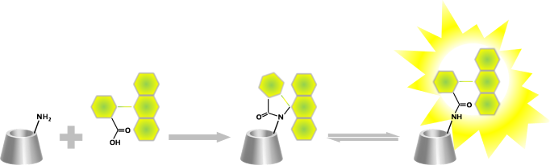
- of the CD scaffold with two different linkers (both polyamines) and then on the coupling of the terminal amino group of the linkers with rhodamine B. The coupling conditions were slightly different from those reported by Harada [14]. The solvent was a mixture of pyridine and DMF, the activating


Optimized methods for preparation of 6I-(ω-sulfanyl-alkylene-sulfanyl)-β-cyclodextrin derivatives
Beilstein J. Org. Chem. 2016, 12, 349–352, doi:10.3762/bjoc.12.38
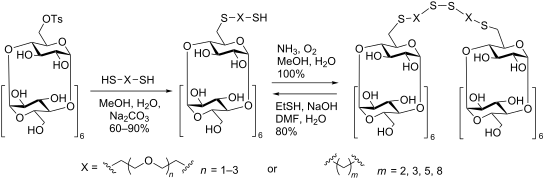
- Prague, Hlavova 8, 128 43, Prague 2, Czech Republic 10.3762/bjoc.12.38 Abstract A general high-yielding method for the preparation of monosubstituted β-cyclodextrin derivatives which have attached a thiol group in position 6 is described. The thiol group is attached through linkers of different lengths
- linkers using standard chemical transformations (Scheme 1). Oligoethylene glycol ditosylates 2a–c [19] were converted to S-acetyl dithiols 3a–c [20] and deacetylated to the oligoethylene glycol dithiols 4a–c using a procedure published for similar thiols [21]. Compounds 4 can be easily oxidized to
- more hydrophilic and flexible oligoethylene glycol linker, which have been successfully applied in several studies to position the CD units at a sufficient distance from the solid surface. These linkers also have the advantage, compared to the aliphatic chain linkers, in a lower tendency to form an


A journey in bioinspired supramolecular chemistry: from molecular tweezers to small molecules that target myotonic dystrophy
Beilstein J. Org. Chem. 2016, 12, 125–138, doi:10.3762/bjoc.12.14
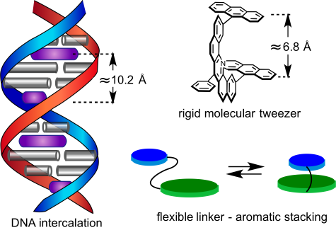
- intercalation sites only half occupied. Le Pecq and coworkers studied bisacridines such as 1 (Figure 2b) [7]. Consistent with the NEP, 1 formed a very tight bisintercalation complex with its spermine-derived linker chain spanning two base-pairs (Figure 2c). However, with shorter linkers that can only span a
- interested in linkers or spacers that minimally allowed or even forced the two chromophores to stack on one another. The DNA target in which we became interested was a repeating sequence (CTG)n in the DMPK gene on chromosome 19. The sequence becomes unstable when n > 50, undergoing progressive expansion to
- interested in bisintercalators and the question of rigid vs flexible linkers? The triaminotriazine unit was designed to provide selective recognition of U–U or T–T mismatches, but on its own was viewed as unlikely to provide significant binding affinity because the hydrogen bonding simply involves replacing


Hydroquinone–pyrrole dyads with varied linkers
Beilstein J. Org. Chem. 2016, 12, 89–96, doi:10.3762/bjoc.12.10
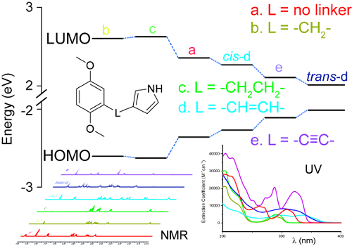
- , Box 576, SE-751 23 Uppsala, Sweden 10.3762/bjoc.12.10 Abstract A series of pyrroles functionalized in the 3-position with p-dimethoxybenzene via various linkers (CH2, CH2CH2, CH=CH, C≡C) has been synthesized. Their electronic properties have been deduced from 1H NMR, 13C NMR, and UV–vis spectra to
- detect possible interactions between the two aromatic subunits. The extent of conjugation between the subunits is largely controlled by the nature of the linker, with the largest conjugation found with the trans-ethene linker and the weakest with the aliphatic linkers. DFT calculations revealed
- different linkers between the pyrrole and hydroquinone subunits was designed [6]. Although it is known that N-protected pyrrole (Py) can be selectively functionalized at the β-position [7], we found the published procedures to be unsuitable for our purpose (vide infra). Therefore, we have developed improved


Supramolecular polymer assembly in aqueous solution arising from cyclodextrin host–guest complexation
Beilstein J. Org. Chem. 2016, 12, 50–72, doi:10.3762/bjoc.12.7
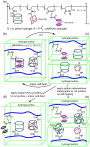
- [76]. (The 66 prefix in 66β-CD2su and 66β-CD2ur indicates that the succinamide and urea linkers are attached to the C6 carbon in a D-glucopyranose subunit of each β-CD.) The increasing length of the adamantyl tether from amido to hexylamido in PAAAD and PAAADhn progressively decreases steric hindrance
- M−1 in aqueous solution at 298.2 K for β-CD and the β-CD dimer b and the β-CD dimer c, respectively, where the greater β-CD dimer c complex stability was attributed to the greater hydrophobicity arising from the two octamethylene linkers. Rheological studies of aqueous solutions of adamantyl
- . A much greater increase in viscosity was observed when the β-CD dimer c was employed consistent with its greater rigidity derived from the twin octamethylene linkers enhancing interchain cross-link formation. Interesting variations on the above complexation studies are those relating to β-CD


Effective immobilisation of a metathesis catalyst bearing an ammonium-tagged NHC ligand on various solid supports
Beilstein J. Org. Chem. 2016, 12, 5–15, doi:10.3762/bjoc.12.2
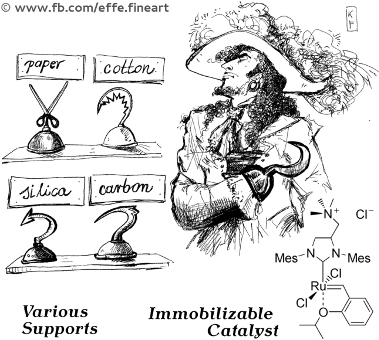
- the need for sophisticated linkers and tags, is significantly more complicated. Several protocols were developed for heterogenisation of ruthenium catalysts and this topic has been thoroughly reviewed [8][9][10][11][12][13][14][15][16][17][18]. The implementation of such concepts requires the presence


Polydisperse methyl β-cyclodextrin–epichlorohydrin polymers: variable contact time 13C CP-MAS solid-state NMR characterization
Beilstein J. Org. Chem. 2015, 11, 2785–2794, doi:10.3762/bjoc.11.299
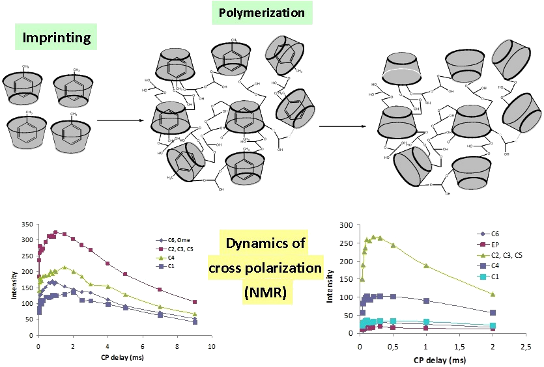
- remove organic pollutants [6][11][12][13] and heavy metals [14] from water. The most efficient method for the synthesis of insoluble polymers is to use di- or polyfunctional linkers with monomers of cyclodextrins. Different effective crosslinkers have been reported in the literature such as