Search results
Search for "monitoring" in Full Text gives 396 result(s) in Beilstein Journal of Organic Chemistry. Showing first 200.
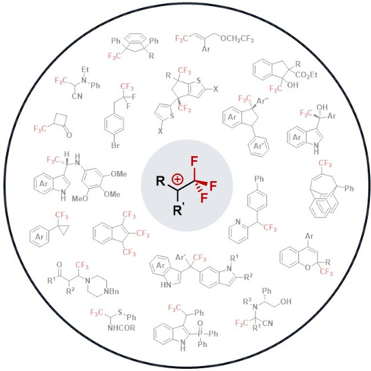
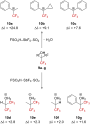
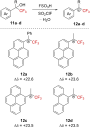
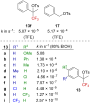
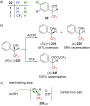
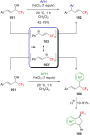
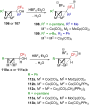
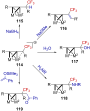
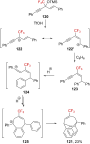
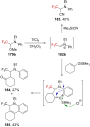
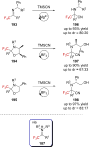
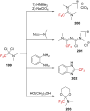
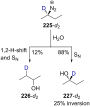
CF3-substituted carbocations: underexploited intermediates with great potential in modern synthetic chemistry
Beilstein J. Org. Chem. 2021, 17, 343–378, doi:10.3762/bjoc.17.32
































Regioselective chemoenzymatic syntheses of ferulate conjugates as chromogenic substrates for feruloyl esterases
Beilstein J. Org. Chem. 2021, 17, 325–333, doi:10.3762/bjoc.17.30
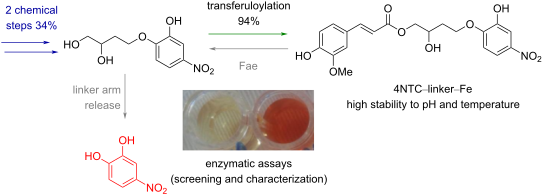
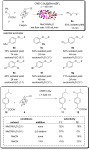
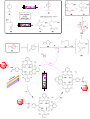
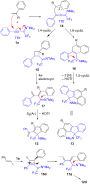
- both pathways. a3-step pathway. b1-step pathway. (A) Spectrometric monitoring (at 530 nm) of 4NTC released after the action of Fae on 12 in the presence of sodium periodate and (B) control reactions of the discontinuous assay of the Fae-mediated hydrolysis of 12. The optical density (OD) was measured


19F NMR as a tool in chemical biology
Beilstein J. Org. Chem. 2021, 17, 293–318, doi:10.3762/bjoc.17.28
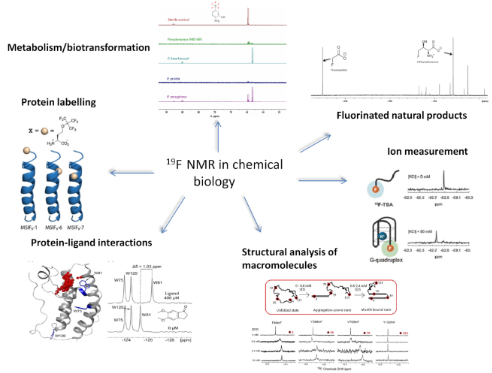
- inhibitors in situ using 19F NMR spectroscopy (Figure 6). For this, the activity of the membrane-bound FAAH enzyme was evaluated by monitoring the hydrolysis of a fluorinated anandamide analogue ARN1203, a previously reported FAAH substrate, to arachidonic acid and 1-amino-3-fluoropropanol in the presence
- Granqvist et al. [101], the 19F NMR signals observed when employing these probes to evaluate the thermal denaturation of a range of RNA hairpins were indeed found to be sensitive enough to allow the monitoring of their secondary structural changes with relatively wide shift dispersion. It also enabled to
- the detection of the new compounds in the complex supernatants of organisms producing non-ribosomal peptides and polyketides. It has been especially useful for monitoring the incorporation


Au(III) complexes with tetradentate-cyclam-based ligands
Beilstein J. Org. Chem. 2021, 17, 186–192, doi:10.3762/bjoc.17.18
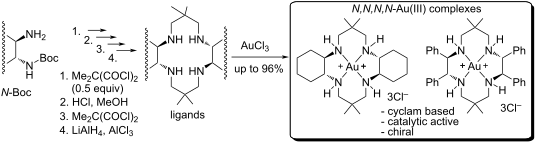
- moderate to excellent yields of tetracoordinated 5a-Au(III) and 6a-Au(III) N,N,N,N-complexes with alternating five- and six-membered chelate rings (50% and 96%, respectively, Scheme 3). Monitoring the formation of complex 5a-Au(III), using 1H NMR, and 1H,15N-HMBC, clearly indicated a tetra-nitrogen


Supramolecular polymerization of sulfated dendritic peptide amphiphiles into multivalent L-selectin binders
Beilstein J. Org. Chem. 2021, 17, 97–104, doi:10.3762/bjoc.17.10
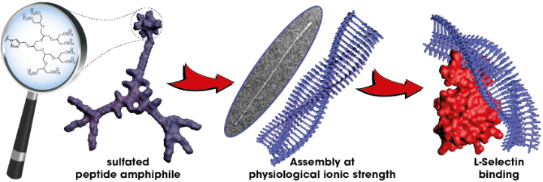
- copper-catalyzed azide–alkyne cycloaddition (Scheme 2). The reaction took place in degassed DMSO at 50 °C with CuSO4 pentahydrate, sodium ascorbate and tris(benzyltriazolylmethyl)amine (TBTA) as chelating species. HPLC-monitoring of the reaction showed a full conversion after three days and the crude



The fluorescence of a mercury probe based on osthol
Beilstein J. Org. Chem. 2021, 17, 22–27, doi:10.3762/bjoc.17.3
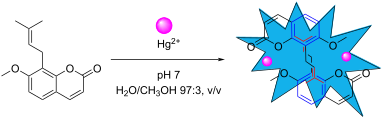
- be used for the quantitative detection and monitoring of mercury ions in the environment. Results and Discussion OST fluorescence probe for Hg2+ identification Selectivity of the fluorescent OST probe to metal ions The specificity of a probe for metal ions is the key factor to evaluate the


Secondary metabolites of Bacillus subtilis impact the assembly of soil-derived semisynthetic bacterial communities
Beilstein J. Org. Chem. 2020, 16, 2983–2998, doi:10.3762/bjoc.16.248
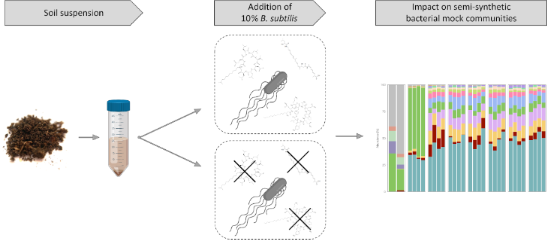
- contained 13 genera with a relative abundance of >0.19% in at least one mock community. Furthermore, it was demonstrated that the addition of B. subtilis suppressed the genera Lysinibacillus and Viridibacillus. Additional optical density (OD)-based growth monitoring of the selected strain Lysinibacillus
- significance of pairs was determined with the Welch two-sample t-test, and the differences among groups >2 was determined with the one-way analysis of variance (ANOVA) test and the Tukey HSD test. The statistical significance was determined with an alpha level <0.05. Growth monitoring of L. fusiformis


Selected peptide-based fluorescent probes for biological applications
Beilstein J. Org. Chem. 2020, 16, 2971–2982, doi:10.3762/bjoc.16.247

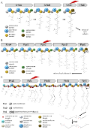
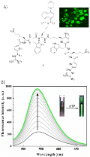
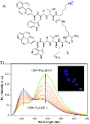
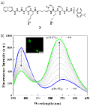
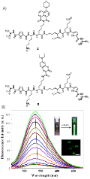
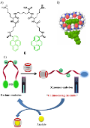
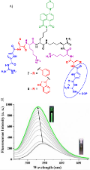
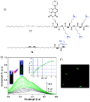
- labeled with environmentally sensitive/FRET fluorophores have allowed direct detection/monitoring of biomolecules in aqueous media and in live cells. In this review, key peptide-based approaches for different biological applications are presented. Keywords: fluorescent probe; fluorophores; molecular
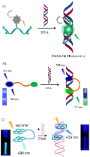
- detection The genetic information carrier nucleic acids are present in nearly all living organisms. Fluorescence monitoring of nucleic acids has become increasingly important in medical diagnosis, drug discovery, environmental monitoring, food safety etc. [40][41]. Schmuck et al. reported several
- excimer (490 nm) to monomer emission (406 nm, Figure 3B). Thus, monitoring the relative fluorescence intensities at two wavelengths (F406/F490) allowed the ratiometric detection of nucleic acids. Schmuck et al. reported a similar cationic peptide beacon 3 coupled with a FRET pair, a naphthalene donor and




Controlled decomposition of SF6 by electrochemical reduction
Beilstein J. Org. Chem. 2020, 16, 2948–2953, doi:10.3762/bjoc.16.244
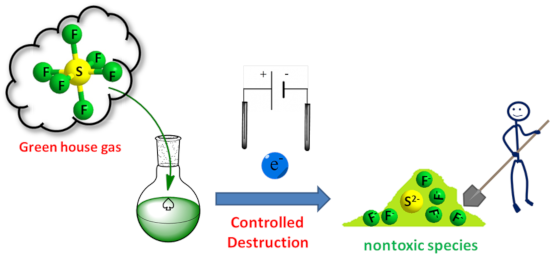
- monitoring the potential scan rate. By cyclic voltametry, unlike macroelectrodes, the polarization of microelectrodes with a low potential scan rate (≤25 mV/s) leads to a drastic decrease of Cottrel contribution which involves the disappearance of current waves. The resulting current becomes a stationary


UV resonance Raman spectroscopy of the supramolecular ligand guanidiniocarbonyl indole (GCI) with 244 nm laser excitation
Beilstein J. Org. Chem. 2020, 16, 2911–2919, doi:10.3762/bjoc.16.240
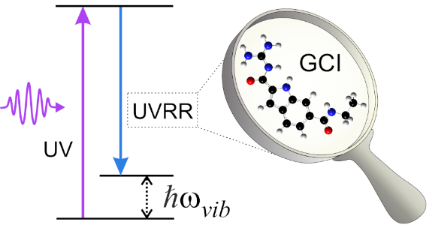
- , Universitätsstrasse 7, 45141 Essen, Germany 10.3762/bjoc.16.240 Abstract Ultraviolet resonance Raman (UVRR) spectroscopy is a powerful vibrational spectroscopic technique for the label-free monitoring of molecular recognition of peptides or proteins with supramolecular ligands such as guanidiniocarbonyl pyrroles
- selectivity for monitoring the CBS, but the resulting UVRR spectrum overlaps with the UV-excited autofluorescence from the aromatic binding partners. This necessitates the use of a laser excitation <260 nm for spectrally separating the UVRR spectrum of the supramolecular ligand from the UV-excited
- strengths. Various spectroscopic techniques can be employed for monitoring these changes. For example, electronic absorption or fluorescence spectroscopy can probe the spectral differences due to the complexation of the supramolecular ligand with a peptide or protein. However, electronic spectroscopies


One-pot multicomponent green Hantzsch synthesis of 1,2-dihydropyridine derivatives with antiproliferative activity
Beilstein J. Org. Chem. 2020, 16, 2862–2869, doi:10.3762/bjoc.16.235
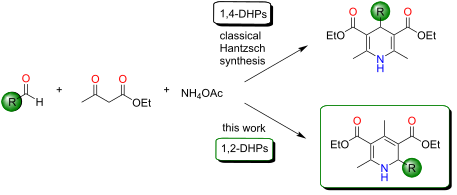
- particularly positive effect. Since the presence of water was shown to be detrimental, the ammonium acetate (3) used was left to dry in a desiccator before use. Reaction monitoring was mostly done using thin-layer chromatography (TLC) and at times also GC. These techniques showed the occurrence of at least



Using multiple self-sorting for switching functions in discrete multicomponent systems
Beilstein J. Org. Chem. 2020, 16, 2831–2853, doi:10.3762/bjoc.16.233

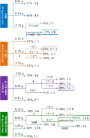
- innovative catch–release system with multiple functions combined the ON/OFF-adjustment of silver(I) catalysis and fluorescence monitoring [59]. Actually, the ratiometric luminescence response allowed the exact monitoring of the catalytic activity. In the initial incomplete self-sorting (state SelfSORT-I









Selective recognition of ATP by multivalent nano-assemblies of bisimidazolium amphiphiles through “turn-on” fluorescence response
Beilstein J. Org. Chem. 2020, 16, 2728–2738, doi:10.3762/bjoc.16.223
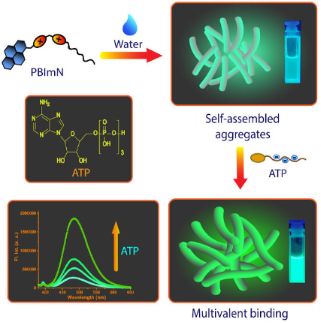
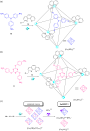
- presence of positive surface charges on the multivalent aggregates led to ATP binding which was accompanied by a significant increase in the excimeric emission intensity. This provided a convenient way of monitoring ATP binding in a “turn-on” mode and an efficient detection of ATP was achieved in aqueous


Activation of pentafluoropropane isomers at a nanoscopic aluminum chlorofluoride: hydrodefluorination versus dehydrofluorination
Beilstein J. Org. Chem. 2020, 16, 2623–2635, doi:10.3762/bjoc.16.213
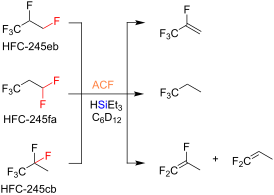
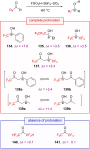
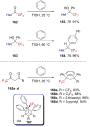
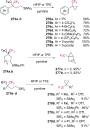
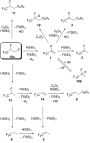
- =CHCH2C6D5 (9) and CF3CH=CHC6D5 (8, Scheme 11, middle). In neat silane, 5 and 6 were detected in a ratio of 1:4 (Scheme 11, bottom). Notably, for all conversions (C6D6 and silane, C6D12 and silane, or in neat silane), monitoring of the reaction by 19F NMR spectroscopy led to the observation of the early




Anion exchange resins in phosphate form as versatile carriers for the reactions catalyzed by nucleoside phosphorylases
Beilstein J. Org. Chem. 2020, 16, 2607–2622, doi:10.3762/bjoc.16.212
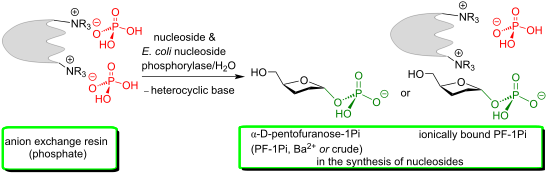
- gently stirred at 47 °C for 48 h, with monitoring the product formation by HPLC. After 48 h, the conversion of the base into nucleoside reached equilibrium at 85% of the latter. The turbid (not reacted starting base according to TLC and barium phosphate) reaction mixture was filtered, the filtrate
- ; 1.2 mequiv/mL) in 15 mL of distilled water; pH 7.0), Ara-U (170 mg, 0.7 mmol) and MgCl2·6H2O (71 mg, 0.5 mmol of MgCl2 per 1 mmol of Ara-U), followed by UP (105 IU; 150 units per 1 mmol of substrate) were added, and the reaction mixture was gently stirred at 40 °C with monitoring the Ara-U
- reaction mixture was gently stirred at 47 °C for 48 h with monitoring the product formation by HPLC (HPLC system A, 5% H2O/MeCN), λ = 260 nm, 1 mL/min; tR 4.5 and 5.1 min for the base and nucleoside, respectively). After 48 h, the conversion of the base into nucleoside reached 85%. The turbid (not reacted


NMR Spectroscopy of supramolecular chemistry on protein surfaces
Beilstein J. Org. Chem. 2020, 16, 2505–2522, doi:10.3762/bjoc.16.203
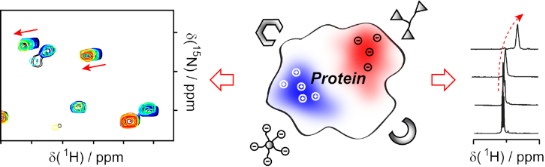
- while titrating the other binding partner. However, for larger supramolecular hosts that encapsulate a large part of their (usually smaller) guest, it is advantageous to monitor the guest’s resonances. Monitoring binding with this simple spectrum requires at least one signal that does not overlap with
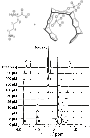
- supramolecular tweezers that bind to lysine or arginine, tweezers have been titrated to the free amino acids or short peptides, monitoring the Lys and Arg resonances [5][80]. While all resonances of the guest amino acid shift upon tweezer binding, the effect is most severe for the H atoms at the end of the side
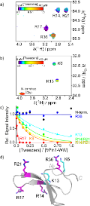
- experiment, monitoring 15N,2H-labeled 14-3-3ΔC protein in 1H,15N-TROSY-HSQC experiments [103], was used to investigate the stabilizing effect of several compounds on the interaction of 14-3-3 with different unlabeled peptide epitopes derived from 14-3-3 cargo proteins [104][105][106]. E.g., a semi-synthetic




Tools for generating and analyzing glycan microarray data
Beilstein J. Org. Chem. 2020, 16, 2260–2271, doi:10.3762/bjoc.16.187
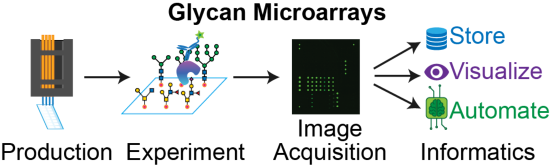
- monitoring for accurate printing. Between the printing of each probe (glycan), there is usually a wash step which is performed to prevent any carryover for the next ligand, and this would need to be determined empirically depending on the glycoconjugates used. After the entire print run, the slides are left


Naphthalene diimide bis-guanidinio-carbonyl-pyrrole as a pH-switchable threading DNA intercalator
Beilstein J. Org. Chem. 2020, 16, 2201–2211, doi:10.3762/bjoc.16.185
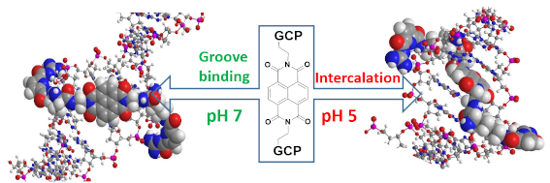
- molecules were dyes used for the DNA/RNA labelling or even monitoring or influencing DNA/RNA function [3][4]. However, due to the complexity of DNA-coded or RNA-coded processes, also including epigenetics, there is permanent need for novel dyes, differing in selectivity, colour, or method of monitoring [5
- monitoring, fluorescence is still the most popular method [8][9][10][11]. However, many new techniques or established ones with increased sensitivity are constantly improved or developed to report complementary to fluorescence. For instance, circular dichroism (CD) spectropolarimetry, highly sensitive to





Reactions of 3-aryl-1-(trifluoromethyl)prop-2-yn-1-iminium salts with 1,3-dienes and styrenes
Beilstein J. Org. Chem. 2020, 16, 2064–2072, doi:10.3762/bjoc.16.173
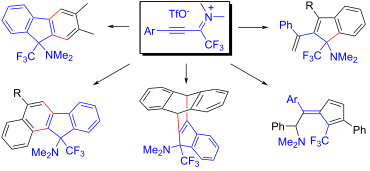
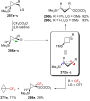
- °C, 19F NMR monitoring of the reaction’s progress indicated the appearance of a second product beside the 1,4-cyclohexadien-1-iminium salt 4-Ch. Further investigations revealed that the new product was the dihydrofluorene 7, resulting from 4-Ch by an intramolecular electrophilic aromatic substitution




Three new O-isocrotonyl-3-hydroxybutyric acid congeners produced by a sea anemone-derived marine bacterium of the genus Vibrio
Beilstein J. Org. Chem. 2020, 16, 1869–1874, doi:10.3762/bjoc.16.154
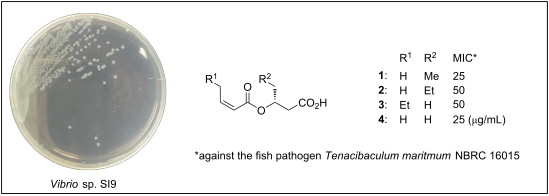
- (10 × 250 mm), eluted by a gradient method (MeCN/0.1% HCOOH) at 4 mL/min, with monitoring at 254 nm, to give the (S)-PGME amide 4a (2.9 mg, 93%) as colorless oil. The PGME amides 1a/b–3a/b and 4b were prepared by the same procedure but replacing the starting material and the chiral reagent accordingly


Nonenzymatic synthesis of anomerically pure, mannosyl-based molecular probes for scramblase identification studies
Beilstein J. Org. Chem. 2020, 16, 1732–1739, doi:10.3762/bjoc.16.145
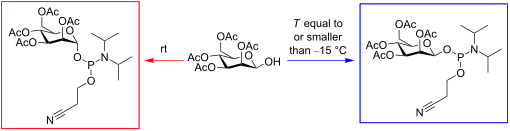
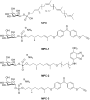
- with radioactively labeled substrates, the use of fluorescently labeled probes offers several advantages, including the continuous monitoring of the transport and a better time resolution. For reasons of comparison, the α-configured ᴅ-mannose probe MPC-3 was synthesized in parallel. The



Facile synthesis of 7-alkyl-1,2,3,4-tetrahydro-1,8-naphthyridines as arginine mimetics using a Horner–Wadsworth–Emmons-based approach
Beilstein J. Org. Chem. 2020, 16, 1617–1626, doi:10.3762/bjoc.16.134
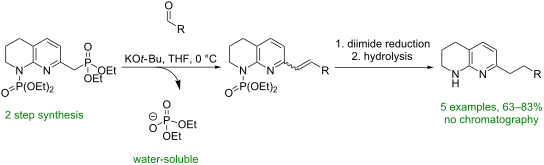
- to account for the deprotonation of the more acidic phosphonate product 7 versus the starting material 13, and potential lithium sequestration by chelation between an oxygen atom of the phosphonate and the nitrogen atom of the unsaturated ring. Monitoring of the deprotonation followed by quenching



Synthesis of new dihydroberberine and tetrahydroberberine analogues and evaluation of their antiproliferative activity on NCI-H1975 cells
Beilstein J. Org. Chem. 2020, 16, 1606–1616, doi:10.3762/bjoc.16.133
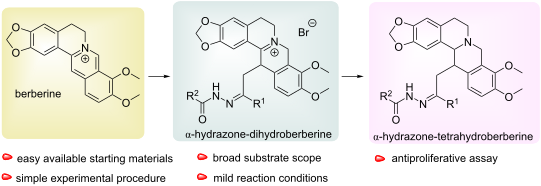
- detectable only in traces (Table 1, entries 1–5). The monitoring by TLC of the reaction conducted in acetonitrile reveals the formation of derivative 2a, which, however, does not precipitate in the reaction medium (Table 1, entry 6). The spontaneous precipitation is particularly relevant to prevent any
- in dichloromethane (3.0 mL) of α-bromohydrazones 1a–n [71] (1.0 mmol) was added the unsubstitued dihydroberberine [66][67] (1.0 mmol). The reaction was allowed to stand at room temperature under magnetic stirring until the complete disappearance of the starting materials (TLC monitoring) and the
- magnetic stirring until the complete disappearance of the starting hydrazono-DHBERs 2a–n (2.0–3.0 h, TLC monitoring). The reaction solvent was then evaporated under reduced pressure. The crude mixture was then purified by column chromatography on silica gel (elution with cyclohexane/ethyl acetate mixtures




Photoredox-catalyzed silyldifluoromethylation of silyl enol ethers
Beilstein J. Org. Chem. 2020, 16, 1550–1553, doi:10.3762/bjoc.16.126

- starting enol ether. Moreover, a further increase in reaction time was accompanied by a decrease in the product yield. Finally, GC monitoring suggested complete consumption of the silyl enol ether within 6 hours. It should also be pointed out that the addition of basic additives, which are frequently


Heterogeneous photocatalysis in flow chemical reactors
Beilstein J. Org. Chem. 2020, 16, 1495–1549, doi:10.3762/bjoc.16.125
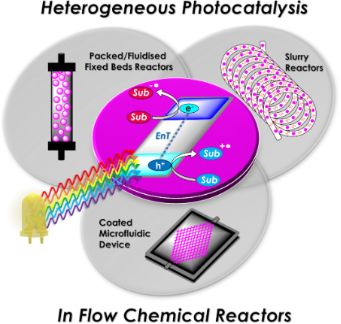
- monitored with in-line and on-line spectroscopies, such as UV–vis, FTIR, mass spectrometry, and NMR [63][64][65][66][67][68]. These systems can be automated to ensure consistency and to remove the need for laborious manual sampling. In-line and on-line monitoring is well aligned with automated synthesis and