Search results
Search for "network" in Full Text gives 338 result(s) in Beilstein Journal of Organic Chemistry. Showing first 200.
Photosensitized direct C–H fluorination and trifluoromethylation in organic synthesis
Beilstein J. Org. Chem. 2020, 16, 2151–2192, doi:10.3762/bjoc.16.183






How and why plants and human N-glycans are different: Insight from molecular dynamics into the “glycoblocks” architecture of complex carbohydrates
Beilstein J. Org. Chem. 2020, 16, 2046–2056, doi:10.3762/bjoc.16.171
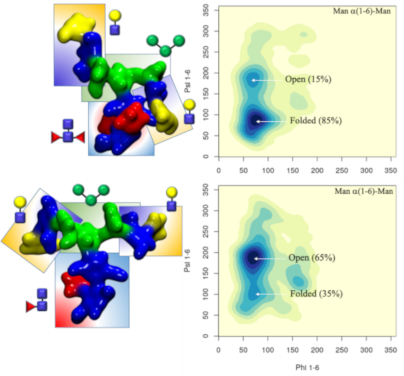
- synergistic effect as this conformation is stabilized by a hydrogen bonding network involving the core fucose, the GlcNAc on the (1-6) arm and the xylose, as shown in Figure S1, Supporting Information File 1. Such folding event has been observed as a stable conformation in two independent simulations. To note
- (open) conformation, while the closed conformation, which accounts for the remaining 10% is achieved through a rotation around the core Man-β(1-4)-GlcNAc. The lack of interaction between the arms is due to the inability to establish the same stable hydrogen bonding network due to the non-complementary
- specific branching and spatial orientation of the motif allowed for a stable interaction between the arms, which is not observed in complex N-glycans with a linear functionalization of the arms [24]. Notably, the same hydrogen bonding network between the arms cannot be established when the same N-glycan


Automated high-content imaging for cellular uptake, from the Schmuck cation to the latest cyclic oligochalcogenides
Beilstein J. Org. Chem. 2020, 16, 2007–2016, doi:10.3762/bjoc.16.167
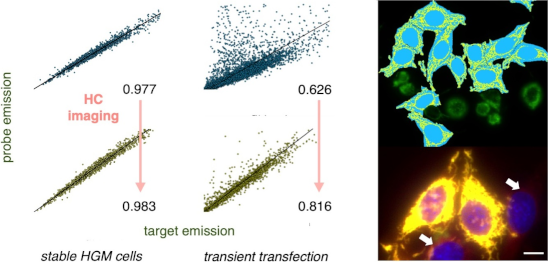
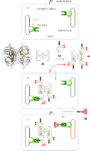
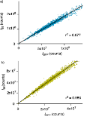
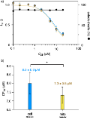
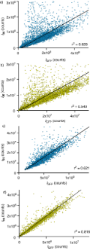
- stable HGM cells with HaloTag–GFP on mitochondria, labeled with 26, showing the fluorescence intensity of GFP versus 26 in a) selected cells inside the cell body mask (light blue and yellow areas in Figure 7a) and in b) selected regions with a high GFP signal, considered as the mitochondrial network




Polarity effects in 4-fluoro- and 4-(trifluoromethyl)prolines
Beilstein J. Org. Chem. 2020, 16, 1837–1852, doi:10.3762/bjoc.16.151
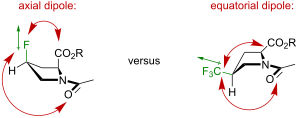
- analogues with distinct hydrophobic properties can impact their ability to pass biomembranes [54][55][56]. A crystallographic study has shown that when included into a protein structure, a fluorine atom exhibits a network of interaction within a protein core [57]. Another recent study showed that the
- . Nonetheless, it is barely conclusive to approach interaction of complex molecules with solvents using net dipole alone. For example, even for the relatively simple molecules like 1–4, the net dipole would not adequately represent neither the complexity of the interaction network within the molecule, nor


One-pot synthesis of isosorbide from cellulose or lignocellulosic biomass: a challenge?
Beilstein J. Org. Chem. 2020, 16, 1713–1721, doi:10.3762/bjoc.16.143
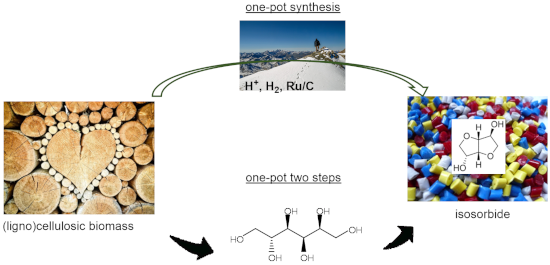
- ; isosorbide; lignocellulosic biomass; Introduction Cellulose, a homopolymer of ᴅ-glucose, is the most abundant component of lignocellulosic biomass. Cellulose is a crystalline polymer due to its intra- and intermolecular hydrogen bond network. The conversion of cellulose to added value chemicals has received


Models of necessity
Beilstein J. Org. Chem. 2020, 16, 1649–1661, doi:10.3762/bjoc.16.137

- computational studies. Furthermore, reactions often follow competing paths, where the dominance of one over another often depends on the specific reaction conditions and only minor variations can give rise to a different outcome. Biological systems have a network of pathways and it is often very difficult to


Mechanochemical green synthesis of hyper-crosslinked cyclodextrin polymers
Beilstein J. Org. Chem. 2020, 16, 1554–1563, doi:10.3762/bjoc.16.127
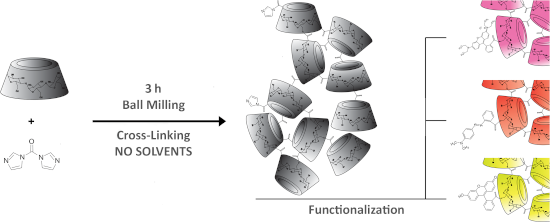
- . Polysaccharides and, among them, starch derivatives such as cyclodextrins (CD), have recently emerged as they are safe, of low cost and biodegradable. Cyclodextrin nanosponges (CD-NS) are crosslinked cyclodextrin polymers characterized by a nanosized three-dimensional network. The reactive hydroxy groups of CDs
- allow them to act as polyfunctional monomers, permitting the crosslinking with bi- or multifunctional chemicals, such as dianhydrides, diisocyanates, diepoxides, and dicarboxylic acids, etc. The polarity and size of the polymer network can be easily tuned by varying the type of the crosslinker and
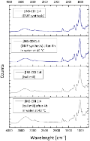
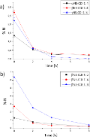
- in the tested solvents, in accordance with the formation of a crosslinked network and with data from previous literature [9]. Figure 1 reports FTIR spectra of the cyclodextrin NS, with a comparison between βNS-CDI 1:4 obtained through ball-mill synthesis and βNS-CDI 1:4 from synthesis in DMF and a




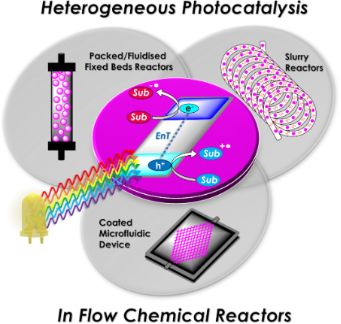
Heterogeneous photocatalysis in flow chemical reactors
Beilstein J. Org. Chem. 2020, 16, 1495–1549, doi:10.3762/bjoc.16.125
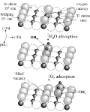
- polymer chains, charge transport is limited to intraplanar transport along the conjugated network. In crystalline and graphitic organic materials, the close packing of two-dimensional sheets permits interplanar charge transport in the third dimension, allowing the delocalisation of charge over several














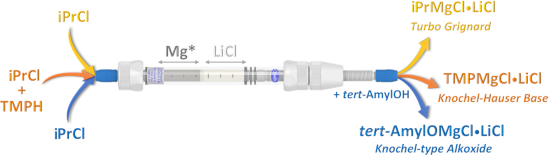
Disposable cartridge concept for the on-demand synthesis of turbo Grignards, Knochel–Hauser amides, and magnesium alkoxides
Beilstein J. Org. Chem. 2020, 16, 1343–1356, doi:10.3762/bjoc.16.115
- keep the back pressure and a constant flow rate is achieved by the tubing length and diameter downstream of the pump or by the fluidic network for more complex cases. The flow is pulseless as a result of the fact that it is driven by compressed air. On-demand reagent (ODR) system design: The ODR


The charge-assisted hydrogen-bonded organic framework (CAHOF) self-assembled from the conjugated acid of tetrakis(4-aminophenyl)methane and 2,6-naphthalenedisulfonate as a new class of recyclable Brønsted acid catalysts
Beilstein J. Org. Chem. 2020, 16, 1124–1134, doi:10.3762/bjoc.16.99
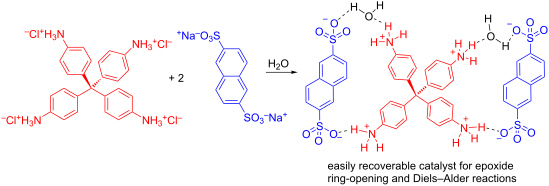
- Information File 1), so that the resulting three-dimensional network had no macro- or mesopores (Figure S1, Supporting Information File 1). The volume of the unit cell that was potentially accessible to a solvent was only 29.0 Å3, as calculated by PLATON [38]. The same crystal phase (F-1a) was present in F-1
- (4) Å3. The resulting structure designated as F-1 (F-1a’ phase, Figure 2) had two ammonium cations and four sulfonate dianions in the asymmetric part of the unit cell, with no traces of water molecules. Its three-dimensional network is built by charge-assisted hydrogen bonds between the ions (Table




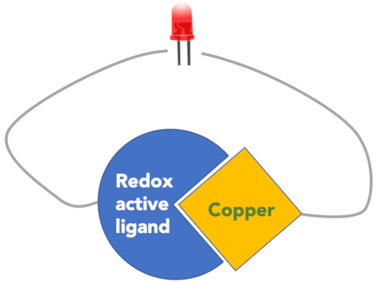
Copper catalysis with redox-active ligands
Beilstein J. Org. Chem. 2020, 16, 858–870, doi:10.3762/bjoc.16.77
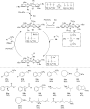
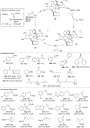
- oxidation of alcohols and representative substrate scope. Introduction of H-bonding network in the ligand coordination sphere. Well-defined isatin copper complexes. Catalyst control in the biomimetic phenol ortho-oxidation. Structural diversity accessible by direct functionalization. Copper-catalyzed
- FrenchBIC network.


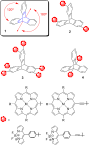
Towards triptycene functionalization and triptycene-linked porphyrin arrays
Beilstein J. Org. Chem. 2020, 16, 763–777, doi:10.3762/bjoc.16.70

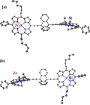
- ) and Zn(II)-porphyrin···Zn(II)-porphyrin (b). Hydrogen atoms and minor disorder are omitted for clarity (thermal displacement 50%). Expanded structure view of the triptycene-linked zinc-nickel porphyrin dimer 16 showing the repeating Zn···Ni···Zn···Ni network in the crystal lattice. Hydrogen atoms and





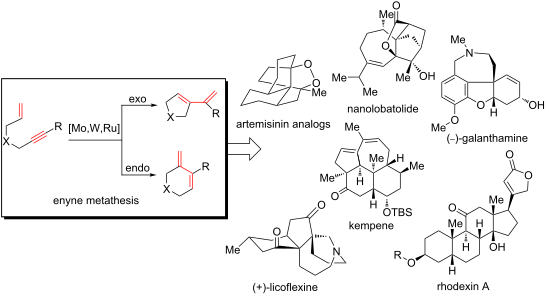
Combining enyne metathesis with long-established organic transformations: a powerful strategy for the sustainable synthesis of bioactive molecules
Beilstein J. Org. Chem. 2020, 16, 738–755, doi:10.3762/bjoc.16.68
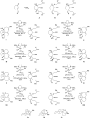
- evidenced the hydrogen-bonding network of amphidinolide N (6a, Scheme 10). Furthermore, a rigorous evaluation of the 13C NMR chemical shift differences suggested that amphidinolide N and its analog, carbenolide I, are identical chemical compounds [72]. In the course of their comprehensive studies on the




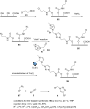
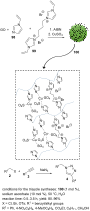
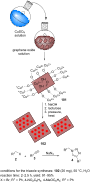
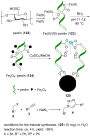
A systematic review on silica-, carbon-, and magnetic materials-supported copper species as efficient heterogeneous nanocatalysts in “click” reactions
Beilstein J. Org. Chem. 2020, 16, 551–586, doi:10.3762/bjoc.16.52
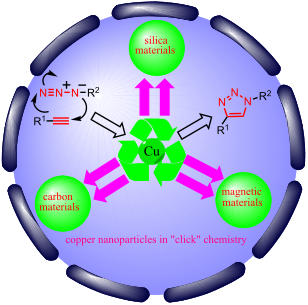
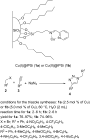
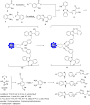
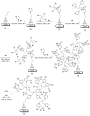
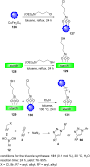
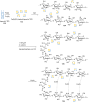
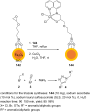
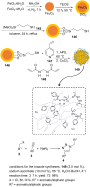
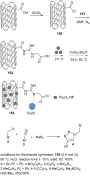
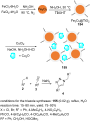
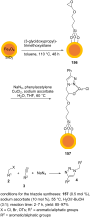
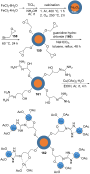
- /mechanical stability, and good adsorption capacity. They also contain an ordered porous network that is appropriate for the free diffusion of reactants and reaction products [24]. In this regard, various functionalized SiO2 nanoparticles were employed in diverse organic reactions, including Suzuki–Miyaura















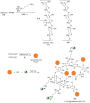

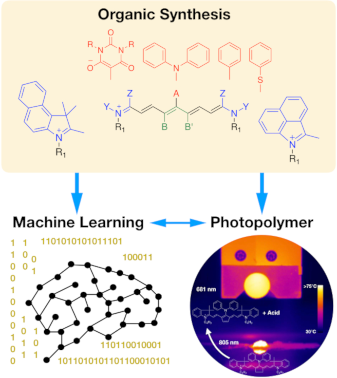
Photophysics and photochemistry of NIR absorbers derived from cyanines: key to new technologies based on chemistry 4.0
Beilstein J. Org. Chem. 2020, 16, 415–444, doi:10.3762/bjoc.16.40


Formal preparation of regioregular and alternating thiophene–thiophene copolymers bearing different substituents
Beilstein J. Org. Chem. 2020, 16, 317–324, doi:10.3762/bjoc.16.31
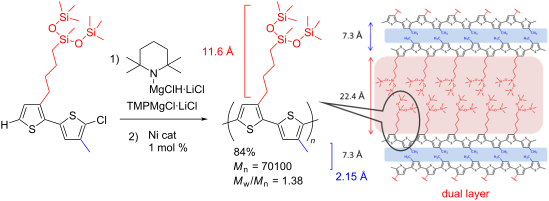
- . Cross-coupling polymerization of thiophene. Polymerization of bithiophene. Preparation of chlorobithiophenes. Polymerization of chlorobithiophenes. Funding This work was partially supported by JSPS Kakenhi B Grant Number JP19182273, Cooperative Research Program of “Network Joint Research Center for


Synthesis, liquid crystalline behaviour and structure–property relationships of 1,3-bis(5-substituted-1,3,4-oxadiazol-2-yl)benzenes
Beilstein J. Org. Chem. 2020, 16, 149–158, doi:10.3762/bjoc.16.17
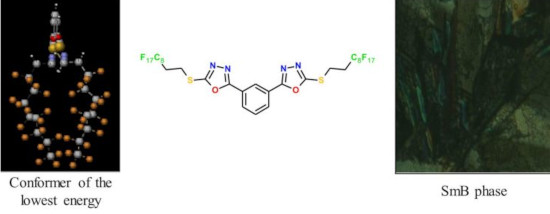
- focal conic texture with unusually narrow ellipses of a SmA phase. Compound 4a presents a mosaic SmB phase where the molecules are organized in a hexagonal network as shown in Figure 2b. The low average of enthalpy value (1.89 J/g) given in Table 2 is due to the first order phase transition marked by




Potent hemithioindigo-based antimitotics photocontrol the microtubule cytoskeleton in cellulo
Beilstein J. Org. Chem. 2020, 16, 125–134, doi:10.3762/bjoc.16.14
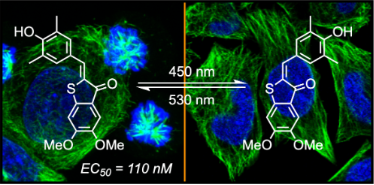
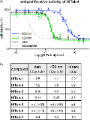
- photopharmaceutical antimitotics in a series of cell-free and cellular assays, and allowed robust photocontrol over tubulin polymerisation, microtubule (MT) network structure, cell cycle, and cell survival. Conclusions: HITubs represent a powerful addition to the growing toolbox of photopharmaceutical reagents for MT
- . This suggests that the same specific direct action can be reproduced in cellulo, and that effects on auxiliary cellular systems dependent upon the MT cytoskeleton can likely be downstream effects of MT depolymerisation. We next investigated the HITubs’ isomer-dependent effects on the MT network inside
- cells, focusing on the active analogues HITub-4 and HITub-2 in comparison with inactive HITub-5 as a control (Figure 5). By reducing tubulin polymerisation dynamics, CDI treatment should first disorganise and then depolymerise the cellular MT network. We performed immunofluorescence staining of the MT





A green, economical synthesis of β-ketonitriles and trifunctionalized building blocks from esters and lactones
Beilstein J. Org. Chem. 2019, 15, 2930–2935, doi:10.3762/bjoc.15.287
- Information File 528: Experimental procedures, compound characterization data and NMR spectra. Acknowledgements KRB thanks the National Research Foundation (South Africa) and the SABINA network for funding. DP and DB gratefully acknowledge the Department of Science and Technology Biocatalysis Initiative


Bacterial terpene biosynthesis: challenges and opportunities for pathway engineering
Beilstein J. Org. Chem. 2019, 15, 2889–2906, doi:10.3762/bjoc.15.283
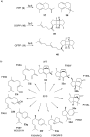
- : mutations. Engineering of terpenoid pathways. a) Metabolic network of terpenoid biosynthesis. Toxic intermediates are labeled with skull signs and known enzyme inhibition by intermediates is indicated. Bottleneck enzymes that have been subjected to optimization/engineering are highlighted in bold. Two novel




Influence of the cis/trans configuration on the supramolecular aggregation of aryltriazoles
Beilstein J. Org. Chem. 2019, 15, 2881–2888, doi:10.3762/bjoc.15.282
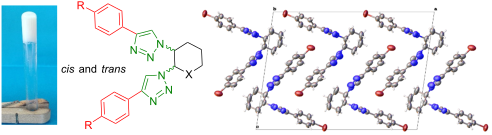
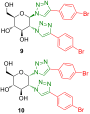
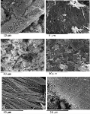
- , and 14 were obtained by SEM (Figure 2). Analyses of these images revealed typically fibrous networks for all except 10. Compound 7f (trans) showed a dense, thin, short, and interlaced/tangled fiber network. The corresponding α-anomer 8f (cis) exhibited an irregular, porous, and dense structure having
- thin and short fibers. The xerogel of compound 12 showed long, thin, and relatively straight fibers, with lack of torsion, as well as regularity of the network. Its cis stereoisomer 14 showed a fibrous network, but of much shorter length. However, the gel of compound 10 showed a different morphology







Emission and biosynthesis of volatile terpenoids from the plasmodial slime mold Physarum polycephalum
Beilstein J. Org. Chem. 2019, 15, 2872–2880, doi:10.3762/bjoc.15.281
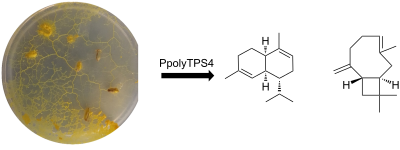
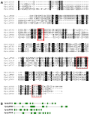
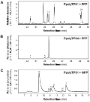
- lineage-specific functions. P. polycephalum has a unique biology. It sends information in the form of nutrient concentrations through the tubular network using the streaming cytoplasm [30]. It will be interesting to test whether volatile terpenoids function in internal communication of P. polycephalum



Carbazole-functionalized hyper-cross-linked polymers for CO2 uptake based on Friedel–Crafts polymerization on 9-phenylcarbazole
Beilstein J. Org. Chem. 2019, 15, 2856–2863, doi:10.3762/bjoc.15.279
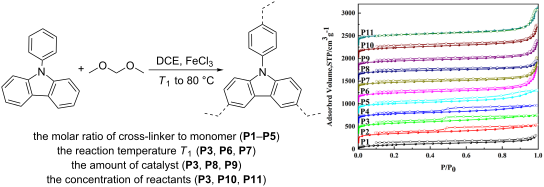
- , 0.6 cm3 g−1) [20][33]. This may be the result of that excessive temperature caused excessive crosslink at the beginning of the reaction, the plethora network cocooned a part of the reaction center, and prevented it from further cross-linking (micropores), hence it formed macropores. All that indicated


Acid-catalyzed rearrangements in arenes: interconversions in the quaterphenyl series
Beilstein J. Org. Chem. 2019, 15, 2655–2663, doi:10.3762/bjoc.15.258
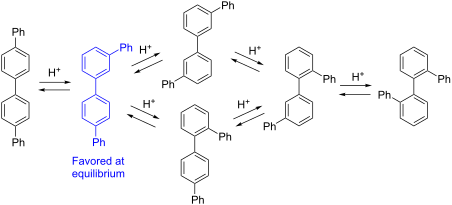
- . DFT computations with inclusion of implicit solvation support a complex network of phenyl and biphenyl shifts, with barriers to rearrangement in the range of 10–21 kcal/mol. Consistent with experiments, the lowest energy arenium ion located on this surface is due to protonation of m,p'-quaterphenyl
- through 1,2-biphenyl migration, with a similar network of interconversions. Based on the behavior of terphenyl which favors meta substitution at equilibrium, we initially hypothesized that m,m'-quaterphenyl (14) would likely be the major isomer at equilibrium. Only brief exploration of quaterphenyl
- solvation support a complex network of phenyl and biphenyl shifts, with barriers to rearrangement in the range of 10–21 kcal/mol. Consistent with experiments, the lowest energy arenium ion located on this surface is due to protonation of m,p'-quaterphenyl. This supports thermodynamic control based on



Anion-driven encapsulation of cationic guests inside pyridine[4]arene dimers
Beilstein J. Org. Chem. 2019, 15, 2486–2492, doi:10.3762/bjoc.15.241
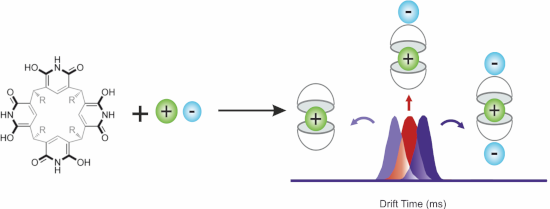
- the coordination of the Me4N+ cation at the lower rim has only a minor effect on the hydrogen-bond network of 12. To verify complexation of separate ion pairs, the geometry optimization was carried out also for [12 + Me4Nendo + Iendo] , which showed that the cavity of 12 is too small for the
- absence of the dispersion force, the positively charged Me4N+ cation, therefore, prefers interactions with the electron-rich oxygen atoms of the hydrogen-bond network to the positively charged lower rim isobutyl groups. The calculated interaction energies are listed in Table S2 (Supporting Information