


Search results
Search for "organocatalytic" in Full Text gives 192 result(s) in Beilstein Journal of Organic Chemistry.
Iodoarene-catalyzed cyclizations of N-propargylamides and β-amidoketones: synthesis of 2-oxazolines
Beilstein J. Org. Chem. 2017, 13, 1823–1827, doi:10.3762/bjoc.13.177

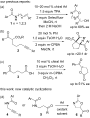
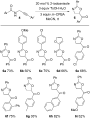
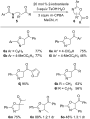
- utilise readily available starting materials and operate under mild organocatalytic conditions. Results and Discussion We initiated our study with readily available alkyne 4a and subjected it to reaction conditions similar to those we have previously reported (Table 1). By using 2-iodoanisole as






Chiral phase-transfer catalysis in the asymmetric α-heterofunctionalization of prochiral nucleophiles
Beilstein J. Org. Chem. 2017, 13, 1753–1769, doi:10.3762/bjoc.13.170
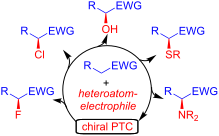
- reactions of prochiral nucleophiles have been much less commonly reported than fluorination and chlorination reactions [49][50][51][52][53][54] and only a few reasonably enantioselective organocatalytic approaches have been reported so far [54][95][96]. In these few reports it became obvious that it is a


Mechanochemical enzymatic resolution of N-benzylated-β3-amino esters
Beilstein J. Org. Chem. 2017, 13, 1728–1734, doi:10.3762/bjoc.13.167

- report, which is in line with our continuous interest in developing new sustainable organocatalytic protocols [39][49][50][51], and taking advantage of previous experience with the enzymatic hydrolysis of a racemic mixture of N-protected-β3-amino acid methyl esters [52], we decided to examine the use of


Oxidative dehydrogenation of C–C and C–N bonds: A convenient approach to access diverse (dihydro)heteroaromatic compounds
Beilstein J. Org. Chem. 2017, 13, 1670–1692, doi:10.3762/bjoc.13.162
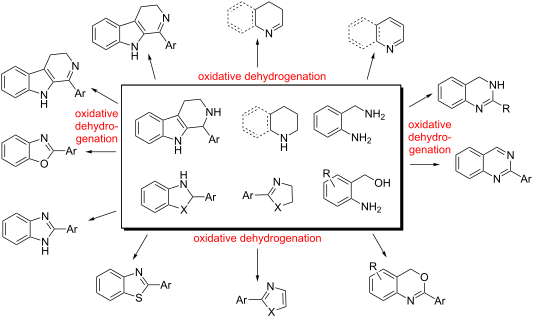
- at times lead to complete aromatization of the moiety based on the dehydrogenation capability of the oxidant as well as the presence of the appropriate acidic protons in the heterocyclic substrate (path b', Scheme 1). To attend greener synthesis metal catalyzed and organocatalytic aerobic oxidative
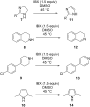
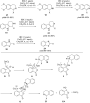
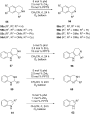
- ) [83]. In general, electron-donating and neutral functionality (R = OMe, H) on the tetrahydroisoquinolines were well tolerated. Interestingly the electron-withdrawing groups were conspicuous by their absence. Metal-catalyzed aerobic dehydrogenation From organocatalytic aerobic dehydrogenation, in this
- conditions were not well tolerated by few sensitive groups, most of the β-carbolines were successfully prepared utilizing this procedure, including the alkaloid harmine with 99% yield. The final product precipitates at the end of the reaction and hence required minimum purification. Organocatalytic aerobic








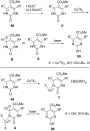


Bifunctional organocatalysts for the asymmetric synthesis of axially chiral benzamides
Beilstein J. Org. Chem. 2017, 13, 1518–1523, doi:10.3762/bjoc.13.151

- transition state. Several successful results and a recent trend in organocatalytic atroposelective reactions, including enantioselective formation of chiral axes [17][18][19][20][21][22][23][24], dynamic kinetic resolution [25][26][27][28][29][30][31][32][33][34][35][36][37][38][39][40][41], kinetic


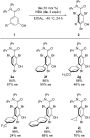


Sustainable synthesis of 3-substituted phthalides via a catalytic one-pot cascade strategy from 2-formylbenzoic acid with β-keto acids in glycerol
Beilstein J. Org. Chem. 2017, 13, 1425–1429, doi:10.3762/bjoc.13.139

- demand and potential for the development of a green one-pot cascade aldol/cyclization strategy for these compounds [22]. The use of β-keto acids as ketone enolate equivalents in metal- and organocatalytic decarboxylative aldol reactions has been extensively studied and proven to be a valuable and


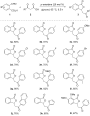

Construction of highly enantioenriched spirocyclopentaneoxindoles containing four consecutive stereocenters via thiourea-catalyzed asymmetric Michael–Henry cascade reactions
Beilstein J. Org. Chem. 2017, 13, 1342–1349, doi:10.3762/bjoc.13.131
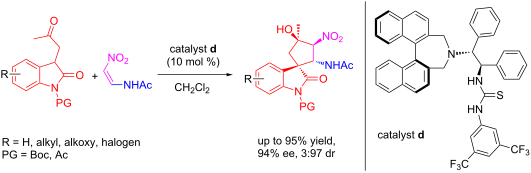
- functionalized nitrovinylacetamides are rare. Chiral thioureas [28][38][39] have evolved as powerful hydrogen bonding catalysts for the asymmetric synthesis of spirocyclopentaneoxindoles, which have been demonstrated as acceptable but still considerably limited. Organocatalytic iminium–enamine cascade reactions



Ultrasound-promoted organocatalytic enamine–azide [3 + 2] cycloaddition reactions for the synthesis of ((arylselanyl)phenyl-1H-1,2,3-triazol-4-yl)ketones
Beilstein J. Org. Chem. 2017, 13, 694–702, doi:10.3762/bjoc.13.68
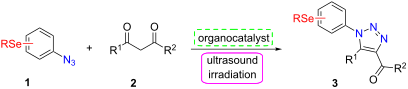
- Biotechnology of Natural and Synthetic Products, Universidade de Caxias do Sul, Caxias do Sul, RS, Brazil Departamento de Quimica Organica, Universidad de Cordoba, Campus de Rabanales, Cordoba, Spain 10.3762/bjoc.13.68 Abstract The use of sonochemistry is described in the organocatalytic enamine–azide [3 + 2
- have been used for this cycloaddition reaction [20][21][22][23][24][25][26][27][28][29]. Organocatalytic approaches based on β-enamine–azide or enolate–azide cycloadditions have been employed to synthesize 1,2,3-triazole scaffolds [30][31][32]. Depending on the organocatalyst employed, different
- ]. There are only a few contributions describing the use of sonochemistry for the preparation of functionalized 1,2,3-triazoles [68][69][70][71][72][73][74]. As a recent example, our research group described the use of sonochemistry in the organocatalytic enamine–azide [3 + 2] cycloadditions of β-oxo


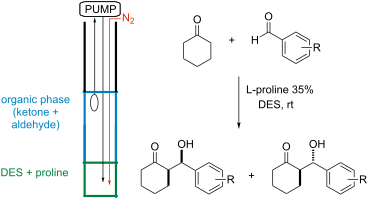
Towards the development of continuous, organocatalytic, and stereoselective reactions in deep eutectic solvents
Beilstein J. Org. Chem. 2016, 12, 2620–2626, doi:10.3762/bjoc.12.258


Continuous-flow synthesis of primary amines: Metal-free reduction of aliphatic and aromatic nitro derivatives with trichlorosilane
Beilstein J. Org. Chem. 2016, 12, 2614–2619, doi:10.3762/bjoc.12.257
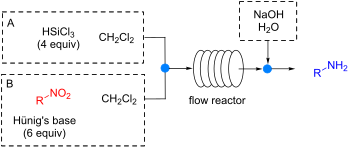
- , are accessible via several synthetic routes. In the last years nitro compounds have been the subject of numerous studies since they served as reactants in many, highly efficient, organocatalytic transformations [3][4][5][6][7]. Furthermore, the introduction of an amino group offers a well-known


Highly chemo-, enantio-, and diastereoselective [4 + 2] cycloaddition of 5H-thiazol-4-ones with N-itaconimides
Beilstein J. Org. Chem. 2016, 12, 2293–2297, doi:10.3762/bjoc.12.222
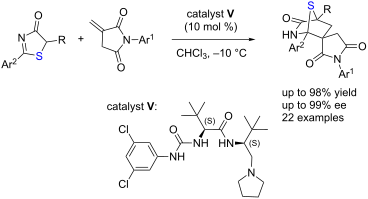
- [6], allylation [7], conjugate addition to enones [8], and γ-addition with allenoates [9]. All these examples focused on nucleophilic addition reactions of the C5 atom of 5H-thiazol-4-ones. Recently, we described an organocatalytic asymmetric [4 + 2] cyclization of 5H-thiazol-4-ones with a series of


Economical and scalable synthesis of 6-amino-2-cyanobenzothiazole
Beilstein J. Org. Chem. 2016, 12, 2019–2025, doi:10.3762/bjoc.12.189

- , organocatalytic cyanation. In addition, the use of filtrations and crystallisations for purification, in combination with control of reaction rate and heat output in the cyanation step, makes this procedure readily scalable. Results and Discussion In order to install the cyano group of ACBT 8 under mild



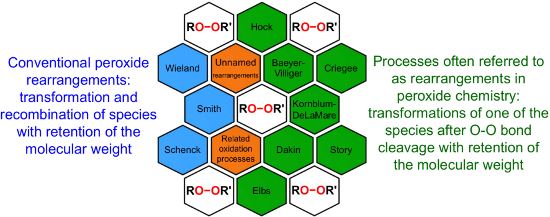
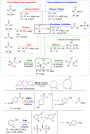
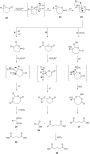
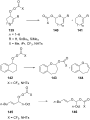
Rearrangements of organic peroxides and related processes
Beilstein J. Org. Chem. 2016, 12, 1647–1748, doi:10.3762/bjoc.12.162













Enantioselective addition of diphenyl phosphonate to ketimines derived from isatins catalyzed by binaphthyl-modified organocatalysts
Beilstein J. Org. Chem. 2016, 12, 1551–1556, doi:10.3762/bjoc.12.149
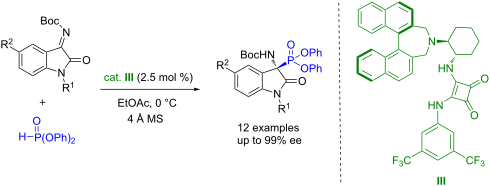
- reaction time, and low temperature required for good enantioselectivity. Thus, new approaches for the organocatalytic enantioselective addition of diphenyl phosphonate to isatin imines are highly desired. In connection with our ongoing research program on the design and application in asymmetric catalysis
- phosphonate to ketimines derived from isatins catalyzed by binaphthyl-modified bifunctional organocatalysts (Figure 1). Results and Discussion To determine suitable reaction conditions for the organocatalytic enantioselective addition reaction of diphenyl phosphonate to ketimines derived from isatins, we


Conjugate addition–enantioselective protonation reactions
Beilstein J. Org. Chem. 2016, 12, 1203–1228, doi:10.3762/bjoc.12.116
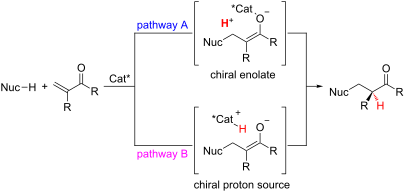
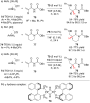
- developed organocatalytic conjugate addition–enantioselective protonations of α,β-unsaturated imides using thiols. Thiols are attractive nucleophiles due to their acidity, which facilitates deprotonation by amine bases and also reduces undesired competitive deprotonation and epimerization of the enolizable
- conjugate addition products. Additionally, the thiolate conjugate bases are highly nucleophilic, allowing ready access to sulfur functionalized products. A common theme among the organocatalytic literature examples is the use of hydrogen-bonding catalysts, which can activate the imides by hydrogen bonding




Towards the total synthesis of keramaphidin B
Beilstein J. Org. Chem. 2016, 12, 1096–1100, doi:10.3762/bjoc.12.104
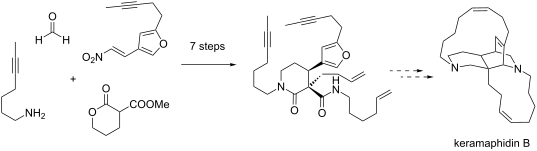
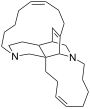
- 1 as a suitable synthetic target. Our plan was to design and implement a new synthetic route that integrated some of our newly developed bifunctional organocatalytic reactions, as well as cascade technologies, to rapidly and stereoselectively build up the core of this fascinating molecule. Herein we
- amine, following our well-established protocol [6][7][8][9][10][11][12]. The key quaternary stereocentre of keramaphidin B, we envisaged, would be installed through an enantio- and diastereoselective organocatalytic Michael addition [13][14][15] between pronucleophile 8 and the known substituted furanyl



Catalytic asymmetric synthesis of biologically important 3-hydroxyoxindoles: an update
Beilstein J. Org. Chem. 2016, 12, 1000–1039, doi:10.3762/bjoc.12.98
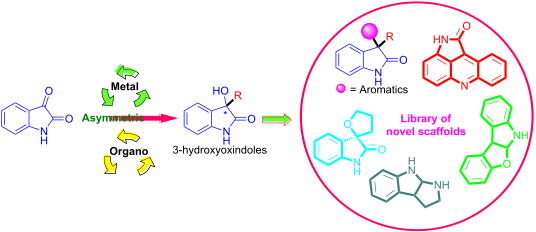
- same group reported the organocatalytic asymmetric addition reactions of isatins with electron-rich aromatics sesamols using the cinchona alkaloid-derived thiourea catalyst (cat. 17) under mild conditions. In the presence of 10% catalyst, sesamols reacted with isatins smoothly in tert-butyl ether at
- for the reactions, although the starting materials were poorly solubilized. However, ten equivalents of aldehyde were used in the reactions. Similarly, Gong and co-workers reported an organocatalytic α-alkylation of enolizable aldehydes with 3-indolyl-3-hydroxyoxindoles co-catalyzed by the cinchona




Asymmetric α-amination of 3-substituted oxindoles using chiral bifunctional phosphine catalysts
Beilstein J. Org. Chem. 2016, 12, 725–731, doi:10.3762/bjoc.12.72
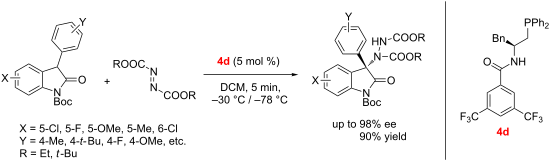
- organocatalysis and metal catalysis for the construction of this type of structures. For example, Chen et al. reported the first organocatalytic enantioselective amination reaction of 2-oxindoles catalyzed by biscinchona alkaloid catalysts [8]. Zhou [9][10] and Barbas [11][12], have independently reported similar
- organocatalytic processes. In the field of metal catalysis, Shibasaki et al. reported the reaction between C3-substituted oxindole and azodicarboxylates, using homodinuclear or monometallic Ni-Schiff base complexes as catalysts [13]; Feng et al. also developed a similar procedure with chiral N,N’-dioxide-Sc(III
- ) complexes as catalysts [14]. Despite these impressive advances, current catalytic systems still more or less suffer from limitations such as long reaction times, relatively large catalyst loading in most organocatalytic systems and in some cases unsatisfactory yields and/or enantioselectivities. Therefore


Stereoselective amine-thiourea-catalysed sulfa-Michael/nitroaldol cascade approach to 3,4,5-substituted tetrahydrothiophenes bearing a quaternary stereocenter
Beilstein J. Org. Chem. 2016, 12, 643–647, doi:10.3762/bjoc.12.63
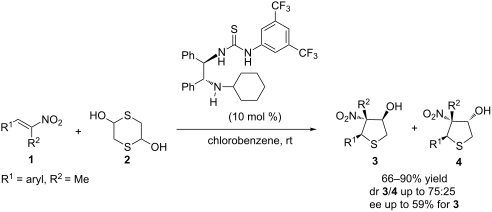
- obtain this class of compounds and only recently organocatalytic stereoselective cascade reactions have emerged as the most successful, and straightforward approach to access them [7][8]. Aminocatalytic [9][10][11][12] and non-covalent organocatalytic cascade sulfa-Michael/Michael [13][14][15] and sulfa


The aminoindanol core as a key scaffold in bifunctional organocatalysts
Beilstein J. Org. Chem. 2016, 12, 505–523, doi:10.3762/bjoc.12.50
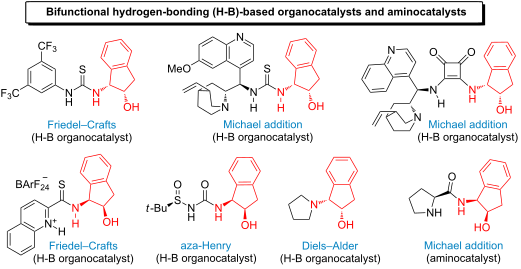
- trifluoroethylamine moiety [3][4][5]. However, it is in the field of asymmetric organocatalysis [6][7][8] where the aminoindanol core has gained more importance, being a recurrent structural motif in several organocatalytic species. Some examples are (a) the enantioselective reduction of ketones through the in situ
- acting through hydrogen bonding, such as thiourea, urea, squaramide, and thioamide frameworks. These have been efficiently employed in a few organocatalytic processes such as Friedel–Crafts alkylations, Michael additions, Diels–Alder reactions and aza-Henry reactions, as discussed below. Friedel–Crafts
- derivative 4 to develop the first organocatalytic enantioselective Friedel–Crafts (F–C) alkylation of indoles, employing nitroalkenes as versatile electrophiles. In the presence of catalyst 4, the differently functionalized indole derivatives 2 reacted with aryl and alkyl nitroalkenes 3 in dichloromethane at


(Thio)urea-mediated synthesis of functionalized six-membered rings with multiple chiral centers
Beilstein J. Org. Chem. 2016, 12, 462–495, doi:10.3762/bjoc.12.48
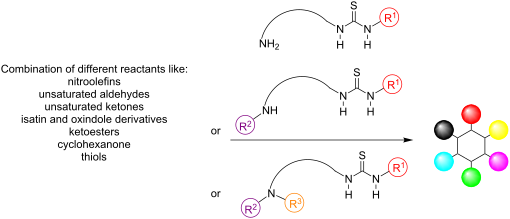
- in the production of 93 and 94 in moderate to excellent enantioselectivities, considering the high molecular complexity achieved in only one step. Recently, Bugaut, Constantieux and co-workers described the enantioselective organocatalytic multicomponent synthesis of 2,6-diazabicyclo[2.2.2]octanones
- stereochemistry of the carbon bearing the R2 group. Very recently, Wang and co-workers used a cinchona alkaloid-based bifunctional thiourea 103 as the catalyst of choice to an organocatalytic domino process. This domino reaction involded a Michael cyclization–tautomerization reaction sequence between isatylidene
- napthoquinone derivatives 140 in excellent yields and selectivities (Scheme 44) [64][65]. In both cases, a bifunctional activation of substrates was proposed by the authors. In 2011, Yan and co-workers reported the organocatalytic cascade Michael hemiketalization, using the same versatile reagent, β-unsaturated


Cupreines and cupreidines: an established class of bifunctional cinchona organocatalysts
Beilstein J. Org. Chem. 2016, 12, 429–443, doi:10.3762/bjoc.12.46
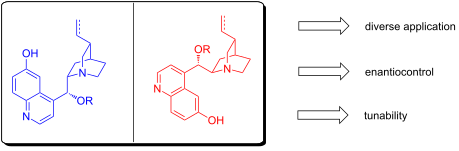
- co-workers who developed an organocatalytic transamination process using the cupreine catalyst CPN-81, which is substituted with n-butyl at the 9-OH position [59]. In this report, the α-ketoester 79 was reacted with the primary amine o-ClC6H4CH2NH2 80 in the presence of the catalyst. Once again, the
- processes Asymmetric oxidative coupling All carbon quaternary centers are prevalent in both natural and pharmaceutical compounds, but rank amongst the hardest to synthesize in a stereoselective manner. Dixon and co-workers have addressed this through the development of an asymmetric organocatalytic
- with cupreine, cupreidine, β-isoquinidine and β-isocupreidine derivatives. The original 6’-OH cinchona alkaloid organocatalytic MBH process, showing how the free 6’-OH is essential for coordination to the substrate. Use of β-ICPD in an aza-MBH reaction. (a) The isatin motif is a common feature for MBH


Organocatalytic asymmetric Henry reaction of 1H-pyrrole-2,3-diones with bifunctional amine-thiourea catalysts bearing multiple hydrogen-bond donors
Beilstein J. Org. Chem. 2016, 12, 295–300, doi:10.3762/bjoc.12.31
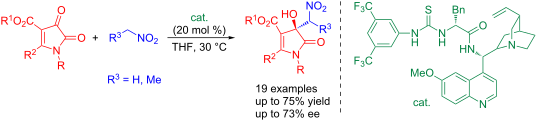
- these observations, the most appropriate conditions for the Henry reaction could be established: 1 equiv of 1a and 10 equiv of 2a with 20 mol % catalyst 3e in 1.0 mL THF at 30 °C (Table 2, entry 4). Under the optimal reaction conditions, the substrate scope and the limitation of this organocatalytic


A quadruple cascade protocol for the one-pot synthesis of fully-substituted hexahydroisoindolinones from simple substrates
Beilstein J. Org. Chem. 2016, 12, 253–259, doi:10.3762/bjoc.12.27
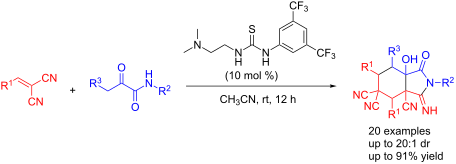
- carboxylic acid anhydrides, respectively [17]. To the best of our knowledge, no efficient method toward the synthesis of fully-substituted hexahydroisoindolinones has been developed so far. The synthesis of complicated molecular structures can now be achieved by organocatalytic cascade reactions [18][19][20
- . Previously, we established organocatalytic domino reactions to construct very useful molecular architectures [47][48][49][50][51][52][53][54][55][56][57][58][59][60]. Based on this past experience, we decided to develop a one-pot quadruple protocol to construct this difficult molecular architecture using


Diastereoselective Ugi reaction of chiral 1,3-aminoalcohols derived from an organocatalytic Mannich reaction
Beilstein J. Org. Chem. 2016, 12, 139–143, doi:10.3762/bjoc.12.15

- Samantha Caputo Andrea Basso Lisa Moni Renata Riva Valeria Rocca Luca Banfi Department of Chemistry and Industrial Chemistry, University of Genova, I-16146 Genova, Italy 10.3762/bjoc.12.15 Abstract Enantiomerically pure β-aminoalcohols, produced through an organocatalytic Mannich reaction, were
- -aminoalcohols have been proved by Nenajdenko and co-workers to be able to induce good levels of diastereoselectivity in the Ugi reaction [17]. Our attention was drawn by 1,3-aminoalcohols of general formula 5 (Scheme 1), which can be obtained by List's organocatalytic Mannich-type reaction of aldehydes with N
- 2 that were immediately submitted to List's organocatalytic Mannich reaction [29][30]. The resulting aldehydes 3 were not isolated (also in view of their known stereochemical lability) but directly reduced to alcohols 4 [32][33]. Purification was carried out through chromatography and, in some cases





