Search results
Search for "probes" in Full Text gives 268 result(s) in Beilstein Journal of Organic Chemistry. Showing first 200.
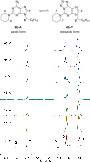
In search of visible-light photoresponsive peptide nucleic acids (PNAs) for reversible control of DNA hybridization
Beilstein J. Org. Chem. 2019, 15, 2500–2508, doi:10.3762/bjoc.15.243
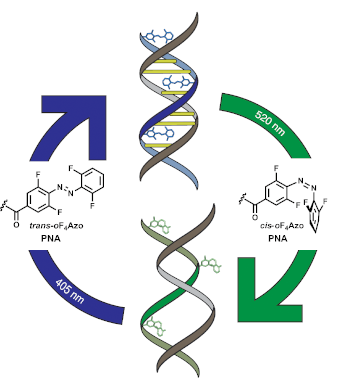
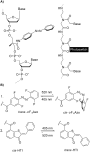
- , artificial probes activated by visible-light irradiation are highly desired in biological applications. Here, we report two novel types of visible-light photoswitchable peptide nucleic acids (PNAs) based on the molecular transducers: hemithioindigo and tetra-ortho-fluoroazobenzene. Our study reveals that the
- and Discussion Initially, short 12-mer PNA probes (Table 1) complementary to the HDAC-1 mRNA sequence were synthesized since, in general, PNAs are active with shorter sequences than the canonical analogues due to the superior binding abilities [40]. Despite that target specificity may be compromised
- synthesized longer PNA conjugates (6–11, 18 and 19) with flanking lysines, which improved the solubility of the probes. In addition, we compared our probes with the ones that contained the classical unmodified azobenzene moiety (Azo) (PNA 12–17). The lower stability of the unmodified cis-Azo forced us to



Effect of ring size on photoisomerization properties of stiff stilbene macrocycles
Beilstein J. Org. Chem. 2019, 15, 2408–2418, doi:10.3762/bjoc.15.233
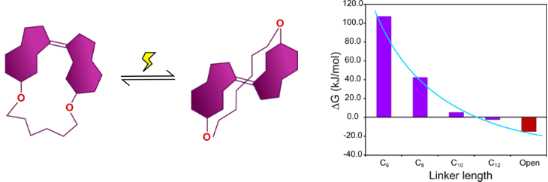
- ][9][10][11]. The interplay between the forces involved in the switching action and the pull from groups attached to the stiff stilbene has been investigated, e.g., as molecular force probes [12][13][14][15][16][17][18]. While these do incorporate other isomerizable units in addition to stiff stilbene




Targeted photoswitchable imaging of intracellular glutathione by a photochromic glycosheet sensor
Beilstein J. Org. Chem. 2019, 15, 2380–2389, doi:10.3762/bjoc.15.230
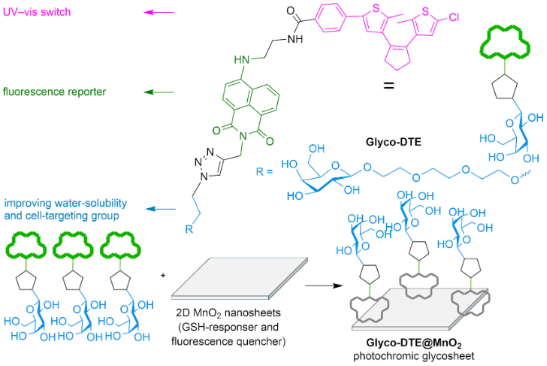
- state of the cells, e.g., causing false-positive/negative results. Generally, strategies like designing ratiometric [4][5] or near-infrared [6][7][8] fluorescence sensors are applied to overcome this obstacle. Recently, a novel category of photochromic probes with light-controlled dynamic fluorescence
- signals has been developed, aiming at reducing interferences and improving sensing precision in complex physiological environments [9][10][11][12][13][14][15][16][17]. This photoresponsive design presents several advantages over conventional probes: 1) The light-activation mode endows the probe with light



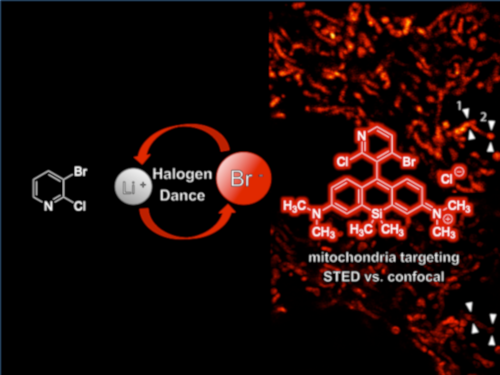
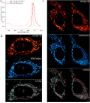
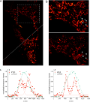
Synthesis of a dihalogenated pyridinyl silicon rhodamine for mitochondrial imaging by a halogen dance rearrangement
Beilstein J. Org. Chem. 2019, 15, 2333–2343, doi:10.3762/bjoc.15.226
- microscopy [2][3][4][5][6][7][8][9], as direct probes for various biomolecules [10][11][12][13] or as sensors for metal ions [14][15][16][17][18], pH [16], voltage [19] or metabolites [20][21][22][23]. Several attempts were made, partially supported by DFT calculations, to correlate the dyes’ structural



Fluorescent phosphorus dendrimers excited by two photons: synthesis, two-photon absorption properties and biological uses
Beilstein J. Org. Chem. 2019, 15, 2287–2303, doi:10.3762/bjoc.15.221
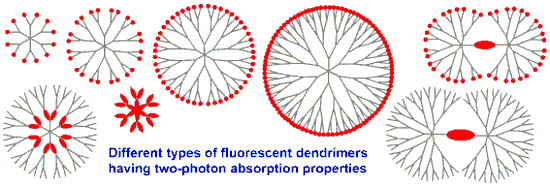
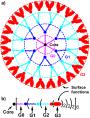
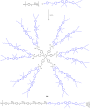
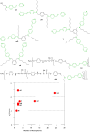
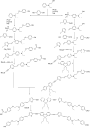
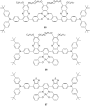
- groups) to four (96 terminal groups) have been synthesized. Dioxaborine derivatives are known as highly fluorescent tracers [48], and also as two-photon probes [49]. Deceptively, the fluorescence of the dendritic dioxaborines is quenched and dramatically decreased compared to the emission of the isolated









Isolation of fungi using the diffusion chamber device FIND technology
Beilstein J. Org. Chem. 2019, 15, 2191–2203, doi:10.3762/bjoc.15.216
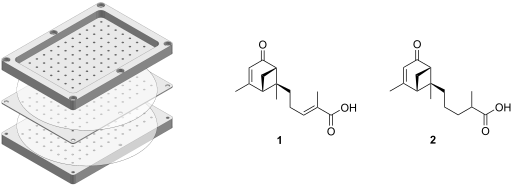
- obtain axenic cultures of rare and less examined filamentous fungi, as several tries before with the iChip were not successful. Apart from terrestrial soil probes we focused on the marine habitat, probing sediment and sea water samples for the presence of fungi. With 150 000 species named and classified


Installation of -SO2F groups onto primary amides
Beilstein J. Org. Chem. 2019, 15, 1907–1912, doi:10.3762/bjoc.15.186

- ][15][16][17][18][19]. Among all the developed S(VI)–F species, sulfonyl fluoride (RSO2F) was specifically recognized as unique scaffold for covalent protein inhibitors and biological probes with the affinity-driven activation for forming covalent linkages with the amino acid residues of protein
- coupling reactions and as potential covalent probes in protein profiling [14][25][26][27][28]. Phenols (or alcohols) and amines as the most common nucleophiles have been found to react with different S(VI) connectors (SO2F2, CH2=CH-SO2F, SOF4 etc.) to provide diversified sulfonyl fluoride derivatives. The
- reactions of phenols (or alcohols) with SO2F2 [29] or the fluorosulfuryl imidazolium salt were developed for mild and effective formation of the corresponding fluorosulfates to act as biological probes in chemical proteomics studies (Scheme 1, (1)) [1][30]. On the other hand, the reactions of aliphatic or


Identification of optimal fluorescent probes for G-quadruplex nucleic acids through systematic exploration of mono- and distyryl dye libraries
Beilstein J. Org. Chem. 2019, 15, 1872–1889, doi:10.3762/bjoc.15.183
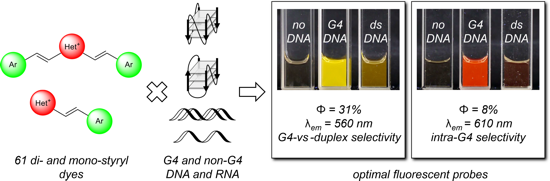
- cationic dyes was synthesized and investigated with respect to their optical properties, propensity to aggregation in aqueous medium, and capacity to serve as fluorescence “light-up” probes for G-quadruplex (G4) DNA and RNA structures. Among the 61 compounds, 57 dyes showed preferential enhancement of
- common feature of mono- and distyryl dyes, including long-known mono-styryl dyes used as mitochondrial probes or protein stains. However, the magnitude of the G4-induced “light-up” effect varies drastically, as a function of both the molecular structure of the dyes and the nature or topology of G4
- ] or its 4-isomer, as optimal fluorescent light-up probes characterized by high fluorimetric response (I/I0 of up to 550-fold), excellent selectivity with respect to double-stranded DNA or single-stranded RNA controls, high quantum yield in the presence of G4 analytes (up to 0.32), large Stokes shift






Synthesis, photophysical and electrochemical properties of pyridine, pyrazine and triazine-based (D–π–)2A fluorescent dyes
Beilstein J. Org. Chem. 2019, 15, 1712–1721, doi:10.3762/bjoc.15.167
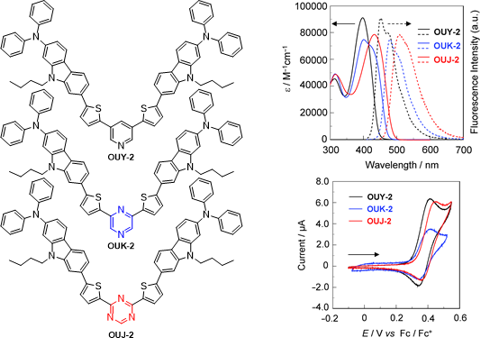
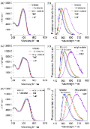
- solvents are fairly large (Table 1). Thus, the fact indicates that the (D–π–)2A fluorescent dyes have advantageous characteristics as emitters for OLEDs and fluorescence probes for biological imaging. It is well accepted that the dipole–dipole interactions between the fluorescent dye and the solvent




Complexation of a guanidinium-modified calixarene with diverse dyes and investigation of the corresponding photophysical response
Beilstein J. Org. Chem. 2019, 15, 1394–1406, doi:10.3762/bjoc.15.139
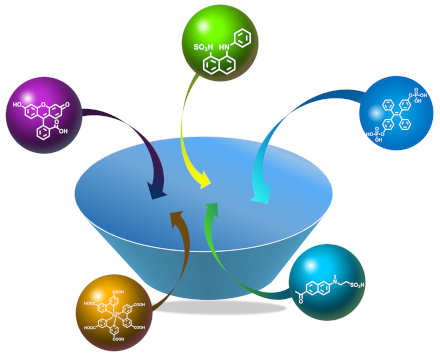
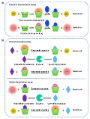
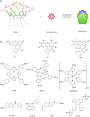
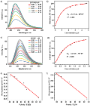
- intramolecular charge-transfer dyes. Phosphated tetraphenylethylene was involved as the classical aggregation-induced emission dye. Sulfonated acedan representing one example of two-photon fluorescent probes, was also investigated. A ruthenium(II) complex with carboxylated bipyridyl ligands was included as a
- -accepting structures. An increase in charge separation within ICT probes would occur upon excitation which results in a larger dipole moment in the excited state. The energy of the excited state with a larger dipole moment could be reduced by interaction with a high polarity environment and could be
- elevated by interaction with non-polar environment. Thus, the S1–S0 energy gap increases as the polarity decreases resulting in a blue-shifted emission in a hydrophobic environment. Their pronounced solvatochromic effect makes them perfect environmental sensitive probes. 1,8-ANS and 2,6-TNS are essentially



Photochemical generation of the 2,2,6,6-tetramethylpiperidine-1-oxyl (TEMPO) radical from caged nitroxides by near-infrared two-photon irradiation and its cytocidal effect on lung cancer cells
Beilstein J. Org. Chem. 2019, 15, 863–873, doi:10.3762/bjoc.15.84
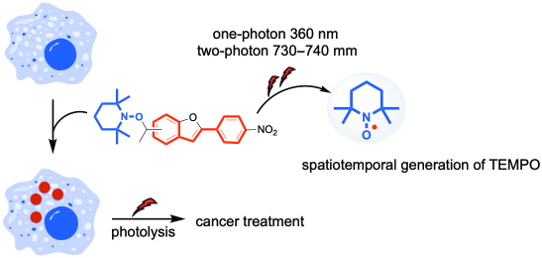
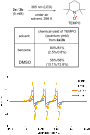
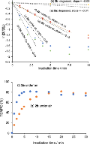
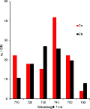
- sciences. These applications include spin-labels [5][6][7], fluorophore-nitroxide probes [8], contrast agents in magnetic resonance imaging (MRI) [9], polarization transfer agents for nuclear magnetic resonance (NMR) [10][11][12][13], and radical batteries [14][15]. Furthermore, the efficient synthesis of






Influence of per-O-sulfation upon the conformational behaviour of common furanosides
Beilstein J. Org. Chem. 2019, 15, 685–694, doi:10.3762/bjoc.15.63

- spectrometers equipped with 5 mm pulsed-field-gradient (PFG) probes at temperatures denoted in the spectra in Supporting Information File 1. The resonance assignment in 1H and 13C NMR spectra was performed using 2D experiments COSY and HSQC. Chemical shifts are reported in ppm. NMR spectra were obtained using a




Polyaminoazide mixtures for the synthesis of pH-responsive calixarene nanosponges
Beilstein J. Org. Chem. 2019, 15, 633–641, doi:10.3762/bjoc.15.59

- the binding properties of CaNSs examined in our previous work [22], because they have been considered good models of organic pollutants [26][27][28][29][30]; moreover, they have been largely used as probes to investigate the microscopic interactions involved in the binding equilibria with other


Design and synthesis of multivalent α-1,2-trimannose-linked bioerodible microparticles for applications in immune response studies of Leishmania major infection
Beilstein J. Org. Chem. 2019, 15, 623–632, doi:10.3762/bjoc.15.58
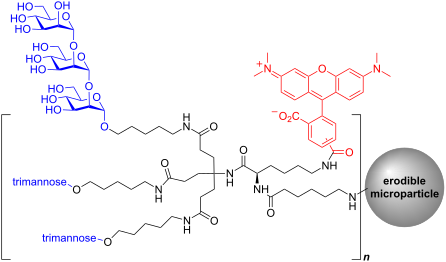
- each year in predominately underdeveloped countries. The treatment of the disease is severely underdeveloped due to the ability of the Leishmania pathogen to evade and abate immune responses. In an effort to develop anti-leishmaniasis vaccines and adjuvants, novel carbohydrate-based probes were made to
- intracellular pathogens, such as Mycobacterium tuberculosis [10][11]. Carbohydrate-based probes provide one method to investigate parasitic mechanisms of immune suppression and evasion. The cell surface glycoconjugates on Leishmania have been implicated in the ability of the parasite to infect host cells, then
- , synthetic pathogen-associated carbohydrate probes are necessary to understand the LPG structure-to-function relationship. These synthetic oligosaccharides also provide a structurally homogeneous standard to study how these glycans interact with the host immune system in an effort to develop effective anti


Synthesis and fluorescent properties of N(9)-alkylated 2-amino-6-triazolylpurines and 7-deazapurines
Beilstein J. Org. Chem. 2019, 15, 474–489, doi:10.3762/bjoc.15.41
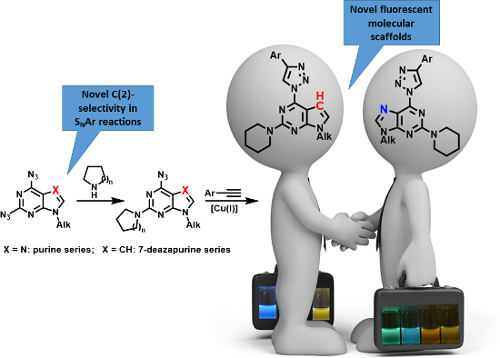
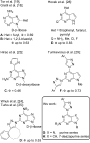
- for this type of molecules. Traditionally, fluorescent purine nucleoside analogs were recognized as valuable fluorescent probes for DNA and RNA research [17]. This paved a way for development of various adenosine and guanosine analogs which in many cases contained an additional substituent at C(8




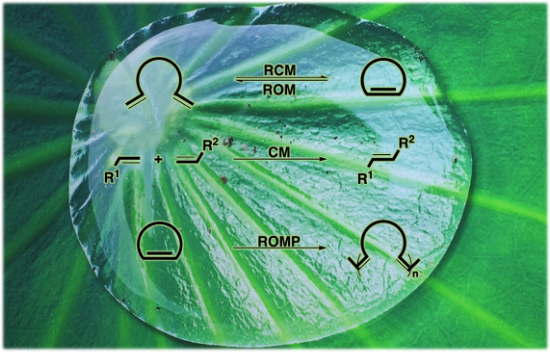
Aqueous olefin metathesis: recent developments and applications
Beilstein J. Org. Chem. 2019, 15, 445–468, doi:10.3762/bjoc.15.39
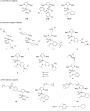
- for the cross metathesis of the allyl-sulfide 99 with allyl alcohol, yielding 50% of product 100 in aqueous mixture (40% t-BuOH) in the presence of 4000 equiv of Mg2+ (Scheme 20). In another recent study, Touissant et al. described the synthesis of two metathesis-based fluorescent probes suitable for
- the detection of ethylene in live cells [91]. BODIPY fluorophores bearing the isopropyloxybenzylidene moiety (101 and 103) reacted with the G-II catalyst to form the HG-II derivatives 102 and 104, respectively (Scheme 21). The resulting compounds are Ru-based profluorescent probes that become
- derived from ripe fruit (e.g., banana or mango). Control experiments reveal however a steady increase in fluorescence in the absence of ethylene, suggesting that further optimization of the probes is required. As ethylene plays an important role as a plant hormone, metathesis-based probes might have




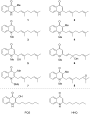
Synthesis and biological evaluation of 1,2-disubstituted 4-quinolone analogues of Pseudonocardia sp. natural products
Beilstein J. Org. Chem. 2018, 14, 2680–2688, doi:10.3762/bjoc.14.245

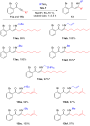
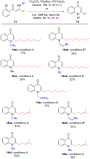
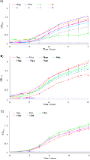
- chemical probes. It has been proposed that such a strategy may perturb bacterial virulence and pathogenicity associated with QS, thus conferring a therapeutic benefit, without applying a selection pressure for resistance [6]. Whilst recent experiments suggest that resistance may still emerge, it has been






Novel solid-phase strategy for the synthesis of ligand-targeted fluorescent-labelled chelating peptide conjugates as a theranostic tool for cancer
Beilstein J. Org. Chem. 2018, 14, 2665–2679, doi:10.3762/bjoc.14.244
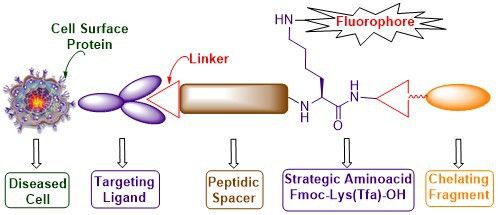
- complex molecular processes in a cell are discerned by tagging fluorescent probes or radioactive tracers to a targeting ligand that will undergo internalization after binding to cell surface proteins overexpressed in diseased conditions. The internalized tracers along with the targeting ligand act as a
- imaging (MRI) are exploited and each modality has its own strengths and weaknesses [3]. However, imaging studies using fluorescent probes [4] or radioactive isotopes [5][6] offers real-time, non-invasive, high-resolution images, during the examination of pathological diseased state. Prostate specific
- folate receptors. The in vitro uptake study has been performed using laser scanning confocal microscopy and the bioconjugates are found to be delivered specifically to cells expressing corresponding cell surface proteins. The small molecule targeted imaging probes prepared in this study are designed for


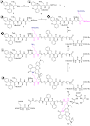
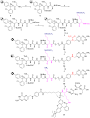

Non-native autoinducer analogs capable of modulating the SdiA quorum sensing receptor in Salmonella enterica serovar Typhimurium
Beilstein J. Org. Chem. 2018, 14, 2651–2664, doi:10.3762/bjoc.14.243
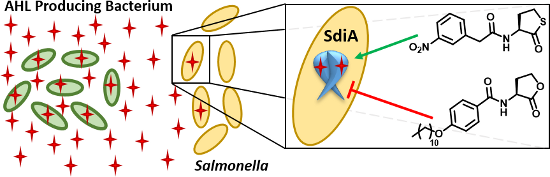
- chemical probes for exploring the mechanisms by which SdiA functions during infection and its role in interspecies interactions. Moreover, as SdiA is highly stable when produced in vitro, these compounds could advance fundamental studies of LuxR-type receptor:ligand interactions that engender both agonism
- ][48][49][50]. The majority of these compounds have been based on the AHL scaffold. The development of small molecule probes for SdiA has lagged relative to these prior studies. Indeed, to our knowledge, there have only been two reports of experimental studies of AHL-type ligand activity in SdiA in any
- utility as chemical probes due to their longer half-lives in biological media. These results suggest that this structural motif could be installed to potentially improve the potencies of other lactone-based SdiA agonists and antagonists. Characterization of the efficacies and potencies of SdiA antagonists



Targeting the Pseudomonas quinolone signal quorum sensing system for the discovery of novel anti-infective pathoblockers
Beilstein J. Org. Chem. 2018, 14, 2627–2645, doi:10.3762/bjoc.14.241
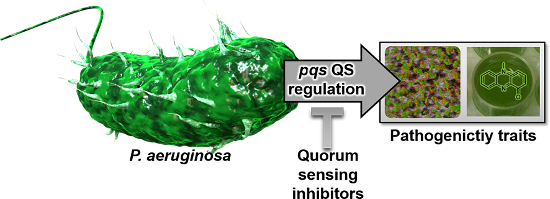
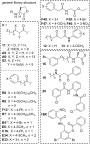
- , a novel competition assay employing ‘clickable’ active-site-labelling probes was developed. These compounds contain terminal alkyne moieties, which can be exploited for straightforward decoration via copper(I)-catalyzed alkyne–azide cycloaddition (CuAAC), the prototypic click reaction. This


Synthesis of new p-tert-butylcalix[4]arene-based polyammonium triazolyl amphiphiles and their binding with nucleoside phosphates
Beilstein J. Org. Chem. 2018, 14, 1980–1993, doi:10.3762/bjoc.14.173
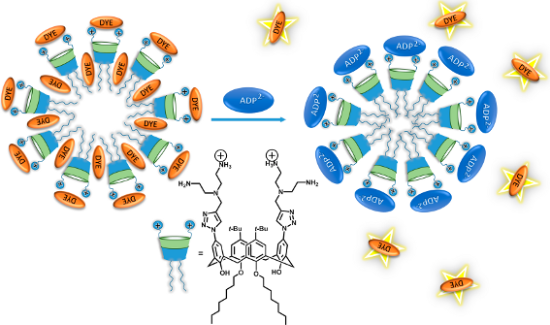
- pyrene and eosin Y as dye probes. The CAC values of tetraalkyl-substituted macrocycles 12a,b (5 µM for both) are significantly lower than those for dialkyl-substituted macrocycles 10a,b (790 and 160 µM, respectively). Premicellar aggregates of macrocycles 10a,b and 12a,b with the dye eosin Y were used
- performed by the dye micellization method using pyrene and eosin Y (EY) as fluorescent and spectrophotometric probes, respectively (Table 1). The nonpolar pyrene can be incorporated into hydrophobic domains of the aggregates due to hydrophobic interactions. Pyrene insertion is measured by analyzing the
- with average hydrodynamic diameters of 150–200 nm and electrokinetic potentials about +40 to +60 mV. CAC values measured by the dye micellization method with pyrene and eosin Y (EY) as dye probes were used to identify optimal concentration conditions for the design of supramolecular architectures for


Rational design of boron-dipyrromethene (BODIPY) reporter dyes for cucurbit[7]uril
Beilstein J. Org. Chem. 2018, 14, 1961–1971, doi:10.3762/bjoc.14.171
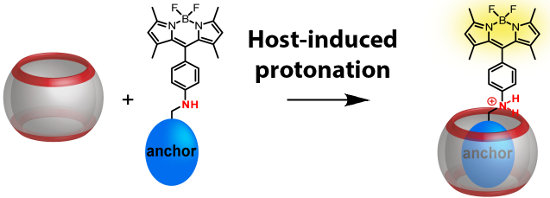
- stability under various conditions, particularly under physiological conditions. Although most BODIPYs are insensitive to pH changes, pH-activatable optical probes for cancer imaging have been reported, in which an aniline substituent in the meso-position of the BODIPY core led to efficient fluorescence




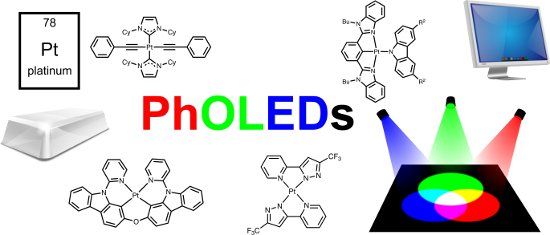
Recent advances in phosphorescent platinum complexes for organic light-emitting diodes
Beilstein J. Org. Chem. 2018, 14, 1459–1481, doi:10.3762/bjoc.14.124
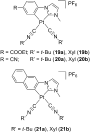
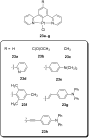
- found numerous applications as emitting materials in areas such as emitters in PhOLEDs [55][56] and luminescent probes in bio-imaging [57][58][59]. Noteworthy, NIR-emitting OLED were fabricated by using complexes 23g and 23h, which presented a π-delocalized substituent at the 5-position of the central






Oligonucleotide analogues with cationic backbone linkages
Beilstein J. Org. Chem. 2018, 14, 1293–1308, doi:10.3762/bjoc.14.111
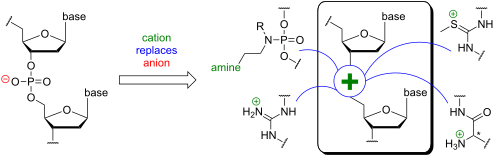
- chemically modify ON structures in order to make them suitable drug candidates or chemical probes, e.g., for diagnostic purposes [6][7]. The relevance of the polyanionic phosphate diester-linked backbone to the overall function of nucleic acids has been discussed by Westheimer [8], Benner [9][10], and others





An overview of recent advances in duplex DNA recognition by small molecules
Beilstein J. Org. Chem. 2018, 14, 1051–1086, doi:10.3762/bjoc.14.93
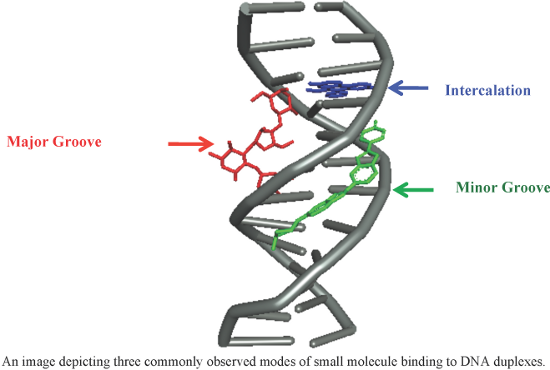
- fluorescein dyes to target mouse major satellite DNA using thermal denaturation, gel-shift electrophoresis, circular dichroism and fluorescence spectroscopy [89][90]. Some of these fluorescent probes were found to detect target sequences in mouse living cell lines and the nuclear substructures formed by
- pairs at micromolar to high nanomolar concentration range [91]. Richert et al. designed a novel set of three-pronged probes (TPPs) comprising of cap, β-alanines and oligopyrrolamides in order to bind A·T-rich target strands from three sides (Watson–Crick face, terminus, and minor groove) resulting in