


Search results
Search for "transition metal catalysis" in Full Text gives 107 result(s) in Beilstein Journal of Organic Chemistry.
Suzuki–Miyaura cross-coupling reaction of 1-aryltriazenes with arylboronic acids catalyzed by a recyclable polymer-supported N-heterocyclic carbene–palladium complex catalyst
Beilstein J. Org. Chem. 2010, 6, No. 70, doi:10.3762/bjoc.6.70
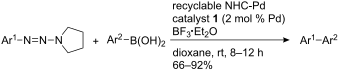
- , arylsulfonyl chlorides and arenediazonium salts with arylboronic acids that gave biaryls in good to excellent yields [28][31][32]. As part of our ongoing investigations aimed at the development of transition metal catalysis, we report here that the Suzuki–Miyaura cross-couplings of 1-aryltriazenes with


A thermally-induced, tandem [3,3]-sigmatropic rearrangement/[2 + 2] cycloaddition approach to carbocyclic spirooxindoles
Beilstein J. Org. Chem. 2010, 6, No. 33, doi:10.3762/bjoc.6.33
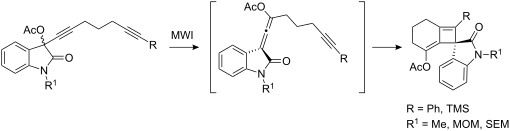
- rearrangement of the propargyl acetate 9a using transition metal catalysis (AuCl3 10 mol %, toluene, 1 h, rt) led to hydrolysis of the allenyl acetate functionality. This densely functionalized alkylidene cyclobutene 10a is postulated to arise via the [2 + 2] cycloaddition reaction between the alkyne and the


A review of new developments in the Friedel–Crafts alkylation – From green chemistry to asymmetric catalysis
Beilstein J. Org. Chem. 2010, 6, No. 6, doi:10.3762/bjoc.6.6
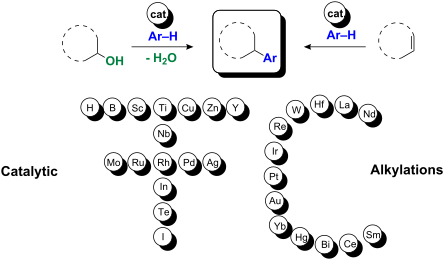
- simultaneously, an acid-catalyzed ortho-arylation of aniline employing the strong Brønsted acid PhNH3B(C6F5)4•Et2O was developed by Bergman et al. indicating the close relationship between strong Brønsted acid- and transition-metal catalysis [70]. A double ortho-hydroarylation of anilines with styrenes was
- optical active ligands for enantioselective transition-metal catalysis (Scheme 22) [71]. To the best of our knowledge, efficient ortho-benzylations of anilines with benzyl alcohols as alkylating reagents have yet to be described [15]. Catalytic Friedel–Crafts allylations Allylated arenes represent


Can we measure catalyst efficiency in asymmetric chemical reactions? A theoretical approach
Beilstein J. Org. Chem. 2009, 5, No. 67, doi:10.3762/bjoc.5.67

- chemistry [1]. Enormous progress has been made in recent years, most notably in homogenous transition metal catalysis, organocatalysis and enzyme-catalysed reactions. It is therefore surprising that there is no generally accepted measure for the effectiveness of a catalytic reaction. That is to say when we


Expedient syntheses of the N-heterocyclic carbene precursor imidazolium salts IPr·HCl, IMes·HCl and IXy·HCl
Beilstein J. Org. Chem. 2007, 3, No. 22, doi:10.1186/1860-5397-3-22

- involving a 1,5-dipolar electrocyclization is proposed. Background Imidazolylidene carbenes have been investigated as ligands in coordination chemistry, as powerful steering/controlling elements in transition-metal catalysis,[1][2] and more recently as metal-free catalysts for organic reactions[3][4]. Some


An exceptional P-H phosphonite: Biphenyl- 2,2'-bisfenchylchlorophosphite and derived ligands (BIFOPs) in enantioselective copper- catalyzed 1,4-additions
Beilstein J. Org. Chem. 2005, 1, No. 6, doi:10.1186/1860-5397-1-6
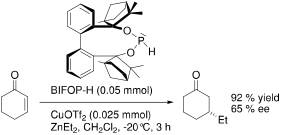
- the phosphorus atoms in biphenyl-2,2'-bisfenchylphosphites (BIFOPs) founds the special suitability for BIFOP-H (3) as P-H phosphonite ligand in transition metal catalysis. This points to promising applications of 3 or analogue P-H ligands in enantioselective catalysis. X-ray crystal structure of BIFOP






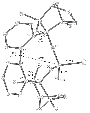

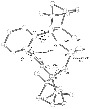


Mixtures of monodentate P-ligands as a means to control the diastereoselectivity in Rh-catalyzed hydrogenation of chiral alkenes
Beilstein J. Org. Chem. 2005, 1, No. 3, doi:10.1186/1860-5397-1-3
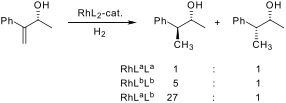
- new approach in the area of combinatorial asymmetric transition metal catalysis:[19][20] The use of mixtures of two chiral monodentate ligands La and Lb in metal catalysts of the type ML2, leading to two so-called homo-combinations and one hetero-combination which are in equilibrium with one another


Other Beilstein-Institut Open Science Activities



